Nitro
Found 2518 products of "Nitro"
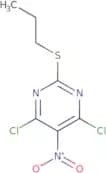
4,6-Dichloro-5-nitro-2-propylthiopyrimidine
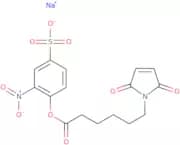
CAS:Intermediate in the synthesis of ticagrelorFormula:C7H7Cl2N3O2SPurity:Min. 95%Molecular weight:268.12 g/molEpsilon-Maleimidocaproic acid-(2-nitro-4-sulfo)-phenyl ester·sodium salt
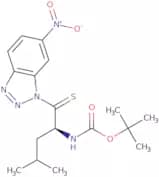
CAS:Epsilon-Maleimidocaproic acid-(2-nitro-4-sulfo)-phenyl ester·sodium salt (EMAP) is a crosslinker that belongs to the group of heterobifunctional reagents. It has been used to conjugate monoclonal antibodies with other molecules, such as toxins. EMAP is activated by the dianion generated by protonation of the nitro groups on the phenyl ring and reacts with free amines or thiols in proteins. EMAP can be used for labeling immunotoxins for diagnostic use, maximizing detection sensitivity, and crosslinking DNA molecules for use in molecular cloning experiments.Formula:C16H15N2NaO9SPurity:Min. 95%Molecular weight:434.35 g/molBoc-Thionoleu-1-(6-nitro)benzotriazolide
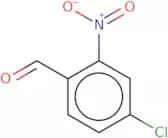
CAS:Please enquire for more information about Boc-Thionoleu-1-(6-nitro)benzotriazolide including the price, delivery time and more detailed product information at the technical inquiry form on this pageFormula:C17H23N5O4SPurity:Min. 95%Molecular weight:393.46 g/mol4-Chloro-2-nitrobenzaldehyde
CAS:4-Chloro-2-nitrobenzaldehyde is a reactive intermediate that has been used to investigate the reaction mechanism of protonation. It is an n-oxide and has been shown to react with calcium carbonate under acidic conditions, forming a stable product. 4-Chloro-2-nitrobenzaldehyde has also been used in the synthesis of amides and nitro compounds. This compound possesses two functional groups, which are a nitro group and a chloro group on the aromatic ring.Formula:C7H4ClNO3Purity:Min. 95%Color and Shape:PowderMolecular weight:185.56 g/mol2-Butyl-5-nitrobenzofuran
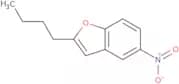
CAS:2-Butyl-5-nitrobenzofuran (2B5NBF) is a drug that belongs to the class of salicylaldehydes. It is an acylation product of 2-butanol and 5-nitrobenzofuran that has the potential for use as a pharmaceutical agent. The reaction yield for this compound is high and can be increased by using hydrochloric acid as the acid catalyst. When 2B5NBF is reacted with chloride, it produces an active substance with a structural formula of C14H11NO3Cl. This substance has been shown to have arrhythmic properties in atrial tissue in rats.Formula:C12H13NO3Purity:Min. 95%Molecular weight:219.24 g/mol2-Bromo-5-nitro-3-(trifluoromethyl)pyridine
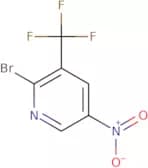
CAS:2-Bromo-5-nitro-3-(trifluoromethyl)pyridine is a white crystalline compound that is soluble in water. It has high melting point and is stable at high temperatures. This chemical has been recycled from terephthalic acid by the cyanation reaction with sodium nitrite, followed by hydrogenation of 2-bromo-5-nitro-3-(trifluoromethyl)pyridine to 5,6-dichloro-2,4,6-(1H,3H)-triazine. The target product of this recycling process is terephthalic acid. 2-Bromo-5-nitro-3-(trifluoromethyl)pyridine can be used as a catalyst for the preparation of drugs for urogenital use.Purity:Min. 95%Anthranilyl-HIV Protease Substrate V trifluoroacetate salt
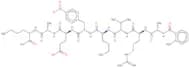
CAS:Please enquire for more information about Anthranilyl-HIV Protease Substrate V trifluoroacetate salt including the price, delivery time and more detailed product information at the technical inquiry form on this pageFormula:C50H76N14O13Purity:Min. 95%Molecular weight:1,081.23 g/mol1-(4-Hydroxy-3-methoxyphenyl)-2-nitroethene
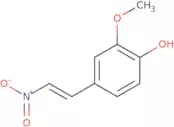
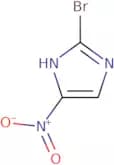
CAS:1-(4-Hydroxy-3-methoxyphenyl)-2-nitroethene is an experimental molecule that was not previously known to exist. The intramolecular reaction of 1,4-dihydroxynitrobenzene and glyoxylic acid yields the product. It is a phenolic compound with biological activity, which has been shown to inhibit glycosidases and alkaloids.Formula:C9H9NO4Purity:Min. 95%Color and Shape:SolidMolecular weight:195.17 g/mol2-Bromo-4-nitroimidazole
CAS:2-Bromo-4-nitroimidazole is a chemical compound with the molecular formula C6H5BrNO2. It is an amide containing a nitroimidazole functional group. 2-Bromo-4-nitroimidazole can be used to synthesize pretomanid, which is an anti-tuberculosis drug. Pretomanid inhibits the growth of Mycobacterium tuberculosis by inhibiting protein synthesis and cell division. The active form of pretomanid has been shown to be hydrolyzed by hydrochloric acid and organic acids such as acetylcholinesterase and carboxypeptidase A. Pretomanid also binds to chloride ions, which may account for its ability to inhibit bacterial growth in acidic environments such as those found in the human stomach.Formula:C3H2BrN3O2Purity:Min. 95%Molecular weight:191.97 g/mol3-Fluoro-2-nitrobenzoic acid
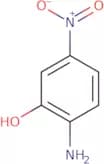
CAS:3-Fluoro-2-nitrobenzoic acid is an anhydrous nitrating agent that reacts with 5-fluoro-2-nitrobenzoic acid to produce 3,5-difluoronitrobenzene. This reaction mixture is introduced into a reaction vessel and heated in the presence of sulfuric acid. 3-Fluoro-2-nitrobenzoic acid is used in the production of dyes and pharmaceuticals.Formula:C7H4FNO4Purity:Min. 95%Color and Shape:PowderMolecular weight:185.11 g/mol5-Nitro-2-aminophenol
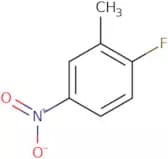
CAS:5-Nitro-2-aminophenol is an aminophenol that has been shown to be a carcinogen in animal studies. It can cause allergic reactions and has been shown to have oxidative DNA damage, which can lead to cancer. 5-Nitro-2-aminophenol is used as a chemical intermediate in the preparation of other chemicals and pharmaceuticals. This chemical has been studied extensively for its analytical properties and is used as a reagent in chromatography. The coordination geometry of 5-nitro-2-aminophenol is octahedral, with nitro groups occupying one axial site each. The toxicity of this compound in animals has been studied extensively, including carcinogenic potential and mutagenicity studies, and it has been shown to inhibit the growth of cultured cells at high concentrations.Formula:C6H6N2O3Purity:Min. 95%Molecular weight:154.12 g/mol4-Fluoro-3-methylnitrobenzene
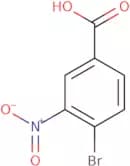
CAS:4-Fluoro-3-methylnitrobenzene is a carbazole that is used as a pesticide. It has been shown to be effective against typhimurium and other bacteria. The mechanism of action of this compound may involve nitrenium ion formation, which is an intermediate in the reaction of ammonium nitrate with calcium carbonate. 4-Fluoro-3-methylnitrobenzene has two isomers: 4-fluoro-3-methylnitrobenzoic acid and 4-fluoronitrobenzoic acid, but only the former reacts with ammonium nitrate. The reaction time for this compound to form carcinogenic nitrosamines can vary from about one day to several months. Chemical shift data for this compound reveal its radical mechanism, which explains its low efficiency. This compound also has optical properties that can cause fluorescence or phosphorescence when exposed to ultraviolet light or laser beams, respectively.Formula:C7H6FNO2Purity:Min. 95%Molecular weight:155.13 g/mol4-Bromo-3-nitrobenzoicacid
CAS:4-Bromo-3-nitrobenzoicacid is a fluorogenic substrate for the labeling of d-serine. It reacts with picric acid to form a fluorescent product, which can be detected by fluorescence spectroscopy. 4BnBA has been used in immobilized enzyme studies to determine the catalysis of chloride and the fluorescence response of chloride. The hydrolysis of 4BnBA by esterases produces 3-nitroaniline, which has been shown to be an intermediate for the synthesis of flavin mononucleotide (FMN). FMN is an essential cofactor for catalytic reactions involving ribonucleotides and ATP. The subunits of FMN are flavin adenine dinucleotide (FAD) and nicotinamide adenine dinucleotide (NAD). 4BnBA has also been analysed using synthetic techniques and functional theory to determine its role in biomolecular processes.
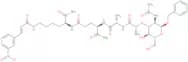
Formula:C7H4BrNO4Purity:Min. 95%Color and Shape:PowderMolecular weight:246.02 g/molAc-alpha-benzyl-muramyl-Ala-D-Glu(Lys(trans-(3-nitrocinnamoyl))-NH2)-NH2
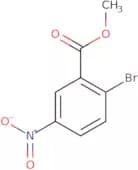
CAS:Please enquire for more information about Ac-alpha-benzyl-muramyl-Ala-D-Glu(Lys(trans-(3-nitrocinnamoyl))-NH2)-NH2 including the price, delivery time and more detailed product information at the technical inquiry form on this pageFormula:C41H56N8O14Purity:Min. 95%Molecular weight:884.93 g/molMethyl 2-bromo-5-nitrobenzoate
CAS:Methyl 2-bromo-5-nitrobenzoate is a potent inhibitor of aspartyl proteases, which are enzymes that are involved in the breakdown of fibrinogen. It has been shown to inhibit the growth of Staphylococcus aureus and other bacteria. Methyl 2-bromo-5-nitrobenzoate is also a potent inhibitor of lactamase, an enzyme that catalyzes the hydrolysis of lactams. This compound has been shown to have biological properties such as antioxidant and anticancer activity. A heterocycle with two nitro groups on the methylene bridge, it is reactive.
Formula:C8H6BrNO4Purity:Min. 95%Molecular weight:260.04 g/mol4-Fluoro-3-nitrobenzyl alcohol
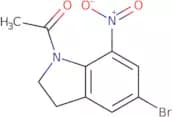
CAS:4-Fluoro-3-nitrobenzyl alcohol (4FNA) is a potent, orally bioavailable, and selective inhibitor of the tyrosine kinase AXL. 4FNA binds to the ATP binding site on AXL and blocks phosphorylation of its tyrosine kinase domain. This binding leads to a conformational change in the AXL protein that prevents it from interacting with downstream signaling molecules, inhibiting T cell activation.Formula:C7H6FNO3Purity:Min. 95%Molecular weight:171.13 g/mol1-Acetyl-5-bromo-7-nitro-2,3-dihydro-1H-indole
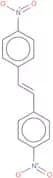
CAS:The 1-Acetyl-5-bromo-7-nitro-2,3-dihydro-1H-indole is a water soluble molecule. It has a molecular weight of 230.3 and a chemical formula of C8H6N2O2Br. The 1A5B7N1 is an aromatic heterocyclic compound that contains a ring with five carbon atoms, three nitrogens, and one oxygen. The 1A5B7N1 is also known as the 5 Bromo 7 Nitro 2,3 Dihydro 1 H Indole or the 5 Bromo 7 Nitro 2,3 Dihydroindole. This molecule has been seen to have bioactive properties in many different ways including photolysis efficiency and molecular orbital.Formula:C10H9BrN2O3Purity:Min. 95%Molecular weight:285.09 g/mol4,4'-Dinitrostilbene
CAS:4,4'-Dinitrostilbene is a neutralizing agent that is used to control the pH of a solution. It can also be used for the treatment of sulfite-induced asthma and for the prevention of methemoglobinemia in nitrate-intoxicated infants. 4,4'-Dinitrostilbene reacts with hydroxyl ions to form an intermediate compound, which reacts with metal ions to form a stable ionic complex. This reaction has been shown to be selective for metal ions such as magnesium and aluminum. The introduction of this compound into a reaction solution causes the formation of hydrogen gas bubbles that are fluorescent in appearance. Hydroxide ions react with this intermediate compound to produce water and nitric oxide gas. This reaction is reversible.Formula:C14H10N2O4Purity:Min. 95%Molecular weight:270.24 g/mol3-Fluoro-4-nitroaniline
CAS:3-Fluoro-4-nitroaniline is an asymptomatic infection that inhibits the growth of bacteria by blocking the synthesis of proteins. This drug binds to the hydroxyl group, which is part of the amine function, and forms a covalent bond to the amino function in bacterial ribosomes. 3-Fluoro-4-nitroaniline blocks the formation of a tetrahydropyran ring in bacterial cells, preventing them from growing and multiplying. 3-Fluoro-4-nitroaniline also has been shown to have anticancer properties. It can inhibit tumor cell proliferation by inhibiting DNA synthesis and protein synthesis. The anticancer effects are due to its ability to inhibit cancer cell growth through inhibition of cellular enzymes such as topoisomerase II and cytosolic ribonucleotide reductase.Purity:Min. 95%1-(Dibromomethyl)-4-nitrobenzene
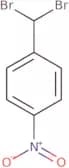
CAS:1-(Dibromomethyl)-4-nitrobenzene is a chemical substance that belongs to the group of industrial chemicals. It has been classified as toxic and hazardous for human health, with an expansion potential. This substance is used in the production of a number of insecticides and other chemical control agents. The toxic effects of 1-(dibromomethyl)-4-nitrobenzene are related to its alkaline properties and include irritation of the eyes, skin, and respiratory tract; central nervous system depression; liver damage; kidney damage; and gastrointestinal disturbances. Inhalation may result in pulmonary edema or death due to oxygen deprivation. This chemical is also known to cause cancer in animals.Formula:C7H5Br2NO2Purity:Min. 95%Molecular weight:294.93 g/mol