Ketones
Ketones are organic compounds characterized by the presence of a carbonyl group (C=O) bonded to two carbon atoms. These compounds are highly versatile and play a crucial role in various chemical reactions, including oxidation, reduction, and condensation. Ketones are essential intermediates in the synthesis of pharmaceuticals, fragrances, and polymers. At CymitQuimica, we provide a wide range of high-quality ketones to support your research and industrial applications.
Found 18809 products of "Ketones"
Sort by
Purity (%)
0
100
|
0
|
50
|
90
|
95
|
100
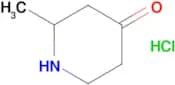
2-Methylpiperidin-4-one hydrochloride
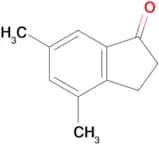
CAS:Formula:C6H12ClNOPurity:97%Color and Shape:SolidMolecular weight:149.624,6-Dimethyl-2,3-dihydro-1H-inden-1-one
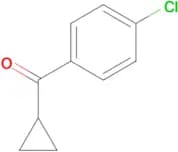
CAS:Formula:C11H12OPurity:98%Color and Shape:SolidMolecular weight:160.2164-chlorophenyl cyclopropyl ketone
CAS:Formula:C10H9ClOPurity:98%Color and Shape:SolidMolecular weight:180.631,1′-(1,4-Phenylene)diethanone
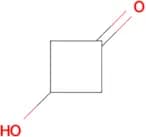
CAS:Formula:C10H10O2Purity:95%Color and Shape:SolidMolecular weight:162.1883-Hydroxycyclobutanone
CAS:Formula:C4H6O2Purity:97%Color and Shape:Liquid, No data available.Molecular weight:86.09(1R,3aR,7aR)-1-((2R,5S,E)-5,6-dimethyl-6-((triethylsilyl)oxy)hept-3-en-2-yl)-7a-methylhexahydro-1H-inden-4(2H)-one
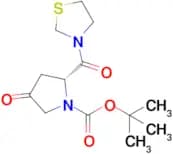
CAS:Purity:98%Molecular weight:406.7260132(R)-tert-butyl 4-oxo-2-(thiazolidine-3-carbonyl)pyrrolidine-1-carboxylate
CAS:Purity:98%Molecular weight:300.369995117,21-Dihydroxy-pregn-4-ene-3,20-dione
CAS:Formula:C21H30O4Purity:98%Color and Shape:SolidMolecular weight:346.467Ref: 10-F038391
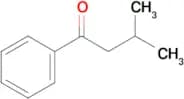
1g82.00€5g287.00€10g412.00€25g912.00€2.5g181.00€50mg39.00€100mg54.00€250mg61.00€500mg75.00€3-Methyl-1-phenylbutan-1-one
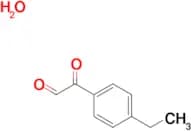
CAS:Formula:C11H14OPurity:98%Color and Shape:LiquidMolecular weight:162.2324-Ethylphenylglyoxal hydrate
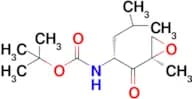
CAS:Formula:C10H12O3Purity:98%Color and Shape:SolidMolecular weight:180.203tert-Butyl ((R)-4-methyl-1-((R)-2-methyloxiran-2-yl)-1-oxopentan-2-yl)carbamate
CAS:Purity:98%Molecular weight:271.3569946Di(N-succinimidyl) 3,3-Dithiodipropionate [Cross-linking Reagent]
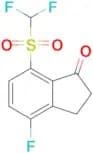
CAS:Formula:C14H16N2O8S2Purity:97%Molecular weight:404.417-((Difluoromethyl)sulfonyl)-4-fluoro-2,3-dihydro-1H-inden-1-one
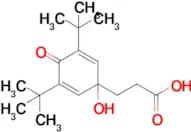
CAS:Purity:98%Molecular weight:264.22000123-(3,5-DI-TERT-BUTYL-1-HYDROXY-4-OXOCYCLOHEXA-2,5-DIEN-1-YL)PROPANOIC ACID
CAS:Purity:97%Molecular weight:294.39099121-(Benzo[d][1,3]dioxol-5-yl)propan-1-one
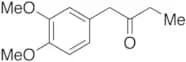
CAS:Formula:C10H10O3Purity:95%Color and Shape:SolidMolecular weight:178.1871-(3,4-Dimethoxyphenyl)-2-butanone
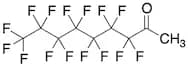
CAS:Controlled Product<p>Applications 1-(3,4-Dimethoxyphenyl)-2-butanone (cas# 884-06-0) is a compound useful in organic synthesis.<br></p>Formula:C12H16O3Color and Shape:NeatMolecular weight:208.25Methyl Pentadecafluoroheptyl Ketone
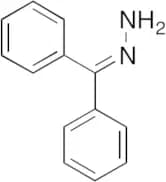
CAS:Controlled Product<p>Applications Methyl Pentadecafluoroheptyl Ketone 754-85-8 (cas# 754-85-8) is a useful research chemical.<br></p>Formula:C9H3OF15Color and Shape:NeatMolecular weight:412.1Diphenylmethanone Hydrazone
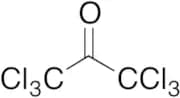
CAS:Controlled Product<p>Applications Diphenyl-methanone Hydrazone is an intermediate used to synthesize Pseudobenztropine (P840155), an analog of Benzotropine (B207575, Mesylate salt) which is used as an antiparkinsonian.. It can also be used to prepare chiral [2.2]paracyclophane-substituted triazolium salts as precursors for copper-triazolylidene-catalyzed asymmetrical boration of unsaturated N-acyloxazolidinones.<br>References Hai, N., et al.: Int. J. Pharm., 357, 55 (2008), Sanderson, H., et al.: Toxicol. Lett., 187, 84 (2009); Zhan, M., et al.: Org. Lett., 15, 4182 (2013)<br></p>Formula:C13H12N2Color and Shape:NeatMolecular weight:196.25Hexachloropropanone
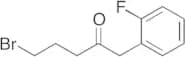
CAS:<p>Applications Hexachloropropanone is a useful synthetic intermediate. It is a reagent used for the conversion of nucleoside-3′-phosphonates to the corresponding phosphates and for the polymerization of vinyl compounds.<br> Not a dangerous good if item is equal to or less than 1g/ml and there is less than 100g/ml in the package<br>References Garegg, P., et al.: J. Chem. Soc. Perkin Trans. I, 6, 1269 (1972); Deming, T., et al.: 26, 7089 (1993)<br></p>Formula:C3Cl6OColor and Shape:NeatMolecular weight:264.755-Bromo-1-(2-fluorophenyl)-2-pentanone
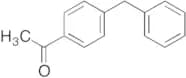
CAS:Controlled Product<p>Applications 5-Bromo-1-(2-fluorophenyl)-2-pentanone is an intermediate in the synthesis of Prasugrel (P701150). Prasugrel is a novel antiplatelet agent; it is a third-generation thienopyridine. Antiplatelet agent Prasugrel showed greater platelet inhibition and decreased incidence of ischemic events than Clopidogrel but may induce increased incidence of bleeding in patient with acute coronary syndrome.<br>References Von Beckerath, N., et al.: Circulation, 112, 2946 (2005), Jernberg, T., et al.: Eur. Heart J., 27, 1166 (2006), Farid, N., et al.: Drug Metab. Dispos., 35, 1096 (2007), Farid, N., et al.: Clin. Pharmacol. Ther., 81, 735 (2007), Jakubowski, J., et al.: J. Cardiovasc. Pharmacol., 49, 167 (2007), Wiviott, S., et al.: N. Engl. J. Med., 357, 2001 (2007),<br></p>Formula:C11H12BrFOColor and Shape:NeatMolecular weight:259.1151-(4-Benzylphenyl)ethanone
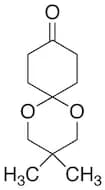
CAS:Controlled Product<p>Applications 1-(4-Benzylphenyl)ethanone is used in the preparation of di- and triarylmethanes through palladium-catalyzed reductive coupling of N-tosylhydrazones and aryl bromides.<br>References Xia, Y., et al.: Synthesis., 49, 1073-1086 (2017)<br></p>Formula:C15H14OColor and Shape:NeatMolecular weight:210.271,4-Cyclohexanedione Mono(2,2-dimethyltrimethylene Ketal)
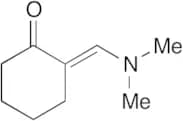
CAS:Controlled Product<p>Applications Reagent used in the preparation of carbazole derivatives<br>References Dong, Y., et al.: J. Med. Chem., 48, 4953 (2005),<br></p>Formula:C11H18O3Color and Shape:NeatMolecular weight:198.262-(Dimethylaminomethylene)cyclohexanone
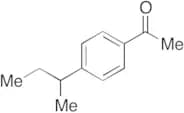
CAS:Controlled Product<p>Applications 2-(Dimethylaminomethylene)cyclohexanone is an intermediate in the synthesis of 2-Pentylidenecyclohexanone (P280255), a fragrance chemical. It can also be used in the synthesis of dialkylphenols in the presence of zirconium catalyst.<br>References Tetsuo, B. et al.: Kenkyu Hokoku - Asahi Garasu Zaidan, 58, 201 (1991); Hostynek, J. J., et al.: Toxicology in Vitro, 11, 377 (1997);<br></p>Formula:C9H15NOColor and Shape:NeatMolecular weight:153.221-(4-sec-Butylphenyl)ethanone
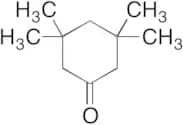
CAS:Controlled Product<p>Applications 1-(4-sec-Butylphenyl)ethanone is a useful synthetic intermediate in the synthesis of 2-(p-sec-Butylphenyl)propionic Acid (B692720); an impurity of Ibuprofen (I140000) which is a selective cyclooxygenase inhibitor (IC50=14.9uM) that inhibits PGH synthase-1 and PGH synthase-2 with comparable potency.<br>References Busson, M., et al.: J. Int. Med Res., 14, 53 (1986); Meade, E.A., et al.: J. Biol. Chem., 268, 6610 (1993); Davies, N.M., et al.: Clin. Pharmacokinet., 34, 101 (1998)<br></p>Formula:C12H16OColor and Shape:NeatMolecular weight:176.253,3,5,5-Tetramethylcyclohexanone
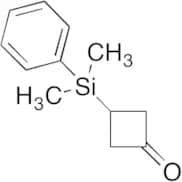
CAS:Controlled Product<p>Applications 3,3,5,5-Tetramethylcyclohexanone (cas# 14376-79-5) is a useful research chemical and a pharmaceutical intermediate.<br>References Ebrahimi, H. P., et al.: Spectrochim. Acta A: Mol. Biomol. Spectrosc., 137, 1067 (2015); Bishop, A. C., et al.: Bioorg. Med. Chem. Lett., 16, 4002 (2006)<br></p>Formula:C10H18OColor and Shape:NeatMolecular weight:154.243-(Dimethylphenylsilyl)-cyclobutanone
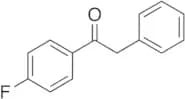
CAS:Controlled Product<p>Applications 3-(Dimethylphenylsilyl)-cyclobutanone is an intermediate used in synthesizing 2-Cyclobutenyl-3-trifluoromethyl-5-chloro-1H-indole-1-carboxylic Acid Ethyl Ester, which is synthesized from 5-chloro-2-oxindole (C375030), that is used in the preparation of novel GSK-3β inhibitors as anticancer agents.<br>References Choi, M.J., et al.: Bull. Korean. Chem. Soc., 32, 2015 (2011); Otani, M., et al.: Bioorg. Med. Chem. Lett.. 20, 4259 (2010); Jhan, Y.H., et al.: Tetrahedron. Lett., 54, 1155 (2013); Hsieh, J.C., et al.: Org. Biomolec. Chem., 10, 6404 (2012);<br></p>Formula:C12H16OSiColor and Shape:NeatMolecular weight:204.34Benzyl 4-Fluorophenyl Ketone
CAS:Controlled Product<p>Applications Benzyl 4-Fluorophenyl Ketone is used in the preparation and evaluation of 2,3-diarylpyrazines and quinoxalines as selective COX-2 inhibitors.<br>References Singh, S. et al.: Bioorg. Med. Chem., 12, 1881 (2004);<br></p>Formula:C14H11FOColor and Shape:NeatMolecular weight:214.231H-[1]-Benzazephe-2,5(3H,4H)-dione
CAS:Controlled Product<p>Applications Intermediate in the synthesis of protein kinase inhibitors<br>References Pruehs, C., et al.: Bioorg. Med. Chem. Lett., 17, 1850 (2007), Stukenbrock, H., et al.: J. Med. Chem., 51, 2196 (2008),<br></p>Formula:C10H9NO2Color and Shape:NeatMolecular weight:175.186-Amino-5-(1,1-dimethylethyl)-3,3-dimethyl-2(3H)-benzofuranone
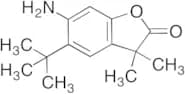
CAS:Controlled Product<p>Applications 6-Amino-5-(1,1-dimethylethyl)-3,3-dimethyl-2(3H)-benzofuranone is an intermediate in synthesizing Ivacaftor Carboxylic Acid (I940605). It is an impurity of Ivacaftor (I940600); a drug used in the treatment of cystic fibrosis.<br>References Clancy, J. et al.: Am. J. Resp. Crit. Care. Med., 186, 593 (2012)<br></p>Formula:C14H19NO2Color and Shape:NeatMolecular weight:233.311,4-Cyclohexanedione Monoethylene Acetal
CAS:Controlled Product<p>Applications 1,4-Cyclohexanedione Monoethylene Acetal is used in the preparation of series of potent analgesic compounds. 1,4-Cyclohexanedione Monoethylene Acetal is also used as a building block in the synthesis of tritium labelled probes for the autoradiography study of the dopamine reuptake complex.<br>References Linders, J. et al.: J. Lab. Comp. Radiopharm., 31, 671 (1992); Lednicer, D. et al.: J. Med. Chem., 22, 1157 (1979);<br></p>Formula:C8H12O3Color and Shape:NeatMolecular weight:156.188-Didemethyl Baquiloprim-2,4-dione
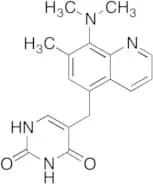
CAS:Controlled Product<p>Applications 8-Didemethyl Baquiloprim-2,4-dione is an intermediate used in the synthesis of Baquiloprim (B118000), which is an amiopyrimidine antibacterial synergist with high activity and slow elimination. Baquiloprim has a better half-life than trimethoprim.<br>References Zhi-hui, H., et al.: Anhui Nongye Kexue, 41, 2503 (2013)<br></p>Formula:C17H18N4O2Color and Shape:NeatMolecular weight:282.35-(1,1-Dimethylethyl)-3,3-dimethyl-6-nitro-2(3H)-benzofuranone
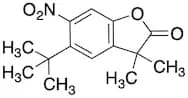
CAS:Controlled Product<p>Applications 5-(1,1-Dimethylethyl)-3,3-dimethyl-6-nitro-2(3H)-benzofuranone is an intermediate in synthesizing Ivacaftor Carboxylic Acid (I940605). It is an impurity of Ivacaftor (I940600); a drug used in the treatment of cystic fibrosis.<br>References Clancy, J. et al.: Am. J. Resp. Crit. Care. Med., 186, 593 (2012)<br></p>Formula:C14H17NO4Color and Shape:NeatMolecular weight:263.291-(3-Methylphenyl)-1H-pyrrole-2,5-dione
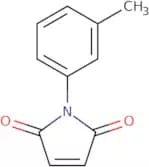
CAS:<p>1-(3-Methylphenyl)-1H-pyrrole-2,5-dione is an anti-aging compound that has been shown to inhibit the replication of herpes viruses. It also inhibits corrosion, in particular by orthophosphoric acid. The monomer itself is useful as a viscosity agent and can be used in the synthesis of polymers such as dibutyl phthalate. 1-(3-Methylphenyl)-1H-pyrrole-2,5-dione has a high yield and can be used for analyzing magnesium oxide.</p>Formula:C11H9NO2Purity:Min. 95%Color and Shape:White PowderMolecular weight:187.19 g/mol2-But-3-yn-1-yl-1H-isoindole-1,3(2H)-dione
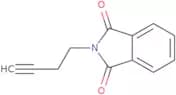
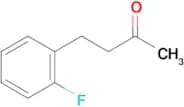
CAS:<p>2-But-3-yn-1-yl-1H-isoindole-1,3(2H)-dione is a heterobicyclic compound that has antiviral properties. It is an inhibitor of the viral enzyme RNA polymerase and can be used to treat viral infections such as HIV, influenza, or herpes. 2-But-3-yn-1yl-1H-isoindole 1,3(2H)-dione has been shown to be effective in vitro against HIV and influenza viruses. It also inhibits the replication of other viruses by binding to their RNA polymerase enzymes. This drug is fluorescent and can emit light when excited with a laser or UV light. 2B3YNIDIO has been shown to fluoresce at 477 nm when irradiated with blue light.</p>Formula:C12H9NO2Purity:Min. 95%Color and Shape:White PowderMolecular weight:199.21 g/mol4-Fluorophenylacetone
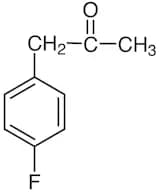
CAS:Formula:C9H9FOPurity:>95.0%(GC)Color and Shape:Light yellow to Yellow to Orange clear liquidMolecular weight:152.17Dimethyl Itaconate (stabilized with HQ)
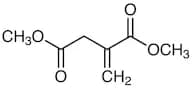
CAS:Formula:C7H10O4Purity:>98.0%(GC)Color and Shape:White or Colorless to Light yellow powder to lump to clear liquidMolecular weight:158.15Iprodione
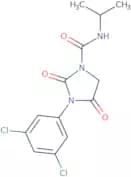
CAS:<p>Iprodione is an ester hydrochloride that belongs to the class of fungicides. It has been shown to have high resistance and is used in vitro assays to detect mutants with a high degree of resistance. Iprodione inhibits the growth of wild-type strains, but not resistant mutants, by inhibiting protein synthesis at the ribosome level, blocking the polymerase chain reaction and DNA replication. This prevents transcription and replication of genetic material. Iprodione also inhibits nitrite ion production in wild-type strains and has genotoxic effects on cultured human cells. The drug is metabolized through a number of metabolic transformations, including hydrolysis by esterases or glucuronidases, oxidation by cytochrome P450 enzymes, reduction by glutathione reductase, or conjugation with glucuronic acid.</p>Formula:C13H13Cl2N3O3Purity:Min. 95%Color and Shape:PowderMolecular weight:330.17 g/mol







![Di(N-succinimidyl) 3,3-Dithiodipropionate [Cross-linking Reagent]](/_next/image/?url=https%3A%2Fstatic.cymitquimica.com%2Fproducts%2F10%2Fthumb-webp%2FF544856.webp&w=3840&q=75)
![1-(5-Bromo-1H-pyrrolo[2,3-c]pyridin-3-yl)ethanone](/_next/image/?url=https%3A%2Fstatic.cymitquimica.com%2Fproducts%2F10%2Fthumb-webp%2FF960445.webp&w=3840&q=75)
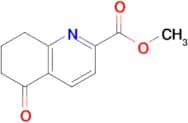
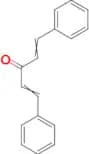
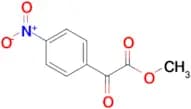
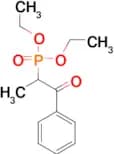
![8,11-dioxadispiro[3.2.4⁷.2⁴]tridecan-2-one](/_next/image/?url=https%3A%2Fstatic.cymitquimica.com%2Fproducts%2F10%2Fthumb-webp%2FF874092.webp&w=3840&q=75)
![7,7-Dimethyl-2-oxobicyclo[2.2.1]heptane-1-carboxylic acid](/_next/image/?url=https%3A%2Fstatic.cymitquimica.com%2Fproducts%2F10%2Fthumb-webp%2FF863107.webp&w=3840&q=75)
![1-(Benzo[d][1,3]dioxol-5-yl)propan-1-one](/_next/image/?url=https%3A%2Fstatic.cymitquimica.com%2Fproducts%2F10%2Fthumb-webp%2FF209773.webp&w=3840&q=75)
![2,5-DIOXASPIRO[3.4]OCTAN-7-ONE](/_next/image/?url=https%3A%2Fstatic.cymitquimica.com%2Fproducts%2F10%2Fthumb-webp%2FF818409.webp&w=3840&q=75)
![2-Azaspiro[4.5]decan-8-one hydrochloride](/_next/image/?url=https%3A%2Fstatic.cymitquimica.com%2Fproducts%2F10%2Fthumb-webp%2FF807586.webp&w=3840&q=75)


![1H-[1]-Benzazephe-2,5(3H,4H)-dione](/_next/image/?url=https%3A%2Fstatic.cymitquimica.com%2Fproducts%2FTR%2Fthumb-webp%2FB186000.webp&w=3840&q=75)