Aldehydes
Aldehydes are organic compounds containing a carbonyl group (C=O) bonded to at least one hydrogen atom. These versatile compounds are fundamental in various chemical reactions, including oxidation, reduction, and nucleophilic addition. Aldehydes are essential building blocks in the synthesis of pharmaceuticals, fragrances, and polymers. At CymitQuimica, we provide a diverse selection of high-quality aldehydes to support your research and industrial applications.
Found 8540 products of "Aldehydes"
Sort by
Purity (%)
0
100
|
0
|
50
|
90
|
95
|
100
(E)-2-Hexadecenal
CAS:<p>(E)-2-Hexadecenal is an asymmetric molecule that is a reactive and carcinogenic compound. It has been shown to induce c-Jun phosphorylation in the human carcinoma cell lines, leading to physiological changes. (E)-2-Hexadecenal has also been used to induce chemiluminescence in vitro, which can be used for analytical chemistry. It is made by a hydroxyl group on a fatty acid with a biofuel reaction. This molecule may also have pro-apoptotic properties due to its chemical biology and ability to affect mitochondrial membrane potentials.</p>Formula:C16H30OPurity:Min. 95%Color and Shape:PowderMolecular weight:238.41 g/mol2-Hydroxy-4,6-dimethoxy-3,5-dimethylbenzaldehyde
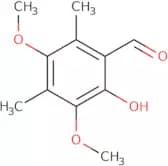
CAS:<p>2-Hydroxy-4,6-dimethoxy-3,5-dimethylbenzaldehyde is a versatile building block that can be used in research chemicals, reagents, and speciality chemicals. It is also a useful building block that can be used as a reaction component or scaffold for high-quality compounds. This chemical has been shown to have antihistamine properties with applications in treatment of allergies and asthma.</p>Formula:C11H14O4Purity:Min. 95%Color and Shape:PowderMolecular weight:210.23 g/mol3-Butoxybenzaldehyde
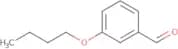
CAS:<p>3-Butoxybenzaldehyde is an electron donor. It is used in the synthesis of heterocyclic compounds and as a reagent or postulated intermediate in the formation of epoxides, ethylene, and peroxides. 3-Butoxybenzaldehyde also functions as a precursor to other oxygenated compounds. 3-Butoxybenzaldehyde has been shown to undergo both aldol condensation and interaction with other compounds.</p>Formula:C11H14O2Purity:Min. 95%Color and Shape:PowderMolecular weight:178.23 g/mol2-Bromo-3,6-difluorobenzaldehyde
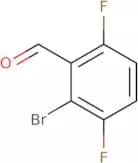
CAS:<p>2-Bromo-3,6-difluorobenzaldehyde is a versatile building block that is used in the synthesis of many complex compounds. It has been shown to be a useful intermediate and reaction component in organic synthesis. 2-Bromo-3,6-difluorobenzaldehyde can be used as a reagent or speciality chemical for research purposes. This compound has high quality and is a useful scaffold for the preparation of fine chemicals.</p>Formula:C7H3BrF2OPurity:Min. 95%Color and Shape:Off-White PowderMolecular weight:221 g/mol6-Fluorosalicylaldehyde
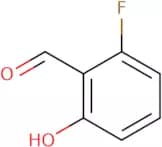
CAS:<p>6-Fluorosalicylaldehyde is a sulfate that has been used in the synthesis of 6-fluorosalicylic acid, which is an intermediate for the production of aspirin. It also can be used to synthesize phenols and formylation products. The reaction with hydroxylamine leads to salicylaldehydes, while the reaction with methoxide leads to salicylaldehyde.<br>6-Fluorosalicylaldehyde reacts with magnesium salts in acidic conditions to produce paraformaldehyde. Deprotonation of 6-fluorosalicylaldehyde yields methoxide.</p>Formula:C7H5FO2Purity:Min. 95%Color and Shape:PowderMolecular weight:140.11 g/mol2-(4-Methoxyphenoxy)benzaldehyde
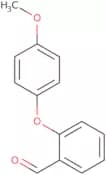
CAS:<p>2-(4-Methoxyphenoxy)benzaldehyde is a fine chemical that is used as a versatile building block in the synthesis of complex compounds and research chemicals. 2-(4-Methoxyphenoxy)benzaldehyde is also a reagent that can be used to synthesize speciality chemicals, useful building blocks, and reaction components. This chemical may be used as an intermediate for the synthesis of high-quality pharmaceuticals or other useful scaffolds. It has CAS number 19434-36-7.</p>Formula:C14H12O3Purity:Min. 95%Color and Shape:White To Brown SolidMolecular weight:228.24 g/mol(3-tert-Butoxy)benzaldehyde
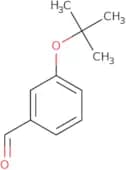
CAS:<p>3-tert-Butoxybenzaldehyde is a versatile building block that can be used as an intermediate in the synthesis of various compounds. It has been shown to react with nucleophiles such as thiols, alcohols, and amines to form adducts that are useful for biological studies. 3-tert-Butoxybenzaldehyde is an important reagent for the synthesis of complex compounds, such as aromatic ketones or heterocycles. This chemical has a high quality and purity, which makes it an excellent research chemical.</p>Formula:C11H14O2Purity:Min. 95%Molecular weight:178.23 g/mol2,5-Dimethoxyterephthalaldehyde
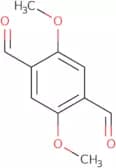
CAS:<p>2,5-Dimethoxyterephthalaldehyde (2,5DMP) is a protonated molecule that can be used in sample preparation for analytical methods. 2,5DMP has been used as a dispersive solid-phase extraction solvent and an adsorbent material. This compound has been shown to exhibit strong hydrophobic interactions with the carbonyl group of aromatic compounds and to have a high chemical stability. 2,5DMP also has an electrochemical impedance spectroscopy (EIS) property that can be used for monitoring the electrochemical behaviour of molecules and magnetic particles in the solution. The EIS property has been enhanced by hydrogen bonding between the protonated molecules and metal ions in the solution.</p>Formula:C10H10O4Purity:Min. 95%Color and Shape:PowderMolecular weight:194.18 g/molQuinoxaline-5-carboxaldehyde
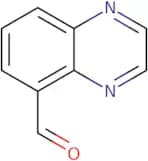
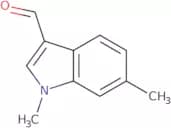
CAS:<p>Quinoxaline-5-carboxaldehyde is a versatile building block and reagent for organic chemistry. It is a complex compound that can be used as a research chemical or as a speciality chemical, with high quality and a useful scaffold. This compound has been shown to be an intermediate in the synthesis of other compounds, such as quinoxaline-5-carboxylic acid.</p>Formula:C9H6N2OPurity:Min. 95%Color and Shape:Off-White PowderMolecular weight:158.16 g/mol1,6-Dimethyl-1H-indole-3-carbaldehyde
CAS:<p>1,6-Dimethyl-1H-indole-3-carbaldehyde is a compound that can be used in the synthesis of many organic and pharmaceutical compounds. It is also an intermediate for the production of other chemicals. 1,6-Dimethyl-1H-indole-3-carboxylic acid has been shown to be useful as a building block in organic synthesis, due to its versatility and reactivity. The compound is also a reagent and can be used as part of research studies. This chemical has CAS number 202584-14-3.</p>Formula:C11H11NOPurity:Min. 95%Color and Shape:PowderMolecular weight:173.21 g/molBourgeonal
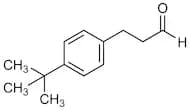
CAS:Formula:C13H18OPurity:>90.0%(GC)Color and Shape:Colorless to Yellow to Yellow green clear liquidMolecular weight:190.292,6-Dimethylbenzaldehyde
CAS:<p>2,6-Dimethylbenzaldehyde is a colorless liquid with a sweet odor. It is used in the synthesis of fatty acids and as an intermediate for other compounds. This chemical has significant cytotoxicity against leukemia cells, and is used in the production of acrylonitrile. 2,6-Dimethylbenzaldehyde can be synthesized by reacting an amine with an acyl chloride, followed by hydrolysis of the resulting ester. A contactor is usually added to facilitate the reaction. The reaction can also be carried out in the presence of a phosphorane or organic solvent.<br>2,6-Dimethylbenzaldehyde can be hydrogenated to produce 2,4-dimethylaniline and 2,4,6-trimethylaniline.</p>Formula:C9H10OPurity:Min. 95%Color and Shape:Clear White Solid Or Liquid (May Vary)Molecular weight:134.18 g/mol4-(4-Fluorophenoxy)benzaldehyde
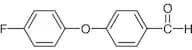
CAS:Formula:C13H9FO2Purity:>98.0%(GC)Color and Shape:White to Yellow to Orange powder to crystalMolecular weight:216.213-Allyl salicylaldehyde
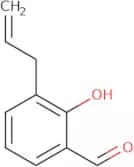
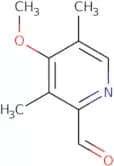
CAS:<p>3-Allyl salicylaldehyde is a fluorescent probe that is used to measure the mitochondrial membrane potential. It can be used as an amine-reactive fluorescence probe for the detection of amines such as histamine and serotonin. 3-Allyl salicylaldehyde has been shown to bind to metal complexes, such as palladium complexes, immobilized on silica gel. The cavity of the immobilized metal complex acts as an adsorption site for 3-allyl salicylaldehyde, which binds to the cavity by means of a metal chelate mechanism. This binding results in an alteration in the absorption spectra and x-ray absorption properties of 3-allyl salicylaldehyde. The hydroxyl group of 3-allyl salicylaldehyde is not involved in this binding process with the immobilized metal complex, while its carbonyl group is important for this interaction.</p>Formula:C10H10O2Purity:Min. 95%Molecular weight:162.19 g/mol4-Methoxy-3,5-dimethyl-2-pyridinecarboxaldehyde
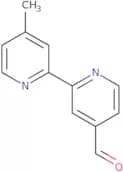
CAS:<p>4-Methoxy-3,5-dimethyl-2-pyridinecarboxaldehyde is a trifunctional molecule that has been shown to suppress the growth of cancer cells in mice. This compound is an inhibitor of acid synthesis and has also been shown to be an antirheumatic drug. 4-Methoxy-3,5-dimethyl-2-pyridinecarboxaldehyde inhibits the activity of three enzymes: synthetase, an enzyme that synthesizes fatty acids; 3-ketoacyl CoA synthase, which synthesizes ketones; and enoyl CoA reductase, which produces fatty acids. The long term efficacy of this molecule has not yet been studied in humans.</p>Formula:C9H11NO2Purity:Min. 95%Color and Shape:Colourless LiquidMolecular weight:165.19 g/mol4'-Methyl-2,2'-bipyridine-4-carboxaldehyde
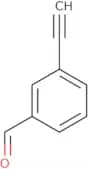
CAS:<p>4'-Methyl-2,2'-bipyridine-4-carboxaldehyde is a heterocyclic compound that contains a nitro group. It has the chemical formula C8H6N2O and the molecular weight of 122.15 g/mol. This compound belongs to the class of formyl compounds and it is composed of two formyl groups and one hydrogen atom. The bipyridines are linked by a methylene bridge to form a six-membered ring. The compound can be used as an intermediate for the synthesis of other organic compounds such as pharmaceuticals, dyes, water repellents, pesticides, and herbicides.</p>Formula:C12H10N2OPurity:Min. 95%Color and Shape:PowderMolecular weight:198.22 g/mol3-Ethynylbenzaldehyde
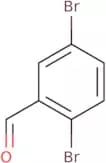
CAS:<p>3-Ethynylbenzaldehyde is a tryptic, nitro compound that contains terminal alkynes and has functional groups. The functional theory of this compound suggests that it may be used as a chemosensor for the detection of acidic compounds. 3-Ethynylbenzaldehyde reacts with sodium trifluoroacetate to form an aldehyde, which is then oxidized to an acid by the addition of water. This acid can be detected using NMR spectroscopy. 3-Ethynylbenzaldehyde has been shown to react with sodium trifluoroacetate in solid form at room temperature and above. The resulting product is a yellow crystalline solid that can be identified by its UV spectrum.</p>Formula:C9H6OPurity:Min. 95%Color and Shape:PowderMolecular weight:130.14 g/mol2,5-Dibromobenzaldehyde
CAS:<p>2,5-Dibromobenzaldehyde is a synthetic compound that has been shown to have a red fluorescent emission. It is also thermally stable and can be used in the synthesis of quinoline derivatives. 2,5-Dibromobenzaldehyde may be used as a potential fluorescent label for viologen or amines. This compound can undergo an intermolecular Diels-Alder reaction with diacetate to form a bicyclic system, which is important to the understanding of its interactions with other compounds.</p>Formula:C7H4Br2OPurity:Min. 95%Color and Shape:PowderMolecular weight:263.91 g/mol3-Bromothiophene-2-carbaldehyde
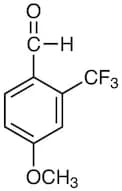
CAS:<p>3-Bromothiophene-2-carbaldehyde is an organic compound that has been shown to have antibacterial activity. It can be synthesized by reacting triethyl orthoformate with methyl ketones in the presence of a photocatalyst such as titanium dioxide or zinc oxide. This reaction produces 3-bromothiophene-2-carboxylic acid which reacts with ammonia and hydrogen bromide to form 3-bromothiophene-2-carbaldehyde. 3-Bromothiophene-2-carbaldehyde has been shown to inhibit the growth of cancer cells and induce apoptosis, which may be due to its ability to inhibit angiogenesis. The anticancer properties are most likely due to its ability to bind DNA and inhibit protein synthesis, leading to cell death.</p>Formula:C5H3BrOSPurity:Min. 95%Color and Shape:White To Yellow To Light Brown SolidMolecular weight:191.05 g/mol4-Methoxy-2-(trifluoromethyl)benzaldehyde
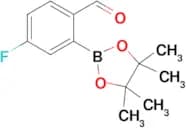
CAS:Formula:C9H7F3O2Purity:>97.0%(GC)Color and Shape:White to Almost white powder to lumpMolecular weight:204.154-Fluoro-2-(4,4,5,5-tetramethyl-1,3,2-dioxaborolan-2-yl)benzaldehyde
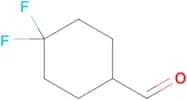
CAS:Formula:C13H16BFO3Purity:97%Molecular weight:250.084,4-Difluoro cyclohexanecarboxaldehyde
CAS:Formula:C7H10F2OPurity:95%+Color and Shape:SolidMolecular weight:148.1532-Morpholino-6-(4,4,5,5-tetramethyl-1,3,2-dioxaborolan-2-yl)benzaldehyde
CAS:Purity:≥95%Molecular weight:317.19000244-[(3-Fluorobenzyl)oxy]-3-methoxybenzaldehyde
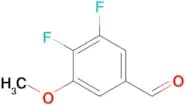
CAS:Formula:C15H13FO3Purity:95.0%Molecular weight:260.2643,4-Difluoro-5-methoxybenzaldehyde
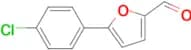
CAS:Formula:C8H6F2O2Purity:95%Color and Shape:SolidMolecular weight:172.1312-FORMYL-5-(4-CHLOROPHENYL)FURAN
CAS:Formula:C11H7ClO2Purity:97%Color and Shape:SolidMolecular weight:206.632-Chloro-6-iodobenzaldehyde
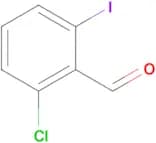
CAS:Formula:C7H4ClIOPurity:95%Color and Shape:Liquid, No data available.Molecular weight:266.462-Phenyloxazole-4-carbaldehyde
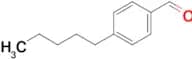
CAS:Formula:C10H7NO2Purity:97%Color and Shape:Liquid, No data available.Molecular weight:173.1714-Pentylbenzaldehyde
CAS:Formula:C12H16OPurity:95%(GC-MS);RGColor and Shape:LiquidMolecular weight:176.2593-[(2-chloro-4-fluorobenzyl)oxy]-4-methoxybenzaldehyde
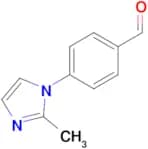
CAS:Formula:C15H12ClFO3Purity:95.0%Molecular weight:294.714-(2-Methyl-imidazol-1-yl)-benzaldehyde
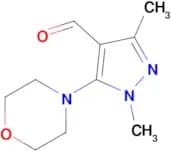
CAS:Formula:C11H10N2OPurity:98%Color and Shape:SolidMolecular weight:186.2141,3-Dimethyl-5-(morpholin-4-yl)-1h-pyrazole-4-carbaldehyde
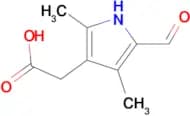
CAS:Purity:98+%Molecular weight:209.24899292-(5-FORMYL-2,4-DIMETHYL-1H-PYRROL-3-YL)ACETIC ACID
CAS:Formula:C9H11NO3Purity:97.0%Molecular weight:181.1916-Bromo-1H-pyrrolo[3,2-b]pyridine-3-carbaldehyde
CAS:Formula:C8H5BrN2OPurity:98%Color and Shape:SolidMolecular weight:225.0456-Methyl-benzo[1,3]dioxole-5-carbaldehyde
CAS:Formula:C9H8O3Purity:95.0%Color and Shape:SolidMolecular weight:164.162-chloro-4-(morpholin-4-yl)pyrrolo[2,1-f][1,2,4]triazine-6-carbaldehyde
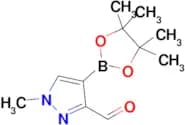
CAS:Formula:C11H11ClN4O2Purity:97%Molecular weight:266.691-Methyl-4-(4,4,5,5-tetramethyl-1,3,2-dioxaborolan-2-yl)-1H-pyrazole-3-carbaldehyde
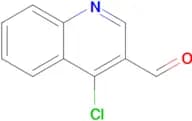
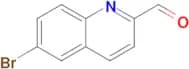
CAS:Purity:95+%Molecular weight:236.08000186-BROMOQUINOLINE-2-CARBALDEHYDE
CAS:Formula:C10H6BrNOPurity:98%Color and Shape:SolidMolecular weight:236.0683-(3-Chloro-4-fluoro-phenoxymethyl)-4-methoxy-benzaldehyde
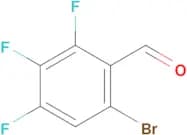
CAS:Formula:C15H12ClFO3Purity:98%Molecular weight:294.716-Bromo-2,3,4-trifluorobenzaldehyde
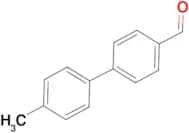
CAS:Formula:C7H2BrF3OPurity:95%Color and Shape:Solid, Low Melting SolidMolecular weight:238.9914′-Methylbiphenyl-4-carboxaldehyde
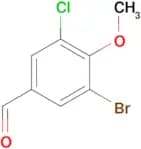
CAS:Formula:C14H12OPurity:95%Color and Shape:SolidMolecular weight:196.2493-bromo-5-chloro-4-methoxybenzaldehyde
CAS:Formula:C8H6BrClO2Purity:≥95%Color and Shape:SolidMolecular weight:249.493-[(2-chloro-4-fluorobenzyl)oxy]benzaldehyde
CAS:Formula:C14H10ClFO2Purity:95.0%Molecular weight:264.68(3-Formyl-2-methyl-indol-1-yl)-acetic acid methylester
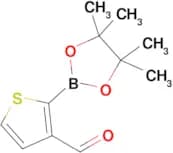
CAS:Formula:C13H13NO3Purity:95.0%Color and Shape:SolidMolecular weight:231.2512-(4,4,5,5-Tetramethyl-1,3,2-dioxaborolan-2-yl)thiophene-3-carbaldehyde
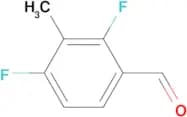
CAS:Formula:C11H15BO3SPurity:≥95%Molecular weight:238.112,4-Difluoro-3-methylbenzaldehyde
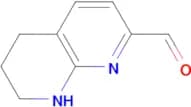
CAS:Formula:C8H6F2OPurity:97%Color and Shape:LiquidMolecular weight:156.1325,6,7,8-Tetrahydro-1,8-naphthyridine-2-carboxaldehyde
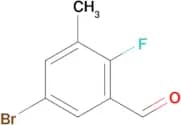
CAS:Formula:C9H10N2OPurity:95%Color and Shape:SolidMolecular weight:162.1925-Bromo-2-fluoro-3-methylbenzaldehyde
CAS:Formula:C8H6BrFOPurity:97%Color and Shape:SolidMolecular weight:217.037tert-Butyl 2-formyl-6,8-dihydro-5H-imidazo[1,2-a]pyrazine-7-carboxylate
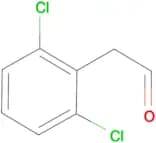
CAS:Purity:95+%Molecular weight:251.2859955(2,6-Dichlorophenyl)acetaldehyde
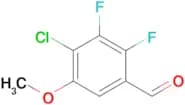
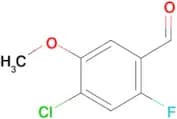
CAS:Formula:C8H6Cl2OPurity:97.0%Color and Shape:SolidMolecular weight:189.044-Chloro-2-fluoro-5-methoxy benzaldehyde
CAS:Formula:C8H6ClFO2Purity:95%Color and Shape:SolidMolecular weight:188.582-[3-(1H-imidazol-1-yl)propoxy]benzaldehyde hydrochloride
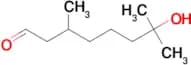
CAS:Formula:C13H15ClN2O2Purity:95.0%Molecular weight:266.737-Hydroxy-3,7-dimethyloctanal
CAS:Formula:C10H20O2Purity:95%Color and Shape:Liquid, No data available.Molecular weight:172.268





![4′-Chloro-3′-fluoro-[1,1′-biphenyl]-2-carbaldehyde](/_next/image/?url=https%3A%2Fstatic.cymitquimica.com%2Fproducts%2F10%2Fthumb-webp%2FF727564.webp&w=3840&q=75)

![4′-Chloro-3′-fluoro[1,1′-biphenyl]-4-carbaldehyde](/_next/image/?url=https%3A%2Fstatic.cymitquimica.com%2Fproducts%2F10%2Fthumb-webp%2FF629094.webp&w=3840&q=75)

![6-Fluoro-1h-pyrrolo[3,2-b]pyridine-3-carbaldehyde](/_next/image/?url=https%3A%2Fstatic.cymitquimica.com%2Fproducts%2F10%2Fthumb-webp%2FF744023.webp&w=3840&q=75)
![5-Fluoro-benzo[b]thiophene-3-carbaldehyde](/_next/image/?url=https%3A%2Fstatic.cymitquimica.com%2Fproducts%2F10%2Fthumb-webp%2FF317679.webp&w=3840&q=75)

![4-[(3-Fluorobenzyl)oxy]-3-methoxybenzaldehyde](/_next/image/?url=https%3A%2Fstatic.cymitquimica.com%2Fproducts%2F10%2Fthumb-webp%2FF042035.webp&w=3840&q=75)




![3-[(2-chloro-4-fluorobenzyl)oxy]-4-methoxybenzaldehyde](/_next/image/?url=https%3A%2Fstatic.cymitquimica.com%2Fproducts%2F10%2Fthumb-webp%2FF307598.webp&w=3840&q=75)

![6-Bromo-1H-pyrrolo[3,2-b]pyridine-3-carbaldehyde](/_next/image/?url=https%3A%2Fstatic.cymitquimica.com%2Fproducts%2F10%2Fthumb-webp%2FF211222.webp&w=3840&q=75)

![6-Methyl-benzo[1,3]dioxole-5-carbaldehyde](/_next/image/?url=https%3A%2Fstatic.cymitquimica.com%2Fproducts%2F10%2Fthumb-webp%2FF057777.webp&w=3840&q=75)
![4-[(tert-Butyldimethylsilyl)oxy]benzaldehyde](/_next/image/?url=https%3A%2Fstatic.cymitquimica.com%2Fproducts%2F10%2Fthumb-webp%2FF635426.webp&w=3840&q=75)
![2-chloro-4-(morpholin-4-yl)pyrrolo[2,1-f][1,2,4]triazine-6-carbaldehyde](/_next/image/?url=https%3A%2Fstatic.cymitquimica.com%2Fproducts%2F10%2Fthumb-webp%2FF516876.webp&w=3840&q=75)




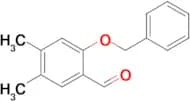
![3-[(2-chloro-4-fluorobenzyl)oxy]benzaldehyde](/_next/image/?url=https%3A%2Fstatic.cymitquimica.com%2Fproducts%2F10%2Fthumb-webp%2FF307585.webp&w=3840&q=75)


![tert-Butyl 2-formyl-6,8-dihydro-5H-imidazo[1,2-a]pyrazine-7-carboxylate](/_next/image/?url=https%3A%2Fstatic.cymitquimica.com%2Fproducts%2F10%2Fthumb-webp%2FF609090.webp&w=3840&q=75)
![2-[3-(1H-imidazol-1-yl)propoxy]benzaldehyde hydrochloride](/_next/image/?url=https%3A%2Fstatic.cymitquimica.com%2Fproducts%2F10%2Fthumb-webp%2FF361659.webp&w=3840&q=75)