Aldehydes
Aldehydes are organic compounds containing a carbonyl group (C=O) bonded to at least one hydrogen atom. These versatile compounds are fundamental in various chemical reactions, including oxidation, reduction, and nucleophilic addition. Aldehydes are essential building blocks in the synthesis of pharmaceuticals, fragrances, and polymers. At CymitQuimica, we provide a diverse selection of high-quality aldehydes to support your research and industrial applications.
Found 8551 products of "Aldehydes"
Sort by
Purity (%)
0
100
|
0
|
50
|
90
|
95
|
100
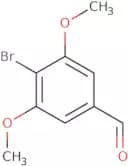
4-Bromo-3,5-dimethoxybenzaldehyde
CAS:<p>4-Bromo-3,5-dimethoxybenzaldehyde is a compound that inhibits the replication of cells. It has been shown to induce apoptosis and inhibit tumor growth, including skin tumors and malignant melanoma cells. This chemical is synthesized by reacting an acrylonitrile with sodium hydroxide in a biphenyl amide. 4-Bromo-3,5-dimethoxybenzaldehyde has been used to inhibit bacterial growth, but it is not active against Mycobacterium tuberculosis or Mycobacterium avium complex.</p>Formula:C9H9BrO3Purity:Min. 95%Color and Shape:PowderMolecular weight:245.07 g/mol2,4-Diaminobenzaldehyde
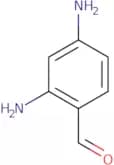
CAS:<p>2,4-Diaminobenzaldehyde is a chemical compound that is used as an intermediate in the synthesis of drugs and other organic chemicals. It can be oxidized with periodate to produce 2,4-diaminophenol. This reaction system can then be desilyated to produce 2,4-diaminoanisole. Reaction time has a significant effect on the yield of this reaction system. The optimal dosage of periodate for this reaction system is 0.5 mM for 2,4-diaminophenol and 0.1 mM for 2,4-diaminoanisole. This reaction system can also be carried out using lavendamycin or tosyl chloride instead of periodate. The conversion efficiency of this reaction system is dependent on the presence or absence of methyl esters in the starting material and product.<br>END></p>Formula:C7H8N2OPurity:Min. 95%Color and Shape:White Yellow PowderMolecular weight:136.15 g/mol5-Bromoindole-3-carboxaldehyde
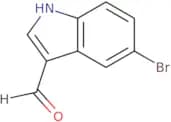
CAS:<p>5-Bromoindole-3-carboxaldehyde is a water molecule that has been crystallized in the form of an amide. It is a chemical substance with asymmetric synthesis and significant antifungal activity. 5-Bromoindole-3-carboxaldehyde is active against some strains of the fungus Candida albicans and has been shown to inhibit the growth of kidney cells. This molecule also binds to the neurokinin 1 receptor and is used as a probe for fluorescence studies. The efficient method for synthesizing 5-Bromoindole-3-carboxaldehyde includes using silico analysis to confirm the structure on a computer, then performing an asymmetric synthesis with an acid catalyst to produce this compound.</p>Formula:C9H6BrNOPurity:Min. 98 Area-%Color and Shape:PowderMolecular weight:224.05 g/mol3-Fluoropyridine-4-carboxaldehyde
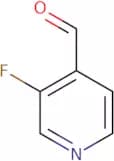
CAS:<p>3-Fluoropyridine-4-carboxaldehyde is a reactivator that can be used in the treatment of bladder cancer. It binds to pyridinium and oxime derivatives, which are present in proteins, to form a reactive intermediate. This intermediate reacts with aldehyde groups on hemoglobin, restoring the oxygen binding capacity of hemoglobin to levels seen in healthy individuals. 3-Fluoropyridine-4-carboxaldehyde has been shown to have anticancer activity against bladder cancer cells and also has potential use as an additive for the treatment of red blood cells.</p>Formula:C6H4FNOPurity:Min. 95%Color and Shape:Colorless Yellow Clear LiquidMolecular weight:125.1 g/mol3,4-Dihydroxybenzaldehyde
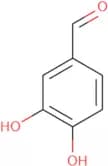
CAS:<p>3,4-Dihydroxybenzaldehyde is an active compound that is a protocatechuic aldehyde. It has been shown to inhibit protein oxidation and kidney injury. 3,4-Dihydroxybenzaldehyde also inhibits the production of bcl-2 protein and growth factor-β in rat urine. This compound has been used in Chinese medicinal preparations as well as in control methods for oxidizing agents.</p>Formula:C7H6O3Color and Shape:Brown White PowderMolecular weight:138.12 g/mol4-Hydroxy-3-nitrobenzaldehyde
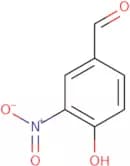
CAS:<p>4-Hydroxy-3-nitrobenzaldehyde (4NBA) is a chemical compound that belongs to the class of aromatic compounds. It is an intermediate in the synthesis of various pharmaceuticals, including benzocaine and nitroglycerin, and has been researched for its potential use in cancer diagnosis. 4NBA has shown optical properties that allow it to be used as a model system for studying the interactions between water and benzyl groups. It also possesses anti-inflammatory properties due to its ability to inhibit the production of inflammatory cytokines such as IL-1β, IL-6, and TNFα.</p>Formula:C7H5NO4Purity:Min. 95%Color and Shape:PowderMolecular weight:167.12 g/mol1-Naphthaldehyde
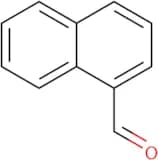
CAS:<p>1-Naphthaldehyde is a coordination compound that contains 1 naphthyl group and an oxygen atom. It can be used as an oxidation catalyst, intramolecular hydrogen, or a reaction solution. The antimicrobial activity of 1-naphthaldehyde has been shown in the presence of sodium carbonate or potassium phosphate buffer. 1-Naphthaldehyde has been shown to possess structural properties similar to those of other metal chelates, such as zinc pyrithione. The protonated form of 1-naphthaldehyde has been identified by means of analytical methods including gas chromatography and mass spectrometry.</p>Formula:C11H8OPurity:Min. 95%Color and Shape:Yellow To Brown LiquidMolecular weight:156.18 g/mol2-Chloro-6-fluorobenzaldehyde oxime
CAS:<p>2-Chloro-6-fluorobenzaldehyde oxime is the chemical compound with the formula ClCH=C(O)N(OH)Cl. It is a white solid that is soluble in water and ethanol. 2-Chloro-6-fluorobenzaldehyde oxime is used as a versatile building block in organic synthesis, for example as a reagent for the preparation of amides, esters, and nitriles. It is also useful as a reagent for the conversion of ketones to nitriles.</p>Formula:C7H5ClFNOPurity:Min. 95%Molecular weight:173.57 g/mol4-Fluoro-3-hydroxybenzaldehyde
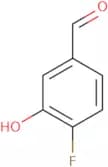
CAS:<p>4-Fluoro-3-hydroxybenzaldehyde is a fluorescent chemical that belongs to the group of alcohols. It has been shown to have the following properties: an excitation wavelength of 285 nm, a fluorescence wavelength of 350 nm, and a quantum yield of 0.004%. The solvent effect on 4-fluoro-3-hydroxybenzaldehyde's fluorescence intensity is approximately linear with concentration, but the fluorescence profile is dependent on the polarity of the solvent. The phenyl group of 4-fluoro-3-hydroxybenzaldehyde causes it to be more polarizable than other molecules in its class. The kinetic rate constants for 4-fluoro-3-hydoxybenzaldehyde were found by measuring the decay rates of its fluorescence emission as a function of time.</p>Formula:C7H5FO2Purity:Min. 95%Color and Shape:PowderMolecular weight:140.11 g/mol2-Hydroxy-4-methoxybenzaldehyde
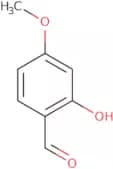
CAS:<p>2-Hydroxy-4-methoxybenzaldehyde is an antifungal agent that has been shown to have a broad spectrum of activity against filamentous fungi. It is able to inhibit the growth of fungi by inhibiting the enzyme shikimate dehydrogenase, which is involved in the synthesis of aromatic amino acids and other essential metabolites. 2-Hydroxy-4-methoxybenzaldehyde also inhibits xylose reductase and alpha-galactosidase, enzymes that are involved in cell wall biosynthesis. This compound is effective against Candida albicans, Aspergillus niger, and Trichophyton mentagrophytes. 2-Hydroxy-4-methoxybenzaldehyde has also been shown to have bacteriostatic effects on Escherichia coli.</p>Formula:C8H8O3Purity:Min. 95%Color and Shape:Off-White PowderMolecular weight:152.15 g/mol3,4-Dimethylbenzaldehyde oxime
CAS:<p>3,4-Dimethylbenzaldehyde oxime is a reactive oxygen species (ROS) that is produced by the oxidation of 3,4-dimethylbenzaldehyde. It has been shown to be an efficient oxidant in aerobic oxidation reactions. The active species generated by this reaction is the aldehyde or ketone form of 3,4-dimethylbenzaldehyde oxime, which can then react with another substrate to generate an oxidized product. This reaction is catalyzed by metal ions and is activated by molecular oxygen.</p>Formula:C9H11NOPurity:Min. 95%Color and Shape:White Off-White PowderMolecular weight:149.19 g/mol4-Ethoxy-3-hydroxybenzaldehyde
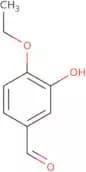
CAS:<p>4-Ethoxy-3-hydroxybenzaldehyde (4EHB) is a thioacetal that has been shown to be an effective precursor for the synthesis of many other molecules, such as combretastatin a-4. It is prepared by reaction of ethylmagnesium bromide and acetone. 4EHB has been shown to have antifungal properties in vitro, and can be used in the treatment of cancer cells. This compound is volatile and can be easily detected with headspace techniques. The functional group of this molecule is an alcohol group, which is found on the ring structure. Spectroscopic analysis shows that it has a carbonyl group with an OH group attached to it.</p>Formula:C9H10O3Purity:Min. 95%Color and Shape:Colorless PowderMolecular weight:166.17 g/mol2-Furaldehyde dimethylacetal
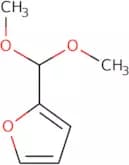
CAS:<p>2-Furaldehyde dimethylacetal is a monomer with a hydroxyl group and an aldehyde group in the molecule. It is produced by the reaction of formaldehyde with methanol and sodium hydroxide, which react to create formaldehyde hemiacetal. The formaldehyde hemiacetal then reacts with methanol to produce 2-furaldehyde dimethylacetal. This compound has been shown to polymerize when heated or irradiated with ultraviolet light, forming polymers. Gel chromatography can be used to separate this compound from other compounds in a mixture. The molecular weight of 2-furaldehyde dimethylacetal is 186g/mol.</p>Formula:C7H10O3Purity:Min. 95 Area-%Color and Shape:Clear LiquidMolecular weight:142.15 g/mol2-Fluoro-6-(trifluoromethyl)benzaldehyde
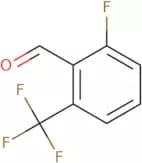
CAS:<p>2-Fluoro-6-(trifluoromethyl)benzaldehyde is a chemical compound that is used in the synthesis of other organic compounds. It can be synthesized by reacting benzaldehyde with sodium trifluoromethanesulfinate in liquid ammonia solution at a temperature of -78°C. The reaction produces 2-fluoro-6-(trifluoromethyl)benzaldehyde, which is isolated by evaporating the reaction liquid and recrystallizing the product from methanol. The yield of this reaction is high and there are no major byproducts.</p>Formula:C8H4F4OPurity:Min. 95%Color and Shape:Clear LiquidMolecular weight:192.11 g/molBenzaldehyde dimethyl acetal
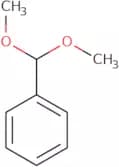
CAS:<p>Vegetable, nutty and floral flavour/fragrance</p>Formula:C9H12O2Purity:Min. 95%Color and Shape:Clear LiquidMolecular weight:152.19 g/mol2,4,5-Trimethoxybenzaldehyde
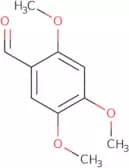
CAS:<p>2,4,5-Trimethoxybenzaldehyde is a natural compound that belongs to the group of sephadex g-100. It is used as an absorbent and has been shown to react with human immunoglobulin in the presence of tiglic acid. The reaction mechanism for this chemical is not well understood but it is believed that intermolecular hydrogen bonding may be occurring. 2,4,5-Trimethoxybenzaldehyde has been shown to have anti-inflammatory effects when tested on rats in a laboratory setting. This chemical has also been used as an analytical reagent for biological samples and biological studies as well as a preparative hplc column. Optical sensors have also been used to detect this chemical in various types of optical sensing experiments. X-ray crystal structures have also been obtained for this compound using synchrotron radiation.</p>Formula:C10H12O4Purity:Min. 98 Area-%Color and Shape:PowderMolecular weight:196.2 g/mol2-Methoxybenzaldehyde oxime
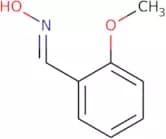
CAS:<p>2-Methoxybenzaldehyde oxime is a synthetic amine that is used in the synthesis of peroxides. The reaction rate and nature depend on the type of peroxide being synthesized, but typically, it is used with acetonitrile as a solvent and an acid catalyst. 2-Methoxybenzaldehyde oxime reacts with peracid to create an aldoxime and nitrite. This product can also be made by reacting benzaldehyde with nitrous acid, which will produce dioxane as an intermediate. The reaction time for this process takes about four hours at room temperature.</p>Formula:C8H9NO2Purity:Min. 95%Color and Shape:PowderMolecular weight:151.16 g/mol4-[(2,3,4Trimethoxyphenyl)methyl]piperazine-1-carbaldehyde
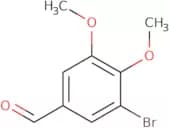
CAS:<p>Please enquire for more information about 4-[(2,3,4Trimethoxyphenyl)methyl]piperazine-1-carbaldehyde including the price, delivery time and more detailed product information at the technical inquiry form on this page</p>Formula:C15H22N2O4Purity:Min. 95%Color and Shape:PowderMolecular weight:294.35 g/mol3-Bromo-4,5-dimethoxybenzaldehyde
CAS:<p>3-Bromo-4,5-dimethoxybenzaldehyde is a molecule that is acidic in nature. It inhibits phosphatases and has shown cytotoxic activity against cancer cells in vitro. This compound also has antibacterial properties and can be used to treat bacterial infections. 3-Bromo-4,5-dimethoxybenzaldehyde is also a synthetic compound that can be found in the bisbenzylisoquinoline alkaloids family. It has been shown to have anti-tumor activity as well as an interaction with aldehydes and chalcones, which may lead to anti-inflammatory effects.</p>Formula:C9H9BrO3Purity:Min. 95%Color and Shape:PowderMolecular weight:245.07 g/molIsoprenaline HCl
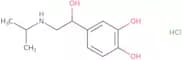
CAS:<p>Isoprenaline is a hormone that belongs to the category of catecholamines. It is a naturally occurring compound and has been used in medicine as an injectable medication for over 50 years. Isoprenaline is used primarily to treat bronchial asthma, but it also may be used to treat cardiac arrest and heart failure. The drug works by binding to the beta-adrenergic receptors in the lungs, heart, and fat cells. This binding stimulates the production of cyclic adenosine monophosphate (cAMP) in these tissues, which relaxes smooth muscle cells and increases their rate of metabolism. As a result, airways open up due to decreased constriction and increased bronchial secretions are cleared away. The drug also has been shown to have beneficial effects on adipose tissue and structural heart disease.</p>Formula:C11H17NO3·HClPurity:Min. 95%Color and Shape:White PowderMolecular weight:247.72 g/mol



![4-[(2,3,4Trimethoxyphenyl)methyl]piperazine-1-carbaldehyde](/_next/image/?url=https%3A%2Fstatic.cymitquimica.com%2Fproducts%2F3D%2Fthumb-webp%2FFT46258.webp&w=3840&q=75)