Lactones
Lactones are a class of esters characterized by a cyclic structure formed through the intramolecular esterification of hydroxy acids. These compounds are known for their distinct ring structures, which can range from three to seven or more members. Lactones are widely utilized in the flavor and fragrance industry due to their pleasant aromas, as well as in pharmaceuticals and agrochemicals for their diverse biological activities. At CymitQuimica, we offer a comprehensive selection of high-quality lactones to support your research and industrial applications, ensuring reliable and effective performance in your projects.
Found 490 products of "Lactones"
Sort by
Purity (%)
0
100
|
0
|
50
|
90
|
95
|
100
Coumarin
CAS:LactoneFormula:C9H6O2Purity:≥ 98.0 % (HPLC)Color and Shape:PowderMolecular weight:146.157-methoxycoumarin
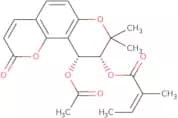
CAS:LactoneFormula:C10H8O3Purity:≥ 98.0 % (HPLC)Color and Shape:PowderMolecular weight:176.17Decursin
CAS:LactoneFormula:C19H20O5Purity:≥ 90.0 % (HPLC)Color and Shape:PowderMolecular weight:328.36Coumestrol
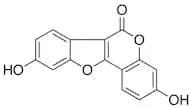
CAS:Controlled Product<p>Applications This compound has estrogenic activity. It exhibits bright blue fluorescence in neutral or acid solution, and greenish-yellow fluorescence in strong alkali solution.<br>References Wolfbeis, O.S. & K. Schaffner: Photochem. Photobiol., 32, 143(1980), Bickoff et al.: J.Am. Chem Soc. 80, 3969 (1958)<br></p>Formula:C15H8O5Color and Shape:NeatMolecular weight:268.22Iso-oxypeucedanin
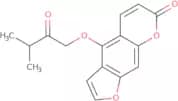
CAS:<p>Iso-oxypeucedanin is a naturally occurring furanocoumarin compound, which is isolated from various plant species, particularly those belonging to the Apiaceae family. It exhibits a range of biological activities, primarily attributable to its structural properties that allow it to interact with various molecular targets.</p>Purity:Min. 95%Fraxin
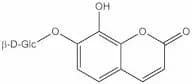
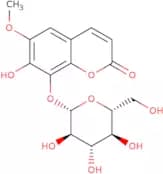
CAS:<p>Fraxin is a naturally occurring anticoagulant, which is derived from the bark of certain species of the Fraxinus tree. It functions by inhibiting thrombin and other key enzymes in the coagulation cascade, thus preventing the formation of blood clots. This mode of action makes it particularly valuable in research settings focused on cardiovascular diseases, as well as in the development of therapeutic agents targeting coagulopathies.</p>Formula:C16H18O10Purity:Min. 95%Color and Shape:PowderMolecular weight:370.31 g/mol6-Hydroxy-7-methoxy-4-phenylcoumarin
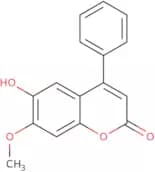
CAS:<p>6-Hydroxy-7-methoxy-4-phenylcoumarin is a synthetic chemical compound classified as a coumarin derivative. Derived from natural coumarin structures, this compound is often synthesized through organic chemistry techniques involving the hydroxylation and methoxylation of coumarin backbones, with the addition of a phenyl group.</p>Formula:C16H12O4Purity:Min. 95%Color and Shape:PowderMolecular weight:268.26 g/molScoparone
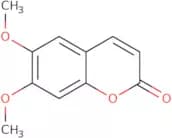
CAS:<p>Scoparone is a bioactive natural compound, which is primarily derived from plants in the Rutaceae family, such as Artemisia species. It is a coumarin derivative, known for its therapeutic properties due to its diverse biological activities. The mode of action of scoparone is multifaceted, involving the modulation of various enzymes and signaling pathways. It acts as an inhibitor of cytochrome P450 enzymes and influences pathways involving nitric oxide and reactive oxygen species, contributing to its anti-inflammatory and hepatoprotective effects.</p>Formula:C11H10O4Purity:Min. 95%Color and Shape:PowderMolecular weight:206.19 g/mol7,8-Dihydroxycoumarin
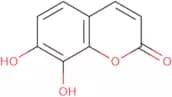
CAS:<p>7,8-Dihydroxycoumarin is a naturally occurring coumarin, which is derived from plants and certain fungi. It possesses a distinct chemical structure characterized by a benzopyrone core with hydroxyl groups at the 7th and 8th positions, contributing to its distinct biochemical properties. The mode of action of 7,8-Dihydroxycoumarin is largely attributed to its ability to act as a potent antioxidant, scavenging free radicals and chelating metal ions, thus mitigating oxidative stress at the cellular level.</p>Formula:C9H6O4Purity:Min. 95%Color and Shape:PowderMolecular weight:178.14 g/molDihydro coumarin
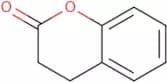
CAS:<p>Dihydro coumarin is a cyclic organic compound, which is a derivative of coumarin primarily obtained through synthetic processes. It possesses the characteristic odor reminiscent of freshly mown hay, contributing to its widespread application in various industries. The primary mode of action of dihydro coumarin involves its role as a fragrance and flavoring agent, capitalizing on its aromatic profile to enhance products’ sensory attributes.</p>Formula:C9H8O2Purity:Min. 95%Molecular weight:148.16 g/molFraxetin
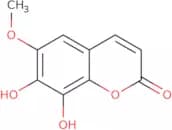
CAS:<p>Fraxetin is a coumarin compound, which is a type of secondary metabolite commonly found in plants. It is principally derived from sources such as Fraxinus rhynchophylla and other related species. Fraxetin functions through various biological mechanisms, including antioxidant, anti-inflammatory, and neuroprotective activities. It accomplishes this by scavenging free radicals, modulating inflammatory pathways, and inhibiting specific enzymes associated with oxidative stress.</p>Formula:C10H8O5Purity:Min. 95%Color and Shape:PowderMolecular weight:208.17 g/mol7-Methoxycoumarin
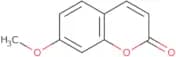
CAS:<p>7-Methoxycoumarin is a fluorescent compound, which is a derivative of coumarin. It is synthesized through chemical modification processes of natural coumarin, typically sourced from plant extracts of the Apiaceae and Rutaceae families.</p>Formula:C10H8O3Purity:Min. 95%Color and Shape:PowderMolecular weight:176.17 g/molIsopteryxin
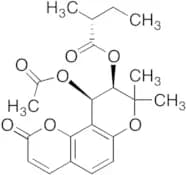
CAS:<p>Isopteryxin is a natural compound classified as a furanocoumarin, which is primarily derived from plants in the Apiaceae family, such as various species of Angelica. It is synthetically produced or extracted from these botanical sources using advanced chromatographic techniques. The mode of action of Isopteryxin involves interactions with cellular and molecular targets through its capability to intercalate with DNA and modulate enzyme activity. This confers notable biological activities, including antimicrobial, antifungal, and potentially anticancer effects. It may inhibit certain cell signaling pathways, thus influencing cellular processes such as apoptosis and proliferation.</p>Formula:C21H22O7Purity:Min. 95%Color and Shape:PowderMolecular weight:386.4 g/molEsculetin
CAS:<p>Esculetin is a naturally occurring coumarin compound, which is predominantly derived from various plant sources, such as the bark and leaves of certain trees and shrubs. As a member of the coumarin family, it is characterized by its benzopyrone structure and is often isolated from botanicals through organic solvent extraction methods. <br><br>Its mode of action primarily involves its ability to scavenge free radicals and chelate metal ions, contributing to its notable antioxidant capacity. Furthermore, Esculetin exerts anti-inflammatory effects by inhibiting the activity of enzymes such as cyclooxygenase and lipoxygenase, which are integral to the inflammatory pathway.<br><br>Common applications of Esculetin are found in scientific research where it is utilized for its potential therapeutic properties. Studies have investigated its role in modulating oxidative stress, its protective effects in neurodegenerative disorders, and its capability to inhibit the proliferation of certain cancer cell lines. Additionally, it serves as a useful biochemical tool in elucidating the pathways of inflammation and oxidative stress within cellular models. Scientists continue to explore its potential as a lead compound in drug discovery and development.</p>Formula:C9H6O4Purity:Min. 98.0 Area-%Molecular weight:178.15 g/molGeiparvarin
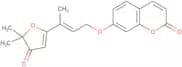
CAS:<p>Geiparvarin is a cytotoxic compound, which is a plant-derived chemical with notable bioactivity. It is sourced from the roots of the Daflon plant, known for various natural compounds with potential therapeutic effects. Geiparvarin acts by interfering with cellular processes, leading to apoptosis in malignant cells. This mode of action is particularly significant in the study and development of anticancer therapies.</p>Purity:Min. 95%Bergamottin
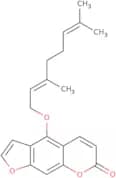
CAS:<p>Bergamottin is a furanocoumarin compound, which is primarily found in grapefruit juice and other citrus fruits. It is derived from natural sources, specifically within the fruit and peel of grapefruits. The mode of action of Bergamottin involves the inhibition of the cytochrome P450 enzymes, particularly CYP3A4, which play a significant role in the metabolism of various drugs. This inhibitory effect can alter the pharmacokinetics of certain medications by increasing their bioavailability.</p>Formula:C21H22O4Purity:Min. 98 Area-%Color and Shape:White PowderMolecular weight:338.4 g/molSkimmin
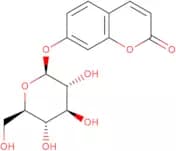
CAS:<p>Skimmin is a bioactive compound, classified as a coumarin, which is derived from various plant sources, particularly the bark of certain tree species. It functions through the modulation of enzyme activity, including antioxidant and anti-inflammatory pathways, by interacting with specific cellular receptors and enzymes.</p>Formula:C15H16O8Purity:Min. 95%Color and Shape:PowderMolecular weight:324.28 g/mol