Lactones
Found 463 products for "Lactones".
Esculetin dibenzyl ether
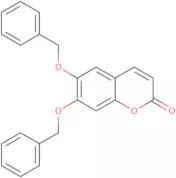
CAS:Esculetin dibenzyl ether is a chemical compound, which is a derivative of esculetin, a natural coumarin obtained chiefly from plant sources such as the bark of horse chestnut and other similar species. The source of esculetin dibenzyl ether is typically synthesized from natural precursors through chemical modifications, allowing for the exploration of its structural analogs.Formula:C23H18O4Purity:Min. 95%Molecular weight:358.39 g/molEpoxybergamottin
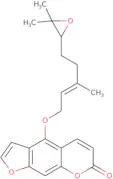
CAS:Epoxybergamottin is a furanocoumarin derivative, which is a natural bioactive compound. It is primarily sourced from citrus fruits, particularly grapefruit. The primary mode of action of epoxybergamottin is the inhibition of cytochrome P450 enzymes, specifically CYP3A4. This enzyme is a major player in the metabolism of many pharmaceuticals, and its inhibition can lead to increased bioavailability and prolonged effects of drugs metabolized by this pathway.
Formula:C21H22O5Purity:Min. 95 Area-%Color and Shape:PowderMolecular weight:354.40 g/molRef: 3D-FE137821
Discontinued product7-Ethoxycoumarin
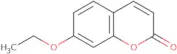
CAS:7-Ethoxycoumarin is a fluorescent substrate used in biochemical research, which is derived synthetically. It undergoes biotransformation primarily via oxidative dealkylation, catalyzed by cytochrome P450 enzymes, resulting in the formation of 7-hydroxycoumarin. By monitoring the fluorescent 7-hydroxycoumarin, researchers can assess enzymatic activity and study metabolic pathways.Formula:C11H10O3Purity:Min. 95%Color and Shape:PowderMolecular weight:190.2 g/molRef: 3D-FE22897
Discontinued productCalycanthoside
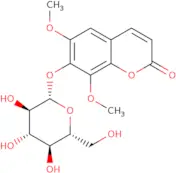
CAS:Calycanthoside is a phenolic glycoside, which is a type of natural compound characterized by a glycosidic bond linking a phenolic moiety. It is derived from the plant Calycanthus chinensis, known for its rich array of bioactive compounds. The extraction and isolation processes of Calycanthoside involve sophisticated chromatographic techniques to ensure its purity and activity.Formula:C17H20O10Purity:Min. 95%Color and Shape:PowderMolecular weight:384.33 g/molRef: 3D-AAA48391
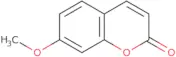
Discontinued productRef: 3D-M-3330
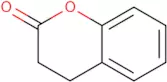
Discontinued productDihydro coumarin
CAS:Dihydro coumarin is a cyclic organic compound, which is a derivative of coumarin primarily obtained through synthetic processes. It possesses the characteristic odor reminiscent of freshly mown hay, contributing to its widespread application in various industries. The primary mode of action of dihydro coumarin involves its role as a fragrance and flavoring agent, capitalizing on its aromatic profile to enhance products’ sensory attributes.Formula:C9H8O2Purity:Min. 95%Molecular weight:148.16 g/molScopolin
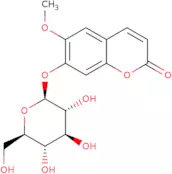
CAS:Scopolin is a coumarin glucoside, which is derived from the plant secondary metabolism. It originates predominantly from species within the Solanaceae family, including tobacco and potato plants. Its biosynthesis involves the conversion of scopoline, a precursor molecule, through glucosylation. This process is catalyzed by glucosyltransferases, which facilitate the attachment of a glucose moiety.
Formula:C16H18O9Purity:Min. 98 Area-%Color and Shape:White PowderMolecular weight:354.31 g/molRef: 3D-FS65518
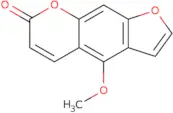
Discontinued productBergapten
CAS:Bergapten is a naturally occurring furanocoumarin, which is derived from the essential oils of citrus fruits, such as bergamot. It is recognized for its photosensitizing properties due to its ability to interact with DNA upon exposure to ultraviolet (UV) light. The mode of action involves the formation of monoadducts with pyrimidine bases in DNA, which can lead to cross-linking and ultimately disrupt DNA replication and transcription.Formula:C12H8O4Molecular weight:216.19 g/molGeiparvarin
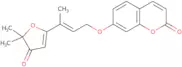
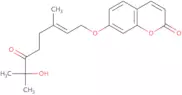
CAS:Geiparvarin is a cytotoxic compound, which is a plant-derived chemical with notable bioactivity. It is sourced from the roots of the Daflon plant, known for various natural compounds with potential therapeutic effects. Geiparvarin acts by interfering with cellular processes, leading to apoptosis in malignant cells. This mode of action is particularly significant in the study and development of anticancer therapies.Purity:Min. 95%8-Hydroxy-7-methoxycoumarin
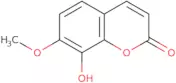
CAS:8-Hydroxy-7-methoxycoumarin is a fluorescent compound, which is a derivative of the coumarin family. This compound is typically sourced through synthetic organic chemistry processes involving the modification of natural coumarin compounds. Its mode of action involves the ability to absorb ultraviolet light and re-emit it as visible light, a characteristic feature of fluorescent molecules. This property makes it particularly useful in scientific research.
Formula:C10H8O4Purity:Min. 95%Color and Shape:PowderMolecular weight:192.17 g/molRef: 3D-FH66318
Discontinued productNordalbergin
CAS:Please enquire for more information about Nordalbergin including the price, delivery time and more detailed product information at the technical inquiry form on this pageFormula:C15H10O4Molecular weight:254.24 g/molOxypeucedanin hydrate acetate
Oxypeucedanin hydrate acetate is a furanocoumarin, primarily classified as a phytochemical. It is derived from various plant sources, particularly from species in the Apiaceae family, such as Peucedanum and Angelica. These compounds are typically isolated through advanced extraction and chromatographic techniques.Purity:Min. 95%6'-Dehydromarmin
CAS:6'-Dehydromarmin is a natural product, classified as a coumarin derivative, which is primarily sourced from certain plant species, notably within the Rutaceae family. This compound arises through the biochemical transformation of secondary metabolites in plants, typically involving oxidation processes that occur under specific enzymatic conditions.Formula:C19H22O5Purity:Min. 95%Molecular weight:330.37 g/molSkimmin
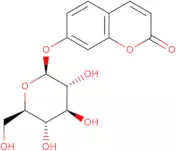
CAS:Skimmin is a bioactive compound, classified as a coumarin, which is derived from various plant sources, particularly the bark of certain tree species. It functions through the modulation of enzyme activity, including antioxidant and anti-inflammatory pathways, by interacting with specific cellular receptors and enzymes.
Formula:C15H16O8Purity:Min. 95%Color and Shape:PowderMolecular weight:324.28 g/molRef: 3D-FS66284
Discontinued productAlloisoimperatorin
CAS:Alloisoimperatorin is a naturally occurring furanocoumarin compound, which is extracted from certain plant species, primarily those belonging to the Apiaceae family. As a type of coumarin derivative, it is synthesized through intricate plant metabolic pathways involving the precursors umbelliferone and isopentenyl pyrophosphate, among others.Formula:C16H14O4Purity:Min. 95%Molecular weight:270.28 g/molEsculin sesquihydrate
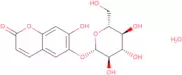
CAS:Fluorescent dye used in diagnostic culture mediaFormula:C15H16O9•(H2O)1Purity:(Uv) Min. 97.5%Color and Shape:White Off-White PowderMolecular weight:367.31 g/molSuberosin
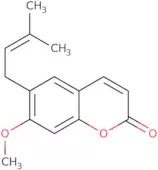
CAS:Suberosin is a naturally occurring sesquiterpene lactone, which is isolated from members of the Rutaceae family, such as the plant Feronia limonia. The compound exhibits diverse biological activities, primarily attributed to its complex structure that facilitates interaction with various biological targets. Suberosin's mode of action involves disrupting microbial cell membranes and interfering with critical biochemical pathways, effectively inhibiting microbial growth and propagation.
Formula:C15H16O3Purity:Min. 95%Molecular weight:244.29 g/molVaginidiol
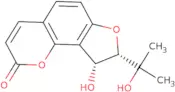
CAS:Vaginidiol is a coumarin derivative that inhibits the biosynthesis of estrogen, which is essential for normal development of female reproductive tissues. The structure of vaginidiol was elucidated by NMR and mass spectroscopy, and it was found to be a bergapten-coumarin derivative. Vaginidiol has been shown to have an inhibitory effect on the growth of plants. This compound can be synthesized in two steps from etoac extract by an asymmetric synthesis using potassium hydroxide as the catalyst.
Formula:C14H14O5Purity:Min. 95%Molecular weight:262.26 g/molFraxetin
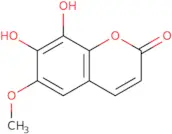
CAS:Fraxetin is a chemical compound known as a coumarin derivative, which is a natural product primarily sourced from various plant species. As a member of the coumarin family, fraxetin is often extracted from the roots, bark, and leaves of plant sources like Fraxinus species and other related flora. The compound operates through an array of biochemical pathways, prominently exhibiting antioxidant and anti-inflammatory properties. It acts by scavenging free radicals and modulating oxidative stress-related pathways, while also influencing the expression of various inflammatory cytokines.
Formula:C10H8O5Molecular weight:208.17 g/molRef: 3D-Q-100662
Discontinued product7-Ethoxy-4-methylcoumarin
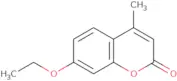
CAS:7-Ethoxy-4-methylcoumarin is a fluorescent probe, which is a synthetic compound commonly sourced from organic chemical synthesis. With its distinct chromophore, this compound becomes highly fluorescent upon enzymatic cleavage, offering a reliable mechanism for the detection of specific enzymatic activities. The mode of action involves the enzymatic cleavage of the ethoxy group, leading to the release of 4-methylumbelliferone, a fluorescent product. This conversion provides a measurable signal that correlates with enzyme activity, making it an invaluable tool in studying enzyme kinetics.
Formula:C12H12O3Purity:Min. 95%Color and Shape:PowderMolecular weight:204.22 g/molRef: 3D-FE35607
Discontinued product