Anilines
Found 104 products of "Anilines"
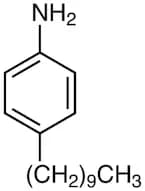
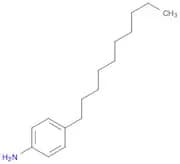
4-Decylaniline
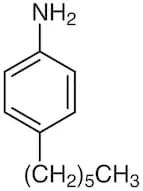
CAS:Formula:C16H27NPurity:>98.0%(GC)(T)Color and Shape:Colorless to Brown clear liquidMolecular weight:233.404-Hexylaniline
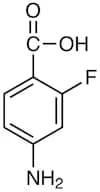
CAS:Formula:C12H19NPurity:>98.0%(GC)(T)Color and Shape:Colorless to Yellow clear liquidMolecular weight:177.294-Amino-2-fluorobenzoic Acid
CAS:Formula:C7H6FNO2Purity:>98.0%(GC)(T)Color and Shape:White to Orange to Green powder to crystalMolecular weight:155.134-Bromoaniline
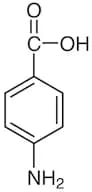
CAS:Formula:C6H6BrNPurity:>99.0%(GC)(T)Color and Shape:White to Almost white powder to crystalMolecular weight:172.034-Aminobenzoic Acid
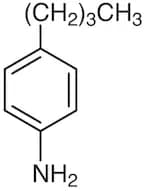
CAS:Formula:C7H7NO2Purity:>99.0%(T)(HPLC)Color and Shape:White to Light yellow to Light orange powder to crystalMolecular weight:137.144-Butylaniline
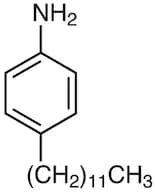
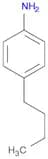
CAS:Formula:C10H15NPurity:>97.0%(GC)(T)Color and Shape:Colorless to Red to Green clear liquidMolecular weight:149.244-Dodecylaniline
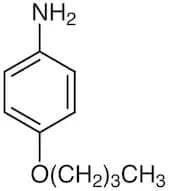
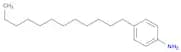
CAS:Formula:C18H31NPurity:>98.0%(GC)(T)Color and Shape:White to Light yellow to Light orange powder to crystalMolecular weight:261.454-Butoxyaniline
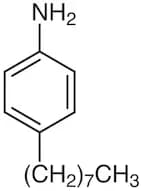
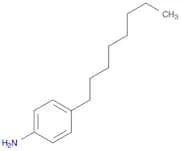
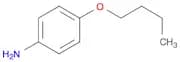
CAS:Formula:C10H15NOPurity:>98.0%(GC)(T)Color and Shape:Colorless to Brown clear liquidMolecular weight:165.244-n-Octylaniline
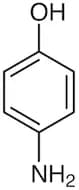
CAS:Formula:C14H23NPurity:>97.0%(GC)(T)Color and Shape:White or Colorles to Yellow to Orange powder to lump to clear liquidMolecular weight:205.354-Aminophenol
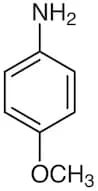
CAS:Formula:C6H7NOPurity:>98.0%(GC)(T)Color and Shape:White to Light yellow to Light red powder to crystalMolecular weight:109.13p-Anisidine
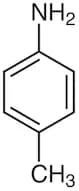
CAS:Formula:C7H9NOPurity:>98.0%(GC)(T)Color and Shape:White to Amber powder to crystalMolecular weight:123.16p-Toluidine
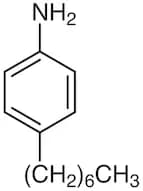
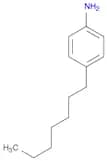
CAS:Formula:C7H9NPurity:>99.0%(GC)(T)Color and Shape:White to Light yellow powder to crystalMolecular weight:107.164-Heptylaniline
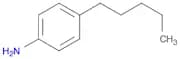
CAS:Formula:C13H21NPurity:>98.0%(GC)(T)Color and Shape:Colorless to Yellow to Orange clear liquidMolecular weight:191.324-Amylaniline
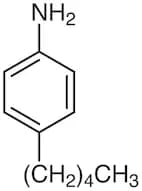
CAS:Formula:C11H17NPurity:>97.0%(GC)(T)Color and Shape:Colorless to Brown clear liquidMolecular weight:163.26p-Phenetidine
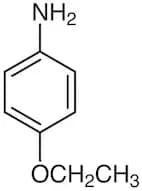
CAS:Formula:C8H11NOPurity:>98.0%(GC)Color and Shape:Colorless to Light orange to Yellow clear liquidMolecular weight:137.18Ref: IN-DA003KX7
5g20.00€10g20.00€25g24.00€50g31.00€5kgTo inquire100g50.00€10kgTo inquire250g76.00€500g118.00€3-Amino-4-(trifluoromethoxy)benzoic acid
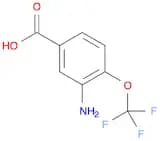
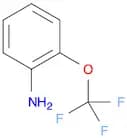
CAS:Formula:C8H6F3NO3Purity:97%Color and Shape:SolidMolecular weight:221.13332-(Trifluoromethoxy)aniline
CAS:Formula:C7H6F3NOPurity:97%Color and Shape:LiquidMolecular weight:177.12384-Amino-2-fluorobenzoic acid
CAS:Formula:C7H6FNO2Purity:98%Color and Shape:SolidMolecular weight:155.1264Benzoic acid, 4-amino-3-(trifluoromethoxy)-
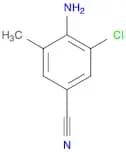
CAS:Formula:C8H6F3NO3Purity:97%Color and Shape:SolidMolecular weight:221.1333Benzonitrile, 4-amino-3-chloro-5-methyl-
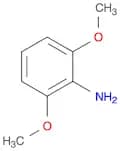
CAS:Formula:C8H7ClN2Purity:90%Color and Shape:SolidMolecular weight:166.6076Benzenamine, 2,5-dimethoxy-
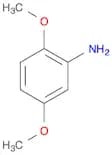
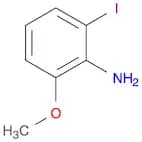
CAS:Formula:C8H11NO2Purity:98%Color and Shape:SolidMolecular weight:153.1784BENZENAMINE, 2-IODO-6-METHOXY-
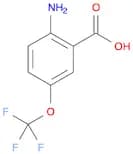
CAS:Formula:C7H8INOPurity:95%Color and Shape:SolidMolecular weight:249.04902-Amino-5-(trifluoromethoxy)benzoic acid
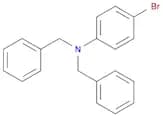
CAS:Formula:C8H6F3NO3Purity:95%Color and Shape:SolidMolecular weight:221.1333N,N-Dibenzyl-4-bromoaniline
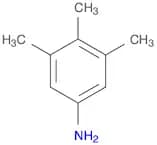
CAS:Formula:C20H18BrNPurity:98%Color and Shape:SolidMolecular weight:352.2676Benzenamine, 3,4,5-trimethyl-
CAS:Formula:C9H13NPurity:98%Color and Shape:SolidMolecular weight:135.20622-Amino-3-(trifluoromethoxy)benzoic acid
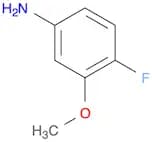
CAS:Formula:C8H6F3NO3Purity:97%Color and Shape:SolidMolecular weight:221.1333Benzenamine, 4-fluoro-3-methoxy-
CAS:Formula:C7H8FNOPurity:98%Color and Shape:SolidMolecular weight:141.1429Ref: IN-DA003G55
1g20.00€5g34.00€10g52.00€1kgTo inquire25g89.00€50g135.00€100g188.00€500gTo inquire250mg22.00€N,N-Dibenzyl-4-bromoaniline
CAS:Formula:C20H18BrNPurity:>98.0%(GC)Color and Shape:White to Orange to Green powder to crystalineMolecular weight:352.284-Fluoro-3-methoxyaniline
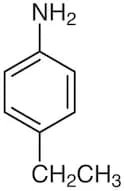
CAS:Formula:C7H8FNOPurity:>98.0%(GC)(T)Color and Shape:White to Gray to Brown powder to crystalMolecular weight:141.154-Ethylaniline
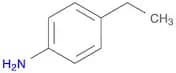
CAS:Formula:C8H11NPurity:>99.0%(GC)(T)Color and Shape:Colorless to Light orange to Yellow clear liquidMolecular weight:121.184-Bromo-2-chloroaniline
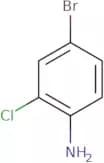
CAS:4-Bromo-2-chloroaniline (4BCA) is an exciplex that forms in the presence of hydrogen peroxide and chloride ions. It is unreactive with fluconazole and other related molecules, but is able to photoreduce hydrogen peroxide. The molecular mechanism of 4BCA is a result of its ability to form a covalent bond with DNA containing pyrimidine bases. This reaction results in the formation of pyrimidine dimers, which can lead to cell death through the inhibition of DNA synthesis and repair. 4BCA has been shown to be effective against cancer cells at high concentrations, but does not affect healthy cells. The effectiveness against cancer cells may be due to the fact that this exciplex reacts with uv irradiation and irradiation, which leads to a higher concentration of reactive oxygen species (ROS).
Formula:C6H5BrClNPurity:Min. 95%Color and Shape:PowderMolecular weight:206.47 g/molAniline
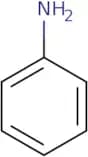
CAS:Aniline is an aromatic amine and is a clear to slightly yellow liquid with a characteristic odor. Aniline is an important precursor in the production of a wide range of industrial chemicals, including polyurethane foams, agricultural chemicals, and dyes. Aniline is also used in the manufacture of pharmaceuticals, rubber processing chemicals, and antioxidants. Due to its widespread industrial use, aniline can be found in various environmental matrices, including water, wastewater, and air.Formula:C6H7NPurity:Min. 95%Color and Shape:Colorless Clear LiquidMolecular weight:93.13 g/mol3,5-Dibromoaniline
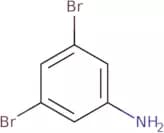
CAS:3,5-Dibromoaniline is a chemical compound that belongs to the group of anilines. It can be used as an intermediate in organic synthesis. 3,5-Dibromoaniline can be obtained by gravimetric analysis and has a solute of about 0.1 g/100 mL in water. The melting point for this compound is about 245 °C and the boiling point is about 330 °C at normal atmospheric pressure. 3,5-Dibromoaniline has been shown to inhibit the growth of Trichophyton mentagrophytes and Coumarin derivatives, which are fungi that cause ringworm infections. This drug also has photophysical properties and can be used as a fluorescence probe for DNA hybridization studies.Formula:C6H5NBr2Purity:Min. 98%Color and Shape:Brown To Black SolidMolecular weight:250.92 g/mol2-Amino-5-chlorobenzamide
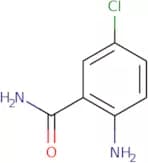
CAS:2-Amino-5-chlorobenzamide is a fluorescence probe that has been shown to react with anthranilic acid, which is a structural component of many active substances. It is used in organic solvents as an indicator for the presence of active oxygen. 2-Amino-5-chlorobenzamide can be used as a linker to connect different molecules and can be activated by dehydrating agents, such as sodium sulfite. This compound has been demonstrated to have a linear response over a wide range of concentrations. The molecular target of 2-amino-5-chlorobenzamide is unknown at this time, but it has been suggested that it may interact with amino acids or proteins. The structural formula for 2-amino-5-chlorobenzamide is C6H4ClN2O2.Formula:C7H7ClN2OPurity:Min. 95%Color and Shape:PowderMolecular weight:170.6 g/mol4-Hydroxybenzamide
CAS:4-Hydroxybenzamide is a fatty acid with the hydroxyl group at the 4 position. It has been shown to inhibit the activity of human protein by interfering with hydrogen bonding and amide formation. The chemical structures of 4-hydroxybenzamide have been studied by electrochemical impedance spectroscopy (EIS) and found to be a competitive inhibitor of 1-hydroxy-2-naphthoic acid, an adenosine receptor antagonist, and p-hydroxybenzoic acid. This compound has also been shown to be acutely toxic in rats at high doses.Formula:C7H7NO2Purity:90%Color and Shape:PowderMolecular weight:137.14 g/mol4-Morpholinoaniline
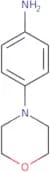
CAS:4-Morpholinoaniline is a synthetic substrate that reacts with hydrochloric acid and sodium nitrite to form the reactive intermediate 4-morpholinonitrosobenzene. The reaction mechanism is proposed to proceed through an initial electron transfer from the substrate to the nitrosobenzene intermediate, followed by protonation of the nitrosobenzene nitrogen atom. The resulting 4-nitrophenyl radical abstracts hydrogen from the substrate to give 4-hydroxyphenyl radical. This radical undergoes a nucleophilic attack on the aromatic ring of the substrate molecule, and cleavage of the disulfide bond in the aromatic ring leads to formation of a cyanohydrin product. Studies have been conducted on rat liver microsomes and hepatitis C virus (HCV) to investigate this reaction mechanism.Formula:C10H14N2OPurity:Min. 98.5 Area-%Color and Shape:Red PowderMolecular weight:178.23 g/molIsovanillin
CAS:Isovanillin is a naturally occurring compound in plants and has been shown to have biological effects on the mitochondria of cells. It has been found to inhibit the mitochondrial membrane potential of k562 cells, which is associated with cell death. Isovanillin has also been shown to affect bacterial strains, such as Acinetobacter baumannii, by inhibiting their growth. This x-ray crystal structure was determined using a lc-MS/MS method and it was found that isovanillin reacts with p-hydroxybenzoic acid to form methyl ethyl benzoate. Isovanillin is toxic and has been found to cause cellular physiology changes when administered at high concentrations.Formula:C8H8O3Purity:Min. 95%Color and Shape:White PowderMolecular weight:152.15 g/mol3,3',5,5'-Tetramethylbenzidine, free base
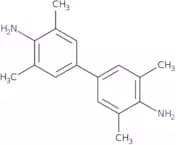
CAS:TMB is an excellent colorimetric substrate for detection of horseradish peroxidase labelled probes and is used with peroxidase and peroxidase coupled systems, particularly in ELISA techniques. It produces a soluble end product, which is blue in color and can be read spectrophotometrically. TMB has also been used in the quantitative determination of hemoglobin and in cytochemical staining for peroxidase. TMB is a hepatitis B antigen.
Formula:C16H20N2Purity:Min. 99.0 Area-%Molecular weight:240.35 g/mol