Glycoscience
Subcategories of "Glycoscience"
- Aminosugars(108 products)
- Glyco-Related Antibodies(283 products)
- Glycolipids(46 products)
- Glycosaminoglycans (GAGs)(55 products)
- Glycosides(419 products)
- Monosaccharides(6,617 products)
- Oligosaccharides(3,718 products)
- Polysaccharides(505 products)
Found 11021 products of "Glycoscience"
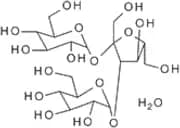
D-Melezitose, monohydrate
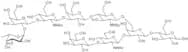
CAS:Melezitose is a non-reducing trisaccharide that is produced by many plant sap-consuming insects, such as aphids (e.g. Cinara pilicornis). Melezitose is a component of honeydew which acts as an attractant for ants and also as food for bees. Partial hydrolysis of melizitose releases glucose and turanose, an isomer of sucrose.Formula:C18H34O17Purity:Min. 98 Area-%Color and Shape:White PowderMolecular weight:522.45 g/molMonofucosyl (1-2)-iso-lacto-N-octaose I
Monofucosyl (1-2)-iso-lacto-N-octaose I is an oligosaccharide found in human milkPurity:Min. 95%6-Deoxy-6-thio-a-cyclodextrin
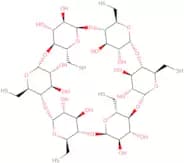
CAS:Alpha-cyclodextrin (α-CD) derivative with a hydrophilic exterior and lipophilic cavity (smaller than β-CDs and γ-CDs) to allocate certain guest molecules. This structural characteristic enables applications in molecular encapsulation, solubility enhancement, and stabilization across multiple industries. In pharmaceuticals, it serves as a drug delivery vehicle, enhancing the bioavailability and stability of active ingredients. The food industry utilizes it as a stabilizer for flavors, colors, and nutrients, as well as a functional ingredient for its effects on lipid metabolism. In cosmetics, it acts as a complex agent for fragrances and active components. Its applications extend to analytical chemistry for chiral separation and to materials science for developing smart materials and nanosystems.Formula:C36H60O24S6Purity:Min. 95%Molecular weight:1,069.24 g/mol1,3-Dihydroxyacetone
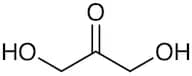
CAS:Formula:C3H6O3Purity:>97.0%(GC)Color and Shape:White to Almost white powder to crystalMolecular weight:90.08Octyl a-D-glucopyranoside
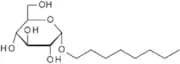
CAS:The enzyme alcohol dehydrogenase, which is located in the cytosol of cells, catalyzes the conversion of ethanol to acetaldehyde. In this reaction, a hydrogen ion (H+) is abstracted from ethanol and two electrons (e-) are added to the molecule. The addition of these electrons results in the formation of a hydrogen bond between the alcohol and an electron-donating species such as water or octyl glucopyranoside. Octyl glucopyranoside is a detergent that has been used as a substrate for measuring rates of alcohol dehydrogenase. This detergent also has been shown to be effective at removing glycol ethers from biological samples.
The biochemical research on octyl glucopyranoside includes its use as an equilibrative nucleoside and its effect on bowel disease.Formula:C14H28O6Purity:Min. 95%Color and Shape:White PowderMolecular weight:292.37 g/molMonophosphoryl 3- deacyl lipid A ammonium
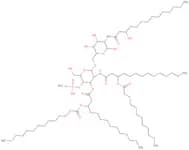
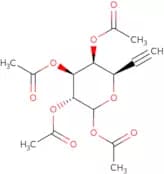
CAS:Synthetic MPLA analog equivalent derived from bacterial LPSFormula:C82H155N2O20P•NH3Purity:Min. 95%Color and Shape:PowderMolecular weight:1,537.11 g/mol1,2,3,4-Tetra-O-acetyl-5-alkynyl-L-fucose
CAS:1,2,3,4-Tetra-O-acetyl-5-alkynyl-L-fucose is a per-O-acetylated version of 5-alkynyl-L-fucose, an inhibitor of the cellular fucosylation pathway. 1,2,3,4-Tetra-O-acetyl-5-alkynyl-L-fucose can pass through the eukaryotic cell membrane somewhat better than 5-alkynyl-L-fucose can itself, is deacetylated by cellular esterases and interferes with the biosynthesis of the fucosyl-donor and fucosyltransferase substrate GDP-Fuc, thus reducing fucosylation levels during glycoprotein biosynthesis (Dekkers, 2016).
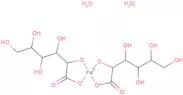
Formula:C15H18O9Purity:Min. 95%Color and Shape:Colorless Clear LiquidMolecular weight:342.3 g/molFerrous gluconate dihydrate
CAS:Ferrous gluconate dihydrate is a fine chemical that has many applications in research and development. It is a versatile building block that can be used as a starting material for the synthesis of complex compounds, such as drugs, pesticides, and perfumes. Ferrous gluconate dihydrate can also be used as a reaction component to produce speciality chemicals, such as benzyl alcohols. In addition to its usefulness in research, ferrous gluconate dihydrate is an important reagent for the production of high-quality pharmaceuticals.Formula:C12H22FeO14·2H2OPurity:Min. 95%Color and Shape:PowderMolecular weight:482.17 g/molGM4-Ganglioside
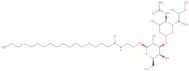
CAS:GM4-ganglioside (sodium salt) is a disaccharide of sialic acid linked α2,4 to galactose and ceramide linked β to position 1 on the galactose (Ledeen, 2009). Demyelinated plaques in multiple sclerosis have decreased amounts of GM4-ganglioside, localized in myelin and oligodendroglia of the central nervous system. It has been found that the myelin basic protein is capable of releasing large quantities of entrapped [14C]glucose from multilamellar liposomes containing GM4. If the conformation of GM4 ganglioside in liposomal membranes resembles that of GM4 ganglioside in its natural environment, basic protein and GM4 may be associated within the myelin sheath of the central nervous system and their interactions are altered in demyelinating diseases, such as, multiple sclerosis (Mullin, 1981).Formula:C57H106N2O17·xNaPurity:Min. 95%Molecular weight:1,091.45 g/molN,N',N'',N'''-Tetraacetylchitotetraose
CAS:Tetraose composed of four N-acetylglucosamine residues.Formula:C32H54N4O21Purity:Min. 95 Area-%Color and Shape:White PowderMolecular weight:830.79 g/mol6-Tert-butyldimethylsilyl-b-cyclodextrin
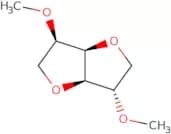
CAS:This beta-cyclodextrin (β-CD) derivative is a functionalized cyclic oligosaccharide composed of seven glucose units, characterized by a hydrophilic exterior and a lipophilic cavity (bigger than α-CD and smaller than γ-CDs), which allows it to encapsulate various guest molecules. This structural feature facilitates its use in multiple applications, including pharmaceuticals, food enhancement, and cosmetics. In the pharmaceutical industry, it enhances the solubility and stability of poorly water-soluble drugs, improving their bioavailability and efficacy while also masking unpleasant tastes. The food sector utilizes it as a stabilizer for flavors, colors, and nutrients, extending shelf life by protecting sensitive ingredients from degradation. In cosmetics, it serves as a complexing agent for fragrances and active components, ensuring their stability and controlled release. Its use expands to many other fields, including nanotechnology for drug delivery systems, environmental remediation for extracting organic pollutants, textiles for slow-release fragrances, and analytical chemistry for chiral separation.Formula:C84H168O35Si7Purity:Min. 95%Molecular weight:1,934.81 g/mol1,4:3,6-Dianhydro-2,5-di-O-methyl-D-glucitol
CAS:Sustainable solvent used widely in cosmetic and pharmaceutical formulationsFormula:C8H14O4Purity:Min. 95%Color and Shape:PowderMolecular weight:174.19 g/molHeptakis(2,3-di-O-methyl-6-O-sulfo)-β-cyclodextrin heptasodium
CAS:This beta-cyclodextrin (β-CD) derivative is a functionalized cyclic oligosaccharide composed of seven glucose units, characterized by a hydrophilic exterior and a lipophilic cavity (bigger than α-CD and smaller than γ-CDs), which allows it to encapsulate various guest molecules. This structural feature facilitates its use in multiple applications, including pharmaceuticals, food enhancement, and cosmetics. In the pharmaceutical industry, it enhances the solubility and stability of poorly water-soluble drugs, improving their bioavailability and efficacy while also masking unpleasant tastes. The food sector utilizes it as a stabilizer for flavors, colors, and nutrients, extending shelf life by protecting sensitive ingredients from degradation. In cosmetics, it serves as a complexing agent for fragrances and active components, ensuring their stability and controlled release. Its use expands to many other fields, including nanotechnology for drug delivery systems, environmental remediation for extracting organic pollutants, textiles for slow-release fragrances, and analytical chemistry for chiral separation.Formula:C56H98O56S7Purity:Min. 95%Molecular weight:1890.28657Methyl β-L-arabinopyranoside
CAS:Methyl β-L-arabinopyranoside is a monomer that is used for the synthesis of polymers. It has been shown to be an effective polymerization catalyst, with long-term stability and good storage properties. Methyl β-L-arabinopyranoside has been used in gas chromatographic analysis as an analyte to identify hydroxy groups, although it may also interfere with the detection of certain other analytes. This monomer is often used in the production of plastics and rubbers because it enhances bonding between rubber molecules and plasticizers. Methyl β-L-arabinopyranoside has also been shown to have tailing enhancements and extracts that are due to hydroxy groups, which can lead to signal enhancement in gas chromatography. Additives such as ammonium acetate can be added if there is a need to increase sensitivity or reduce tailing effects.Formula:C6H12O5Purity:Min. 95%Color and Shape:PowderMolecular weight:164.16 g/molL-Threonic acid
CAS:L-Threonic acid is a metabolite of plants that is involved in the synthesis of other molecules. It can be found in the injection solution and magnesium salts that are used for treating osteoporosis and magnesium deficiency. L-Threonic acid can also be found in caffeic acids, which are plant polyphenols that have antioxidant properties. L-Threonic acid has been shown to have structural similarity to calcium and has been shown to have a role in mitochondrial membrane potential, cellular physiology, and oxidative injury. L-Threonic acid may also play a role in energy metabolism. The toxicity of L-Threonic acid has been studied extensively with mixed results.Formula:C4H8O5Purity:Min. 95%Molecular weight:136.1 g/molG418 Disulfate
CAS:Formula:C20H40N4O10·2H2SO4Purity:>90.0%(HPLC)(N)Color and Shape:White to Almost white powder to crystalMolecular weight:692.706-Chloro-6-deoxy-gamma-cyclodextrin
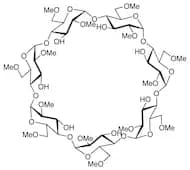
CAS:This gamma-cyclodextrin (γ-CD) derivative is a modified cyclic oligosaccharide composed of eight glucose units, featuring a larger cavity size than α- and β-cyclodextrins. This structural characteristic allows γ-CDs to form inclusion complexes with a wider range of guest molecules, making it particularly versatile in various industries. In the food sector, it is used as a carrier and stabilizer for flavors, fat-soluble vitamins, and polyunsaturated fatty acids, protecting volatile compounds from evaporation. In pharmaceuticals, it enhances the solubility and bioavailability of poorly water-soluble drugs and, thanks to its larger ring size, allows for the encapsulation of larger molecules or even entire drug molecules. γ-CDs and derivatives are also used for environmental remediation and, in analytical chemistry, for the extraction and concentration of target substances.Formula:C48H72Cl8O32Purity:Min. 95%Molecular weight:1,444.69 g/molHeptakis(2,3,6-tri-O-ethyl)cyclomaltoheptaose
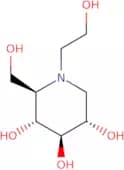
CAS:This beta-cyclodextrin (β-CD) derivative is a functionalized cyclic oligosaccharide composed of seven glucose units, characterized by a hydrophilic exterior and a lipophilic cavity (bigger than α-CD and smaller than γ-CDs), which allows it to encapsulate various guest molecules. This structural feature facilitates its use in multiple applications, including pharmaceuticals, food enhancement, and cosmetics. In the pharmaceutical industry, it enhances the solubility and stability of poorly water-soluble drugs, improving their bioavailability and efficacy while also masking unpleasant tastes. The food sector utilizes it as a stabilizer for flavors, colors, and nutrients, extending shelf life by protecting sensitive ingredients from degradation. In cosmetics, it serves as a complexing agent for fragrances and active components, ensuring their stability and controlled release. Its use expands to many other fields, including nanotechnology for drug delivery systems, environmental remediation for extracting organic pollutants, textiles for slow-release fragrances, and analytical chemistry for chiral separation.Formula:C84H154O35Purity:Min. 95%Molecular weight:1,724.1 g/molN-(b-Hydroxyethyl)-1-deoxynojirimycin
CAS:Inhibitor of α-glucosidase with applications in diabetes therapy for control of post-prandial blood glucose fluctuations. The compound inhibits the digestive breakdown of complex carbohydrates to absorbable monosaccharides and smoothens hyperglycaemic peaks in type 2 diabetes mellitus. It also possesses anti-obesity effects thanks to activation of brown adipose tissue and increasing energy expenditure.
Formula:C8H17NO5Purity:Min. 95%Color and Shape:White PowderMolecular weight:207.22 g/molDifucosyl (1-2,1-2)-iso-lacto-N-octaose (DFiLNO (1-2,1-2))
Difucosyl (1-2,1-2)-iso-lacto-N-octaose (DFiLNO (1-2,1-2)) is an oligosaccharide that is found in human milk
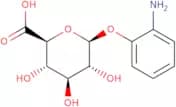
Purity:Min. 95%2-Aminophenyl β-D-glucuronide
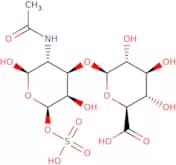
CAS:2-Aminophenyl b-D-glucuronide is a cytosolic drug that is metabolized by the liver to mandelonitrile, which is then excreted in urine. 2-Aminophenyl b-D-glucuronide has been shown to inhibit the growth of fungi in vivo and has been shown to have a reversible binding affinity for fungal cell walls. This drug also inhibits the production of ergosterol, an important component of fungal cell membranes, which leads to cell death.Formula:C12H15NO7Purity:Min. 95%Color and Shape:PowderMolecular weight:285.25 g/molChondroitin sulfate A sodium salt - Average MW 10,000 - 50,000
CAS:Chondroitin sulfate A sodium salt is a glycosaminoglycan that is derived from chondroitin. It is a complex carbohydrate with a high molecular weight and an average MW of 10,000 to 50,000 Da. The synthesis of the monosaccharide units in chondroitin sulfate A sodium salt occurs by Methylation, Click modification, Polysaccharide, or Fluorination. Chondroitin sulfate A sodium salt can be custom synthesized according to customer specifications and can be ordered as a CAS No. 39455-18-0 with high purity.Purity:Min. 95%Color and Shape:White Off-White PowderGD1b-Ganglioside ammonium
CAS:GD1b ganglioside (shown as ammonium salt) is one of the major gangliosides in neuronal and glial membranes. It has a core tetrasaccharide structure (Galβ1,3GalNAcβ1,4Galβ1,4Glc) with its two sialic acids linked α2,3/α2,8 to the inner galactose residue, and ceramide linked β to position 1 on the reducing terminal glucose residue (Ledeen, 2009). GD1b ganglioside acts as a receptor for BK virus, as well as for heat-labile LTII-a toxin, produced by enteropathogenicâ¯E. coli. GD1b ganglioside also interacts with tetanus neurotoxin (TeNT) and is crucial for its entry into cells (Kolter, 2012). The functional significance of ammonia in the brain is not yet fully understood: see (Modi 1994).
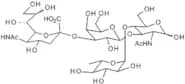
Purity:Min. 95%3'-Sialyl Lewis A
CAS:Tetrasaccharide; tumor-associated antigen; prognostic factor
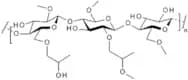
Formula:C31H52N2O23Purity:Min. 95%Color and Shape:White PowderMolecular weight:820.74 g/molHydroxypropyl cellulose - Average MW 150,000
CAS:In water, hydroxypropyl cellulose forms liquid crystals with many mesophases depending on concentration. These mesophases include isotropic, anisotropic, nematic and cholesteric, the latter resulting in many colors such as violet, green and red. Pharmaceutical applications include treatments for medical conditions such as dry eye syndrome (keratoconjunctivitis sicca), recurrent corneal erosions, decreased corneal sensitivity, exposure and neuroparalytic keratitis. It is also used as a binder in tablets. Hydroxypropylcellulose is also used as a thickener, a binder and emulsion stabiliser in foods with E number E463. HPC is used as a support matrix for DNA separations by capillary and microchip electrophoresis.
2-(D-Gluco-pentylhydroxypentyl)-4(R)-1,3-thiazolidine-4-carboxylic acid
CAS:2-(D-Gluco-pentylhydroxypentyl)-4(R)-1,3-thiazolidine-4-carboxylic acid is a custom synthesis. It is used in the glycosylation of saccharides and oligosaccharides. This product can be modified with fluorination, methylation, or click modification. It is also used in the synthesis of complex carbohydrates.Formula:C9H17NO7SPurity:(Hplc-Ms) Min. 95 Area-%Color and Shape:PowderMolecular weight:283.3 g/molFructooctasaccharide
Fructo-octasaccharide (FOS) is a synthetic, high-purity carbohydrate that is used in the production of various food and beverage products. FOS is produced by enzymatic synthesis from sucrose and has been modified to include a fluorination step. FOS can be used as a sugar substitute and is found in many foods such as breads, beverages, yogurt, ice cream, candy, and chewing gum. FOS has been shown to stimulate the growth of beneficial bacteria in the gastrointestinal tract and may help promote healthy digestion.Formula:C48H82O41Purity:Min. 95%Color and Shape:PowderMolecular weight:1,315.14 g/molGalβ(1-3)[Neu5Acα(2-6)]GalNAc-β-pNP
CAS:Formula:C31H45N3O21Purity:min. 97.0 area%(HPLC)Color and Shape:White to Light yellow to Green powder to crystalMolecular weight:795.70L-Arabinose-BSA
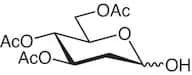
L-Arabinose-BSA is a Glycosylation, Oligosaccharide, sugar, Synthetic, Fluorination, Custom synthesis, Methylation, Monosaccharide, Polysaccharide, saccharide. It is a Click modification. L-Arabinose-BSA has CAS No. 1590-84-3 and Modification of complex carbohydrate. This product has High purity.Purity:Min. 95%3,4,6-Tri-O-acetyl-2-deoxy-D-glucopyranose
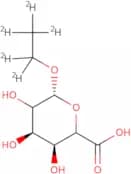
CAS:Formula:C12H18O8Purity:>98.0%(GC)Color and Shape:White to Almost white powder to crystalMolecular weight:290.27d5-Ethyl b-D-glucuronide
CAS:Controlled ProductEthyl b-D-glucuronide is a modification of the carbohydrate. It is used in the synthesis of oligosaccharides, polysaccharides, and other complex carbohydrates with high purity. This compound can be synthesized by methylation and glycosylation, or by fluorination and saccharide.Formula:C8H9D5O7Purity:Min. 95%Color and Shape:PowderMolecular weight:227.22 g/molOroxylin A 7-O-glucuronide
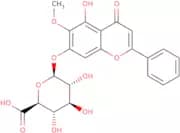
CAS:Oroxylin A 7-O-glucuronide (OA7G) is a natural compound that exhibits anti-angiogenic and anti-inflammatory effects. OA7G binds to p-hydroxybenzoic acid and inhibits the activity of glycosidases, which are enzymes that hydrolyze glycosides. OA7G has been shown to have therapeutic potential in several models of inflammatory bowel disease. In vivo studies show that OA7G may be a useful agent for the treatment of bowel disease by inhibiting angiogenesis, which is the formation of new blood vessels from pre-existing ones. Molecular docking analysis showed binding affinity between OA7G and the enzyme dextran sulfate glucuronyltransferase, suggesting a possible mechanism for its anti-inflammatory effects.Formula:C22H20O11Purity:Min. 95%Color and Shape:Yellow PowderMolecular weight:460.39 g/mol6-deoxy-6-iodo-gamma-cyclodextrin
CAS:This gamma-cyclodextrin (γ-CD) derivative is a modified cyclic oligosaccharide composed of eight glucose units, featuring a larger cavity size than α- and β-cyclodextrins. This structural characteristic allows γ-CDs to form inclusion complexes with a wider range of guest molecules, making it particularly versatile in various industries. In the food sector, it is used as a carrier and stabilizer for flavors, fat-soluble vitamins, and polyunsaturated fatty acids, protecting volatile compounds from evaporation. In pharmaceuticals, it enhances the solubility and bioavailability of poorly water-soluble drugs and, thanks to its larger ring size, allows for the encapsulation of larger molecules or even entire drug molecules. γ-CDs and derivatives are also used for environmental remediation and, in analytical chemistry, for the extraction and concentration of target substances.Formula:C48H72I8O32Purity:Min. 95%Color and Shape:PowderMolecular weight:2,176.3 g/mol2,3-Dimethyl-β-cyclodextrin
CAS:This beta-cyclodextrin (β-CD) derivative is a functionalized cyclic oligosaccharide composed of seven glucose units, characterized by a hydrophilic exterior and a lipophilic cavity (bigger than α-CD and smaller than γ-CDs), which allows it to encapsulate various guest molecules. This structural feature facilitates its use in multiple applications, including pharmaceuticals, food enhancement, and cosmetics. In the pharmaceutical industry, it enhances the solubility and stability of poorly water-soluble drugs, improving their bioavailability and efficacy while also masking unpleasant tastes. The food sector utilizes it as a stabilizer for flavors, colors, and nutrients, extending shelf life by protecting sensitive ingredients from degradation. In cosmetics, it serves as a complexing agent for fragrances and active components, ensuring their stability and controlled release. Its use expands to many other fields, including nanotechnology for drug delivery systems, environmental remediation for extracting organic pollutants, textiles for slow-release fragrances, and analytical chemistry for chiral separation.Formula:C56H98O35Purity:Min. 95%Color and Shape:PowderMolecular weight:1,331.36 g/molCarboxymethyl-a-cyclodextrin sodium salt
Alpha-cyclodextrin (α-CD) derivative with a hydrophilic exterior and lipophilic cavity (smaller than β-CDs and γ-CDs) to allocate certain guest molecules. This structural characteristic enables applications in molecular encapsulation, solubility enhancement, and stabilization across multiple industries. In pharmaceuticals, it serves as a drug delivery vehicle, enhancing the bioavailability and stability of active ingredients. The food industry utilizes it as a stabilizer for flavors, colors, and nutrients, as well as a functional ingredient for its effects on lipid metabolism. In cosmetics, it acts as a complex agent for fragrances and active components. Its applications extend to analytical chemistry for chiral separation and to materials science for developing smart materials and nanosystems.Formula:C43H64O37·xNaPurity:Min. 95%Molecular weight:1,172.95 g/mol3,4,6-Tri-O-benzyl-2-nitro-D-galactal
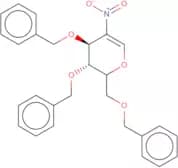
CAS:3,4,6-Tri-O-benzyl-2-nitro-D-galactal is a nitro compound that is used in the synthesis of glycopeptide antibiotics. It reacts with threonine, forming an intramolecular hydrogen bond to yield the corresponding methyl ester. The nitrate ion can also be used as a nucleophile to form an ether with alcohols or amines. This reaction is stereoselective and yields the desired product in high yields.Formula:C27H27NO6Purity:Min. 98 Area-%Color and Shape:PowderMolecular weight:461.51 g/molTri-guluronic acid sodium salt
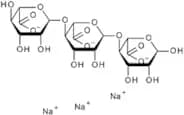
CAS:Tri-guluronic acid sodium salt (1,4-linked α-L-sodium guluronotriose) is one of a number of oligosaccharides obtained from alginate which is a polysaccharide in brown seaweeds containing: blocks of repeating mannuronic acid sequences (M-M-M-M etc), repeating guluronic acid sequences (G-G-G-G etc), and alternating M-G-M-G sequences. This oligosaccharide can be released by acid hydrolysis (Shimokawa, 1996) and a number of biological activities have been discussed in a recent review (Xing, 2020).
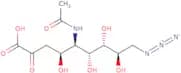
Formula:C18H23O19Na3Purity:Min. 98 Area-%Color and Shape:White PowderMolecular weight:612.33 g/molN-Acetyl-9-azido-9-deoxy-neuraminic acid
CAS:N-Acetyl-9-azido-9-deoxy-neuraminic acid (also known as 9AzNeu5Ac) is used as a sialic acid substitute for metabolic glycan labelling, which allows glycan-protein interactions and sialylations to be interrogated. Naturally occurring glycans can be di-sialylated by sialidase and replaced by a sialyl analogue, such as N-acetyl-9-azido-9-deoxy-neuraminic acid, using sialyltransferase. The modified glycans are then resistant to sialidase. Reduction of the azide functionality of N-acetyl-9-azido-9-deoxy-neuraminic acid affords access to an additional 9-amino sialic acid analogue which can be further elaborated to 9-amido analogues.Formula:C11H18N4O8Purity:Min. 90 Area-%Color and Shape:Off-White PowderMolecular weight:334.28 g/mol2,6-Di-O-methyl-β-cyclodextrin
CAS:Formula:C56H98O35Purity:>95.0%(HPLC)Color and Shape:White to Light yellow powder to crystalMolecular weight:1,331.372,3,6-Triethyl-gamma-cyclodextrin
This gamma-cyclodextrin (γ-CD) derivative is a modified cyclic oligosaccharide composed of eight glucose units, featuring a larger cavity size than α- and β-cyclodextrins. This structural characteristic allows γ-CDs to form inclusion complexes with a wider range of guest molecules, making it particularly versatile in various industries. In the food sector, it is used as a carrier and stabilizer for flavors, fat-soluble vitamins, and polyunsaturated fatty acids, protecting volatile compounds from evaporation. In pharmaceuticals, it enhances the solubility and bioavailability of poorly water-soluble drugs and, thanks to its larger ring size, allows for the encapsulation of larger molecules or even entire drug molecules. γ-CDs and derivatives are also used for environmental remediation and, in analytical chemistry, for the extraction and concentration of target substances.Formula:C95H176O40Purity:Min. 95%Molecular weight:1,958.39 g/mol2,3,4,6-Tetra-O-acetyl-a-D-galactopyranosyl trichloroacetimidate
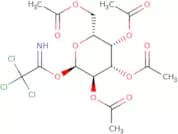
CAS:2,3,4,6-Tetra-O-acetyl-a-D-galactopyranosyl trichloroacetimidate is a disaccharide that is an activated glycoprotein. It is used as a hapten for the production of monoclonal antibodies and as an immunogen in stepwise immunization with bovine serum albumin. This compound has been shown to be specific for the EGF receptor on neoglycoproteins and can be used to detect this receptor. The glycosidic residue of 2,3,4,6-tetra-O-acetyl-a-D-galactopyranosyl trichloroacetimidate allows it to bind to proteins such as albumin and act as a carrier for other molecules.Formula:C16H20Cl3NO10Purity:Min. 95%Color and Shape:White PowderMolecular weight:492.69 g/molPhenyl 2,3,4,6-tetra-O-acetyl-b-D-galactopyranoside
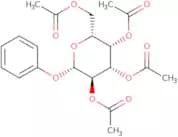
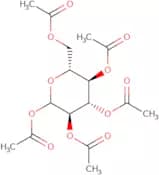
CAS:Phenyl 2,3,4,6-tetra-O-acetyl-b-D-galactopyranoside (TTA) is a synthetic monosaccharide that is used in the synthesis of complex carbohydrates. TTA is also known as Fluorination, Monosaccharide, Synthetic, Oligosaccharide, complex carbohydrate and has CAS No. 2872-72-2. TTA can be custom synthesized for research purposes or for commercial use and can be glycosylated to form polysaccharides. TTA is modified through methylation or click chemistry and can be used to modify sugar molecules or other carbohydrates. It is also high purity with less than 1% impurities.Formula:C20H24O10Purity:Min. 95%Color and Shape:PowderMolecular weight:424.4 g/mol1,2,3,4,6-Penta-O-acetyl-D-glucopyranose
CAS:Benzoate is a carboxylic acid that is found in many fruits and vegetables. Benzoate can be metabolized by the body to form hydrogen chloride, which may cause irritation of the mucous membranes of the respiratory tract. This chemical has been shown to have cytotoxic activity against human cancer cells in vitro. Benzoate also has an anti-inflammatory effect on insulin resistance and can be used as a topical treatment for psoriasis. The mechanism by which benzoate exerts its anticancer activity is not fully understood, but it may involve the production of reactive oxygen species or induction of apoptosis.
Formula:C16H22O11Purity:Min. 95%Color and Shape:White PowderMolecular weight:390.34 g/molMethyl 3,5-di-O-acetyl-2-deoxy-D-ribofuranoside
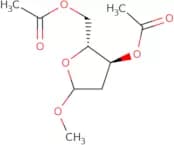
CAS:Methyl 3,5-di-O-acetyl-2-deoxy-D-ribofuranoside is a synthetic, fluorinated monosaccharide. It is an important building block for the synthesis of complex carbohydrates. The compound is also used for glycosylation reactions, click modification reactions and methylation reactions. Methyl 3,5-di-O-acetyl-2-deoxy-D-ribofuranoside can be used as an intermediate to make other products or as a custom synthesis.Formula:C10H16O6Purity:Min. 95%Molecular weight:232.23 g/molNeu5Acα(2-3)Galβ(1-4)GlcNAc-β-pNP
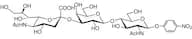
CAS:Formula:C31H45N3O21Purity:>95.0%(HPLC)Color and Shape:White to Almost white powder to crystalMolecular weight:795.70Benzyl α-D-mannopyranoside
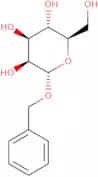
CAS:Benzyl a-D-mannopyranoside is a pharmaceutical dosage form of the drug benzyl a-D-mannopyranoside, which is used to control analysis of silver trifluoromethanesulfonate. It is administered orally as a monosodium salt, which is the only form that has been studied in humans. This combination therapy group was found to be more effective than benzyl groups or systematically administered drugs when used as monotherapy. Benzyl a-D-mannopyranoside may be glycosidated by cells in culture and this process may cause symptoms such as nausea and vomiting. However, glycosidation does not occur in humans.Formula:C13H18O6Purity:Min. 95%Color and Shape:PowderMolecular weight:270.28 g/mol1,4-Anhydro-D-mannitol
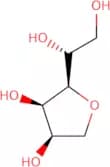
CAS:1,4-Anhydro-D-mannitol is a sugar alcohol that belongs to the group of alditols. It is a tautomer of galactitol, which is found in fetal bovine serum. The dehydrated form of this compound has been shown to have an inhibitory effect on tyrosinase activity. 1,4-Anhydro-D-mannitol may be used as an intermediate in the production of polymers or as a cosmeceutical agent due to its high water solubility and low toxicity.
Formula:C6H12O5Purity:Min. 95%Color and Shape:PowderMolecular weight:164.16 g/molNeu5Ac[1Me,4789Ac]α(2-6)Gal[24Bz,3Bn]-β-MP
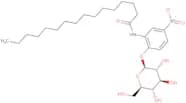
CAS:Formula:C54H59NO21Purity:>95.0%(HPLC)Color and Shape:White to Almost white powder to crystalMolecular weight:1,058.052’-(N-Hexadecanoylamino)-4’-nitrophenyl-β-D-glucopyranoside
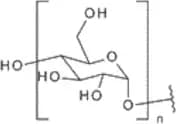
CAS:2’-(N-Hexadecanoylamino)-4’-nitrophenyl-b-D-glucopyranoside is a synthetic substrate that is used in diagnostic procedures to identify the presence of lysosomal enzymes. The reaction product, resorufin, is a fluorogenic substrate that reacts with the enzyme hexanoyl coenzyme A reductase and can be detected by spectrophotometry. This experimentally insensitive compound has been used to measure the activity of hexanoyl coenzyme A reductase in skin fibroblasts from patients with ichthyosis vulgaris. Resorufin fluorescence is proportional to the amount of hexanoyl coenzyme A reductase present in cells.Formula:C28H46N2O9Purity:Min. 95%Color and Shape:PowderMolecular weight:554.67 g/molMaltodextrin - dextrose equivalent 4.0-7.0
CAS:Ex starch-partial hydrolysis,food ingredient, moderatly sweet, easily digestedPurity:Min. 95%Color and Shape:White Powder










![Galβ(1-3)[Neu5Acα(2-6)]GalNAc-β-pNP](/_next/image/?url=https%3A%2Fstatic.cymitquimica.com%2Fproducts%2F3B%2Fthumb-webp%2FG0345.webp&w=3840&q=75)



![Neu5Ac[1Me,4789Ac]α(2-6)Gal[24Bz,3Bn]-β-MP](/_next/image/?url=https%3A%2Fstatic.cymitquimica.com%2Fproducts%2F3B%2Fthumb-webp%2FM1761.webp&w=3840&q=75)