Antimicrobials
Antimicrobials are agents that destroy or inhibit the growth of microorganisms, including bacteria, viruses, fungi, and parasites. These compounds are essential in the prevention and treatment of infections, playing a crucial role in medicine, agriculture, and the food industry. At CymitQuimica, we offer an extensive range of high-quality, high-purity antimicrobials suitable for various scientific and industrial applications. Our catalog includes antibiotics, antifungals, antivirals, and disinfectants, all designed to meet the needs of research and development, as well as clinical and production applications. With our products, professionals can ensure the effectiveness and safety in infection control and public health protection.
Subcategories of "Antimicrobials"
- Antibiotics(4,115 products)
- Antifungals(837 products)
- Antiparasitics(704 products)
- Antivirals(763 products)
Found 2422 products of "Antimicrobials"
Sort by
Purity (%)
0
100
|
0
|
50
|
90
|
95
|
100
Flucloxacillin
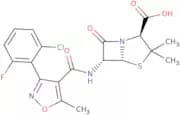
CAS:<p>Flucloxacillin is a beta-lactam antibiotic, which is derived from the penicillin family. It is synthetically produced through chemical modification to enhance its stability against beta-lactamase enzymes. The mode of action of flucloxacillin involves inhibiting bacterial cell wall synthesis. It binds to penicillin-binding proteins (PBPs) located inside the bacterial cell wall, which in turn inhibits the transpeptidation or cross-linking of peptidoglycan chains. This action leads to cell lysis and ultimately, bacterial death.</p>Formula:C19H17ClFN3O5SPurity:Min. 95%Molecular weight:453.87 g/molCefmenoxime hydrochloride
CAS:<p>Cefmenoxime hydrochloride is a third-generation cephalosporin antibiotic with action on bacterial cell wall synthesis and is used for treating gynecological and obstetric infections.</p>Formula:C16H17N9O5S3HClPurity:Min. 95%Color and Shape:White PowderMolecular weight:529.79 g/molLeptomycin B
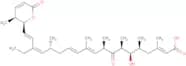
CAS:<p>Leptomycin B is a bacterial secondary metabolite, which is derived from the bacterium Streptomyces sp. This compound is a potent nuclear export inhibitor with a mechanism of action that targets and inhibits the export receptor CRM1 (Chromosomal Maintenance 1), also known as Exportin 1. By binding irreversibly to CRM1, Leptomycin B prevents the nuclear export of proteins and RNA, disrupting the nuclear-cytoplasmic transport essential for cell function.</p>Formula:C33H48O6Purity:Min. 95%Molecular weight:540.73 g/molMicafungin FR-179642 impurity (acid)
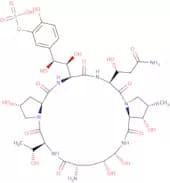
CAS:<p>Micafungin is an antifungal drug that inhibits the synthesis of ergosterol, a vital component of fungal cell membranes. It is a cyclic peptide with a lipophilic fatty acid chain that has been modified to allow penetration into cells. Micafungin is active against Candida and Aspergillus species and has shown activity against some strains of Cryptococcus neoformans. The MIC (minimum inhibitory concentration) for this drug ranges from 0.06 to 1 microgram/mL, depending on the bacterial strain being tested. Micafungin FR-179642 impurity (acid) is an impurity in micafungin that can be present as trace amounts in the final product and may contribute to hemolytic activity. This impurity is formed by hydrolysis during the synthesis process.</p>Formula:C35H52N8O20SPurity:Min. 95 Area-%Color and Shape:White PowderMolecular weight:936.9 g/mol4-Demethyl daunomycinone
CAS:<p>4-Demethyl daunomycinone is an anthracycline derivative, which is a natural or semi-synthetic compound derived from the bacterium *Streptomyces*. It is primarily studied for its potential use in anticancer therapies, given its structural similarity to other well-known anthracyclines like daunorubicin and doxorubicin. These compounds are known to intercalate into DNA, thereby disrupting the function of DNA and RNA synthesis, leading to the inhibition of cell proliferation.</p>Formula:C20H16O8Purity:Min. 95%Molecular weight:384.34 g/molCefepime Related Compound E
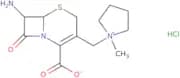
CAS:<p>Cefepime Related Compound E is a chemical impurity, which is typically encountered as a byproduct in the synthesis or degradation of the antibiotic cefepime. This impurity is derived from synthetic processes used in the pharmaceutical industry and can originate from a variety of pathways during the manufacturing or storage of cefepime.</p>Formula:C13H20ClN3O3SPurity:Min. 95%Molecular weight:333.83 g/molSterigmatocystin
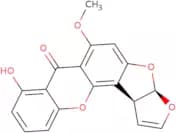
CAS:<p>Sterigmatocystin is a mycotoxin, which is a secondary metabolite primarily produced by certain species of the fungi Aspergillus and Bipolaris. This compound exhibits its mode of action by interfering with DNA, RNA, and protein synthesis, ultimately disrupting cellular processes. As a precursor to the well-known aflatoxins, sterigmatocystin shares a similar structure and exhibits carcinogenic properties.</p>Purity:Min. 95%Oteseconazole
CAS:<p>Oteseconazole is an antifungal medication, which is a synthetic triazole-derived agent. It functions by inhibiting the activity of the fungal enzyme lanosterol 14α-demethylase. This inhibition disrupts the synthesis of ergosterol, a vital component of fungal cell membranes, thereby interfering with cell membrane integrity and function, ultimately leading to fungal cell death.</p>Formula:C23H16F7N5O2Purity:Min. 95%Molecular weight:527.4 g/molSpiramycin I
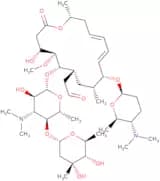
CAS:<p>Spiramycin I is a macrolide antibiotic with action on bacterial protein synthesis inhibition and is used for treating toxoplasmosis and bacterial infections.</p>Formula:C43H74N2O14Purity:Min. 95 Area-%Color and Shape:White PowderMolecular weight:843.05 g/molCecropin A
CAS:<p>Cecropin A is an antimicrobial peptide, which is derived from the immune systems of insects, specifically moths. It displays potent antimicrobial properties through its ability to disrupt bacterial cell membranes, leading to cell lysis and death. This peptide primarily targets Gram-negative bacteria but is also effective against some Gram-positive strains. Cecropin A has garnered significant scientific interest due to its potential applications in developing new antimicrobial agents, particularly in the face of increasing antibiotic resistance. By integrating Cecropin A into therapeutic strategies, researchers aim to broaden the spectrum of antimicrobial options available for use in both clinical and agricultural settings, offering a promising avenue for future drug development.</p>Formula:C184H313N53O46Purity:Min. 95%Molecular weight:4,003.78 g/molGentamicin C2 sulfate
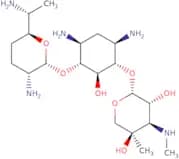
CAS:<p>Gentamicin C2 sulfate is an aminoglycoside antibiotic with action on bacterial protein synthesis inhibition and is used for treating severe bacterial infections.</p>Formula:C20H41N5O7Purity:(%) Min. 90%Color and Shape:PowderMolecular weight:463.57 g/molSTAADIUM™ PeptiZide L-Pyr
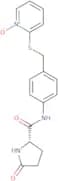
CAS:<p>STAADIUMTM PeptiZide L-Pyr is a targeted inhibitor for pyroglutamyl-aminopeptidase-producing bacteria. The antibacterial activity of STAADIUMTM PeptiZide L-Pyr is triggered by the enzyme pyroglutamyl aminopeptidase (a.k.a. pyrase or pyrrolidonyl peptidase) that is present, not only in bacteria, but also in archaea, plants and animals. STAADIUMTM PeptiZide can be used to suppress the growth of Citrobacter freundii on diagnostic agar plates for Salmonella. L-pyrrolidonyl peptidase activity has also been exploited to distinguish Enterococcus species and Streptococcus pyogenes from other Streptococaceae species. More details in the application notes document.</p>Formula:C17H17N3O3SPurity:Min. 95 Area-%Color and Shape:PowderMolecular weight:343.41 g/molDMDNA31
CAS:<p>DMDNA31 is a synthetic nucleotide analog, which is a man-made compound designed to mimic the natural building blocks of DNA. It originates from advanced chemical synthesis processes, allowing precise control over its structure to mimic specific nucleotide sequences. DMDNA31 operates by integrating into DNA strands during replication, thereby enabling the study of genetic mutations and the mapping of genomic sequences.</p>Formula:C50H62N4O13Purity:Min. 95%Molecular weight:927 g/molDihydropenicillin F potassium
CAS:<p>Dihydropenicillin F potassium is a novel antibiotic compound, which is semisynthetic in nature, derived from the penicillin family. It is sourced through the modification of natural penicillins, bringing about enhanced stability and efficacy against certain resistant bacterial strains. The mode of action involves the inhibition of bacterial cell wall synthesis, primarily targeting the penicillin-binding proteins (PBPs). This disruption consequently leads to cell lysis and the eventual bacterial death.</p>Formula:C14H22N2O4S•KPurity:Min. 95%Molecular weight:353.5 g/molBacampicillin Hydrochloride
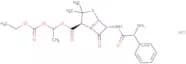
CAS:<p>Bacampicillin Hydrochloride is an aminopenicillin antibiotic and is used for the treatment of bacterial infections. It is a prodrug that is converted to ampicillin in the body, which then inhibits bacterial cell wall synthesis.</p>Formula:C21H28ClN3O7SPurity:Min. 95%Color and Shape:PowderMolecular weight:501.98 g/mol14-Bromodaunorubicin HBr
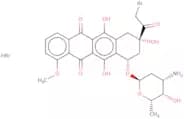
CAS:<p>14-Bromodaunorubicin HBr is a synthetic antitumor antibiotic derivative, which is a modified version of daunorubicin, an anthracycline antibiotic originally isolated from Streptomyces peucetius. With the inclusion of a bromine atom at the 14th position, this compound is designed to enhance the antitumor efficacy and alter pharmacokinetic properties compared to its parent molecule.</p>Formula:C27H28BrNO10·BrHPurity:75%MinMolecular weight:687.33 g/molTenofovir alafenamide (free base)
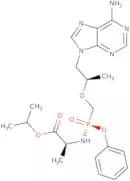
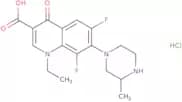
CAS:<p>Tenofovir alafenamide (free base) is a prodrug of tenofovir with action on viral reverse transcriptase to block replication and is used for treating HIV/AIDS and chronic hepatitis B with improved safety profile.</p>Formula:C21H29N6O5PPurity:Min. 97 Area-%Color and Shape:PowderMolecular weight:476.47 g/molLomefloxacin hydrochloride
CAS:<p>Lumefantrine is an antimalarial compound with a mode of action that inhibits heme detoxification in Plasmodium parasites. It is used in combination with artemether for treating malaria.</p>Formula:C17H19F2N3O3•HClPurity:Min. 95%Color and Shape:PowderMolecular weight:387.81 g/molSulbactam pivoxyl
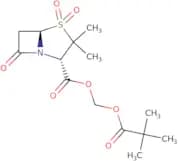
CAS:<p>**Sulbactam pivoxyl** is a prodrug, which is a chemically modified form of sulbactam intended to improve its pharmacokinetic properties. Sulbactam itself is a beta-lactamase inhibitor of synthetic origin, specifically designed to combat antibiotic resistance by inhibiting the beta-lactamase enzymes produced by certain bacteria. These enzymes typically break down beta-lactam antibiotics, rendering them ineffective.</p>Formula:C14H21NO7SPurity:Min. 95%Molecular weight:347.38 g/molBleomycin A5 hydrochloride
CAS:<p>Bleomycin A5 hydrochloride is an antineoplastic antibiotic, which is derived from the bacterium Streptomyces verticillus. Its mode of action involves binding to DNA and inducing strand breaks through the generation of free radicals, specifically targeting deoxyribose units. This leads to the inhibition of DNA synthesis and cell division, ultimately resulting in cell death.</p>Formula:C57H89N19O21S2•HClPurity:Min. 95%Color and Shape:PowderMolecular weight:1,177.03 g/mol