Terpenoids
Subcategories of "Terpenoids"
- Diterpenes (C₂₀)(671 products)
- Hemiterpenes (C₅)(21 products)
- Monoterpenes (C₁₀)(709 products)
- Sesquiterpenes (C₂₅)(452 products)
- Tetraterpenes (C₄₀)(63 products)
- Triterpenes (C₃₀)(1,128 products)
Found 1423 products of "Terpenoids"
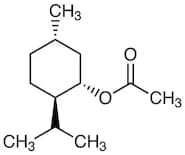
(+)-Menthyl Acetate
CAS:Formula:C12H22O2Purity:>98.0%(GC)Color and Shape:Colorless to Almost colorless clear liquidMolecular weight:198.31Ginsenoside Rb1 - 94%
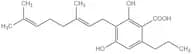
CAS:Ginsenoside Rb1 - 94% is a bioactive compound, which is a major ginsenoside found in Panax ginseng, a plant species with a long history of medicinal use. It is extracted through meticulous processes to ensure high purity, focusing on the retention of its bioactive properties.Formula:C54H92O23Purity:Min. 95%Color and Shape:PowderMolecular weight:1,109.29 g/molCannabigerovarinic acid
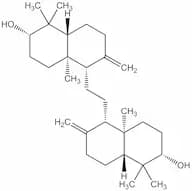
CAS:Carboxylic acid with phenol functionFormula:C20H28O4Purity:≥ 90.0 % (HPLC)Color and Shape:PowderMolecular weight:332.43Α-onocerin
CAS:Cyclic alcoholFormula:C30H50O2Purity:≥ 95.0 % (HPLC)Color and Shape:CrystalsMolecular weight:442.73Benzoylpaeoniflorin
CAS:Controlled ProductApplications Benzoylpaeoniflorin is a derivative of Paeoniflorin (P133830), a monoterpene glycoside with potential anti-inflammatory activity. Paeoniflorin inhibits monocyte phagocytosis, or the TNF-α and PGE-2 production of monocytes.
References Zhu, X. et al.: Nat. Prod. Res., 28, 301(2014); Di, W. et al.: Int. Immunopharmacol.,, 14, 172 (2012);Formula:C30H32O12Color and Shape:Off-WhiteMolecular weight:584.57Lanatoside B
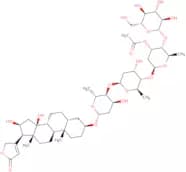
CAS:Lanatoside B is a cardiac glycoside, which is a type of compound obtained from the leaves of the Digitalis lanata plant, commonly known as woolly foxglove. This compound belongs to a class of organic substances known for their potent effects on the heart's contractile capability. The primary mode of action of Lanatoside B involves inhibiting the sodium-potassium ATPase enzyme in cardiac tissues. This inhibition leads to an increase in intracellular sodium concentration, which subsequently boosts calcium ions available for myocardial contraction via the sodium-calcium exchange mechanism.
Formula:C49H76O20Purity:Min. 95%Molecular weight:985.12 g/molLucidenic acid P
CAS:Lucidenic acid P is a triterpenoid compound, which is a bioactive metabolite isolated from Ganoderma lucidum, a medicinal mushroom known for its diverse pharmacological properties. It is primarily sourced from the fruiting bodies of this fungus, where it is present as part of a complex mixture of triterpenoids.
Formula:C29H42O8Purity:Min. 95%Molecular weight:518.64 g/molBetulonicacid
CAS:Betulonic acid is a naturally occurring triterpenoid compound, which is sourced from the bark of certain species of birch trees, mainly Betula species. It exhibits anti-inflammatory and anti-cancer properties, primarily through the modulation of various signaling pathways involved in inflammation and apoptosis. Betulonic acid acts by inhibiting key enzymes and transcription factors, such as cyclooxygenase and NF-κB, thereby reducing the production of pro-inflammatory mediators and promoting cell death in cancerous cells.Formula:C30H46O3Purity:Min. 95%Molecular weight:454.68 g/mol(+)-Cembrene
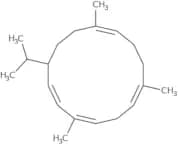
CAS:(+)-Cembrene is a diterpene hydrocarbon, which is a naturally occurring compound primarily found in marine organisms such as soft corals. This compound is characterized by its complex cyclic structure, which is a hallmark of many terpenoids known for diverse biological activities. The source of (+)-Cembrene is often the soft coral species, where it functions as a part of the organism's chemical defense system, deterring predators and inhibiting microbial growth.
Formula:C20H32Purity:Min. 95%Color and Shape:White PowderMolecular weight:272.47 g/molCycloartanol
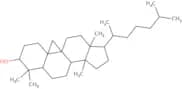
CAS:Cycloartanol is a triterpenoid alcohol, which is primarily derived from plant sources, particularly from the cell membranes of various plant species. As a phytosterol, it plays a critical role in the stabilization of cell membranes and serves as a precursor in the biosynthesis of more complex steroidal compounds. The mode of action of cycloartanol involves its integration into lipid bilayers, contributing to membrane fluidity and integrity, and potentially interacting with various biochemical pathways within the plant systems.Formula:C30H52OPurity:Min. 95%Color and Shape:PowderMolecular weight:428.7 g/molMethyl lucidenate D2
CAS:Methyl lucidenate D2 is a triterpenoid compound, which is a derivative isolated from the fruiting bodies of Ganoderma lucidum, a widely studied medicinal mushroom. This compound exhibits activity primarily through its ability to modulate various signaling pathways implicated in cancer cell proliferation and survival. Specifically, it has been observed to interfere with tumor growth by inducing apoptosis and cell cycle arrest in several cancer cell lines.Purity:Min. 95%Valerenic acid - Valeriana officinalis (common valerian)
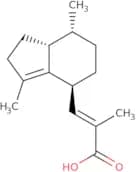
CAS:Valerenic acid is a bioactive compound, which is a sesquiterpenoid product of Valeriana officinalis, commonly known as valerian. This perennial flowering plant is native to Europe and parts of Asia and has been employed in traditional medicine for centuries. Valerenic acid is primarily extracted from the root, which is known for its distinctive aroma and therapeutic properties.Formula:C15H22O2Purity:Min. 98 Area-%Color and Shape:PowderMolecular weight:234.33 g/molSabinene hydrate
CAS:Sabinene hydrate is a bicyclic monoterpene alcohol, which is a naturally occurring compound found in essential oils of various plants, especially in species such as Juniperus and Myristica. This compound is derived from the oxidation of sabinene, a terpene prevalent in numerous aromatic plants.Formula:C10H18OPurity:Min. 95%Molecular weight:154.25 g/molJasminoside N
CAS:Jasminoside N is a natural compound, specifically a glycoside, which is derived from certain plant species, particularly in the genus *Jasminum*. As a natural metabolite found in these species, it exhibits an interesting profile in pharmacological research. The mode of action of Jasminoside N primarily involves its interaction with specific cellular pathways, often influencing anti-inflammatory and antioxidant responses. Its ability to modulate these pathways makes it a subject of interest in the study of plant-based therapeutic agents.Formula:C22H38O11Purity:Min. 95%Molecular weight:478.53 g/mol(-)-trans-Pinocarveol
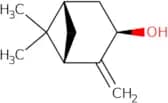
CAS:(-)-trans-Pinocarveol is a bicyclic monoterpene alcohol, which occurs naturally in a variety of essential oils, typically extracted from coniferous trees and some aromatic plants. As a chiral compound, it features a unique molecular configuration, often isolated from the Pinaceae family or synthesized via dihydroxylation of pinene derivatives.
Formula:C10H16OPurity:Min. 95%Molecular weight:152.23 g/molSaikosaponin B1
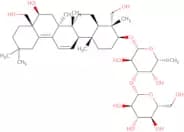
CAS:Saikosaponin B1 is a triterpenoid saponin, which is primarily derived from the roots of Bupleurum species, particularly Bupleurum falcatum. This bioactive compound exhibits a plethora of pharmacological activities through various modes of action, including modulation of immune responses and inhibition of inflammatory pathways. It interacts with cellular components to influence signal transduction mechanisms that are crucial in the pathophysiology of various diseases.Purity:Min. 95%8(17)14-Labdadiene-13-ol-6-acetyl - Larix decidua (European larch)
CAS:8(17)14-Labdadiene-13-ol-6-acetyl is a sesquiterpenoid compound, which is a type of naturally occurring terpenoid. It is derived from the resin of the Larix decidua, commonly known as the European larch. This compound is formed through the complex biosynthetic pathways in the larch tree, specifically involving the cyclization of geranylgeranyl diphosphate (GGPP) and subsequent modifications to yield its unique structure.Formula:C22H36O3Purity:Min. 95%Molecular weight:348.52 g/molPseudoginsenoside RT5
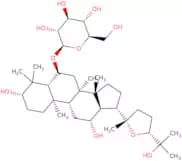
CAS:Pseudoginsenoside RT5 is a saponin, which is a type of glycoside found in certain plants, particularly in the Panax ginseng species. It is extracted from the root of this traditional medicinal plant, which is well-known for its therapeutic properties. The mode of action of Pseudoginsenoside RT5 involves modulating various cellular pathways, including the inhibition of certain enzymes and receptors involved in disease processes such as inflammation and cell proliferation. This compound is also implicated in antioxidant activities, which further contribute to its potential therapeutic effects.Purity:Min. 95%Pseudolaric acid B-O-beta-D-glucopyranoside
CAS:Pseudolaric acid B-O-beta-D-glucopyranoside is a secondary metabolite, which is a bioactive compound sourced from the bark of the Pseudolarix amabilis, a coniferous tree native to China. It exhibits its mode of action primarily through the disruption of fungal cell integrity and inhibition of fungal growth by interfering with the synthesis of key structural components in the cell wall. This action makes it a potent antifungal agent with secondary antibacterial properties.Purity:Min. 95%Prosaikogenin H
CAS:Prosaikogenin H is a naturally occurring compound, classified as a saponin, which is derived from specific plant sources, particularly within the family Araliaceae. It is obtained through extraction and purification processes from plants known for their bioactive compounds. The mode of action of prosaikogenin H involves interacting with cellular pathways to modulate biological responses, including anti-inflammatory and antioxidant effects. These interactions are facilitated by its structural properties that enable it to engage with cell membranes and influence signaling cascades.Formula:C36H58O8Purity:Min. 95%Molecular weight:618.84 g/mol