Flavonoids
Flavonoids are a group of plant metabolites with antioxidant properties that contribute to the color of fruits and flowers. They play a significant role in protecting plants from UV radiation and pathogens. Flavonoids are studied for their potential health benefits, including anti-inflammatory, antiviral, and anticancer properties. They are widely researched in the fields of pharmacology, nutrition, and molecular biology.
Subcategories of "Flavonoids"
- Anthocyanidins(46 products)
- Anthocyanin(46 products)
- Catechin(88 products)
- Chalcones(237 products)
- Pterocarpan(28 products)
Found 2408 products of "Flavonoids"
Sort by
Purity (%)
0
100
|
0
|
50
|
90
|
95
|
100
Luteone
CAS:<p>Luteone is a natural compound, which is a plant-derived flavonoid isolated from various botanical sources. It exhibits a range of biological activities primarily due to its ability to modulate key cellular mechanisms. Luteone functions through its interaction with multiple molecular targets, demonstrating antioxidant, anti-inflammatory, and anti-cancer properties by influencing signaling pathways and gene expression related to cellular stress responses and apoptosis.</p>Formula:C20H18O6Purity:Min. 95%Molecular weight:354.35 g/mol3-Hydroxy-5,6,2'-trimethoxyflavone
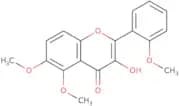
CAS:<p>3-Hydroxy-5,6,2'-trimethoxyflavone is a naturally occurring flavonoid, which is a type of polyphenolic compound found predominantly in various plants. These compounds are known for their diverse biological activities, often exerting significant pharmacological effects. This particular flavonoid is commonly sourced from medicinal plants and has been the subject of research due to its potential therapeutic benefits.</p>Formula:C18H16O6Purity:Min. 95%Molecular weight:328.32 g/mol3,7-Dihydroxy-3',4'-dimethoxyflavone
CAS:<p>3,7-Dihydroxy-3',4'-dimethoxyflavone is a flavonoid compound, which is a type of polyphenolic molecule known for its diverse roles in biological systems. This compound is naturally sourced from various plants, where it functions as a secondary metabolite contributing to the plant's defense mechanisms. Its biochemical mode of action primarily involves scavenging free radicals, thereby exerting antioxidant effects. In addition, it modulates key signaling pathways to exhibit anti-inflammatory effects.</p>Formula:C17H14O6Purity:Min. 95%Color and Shape:White PowderMolecular weight:314.29 g/molQuercetin-3-arabinoside
CAS:<p>Quercetin-3-arabinoside is a flavonoid glycoside, which is a naturally occurring compound found in various plants including fruits and vegetables. It is derived from quercetin, a flavonoid widely distributed in the plant kingdom. The arabinoside component is a sugar moiety that enhances the solubility and stability of the compound. Quercetin-3-arabinoside exerts its effects through antioxidant activity, where it scavenges free radicals and chelates metal ions, thus protecting cells from oxidative stress and potential damage.</p>Formula:C20H18O11Purity:Min. 95%Color and Shape:PowderMolecular weight:434.35 g/molQuercetin 3-b-D-galactoside
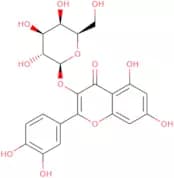
CAS:<p>Quercetin 3-b-D-galactoside is a flavonoid glycoside, which is a type of polyphenolic compound. It is derived primarily from various fruits and vegetables, as it is a naturally occurring plant metabolite. This compound acts as an antioxidant, scavenging free radicals and reducing oxidative stress.</p>Formula:C21H20O12Purity:Min. 98 Area-%Color and Shape:Yellow PowderMolecular weight:464.38 g/molNaringenin-7-glucoside
CAS:<p>Naringenin-7-glucoside is a flavonoid glycoside, which is primarily sourced from citrus fruits and certain herbs. This compound is a glucoside derivative of naringenin, a type of flavanone commonly found in a variety of plant species. With its distinct chemical structure, Naringenin-7-glucoside exerts its effects primarily through antioxidant and anti-inflammatory mechanisms. The compound works by scavenging free radicals and modulating cell signaling pathways, thereby reducing oxidative stress and inflammation at the cellular level.</p>Formula:C21H22O10Purity:Min. 95%Color and Shape:White Off-White PowderMolecular weight:434.39 g/mol5-Methyl-7-hydroxyisoflavone
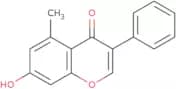
CAS:<p>5-Methyl-7-hydroxyisoflavone is a naturally occurring isoflavone metabolite, which is derived primarily from the metabolic process of certain plant-derived flavonoids. Its source includes various legumes and other plants known for their rich isoflavone profiles. The compound acts principally by modulating cellular signaling pathways, including those involved in inflammation and oxidative stress response.</p>Formula:C16H12O3Purity:Min. 95%Color and Shape:White PowderMolecular weight:252.26 g/molKaempferol-3-glucoside(6”-O-acetate)-7-glucoside
CAS:<p>Kaempferol-3-glucoside(6”-O-acetate)-7-glucoside is a flavonoid glycoside, which is a naturally occurring compound found in various plants and foods. This compound originates from plant sources, notably in fruits, vegetables, and certain traditional medicines, where it is biosynthesized as a secondary metabolite.</p>Formula:C29H32O17Purity:Min. 95%Molecular weight:652.55 g/mol3,7,8,3'-Tetramethoxyflavone
CAS:<p>3,7,8,3'-Tetramethoxyflavone is a naturally occurring flavonoid compound, which is derived from various plant sources, particularly those in the genus Kaempferia and others known for their rich phytochemical profiles. As a secondary metabolite, it has been studied for its potential pharmacological benefits and biological activities. The mode of action of 3,7,8,3'-Tetramethoxyflavone includes modulation of signaling pathways and interaction with specific enzymes and receptors, contributing to its anti-inflammatory, antioxidant, and potential anticancer properties. Researchers have explored its effects on cellular processes such as apoptosis and cell cycle regulation, making it a compound of interest in drug discovery and development. Additionally, 3,7,8,3'-Tetramethoxyflavone has been investigated for its role in neuroprotection and its capacity to interact with biochemical pathways involved in neurodegenerative diseases. This compound continues to be a focal point in studies aimed at understanding its contributions to health and disease prevention at the molecular level.</p>Formula:C19H18O6Purity:Min. 95%Color and Shape:PowderMolecular weight:342.34 g/mol7,2',4'-Trimethoxyisoflavone
CAS:<p>7,2',4'-Trimethoxyisoflavone is a naturally occurring isoflavone, which is primarily found in certain plant species. As a derivative of the isoflavone family, it is sourced from botanical origins known for their rich content of phytoestrogens. The mode of action of 7,2',4'-Trimethoxyisoflavone is linked to its potential antioxidant properties, where it may interact with cellular mechanisms to mitigate oxidative stress by neutralizing free radicals.</p>Formula:C18H16O5Purity:Min. 95%Molecular weight:312.32 g/molPinocembrin
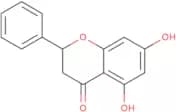
CAS:<p>Pinocembrin is a flavonoid compound, which is a type of polyphenolic molecule, extracted primarily from honey, propolis, and various plants. It is characterized by its unique structure allowing it to function effectively as an antioxidant. The mode of action of Pinocembrin involves scavenging free radicals and reducing oxidative stress, which contributes to its protective effects on cells and tissues.</p>Formula:C15H12O4Purity:Min. 98 Area-%Color and Shape:White PowderMolecular weight:256.25 g/mol7-Hydroxy-2',4',5'-trimethoxyisoflavone
CAS:<p>7-Hydroxy-2',4',5'-trimethoxyisoflavone is a naturally occurring flavonoid, which is commonly isolated from various plant sources, including legumes and other flavonoid-rich botanical species. This compound exhibits a unique structural configuration characterized by hydroxyl and methoxy functional groups, contributing to its notable bioactivity.</p>Formula:C18H16O6Purity:Min. 95%Color and Shape:PowderMolecular weight:328.32 g/mol7,8-Dihydroxyisoflavone
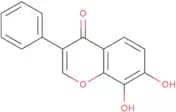
CAS:<p>7,8-Dihydroxyisoflavone is an isoflavone compound, which is a naturally derived product found predominantly in plants like Trifolium pratense, also known as red clover. It is classified as a selective tyrosine receptor kinase B (TrkB) agonist, which means it can mimic the action of brain-derived neurotrophic factor (BDNF), a protein crucial for neuronal survival, growth, and differentiation in the central nervous system.</p>Formula:C15H10O4Purity:Min. 95%Molecular weight:254.24 g/molRutin hydrate
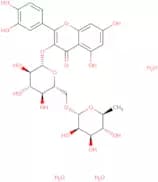
CAS:<p>Capillary protectant; free radical scavenger; antioxidant</p>Formula:C27H30O16·3H2OPurity:Min. 95 Area-%Color and Shape:Yellow PowderMolecular weight:664.56 g/molSchaftoside
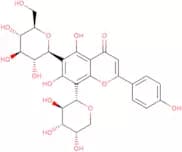
CAS:<p>Schaftoside is a naturally occurring flavonoid glycoside, which is derived from a variety of plant sources, particularly within the Leguminosae and Poaceae families. As a compound, it features a structural integration of apigenin linked to two units of glucose, establishing its classification within the group of C-glycosyl flavonoids. Its mode of action involves interactions with various molecular pathways, implying antioxidant and anti-inflammatory effects. This is attributed to its capacity to scavenge free radicals and modulate signal transduction processes involving cytokines and transcription factors.</p>Formula:C26H28O14Purity:Min. 98 Area-%Color and Shape:PowderMolecular weight:564.49 g/mol3,7-Dimethoxyflavone
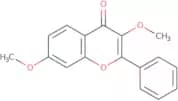
CAS:<p>3,7-Dimethoxyflavone is a naturally occurring flavone, which is a type of polyphenolic compound. It is sourced from various plant species, notably those within the genus *Kaempferia*, and can also be synthesized in laboratory settings. The compound is characterized by its distinct chemical structure, featuring methoxy groups at the 3 and 7 positions on the flavone backbone.</p>Formula:C17H14O4Purity:Min. 95%Color and Shape:PowderMolecular weight:282.29 g/mol7,8-Benzoflavone
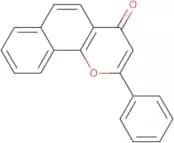
CAS:<p>7,8-Benzoflavone is a synthetic flavonoid compound, which is derived from the structural modification of naturally occurring flavones. It possesses significant biochemical activity attributed to its ability to act as a potent inhibitor of certain cytochrome P450 enzymes, particularly CYP1A1 and CYP1B1. By inhibiting these enzymes, 7,8-Benzoflavone modulates the metabolism of various xenobiotics, impacting the bioactivation or detoxification of potential carcinogens.</p>Formula:C19H12O2Purity:Min. 95%Color and Shape:White PowderMolecular weight:272.3 g/molGlycitein
CAS:<p>Glycitein is an isoflavone compound, which is a type of phytoestrogen primarily derived from soy products. It is sourced from soybeans, where it functions as a secondary metabolite. In biochemical terms, glycitein exhibits modes of action characterized by its estrogenic and antioxidant activities. It interacts with estrogen receptors in the body, mimicking the hormone's effects to a certain extent, which can influence numerous physiological processes.</p>Formula:C16H12O5Purity:Min. 95%Color and Shape:PowderMolecular weight:284.26 g/molα-Naphthoflavanone
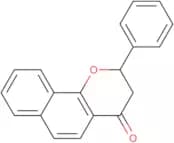
CAS:<p>**α-Naphthoflavanone** is a synthetic flavanone compound, which is derived from natural plant polyphenols. It exhibits its mode of action primarily through the modulation of various biochemical pathways, potentially influencing enzyme activity, receptor binding, and signaling cascades. As a flavanone, it interacts with specific molecular targets, leading to possible antioxidant and anti-inflammatory effects.</p>Formula:C19H14O2Purity:Min. 95%Color and Shape:SolidMolecular weight:274.31 g/mol5,2'-Dihydroxyflavone
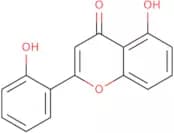
CAS:<p>5,2'-Dihydroxyflavone is a type of flavonoid, which is a class of polyphenolic compounds. These compounds are predominantly found in various plants, serving as part of their secondary metabolites. As a natural phytochemical, 5,2'-Dihydroxyflavone has garnered attention for its potential bioactive properties, particularly in the realm of neuroprotection.</p>Formula:C15H10O4Purity:Min. 95%Molecular weight:254.24 g/mol