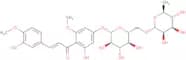
Flavonoids
Flavonoids are a group of plant metabolites with antioxidant properties that contribute to the color of fruits and flowers. They play a significant role in protecting plants from UV radiation and pathogens. Flavonoids are studied for their potential health benefits, including anti-inflammatory, antiviral, and anticancer properties. They are widely researched in the fields of pharmacology, nutrition, and molecular biology.
Subcategories of "Flavonoids"
- Anthocyanidins(46 products)
- Anthocyanin(46 products)
- Catechin(88 products)
- Chalcones(237 products)
- Pterocarpan(28 products)
Found 2408 products of "Flavonoids"
Sort by
Purity (%)
0
100
|
0
|
50
|
90
|
95
|
100
Daidzein
CAS:<p>Daidzein is an isoflavone compound, which is a type of phytoestrogen primarily sourced from soybeans and other legumes. It exhibits estrogenic activity through its ability to bind to estrogen receptors, albeit with less potency than endogenous estrogens. This selective estrogen receptor modulator (SERM) can mimic or modulate natural estrogen effects in the body, depending on the physiological context.</p>Formula:C15H12O4Purity:Min. 95%Color and Shape:White PowderMolecular weight:256.25 g/molAmpelopsin-3'-O-glucoside
CAS:<p>Ampelopsin-3'-O-glucoside is a flavonoid glycoside, which is a compound derived from various plant sources, including members of the Vitaceae family. This compound is characterized by the attachment of a glucose molecule to the flavonoid ampelopsin, altering its solubility and bioavailability properties. Its mode of action is primarily through its antioxidant activity, involving the scavenging of free radicals and inhibition of oxidative stress pathways. These properties are of significant interest due to their potential in modulating the oxidative status in biological systems.</p>Formula:C21H22O13Purity:Min. 95%Color and Shape:PowderMolecular weight:482.39 g/mol3,7,8,2',4'-Pentahydroxyflavone
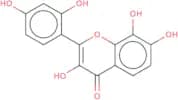
3,7,8,2',4'-Pentahydroxyflavone is a flavonoid compound, which is a type of polyphenolic secondary metabolite found in various plants. This compound is typically isolated from natural sources, including vegetables, fruits, and certain herbs. Its chemical structure, characterized by multiple hydroxyl groups, contributes to its potent antioxidant activity, allowing it to scavenge free radicals effectively.Formula:C15H10O7Purity:90%Color and Shape:PowderMolecular weight:302.24 g/molDaidzin
CAS:<p>Daidzin is an isoflavone compound, which is a naturally occurring chemical extracted from the root of the plant Pueraria lobata, commonly known as kudzu. Its primary mode of action involves the inhibition of the enzyme aldehyde dehydrogenase (ALDH). This enzyme plays a significant role in the metabolism of alcohol, as it converts acetaldehyde, a toxic intermediate, into acetic acid, which is less harmful to the body.</p>Formula:C21H20O9Purity:Min. 95%Color and Shape:White Off-White PowderMolecular weight:416.38 g/mol3-Hydroxy-7,8,2',4'-tetramethoxyflavone
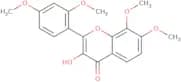
CAS:<p>3-Hydroxy-7,8,2',4'-tetramethoxyflavone is a specialized flavonoid compound, which is a type of polyphenolic metabolite derived primarily from certain plant sources. This compound belongs to a class of naturally occurring flavones that are isolated from plants known for their diverse biological activities. Its mode of action involves interacting with cellular pathways and receptors, potentially modulating enzymatic activity and affecting signal transduction processes.</p>Formula:C19H18O7Purity:Min. 95%Molecular weight:358.34 g/molOrobol 3',4'-dimethyl ether
CAS:<p>Orobol 3',4'-dimethyl ether is a synthetic flavonoid compound, which is derived from chemical modifications of naturally occurring flavonoids. These compounds are typically found in a variety of plants and are well-known for their diverse biological activities. Orobol 3',4'-dimethyl ether is specifically engineered to enhance or modify these natural properties for potential therapeutic use.</p>Formula:C17H14O6Purity:Min. 95 Area-%Color and Shape:PowderMolecular weight:314.29 g/molIriskashmirianin
CAS:<p>Iriskashmirianin is a naturally occurring flavonoid derivative, which is isolated from specific plant sources. It belongs to the broader class of flavonoids, compounds known for their bioactive properties. The mode of action of Iriskashmirianin involves its interaction with cellular pathways, where it functions primarily as an antioxidant and anti-inflammatory agent. It neutralizes free radicals and modulates inflammatory responses by influencing various signaling pathways at the molecular level.</p>Formula:C18H14O7Purity:Min. 95%Molecular weight:342.3 g/mol3',4'-Dihydroxyflavanone
<p>3',4'-Dihydroxyflavanone is a type of flavonoid, which is a class of polyphenolic compounds known for diverse biological activities. This compound is primarily sourced from various plants, where it plays a role in plant defense mechanisms due to its antioxidant properties. The mode of action of 3',4'-Dihydroxyflavanone involves the scavenging of free radicals, thereby mitigating oxidative stress at the cellular level. This activity is facilitated by its dihydroxy structure, which allows it to donate hydrogen atoms to neutralize reactive oxygen species.</p>Formula:C15H10O4Purity:Min. 95%Molecular weight:254.24 g/molIsoliquiritin
CAS:<p>Isoliquiritin is a flavonoid compound, which is primarily extracted from the roots of the Glycyrrhiza glabra plant, commonly known as licorice. The compound is characterized by its unique chemical structure that plays a significant role in its biological activity. The mode of action of isoliquiritin is tied to its ability to interact with various cellular signaling pathways. It exhibits antioxidant, anti-inflammatory, and antimicrobial properties by modulating the expression of specific enzymes and inhibiting the activity of pro-inflammatory cytokines. Additionally, its potential in modulating cellular pathways makes it an intriguing subject for research related to metabolic and cardiovascular health.</p>Formula:C21H22O9Purity:Min. 85.0 Area-%Molecular weight:418.39 g/molRef: 3D-Q-100563
10mgTo inquire25mgTo inquire50mgTo inquire100mgTo inquire250mgTo inquire-Unit-mgmgTo inquireLoureirin B
CAS:<p>Loureirin B is a natural polyphenolic compound, which is derived from the resin of Dracaena cochinchinensis, commonly known as Dragon's Blood. This compound exhibits its mode of action primarily through the inhibition of key inflammatory pathways, including the suppression of cyclooxygenase-2 (COX-2) and the reduction of pro-inflammatory cytokines. Such mechanisms suggest its potential in modulating inflammatory responses effectively.</p>Formula:C18H20O5Purity:Min. 95%Color and Shape:White PowderMolecular weight:316.35 g/mol7,2'-Dibenzyloxy-8,4'-dimethoxyisoflavone
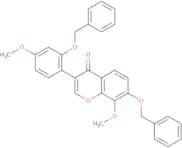
CAS:<p>7,2'-Dibenzyloxy-8,4'-dimethoxyisoflavone is a complex flavonoid derivative, which is a synthetic isoflavone compound with potential applications in medical and biochemical research. It is derived from the modification of naturally occurring isoflavones, typically found in various plants, including soybeans. Isoflavones like this compound are of significant interest due to their estrogenic activities, as they can mimic or influence estrogen action in biological systems.</p>Formula:C31H26O6Purity:Min. 95%Molecular weight:494.53 g/mol3',4',7,8-Tetramethoxyflavone
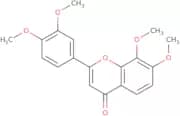
CAS:<p>3',4',7,8-Tetramethoxyflavone is a naturally occurring flavonoid, which is a type of polyphenolic compound. It is predominantly found in various plant species, where it serves vital roles in the plant's defense mechanisms and contributes to its pigmentation. This compound is characterized by its methoxy groups attached to its flavonoid backbone, which influence its bioactivity and solubility.</p>Formula:C19H18O6Purity:Min. 95%Color and Shape:PowderMolecular weight:342.34 g/mol4',6-Dihydroxyflavone
CAS:<p>4',6-Dihydroxyflavone is a naturally occurring flavonoid, commonly found in various plants and foods. It is a compound derived from the flavonoid class, which is known for its wide range of biological activities. This compound is isolated from plant sources, and it shares the common structure of flavones, consisting of a 15-carbon skeleton with hydroxyl groups at specific positions, enhancing its antioxidant properties.</p>Formula:C15H10O4Purity:Min. 95%Color and Shape:PowderMolecular weight:254.24 g/mol2',5,6',7-Tetrahydroxyflavanone
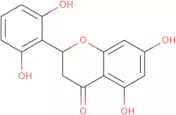
CAS:<p>2',5,6',7-Tetrahydroxyflavanone is a naturally occurring flavanone, which is a type of flavonoid compound. It is primarily sourced from various plant species, where it functions as a secondary metabolite. This compound exhibits significant antioxidant activity, which is mediated through its ability to scavenge free radicals and chelate metal ions, thereby mitigating oxidative stress at the cellular level.</p>Formula:C15H12O6Purity:Min. 95%Color and Shape:PowderMolecular weight:288.25 g/molGlabridin
CAS:<p>Glabridin is a flavonoid compound, which is primarily isolated from the root of the licorice plant, Glycyrrhiza glabra. It functions as a potent skin-lightening and anti-inflammatory agent through its ability to inhibit melanin synthesis in the skin. This mode of action is primarily achieved by inhibiting the activity of tyrosinase, an enzyme crucial in the melanin biosynthesis pathway. Additionally, Glabridin exhibits antioxidant properties, which help to protect skin cells from oxidative damage.</p>Formula:C20H20O4Purity:Min. 98 Area-%Color and Shape:PowderMolecular weight:324.37 g/molLuteolin-6-C-glucoside
CAS:<p>Luteolin-6-C-glucoside is a flavonoid glycoside, which is a bioactive compound derived from various plant sources, including celery, parsley, and certain herbs. This compound is characterized by the attachment of a glucose molecule at the C-6 position of luteolin, a naturally occurring flavonoid. The mode of action of luteolin-6-C-glucoside primarily involves its antioxidant properties, where it neutralizes free radicals and reduces oxidative stress within biological systems.</p>Formula:C21H20O11Purity:Min. 98 Area-%Color and Shape:PowderMolecular weight:448.38 g/molLuteolin
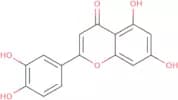
CAS:<p>Luteolin is a flavonoid compound, which is a naturally occurring substance found predominantly in various fruits, vegetables, and medicinal herbs. Its sources are diverse, including parsley, artichokes, celery, and chamomile tea, where it is accumulated as a secondary metabolite. The mode of action of luteolin primarily involves the inhibition of key enzymes and pathways that lead to oxidative stress and inflammation, including but not limited to the cyclooxygenase and lipoxygenase pathways. This inhibition results in its strong antioxidant and anti-inflammatory properties.</p>Formula:C15H10O6Purity:Min. 95 Area-%Color and Shape:White Yellow Green PowderMolecular weight:286.24 g/mol3',4',5'-Trimethoxyflavanone
<p>3',4',5'-Trimethoxyflavanone is a specialized flavonoid compound, which is synthesized from natural sources, such as plants belonging to the flavonoid family. This compound is characterized by its distinctive methoxy group modifications on the flavanone backbone, enhancing its bioactive potential. Its mode of action involves modulation of various biochemical pathways, including antioxidant systems and inflammatory mediators. By stabilizing free radicals and inhibiting pro-inflammatory enzymes, 3',4',5'-Trimethoxyflavanone plays a crucial role in cellular protection and homeostasis.</p>Formula:C18H16O5Purity:Min. 95%Molecular weight:312.3 g/molHesperidin methylchalcone
CAS:<p>Hesperidin methylchalcone is a specialized flavonoid product, which is derived from citrus fruits, predominantly oranges. It is chemically modified from its natural form to enhance its solubility and bioavailability, making it more effective in biological systems. The mode of action of hesperidin methylchalcone involves the modulation of oxidative stress and inflammation within the body, primarily by acting as an antioxidant and anti-inflammatory agent. It achieves these effects by scavenging free radicals and inhibiting pro-inflammatory enzymes, which contributes to cellular protection and stabilization of connective tissues.</p>Formula:C29H36O15Purity:Min. 98.0%Color and Shape:PowderMolecular weight:624.59 g/molKaempferol-3,4'-diglucoside
CAS:<p>Kaempferol-3,4'-diglucoside is a glycosylated flavonoid, which is a type of chemical compound found abundantly in various plants. This product is derived from natural sources, particularly from several edible and medicinal plants known for their health benefits. Kaempferol-3,4'-diglucoside functions through mechanisms related to its antioxidant properties, scavenging free radicals and reducing oxidative stress within biological systems.</p>Formula:C27H30O16Purity:Min. 95%Molecular weight:610.52 g/mol