Flavonoids
Flavonoids are a group of plant metabolites with antioxidant properties that contribute to the color of fruits and flowers. They play a significant role in protecting plants from UV radiation and pathogens. Flavonoids are studied for their potential health benefits, including anti-inflammatory, antiviral, and anticancer properties. They are widely researched in the fields of pharmacology, nutrition, and molecular biology.
Subcategories of "Flavonoids"
- Anthocyanidins(46 products)
- Anthocyanin(46 products)
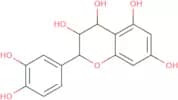
- Catechin(88 products)
- Chalcones(237 products)
- Pterocarpan(28 products)
Found 2408 products of "Flavonoids"
Sort by
Purity (%)
0
100
|
0
|
50
|
90
|
95
|
100
Genistein
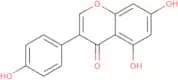
CAS:<p>Genistein is a naturally occurring isoflavone, which is derived primarily from soy products and other legumes. Its chemical structure allows it to mimic the function of 17-beta-estradiol, a form of estrogen, by binding to estrogen receptors. This selective binding primarily targets estrogen receptor beta, leading to a range of biological effects. Moreover, Genistein exhibits antioxidant properties by scavenging free radicals and inhibiting oxidative stress.</p>Formula:C15H10O5Purity:Min. 95%Color and Shape:White PowderMolecular weight:270.24 g/mol5,2',3'-Trimethoxyflavanone
<p>5,2',3'-Trimethoxyflavanone is a specialized methoxyflavanone, which is a derivative of flavanone compounds. This compound is typically sourced from naturally occurring flavonoids found in various plant species. Its structure incorporates methoxy groups that contribute to its distinct chemical properties and potential biological activity.</p>Formula:C18H16O5Purity:Min. 95%Molecular weight:312.3 g/molCladrin-7-O-glucoside
CAS:<p>Cladrin-7-O-glucoside is a flavonoid glycoside, which is a type of secondary metabolite commonly found in various plants. This compound is derived from natural sources, particularly plants belonging to the genus Cleome. Flavonoid glycosides are known for having a sugar molecule attached to a flavonoid backbone, which influences their solubility and bioavailability.</p>Formula:C23H24O10Purity:Min. 95%Molecular weight:460.43 g/mol3,7,3'-Trimethoxyflavone
CAS:3,7,3'-Trimethoxyflavone is a type of flavonoid, which is a class of polyphenolic compounds. It is naturally occurring and can be derived from certain plant species. Flavonoids are well-known for their presence in fruits, vegetables, and various other plant sources, contributing to the plants' color, flavor, and disease resistance.Formula:C18H16O5Purity:Min. 95%Molecular weight:312.32 g/mol7-Hydroxy-2',3',4'-trimethoxyisoflavone
CAS:<p>7-Hydroxy-2',3',4'-trimethoxyisoflavone is a naturally occurring isoflavone, which is a type of flavonoid commonly found in certain plants. It is typically sourced from various botanical species known for their rich flavonoid content. Isoflavones are derived from plants such as soybeans, and in some cases, isolated from other legumes and herbs.</p>Formula:C18H16O6Purity:Min. 95%Molecular weight:328.32 g/mol5,7-Dihydroxyisoflavone
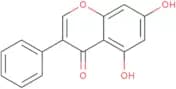
CAS:<p>5,7-Dihydroxyisoflavone is a naturally occurring isoflavone, which is a type of flavonoid compound commonly found in various plants. It is primarily derived from sources such as soybeans and other legumes, which are known to contain a wide array of phytonutrients. The mode of action of 5,7-Dihydroxyisoflavone involves its ability to act as an antioxidant, scavenging free radicals and thereby reducing oxidative stress within biological systems. This function is crucial in preserving cellular health and preventing damage that can lead to chronic diseases.</p>Formula:C15H10O4Purity:Min. 95%Color and Shape:PowderMolecular weight:254.24 g/molEupatilin
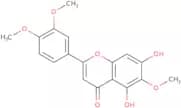
CAS:<p>Eupatilin is a flavonoid compound, which is derived from the Artemisia species. This plant-based source has been traditionally used in various medicinal applications across different cultures. Eupatilin’s mode of action involves inhibition of pro-inflammatory cytokines and modulation of signaling pathways associated with inflammation, such as the NF-kB pathway. Additionally, it has been found to possess antioxidant activities, which further contributes to its therapeutic potential.</p>Formula:C18H16O7Purity:Min. 95%Color and Shape:PowderMolecular weight:344.32 g/molIsorhamnetin-3-O-b-D-glucoside
CAS:<p>Isorhamnetin-3-O-b-D-glucoside is a flavonoid glycoside, which is typically extracted from various plant sources, notably from fruits and medicinal herbs like sea buckthorn and Ginkgo biloba. This compound is recognized for its role in modulating oxidative stress due to its antioxidant capabilities. The glycoside linkage enhances the solubility and bioavailability compared to the aglycone, isorhamnetin.</p>Formula:C22H22O12Purity:Min. 95 Area-%Color and Shape:Yellow PowderMolecular weight:478.4 g/mol7-O-Methyl quercetin
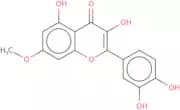
CAS:<p>7-O-Methyl quercetin is a flavonoid derivative, which is a naturally occurring compound found in several plant species, often referred to as a methylated form of the flavonoid quercetin. It is primarily sourced from plants such as onion, green tea, and various berries, where it serves diverse ecological roles, including defense mechanisms against herbivores and pathogens.</p>Formula:C16H12O7Purity:90%Color and Shape:PowderMolecular weight:316.26 g/molQuercetin 3,4'-dimethyl ether
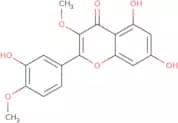
CAS:<p>Quercetin 3,4'-dimethyl ether is a flavonoid derivative, which is a naturally occurring compound found in various plants. It is part of the larger family of flavonoids, known for their diverse biological activities and presence in numerous botanical sources such as fruits, vegetables, and medicinal herbs. The modification of quercetin by methylation alters its solubility and bioavailability, potentially enhancing its biological effects.</p>Formula:C17H14O7Purity:Min. 95%Molecular weight:330.29 g/molHinokiflavone pentamethyl ether
CAS:<p>Hinokiflavone pentamethyl ether is a synthetic flavonoid derivative, which is a chemically modified compound sourced from the natural biflavonoid, hinokiflavone. It is characterized by the methylation of phenolic hydroxyl groups, enhancing its stability and solubility. This compound can be derived through organic synthesis techniques involving the catalytic methylation of hinokiflavone.</p>Formula:C35H28O10Purity:Min. 95%Molecular weight:608.59 g/molApigenin - 97%
CAS:Apigenin - 97% is a high-purity flavonoid compound, which is primarily derived from various plant sources such as parsley, chamomile, and celery. This compound is known for its significant presence in the plant kingdom, where it functions as a secondary metabolite contributing to plant defense.Formula:C15H10O5Purity:Min. 97 Area-%Color and Shape:PowderMolecular weight:270.24 g/mol3-Methylflavone-8-carboxylic acid
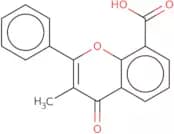
CAS:<p>3-Methylflavone-8-carboxylic acid is a synthetic compound, which is known primarily as an antagonist of the gamma-aminobutyric acid (GABA) receptor system. This product is derived from chemical synthesis processes involving flavone derivatives. The mode of action involves competitive inhibition at the GABA-A receptor sites, thereby modulating neurotransmitter activity within the central nervous system.</p>Formula:C17H12O4Purity:Min. 95%Color and Shape:PowderMolecular weight:280.27 g/mol4',6,7-Trimethoxyisoflavone
CAS:<p>4',6,7-Trimethoxyisoflavone is a naturally occurring isoflavone, which is a type of phytoestrogen found in certain plants. This compound is generally derived from plant sources that are rich in isoflavones, such as soybeans and other legumes. Isoflavones like 4',6,7-Trimethoxyisoflavone are known to exhibit a range of biological activities due to their structural similarity to estrogens, allowing them to bind to estrogen receptors.</p>Formula:C18H16O5Purity:Min. 95%Color and Shape:White Off-White PowderMolecular weight:312.32 g/molTheaflavin-3,3'-digallate
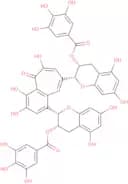
CAS:<p>Theaflavin-3,3'-digallate is a polyphenolic compound, which is primarily derived from black tea through the oxidative fermentation of tea leaves. This compound is part of the theaflavins, which result from the enzymatic oxidation of catechins, the major constituents of green tea. It exhibits various biological activities due to its complex molecular structure, which includes multiple hydroxyl groups that facilitate specific intermolecular interactions.</p>Formula:C43H32O20Purity:Min. 95%Color and Shape:Red PowderMolecular weight:868.7 g/molAspalathin
CAS:<p>AntioxidantImage created by Dave Richardson sourced from <a href="https://www.inaturalist.org/photos/171407970" target="_blank" rel="noreferrer noopener">https://www.inaturalist.org/photos/171407970</a></p>Formula:C21H24O11Purity:Min. 97 Area-%Color and Shape:White PowderMolecular weight:452.41 g/molLeucocyanidin polymer
CAS:<p>Leucocyanidin polymer is an oligomeric flavonoid compound, which is primarily sourced from plants, particularly abundant in certain fruits, seeds, and barks. These naturally occurring polymers belong to a class of compounds known as proanthocyanidins, which are part of the larger flavonoid family.</p>Formula:(C15H14O7•C15H14O6)xPurity:Min. 95%Color and Shape:PowderBryacarpene-2
CAS:<p>Bryacarpene-2 is a terpene compound, which is derived from natural sources, specifically marine bryozoans. Its mode of action involves interacting with specific biological pathways, potentially influencing cellular processes such as apoptosis and inflammation. This interaction suggests its potential as a therapeutic agent in various biomedical fields. The uses and applications of Bryacarpene-2 are currently under investigation, particularly its role in medical research related to anti-cancer, anti-inflammatory, and antimicrobial properties. The exploration of Bryacarpene-2 highlights its capacity as a candidate for drug development, offering a promising avenue for scientific exploration and potential clinical applications.</p>Formula:C18H16O6Purity:Min. 95%Molecular weight:328.32 g/molKaempferol-3-glucoside-7-rhamnoside
CAS:<p>Kaempferol-3-glucoside-7-rhamnoside is a flavonoid glycoside, which is a natural compound found in several plant species, including tea, broccoli, and propolis. It is synthesized through glycosylation, where sugar moieties are enzymatically attached to the kaempferol backbone. This compound is known for its potent antioxidant activity, capable of scavenging free radicals and protecting cells from oxidative stress.</p>Formula:C27H30O15Purity:Min. 95%Color and Shape:PowderMolecular weight:594.52 g/mol5,4'-Dimethoxyflavanone
<p>5,4'-Dimethoxyflavanone is a flavonoid compound, which is a type of polyphenolic product ubiquitously found in various plant sources. These flavonoids are synthesized by plants as secondary metabolites, which aid in plant defense against herbivores and pathogens, and also contribute to the plant's coloration. The mode of action of 5,4'-Dimethoxyflavanone involves the modulation of oxidative stress and inflammation pathways. It achieves this by scavenging free radicals and inhibiting pro-inflammatory enzymes, thus providing a protective effect at the cellular level.</p>Formula:C17H16O4Purity:Min. 95%Molecular weight:284.31 g/mol