Nucleosides
Found 3569 products of "Nucleosides"
Guanosine 5'-diphosphate disodium salt
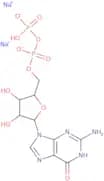
CAS:Guanosine 5'-diphosphate (GDP) disodium salt is a nucleoside dipsphate and a pyruvate kinase substrate, which converts GDP to GTP.Formula:C10H13N5Na2O11P2Purity:Min. 90.0 Area-%Molecular weight:487.16 g/mol2-Amino-1-(b-D-arabinofuranosyl)-5-methyl-4(1H)-pyrimidinone
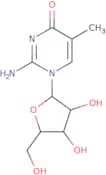
CAS:2-Amino-1-(b-D-arabinofuranosyl)-5-methyl-4(1H)-pyrimidinone (araA) is an activator of nucleoside synthesis. It is a novel and versatile chemical that can be used to produce both ribonucleosides and deoxyribonucleosides. AraA is a potent antiviral and anticancer agent that has been shown to inhibit the growth of cancer cells in vitro. AraA is a modified form of 2′,3′-dideoxyadenosine, which is synthesized by enzymatic modification of natural 2′,3′ dideoxythymidine.Purity:Min. 95%N6-Benzoyl-9-(3'-O-Deoxy-3'-fluoro-b-D-xylofuranosyl)adenine
N6-Benzoyl-9-(3'-O-Deoxy-3'-fluoro-b-D-xylofuranosyl)adenine is a novel compound that was synthesized in order to improve the activity of adenine. It has been shown to be an effective anticancer agent and antiviral agent in vitro. This drug has also been shown to be effective against herpes simplex virus type 1, herpes simplex virus type 2, varicella zoster virus, and HIV. N6-Benzoyl-9-(3'-O-Deoxy-3'-fluoro-b-D-xylofuranosyl)adenine is a ribonucleoside that binds to DNA and inhibits the synthesis of RNA. The phosphoramidites were synthesized with high purity and high quality. CAS Number: 51401061Purity:Min. 95%3-Ribofuranosyl-4,9-dihydro-4,6,7-trimethyl-9-oxoimidazo(1,2-a)purine
CAS:3-Ribofuranosyl-4,9-dihydro-4,6,7-trimethyl-9-oxoimidazo(1,2-a)purine is a nucleoside with the chemical formula C8H8N5O5. It is used in research as a phylogenetic marker and index fossil. 3RFP is found as a natural product in some plants and animals, but it can also be synthesized chemically. 3RFP has been shown to posttranscriptionally inhibit rRNA synthesis by binding to the ribonucleotide reductase enzyme. This inhibits the production of RNA needed for protein synthesis and cell division. 3RFP has been shown to have structural diversity that has yet to be fully explored due to its rarity.Purity:Min. 95%2'-Deoxycytidine-5'-triphosphate trisodium salt
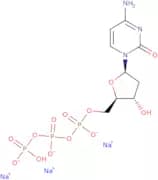
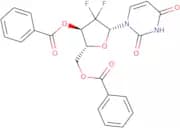
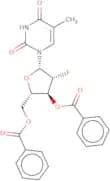
CAS:2'-Deoxycytidine-5'-triphosphate trisodium salt is an activator that has been shown to exhibit anticancer and antiviral activities. It is a novel nucleoside phosphoramidite that is used in the synthesis of DNA, RNA, and other nucleic acids. 2'-Deoxycytidine-5'-triphosphate trisodium salt has been modified by substituting the oxygen atom for a sulfur atom at the 5' position of the sugar moiety. This change makes it resistant to degradation by ribonucleases. 2'-Deoxycytidine-5'-triphosphate trisodium salt has also been shown to act as an inhibitor of human telomerase activity.Formula:C9H13N3O13P3Na3Purity:(%) Min. 85%Color and Shape:PowderMolecular weight:533.1 g/mol3',5'-Di-O-benzoyl-2'-deoxy-2',2'-difluorouridine
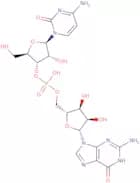
CAS:An intermediate for the preparation of modified oligonucleotides and other uridine derivatives containing a 2',2'-difluoro modification.Formula:C23H18F2N2O7Purity:Min. 95%Color and Shape:White PowderMolecular weight:472.4 g/molCytidyl-3'-5'-guanosine ammonium
CAS:Cytidyl-3'-5'-guanosine ammonium salt is a modified nucleoside that has antiviral and anticancer properties. It is synthetically made by modifying the phosphate groups of cytidine and guanosine with phosphoramidites. Cytidyl-3'-5'-guanosine ammonium salt has been shown to activate protein kinase C, which may be related to its anticancer activity.Formula:C19H25N8O12PPurity:Min. 95%Color and Shape:PowderMolecular weight:588.42 g/mol6-(β-D-2-Deoxyribofuranosyl)-3,4-dihydro-8H-pyrimido[4,5-c][1,2]oxazin-7-one
CAS:6-(β-D-2-Deoxyribofuranosyl)-3,4-dihydro-8H-pyrimido[4,5-c][1,2]oxazin-7-one is a novel nucleoside that has been shown to have anticancer and antiviral properties. In vitro studies have shown the compound to activate both DNA and RNA synthesis in cells. The compound also inhibits the replication of HIV viruses. 6-(β-D-2-Deoxyribofuranosyl)-3,4-dihydro-8H-pyrimido[4,5-c][1,2]oxazin-7-one is synthesized from ribonucleosides or deoxyribonucleosides through phosphoramidite chemistry. This product is available in high purity and high quality.Formula:C11H15N3O5Purity:Min. 95%Color and Shape:PowderMolecular weight:269.25 g/mol3'-O-Propargyluridine
CAS:3'-O-Propargyluridine is a synthetic nucleoside with an alkyne functional handle on the 3'-position of the sugarFormula:C12H14N2O6Purity:Min. 95%Color and Shape:White PowderMolecular weight:282.25 g/molN4-Propanoylcytidine
CAS:N4-Propanoylcytidine is a modified nucleoside which can be used as an antiviral agent, anticancer agent and activator. It activates the immune system by stimulating the production of interferon, resulting in the inhibition of viral replication. N4-Propanoylcytidine has also been shown to inhibit the proliferation of cancer cells and induce apoptosis. This compound has a novel chemical structure that is not found in natural nucleosides.
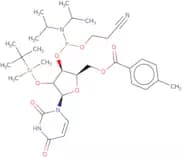
Purity:Min. 95%2'-O-tert-Butyldimethylsilyl-5'-O-toluoyluridine 3'-CE phosphoramidite
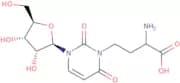
2'-O-tert-Butyldimethylsilyl-5'-O-toluoyluridine 3'-CE phosphoramidite is a modified ribonucleotide that can be used as an activator in oligonucleotide synthesis. 2'-O-tert-Butyldimethylsilyl-5'-O-toluoyluridine 3'-CE phosphoramidite is a novel nucleoside that has antiviral and anticancer properties. It has been shown to inhibit the growth of cells by inhibiting DNA synthesis, which may be due to its ability to bind to DNA and inhibit DNA polymerase. The CAS number for this product is 126214-01-3.Formula:C32H49N4O8PSiPurity:Min. 95%Molecular weight:676.83 g/mol3-(3-Amino-3-carboxypropyl)uridine
CAS:3-(3-Amino-3-carboxypropyl)uridine is an uridine analog that is used in the study of protein synthesis. It can be used to determine the amino acid sequence of a protein, or to identify proteins with similar sequences. 3-(3-Amino-3-carboxypropyl)uridine can also be used to study enzymatic reactions, such as those involved in the synthesis of polypeptides. This molecule has been shown to produce disulfide bonds and form covalent bonds with other molecules. The three-dimensional structure of this molecule has been determined by NMR spectroscopy and X-ray crystallography.
Formula:C13H19N3O8Purity:Min. 95%Color and Shape:PowderMolecular weight:345.31 g/mol9-(2'-O-Acetyl-3'-deoxy-3'-fluoro-5'-O-toluoyl-b-D-ribofuranosyl)-6-phenylpurine
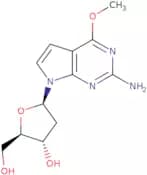
9-(2'-O-Acetyl-3'-deoxy-3'-fluoro-5'-O-toluoyl-b-D-ribofuranosyl)-6-phenylpurine (FTC) is a novel antiviral nucleoside analog that inhibits the synthesis of DNA by inhibiting the enzyme DNA polymerase. It has been shown to be effective against HIV in vitro. FTC exhibits anticancer activity through inhibition of DNA synthesis and induction of apoptosis. FTC also has high purity and quality, as it is synthesized chemically without any purification steps.Purity:Min. 95%7-Deaza-2'-deoxy-6-methoxyguanosine
CAS:7-Deaza-2'-deoxy-6-methoxyguanosine is a modified nucleoside and antiviral agent. It has been shown to inhibit the synthesis of DNA, RNA and protein in cells infected with the herpes simplex virus (HSV). 7-Deaza-2'-deoxy-6-methoxyguanosine is also an anticancer agent that has been shown to inhibit tumor growth in animal models. This compound is synthesized by phosphoramidite chemistry and is a novel precursor for the preparation of modified DNA and RNA. The purity of this product is greater than 98%.Formula:C12H16N4O4Purity:Min. 95%Color and Shape:PowderMolecular weight:280.29 g/mol2'-Deoxy-5-methylcytidine HCl
CAS:2'-Deoxy-5-methylcytidine HCl is a cytidine derivative that is used in the synthesis of DNA. It has been shown to have anticancer and antiviral properties, as well as being a synthetic activator for RNA polymerase. The chemical name for 2'-deoxy-5-methylcytidine HCl is 5'-[(2-bromoacetyl)amino]-2'-deoxyuridine 5'-O-(1,3-dithiole-2-thiocarbonyl)-3',5' -diiodo-. It belongs to the class of deoxyribonucleosides. This product may be used in applications such as DNA synthesis, modification of DNA, and antiviral treatment.Formula:C10H15N3O4·HClPurity:Min. 95%Color and Shape:White PowderMolecular weight:277.7 g/mol5-Iodo-2’-C-methylcytidine
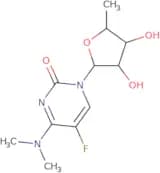
CAS:5-Iodo-2’-C-methylcytidine is a synthetic nucleoside that is an activator of DNA polymerases. It has been shown to be an anticancer agent and antiviral agent, with potential applications in the treatment of HIV and HBV infections. 5-Iodo-2’-C-methylcytidine is a novel monophosphate nucleoside that has been modified to improve its stability. This product is sold as a high purity, high quality, NMR grade material that can be used in research or in the manufacture of pharmaceuticals.Formula:C10H14IN3O5Purity:Min. 95%Molecular weight:383.14 g/mol5’-Deoxy-N4-dimethyl-5-fluorocytidine
CAS:5’-Deoxy-N4-dimethyl-5-fluorocytidine is a novel antiviral agent that inhibits the synthesis of viral RNA. It is synthesized by the de novo purine nucleotide biosynthesis pathway and is activated by phosphorylation to a 5'-diphosphate. This compound has been shown to inhibit the replication of herpes simplex virus type 1 in cell culture. In addition, it has been shown to have anticancer activity against human leukemia cells in vitro and in vivo.Purity:Min. 95%5-Hydroxymethyl-2’-β-C-methyluridine
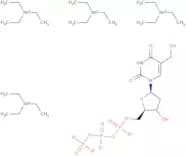
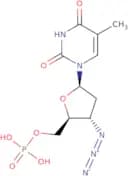
CAS:5-Hydroxymethyl-2’C-methyluridine is a modified nucleoside that is an activator of cellular DNA synthesis. It is a synthetic compound that has been shown to be active against cancer cells in vitro. 5-Hydroxymethyl-2’C-methyluridine has also been used to inhibit the replication of various viruses, including herpes simplex virus type 1 and 2, cytomegalovirus, and human immunodeficiency virus type 1. This drug was shown to be safe and effective in clinical trials for the treatment of HIV/AIDS patients with no adverse side effects.Formula:C11H16N2O7Purity:Min. 95%Color and Shape:PowderMolecular weight:288.25 g/mol3'-Azido-3'-deoxythymidine 5'-monophosphate sodium salt
CAS:3'-Azido-3'-deoxythymidine 5'-monophosphate sodium salt is a synthetic nucleoside that is structurally related to thymidine. It has antiviral and anticancer properties, as well as the potential for use in gene therapy. 3'-Azido-3'-deoxythymidine 5'-monophosphate sodium salt is active against herpes simplex virus type 1 (HSV-1) and HSV-2, human immunodeficiency virus type 1 (HIV-1), human papillomavirus types 16 and 18 (HPV), Epstein Barr Virus (EBV), and cytomegalovirus (CMV). 3'-Azido-3'-deoxythymidine 5'-monophosphate sodium salt inhibits the production of HIV by preventing the viral reverse transcriptase from synthesizing DNA from RNA.Formula:C10H13N5NaO7PPurity:Min. 95%Molecular weight:369.23 g/mol1-(3'-5'-Di-O-benzoyl-2'-deoxy-2'-fluoro-alpha-L-arabinofuranosyl)thymine
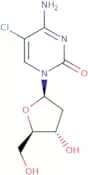
1-(3`-5`-Di-O-benzoyl-2`-deoxy-2`-fluoro-alpha-L-arabinofuranosyl)thymine is a nucleoside analog with modifications that influence its biological activity. It is made up of a thymine base, benzoyl groups that protect hydroxyl functionalities during chemical synthesis and a α-L-linkage, which impacts its biological interactions compared to β-L-nucleosides. This molecule also contains the sugar 2'-Deoxy-2'-fluoro-α-L-arabinofuranose which has a L-arabinose configuration, an α-Anomeric linkage and a 2'-Fluoro substitution. The latter modification has the potential to increase the molecule's metabolic stability and resistance to enzymatic degradationFormula:C24H21FN2O7Purity:Min. 95%Molecular weight:484.89 g/mol5-Chloro-2'-deoxycytidine
CAS:5-Chloro-2'-deoxycytidine (5-Cl-dC) is a nucleoside analog that inhibits DNA synthesis by blocking the action of thymidylate synthase. It can be used in animal models to study bowel diseases, such as ulcerative colitis and Crohn's disease. 5-Cl-dC has been shown to be effective in treating the effects of radiation and chemical toxicity in HL60 cells, a type of human leukemia cell line. 5-Cl-dC has also been shown to enhance the cytotoxicity of eosinophil peroxidase, which is an enzyme that may be involved in the pathogenesis of asthma. This drug is currently being evaluated for its safety and efficacy in clinical trials involving patients with myelodysplastic syndrome or acute myeloid leukemia who are at risk for developing leukemia.
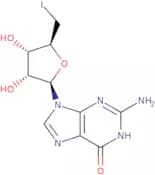
Formula:C9H12CIN3O4Purity:Min. 95%Color and Shape:PowderMolecular weight:261.67 g/mol5'-Deoxy-5'-iodoguanosine
CAS:5'-Deoxy-5'-iodoguanosine is a synthetic nucleoside that is used as a molecular probe to study the biochemical and physiological effects of UV irradiation. It has been shown to be reactive under in vitro conditions, and to have functionalities in vivo. 5'-Deoxy-5'-iodoguanosine has been used as a polymerase inhibitor, and it can also be used for the synthesis of oligonucleotides.Formula:C10H12IN5O4Purity:Min. 95%Color and Shape:Yellow PowderMolecular weight:393.14 g/molN4-Benzoyl-5'-O-DMT-2'-O-(2-methoxyethyl)cytidine 3'-O succinate TEA
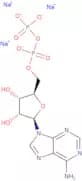
N4-Benzoyl-5'-O-DMT-2'-O-(2-methoxyethyl)cytidine 3'-O succinate TEA salt (BEDOT) is a novel nucleoside analogue that is a phosphoramidite for DNA synthesis. BEDOT has shown anticancer and antiviral activity in vitro.Purity:Min. 95%Adenosine 5'-diphosphate monosodium salt
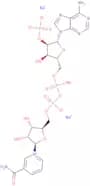
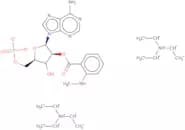
CAS:Used for energy storage and in nucleic acid metabolismFormula:C10H14N5NaO10P2Purity:Min. 98 Area-%Color and Shape:White Off-White PowderMolecular weight:449.18 g/mol2'/3'-(N-Methylanthraniloyl)-adenosine-5'-monophosphate triethylammonium salt
CAS:2'/3'-(N-Methylanthraniloyl)-adenosine-5'-monophosphate triethylammonium salt is an antiviral agent that is based on ribonucleosides. This drug has been shown to be effective against cancer and herpes simplex virus type 1 (HSV-1) and may have potential as a treatment for HIV. It also inhibits the growth of tumors in animal models. 2'/3'-(N-Methylanthraniloyl)-adenosine-5'-monophosphate triethylammonium salt is synthesized by reacting ribonucleosides with N-(2,2,2,-trimethylpropyl)anthranilic acid chloride in the presence of triethylamine. The resulting product can be purified by column chromatography or recrystallization.Formula:C18H21N6O8PPurity:Min. 95%Molecular weight:480.37 g/mol1-(2-C-Methyl-b-D-ribofuranosyl)-5-nitropyridine-2(1H)-one
1-(2-C-Methyl-b-D-ribofuranosyl)-5-nitropyridine-2(1H)-one is an antiviral agent that belongs to the class of monophosphate deoxyribonucleosides. It is a novel compound that has been shown to be an activator of high purity and quality. 1-(2-C-Methyl-b-D-ribofuranosyl)-5-nitropyridine-2(1H)-one is synthesized from modified ribonucleosides and phosphoramidites. The antiviral activity of this drug against DNA viruses (e.g., herpes, adenovirus) and RNA viruses (e.g., influenza virus) has been shown in vitro and in vivo. In addition, 1-(2-C-Methyl-b--D--ribofuranosyl)-5--nitropyridine--2(1H)--Purity:Min. 95%5'-O-Benzoyl-2'-O-tert-butyldimethylsilyluridine 3'-CE phosphoramidite
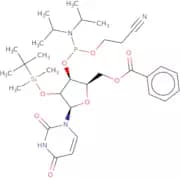
5'-O-Benzoyl-2'-O-tert-butyldimethylsilyluridine 3'-CE phosphoramidite is a nucleoside monophosphate, which is used as a synthetic building block in DNA and RNA synthesis. 5'-O-Benzoyl-2'-O-tert-butyldimethylsilyluridine 3'-CE phosphoramidite has shown anticancer activity, which may be due to its ability to inhibit the activation of oncogenes by acting as an antagonist at the cell surface. This agent also inhibits viral replication and is active against HIV, herpes simplex virus type 1, and varicella zoster virus.Formula:C31H47N4O8PSiPurity:Min. 95%Molecular weight:662.8 g/mol2,4-bis(Benzyloxy)-6-chloropyrimidine
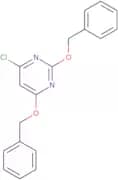
CAS:This study investigates the association between the use of 2,4-bis(benzyloxy)-6-chloropyrimidine (BCP) and lowering in the risk of developing breast cancer in women. The study is based on a national dataset that includes all Danish women who were enrolled in the Danish Breast Cancer Screening Program from 1995 to 2009. The covariates collected include age, weight, height, family history of breast cancer, parity, and hormone replacement therapy. This research was conducted by researchers at various universities in Denmark.Purity:Min. 95%2-Methylthio-N6-isopentenyladenosine
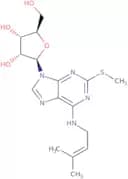
CAS:A nucleoside analogue of adenosine that arises from post-transcriptional modification. In humans, this is mediated by the enzyme CDK5RAP1 in mitochondrial transfer RNA (tRNA) at amino acid 37. Deficiency for this modification, for example due to CDK5RAP1 deficiency, leads to impaired mitochondrial protein synthesis. This has implications for mitochondrial diseases, as well as cancer, type II diabetes and vitiligo. Synthetic ms2i6A can be used to raise monoclonal antibodies against this nucleotide in vivo.Formula:C16H23N5O4SPurity:Min. 95%Color and Shape:White PowderMolecular weight:381.45 g/mol1-(2'-Deoxy-5'-O-DMT-2'-fluoro-β-D-arabinofuranosyl)thymine
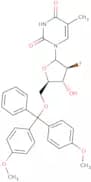
CAS:1-(2'-Deoxy-5'-O-DMT-2'-fluoro-b-D-arabinofuranosyl)thymine is a chemically modified nucleoside that contains a fluorinated sugar moiety and a thymine base, with a dimethoxytrityl (DMT) protecting group on the 5'-hydroxyl of the sugar.Formula:C31H31FN2O7Purity:Min. 95%Molecular weight:562.6 g/mol5'-Deoxy-5'-fluorothymidine
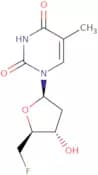
CAS:5'-Deoxy-5'-fluorothymidine is a cytotoxic agent that inhibits the synthesis of DNA by binding to the enzyme thymidylate synthase and preventing the formation of thymine nucleotide. 5'-Deoxy-5'-fluorothymidine has shown to be effective against herpes simplex virus, murine bone, and tissue culture cells. This drug also inhibits cellular proliferation in vitro and can be used in chemotherapy treatment. 5'-Deoxy-5'-fluorothymidine is synthesized from guanine by an enzyme called deoxyguanosine kinase. The biosynthesis of this drug involves two steps: conversion of guanine to xanthosine monophosphate (XMP) and conversion of XMP to 5'-deoxy-5'-fluorothymidine (dFTP).Formula:C10H13FN2O4Purity:Min. 95%Molecular weight:244.22 g/molN2-Isobutyryl-2'-deoxy-5'-O-pixylguanosine
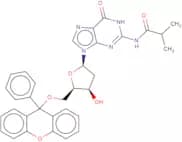
N2-Isobutyryl-2'-deoxy-5'-O-pixylguanosine is a modified nucleotide that has been shown to be an activator of the protein kinase C and may have anticancer and antiviral properties. N2-Isobutyryl-2'-deoxy-5'-O-pixylguanosine is a synthetic nucleoside that is structurally similar to ribonucleosides and deoxyribonucleosides, but contains a modified base. The nucleotide is activated by phosphorylation and then undergoes hydrolysis in the cell to form diphosphate. This product has CAS No. 125965-04-3, purity at 99%, and high quality.Formula:C33H31N5O6Purity:Min. 95%Molecular weight:593.64 g/mol7-[3,5-Bis-O-[(-2,4-dichlorophenyl)methyl]-2-C-methyl-b-D-ribofuranosyl]-4-chloro-5-iodo-7H-pyrrolo[2,3-d]pyrimidine
CAS:7-[3,5-Bis-O-[(-2,4-dichlorophenyl)methyl]-2-C-methyl-b-D-ribofuranosyl]-4-chloro-5-iodo-7H-pyrrolo[2,3-d]pyrimidine is a synthetic nucleoside that inhibits viral DNA synthesis by interfering with the viral enzyme polymerase. It has been shown to be active against HIV and HSV and may have potential therapeutic use in antiviral therapy. 7-[3,5-Bis-O-[(-2,4-dichlorophenyl)methyl]-2-C--methyl--b--D--ribofuranosyl]-4--chloro--5--iodo--7H--pyrrolo[2,3--d]pyrimidine has been synthesized for the first time by a novel process involving deoxyribonucleosides and phosphorPurity:Min. 95%N6-Benzoyl-2'-deoxy-5'-O-DMT-adenosine
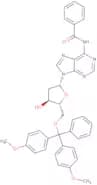
CAS:N6-Benzoyl-2'-deoxy-5'-O-DMT-adenosine is a versatile nucleoside building block.
Formula:C38H35N5O6Purity:Min. 98 Area-%Color and Shape:White PowderMolecular weight:657.72 g/mol3',5'-Di-O-acetylthymidine
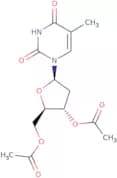
CAS:3',5'-Di-O-acetylthymidine is a pyrimidine nucleoside that has antibacterial activity. It is an anomer of thymidine, which makes it a hydroxymethylated analog of thymine. It can be used in the preparation of uridine for the treatment of human immunodeficiency virus type 1 (HIV-1) infection and to study the mechanism of action of this nucleoside on HIV-1 replication. 3',5'-Di-O-acetylthymidine binds to the ribose moiety of pyrimidines and inhibits bacterial growth by inhibiting DNA synthesis. This compound also inhibits the growth of staphylococcus that are resistant to penicillin. The chemical structure of 3',5'-Di-O-acetylthymidine can be modified with different acetic acid substituents to produce other pyrimidine nucleosides with different antibacterial properties, such as 4-Formula:C14H18N2O7Purity:Min. 95%Color and Shape:PowderMolecular weight:326.3 g/mol2'-O-(N-Methylanthraniloyl)-3'-deoxy-adenosine-5'-triphosphate triethylammonium salt
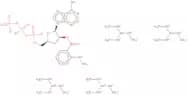
CAS:2'-O-(N-Methylanthraniloyl)-3'-deoxy-adenosine-5'-triphosphate triethylammonium salt is a novel antiviral and anticancer compound. It is an analogue of adenosine, which inhibits the synthesis of viral RNA and DNA. This compound can also be used to treat certain types of cancer. 2'-O-(N-Methylanthraniloyl)-3'-deoxy-adenosine-5'-triphosphate triethylammonium salt is chemically synthesized by reacting anthranilic acid with 3',5'-dideoxyadenosine 5' triphosphoric acid.Formula:C18H23N6O13P3Purity:Min. 95%Molecular weight:624.33 g/molN4-Benzoyl-2'-deoxy-5'-O-tritylcytidine
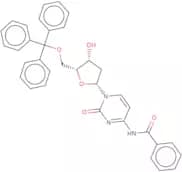
CAS:N4-Benzoyl-2'-deoxy-5'-O-tritylcytidine is a nucleoside analog that is used as an antiviral agent. It inhibits DNA synthesis by inhibiting the enzyme DNA polymerase, which is essential for the replication of viral and cellular DNA. N4-Benzoyl-2'-deoxy-5'-O-tritylcytidine also has anticancer activity, which may be due to its ability to inhibit ribonucleotide reductase and thereby block the production of RNA.Formula:C35H31N3O5Purity:Min. 95%Molecular weight:573.65 g/molN4-Benzoyl-2'-deoxy-5'-O-pixylcytidine
CAS:N4-Benzoyl-2'-deoxy-5'-O-pixylcytidine is a novel nucleoside that is structurally related to cytidine. It is synthesized from 2'-deoxycytidine monophosphate and 4-benzoylpixyl chloride. N4-Benzoyl-2'-deoxy-5'-O-pixylcytidine has antiviral, antiangiogenic and anticancer properties, as well as the ability to inhibit the replication of DNA in cells. This compound can be used for synthesis of phosphoramidites, which are used in the production of oligonucleotides.Formula:C35H29N3O6Purity:Min. 95%Molecular weight:587.64 g/mol4’,5’-Didehydro-5’-deoxy-5-methyluridine
CAS:4’,5’-Didehydro-5’-deoxy-5-methyluridine is a monophosphate nucleoside that is used as an antiviral agent. It has been shown to be active in the treatment of HIV and hepatitis B. 4’,5’-Didehydro-5’-deoxy-5-methyluridine also has anticancer properties and has been shown to inhibit cell proliferation in vitro by interfering with DNA synthesis. This product is an intermediate for the synthesis of other nucleosides and phosphoramidites.Purity:Min. 95%2-Amino-2'-deoxy-2'-fluoroadenosine
CAS:2-Amino-2'-deoxy-2'-fluoroadenosine is a modified nucleoside. Fluorination modifications can make molecules have increased resistance to enzymatic degradation, which has useful applications in drug development. The extra amino group could also enhance binding properties or alter biological activity.Formula:C10H13FN6O3Purity:Min. 95%Color and Shape:PowderMolecular weight:284.25 g/mol2,2'-Anhydrocytidine HCl
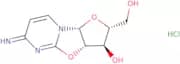
CAS:2,2'-Anhydrocytidine HCl is a nucleoside for use as a DNA synthesis inhibitor
Formula:C9H11N3O4·HClPurity:Min. 98 Area-%Color and Shape:White PowderMolecular weight:261.66 g/mol2'-Deoxy-N2-DMF-guanosine
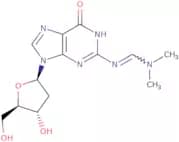
CAS:2'-Deoxy-N2-DMF-guanosine is a synthetic nucleoside that is used as a primer in DNA sequencing and hybridization experiments. It binds to the 5' end of single-stranded DNA and is complementary to guanosine. The 2'-deoxy group on the sugar moiety prevents the formation of hydrogen bonds with other bases, which increases stability. In addition, it has a high affinity for dna binding proteins. This synthetic nucleoside has been shown to be useful in clinical diagnostics and can be used as a probe for detecting diazirine residues in DNA sequences.Formula:C13H18N6O4Purity:Min. 97 Area-%Color and Shape:White Off-White PowderMolecular weight:322.33 g/mol3’-Deoxy-3’-fluoro-N6-hydroxyadenosine
CAS:3’-Deoxy-3’-fluoro-N6-hydroxyadenosine (3'-DF) is an antiviral nucleoside that inhibits viral DNA synthesis and has shown cytotoxic effects in human cancer cells. 3'-DF is a novel chemical compound that was first synthesized in 1994. It is a nucleotide analog that is structurally related to adenosine, with the exception of the fluoro atom at position 6 on the ribose sugar. 3'-DF inhibits DNA polymerase and RNA polymerase by competitively binding to the ribonucleotide reductase enzyme, inhibiting the production of new RNA and DNA molecules. This compound also has been shown to inhibit protein synthesis in cancer cells without affecting normal cells.Purity:Min. 95%5-Fluoro-4’-C-methyluridine
CAS:5-Fluoro-4’-C-methyluridine is a novel antiviral agent that is structurally related to the nucleoside analogue cytidine. It has been shown to be an activator of DNA polymerase, which may contribute to its antiviral activity. 5-Fluoro-4’-C-methyluridine has been shown to inhibit the growth of cancer cells by modifying the synthesis of deoxyribonucleic acid (DNA) and ribonucleic acid (RNA). 5-Fluoro-4’-C-methyluridine has also been shown to have anticancer effects, as it inhibits cell proliferation and induces apoptosis.Purity:Min. 95%Isocytidine triphosphate triethylamine
CAS:Isocytidine triphosphate triethylamine salt is a nucleoside that has been modified to include an amino group. It is a monophosphate, which means it contains one phosphate group. Isocytidine triphosphate triethylamine salt has shown anticancer properties as it inhibits the synthesis of DNA and RNA. This compound also prevents the activation of transcription factors, such as NF-κB, that are important in cancer cell proliferation.Formula:C9H16N3O14P3•(C6H15N)xPurity:Min. 95%Color and Shape:PowderMolecular weight:483.15 g/mol2-Amino-6-chloro-9-(b-D-ribofuranosyl)purine
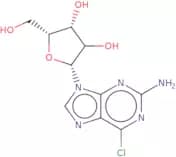
CAS:Intermediate in the synthesis of nelarabineFormula:C10H12ClN5O4Purity:Min. 97 Area-%Color and Shape:Off-White PowderMolecular weight:301.69 g/mol5'-O-MMT-thymidine 3'-CE phosphoramidite
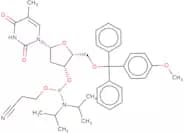
CAS:5'-O-MMT-thymidine 3'-CE phosphoramidite is a novel anticancer drug that is modified from the natural nucleoside thymidine. It has been shown to inhibit the activity of DNA polymerase, preventing DNA synthesis and replication. It also inhibits viral DNA replication, including HIV and herpes simplex virus type-1 (HSV-1). 5'-O-MMT-thymidine 3'-CE phosphoramidite has antiviral properties against HIV and HSV-1. This nucleoside is synthesized by reacting 5'-O-methyl cytidylic acid with an activated phosphite in the presence of triethylamine in dichloromethane. The product is purified by column chromatography on silica gel and recrystallization from acetonitrile.
Formula:C39H47N4O7PPurity:Min. 95%Molecular weight:714.81 g/molN4-Benzoyl-5'-O-DMT-cytidine
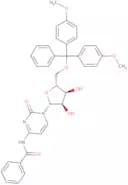
CAS:N4-Benzoyl-5'-O-DMT-cytidine is a novel modified nucleoside that can be phosphorylated by T4 kinase to form 5'-O-DMT-N4-benzoyl cytidine, which is an antiviral agent. This active compound is also an activator of DNA polymerases and has anticancer properties. N4-Benzoyl-5'-O-DMT cytidine has been shown to inhibit the replication of HIV in human cells and inhibit tumor growth in animal models. It has been synthesized with high quality and high purity, and has been assigned CAS No. 81246-76-6.Formula:C37H35N3O8Purity:Min. 95 Area-%Color and Shape:White PowderMolecular weight:649.69 g/molN2-DMF-5'-O-DMT-2'-O-methylguanosine 3'-CE phosphoramidite
N2-DMF-5'-O-DMT-2'-O-methylguanosine 3'-CE phosphoramidite is a novel ribonucleotide with high purity and high quality. It is an activator of DNA synthesis and can be used in the synthesis of DNA, monophosphate, and diphosphate. N2-DMF-5'-O-DMT-2'-O-methylguanosine 3'-CE phosphoramidite is used for the preparation of anticancer drugs, antiviral agents, and other nucleosides.Formula:C44H55N8O8PPurity:Min. 95%Color and Shape:White PowderMolecular weight:854.95 g/mol2'-Deoxy-5'-O-DMT-2'-fluoro-N2-isobutyrylguanosine 3'-CE phosphoramidite
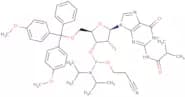
CAS:2'-Deoxy-5'-O-DMT-2'-fluoro-N2-isobutyrylguanosine 3'-CE phosphoramidite is a novel nucleoside analog, which has potent antiviral activity against HIV and other retroviruses. It is synthesized from 5'-O-DMT-2'-fluoro-N2-isobutyrylguanosine by the reaction of sodium bicarbonate with 2',3'-dideoxyadenosine in the presence of an activator. The product can be used for the synthesis of RNA or DNA for use as probes, primers, and templates in polymerase chain reactions (PCRs).Formula:C44H53FN7O8PPurity:Min. 95%Color and Shape:White PowderMolecular weight:857.91 g/molN6-Benzoyl-3'-O-tert-butyldimethylsilyl-5'-O-DMT-adenosine 2'-CE phosphoramidite
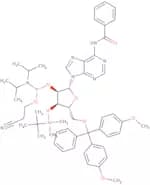
CAS:N6-Benzoyl-3'-O-tert-butyldimethylsilyl-5'-O-DMT-adenosine 2'-CE phosphoramidite is an antiviral nucleoside phosphoramidite that is used in the synthesis of DNA. It has been shown to have antiviral activity against HIV and herpes, as well as anticancer effects. It also has high purity, being a novel synthetic nucleoside with a CAS number. N6-Benzoyl-3'-O-tert-butyldimethylsilyl-5'-O-DMT-adenosine 2'-CE phosphoramidite is synthesized using novel methods. The synthesis process includes activation with diphosphate, DNA, and Novel nucleosides, which are high quality and modified.Formula:C53H66N7O8PSiPurity:Min. 95%Color and Shape:PowderMolecular weight:988.19 g/molN6-Benzoyl-2'-O-tert-butyldimethylsilyl-5'-O-DMT-adenosine
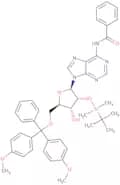
CAS:N6-Benzoyl-2'-O-tert-butyldimethylsilyl-5'-O-DMT-adenosine is a nucleoside that can be used in the synthesis of oligomers. It is a synthetic nucleoside with an absorption maximum at 410 nm and emission maximum at 522 nm. This compound has been shown to be efficient in the synthesis of phosphoramidites and ligands, as well as in rna synthesis and modifications. N6-Benzoyl-2'-O-tert-butyldimethylsilyl-5'-O-DMT-adenosine may inhibit bacterial growth by binding to the ribosome, preventing protein synthesis.
Formula:C44H49N5O7SiPurity:Min. 97 Area-%Color and Shape:PowderMolecular weight:787.97 g/mol3’-b-Amino-2’,3-dideoxy uridine
CAS:3’-b-Amino-2’,3-dideoxy uridine is an activator nucleoside that is a novel therapeutic agent for viral infections and cancer. It has antiviral activity against herpes simplex virus type 1 (HSV-1) and cytomegalovirus (CMV), as well as anticancer activity against human breast adenocarcinoma cells. 3’-b-Amino-2’,3-dideoxy uridine is a modified nucleoside with antiviral and anticancer properties. This drug has been shown to inhibit HSV-1 replication by interfering with the synthesis of viral DNA. 3’-b-Amino-2’,3-dideoxy uridine also inhibits the proliferation of human breast adenocarcinoma cells by inhibiting ribonucleotide reductase.Formula:C9H13N3O4Purity:Min. 95%Molecular weight:227.22 g/mol1-(b-L-Threonyl)-5-methyluracil
1-(b-L-Threonyl)-5-methyluracil (1,5MT) is a synthetic nucleoside that has antiviral and anticancer properties. 1,5MT is modified with a b-L-threonyl group at the 5’ position. This modification stabilizes the molecule and prevents its degradation by ribonucleases. The modification also increases the phosphoramidite reactivity of 1,5MT and enhances its incorporation into DNA during synthesis. 1,5MT is an activator for RNA polymerase II, which plays an important role in transcriptional regulation. It binds to the enzyme's allosteric site and stimulates transcriptional elongation by RNA polymerase II through phosphoramidate formation with deoxyribose phosphate. 1,5MT is active against cancer cells in vitro and has been shown to inhibit tumor growth in vivo.Purity:Min. 95%N6-Benzoyl-2'-chloro-2'-deoxy-5'-O-DMT-adenosine
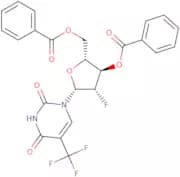
The N6-benzoyl-2'-chloro-2'-deoxy-5'-O-DMT-adenosine is a novel nucleoside that is a potent inhibitor of the human immunodeficiency virus type 1 (HIV-1) and has been shown to be effective against cancer. It is a phosphoramidite nucleoside with high purity and high quality, which can be used as an antiviral agent or an anticancer agent. The chemical name for this compound is 2'-(N6-Benzoyl)-2'-deoxyadenosine 5'-O-(DMT). This product is also known as NBDT, and it has been modified by changing the ribose sugar to DMT. NBDT inhibits viral replication by preventing the formation of DNA from RNA in the reverse transcription process. This process requires two enzymes: HIV reverse transcriptase and DNA polymerase α. The first enzyme, HIV reverse transcriptase,Purity:Min. 95%3’,5’-Di-O-benzoyl-2’-deoxy-2’-fluoro-5-trifluoromethyl-arabinouridine
CAS:Please enquire for more information about 3’,5’-Di-O-benzoyl-2’-deoxy-2’-fluoro-5-trifluoromethyl-arabinouridine including the price, delivery time and more detailed product information at the technical inquiry form on this pagePurity:Min. 95%1-(Arabinofuranosyl)-5-azidomethyluracil
CAS:1-(Arabinofuranosyl)-5-azidomethyluracil (AFAU) is a novel nucleoside that is synthesized by the reaction of 5-azido-1-(2'-deoxyribofuranosyl) uracil with phosphoramidite. The synthesis of this nucleoside has been used as a model for the synthesis of other deoxyribonucleosides. AFAU is an activator of ribonucleotide reductase and has shown activity against DNA and RNA viruses, such as influenza virus, herpes simplex virus type 1, and human immunodeficiency virus type 1.Purity:Min. 95%9-(5'-tert-Butyldiphenylsilyl-2'-deoxy-b-D-xylofuranosyl)guanine
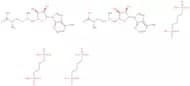
9-(5'-tert-Butyldiphenylsilyl-2'-deoxy-b-D-xylofuranosyl)guanine is a novel nucleoside that has been synthesized by the phosphoramidite method. It is a monophosphate, which can be activated to yield an anticancer agent. 9-(5'-tert-Butyldiphenylsilyl-2'-deoxy-b-D-xylofuranosyl)guanine is chemically modified with a silyl group at the 5' position of the sugar moiety and a tertiary butyldiphenylsilyl group at the 2' position of the sugar moiety. It has been shown to inhibit DNA synthesis and viral replication, as well as to have antiangiogenic activity.Purity:Min. 95%S-Adenosylmethione-1,4-butanedisulfonate
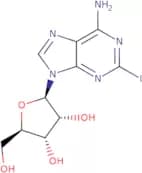
CAS:S-adenosylmethionine is a compound that is naturally produced in the body and has been shown to be involved in many biochemical reactions. It can be found as a supplement at health food stores, but also is available as a prescription for the treatment of certain liver diseases such as hepatitis. S-adenosylmethionine may have some drug transporter function and can affect the metabolism of other drugs.Formula:C42H74N12O28S8Purity:Min. 95 Area-%Color and Shape:White PowderMolecular weight:1,451.63 g/mol2-Iodoadenosine
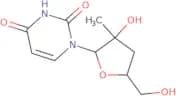
CAS:2-Iodoadenosine is a chemical compound that is produced from the oxidation of uridine. It is used in the synthesis of peptides, which are important for biological processes like signal transduction and cell growth. 2-Iodoadenosine can be made by coupling other molecules to an adenosine molecule. This process involves a cross-coupling reaction with palladium catalysts or hydroxylation reactions with sodium borohydride. The resulting product has been shown to have anticancer and anti-microbial activities against protozoan parasites and cyclic peptide structures.Formula:C10H12IN5O4Purity:Min. 97 Area-%Color and Shape:PowderMolecular weight:393.14 g/mol3'-Deoxy-2'-C-methyluridine
CAS:3'-Deoxy-2'-C-methyluridine is a nucleoside with antiviral, anticancer and deoxyribonucleoside properties. It is a synthetic nucleoside that can be activated to form a monophosphate or diphosphate. It has been shown to inhibit the replication of DNA and RNA viruses in vitro. 3'-Deoxy-2'-C-methyluridine has also been shown to induce apoptosis in cancer cells and inhibit tumor growth in vivo.Purity:Min. 95%3’-Azido-3’-deoxy-5-iodouridine
CAS:3’-Azido-3’-deoxy-5-iodouridine is a novel antiviral nucleoside phosphoramidite. It is an activator of the NNRTI class of drugs, which inhibit the reverse transcriptase enzyme that is responsible for HIV replication. 3’-Azido-3’-deoxy-5-iodouridine has been shown to have a high quality and purity with a long shelf life. This compound is useful in the synthesis of diphosphate, monophosphate, and ribonucleosides.Purity:Min. 95%2'-Deoxy-5'-O-DMT-N2-isobutyryl-6-thioguanosine 3-CE phosphoramidite
CAS:2'-Deoxy-5'-O-DMT-N2-isobutyryl-6-thioguanosine 3-CE phosphoramidite is an anticancer agent that is used to treat leukemia and other cancers. It also has antiviral activity, inhibiting the viral enzyme RNA polymerase. It is a novel synthetic nucleoside that has been shown to be active against HIV in vitro. 2'-Deoxy-5'-O-DMT-N2-isobutyryl-6-thioguanosine 3-CE phosphoramidite is a nucleotide analogue of guanosine and is phosphorylated by cellular enzymes to form 2'-deoxyguanosine 5' phosphate. This compound binds to DNA and inhibits replication by preventing the unwinding of DNA helixes during transcription. 2'-Deoxyguanosine 5' phosphate also blocks translation by inhibiting ribosomal protein synthesis at the initiationFormula:C44H54N7O7PSPurity:Min. 95%Molecular weight:855.98 g/mol2'-Deoxy-5-hydroxymethyluridine-5'-triphosphate triethylammonium
CAS:2'-Deoxy-5-hydroxymethyluridine-5'-triphosphate triethylammonium salt (dHMUTP) is a noncompetitive inhibitor of transcriptase activity. It inhibits the synthesis of DNA by binding to RNA polymerase on the template strand, thereby blocking the progress of the enzyme along the DNA. This drug has been shown to be effective in inhibiting viral production and growth in mammalian cells, as well as cancer cell culture. Dihydrofolate reductase is required for dHMUTP to function, and it is metabolized in vivo through hydrolysis by glycosylases or antineoplastic properties by nucleotide excision repair enzymes. These enzymes are present in human cells but absent in bacteria and yeast. The drug also has antineoplastic properties due to its ability to inhibit tumor cell proliferation.Formula:C10H16N2O15P3·C6H16NPurity:Min. 70 Area-%Color and Shape:PowderMolecular weight:599.36 g/mol3’-Deoxy-3’-fluoro-2-thiouridine
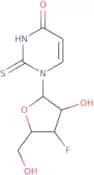
CAS:3’-Deoxy-3’-fluoro-2-thiouridine is a nucleoside analog that has been modified to have antiviral and anticancer activity. It is an activator of the ribonucleotide reductase enzyme, which is involved in DNA synthesis. 3’-Deoxy-3’-fluoro-2-thiouridine has been used successfully as an antiviral agent against HIV and other viruses, and as an anticancer agent against leukemia. The monophosphate form of this drug has been shown to inhibit DNA replication in vitro.
Purity:Min. 95%3'-Azido-N4-benzoyl-5'-O-tert-butyldimethylsilyl-2',3'-dideoxycytidine
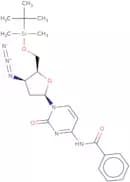
CAS:3'-Azido-N4-benzoyl-5'-O-tert-butyldimethylsilyl-2',3'-dideoxycytidine is a novel nucleoside phosphoramidite that has been modified to have an azido group at the 3' position and a benzoate group at the 5' position. This product can be used for the synthesis of oligonucleotides and DNA. The purity of this product is high, and it has been shown to be active against cancer cells. In addition, this product is resistant to antiviral agents such as HIV.Formula:C22H30N6O4SiPurity:Min. 95%Molecular weight:470.61 g/mol3'-Amino-5'-O-tert-butyldimethylsilyl-3'-deoxy-D3-thymidine
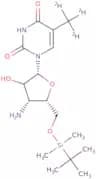
CAS:Controlled Product3'-Amino-5'-O-tert-butyldimethylsilyl-3'-deoxy-D3-thymidine is a synthetic nucleoside analogue that inhibits the synthesis of DNA. It is a monophosphate and diphosphate analog of thymidine, which are incorporated into DNA during replication. 3'-Amino-5'-O-tert-butyldimethylsilyl-3'-deoxy-D3-thymidine is an activator of RNA polymerase II and inhibits viral replication by inhibiting the function of reverse transcriptase. This drug has been shown to be effective against HIV in vitro and in vivo, as well as herpes simplex virus type 1. 3'-Amino-5'-O-tert-butyldimethylsilyl-3'-deoxy-D3-thymidine also has antitumor activity as it inhibits the growth ofFormula:C16H26N3O5SiD3Purity:Min. 95%Molecular weight:374.52 g/mol2'-Deoxy-5'-O-DMT-N2-isobutyrylguanosine 3'-CE phosphoramidite
CAS:2'-Deoxy-5'-O-DMT-N2-isobutyrylguanosine 3'-CE phosphoramidite is a nucleoside analogue that has been modified to contain an isobutyryl group. It is an activator of the polymerase enzyme, which helps to synthesize DNA. This product can be used in the synthesis of oligonucleotides for use as therapeutic or diagnostic agents. It has anticancer and antiviral activities, due to its ability to inhibit viral replication. This product also has high purity and quality.Formula:C44H54N7O8PPurity:Min. 98 Area-%Color and Shape:PowderMolecular weight:839.92 g/molN2-DMF-guanosine
N2-DMF-guanosine is a novel antiviral agent that has been synthesized by modifying the nucleoside guanosine. It is an analog of guanosine in which the 2'-hydroxyl group has been replaced with a 2'-deoxy-2'-fluoro group, and it inhibits viral replication by inhibiting viral DNA polymerase. N2-DMF-guanosine is also used as a high quality deoxyribonucleoside monophosphate for the synthesis of ribonucleosides and nucleosides. This compound has a CAS number of 6074-37-4.
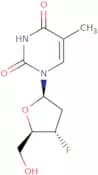
Formula:C13H18N6O5Purity:Min. 95%Molecular weight:338.32 g/mol3'-Deoxy-3'-fluorothymidine
CAS:3'-Deoxy-3'-fluorothymidine is a nucleoside analog that is used to diagnose and treat cancer. It is a prodrug that is metabolized intracellularly by deoxycytidine kinase to the 3'-deoxy-3'-fluoro derivative of thymidine, which competes with natural thymidine for incorporation into DNA. Uptake of 18F-flouride (18F-FDG) in tumor cells has been shown to be proportional to the rate constant (k) of cellular uptake. This process can be quantified using positron emission tomography imaging. The cell cycle inhibitor activity of 3'-deoxy-3'-fluorothymidine has also been demonstrated in vitro and in vivo, inhibiting the proliferation of tumor cells and normal cells in culture, respectively.Formula:C10H13FN2O4Purity:Min. 97 Area-%Color and Shape:White Off-White PowderMolecular weight:244.22 g/mol5’-Azido-5’-deoxy-2’-O-methyl-5-methyluridine
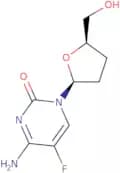
CAS:5’-Azido-5’-deoxy-2’-O-methyl-5-methyluridine is a novel nucleoside with the ability to activate ribonucleosides and phosphoramidites. It is a modified nucleoside that has been shown to have anticancer and antiviral properties. 5’-Azido-5’-deoxy-2’-O-methyl-5-methyluridine also inhibits the synthesis of viral RNA and DNA, which may result in its antiinflammatory properties. 5’-Azido-5’deoxy -2′O methyl -5′ methyl uridine has a CAS number of 187733–73–9.
Purity:Min. 95%5'-O-DMT-N2-phenoxyacetyl-2'-O-methylguanosine 3'-CE phosphoramidite
5'-O-DMT-N2-phenoxyacetyl-2'-O-methylguanosine 3'-CE phosphoramidite is a nucleoside analog that inhibits DNA synthesis by forming a covalent bond with the beta-subunit of DNA polymerase. It is a modified nucleoside that has been synthesized from 2'-O-methylguanosine and N2,N2-dimethoxyacetyl. 5'-O-DMT-N2-phenoxyacetyl-2'-O methylguanosine 3'-CE phosphoramidite possesses the CAS No. 16053526.Purity:Min. 95%3’-Deoxy-3’-α-C-methyl-N6,N6-dimethyladenosine
3’-Deoxy-3’-alpha-C-methyl-N6,N6-dimethyladenosine is a nucleoside with anticancer activity. It is a novel nucleoside that has been shown to have antiviral and antitumor activities. Research has shown that 3’-Deoxy-3’-alpha-C-methyl-N6,N6-dimethyladenosine inhibits tumor growth in animals without toxicity to the normal cells of the body. This nucleoside also has an effect on DNA and RNA synthesis, which may be due to its ability to inhibit viral replication enzymes.Purity:Min. 95%3’,2-anhydro-2'-deoxyuridine
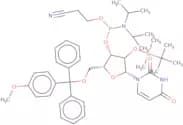
CAS:3’,2-anhydro-2'-deoxyuridine is a nucleoside analog that has antiviral and anticancer activities. It is an activator of the ribonucleotide reductase enzyme, which catalyses the conversion of ribonucleotide diphosphates to deoxynucleotides. 3’,2-anhydro-2'-deoxyuridine also inhibits DNA synthesis by cytostatic mechanisms. This product is used as a building block in phosphoramidite synthesis and can be used for the preparation of novel nucleosides and phosphoramidites. This product was originally synthesized for use as an antiviral agent against herpes simplex virus type 1 (HSV-1) and human cytomegalovirus (HCMV). It is also used as an anticancer agent in preclinical research.Purity:Min. 95%2'-O-tert-Butyldimethylsilyl-5'-O-MMT-uridine 3'-CE phosphoramidite
2'-O-tert-Butyldimethylsilyl-5'-O-MMT-uridine 3'-CE phosphoramidite is a monophosphate that is synthesized by reacting 2'-O-tert-butyldimethylsilyl-5'-O-methylguanosine 3'-CE with uridine 3'-CE. This nucleoside has been shown to be an activator of the immune system and to inhibit cancer cell growth in vitro. It also inhibits the synthesis of DNA and RNA, as well as ribonucleosides and deoxyribonucleosides. The purity of this product is high, with no detectable impurities or toxic substances known to the manufacturer. It is also stable at room temperature for at least six months. This product does not contain any phosphate groups or other reactive functional groups that could interfere with downstream reactions. 2'-O-tert-ButyldimethylsilyFormula:C44H59N4O8PSiPurity:Min. 95%Molecular weight:831.04 g/molN4-Benzoyl-2'-deoxy-5'-O-DMT-2',2'-difluorocytidine 3'-CE phosphoramidite
CAS:N4-Benzoyl-2'-deoxy-5'-O-DMT-2',2'-difluorocytidine 3'-CE phosphoramidite, also known as Gemcitabine 3'-CE phosphoramidite, is a nucleoside phosphoramidite used in oligonucleotide synthesis. A chemical oligonucleotide synthesis instead of an enzymatic one allows quick access to bespoke oligonucleotides of the desired sequence. Chemically synthesised oligonucleotide sequences are typically constructed in a 3’ to 5’ direction. Gemcitabine 3'-CE phosphoramidite has been used in the synthesis of an oligonucleotide by single replacement of cytidine for gemcitabine for use in gene silencing experiments.
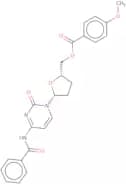
Formula:C46H50F2N5O8PPurity:Min. 95 Area-%Color and Shape:PowderMolecular weight:869.89 g/mol5'-O-p-Anisoyl-N4-benzoyl-2',3'-dideoxycytidine
CAS:5'-O-p-Anisoyl-N4-benzoyl-2',3'-dideoxycytidine is a synthetic nucleoside that belongs to the class of deoxyribonucleosides. It is a modified nucleoside with an anisoyl group at the 5' position and a benzoyl group at the 2' position. This product can be used in the synthesis of DNA, RNA, and phosphoramidites. 5'-O-p-Anisoyl-N4-benzoyl-2',3'-dideoxycytidine has antiviral properties and has been shown to inhibit viral replication in vitro and in vivo. It also has anticancer activities as it inhibits cell proliferation and induces apoptosis, which may be due to its ability to inhibit DNA synthesis.Formula:C24H23N3O6Purity:Min. 95%Molecular weight:449.46 g/molN6-Benzoyl-2’-O,4’-C-methyleneadenosine
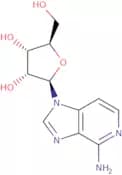
CAS:N6-Benzoyl-2’-O,4’-C-methyleneadenosine is a novel nucleoside analogue with antiviral activity. It is a modified deoxyribonucleoside that is synthesized from adenosine. N6-Benzoyl-2’-O,4’-C-methyleneadenosine has been shown to be an effective inhibitor of the replication of DNA and RNA in vitro. This drug effectively inhibits human immunodeficiency virus type 1 (HIV1) in cell culture and has been shown to inhibit tumor growth in laboratory animals.Purity:Min. 95%3-Deazaadenosine
CAS:A potential role in apoptosis and cellular senescence.Formula:C11H14N4O4Purity:Min. 99 Area-%Color and Shape:PowderMolecular weight:266.26 g/molb-Nicotinamide adenine dinucleotide phosphate disodium salt
CAS:Coenzyme and regenerating electron donor in catabolic processesFormula:C21H26N7Na2O17P3Purity:Min. 93 Area-%Color and Shape:White PowderMolecular weight:787.4 g/molS-(4-Nitrobenzyl)-6-thioinosine
CAS:S-(4-Nitrobenzyl)-6-thioinosine (SBT) is a nucleoside with biochemical properties that are similar to those of adenosine. SBT is an equilibrative nucleoside, which means that it can bind to both DNA and RNA. It has been shown to be effective in inhibiting the growth of cancer cells in vitro by binding to DNA. SBT binds to the purine nucleotide transporter and prevents the uptake of uridine, adenosine, and other nucleosides into the cell. This process leads to a decrease in intracellular concentrations of these nucleosides. SBT also binds to divalent metal ions such as copper or zinc, which may affect its activity on cancer cells.Formula:C17H17N5O6SPurity:Min. 98 Area-%Color and Shape:White Off-White PowderMolecular weight:419.41 g/molN4-Acetylcytidine
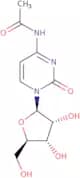
CAS:N4-Acetylcytidine is a modified nucleoside and endogenous urinary nucleoside product of the degradation of tRNA. N4-Acetylcytidine is a biological marker for various cancers with elevated concentrations present in urine. N4-Acetylcytidine is also a partially protected cytidine and therefore can be used as a synthetic building block to prepare further derivatized nucleosides such as 2’,3’-dideoxycytidine.Formula:C11H15N3O6Purity:Min. 95%Color and Shape:White PowderMolecular weight:285.25 g/mol1-(2'C-Methyl-b-D-ribofuranosyl)-5-nitropyridine-2(1H)-one
CAS:1-(2'C-Methyl-b-D-ribofuranosyl)-5-nitropyridine-2(1H)-one (1) is a synthetic nucleoside that has been modified to be activated with the addition of a phosphoryl group. It inhibits viral replication by inhibiting viral DNA synthesis. It also inhibits cancer cell growth, and has shown potential as an antiviral agent against HIV, herpes simplex type 2, and influenza A viruses. 1 is a novel monophosphate nucleoside with high purity and high quality. CAS No. 2072145-17-4.Purity:Min. 95%N4-Benzoyl-2'-O-methylcytidine
CAS:N4-Benzoyl-2'-O-methylcytidine is a triester of cytidine that is used in various biochemical research applications. It is enzymatically synthesized from cytidine and benzoyl chloride. N4-Benzoyl-2'-O-methylcytidine has been shown to have the same electrophoretic mobility as 5-hydroxyl cytidine, but it does not react with hydroxylamine to produce the corresponding hydroxylated product. This compound has also been used to study nucleic acid structure and function.
Formula:C17H19N3O6Purity:Min. 95%Color and Shape:PowderMolecular weight:361.35 g/molN6-Benzoyl-2'-O-tert-butyldimethylsilyladenosine
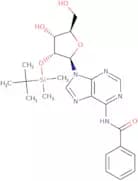
CAS:N6-Benzoyl-2'-O-tert-butyldimethylsilyladenosine (BTS) is a novel phosphoramidate monophosphate nucleoside analog that has been modified to be resistant to the ribonuclease A enzyme. BTS is an activator of DNA synthesis and inactivator of RNA synthesis, which makes it useful for the treatment of cancer and antiviral infections. This drug is synthesized using high quality reagents and can be used for the production of phosphoramidites to produce high purity oligonucleotides.Formula:C23H31N5O5SiPurity:Min. 95%Color and Shape:PowderMolecular weight:485.61 g/mol3’-Deoxy-3’-fluoro-6-azauridine
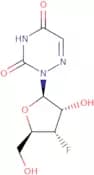
CAS:Please enquire for more information about 3’-Deoxy-3’-fluoro-6-azauridine including the price, delivery time and more detailed product information at the technical inquiry form on this pagePurity:Min. 95%1-(b-L-Arabinofuranosyl)uracil 5'-triphosphate triethylammonium salt
1-(b-L-Arabinofuranosyl)uracil 5'-triphosphate triethylammonium salt is a novel antiviral agent that is synthesized from ribonucleosides. It is an activator of the monophosphate form of RNA polymerase and inhibits the synthesis of DNA in cells. This drug has also been shown to be effective against cancer cells and may be useful for treatment of leukemia.Purity:Min. 95%b-L-2',3'-Dideoxy-5-fluorocytidine
CAS:b-L-2',3'-Dideoxy-5-fluorocytidine is a pyrimidine nucleoside that inhibits the deoxycytidine kinase enzyme, which catalyzes conversion of deoxycytidine to cytidine. It has potent inhibition against human lymphocytes and liver cells, as well as virus replication. b-L-2',3'-Dideoxy-5-fluorocytidine has potent antitumor activity in vitro and in vivo, with an inhibitory effect on immunodeficiency and hepatitis. This drug also has a potent inhibitory effect on T-cell growth in cell culture. b-L-2',3'-Dideoxy-5-fluorocytidine is converted to 5'-deoxyfloxuridine by cellular enzymes and then to 5'-deoxyuridylate by the enzyme uridylate kinase. The latter compound inhibits DNA synthesis by inhibiting thymidylFormula:C9H12FN3O3Purity:Min. 95%Molecular weight:229.21 g/mol2'-O-Methyl-N6-phenoxyacetyladenosine
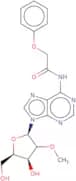
CAS:2'-O-Methyl-N6-phenoxyacetyladenosine is a phosphoramidite nucleoside that is used in the synthesis of DNA and RNA. It has antiviral, anticancer, and antiribonucleases properties. The chemical structure of 2'-O-Methyl-N6-phenoxyacetyladenosine is similar to that of adenosine, but contains a methyl group on C2' position and an oxyalkyl group on N6. This compound can be used as a novel anticancer agent and has been shown to have high affinity for the purine receptor, inhibiting cancer cell proliferation by activating the p53 tumor suppressor pathway.Formula:C19H21N5O6Purity:Min. 95%Color and Shape:White to off-white solid.Molecular weight:415.41 g/molC2,C8-Dimethyladenosine
C2,C8-Dimethyladenosine is a nucleoside that is used for antiviral and anticancer purposes. It is synthesized from 2′-deoxyadenosine monophosphate, which is in turn synthesized from adenosine triphosphate and diphosphate. C2,C8-Dimethyladenosine has been shown to inhibit viral replication and induce cell death of cancer cells. It binds to viral RNA polymerase, thereby inhibiting the formation of new viral particles. This compound also inhibits DNA synthesis by binding to the active site of DNA polymerase α and interfering with the process of base pairing. C2,C8-Dimethyladenosine has also been shown to have an antimetastatic effect by inducing apoptosis in tumor cells.Purity:Min. 95%9-(2'-C-methyl-b-D-ribofuranosyl)6-methylpurine
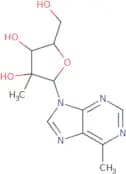
CAS:9-(2'-C-methyl-b-D-ribofuranosyl)6-methylpurine is a modified monophosphate nucleoside that is an antiviral agent. It can be used as a building block for the synthesis of ribonucleosides, deoxyribonucleosides, and phosphoramidites. This product has been shown to have anticancer properties and may be used in the development of new anticancer drugs. 9-(2'-C-methyl-b-D-ribofuranosyl)6-methylpurine has also been shown to inhibit the growth of bacteria by inhibiting DNA synthesis.Purity:Min. 95%2,6-Diamino-9-(2'-deoxy-2'-fluoro-β-D-ribofuranosyl)purine
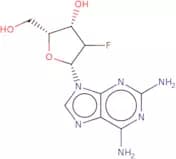
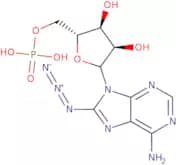
CAS:2,6-Diamino-9-(2'-deoxy-2'-fluoro-β-D-ribofuranosyl)purine is a modified purine nucleoside analog. This compound has modification that have the potential to influence its ability to interfere with nucleic acid synthesis, such as DNA or RNA.Formula:C10H13FN6O3Purity:Min. 95%Color and Shape:White PowderMolecular weight:284.25 g/mol8-Azidoadenosine 5'-monophosphate sodium salt
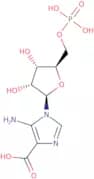
CAS:8-Azidoadenosine 5'-monophosphate sodium salt is an azido-conjugated adenosine monophosphate derivative used to introduce a label on oligonucleotides. A click reaction between the azide-functionalised nucleotide and a terminal alkyne-functionalised labelled moiety (with either a fluorophore or biotin) generates a stable conjugate containing a triazole link.Formula:C10H13N8O7PPurity:Min. 95%Molecular weight:388.23 g/mol5-Aminoimidazole-4-carboxylic acid-1-b-D-ribofuranose 5'-monophosphate
CAS:5-Aminoimidazole-4-carboxylic acid-1-b-D-ribofuranose 5'-monophosphate (AIRC) is a synthetase that catalyzes the reaction between ribulose 5-phosphate and ammonia to form 1,3,5-triaminoimidazole ribotide. AIRC is found in plants such as solanum tuberosum, where it functions in the synthesis of starch. It has been shown to be involved in physiological processes, including enzymatic reactions and growth factors. The enzyme is activated by hydrochloric acid and pyridine phosphate, which are its substrates. The enzyme is also inhibited by dry weight and synthetic pathway inhibitors. This enzyme has been used as a model for studying the effects of linear models on metabolic pathways.Formula:C9H14N3O9PPurity:Min. 95%Molecular weight:339.2 g/mol3'-O-Allylguanosine
3'-O-Allylguanosine is a antiviral agent that belongs to the group of synthetic nucleosides. It is a monophosphate analog of guanosine and an activator of ribonucleotide reductase. 3'-O-Allylguanosine has been shown to be effective against cancer cells in vitro. It has also been shown to inhibit DNA synthesis and promote DNA degradation in human leukemia cells, suggesting its potential use for the treatment of leukemia.
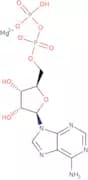
Formula:C13H17N5O5Purity:Min. 95%Molecular weight:323.3 g/molAdenosine 5'-diphosphate magnesium salt
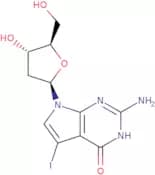
CAS:Adenosine 5'-diphosphate magnesium salt (ADP-Mg) is a pharmacological agent that has inhibitory properties. It is used as a model system to study platelet function and the effect of adenosine on platelet aggregation. ADP-Mg is also used as a reagent in the study of protein synthesis and regulation. This chemical has been shown to potentiate the activity of serotonin receptors, which may contribute to its anti-inflammatory effects. Adenosine 5'-diphosphate magnesium salt also inhibits papillary muscle contractions by inhibiting Ca2+ currents, leading to an improved ejection fraction in patients with congestive heart failure.Formula:C10H13N5O10P2·MgPurity:Min. 95%Color and Shape:PowderMolecular weight:449.49 g/mol7-Deaza-2'-deoxy-7-iodoguanosine
CAS:7-Deaza-2'-deoxy-7-iodoguanosine is a purine nucleoside that is synthesized from guanosine and iodine. It is used as a marker in sequencing reactions because it can be easily detected by UV light at 254 nm. 7-Deaza-2'-deoxy-7-iodoguanosine can be synthesized using the following general equation:
Formula:C11H13IN4O4Purity:Min. 97 Area-%Color and Shape:White PowderMolecular weight:392.16 g/molN4-Benzoyl-2-aza-3’-deazaadenine
CAS:N4-Benzoyl-2-aza-3’-deazaadenine is a modified nucleoside that is synthesized from the natural deoxyribonucleoside adenine. It has been shown to have antiviral and anticancer properties. N4-Benzoyl-2-aza-3’-deazaadenine is a DNA Activator and can be used in the treatment of viral infections, such as HIV and herpes, as well as cancer. The drug binds to the viral DNA polymerase and prevents it from making new copies of the virus. This results in an accumulation of defective viruses within infected cells and ultimately cell death.Purity:Min. 95%2-Thiocytidine
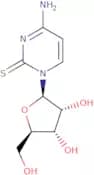
CAS:2-Thiocytidine is a nucleoside that is an intermediate in the synthesis of thiamine. It has been shown to be effective in the treatment of prostate cancer cells, which may be due to its ability to inhibit protein synthesis. 2-Thiocytidine binds to the catalytic site of ribonucleotide reductase (RR) and inhibits the enzyme's activity, thereby inhibiting DNA synthesis. This drug also has been shown to inhibit crosslinking caused by UV light or other agents that generate reactive oxygen species. 2-Thiocytidine binds to the active site of RR and prevents the formation of the enzyme-substrate complex. This binding prevents reduction of ribose into ribonucleotides and inhibits DNA synthesis.
Formula:C9H13N3O4SPurity:Min. 95%Color and Shape:Yellow PowderMolecular weight:259.28 g/mol2'-O-tert-Butyldimethylsilyl-5'-O-DMT-N3-methylcytidine 3'-CE phosphoramidite
2'-O-tert-Butyldimethylsilyl-5'-O-DMT-N3-methylcytidine 3'-CE phosphoramidite is a modified nucleoside that is synthesized by the reaction of 2'-deoxycytidine with bis(2,4,6-trichlorophenyl)carbonate in the presence of a base. 2'-O-tert-Butyldimethylsilyl-5'-O-DMT-N3 methylcytidine 3'-CE phosphoramidite has been shown to have anticancer activity and is used as an activator in the synthesis of oligonucleotides. This product is available as a white powder and can be used for research purposes only.Purity:Min. 95%



![6-(β-D-2-Deoxyribofuranosyl)-3,4-dihydro-8H-pyrimido[4,5-c][1,2]oxazin-7-one](/_next/image/?url=https%3A%2Fstatic.cymitquimica.com%2Fproducts%2F3D%2Fthumb-webp%2FND145587.webp&w=3840&q=75)








![7-[3,5-Bis-O-[(-2,4-dichlorophenyl)methyl]-2-C-methyl-b-D-ribofuranosyl]-4-chloro-5-iodo-7H-pyrrol…](/_next/image/?url=https%3A%2Fstatic.cymitquimica.com%2Fproducts%2F3D%2Fthumb-webp%2FNB14088.webp&w=3840&q=75)