Nucleosides
Found 3569 products of "Nucleosides"
Clofarabine
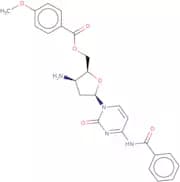
CAS:Clofarabine is FDA-approved for treating relapsed or refractory acute lymphoblastic leukaemia (ALL) in children after at least two other types of treatment have failedFormula:C10H11ClFN5O3Purity:Min. 98 Area-%Color and Shape:White Off-White PowderMolecular weight:303.68 g/mol3'-Amino-5'-O-p-anisoyl-N4-benzoyl-2',3'-dideoxycytidine
3'-Amino-5'-O-p-anisoyl-N4-benzoyl-2',3'-dideoxycytidine is a synthetic nucleoside that inhibits DNA synthesis by competitively inhibiting the activity of deoxycytidine kinase. 3'-Amino-5'-O-p-anisoyl-N4-benzoyl-2',3'-dideoxycytidine is an antiviral agent and has been shown to be effective against herpes simplex virus type 1 and varicella zoster virus. It has also been shown to have anticancer properties, which may be due to its ability to inhibit the growth of human breast cancer cells in culture.Formula:C24H24N4O6Purity:Min. 95%Molecular weight:464.47 g/mol3'-Deoxy-2'-O-methyladenosine
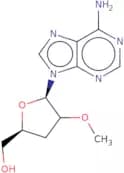
CAS:3'-Deoxy-2'-O-methyladenosine is a nucleoside that has antiviral and anticancer activity. It is a novel chemical compound with a unique structure, which makes it highly reactive. 3'-Deoxy-2'-O-methyladenosine induces DNA synthesis and cell proliferation in cancer cells. It also inhibits the production of viral DNA and RNA in infected cells by inhibiting the enzyme ribonucleotide reductase, which converts ribonucleotides to deoxyribonucleotides. 3'-Deoxy-2'-O-methyladenosine can be used as an antiviral agent against herpes simplex virus type 1 (HSV1), herpes simplex virus type 2 (HSV2) and human cytomegalovirus (CMV).
Formula:C11H15N5O3Purity:Min. 95%Color and Shape:Off-White PowderMolecular weight:265.27 g/mol2’,3’,5’-Tri-O-benzoyl-2’C-methyl-5-methoxyuridine
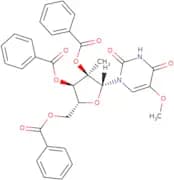
CAS:2’,3’,5’-Tri-O-benzoyl-2’C-methyl-5-methoxyuridine is a modified nucleoside that is used as an anticancer drug. It is synthesized from 2’,3’,5’triphosphate and 2’C-methyl-5-methoxyuridine. This compound is used to treat leukemia and other cancers by inhibiting the synthesis of DNA. Inhibiting DNA synthesis prevents the reproduction of cancer cells. The chemical structure of this compound was first published in 2007.Purity:Min. 95%6-O-Methylinosine
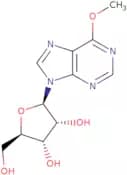
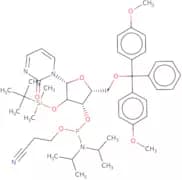
CAS:6-O-Methylinosine is a modified nucleoside that is used in the synthesis of recombinant proteins. It is synthesized from the reaction of methylphosphate and 6-O-methylguanosine. The phosphate group of the 6-O-methylguanosine molecule reacts with methylphosphate in an acid or neutral environment, while it reacts with phosphoric acid in a basic environment. This reaction can be monitored by measuring the amount of free phosphate groups present after the reaction. The rate of this reaction can be increased by increasing temperature and pH. 6-O-Methylinosine has been shown to have anticancer activity, which may be due to its ability to inhibit enzyme catalysis and modify DNA structure.Formula:C11H14N4O5Purity:Min. 95%Color and Shape:White PowderMolecular weight:282.25 g/molN4-Benzoyl-3'-O-tert-butyldimethylsilyl-5'-O-DMT-N4-methylcytidine
N4-Benzoyl-3'-O-tert-butyldimethylsilyl-5'-O-DMT-N4-methylcytidine is a nucleoside that is chemically modified by the addition of a benzoyl group. It has antiviral, anticancer and antiretroviral activities. N4-Benzoyl-3'-O-tert-butyldimethylsilyl-5'-O-DMT-N4-methylcytidine inhibits viral DNA synthesis by inhibiting both viral DNA polymerase and reverse transcriptase, which are enzymes required for the production of viral DNA. It also inhibits cancer cell growth by forming covalent bonds with deoxyribonucleic acid (DNA) in the cancer cells and initiating apoptosis. This nucleoside has been shown to be active against HIV, Herpes Simplex Virus Type 1 (HSV1), and Human CytomegalovPurity:Min. 95%2'-O-(2-Methoxyethyl)uridine
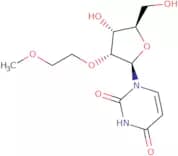
CAS:2'-O-(2-Methoxyethyl)uridine is a nucleoside analog that inhibits the synthesis of DNA, RNA and protein. It can be used as an antimetabolite to treat cancer and prevents tumor growth by interfering with cell division. 2'-O-(2-Methoxyethyl)uridine is often used in combination with other chemotherapeutic drugs. This drug is not active against bacteria and does not inhibit the growth of bacteria. The major disadvantage of this drug is its lack of efficacy against tumors, which may be due to the lack of penetration through the cell membrane or damage to DNA caused by radiation, abiotic factors, or malfunctioning enzymes. 2'-O-(2-Methoxyethyl)uridine has been shown to cause damage to cells by altering their metabolism and affecting the function of their mitochondria. Damage can cause cells to die through apoptosis or necrosis.Formula:C12H18N2O7Purity:Min. 95 Area-%Color and Shape:PowderMolecular weight:302.28 g/mol7-Deaza-2',3'-dideoxyadenosine
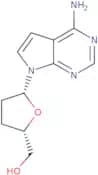
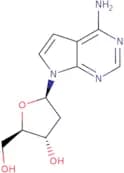
CAS:7-Deaza-2',3'-dideoxyadenosine (7DDAD) is a nucleoside analogue that has been used as an immunodeficiency agent. This drug inhibits the replication of the human immunodeficiency virus (HIV). 7DDAD is a prodrug that is converted to adenosine after it enters the cell, and this conversion prevents DNA synthesis. The effective dose of 7DDAD is 50 mg/kg in rats, but this dose may vary depending on the technique used. 7DDAD has been shown to be effective in vitro against HIV-1 and HIV-2 isolates, and it can also be used to treat cytomegalovirus infections. In addition, 7DDAD has been shown to inhibit the growth of various types of cancer cells in vitro.Formula:C11H14N4O2Purity:Min. 98 Area-%Color and Shape:PowderMolecular weight:234.26 g/mol3’-b-C-Methyl-N6-methyladenosine
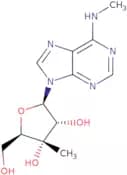
CAS:3’-b-C-Methyl-N6-methyladenosine is a modified monophosphate nucleoside that has antiviral and anticancer properties. It was first synthesized in the lab of Professor N.A. Nicolaou and his team in the 1980s at The Scripps Research Institute. 3’-b-C-Methyl-N6-methyladenosine is an activator of RNA polymerase II and ribonucleotide reductase, which are important enzymes in DNA synthesis, cell proliferation, and cancer progression. 3’-b-C-Methyl-N6-methyladenosine is also a potent inhibitor of HIV replication and may be useful for treatment of AIDS.Purity:Min. 95%2’-Deoxy-N4-dimethylcytidine
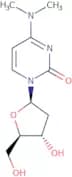
CAS:2’-Deoxy-N4-dimethylcytidine is a synthetic nucleoside analog that is used to inhibit viral replication in the treatment of AIDS and cancer. It is phosphorylated by adenosine kinase to form deoxydimethylcytidine monophosphate (dDMP), which inhibits viral DNA synthesis by inhibiting the activity of reverse transcriptase, an enzyme involved in the production of viral DNA. 2’-Deoxy-N4-dimethylcytidine has also been shown to inhibit cancer cell growth by interrupting mitosis and inducing apoptosis.Purity:Min. 95%Thymidine-5'-diphosphate trisodium salt
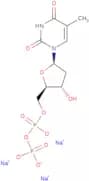
CAS:Thymidine-5'-diphosphate trisodium salt is a novel anticancer drug that is structurally modified to resemble thymidine. It has antiviral and antitumor effects and can be used as an antineoplastic agent. Thymidine-5'-diphosphate trisodium salt is a high quality, high purity ribonucleoside that can be used in the synthesis of deoxyribonucleosides and phosphoramidites. This drug has shown activity against various types of cancer cells and is being investigated for its potential use in the treatment of leukemia.
Formula:C10H13N2Na3O11P2Purity:Min. 95%Color and Shape:White PowderMolecular weight:468.13 g/mol2’-O-Methyl-5-methyluridine 5’-triphosphate triethylammonium salt
CAS:2’-O-Methyl-5-methyluridine 5’-triphosphate triethylammonium salt is a nucleoside that can be used as an antiviral or anticancer drug. It is a modified nucleoside, which is synthesized by phosphoramidite chemistry. 2'-O-Methyl-5'-methyluridine 5'-triphosphate triethylammonium salt has been shown to be an activator of DNA polymerase in vitro and in vivo. It also has high purity and high quality.Formula:C11H19N2O15P3Purity:Min. 95%Molecular weight:512.19 g/molRibavirin 5'-triphosphate tetrasodium salt - 10mM aqueous solution
CAS:Ribavirin triphosphate is the biologically active metabolite of antiviral nucleoside analog ribavirin. In cells, the prodrug ribavirin gets triphosphorylated and in it inhibits viral RNA polymerases, interfering with the synthesis of newly formed RNA.Formula:C8H15N4O14P3·Na4Purity:Min. 95 Area-%Color and Shape:PowderMolecular weight:576.1 g/mol3'-O-Methyladenosine
CAS:3'-O-Methyladenosine (3'OMeA) is a monomethylated adenosine that belongs to the group of nucleosides. It has been found to inhibit the activity of adenosine receptors, which are important for the regulation of blood pressure and central nervous system function. 3'OMeA also inhibits virus replication in human lymphocytes. 3'OMeA is synthesized by reaction with methylamine and purification by column chromatography. The molecule is a potential therapeutic target for HIV/AIDS, as it can be used as a specific agonist in order to block viral entry into cells.
Formula:C11H15N5O4Purity:Min. 95%Color and Shape:White PowderMolecular weight:281.27 g/mol1-(8-Phosphonooctyl)-7-deazaxanthine ammonium salt
CAS:Ribonucleosides are a group of compounds that are similar to the nucleosides, but contain ribose as the sugar component. Ribonucleosides have been shown to have anticancer properties in-vitro and in-vivo. The compound 1-(8-Phosphonooctyl)-7-deazaxanthine ammonium salt is a novel monophosphate nucleotide with antiviral and antimalarial activities. It has also been shown to be an activator of DNA synthesis, which may lead to its use as a therapeutic agent for cancers or viral infections. This compound has a high purity and quality level, and is available at CAS No. 265322-84-7.br>Purity:Min. 95%5'-O-Benzoylthymidine
CAS:5'-O-Benzoylthymidine is an oxidative, single-stranded DNA (ssDNA) stabilizing agent. It has been shown to stabilize ssDNA by preventing the formation of intrastrand and interstrand disulfide bonds. This agent also destabilizes ssDNA by forming covalent adducts with the 5' ends of oligodeoxyribonucleotides. The stability and destabilization of ssDNA can be used in research on nucleic acid sequences, such as antigene sequences or oligonucleotide sequences.
Formula:C17H18N2O6Purity:Min. 95%Molecular weight:346.34 g/mol5'-Amino-5'-deoxyadenosine hydrochloride
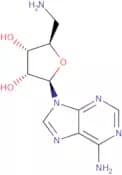
CAS:5'-Amino-5'-deoxyadenosine hydrochloride (5'-ADeA) is a nucleotide that is synthesized from ribose 5-phosphate and adenosine monophosphate. It has been shown to have potential as a biomarker for skin cancer. The synthesis of 5'-ADeA is catalyzed by the enzyme caffeic acid 4-monooxygenase, which converts caffeic acid into 5'-ADeA. This reaction requires molecular oxygen, NADPH, and iron ions. The activity of this enzyme can be inhibited by sodium carbonate or basic fibroblast growth factor (bFGF). This drug has been shown to have anti-inflammatory effects in vivo.Formula:C10H14N6O3Purity:Min. 95 Area-%Color and Shape:PowderMolecular weight:266.26 g/mol2'-tert-Butyldimethylsilyl-5'-DMT-N6-methyladenosine
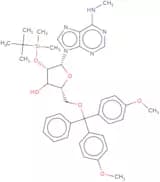
CAS:2'-tert-Butyldimethylsilyl-5'-DMT-N6-methyladenosine is an antiviral monophosphate nucleoside. It is a novel and structurally modified analog of adenosine, which inhibits viral DNA polymerase by competitive inhibition. 2'-tert-Butyldimethylsilyl-5'-DMT-N6-methyladenosine is a high purity and high quality nucleotide that can be used in the synthesis of DNA or RNA. This product has been shown to be an anticancer agent with potential therapeutic effects against leukemia, lymphoma, and breast cancer.Formula:C38H47N5O6SiPurity:Min. 95%Molecular weight:697.9 g/mol2'-Azido-2'-deoxy-5-methyluridine
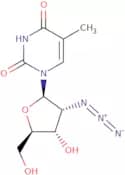
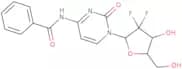
CAS:2'-Azido-2'-deoxy-5-methyluridine (2'-Aza-dUMP) is an antiviral agent that inhibits the replication of HIV. It has been shown to be an activator of DNA, RNA, and phosphoramidites. This compound is an analog of thymidine and is structurally similar to 5-fluoro-2',3'-dideoxyuridine. 2'-Aza-dUMP has been used as a substrate for DNA synthesis in order to produce oligonucleotides for use in gene therapy. 2'-Aza-dUMP also induces apoptosis in cancer cells and has shown anti-inflammatory properties.Formula:C10H13N5O5Purity:Min. 95%Molecular weight:283.24 g/molN-Benzoyl-2'-deoxy-2',2'-difluorocytidine
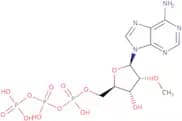
CAS:N-Benzoyl-2'-deoxy-2',2'-difluorocytidine is a novel nucleoside analog with potent antiviral and anticancer activity. It is an activator of the enzyme ribonucleotide reductase and inhibits DNA synthesis. N-Benzoyl-2'-deoxy-2',2'-difluorocytidine has been shown to be an effective inhibitor of human immunodeficiency virus type 1 (HIV-1) replication in vitro, as well as the growth of human tumor cells in vivo.Formula:C16H15F2N3O5Purity:Min. 95%Color and Shape:PowderMolecular weight:367.3 g/mol2'-O-Methyladenosine-5'-triphosphate sodium salt - 100mM aqueous solution
CAS:2'-O-Methyladenosine-5'-triphosphate sodium salt is a novel nucleoside phosphoramidite. It is an activator and it can be used in the synthesis of DNA and RNA. The compound has antiviral properties and has been shown to inhibit DNA replication, protein synthesis, and RNA transcription. The compound also inhibits the growth of cancer cells by inducing apoptosis.Formula:C11H18N5O13P3·xNaPurity:Min. 95%Color and Shape:PowderMolecular weight:521.21 g/mol1-(4’-Azido-3’,5’-di-O-benzoyl-2’-deoxy-2’-fluoro-b-D-arabinofuranosyl)uracil
CAS:1-(4’-Azido-3’,5’-di-O-benzoyl-2’-deoxy-2’-fluoro-b-D-arabinofuranosyl)uracil is a synthetic antiviral agent that inhibits the activity of DNA and RNA polymerases. It also has anticancer properties. The compound is an analogue of 2'-deoxycytidine monophosphate (dCMP). This compound binds to the phosphate group of nucleoside triphosphates and prevents their incorporation into DNA or RNA. 1-(4’-Azido-3’,5’-di-O-benzoyl-2’-deoxy) -2′ fluoro -b D arabinofuranosyl) uracil has been shown to inhibit the growth of cancer cells in vitro.Purity:Min. 95%2-Chloro-2'-deoxyadenosine 5'-triphosphate sodium salt
2-Chloro-2'-deoxyadenosine 5'-triphosphate sodium salt is a nucleoside that can be used in the synthesis of DNA and RNA. It is a synthetic, high quality, and novel compound that has been shown to have antiviral, anticancer, and anti-inflammatory properties. This compound has been shown to inhibit the growth of cancer cells by inhibiting the production of proteins vital for cell division. 2-Chloro-2'-deoxyadenosine 5'-triphosphate sodium salt has also been shown to be an activator of nucleoside phosphorylase and deoxynucleotide kinase, which are enzymes that catalyze the conversion of nucleosides into their corresponding monophosphates.Purity:Min. 95%5-(2-Fluorovinyl)-2'-Deoxyuridine
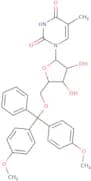
CAS:5-(2-Fluorovinyl)-2'-Deoxyuridine is a hydrophobic analogue of acyclovir that has potent activity against herpes simplex virus type 1. It inhibits the synthesis of viral DNA, and thus prevents the formation of plaques in tissue culture. This drug also inhibits cell proliferation and viral production by l1210 cells as well as lung fibroblasts. 5-(2-Fluorovinyl)-2'-Deoxyuridine has shown inhibitory effects against uninfected cells, but not against cells infected with herpes simplex virus type 2.Formula:C11H13FN2O5Purity:Min. 95%Molecular weight:272.23 g/mol5'-O-DMT-5-methyluridine
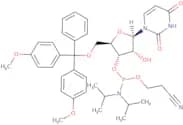
CAS:5'-O-DMT-5-methyluridine is a mesylate that is used as a chemical building block in the synthesis of unmodified, modified, and conjugate nucleosides. 5'-O-DMT-5-methyluridine can be used to modify ribonucleotides and derivates. It has been shown to be useful for labeling DNA probes with fluorescein and rhodamine dyes. 5'-O-DMT-5-methyluridine also has affinity for nucleophile groups such as phosphate, hydroxyl and amino groups. This compound is used in the incorporation of labeled polypeptides into proteins by ligation.Formula:C31H32N2O8Purity:Min. 95%Molecular weight:560.59 g/mol5'-O-DMT-uridine 3'-CE phosphoramidite
CAS:5'-O-DMT-uridine 3'-CE phosphoramidite is a novel, modified and activator nucleoside. It can be used as an antiviral agent or in the synthesis of DNA. 5'-O-DMT-uridine 3'-CE phosphoramidite has been shown to be cytotoxic in vitro to cancer cells.Formula:C39H47N4O9PPurity:Min. 95%Molecular weight:746.79 g/mol3'-O-Aminoacetoxy-2'-deoxyadenosine
amino functionalised nucleosideFormula:C13H22N6O3Purity:Min. 98 Area-%Color and Shape:PowderMolecular weight:310.36 g/mol1-(4’-Azido-2’-deoxy-2’-fluoro-b-D-arabinofuranosyl)N4-(n-docosanoyl)-cytosine
1-(4’-Azido-2’-deoxy-2’-fluoro-b-D-arabinofuranosyl)N4-(n-docosanoyl)-cytosine is a deoxyribonucleoside monophosphate with antiviral effects. It is a novel nucleotide analogue that contains an azido group and a 2,4,6-trifluorobenzene moiety. The 4′ position of the sugar is modified with an n-docosanoyl group. 1-(4’Azo-2′deoxy-2′fluoro-bDara)ribonucleosides are synthetic nucleotides that can be used to inhibit viral replication by inhibiting DNA polymerase and RNA polymerase.Purity:Min. 95%8-Azidoadenosine
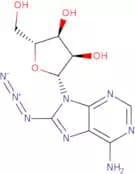
CAS:8-Azidoadenosine is an adenosine analogue conjugated with an azido group which can be used for oligonucleotide labelling. The azido group reacts with a terminal alkyne via a click reaction, forming the labelled nucleotide containing a triazole linker.
Formula:C10H12N8O4Purity:Min. 95%Color and Shape:PowderMolecular weight:308.25 g/molZebularine 3'-CE phosphoramidite
CAS:Zebularine 3'CE phosphoramidite is a novel, high quality activator for modified DNA monophosphate. It is used as an anticancer drug and antiviral agent. Zebularine 3'CE phosphoramidite is a synthetic, diphosphate with high purity and high reactivity. It has been shown to activate deoxyribonucleosides to ribonucleosides in DNA synthesis, as well as being able to inhibit viral RNA synthesis by inhibiting viral polymerase.Formula:C45H61N4O8PSiPurity:Min. 95%Color and Shape:Off-white solid.Molecular weight:845.04 g/molN4,3'-O-Dibenzoyl-2'-deoxycytidine
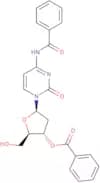
CAS:N4,3'-O-Dibenzoyl-2'-deoxycytidine is a nucleoside that functions as a base. It is a diester of the naturally occurring nucleoside cytidine and 2′,6′-dibenzoyl-deoxyribose. The compound has been shown to be an inhibitor of DNA polymerases and nuclease activity in vitro. N4,3'-O-Dibenzoyl-2'-deoxycytidine has been shown to inhibit the growth of certain strains of bacteria and can be used for the treatment of tuberculosis. This drug also has anti-inflammatory properties that may be due to its ability to inhibit prostaglandin synthesis. !-- END OF PRODUCT DESCRIPTIONS -->Formula:C23H21N3O6Purity:Min. 95%Color and Shape:PowderMolecular weight:435.44 g/mol3'-O-Benzoyl-2'-deoxyuridine
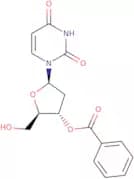
CAS:3'-O-Benzoyl-2'-deoxyuridine is a synthetic nucleoside that is used in the synthesis of DNA and RNA. 3'-O-Benzoyl-2'-deoxyuridine is also an antiviral agent that has shown efficacy against HIV, HSV, and influenza virus. 3'-O-Benzoyl-2'-deoxyuridine is a phosphoramidite monophosphate that can be used as a building block for DNA or RNA synthesis. It is also a diphosphate that can be used to synthesize modified nucleosides. This product has novel properties and high purity, making it suitable for research purposes.Formula:C16H16N2O6Purity:Min. 95%Color and Shape:PowderMolecular weight:332.31 g/molN2-Phenoxyacetyl-2'-O-methylguanosine
CAS:N2-Phenoxyacetyl-2'-O-methylguanosine is a new monophosphate nucleoside that has been modified to mimic the anticancer properties of guanosine. It is synthesized by modifying the sugar moiety of guanosine and adding a phenoxyacetyl group to the 2'-OH position. N2-Phenoxyacetyl-2'-O-methylguanosine has shown antiviral and antitumor activity in vitro and in vivo, as well as high purity.Formula:C19H21N5O7Purity:Min. 95%Molecular weight:431.4 g/mol7-Deaza-2'-deoxyadenosine
CAS:7-Deaza-2'-deoxyadenosine is an oligodeoxynucleotide analog that has been shown to be a potent inhibitor of human ovarian carcinoma cells. It inhibits the uptake of organic anion transporters, which are proteins found in the cell membrane that transport organic anions such as nucleosides and nucleotides. 7-Deaza-2'-deoxyadenosine has also been shown to inhibit DNA synthesis and polymerase chain reactions by binding to the enzyme RNA polymerase II. This drug can be synthesized with solid phase chemistry, making it a highly reproducible product.Formula:C11H14N4O3Purity:Min. 98 Area-%Color and Shape:White PowderMolecular weight:250.26 g/mol2,4,6-Trichloro-5-methylpyrimidine
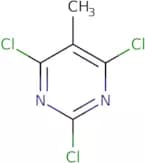
CAS:2,4,6-Trichloro-5-methylpyrimidine is a nucleoside for use in research applicationsFormula:C5H3Cl3N2Purity:Min. 95%Color and Shape:PowderMolecular weight:197.45 g/mol5'-O-p-Anisoyl-2,2'-anhydrouridine
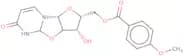
5'-O-p-Anisoyl-2,2'-anhydrouridine is a novel nucleoside. It is an activator of ribonucleosides and deoxyribonucleosides. This compound has antiviral activity against HIV and DNA synthesis inhibitory activity against cancer cells. 5'-O-p-Anisoyl-2,2'-anhydrouridine is also a modified nucleoside that can be used for the synthesis of phosphoramidites for the chemical synthesis of oligodeoxynucleotides (ODN).Formula:C17H16N2O7Purity:Min. 95%Molecular weight:360.32 g/mol5'-O-tert-Butyldimethylsilyl-2'-deoxyuridine
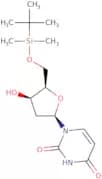
5'-O-tert-Butyldimethylsilyl-2'-deoxyuridine (5'-O-TBDMSU) is a modified nucleoside that has antiviral, anticancer and novel activities. It is synthesized by the reaction of 5'-O-tert-butyldimethylsilyl-2'-deoxyuridine with methyl chloroformate. 5'-O-TBDMSU has been shown to inhibit viral replication in cell culture. The antiviral activity of 5'-O-TBDMSU may be due to its ability to inhibit DNA synthesis by inhibiting the incorporation of deoxyribonucleotide triphosphates into DNA or by inhibiting the activity of DNA polymerases. This compound also inhibits the replication of RNA viruses such as HIV and hepatitis C virus, which are dependent on deoxyribonucleosides for their replication.Formula:C15H26N2O5SiPurity:Min. 95%Molecular weight:342.47 g/molN4-Benzoyl-3'-deoxycytidine
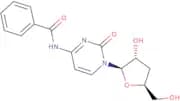
CAS:N4-Benzoyl-3'-deoxycytidine is a novel antiviral agent that has shown activity against DNA and RNA viruses. It is an activator of DNA polymerase, which is essential for replication of viral nucleic acids. The compound is a modified nucleoside with a benzoyl group at the 4' position of the ribose moiety. It also has phosphoramidite, monophosphate, and diphosphate analogues. N4-Benzoyl-3'-deoxycytidine binds to the enzyme DNA polymerase, thereby inhibiting its ability to synthesize deoxyribonucleotides from ribonucleotides. This results in inhibition of viral DNA synthesis and subsequent inhibition of viral replication.Formula:C16H17N3O5Purity:Min. 95%Color and Shape:White To Off-White SolidMolecular weight:331.32 g/molβ-Nicotinamide adenine dinucleotide phosphate sodium salt hydrate
CAS:Please enquire for more information about β-Nicotinamide adenine dinucleotide phosphate sodium salt hydrate including the price, delivery time and more detailed product information at the technical inquiry form on this pageFormula:C21H27N7NaO17P3Purity:Min. 95%Color and Shape:PowderMolecular weight:765.39 g/molL-Thymidine
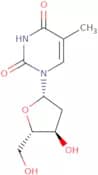
CAS:L-Thymidine is an antiviral drug that is used in the treatment of chronic hepatitis. It has been shown to be active against a range of viruses, including HIV, HSV, and HBV. L-Thymidine can also be used to treat patients with cancer as an anti-cancer agent. L-Thymidine is a prodrug that is converted into thymidine triphosphate (TTP), which inhibits viral DNA polymerase by competitive inhibition. The antiviral activity of L-Thymidine may be due to its ability to inhibit the synthesis of viral proteins required for viral replication by interfering with the protein production process or by inhibiting the formation of dsDNA during reverse transcription.Formula:C10H14N2O5Purity:Min. 95%Color and Shape:PowderMolecular weight:242.23 g/mol1-Methylpseudouridine
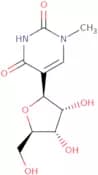
CAS:1-Methylpseudouridine is a substitute for uridine in modified mRNA. This substitution has shown to increase transfection by reducing immuogenicity. The 1-methylpseudouridine substituted mRNA increases protein expression due to low immune stimulation as it evades detection by the edosomal Toll-like receptor (TLR3).Formula:C10H14N2O6Purity:Min. 95 Area-%Color and Shape:PowderMolecular weight:258.23 g/mol5'-O-Benzoyl-2',3'-dideoxy-3'-fluorouridine
5'-O-Benzoyl-2',3'-dideoxy-3'-fluorouridine is a novel nucleoside that is synthesized from ribonucleosides. It is an inhibitor of the RNA polymerase enzyme, which prevents the transcription and replication of DNA. 5'-O-Benzoyl-2',3'-dideoxy-3'-fluorouridine also inhibits viral DNA synthesis by preventing viral RNA from being translated into DNA. This product has been shown to be active against a wide range of viruses, including influenza A virus, herpes simplex virus type 1, and vaccinia virus.Formula:C16H15FN2O5Purity:Min. 95%Molecular weight:334.35 g/molEdU
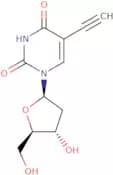
CAS:2'-Deoxy-5-ethynyluridine (5-EdU) is a modified thymidine analogue containing a terminal alkyne group, which is used for nucleotide labelling. 5-Edu is easily taken up by cells and incorporated by metabolic activation during DNA synthesis. By adding an azide conjugated to a fluorophore or a biotin moiety, a click reaction occurs from the labelled nucleotide linked by a triazole group. 5-Edu are employed in cell proliferation assays, to study DNA and RNA localisation, structure and dynamics, in the synthesis of aptamers with the click-SELEX method, and in other applications such as the preparation of oligonucleotide microarrays and nanoelectronic devices.Formula:C11H12N2O5Purity:Min. 98 Area-%Color and Shape:PowderMolecular weight:252.23 g/mol2-Amino-6-chloro-9-(2'-deoxy-b-D-ribofuranosyl)purine
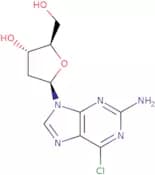
CAS:2-Amino-6-chloro-9-(2'-deoxy-b-D-ribofuranosyl)purine is a purine nucleoside where the purine base has a 2-amino group at position 2 and a chlorine at position 6. The sugar is 2'-deoxy, meaning it is like the sugar found in DNA, lacking the 2'-hydroxyl group that is present in RNA. The amino and chloro groups on the purine base modify how this molecule behaves in biological systems making it useful in research applications.Formula:C10H12ClN5O3Purity:Min. 97 Area-%Color and Shape:White PowderMolecular weight:285.69 g/mol2-Amino-9-(β-D-ribofuranosyl)purine
CAS:2-Amino-9-(β-D-ribofuranosyl)purine is a purine nucleoside consisting of the base 2-aminopurine linked via an N9-glycosidic bond to β-D-ribofuranose. As an analog of adenosine, it retains structural compatibility with nucleic acids but exhibits distinct biochemical properties, most notably intrinsic fluorescence. This makes it a valuable probe in molecular biology for studying nucleic acid structure, base pairing, and conformational changes, as its fluorescence is sensitive to local stacking interactions and environmental conditions.Formula:C10H13N5O4Purity:Min. 95%Color and Shape:White PowderMolecular weight:267.24 g/molN6-Benzoyl-2'-deoxy-5'-O-DMT-adenosine 3'-CE phosphoramidite
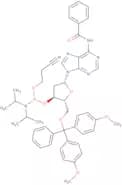
CAS:N6-Benzoyl-2'-deoxy-5'-O-DMT adenosine 3'-CE phosphoramidite is a protected adenosine amidite.Formula:C47H52N7O7PPurity:Min. 98 Area-%Color and Shape:White PowderMolecular weight:857.93 g/mol2'-Azido-2'-deoxy-5'-O-DMT-uridine
CAS:2'-Azido-2'-deoxy-5'-O-DMT-uridine is a nucleoside that has been modified with an azido group at the 2' position. The azido group is used to modify DNA and RNA nucleosides, which are monophosphate, ribonucleosides, and deoxyribonucleosides. This drug may be used as an activator of DNA synthesis or as a antiviral agent. It has been shown to inhibit HIV replication in vitro.Purity:Min. 95%5'-Azido-5'-deoxyuridine
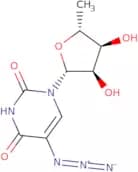
CAS:5'-Azido-5'-deoxyuridine is a synthetic nucleobase that is used in the synthesis of oligodeoxynucleotides. It has been shown to have an inhibitory effect on tumor cells, which may be due to its ability to interact with guanosine diphosphate (GDP) and prevent the formation of GTP. 5'-Azido-5'-deoxyuridine has also been shown to have an inhibitory effect on Mycobacterium tuberculosis and Mycobacterium avium complex, but does not affect other bacteria. 5'-Azido-5'-deoxyuridine interacts with RNA by binding to the phosphate group and inhibiting the synthesis of proteins and DNA.Purity:Min. 95%2’-O-Methy-2,5’-anhydro-5-methyluridine
2’-O-Methy-2,5’-anhydro-5-methyluridine is a modified nucleoside with antiviral and anticancer properties. It is an activator of the antiviral response and has been shown to inhibit cancer cells from dividing. This compound is synthesized in an enzymatic reaction that converts 5-methyluridine to 2'-O-methylated uridine. The synthesis involves ribonucleotide reductase, which converts ribonucleotides into deoxyribonucleotides. 2' -O -Methy -2,5'-anhydro-5-methyluridine was originally identified as a novel monophosphate derivative in the 1960s and has been shown to be more effective than other nucleoside analogues.Purity:Min. 95%