Others
Found 6299 products of "Others"
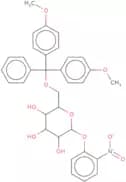
2-Nitrophenyl 6-O-DMT-b-D-galactopyranoside
N-Acetyl-2-nitrophenyl 6-O-DMT-b-D-galactopyranoside is a fluorogenic substrate that is used in enzyme and chromogenic assays, including the determination of aminoglycoside activity. This product has been shown to be suitable for detection of bacterial contamination in food products and environmental samples. N-Acetyl-2-nitrophenyl 6-O-DMT-b-D-galactopyranoside reacts with aminoglycosides at the O4 position, forming a fluorescent product that can be measured using a fluorometer.Purity:Min. 95%Molecular weight:603.62 g/mol4-Nitrophenyl 3-O-(2,3,4,6-tetra-O-acetyl-a-D-mannopyranosyl)-2,4-di-O-benzoyl-b-D-mannopyranoside
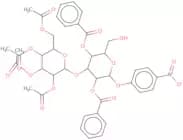
CAS:4-Nitrophenyl 3-O-(2,3,4,6-tetra-O-acetyl-a-D-mannopyranosyl)-2,4-di-O-benzoyl-b-D-mannopyranoside is a bioactive metabolite that can be found in the gene expression profile of a human genome. It has been shown to have an effect on gene expression levels and cellular function. This metabolite is found in the environment and has been shown to be mediated by environmental factors. The high level of gene expression has been shown to be due to its ability to bind to DNA.Purity:Min. 95%Molecular weight:839.75 g/mol2-Naphthyl 2,3,4,6-tetra-O-acetyl-b-D-glucopyranoside
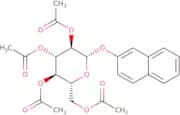
CAS:2-Naphthyl 2,3,4,6-tetra-O-acetyl-b-D-glucopyranoside (NAG tetra acetate) is a chromogenic enzyme substrate commonly used in the detection of β-galactosidase activity. Upon hydrolysis by the enzyme, it produces a yellow product that can be detected by spectrophotometry or visually. It is frequently used in bacterial assays to monitor gene expression or as a tool for screening potential inhibitors of the enzyme.Purity:Min. 95%Molecular weight:474.47 g/mol2-Chloro-4-nitrophenyl 2-acetamido-2-deoxy-a-D-glucopyranoside
L-2-Chloro-4-nitrophenyl 2-acetamido-2-deoxy-a-D-glucopyranoside is a chemiluminescent substrate for the detection of aminoglycoside antibiotics. It can be used to determine the concentration of aminoglycosides in blood, urine, and serum. The chemiluminescence reaction is dependent on the presence of oxygen. This product has been shown to have a high quality and purity with environmental testing and staining properties. L-2-Chloro-4-nitrophenyl 2-acetamido-2-deoxy--a--D--glucopyranoside has also been shown to bind ligands such as porphyrins, bilirubin, or hemin with bioluminescence or chromogenic substrates in diagnostics or culture media for food testing. L--2--Chloro--4--Purity:Min. 95%4-Nitrophenyl hepta-O-acetyl-1-thio-b-lactoside
CAS:4-Nitrophenyl hepta-O-acetyl-1-thio-b-lactoside is an inorganic molecule that binds to the surface of bacteria. It has been used as a fingerprinting tool for a variety of organisms, including corynebacterium glutamicum. The molecule can be used to measure the metabolic activity of corynebacterium glutamicum with a technique called incremental acidification. This technique is based on the observation that the concentration of 4-nitrophenol decreases by one unit for each glucose metabolized by corynebacterium glutamicum. The use of 4NPHTBL and other primers can also be useful in diagnosing patients with autoimmune diseases such as celiac disease and inflammatory bowel disease.Purity:Min. 95%2-Methyl-4-nitrophenyl b-D-galactopyranoside
2-Methyl-4-nitrophenyl b-D-galactopyranoside is a chemiluminescent substrate that is used in various applications. It is a ligand that binds to the enzyme beta-galactosidase and is used in diagnostics for detecting the presence of the enzyme. 2-Methyl-4-nitrophenyl b-D-galactopyranoside has been shown to be an appropriate substrate for chemiluminescence reactions, such as those used in diagnostic or research applications. The product also has been tested for potential toxicity and found not to be toxic at concentrations up to 100mg/mL. This product can be used in a variety of applications, including food testing, bacterial culture media, and environmental testing.Purity:Min. 95%Molecular weight:315.28 g/mol2,4-Dinitrophenyl 2-deoxy-2-fluoro-b-xylobioside
CAS:2,4-Dinitrophenyl 2-deoxy-2-fluoro-beta-xylobioside, also known as DNFPX, is a substrate to study the activity of glycosidases. It is a derivative of xylobiose, which is a disaccharide composed of two xylose units. The 2-deoxy-2-fluoro modification on one of the xylose units makes the compound resistant to further hydrolysis by the enzyme, allowing it to be used as a reporter of enzyme activity. The 2,4-Dinitrophenyl group is used as a chromogenic group that enables rapid detection and measurement of the enzyme activity that can be quantitatively measured by monitoring the appearance of the yellow 2,4-dinitrophenyl group when cleavage of the glycosidic bond.Purity:Min. 95%Molecular weight:450.33 g/mol4-Nitrophenyl hepta-O-acetyl-b-lactoside
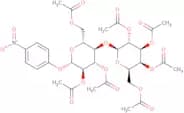
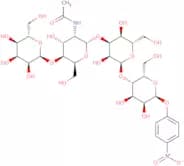
CAS:4-Nitrophenyl hepta-O-acetyl-b-lactoside is a high-quality chromogenic pNP enzyme substrate that exhibits excellent sensitivity and specificity in enzyme assays. This synthetic compound is designed to react with β-galactosidase enzymes, generating a yellow product (4-nitrophenol) upon cleavage. The resulting color change allows for quantitative measurement of enzyme activity, providing valuable insights in various research applications including enzyme kinetics, screening of inhibitors, drug discovery, and molecular diagnostics. Our product ensures consistent results with minimal interference, making it a reliable choice for a wide range of biochemical applications.Purity:Min. 95%Molecular weight:757.65 g/mol4-Nitrophenyl b-lacto-N-neotetraoside
CAS:4-Nitrophenyl b-lacto-N-neotetraoside is a potent antibiotic that inhibits bacterial growth by binding to the beta subunit of DNA gyrase. This drug has been shown to be effective against methicillin resistant Staphylococcus aureus (MRSA) and Clostridium perfringens, although is not active against acid-fast bacteria such as Mycobacterium tuberculosis or Mycobacterium avium complex. Gatifloxacin has shown anti-inflammatory properties, which may be due to its inhibition of prostaglandin synthesis.Purity:Min. 95%Molecular weight:828.72 g/mol4-Nitrophenyl phosphate potassium salt
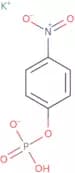
CAS:4-Nitrophenyl phosphate potassium salt is a high quality, non-radioactive chemiluminescence substrate that is used in the detection of oxidase activity. This product can be used to measure the activity of peroxidase and catalase enzymes, as well as the accumulation of hydrogen peroxide. It also has been shown to be a ligand for some sulfhydryl groups and an inhibitor of phosphatases. 4-Nitrophenyl phosphate potassium salt has been tested for its ability to inhibit bacterial growth and fluorescence by staining cells. This product has also been shown to have bioluminescent properties and can be used for diagnostics or culture media.Purity:Min. 95%Molecular weight:257.18 g/mol5-Bromo-3-indolyl β-D-glucuronide cyclohexylammonium
CAS:chromogenic substrate for beta-glucuronidaseFormula:C14H14BrNO7•C6H13NPurity:Min. 95%Color and Shape:PowderMolecular weight:487.34 g/mol4-Nitrophenyl 2,3,4,6-tetra-O-acetyl-b-D-thiogalactopyranoside
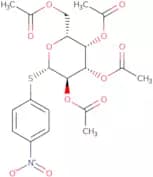
CAS:4-Nitrophenyl 2,3,4,6-tetra-O-acetyl-b-D-thiogalactopyranoside (NPG) is a fluorogenic substrate that can be used in the detection of beta-galactosidase activity. It reacts with 4-nitrophenol to form an orange product at pH 6.0. The fluorescence intensity increases with increasing concentrations of the substrate and enzyme. The reaction is inhibited by borax, which competes for the enzyme active site. This product has been used as a chromogenic substrate for beta-galactosidase and as an enzyme substrate for beta-galactosidase in diagnostic tests for galactosemia and other carbohydrate metabolism disorders. NPG has also been used in chemiluminescent assays to detect beta-galactosidase activity in culture media and as a bioluminescence substrate in the detection of bacterialPurity:Min. 95%Molecular weight:485.47 g/molN-Acetyl-L-glutamine p-nitroanilide
CAS:N-Acetyl-L-glutamine p-nitroanilide is a fluorogenic substrate that can be used in the diagnosis of bacterial infections. It is a ligand that can bind to enzymes involved in the production of bioluminescence, such as luciferase, and can be used for the detection of bacteria. It is also used for food testing, environmental testing, and diagnostics. N-Acetyl-L-glutamine p-nitroanilide has high purity and high quality, which makes it suitable for conjugation with other molecules.
Formula:C13H15N3O6Purity:Min. 95%Color and Shape:PowderMolecular weight:309.27 g/mol5-Bromo-4-chloro-1H-indol-3-yl-b-D-glucuronide
CAS:5-Bromo-4-chloro-3-indolyl β-D-glucuronide (BCIG) is an chromogenic enzyme substrate used to detect the presence of glucuronidase enzyme activity. The reaction occurs when BCIG reacts with the enzyme beta-glucuronidase yielding an intense blue color. It is used in a variety of biochemical and biomedical applications, such as the detection of pathogenic bacteria, the diagnosis of genetic disorders, and the isolation of recombinant proteins.Formula:C14H13BrClNO7Purity:Min. 95%Molecular weight:422.61 g/mol2-Chloro-4-nitrophenyl 2,3,4,6-tetra-O-acetyl-a-D-glucopyranoside
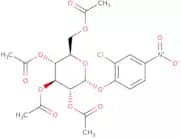
CAS:2-Chloro-4-nitrophenyl 2,3,4,6-tetra-O-acetyl-a-D-glucopyranoside is a chromogenic substrate used to characterize enzymes in biochemical assays. The substrate is cleaved by enzymes, such as esterases and glycosidases, releasing the chromogenic group, which can be detected by its yellow color.Purity:Min. 95%Molecular weight:503.84 g/mol4-Nitrophenyl 2,3,4-tri-O-acetyl-b-D-glucuronide methyl ester
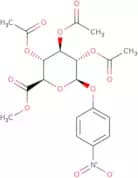
CAS:4-Nitrophenyl 2,3,4-tri-O-acetyl-b-D-glucuronide methyl ester is a fluorescent substrate for the beta-glucuronidase enzyme. It can be used to detect the presence of this enzyme in bacteria and other microorganisms by means of fluorometric or colorimetric assays. It has been shown to have an excellent stability in a variety of culture media and food testing applications. This product is available in high purity and quality, with a CAS number of 18472-49-6.Purity:Min. 95%Molecular weight:455.37 g/mol4-Nitrophenyl 3,4,6-tri-O-acetyl-b-D-galactopyranoside
CAS:4-Nitrophenyl 3,4,6-tri-O-acetyl-b-D-galactopyranoside is a nucleic acid molecule that has been synthesized by recombinant expression in Corynebacterium glutamicum. It is a photosynthetic molecule and can be used to study the molecular basis of photosynthesis. The 4-nitrophenyl group on the sugar moiety confers resistance to degradation by nucleases. 4NP3,4,6GalAc has been shown to be capable of binding to proteins and polypeptides that are important for photosynthesis. This compound also has marginalizing effects on C. glutamicum strains that are used as expression vectors for recombinant protein production.Purity:Min. 95%Molecular weight:427.36 g/molAldol® 458 phosphate, disodium salt, Biosynth Patent: EP 2427431 and US 8940909
CAS:Aldol® 458 phosphate is a chromogenic and fluorogenic enzyme substrate used for detection of phosphatase activity. The colorless enzyme substrate is cleaved by phosphatases secreted by bacteria grown in liquid media, yielding yellow color and green fluorescence. Aldol® 458 phosphate can also be used in assays involving phosphatase-coupled antibodies in immunoassay applications (ELISA). Aldol® 458 phosphate can be used under aerobic and anaerobic conditions.Formula:C16H12NNa2O6PPurity:Min. 95.0 Area-%Molecular weight:391.22 g/mol4-Nitrophenyl 2,3,4-tri-O-acetyl-6-O-trityl-a-D-glucopyranoside
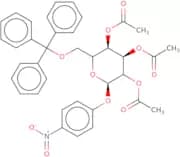
4-Nitrophenyl 2,3,4-tri-O-acetyl-6-O-trityl-a-D-glucopyranoside is a substrate for chemiluminescent assays. It is a high quality chemical that can be used in environmental testing, staining, ligand binding and bioluminescence. 4NP2T6AODG is used as a chromogenic substrate or fluorogenic substrate to detect the presence of enzymes in diagnostics and food testing. This product has CAS No. 67794-14-0 and can be purchased at high purity.Purity:Min. 95%Molecular weight:669.67 g/mol4-Nitrophenyl 3,6-di-O-(a-D-mannopyranosyl)-b-D-mannopyranoside
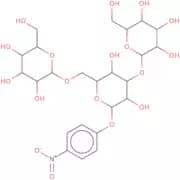
4-Nitrophenyl 3,6-di-O-(a-D-mannopyranosyl)-b-D-mannopyranoside is a chemiluminescent substrate that is used in the detection of enzymes. It is also used to measure the activity of beta-glucosidase, alpha-galactosidase, and alkaline phosphatase. The product has been tested for environmental sensitivity and has not shown any effects on bacterial growth. 4-Nitrophenyl 3,6-di-O-(a-D-mannopyranosyl)-b-D-mannopyranoside can be used as a high quality stain for histological sections and immunohistochemical studies. This product has been tested for staining properties with different dyes and has shown no interference with the staining process.Purity:Min. 95%Molecular weight:625.53 g/mol3-Indolyl b-D-cellotetraoside
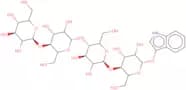
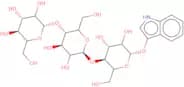
3-Indolyl b-D-cellotetraoside is a chemiluminescent substrate that is used as an indicator in the detection of aminoglycosides. The ligand is a cell wall component that has been shown to bind specifically to the active site of bacterial β-lactamases, which are enzymes that catalyze the hydrolysis of β-lactam antibiotics. 3-Indolyl b-D-cellotetraoside can be used for bacterial identification and enumeration, food testing, and enzyme substrate for diagnostics. It fluoresces in response to electron excitation with a wavelength of about 590 nm.Purity:Min. 95%Molecular weight:781.71 g/mol4-Nitrophenyl b-D-cellobioside heptaacetate
4-Nitrophenyl b-D-cellobioside heptaacetate is a chromogenic substrate for enzymes that catalyze the hydrolysis of glycosidic bonds. This product is used as a diagnostic tool for identifying and characterizing glycosidases and other enzymes that degrade glycosidic bonds. 4-Nitrophenyl b-D-cellobioside heptaacetate is also used in culture media to measure the activity of cellulase enzymes by measuring the release of reducing sugars. The color change of this substrate can be detected at 405 nm, 490 nm, or 550 nm.Purity:Min. 95%Molecular weight:757.65 g/mol2-Nitrophenyl 2-acetamido-3,6-di-O-acetyl-4-O-[2-O-(2,3,4-tri-O-benzoyl-a-L-fucopyranosyl)]-2-deoxy-b-D-glucopyranoside
2-Nitrophenyl 2-acetamido-3,6-di-O-acetyl-4-O-[2-O-(2,3,4-tri-O-benzoyl-a-L-fucopyranosyl)]--2-deoxy--bDglucopyranoside is an acylated glucopyranoside that is used as a substrate for the enzyme β -galactosidase. When hydrolyzed by β -galactosidase, it yields a blue product that has been widely used in chemiluminescence and bioluminescence assays. It also can be used for staining and ligand binding studies.
Purity:Min. 95%Molecular weight:884.83 g/mol5-Bromo-6-chloro-3-indolyl palmitate
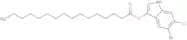
CAS:5-Bromo-6-chloro-3-indolyl palmitate is a magenta enzyme substrate that is widely used in the study of lipase and esterase enzymes. This compound consists of an indole ring with bromine and chlorine atoms at positions 5 and 6, respectively, and a palmitate moiety esterified to the indolyl ring. The palmitate group is a long-chain fatty acid, making this substrate particularly useful for investigating enzymes that hydrolyze ester bonds in lipids. Upon cleavage by lipases or esterases, 5-Bromo-6-chloro-3-indolyl palmitate releases a magenta-colored product, which can be easily detected and quantified to measure enzyme activity.
Purity:Min. 95%Molecular weight:484.9 g/mol4-Nitrophenyl 2-O-(2,3,4-tri-O-acetyl-b-L-fucopyranosyl)-6-O-benzoyl-a-D-galactopyranoside
CAS:4-Nitrophenyl 2-O-(2,3,4-tri-O-acetyl-b-L-fucopyranosyl)-6-O-benzoyl-a-D-galactopyranoside is a chemiluminescent substrate with a CAS number of 104341548. It is used as a fluorescent probe for the detection of alpha amylase, beta amylase and glucose oxidase. It can be used to detect bacteria in food. This substrate can be used in the diagnostic industry and is an important component for the production of various enzymes.Purity:Min. 95%Molecular weight:677.61 g/mol4-Nitrophenyl 2-acetamido-2-deoxy-4,6-O-p-methoxybenzylidene-a-D-galactopyranoside
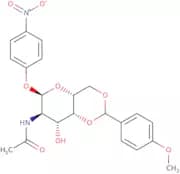
CAS:4-Nitrophenyl 2-acetamido-2-deoxy-4,6-O-p-methoxybenzylidene-a-D-galactopyranoside is a chromogenic substrate designed for the detection and quantification of enzyme activity. This methoxybenzylidene-protected compound is specifically designed to be cleaved by enzymes, releasing a yellow 4-nitrophenol product that can be easily measured spectrophotometrically. This allows for accurate and sensitive analysis of enzyme kinetics, inhibition studies, and substrate specificity determination in various applications.Purity:Min. 95%Molecular weight:460.43 g/molOctyl 4-nitrophenyl hexyl phosphonate
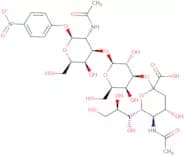
CAS:Octyl 4-nitrophenyl hexyl phosphonate is a lipase suicide inhibitor that is a chromogenic substrate for lipases which upon enzymatic action, binds irreversibly to the lipase and inactivates it. The substrate can be used for the determination of active sites in lipases, especially in lipases preferring hydrophobic leaving groups.Purity:Min. 95%Molecular weight:399.464-Nitrophenyl O-(N-acetyl-a-neuraminosyl)-(2-6)-b-D-galactopyranosyl-(1-4)-2-acetamido-2-deoxy-b-D-glucopyranoside
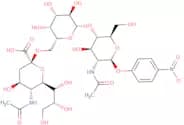
CAS:4-Nitrophenyl O-(N-acetyl-a-neuraminosyl)-(2-6)-b-D-galactopyranosyl-(1-4)-2-acetamido-2-deoxy-b-D-glucopyranoside is a fluorogenic substrate used in the detection of sialidase activity. It is also used as a chromogenic substrate in the determination of β -galactosidase activity.Purity:Min. 95%Color and Shape:White PowderMolecular weight:795.7 g/mol6-Chloro-1H-indol-3-yl b-D-glucuronide
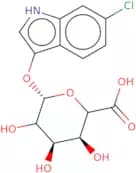
CAS:6-Chloro-1H-indol-3-yl b-D-glucuronide is a chemiluminescence substrate that can be used in immunoassays and other biochemical analyses. 6CIG is a highly purified, high quality product with a CAS No. 138182-19-1. This product has been tested for bacterial contamination and found to be free of detectable levels of mycoplasma, yeast, mold, or other microbial agents. It has also been tested for its ability to support the growth of various types of cells and found to be suitable for cell culture media. This chemical has been shown to produce an intense blue chemiluminescent reaction when reacted with horseradish peroxidase enzyme and hydrogen peroxide.Purity:Min. 95%Molecular weight:343.72 g/molN-Benzoyl-Val-Gly-Arg p-nitroanilide hydrochloride
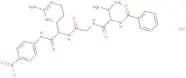
CAS:N-Benzoyl-Val-Gly-Arg p-nitroanilide hydrochloride is a fluorogenic substrate that can be used for the detection of β-glucuronidase. It has been shown to have high purity and quality, which makes it an excellent choice for use in food testing and staining.
Formula:C26H34N8O6•HClPurity:Min. 95%Molecular weight:591.06 g/mol2-Chloro-4-nitrophenyl b-D-lactoside
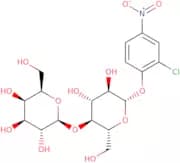
CAS:2-Chloro-4-nitrophenyl b-D-galactopyranoside is a chromogenic enzyme substrate used to study the activity of beta-lactoside. It produces a yellow color when cleaved by the enzyme, making it a useful tool in enzyme assays and screening experiments.Purity:Min. 95%Color and Shape:PowderMolecular weight:497.83 g/mol4-Nitrophenyl 2,3-di-O-(2,3,4,6-tetra-O-acetyl-b-D-glucopyranosyl)-4,6-benzylidene-b-D-glucopyranoside
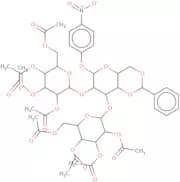
4-Nitrophenyl 2,3-di-O-(2,3,4,6-tetra-O-acetyl-b-D-glucopyranosyl)-4,6-benzylidene-b-D-glucopyranoside is a high purity, high quality 4nitrophenol derivative that is used as a food testing substrate. It is also used for the detection of fluorescence in environmental testing. This product can be conjugated with ligands for use in diagnostic assays.Purity:Min. 95%Molecular weight:1,049.93 g/mol1-Naphthyl 2-acetamido-3,4,6-tri-O-acetyl-2-deoxy-b-D-glucopyranoside
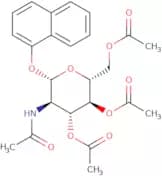
CAS:1-Naphthyl 2-acetamido-3,4,6-tri-O-acetyl-2-deoxy-b-D-glucopyranoside is a fluorogenic substrate for bacterial beta D glucosidase. It is used for measuring the enzyme activity in different types of culture media and in the detection of bacterial contamination in food and environmental samples. This product can be used to detect the presence of beta D glucosidase by measuring luminescence with a luminometer. 1NAAG can also be used as a chromogenic substrate or to conjugate with antibodies for use in immunoassays.br>Purity:Min. 95%Molecular weight:473.47 g/mol4-Nitrophenyl (N-acetyl-a-neuraminosyl)-(2,3)-O-b-D-galactopyranosyl-(1,3)-2-acetamido-2-deoxy-b-D-galactopyranoside
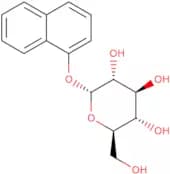
CAS:4-Nitrophenyl (N-acetyl-a-neuraminosyl)-(2,3)-O-b-D-galactopyranosyl-(1,3)-2-acetamido-2-deoxy-b-D-galactopyranoside is a fluorogenic substrate that is used in the detection of enzyme activity. It reacts with a specific enzyme to produce light. This product has been shown to be useful for detecting β -galactosidase, β -glucuronidase, α -mannosidase, and lactose permeases. The product is also used in the diagnosis of urinary tract infections and other diseases. This product is not intended for use in humans or animals.Purity:Min. 95%Molecular weight:795.7 g/mol1-Naphthyl a-D-glucopyranoside
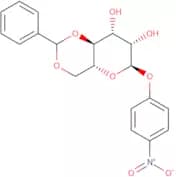
CAS:1-Naphthyl a-D-glucopyranoside is a chromogenic substrate used to detect the presence of enzymes that catalyze the hydrolysis of glycosidic bonds, such as alpha-glucosidase. When the substrate is cleaved by the enzyme, it produces a colored product that can be visualized and quantified.Purity:Min. 95%Molecular weight:306.31 g/mol4-Nitrophenyl 4,6-O-benzylidene-a-D-mannopyranoside
CAS:4-Nitrophenyl 4,6-O-benzylidene-a-D-mannopyranoside is a chromogenic substrate for alpha-mannosidase and beta-glucosidase. It is used as a diagnostic tool for identifying the presence of these enzymes in certain bacteria. This product is also used in food testing, environmental testing, and bioluminescence.Purity:Min. 95%Molecular weight:389.36 g/mol2-Nitrophenyl 2-acetamido-3,4,6-tri-O-acetyl-2-deoxy-a-D-glucopyranoside
CAS:2-Nitrophenyl 2-acetamido-3,4,6-tri-O-acetyl-2-deoxy-a-D-glucopyranoside is a chromogenic substrate commonly used in enzyme assays for the detection and quantification of enzyme activity. It is a colorless substrate that is enzymatically converted into a yellowish product, the intensity of which is directly proportional to the enzyme activity present in the sample.Purity:Min. 95%Molecular weight:468.41 g/mol3-Indolyl b-D-cellotrioside
3-Indolyl b-D-cellotrioside is a chemiluminescent substrate that is used for the detection of bacterial activity. 3-Indolyl b-D-cellotrioside reacts with hydrogen peroxide to produce light, which can be detected by luminometers. This product can be used in diagnostic tests to detect the presence of bacteria in food, water, and other samples. It has been shown to have excellent performance characteristics and high purity and quality.Purity:Min. 95%Molecular weight:619.57 g/mol4-Nitrophenyl 2-O-(2,3,4,6-tetra-O-acetyl-b-D-glucopyranosyl)-b-D-glucopyranoside
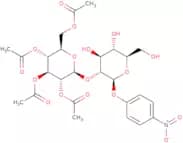
CAS:4-Nitrophenyl 2-O-(2,3,4,6-tetra-O-acetyl-b-D-glucopyranosyl)-b-D-glucopyranoside is a state-of-the-art chromogenic substrate designed for rapid and sensitive enzyme activity detection. As a versatile pNP substrate, it produces a noticeable color change upon enzyme-catalyzed hydrolysis, facilitating easy monitoring and quantification of enzyme levels in research and diagnostic applications. The substrate's acetylated glucose moiety ensures specificity and stability, allowing for precise and reliable results across a range of experimental conditions.Purity:Min. 95%Molecular weight:631.54 g/mol4-Nitrophenyl 4,6-benzylidene-2-O-(2,3,4,6-tetra-O-[4-methoxybenzyl]-a-D-glucopyranosyl)-a-D-glucopyranoside
4-Nitrophenyl 4,6-benzylidene-2-O-(2,3,4,6-tetra-O-[4-methoxybenzyl]-a-D-glucopyranosyl)-a-D-glucopyranoside is a fluorogenic substrate that is used in diagnostic assays to measure the activity of enzymes such as β–galactosidase and β–glucuronidase. It is also an enzyme substrate for culture media and chemiluminescence. This product has a CAS number of 57316-92-8.Purity:Min. 95%Molecular weight:1,088.02 g/mol2-Nitrophenyl 2,3,4-tri-O-acetyl-b-D-galactopyranoside
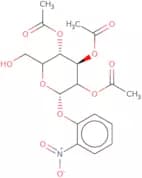
CAS:2-Nitrophenyl 2,3,4-tri-O-acetyl-b-D-galactopyranoside is a fluorogenic substrate that can be used to detect β-galactosidase activity. This specific substrate is one of the most commonly used substrates for detecting β-galactosidase activity in diagnostic assays. It reacts with the enzyme to produce a blue color and has a fluorescence emission maximum at about 480 nm. The product is available in high purity and high quality and it is also an enzyme substrate.Purity:Min. 95%Molecular weight:427.36 g/mol4-Nitrophenyl 2-acetamido-3-O-[2-O-(2,3,4-tri-O-benzoyl-a-L-fucopyranosyl)-3,4,6-tri-O-acetyl-2-deoxy-D-galactopyranosyl]-b-D-glucop yranoside
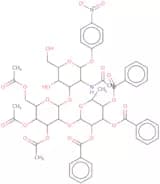
4-Nitrophenyl 2-acetamido-3-O-[2-O-(2,3,4-tri-O-benzoyl-a-L-fucopyranosyl)-3,4,6-tri-O-acetyl-2 deoxy -D-galactopyranosyl]-b D glucopyranoside is a fluorescent substrate for the enzyme β galactosidase. It can be used to test for β galactosidase activity in food products, environmental samples and diagnostics. 4NPFAPG is a conjugate of 4 nitrophenol and 2 acetamido 3 O-[2 O-(2,3,4 tri O benzoyl a L fucopyranosyl) 3,4 6 tri O acetyl 2 deoxy D galactopyranosyl] b D glucopyranose. 4NPFAPG is water soluble and hasPurity:Min. 95%Molecular weight:1,089.01 g/molEspresso-Gal
Espresso-Gal (Espresso-beta-D-galactopyranoside) is a chromogenic indicator for beta-galactosidase activity. The colorless product is cleaved by lactose-utilizing bacteria in liquid media or on agar plates and yields an espresso brown colored precipitate. Espresso-Gal can also be used as detecting agent for beta-galactosidase activity in reporter gene assays or for identification of positive transformants on agar plates when using the α-complementation approach. Read more in the Application Notes.Molecular weight:495.6 g/mol1-Naphthyl 2-acetamido-2-deoxy-b-D-glucopyranoside
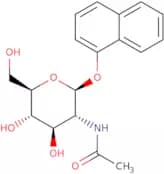
CAS:1-Naphthyl 2-acetamido-2-deoxy-b-D-glucopyranoside is a chromogenic substrate commonly used to assay the activity of enzymes that cleave N-acetyl-beta-D-glucosaminide, such as beta-N-acetylglucosaminidase. Upon cleavage by the enzyme of interest, the substrate releases a yellow-colored 1-naphthylamine, which can be measured spectrophotometrically. This substrate is widely used in biomedical research and drug discovery for studying lysosomal storage disorders, bacterial infections, and neurological diseases.
Purity:Min. 95%Molecular weight:347.36 g/mol2-Nitrophenyl caprylate
CAS:2-Nitrophenyl caprylate is a potent inhibitor of gram-negative bacteria. It has been shown to inhibit the enzymatic activity of certain bacterial enzymes, such as the modification of cellular fatty acids. 2-Nitrophenyl caprylate has also been shown to inhibit in vitro growth of various gram-negative bacteria, including E. coli and Salmonella enterica serovar Typhimurium, through detergent compositions and enzymatic reactions (e.g., aminopeptidases). 2-Nitrophenyl caprylate may be useful for the treatment of pancreatitis due to its inhibition of pancreatic secretions and inhibition of pancreatic lipase activity. Transposable sequences have been found in the 2-nitrophenyl caprylate gene cluster, which may be related to its regulatory properties.Purity:Min. 95%Color and Shape:PowderMolecular weight:265.31 g/mol2-Nitrophenyl 2,2',3,3',4'-penta-O-acetyl-b-D-xylobioside
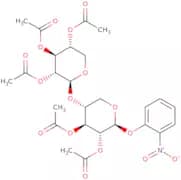
CAS:2-Nitrophenyl 2,2',3,3',4'-penta-O-acetyl-b-D-xylobioside is an oligosaccharide that is used as a substrate for the transport of nucleic acid molecules. It can be used to study the function of membrane transport proteins and their homologues. This compound has been shown to inhibit the growth of corynebacterium glutamicum and trisaccharide emissions.Purity:Min. 95%Molecular weight:613.52 g/mol4-Nitrophenyl 6'-deoxy-6'-(2-pyridylamino)-a-D-penta-(1-4)-glucopyranoside
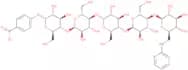
CAS:4-Nitrophenyl 6'-deoxy-6'-(2-pyridylamino)-a-D-penta-(1-4)-glucopyranoside is a fluorescent substrate for the enzyme beta glucosidase. It is a chemiluminescent reagent that can be used to measure beta glucosidase activity. The substrate is an excellent high quality chemical and has been tested for environmental safety, heavy metal content and staining. 4-Nitrophenyl 6'-deoxy-6'-(2-pyridylamino)-a-D-penta-(1-4)-glucopyranoside is a chromogenic substrate that can be used in diagnostic testing, such as bioluminescence or fluorogenic assay. This product can also be used as a culture media additive or food testing agent.Purity:Min. 95%Molecular weight:1,025.91 g/mol4-Nitrophenyl 2,3,4-tri-O-acetyl-a-D-glucopyranoside
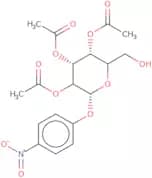
4-Nitrophenyl 2,3,4-tri-O-acetyl-a-D-glucopyranoside is a high quality chemical used in the development of various diagnostic and research applications. It is also used in the production of enzymatic substrates for enzyme activity assays. 4NPTAG is a chromogenic substrate that produces chemiluminescence when it reacts with an oxidizing agent and has been shown to be very effective as a fluorogenic substrate for protein kinases. This compound has been shown to bind to ligands and can be used as a bioluminescent reporter for molecular biology applications. The CAS number for this product is 54973-14-0.Purity:Min. 95%Molecular weight:427.36 g/mol4-Nitrophenyl b-laminaritrioside
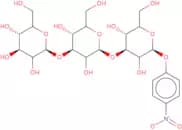
CAS:4-Nitrophenyl b-laminaritrioside is a chemiluminescent substrate that reacts with hydrogen peroxide to produce light. It is used in the detection of bacteria and other microorganisms in culture media, food testing, and diagnostics. 4-Nitrophenyl b-laminaritrioside is also used as a chromogenic or fluorogenic substrate in enzyme assays.Purity:Min. 95%Molecular weight:625.53 g/mol4-Nitrophenyl 2-acetamido-2-deoxy-4-O-(a-L-fucopyranosyl)-b-D-glucopyranoside
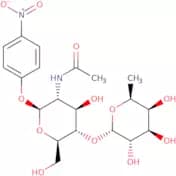
CAS:4-Nitrophenyl 2-acetamido-2-deoxy-4-O-(a-L-fucopyranosyl)-b-D-glucopyranoside is a fluorescent substrate for beta-galactosidase that is used in diagnostics and research. The product has been shown to be an excellent substrate for beta-galactosidase and beta-glucuronidase, as well as other glycosidases. It can be used to detect the presence of these enzymes in any sample containing glycosides. This product is also used in food testing, environmental testing, and bioluminescence experiments. 4NPAFG is available in high purity with a conjugate group at the C4 position.Purity:Min. 95%Molecular weight:488.44 g/mol









![2-Nitrophenyl 2-acetamido-3,6-di-O-acetyl-4-O-[2-O-(2,3,4-tri-O-benzoyl-a-L-fucopyranosyl)]-2-deox…](/_next/image/?url=https%3A%2Fstatic.cymitquimica.com%2Fproducts%2F3D%2Fthumb-webp%2FEN04919.webp&w=3840&q=75)


![4-Nitrophenyl 4,6-benzylidene-2-O-(2,3,4,6-tetra-O-[4-methoxybenzyl]-a-D-glucopyranosyl)-a-D-gluco…](/_next/image/?url=https%3A%2Fstatic.cymitquimica.com%2Fproducts%2F3D%2Fthumb-webp%2FEN04828.webp&w=3840&q=75)