Natural and semi-synthetic antibiotics
Natural and semisynthetic antibiotics are characterised by chemical structures with heterocyclic rings and active functional groups that inhibit the growth of microorganisms. Their structures allow them to interact with vital bacterial processes, making them useful treatments for bacterial infections. Semisynthetic antibiotics can be modified to enhance their spectrum of activity or resistance to degradation.
At CymitQuimica, we offer high-quality natural and semisynthetic antibiotics for research in microbiology and pharmaceutical development.
Found 6343 products of "Natural and semi-synthetic antibiotics"
Sort by
Purity (%)
0
100
|
0
|
50
|
90
|
95
|
100
Ref: 4Z-F-107029
Discontinued productRef: 4Z-P-0458
Discontinued productRef: 4Z-T-153004
Discontinued productRef: 4Z-C-9671
Discontinued productRef: 4Z-A-137014
Discontinued productRef: 4Z-S-4310
Discontinued productRef: 4Z-A-264
Discontinued productRef: 4Z-T-3947
Discontinued productRef: 4Z-C-6620
Discontinued productRef: 4Z-C-156019
Discontinued productRef: 4Z-P-206009
Discontinued productRef: 4Z-A-455
Discontinued productRef: 4Z-C-156026
Discontinued productRef: 4Z-C-3740
Discontinued productRef: 4Z-A-4211
Discontinued productRef: 4Z-M-1810
Discontinued productRef: 4Z-P-3896
Discontinued productRef: 4Z-F-076007
Discontinued productRef: 4Z-E-2055
Discontinued productRef: 4Z-PC-155030
Discontinued productRef: 4Z-C-964
Discontinued productRef: 4Z-M-2724
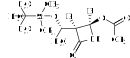
Discontinued productRifamycin Impurity 10 (25-O-deacetyl-23-O-acetyl Rifamycin S)
Formula:C37H45NO12Molecular weight:695.76Ref: 4Z-R-077016
Discontinued productRef: 4Z-PC-155032
Discontinued productRef: 4Z-V-032033
Discontinued productRef: 4Z-A-2651
Discontinued productRef: 4Z-T-153011
Discontinued productRef: 4Z-PC-155035
Discontinued productRef: 4Z-V-102001
Discontinued productRef: 4Z-R-077011
Discontinued productRef: 4Z-D-176004
Discontinued productRef: 4Z-C-264009
Discontinued productRef: 4Z-T-163087
Discontinued productRef: 4Z-F-107027
Discontinued productRef: 4Z-C-126010
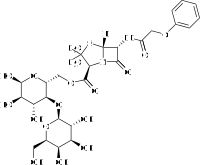
Discontinued productBenzylpenicillin Benzathine Tetrahydrate (Penicillin G Benzathine Tetrahydrate)
CAS:Formula:C16H18N2O4S·C16H20N2·4H2OMolecular weight:334.40 240.35 4*18.02Ref: 4Z-P-0410
Discontinued productRef: 4Z-P-206006
Discontinued productRef: 4Z-D-578
Discontinued productRef: 4Z-F-107037
Discontinued productRef: 4Z-C-372
Discontinued productRef: 4Z-T-3950
Discontinued productRef: 4Z-M-842
Discontinued productRef: 4Z-F-087010
Discontinued productRef: 4Z-P-0427
Discontinued productRef: 4Z-P-415001
Discontinued productRef: 4Z-D-176014
Discontinued productRef: 4Z-T-153013
Discontinued productRef: 4Z-T-199007
Discontinued productRef: 4Z-G-044011
Discontinued productRef: 4Z-P-206018
Discontinued productRef: 4Z-M-3427
Discontinued productRef: 4Z-C-8513
Discontinued productRef: 4Z-N-158009
Discontinued productRef: 4Z-I-3626
Discontinued productRef: 4Z-N-080017
Discontinued productRef: 4Z-C-296005
Discontinued productRef: 4Z-T-3926
Discontinued productRef: 4Z-T-143016
Discontinued productRef: 4Z-P-206002
Discontinued productRef: 4Z-F-107023
Discontinued productRef: 4Z-M-2770
Discontinued productRef: 4Z-T-3914
Discontinued productRef: 4Z-C-106032
Discontinued productRef: 4Z-F-087050
Discontinued productRef: 4Z-C-4717
Discontinued productRef: 4Z-M-183
Discontinued productRef: 4Z-P-206004
Discontinued productRef: 4Z-I-069003
Discontinued productRef: 4Z-S-081007
Discontinued productRef: 4Z-P-0461
Discontinued productRef: 4Z-L-102070
Discontinued productRef: 4Z-A-137017
Discontinued productRef: 4Z-E-071013
Discontinued productRef: 4Z-A-6629
Discontinued productRef: 4Z-I-077014
Discontinued productRef: 4Z-T-3943
Discontinued productRef: 4Z-R-077015
Discontinued productRef: 4Z-PC-155031
Discontinued productRef: 4Z-C-1104
Discontinued productRef: 4Z-E-071046
Discontinued productRef: 4Z-I-365
Discontinued productRef: 4Z-D-176030
Discontinued productRef: 4Z-E-2067
Discontinued productRef: 4Z-A-4220
Discontinued productRef: 4Z-C-135019
Discontinued productRef: 4Z-C-663
Discontinued productTulathromycin A Impurity 5
CAS:Formula:C40H75N3O13Color and Shape:Yellow SolidMolecular weight:806.05Ref: 4Z-T-153007
Discontinued productRef: 4Z-T-153021
Discontinued productRef: 4Z-A-454
Discontinued productRef: 4Z-S-064005
Discontinued productRef: 4Z-PC-155015
Discontinued productRef: 4Z-A-2611
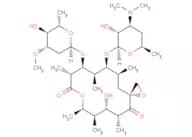
Discontinued productDirithromycin EP Impurity A (Erythromycylamine)
CAS:Formula:C37H70N2O12Color and Shape:White To Off-White SolidMolecular weight:734.98Ref: 4Z-D-106005
Discontinued productRef: 4Z-R-2318
Discontinued productRef: 4Z-T-153012
Discontinued productRef: 4Z-C-9027
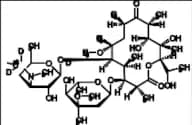
Discontinued productOleandomycin
CAS:<p>Oleandomycin, a macrolide antibiotic structurally similar to Erythromycin, exhibits antimicrobial activity.</p>Formula:C35H61NO12Purity:98%Color and Shape:White Amorphous Powder SolidMolecular weight:687.86Ref: 4Z-R-339
Discontinued productRef: 4Z-T-143017
Discontinued productRef: 4Z-P-206014
Discontinued productRef: 4Z-C-5094
Discontinued productRef: 4Z-T-3944
Discontinued productRef: 4Z-N-080007
Discontinued productRef: 4Z-V-032015
Discontinued productRef: 4Z-P-0420
Discontinued productRef: 4Z-T-199016
Discontinued productRef: 4Z-D-176037
Discontinued productRef: 4Z-E-2043
Discontinued productRef: 4Z-R-7421
Discontinued productRef: 4Z-E-071021
Discontinued productRef: 4Z-R-101005
Discontinued productRef: 4Z-N-158007
Discontinued productRef: 4Z-A-4213
Discontinued productRef: 4Z-S-080006
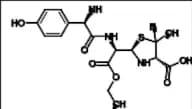
Discontinued productSultamicillin EP Impurity C (Ampicillin, Piperacillin EP Impurity A)
CAS:Formula:C16H19N3O4SMolecular weight:349.41Ref: 4Z-S-081002
Discontinued productRef: 4Z-P-0454
Discontinued productN-Nitroso Benzylpenicillin Potassium EP Impurity E (N-Nitroso Benzylpenicillin (Benzathine), Benzylpenicillin Sodium EP Impurity E, N-Nitroso Benzylpenicillin (Procaine) EP Impurity B) (Mixture of Diastereomers)
Formula:C16H19N3O6SMolecular weight:381.40Ref: 4Z-P-0463
Discontinued productRef: 4Z-P-0455
Discontinued productRef: 4Z-P-0453
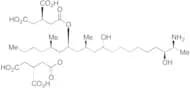
Discontinued productFumonisin B2
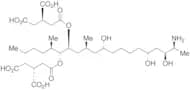
CAS:Controlled Product<p>Stability Hygroscopic, Toxic<br>Applications A mycotoxin produced by mold associated with corn. Inhibitor of sphingosine N-acyltransferase. Blocks the formation of ceramide from sphingosine.<br> Not a dangerous good if item is equal to or less than 1g/ml and there is less than 100g/ml in the package<br>References Monbaliu, S., et al.: J. Agric. Food Chem., 58, 10475 (2010), Klosowski, G., et al.: Biores. Technol., 101, 9723 (2010), Soerensen, L., et al.: Anal. Bioanal. Chem., 398, 1535 (2010),<br></p>Formula:C34H59NO14Color and Shape:Off-WhiteMolecular weight:705.83Zearalenone
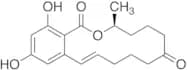
CAS:<p>Applications Estrogenic mycotoxin produced by Fusarium fungi commonly found in grains. One of a group of compounds known as resorcylic acid lactones.Environmental contaminants; Food contaminants<br> Not a dangerous good if item is equal to or less than 1g/ml and there is less than 100g/ml in the package<br>References Tanaka, T., et al.: J. Agric. Food Chem., 36, 979 (1988), Hamilton, S., et al.: Anticancer Res., 16, 3597 (1996), Hecht, S., et al.: Cancer Lett., 150, 49 (2000), Hussein, H., et al.: Toxicology, 167, 101 (2001), Lim, H., et al.: J. Immunol., 175, 4180 (2005),<br></p>Formula:C18H22O5Color and Shape:White To Light BrownMolecular weight:318.36Fumonisin B1
CAS:<p>Stability Hygroscopic<br>Applications A mycotoxin produced by mold associated with corn. Fungal metabolite believed to cause leukoencephalomalacia in horses.Environmental contaminants; Food contaminants<br>References Monbaliu, S., et al.: J. Agric. Food Chem., 58, 10475 (2010), Klosowski, G., et al.: Biores. Technol., 101, 9723 (2010), Soerensen, L., et al.: Anal. Bioanal. Chem., 398, 1535 (2010),<br></p>Formula:C34H59NO15Color and Shape:NeatMolecular weight:721.83HT-2 Toxin (>85%)
CAS:Controlled Product<p>Stability Hygroscopic<br>Applications HT-2 Toxin is a trichothecene group mycotoxin. HT-2 Toxin is the 4-hydroxy analogue of T-2 Toxin (T002980) which has been shown to induce DNA damage and cell death on prolonged administration.Environmental contaminants; Food contaminants<br> Not a dangerous good if item is equal to or less than 1g/ml and there is less than 100g/ml in the package<br>References Weidner, M. et al.: J. Agric. Food Chem., 60, 5676 (2012); Choi, H. et al.: Toxicol. Appl. Pharmacol., 240, 46 (2009); Amuzie, C. et al.: Toxicol. Sci., 113, 412 (2010);<br></p>Formula:C22H32O8Purity:>85%Color and Shape:Off-WhiteMolecular weight:424.48T-2 Toxin
CAS:Controlled Product<p>Applications T-2 Toxin is a tricothecene mycotoxin produced by fungi of the genus Fusarium. T-2 Toxin induces DNA damage and cell death on prolonged administration.Environmental contaminants; Food contaminants<br> Not a dangerous good if item is equal to or less than 1g/ml and there is less than 100g/ml in the package<br>References Kim, C., et al.: Cancer Res., 57, 3115 (1997), Bottrel, R., et al.: Antimicrob. Agents Chemother., 1999, 43, 856 (1999), Murray, P., et al.: J. Immunol., 178, 2623 (2007), Choi, H., et al.: Toxicol. Appl. Pharmacol., 240, 46 (2009), Amuzie, C., et al.: Toxicol. Sci., 113, 412 (2010),<br></p>Formula:C24H34O9Color and Shape:White SolidMolecular weight:466.52β-Zearalenol-d4 (Major)
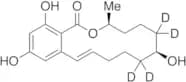
CAS:Controlled Product<p>Stability Light Sensitive<br>Applications Isotope labelled β-Zearalenol is an more active metabolite of Zearalenone (Z270500), a estrogenic mycotoxin produced by Fusarium fungi commonly found in grains.<br> Not a dangerous good if item is equal to or less than 1g/ml and there is less than 100g/ml in the package<br>References Olsen, M., et al.: Acta Pharmacol. Toxicol., 48, 15 (1981), Chang, W., et al.: Food Chem. Toxicol., 22, 887 (1984), El Golli, E., et al.: Toxicol Lett., 166, 122 (2006), Hassen, W., et al.: Toxicology, 232, 294 (2007), Benzoni, E., et al.: Reprod. Toxicol., 25, 461 (2008),<br></p>Formula:C18H20D4O5Color and Shape:NeatMolecular weight:324.4Deoxynivalenol
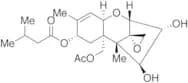
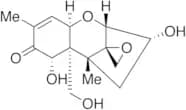
CAS:Controlled Product<p>Applications Deoxynivalenol is a tricothecene mycotoxin and potent protein synthesis inhibitor. Deoxynivalenol exhibits cytotoxic activity in vivo via the ribotoxic stress response. Deoxynivalenol induces p38-mediated gene expression and apoptosis in leukocytes; activity results in systemic expression of interleukin-6 (IL-6) and other proinflammatory cytokines. Also induces migration of NF-κB into the nucleus.Environmental contaminants; Food contaminants<br> Not a dangerous good if item is equal to or less than 1g/ml and there is less than 100g/ml in the package<br>References Bae, et al.: Toxicol. Sci., 105, 59 (2008), Shi, et al.: Toxicol. Sci., 109, 247 (2009), Krishnaswamy, et al.: Free Radic. Biol. Med., 49 50 (2010),<br></p>Formula:C15H20O6Color and Shape:NeatMolecular weight:296.32α-Zearalenol-d4 (Major)
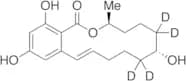
CAS:Controlled Product<p>Applications α-Zearalenol-d4 is the isotope labelled metabolite of Zearalenone (Z270500), an estrogenic mycotoxin produced by Fusarium fungi commonly found in grains.<br>References Olsen, M., et al.: Acta Pharmacol. Toxicol., 48, 15 (1981), Chang, W., et al.: Food Chem. Toxicol., 22, 887 (1984), El Golli, E., et al.: Toxicol Lett., 166, 122 (2006), Hassen, W., et al.: Toxicology, 232, 294 (2007), Benzoni, E., et al.: Reprod. Toxicol., 25, 461 (2008),<br></p>Formula:C18H20D4O5Color and Shape:NeatMolecular weight:324.4Fumonisin B3
CAS:Controlled Product<p>Stability Hygroscopic<br>Applications Fumonisin B3 is a mycotoxin present in corn. Fungal metabolite believed to cause leukoencephalomalacia in horses.<br>References Azcona-Olivera, J. et al.: J. Agric. Food Chem., 40, 531 (1992); Hopmans, E. et al.: J. Agric. Food Chem., 41, 1655 (1993); Monbaliu, S., et al.: J. Agric. Food Chem., 58, 10475 (2010), Klosowski, G., et al.: Biores. Technol., 101, 9723 (2010), Soerensen, L., et al.: Anal. Bioanal. Chem., 398, 1535 (2010),<br></p>Formula:C34H59NO14Color and Shape:BeigeMolecular weight:705.83Zearalenone 4-Sulfate Ammonium Salt
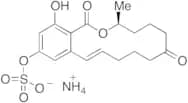
CAS:Controlled ProductFormula:C18H25NO8SColor and Shape:NeatMolecular weight:415.46rac Zearalenone-d6 (major)
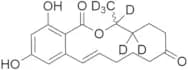
CAS:Controlled ProductFormula:C18H16D6O5Color and Shape:NeatMolecular weight:324.40rac Zearalenone-d6
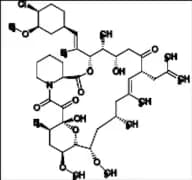
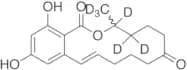
CAS:Controlled Product<p>Applications Estrogenic mycotoxin produced by Fusarium fungi commonly found in grains. One of a group of compounds known as resorcylic acid lactones.Environmental contaminants; Food contaminants<br> Not a dangerous good if item is equal to or less than 1g/ml and there is less than 100g/ml in the package<br>References Tanaka, T., et al.: J. Agric. Food Chem., 36, 979 (1988), Hamilton, S., et al.: Anticancer Res., 16, 3597 (1996), Hecht, S., et al.: Cancer Lett., 150, 49 (2000), Hussein, H., et al.: Toxicology, 167, 101 (2001), Lim, H., et al.: J. Immunol., 175, 4180 (2005),<br></p>Formula:C18H16D6O5Color and Shape:BeigeMolecular weight:324.4015-O-Demethyl Tacrolimus
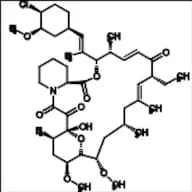
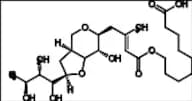
CAS:<p>Tacrolimus is a macrolide that is used as an immunosuppressive drug. It has been shown to bind to the FK-binding protein, which in turn inhibits calcineurin. This prevents the release of IL-2, TNF-α and other cytokines. The immunosuppressive effects of tacrolimus have been evaluated using analytical methods such as coefficients, affinity, and monitoring techniques such as immunoassays and agglutination. These techniques are used to evaluate the plasma concentration of tacrolimus. Tacrolimus also binds to proteins in the blood samples and can be detected by turbidimetric or electrochemiluminescence immunoassay reagents.</p>Formula:C43H67NO12Purity:Min. 95%Molecular weight:789.99 g/mol4H-Furo[2,3-c]pyranyl Mupirocin Sodium Impurity
CAS:<p>Impurity Mupirocin EP Impurity D<br>Stability Hygroscopic<br>Applications Mupirocin (M794000) impurity. (Mupirocin EP Impurity D) The rearrangement isomer of Mupirocin is prepared using an enzyme-catalyzed, selective deesterification.<br>References Sime, J.T., et al.: Tetrahedron Lett., 28, 5169 (1987),<br></p>Formula:C26H43O9·NaColor and Shape:NeatMolecular weight:522.6015-Acetyl Deoxynivalenol (~90%)
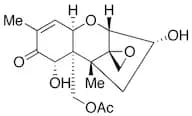
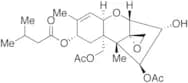
CAS:Controlled Product<p>Applications A mycotoxin produced by the fungi Fusarium culmorum and Fusarium graminearum, inhibits protein synthesis.Environmental contaminants; Food contaminants<br> Not a dangerous good if item is equal to or less than 1g/ml and there is less than 100g/ml in the package<br>References Ashraf, A.; et al.: Int. J. Biol. Biotechnol., 4, 391 (2007), Burlakoti, R., et al.: App. Environ. Microbiol., 74, 6513 (2008), Steinmetz, W., et al.: Eur. J. Med. Chem., 44, 4485 (2009), Zhang, Y., et al.: Phytopathol., 99, 95 (2009),<br></p>Formula:C17H22O7Purity:~90%Color and Shape:WhiteMolecular weight:338.353-Acetyldeoxynivalenol
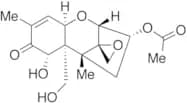
CAS:Controlled Product<p>Stability Appears to decompose in DMSO<br>Applications 3-Acetyldeoxynivalenol is a trichothecene mycotoxin that is produced in a plant-pathogenic fungus, Fusarium graminearum Schwabe.Environmental contaminants; Food contaminants<br> Not a dangerous good if item is equal to or less than 1g/ml and there is less than 100g/ml in the package<br>References Beyer, M., et al.: Int. J. Food. Microbiol., 119, 153 (2007); Schiefer, H.B., et al.: Can. J. Comp. Med., 49, 315 (1985); Mirocha, C.J., et al.: App. Enviro.Microbiol., 55, 1315 (1989);<br></p>Formula:C17H22O7Color and Shape:WhiteMolecular weight:338.35











































![4H-Furo[2,3-c]pyranyl Mupirocin Sodium Impurity](/_next/image/?url=https%3A%2Fstatic.cymitquimica.com%2Fproducts%2FTR%2Fthumb-webp%2FF864850.webp&w=3840&q=75)