Carbohydrates and glycoconjugates
Carbohydrates are organic compounds composed of carbon, hydrogen, and oxygen, with a basic structure formed by monosaccharides. These can combine to form disaccharides, oligosaccharides, or polysaccharides, depending on the number of monomeric units. Carbohydrates play a fundamental role in energy storage, cell structure, and cellular communication. Their derivatives are used in pharmaceutical products, such as sweeteners and excipients.
At CymitQuimica, we offer a wide range of carbohydrates and their derivatives for research and industrial applications.
Found 5013 products of "Carbohydrates and glycoconjugates"
Sort by
Purity (%)
0
100
|
0
|
50
|
90
|
95
|
100
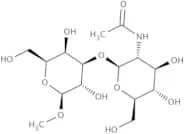
Methyl 3-O-(2-acetamido-2-deoxy-b-D-glucopyranosyl)-b-D-galactopyranoside
CAS:Formula:C16H27NO11Molecular weight:409.39Mucopolysaccharidosis Type IV Related Compound MPS-IV-1 (GALNS-S)
Formula:C27H38N2O14SMolecular weight:646.67Plerixafor octahydrochloride
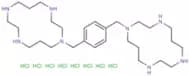
CAS:<p>Plerixafor octahydrochloride mobilizes HSCs by blocking SDF-1alpha/CXCR4 interaction, facilitating their release into circulation.</p>Formula:C28H62Cl8N8Purity:98.01% - 99.79%Color and Shape:SolidMolecular weight:794.46N-Biotinyl-6-aminohexanoic acid
CAS:<p>N-Biotinyl-6-aminohexanoic acid (N-(+)-Biotinyl-6-aminohexanoic acid) can be used to perform N-terminal biotinylation.</p>Formula:C16H27N3O4SPurity:98.61%Color and Shape:SolidMolecular weight:357.47KL-11743
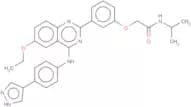
CAS:<p>KL-11743 blocks glucose metabolism, collapses NADH, and increases aspartate, shifting cells to oxidative phosphorylation.</p>Formula:C30H30N6O3Purity:98.46% - 99.57%Color and Shape:SolidMolecular weight:522.6Chitosan (300 - 1000 cps); medium molecular weight, non-animal from fermentation, suitable for biotechnology
CAS:Formula:C6H11NO4nColor and Shape:White powderFEMA 4774
CAS:<p>FEMA 4774 (S9632) is a positive allosteric modulator of T1R2/T1R3. FEMA4774 shows obvious enhancement of the sweetness of sucrose in sensory evaluation tests</p>Formula:C19H25N3O4Purity:99.97%Color and Shape:SolidMolecular weight:359.42GA1-Ganglioside
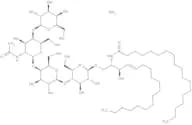
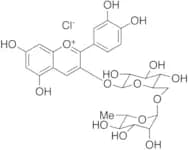
CAS:Formula:C62H114N2O23Purity:≥ 98%Color and Shape:White to light-yellow solid or powderMolecular weight:1255.6Cyanidin 3-O-Rutinoside (75%)
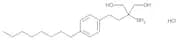
CAS:Controlled Product<p>Applications Cyanidin 3-O-Rutinoside retards absorption of carbohydrates by inhibition of α-glucosidase which may be useful as a potential inhibitor for prevention and treatment of diabetes mellitus.<br>References Raptis, S., et al.: Exp Clin Endocrinol Diabetes 2001, 109, S265,,Ceriello, A; Diabetes 2005, 54, 1,,Chiasson, J; Endocr Pract 2006, 12, 25,,,Misra, A; J Clin Endocrinol Metab 2008, 93, S9<br></p>Formula:C27H31O15·ClPurity:75%Color and Shape:NeatMolecular weight:630.98Fingolimod Hydrochloride
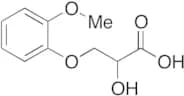
CAS:Formula:C19H33NO2·ClHColor and Shape:White To Off-WhiteMolecular weight:343.933-(2-Methoxyphenoxy) Lactic Acid
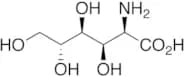
CAS:Controlled Product<p>Applications 3-(2-Methoxyphenoxy) Lactic Acid is a metabolite of the Guaifenesin (G810500), a centrally acting muscle relaxant with expectorant properties.<br>References D.G. Workmann et. al. Curr. Ther. Res. 41 1751 (1980).<br></p>Formula:C10H12O5Color and Shape:NeatMolecular weight:212.2D-Glucosaminic Acid
CAS:<p>Applications D-Glucosaminic Acid is a useful starting material for the synthesis of aldonic acids containing a free carboxyl group and having all hydroxyl functions esterified with a simple carboxylic acid are well established deriviatives.<br>References Major, R.T., et al.: J.A.C.S., 58, 2474 (1936), Hurd, C.D., et al.: J.A.C.S., 60, 235 (1938), Wolfrom, M., et al.: J.A.C.S., 61, 574 (1939)<br></p>Formula:C6H13NO6Color and Shape:NeatMolecular weight:195.17Plerixafor
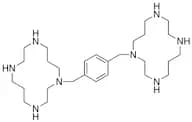
CAS:<p>Stability Hygroscopic<br>Applications Plerixafor is a hematopoietic stem cell (HSC) mobilizer that inhibits the CXCR4 chemokine receptor and blocks binding of its ligand, stromal cell-derived factor-1-α (SDF-1-α). This agent was approved on Dec. 15, 2008, as treatment in combination with granulocyte-colony stimulating factor (G-CSF) to mobilize HSCs to the peripheral blood for collection and subsequent autologous transplantation in patients with non-Hodgkin's lymphoma (NHL) and multiple myeloma (MM). Selective CXCR4 antagonist.<br>References Xie, T., et al.: Science, 290, 328 (2000), Leone, D., et al.: J. Pharmacol. Exp. Ther., 305, 1150 (2003), Chigaev, A., et al.: J. Immunol. 178, 6828 (2007), Kiel, M., et al.: Cell Stem Cell, 1, 204 (2007),<br></p>Formula:C28H54N8Color and Shape:Off White PowderMolecular weight:502.78Voglibose
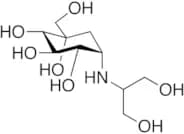
CAS:<p>Applications An α-Glucosidase inhibitor used as an antidiabetic.<br>References Matsuo, T., et al.: Am. J. Clin. Nutr., 55, 314S (1992), Goke, B., et al.: Digestion, 56, 493 (1995), Shinozaki, K., et al.: Metabolism, 45, 731 (1996)<br></p>Formula:C10H21NO7Color and Shape:NeatMolecular weight:267.28Citric acid-2,4-13C2
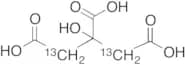
CAS:Controlled Product<p>Applications Citric acid-2,4-13C2 is an isotopic analog of citric acid (C521000), a component of the Krebs cycle.<br></p>Formula:C2C4H8O7Color and Shape:White To Light YellowMolecular weight:194.11Xylitol
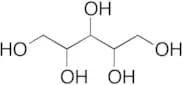
CAS:Controlled Product<p>Applications Xylitol, is a lower-calorie alternative to table sugar. Studies have shown xylitol chewing gum can help prevent acute otitis media. Xylitol is categorized by the U.S. Food and Drug Administration as a food additive.<br>References Code of Federal Regulations Title 21, US., FDA (2012); Azarparzhooh, A., et al.,: Cochrane data. Sys. Revi. (online) (11), (2011);<br></p>Formula:C5H12O5Color and Shape:NeatMolecular weight:152.153-[2-(Ethylhexyl)oxyl]-1,2-propandiol
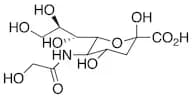
CAS:<p>Applications 3-[2-(Ethylhexyl)oxyl]-1,2-propandiol is the novel raw material for deodorants application and is widely used as a cosmetic emollient. 3-[2-(Ethylhexyl)oxyl]-1,2-propandiol reliably inhibits the odor-causing bacteria, yeast and fungi on the skin.<br>References Nagao, S.: Frag. J., 34, 39 (2006); Lawan, K. et al.: J. Health Sci., 23, 1 (2009); Leschke, M.: SOFW J., 136, 10 (2010);<br></p>Formula:C11H24O3Color and Shape:ColourlessMolecular weight:204.31N-Glycolyl Neuraminic Acid
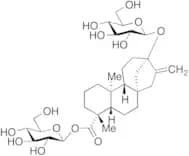
CAS:<p>Applications Regulation of N-glycolylneuraminic acid biosynthesis in rat and mouse liver.<br>References Malykh, Y., et al.: Biochimie, 83, 623 (2001), Angata, T., et al.: Chem. Rev., 102, 439 (2002), Soh, N., et al.: Anal. Sci., 18, 1159 (2002), Taylor, P., et al.: Clin. Biochem., 38, 328 (2005),<br></p>Formula:C11H19NO10Color and Shape:White To Off-WhiteMolecular weight:325.27Rubusoside
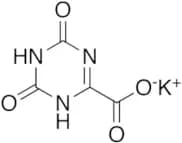
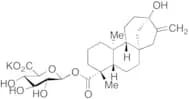
CAS:Controlled ProductFormula:C32H50O13Color and Shape:White To Off-WhiteMolecular weight:642.73Oxonic Acid Potassium Salt
CAS:Controlled Product<p>Applications Antitumor effect potentiator and antitumor agent.<br>References Chelbova, et al.: Biochem. Pharmacol., 19, 1785 (1970), Collins, J., et al.: Clin. Pharmacol. Ther., 28, 235 (1980), Hoff, P., et al.: Anticancer Drugs, 9, 479 (1998), Backus, H., et al.: Oncol. Res., 12, 231(2000), Peters, G., et al.: J. Clin. Oncol., 19, 4267 (2001).<br></p>Formula:C4H2N3O4·KColor and Shape:NeatMolecular weight:195.17S-(3-Hydroxypropyl)-L-cysteine
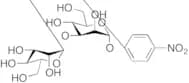
CAS:<p>Applications An antiinflammatory expectorant used in the treatment of MUC5 mucin obstructive pulmonary disease.<br>References Takeyama, K., et al.: J. Immunol.,164, 1546 (2000), Komatsu, H., et al.: Pulm. Pharmacol. Ther., 18, 121 (2005), Rhee, C., et al.: Eur. Respir. J., 32, 1195 (2008),<br></p>Formula:C6H13NO3SColor and Shape:NeatMolecular weight:179.244-Nitrophenyl 3-O-(α-D-Mannopyranosyl)-α-D-mannopyranoside
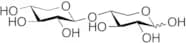
CAS:Controlled Product<p>Stability Very Hygroscopic<br>Applications 4-Nitrophenyl 3-O-(α-D-Mannopyranosyl)-α-D-mannopyranoside (cas# 93979-06-7) is a compound useful in organic synthesis.<br></p>Formula:C18H25NO13Color and Shape:NeatMolecular weight:463.39Xylobiose
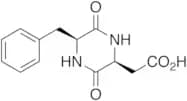
CAS:Controlled Product<p>Applications Xylobiose is a disaccharide that can reduce the blood sugar and blood fat and inhibit the fat accumulation of diet-induced obese rats.<br>References Chen, H., et al.: Shipin Kexue, 35, 255 (2014)<br></p>Formula:C10H18O9Color and Shape:NeatMolecular weight:282.24(2S,5S)-5-Benzyl-3,6-dioxo-2-piperazineacetic Acid
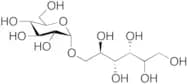
CAS:<p>Impurity Aspartame EP Impurity A/ Aspartame USP Related Compound A<br>Applications (2S,5S)-5-Benzyl-3,6-dioxo-2-piperazineacetic Acid (Aspartame EP Impurity A) is the diketopiperazine impurity of the sweetening agent Aspartame (A790015). It is also found in in processed cocoa powder.<br>References Ciranni Signoretti, E. et al.: Boll. Chim. Farmac., 122, 289 (1983); Prudel, M. et al.: Nahrung, 29, 381 (1985); Bonvehi, J.S. et al.: Eur. Food. Res. Technol., 210, 189 (2000);<br></p>Formula:C13H14N2O4Color and Shape:White To Off-WhiteMolecular weight:262.26Isomalt
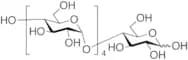
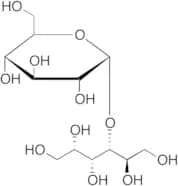
CAS:<p>Stability Hygroscopic<br>Applications Isomalt is a sugar alcohol and artificial sweetener.<br>References Martinez-Cervera, S. et al.: Food Hydro., 35, 1 (2014); Ilic, I. et al.: Int. J. Pharm., 446, 6 (2013);<br></p>Formula:C12H24O11Color and Shape:White To Off-WhiteMolecular weight:344.31Maltopentose
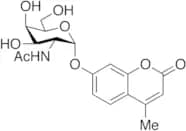
CAS:Controlled Product<p>Stability Hygroscopic<br>Applications Maltopentaose is a maltooligosaccharide that is used for research and diagnostic purposes. They can also be used in nutrients and healthcare.<br>References Ezure, Y. et al.: Biosci. Biotech. Biochem., 61, 1931 (1997); Hatonen, K. et al.: Am. J. Clin. Nutr., 96, 44 (2012);<br></p>Formula:C30H52O26Color and Shape:NeatMolecular weight:828.724-Methylumbelliferyl 2-Acetamido-2-deoxy-a-D-galactopyranoside
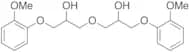
CAS:Controlled ProductFormula:C18H21NO8Color and Shape:NeatMolecular weight:379.361,7-Di(2-methoxyphenoxy)-2,6-dihydroxy-4-oxaheptane
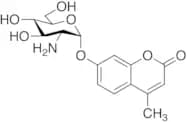
CAS:Controlled Product<p>Impurity Guaifenasin EP Impurity C<br>Applications 1,7-Di(2-methoxyphenoxy)-2,6-dihydroxy-4-oxaheptane is an impurity of Atenolol l (A790075), a cardioselective β-adrenergic blocker.<br>References Caplar, V., et al.: Anal. Profiles Drug Subs., 13, 1 (1984),<br></p>Formula:C20H26O7Color and Shape:Colourless To YellowMolecular weight:378.424-Methylumbelliferyl 2-Amino-2-deoxy-α-D-glucopyranoside (>90%)
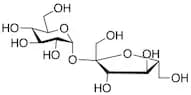
CAS:Formula:C16H19NO7Purity:>90%Color and Shape:NeatMolecular weight:337.32Sucrose
CAS:<p>Stability Hygroscopic<br>Applications Yuanzhen sugar is a polysaccharide polymer, containing a certain amount of fructooligosaccharides.<br>References Watanabe, T., et al.: Biosci. Biotech. Biochem., 72, 3167 (2008), You, Y., et al.: J. Agric. Food Chem., 57, 709 (2009),<br></p>Formula:C12H22O11Color and Shape:WhiteMolecular weight:342.30









![3-[2-(Ethylhexyl)oxyl]-1,2-propandiol](/_next/image/?url=https%3A%2Fstatic.cymitquimica.com%2Fproducts%2FTR%2Fthumb-webp%2FE918770.webp&w=3840&q=75)