


Flavonoids and Polyphenols
Flavonoids are phenolic compounds that contain a structure of 15 carbon atoms, consisting of two aromatic rings linked by a three-carbon bridge. Polyphenols are a broader class of organic compounds containing multiple phenolic groups. Both groups have potent antioxidant properties, allowing them to protect cells from damage caused by free radicals. Flavonoids are commonly found in fruits, vegetables, and tea and are associated with improved cardiovascular health and the prevention of chronic diseases. Polyphenols also have applications in cancer prevention and brain health promotion.
At CymitQuimica, we offer high-quality flavonoids and polyphenols for research in chemistry, pharmacology, and biomedicine.
Found 17009 products of "Flavonoids and Polyphenols"
Sort by
Purity (%)
0
100
|
0
|
50
|
90
|
95
|
100
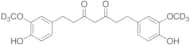
Tetrahydro Curcumin-d6
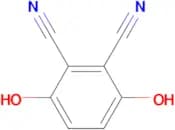
CAS:Controlled Product<p>Applications Labelled analogue of Tetrahydro Curcumin, a major metabolite of Curcumin (C838500) that has been shown to have protective effects against diabetes and vascular dysfunction via alleviation of oxidative stress.<br>References Namareoung, S. et al.: Naun.-Schmied. Arch. Pharmacol.,383, 519 (2011); Kartileksan, K. et al.: J. Func. Foods, 2, 134 (2009);<br></p>Formula:C21H18D6O6Color and Shape:NeatMolecular weight:378.452,3-Dicyanohydroquinone
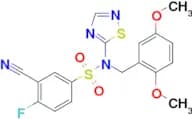
CAS:Formula:C8H4N2O2Purity:99.0%Color and Shape:SolidMolecular weight:160.1323-Cyano-N-(2,5-dimethoxybenzyl)-4-fluoro-N-(1,2,4-thiadiazol-5-yl)benzenesulfonamide
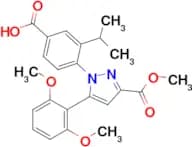
Purity:85%Molecular weight:434.45999145507814-(5-(2,6-Dimethoxyphenyl)-3-(methoxycarbonyl)-1H-pyrazol-1-yl)-3-isopropylbenzoic acid
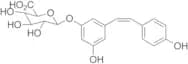
CAS:Purity:95%Molecular weight:424.4530029296875cis-Resveratrol 3-O-β-D-Glucuronide (contains up to 15% trans isomer)
CAS:Controlled Product<p>Stability Light Sensitive, Temperature Sensitive<br>Applications A metabolite of cis Resveratrol.<br>References Schroder, H., et al.: Clin. Nutr., 20, 429 (2001), Yu, C., et al.: Pharm. Res., 19, 1907 (2002), Rimando, A., et al.: J. Agric. Food Chem., 52, 4713 (2004), Walle, T., et al.: Drug Metab. Dispos., 32, 1377 (2004), Ito, H., et al.: Br. J. Nutr., 94, 500 (2005),<br></p>Formula:C20H20O9Color and Shape:NeatMolecular weight:404.37Tetrahydro Curcumin
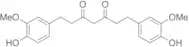
CAS:Controlled Product<p>Stability Light Sensitive<br>Applications Tetrahydro Curcumin is a major metabolite of Curcumin (C838500) that has been shown to have protective effects against diabetes and vascular dysfunction via alleviation of oxidative stress.<br>References Namareoung, S. et al.: Naun.-Schmied. Arch. Pharmacol.,383, 519 (2011); Kartileksan, K. et al.: J. Func. Foods, 2, 134 (2009);<br></p>Formula:C21H24O6Color and Shape:Light Yellow To YellowMolecular weight:372.41Erythrosine B Disodium Salt
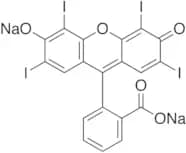
CAS:<p>Stability Hygroscopic, Light Sensitive<br>Applications Erythrosine B Disodium Salt is a derivative of fluorone and is used as a cherry-pink synthetic colour additives used on food products. Dyes and metabolites, Environmental Testing<br>References Xue, H., et al.: Adv. Mat. Res., 476, 2239 (2012); Harp, B. P., et al.: Food. Add. Contamin., 29, 886 (2012); Sarikaya, R., et al.: Chemosphere., 88, 974 (2012);<br></p>Formula:C20H6I4O5·2NaColor and Shape:NeatMolecular weight:879.86Riboflavine Tetrabutyrate
CAS:Controlled Product<p>Applications RIBOFLAVINE TETRABUTYRATE (cas# 752-56-7) is a useful research chemical.<br></p>Formula:C33H44N4O10Color and Shape:NeatMolecular weight:656.72rac-Pinocembrin
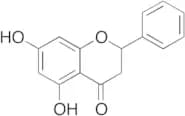
CAS:Controlled Product<p>Applications Pinocembrin is a flavanoid with antioxidant activity found in damiana, honey, and propolis. Recent studies show that Pinocembrin maybe be a therapeutic option in reducing cerebral ischemia/reperfusion injury as a result of its anti-oxidative and anti-apoptotic effects. Pinocembrin displayed neuroprotective effects in glutamate injury model partly by inhibiting p53 expression causing a lower Bax-Bcl-2 ratio and by inhibiting the release of cytochrome c.<br>References Zhao, J. et al.: J. Ethnopharmacol., 120, 387 (2008); Liu, R. et al.: Brain Res., 1216, 104 (2008); Gao, M. et al.: Eur. J. Pharmacol., 591, 73 (2008);<br></p>Formula:C15H12O4Color and Shape:Off-WhiteMolecular weight:256.25Diosmin
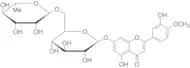
CAS:Controlled Product<p>Applications Naturally occurring flavonic glycoside; rhamnoglycoside of Diosmetin. Capillary protectant.<br>References Damon, M., et al.: Arzneim.-Forsch., 37, 1149 (1987), Laurent, R., et al.: Int. Angiol., 7, 39 (1988), Tajana, A., et al.: Minerva Med., 79, 387 (1988),<br></p>Formula:C28H32O15Color and Shape:NeatMolecular weight:608.54Silybin B
CAS:Controlled Product<p>Applications Silybin B is the 2R, 3R, 7‘S, 8‘S isomer of Silybin (S465850); a natural occurring flavolignan that exerts anti-inflammatory and anti-fibrogenic effects on human hepatic stellate cells.<br>References Lee, D.Y.W, et al.: J. Nat. Prod., 66, 1171 (2003); Trappoliere, M., et al.: J. Hepatol., 50, 1102 (2009); Borsari, M., et al.: J. Inorg. Biochem., 85, 123 (2001)<br></p>Formula:C25H22O10Color and Shape:NeatMolecular weight:482.4365-azetidin-3-yl-3-(2-methoxybenzyl)-1,2,4-oxadiazole hydrochloride
CAS:Purity:95.0%Molecular weight:281.7399902343754-{[(5Z)-3-[2-(3,4-dimethoxyphenyl)ethyl]-4-oxo-2-sulfanylidene-1,3-thiazolidin-5-ylidene]methyl}-2-methoxyphenyl thiophene-2-carboxylate
CAS:Molecular weight:541.6500244140625Curcumin
CAS:<p>Applications A natural phenolic compound. Potent anti-tumor agent having anti-inflammatory and antioxidant properties. Induces apoptosis in cancer cells and inhibits phorbol ester-induced protein kinase C (PKC) activity. Reported to inhibit production of inflammatory cytokines by peripheral blood monocytes and alveolar macrophages. Potent inhibitor of EGFR tyrosine kinase and IκB kinase. Inhibits inducible nitric oxide synthase (iNOS), cycloxygenase and lipoxygenase. Easily penetrates into the cytoplasm of cells, accumulating in membranous structures such as plasma membrane, endoplasmic reticulum and nuclear envelope.Curcumin is currently being examined as a possible therapeutic for the treatment of Alzheimers disease. Neuroprotective. Dyes and metabolites.<br>References Srinivasan, et al.: J. Pharm. Pharmacol., 5, 448 (1953), Tu, B., et al.: J .Cell Biol., 164, 341 (2004), Xu, G., et al.: Biochemistry, 44, 9817 (2005), Johnson, J., et al.: Cancer Lett., 255, 170 (2007), Chem. and Eng. News 90(31), 44 (2012)<br></p>Formula:C21H20O6Color and Shape:OrangeMolecular weight:368.383-(2-(4-METHOXYPHENYLAMINO)BENZO[D]OXAZOL-5-YL)PROPANOIC ACID HCL
CAS:Purity:95.0%Molecular weight:348.7799987792969






![4-{[(5Z)-3-[2-(3,4-dimethoxyphenyl)ethyl]-4-oxo-2-sulfanylidene-1,3-thiazolidin-5-ylidene]methyl}-…](/_next/image/?url=https%3A%2Fstatic.cymitquimica.com%2Fproducts%2F10%2Fthumb-webp%2FF094193.webp&w=3840&q=75)
![2-(1H-Benzo[d]imidazol-2-yl)phenol](/_next/image/?url=https%3A%2Fstatic.cymitquimica.com%2Fproducts%2F10%2Fthumb-webp%2FF224811.webp&w=3840&q=75)

![3-(2-(4-METHOXYPHENYLAMINO)BENZO[D]OXAZOL-5-YL)PROPANOIC ACID HCL](/_next/image/?url=https%3A%2Fstatic.cymitquimica.com%2Fproducts%2F10%2Fthumb-webp%2FF534865.webp&w=3840&q=75)