Monosaccharides
Monosaccharides are the simplest form of carbohydrates and serve as fundamental building blocks for more complex sugars and polysaccharides. These single sugar molecules play critical roles in energy metabolism, cellular communication, and structural components of cells. In this section, you will find a wide variety of monosaccharides essential for research in biochemistry, molecular biology, and glycoscience. These compounds are crucial for studying metabolic pathways, glycosylation processes, and developing therapeutic agents. At CymitQuimica, we offer high-quality monosaccharides to support your research needs, ensuring precision and reliability in your scientific investigations.
Subcategories of "Monosaccharides"
- Alloses(11 products)
- Arabinoses(21 products)
- Erythroses(11 products)
- Fructoses(9 products)
- Fucoses(36 products)
- Galactosamine(41 products)
- Galactose(261 products)
- Glucoses(365 products)
- Glucuronic Acids(51 products)
- Glyco-substrates for Enzyme(77 products)
- Guloses(6 products)
- Idoses(4 products)
- Inositols(15 products)
- Lyxoses(4 products)
- Mannoses(65 products)
- O-Glycans(48 products)
- Psicoses(3 products)
- Rhamnoses(10 products)
- Riboses(61 products)
- Sialic Acids(100 products)
- Sorboses(4 products)
- Sugars(173 products)
- Tagatoses(4 products)
- Taloses(8 products)
- Xyloses(20 products)
Show 17 more subcategories
Found 6088 products of "Monosaccharides"
Sort by
Purity (%)
0
100
|
0
|
50
|
90
|
95
|
100
Muramic acid hydrate
CAS:<p>Muramic acid hydrate as an amino sugar with a carboxylic acid group. It occurs in nature as N-acetylmuramic acid which is typically found in cell wall of bacterial.</p>Formula:C9H17NO7•(H2O)xPurity:Min. 95%Color and Shape:White PowderMolecular weight:269.25 g/molD-Glucose 6-phosphate, barium salt
CAS:<p>D-Glucose 6-phosphate is a high purity, custom synthesis sugar. It is a synthetic glycoside that is used in the production of fluorinated saccharides and oligosaccharides. D-Glucose 6-phosphate can be modified with methyl groups, fluorine atoms, and/or glycosylation. This compound has been shown to have properties as an antiviral agent against herpes simplex virus type 1 (HSV1) and cytomegalovirus (CMV).</p>Formula:C6H11BaO9PMolecular weight:395.46 g/molRef: 3D-G-3300
25gTo inquire50gTo inquire100gTo inquire250gTo inquire500gTo inquire-Unit-ggTo inquire3-O-Benzyl-1,2,4-tri-O-acetyl-D-xylopyranoside
<p>3-O-Benzyl-1,2,4-tri-O-acetyl-D-xylopyranoside is a methylated saccharide that has been modified with the click chemistry. This product can be used for the synthesis of complex carbohydrates and glycosylations. This product is available in high purity and custom synthesis. It is soluble in water or aqueous solutions, making it ideal for use in biological applications. 3-O-Benzyl-1,2,4-tri-O-acetyl-D-xylopyranoside can be used as an intermediate for the synthesis of oligosaccharides and glycoconjugates. It has CAS number 69936–76–5.</p>Purity:Min. 95%Propranolol D-glucuronide D6
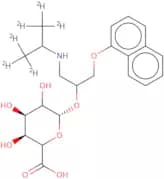
Controlled Product<p>Propranolol D-glucuronide D6 is a synthetic, fluorinated, saccharide that is a modification of propranolol. It has high purity and can be custom synthesized to meet specific requirements. Propranolol D-glucuronide D6 has been shown to inhibit the growth of bacteria by binding to the 50S ribosomal subunit. It is used in veterinary medicine to treat respiratory infections caused by Clostridium perfringens and other bacteria. The drug also has a toxic effect on respiratory system cells, which may be due to its ability to induce apoptosis.</p>Formula:C22H23NO8D6Purity:Min. 95%Molecular weight:441.5 g/mol2-(Piperidine-2,6-dione-4-yl)-acetic acid
<p>2-(Piperidine-2,6-dione-4-yl)-acetic acid is a modification of an oligosaccharide. It is a monosaccharide that has been methylated and glycosylated. 2-(Piperidine-2,6-dione-4-yl)-acetic acid can be used as a building block for the synthesis of complex carbohydrates. This compound has been synthesized by fluorination and saccharide.</p>Purity:Min. 95%UDP-N-Lev-galactosamine
CAS:<p>UDP-N-Lev-galactosamine is a glycosylation agent that is used in the synthesis of complex carbohydrates, such as methylated and fluorinated saccharides. It can be used to modify saccharides, oligosaccharides, and sugars. This compound can also be used for the synthesis of monosaccharides. UDP-N-Lev-galactosamine is a custom synthesis that has been shown to have a high purity.</p>Purity:Min. 95%D-Talitol-1,6-diphosphate
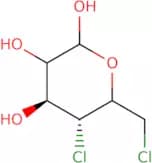
<p>D-Talitol-1,6-diphosphate is a modified sugar. It is an oligosaccharide and polysaccharide composed of D-talitol and 1,6-diphosphate. This product can be used in the synthesis of complex carbohydrates or as a reagent for fluorination reactions. D-Talitol phosphates are also used to modify monosaccharides by methylation, click modification, or other modifications.</p>Purity:Min. 95%4,6-Dichloro-4,6-dideoxy-D-galactose
<p>4,6-Dichloro-4,6-dideoxy-D-galactose (4,6DDG) is a chlorinated sugar that is used as a precursor for the synthesis of glycosides. It has been shown to react with cellulose to form 4,6-dichloro-4,6-dideoxycellulose. Chlorination of 4,6DDG at the hydroxyl group leads to the formation of 4,6-dichloro-4,6-dideoxyhydroxyl chloride (4,6DDH). The chlorination process can be done in two ways: nonreducing and reducing. The nonreducing chlorination process occurs by reacting 4,6DDG with chlorine and dimethylformamide. The reducing chlorination process occurs by reacting 4,6DDG with hydrogen chloride and sodium borohydride or lithium aluminum hydride. An excess of hydrogen chloride</p>Formula:C6H10Cl2O4Purity:Min. 95%Molecular weight:217.05 g/molMethyl a-D-glucopyranoside
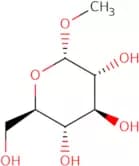
CAS:<p>Methyl α-D- glucopyranoside is a methylated sugar used as an inhibitor of lectin-conjugate binding. Methyl α-D- glucopyranoside is commonly used in protein purification for eluting glycoproteins and other glycoconjugates from affinity chromatography columns of agarose lectin. Methyl α-D- glucopyranoside is also known as Methyl alpha-D-glucoside or alpha-Methyl-glucoside.</p>Formula:C7H14O6Purity:Min. 98 Area-%Color and Shape:PowderMolecular weight:194.18 g/molα-D-Galacturonic acid 1-phosphate
<p>a-D-Galacturonic acid 1-phosphate is a component of the polygalacturonate skeleton. It is an intermediate in the biosynthesis of d-galacturonic acid and galacturonic acid. This compound is also involved in cellular growth, as it is a precursor for uronic acids. The enzyme catalyzing the conversion of a-D-galacturonic acid 1-phosphate to uronic acid has been purified from Phaseolus vulgaris. It has been shown that this enzyme can be inhibited by phosphatase inhibitors such as pyridoxal phosphate, and that it can be activated by nucleotide analogs such as adenosine 5'-diphosphate (ADP) or cytidine 5'-triphosphate (CTP).</p>Formula:C6H11O10PPurity:Min. 95%Color and Shape:PowderMolecular weight:274.12 g/mol2-Deoxy-2-fluoro-D-ribofuranose
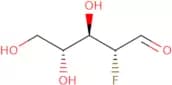
CAS:<p>2-Deoxy-2-fluoro-D-ribofuranose is a dinucleoside that stabilizes the ribose moiety of uridine and guanosine, which are important for bacterial DNA replication. 2-Deoxy-2-fluoro-D-ribofuranose binds to the ribosomal enzyme Uridylate Kinase and inhibits its activity, thereby preventing the synthesis of nucleotide precursors. This product has been shown to be effective against bacteria such as Escherichia coli and Staphylococcus aureus. The hydration properties of 2-deoxy -2 fluorodeoxy D ribofuranose make it an ideal ligand for binding to enzymes in order to inhibit their function. The nature of this compound also makes it an ideal candidate for thermodynamic studies.</p>Formula:C5H9FO4Purity:Min. 95%Color and Shape:White PowderMolecular weight:152.12 g/mol4-Deoxy-4-fluoro-D-mannose
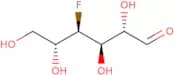
CAS:<p>4-Deoxy-4-fluoro-D-mannose is a sugar that is an analog of 3-deoxy-3-fluoro-d-mannose. It is synthesized by the transfer of a 6-hydroxyl group from 6,6'-dideoxyadenosine to the C6 hydroxyl group of 3,6'-dihexadecylthio adenosine. 4,4'-Difluoro D-mannose is then obtained by hydrolysis and decarboxylation. This process can be catalyzed by enzyme catalysis with phosphofructokinase or hexokinase. 4,4'-Difluoro D mannose has been used in biochemical studies as an analog for 6,6'-dideoxydaunosine. It has also been used as a substrate for virus glycosylation and protein glycosylation in living cells. In addition, it has been shown to inhibit</p>Formula:C6H11FO5Purity:Min. 95%Color and Shape:PowderMolecular weight:182.15 g/molN,O-Didesmethyl venlafaxine D-glucuronide
<p>N,O-Didesmethyl venlafaxine D-glucuronide is a custom synthesis, complex carbohydrate. It is an Oligosaccharide with CAS No. that is Polysaccharide and Modification. It has Methylation and Glycosylation. The saccharide in the molecule is a sugar or Carbohydrate and sugar. The high purity of the product makes it Fluorination and Synthetic.</p>Purity:Min. 95%Raloxifene-4'-D-glucuronide D4 lithium salt
Controlled Product<p>Raloxifene-4'-D-glucuronide D4 lithium salt is a synthetic glycosylate drug, which belongs to the group of anti-estrogens. Raloxifene-4'-D-glucuronide D4 lithium salt is used for the treatment of postmenopausal osteoporosis and prevention of osteoporotic fractures in women with intact uterus. It has been shown to inhibit bone resorption, increase bone mineral density and reduce the incidence of vertebral fractures in postmenopausal women. Raloxifene-4'-D-glucuronide D4 lithium salt can be synthesized using a click chemistry reaction which involves the addition of an azide to an alkyne followed by copper catalysis and subsequent reduction with sodium borohydride. Synthesis of this compound can be achieved without any purification steps due to its high purity.</p>Formula:C34H30NO10SD4·LiPurity:Min. 95%Molecular weight:659.66 g/mol2,5-Anhydro-L-iditol
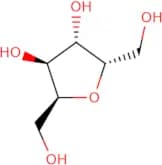
CAS:<p>2,5-Anhydro-L-iditol is a kinetic product of transglycosylation. It has been shown to be stereoselective and can be used as an acid catalyst in the synthesis of furanic compounds. 2,5-Anhydro-L-iditol is also a nucleophilic reagent that can participate in reactions with hydrogen chloride and tetraose chloride. This compound is useful for the production of polyols and glycols via dehydration reactions. 2,5-Anhydro-L-iditol has been used in carbohydrate chemistry techniques.</p>Formula:C6H12O5Purity:Min. 95%Color and Shape:PowderMolecular weight:164.16 g/mol1-Deoxy-1-nitro-L-mannitol
CAS:<p>1-Deoxy-1-nitro-L-mannitol is an irreversible inhibitor of the enzyme mannitol dehydrogenase. It also inhibits other enzymes, such as L-arabinose isomerase and L-azide amidohydrolase, which are involved in the biosynthesis of arabinose and azide. The synthesis of 1-deoxy-1 nitro mannitol can be achieved through a one step reaction with hydroxide and l-arabinose (or l-xylose) in the presence of carbonate or sulfate. This product can be used in syntheses of amphoteric compounds.</p>Formula:C6H13NO7Purity:Min. 95%Molecular weight:211.17 g/mol2-O-Hydroxyethyl-D-glucose
CAS:<p>2-O-Hydroxyethyl-D-glucose is a synthesised compound that has been glycosidically linked to the glucoside. This compound is an intramolecular glucoside with a bicyclic structure. It can be used in the synthesis of other compounds, such as 3-o-hydroxypropyl-D-glucose, which has been shown to have anti-inflammatory effects.</p>Formula:C8H16O7Purity:Min. 95%Color and Shape:PowderMolecular weight:224.21 g/mol5-Amino-3-β-D-ribofuranosylthiazolo[4,5-d]pyrimidin-2,7(3H,6H)-dione
CAS:<p>5-Amino-3-β-D-ribofuranosylthiazolo[4,5-d]pyrimidin-2,7(3H,6H)-dione (ATZ) is a prodrug that is converted to the active drug ATZ. ATZ has been shown to be effective against hepatitis C virus in vitro assays and in vivo in animal models. It inhibits viral replication by inhibiting the protein synthesis of the virus and its ability to replicate. ATZ also has been shown to be effective against infectious diseases such as herpes simplex virus, inflammatory diseases such as rheumatoid arthritis, and cancer. The drug is an oral prodrug that must be activated by intestinal bacteria before it can be absorbed into the bloodstream. It is chemically stable and does not undergo significant metabolism after being absorbed into the body.</p>Formula:C10H12N4O6SPurity:Min. 95%Color and Shape:PowderMolecular weight:316.29 g/molIsomaltol
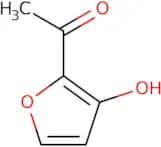
CAS:<p>Isomaltol is a sugar alcohol that is used as a food additive. It is a white, crystalline powder that is soluble in water and has an intense sweet taste. Isomaltol is produced by hydrogenating the reducing ends of sucrose to form maltose, which then undergoes hydrolysis to form maltitol. Isomaltol can be used as a replacement for sugar in foods and drinks. Isomaltol has been shown to inhibit tyrosinase activity, which may be beneficial for skin care products. It also has antimicrobial properties due to its ability to react with aluminium ions.</p>Formula:C6H6O3Purity:Min. 95%Molecular weight:126.11 g/molD-Iditol
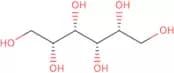
CAS:<p>D-Iditol is a chromatographic stationary phase that is used for hydrophilic interaction chromatography. It is a polymer of 1,2-diols and long-chain fatty acids. D-Iditol has been shown to have long-term toxicity in rats and has been shown to be carcinogenic in mice. This substance binds to calcium stearate and forms ternary complexes with glutamate dehydrogenase and calcium stearate. The kinetic data on the formation of these complexes can be obtained using light signal detectors. D-Iditol also has an affinity for hydroxyl groups found in proteins, giving it the ability to bind to proteins such as glutathione reductase, cytochrome p450, mycobacterium, and erythrocytes.</p>Formula:C6H14O6Purity:Min. 98 Area-%Color and Shape:White PowderMolecular weight:182.17 g/mol






![5-Amino-3-β-D-ribofuranosylthiazolo[4,5-d]pyrimidin-2,7(3H,6H)-dione](/_next/image/?url=https%3A%2Fstatic.cymitquimica.com%2Fproducts%2F3D%2Fthumb-webp%2FXEA97040.webp&w=3840&q=75)