Monosaccharides
Monosaccharides are the simplest form of carbohydrates and serve as fundamental building blocks for more complex sugars and polysaccharides. These single sugar molecules play critical roles in energy metabolism, cellular communication, and structural components of cells. In this section, you will find a wide variety of monosaccharides essential for research in biochemistry, molecular biology, and glycoscience. These compounds are crucial for studying metabolic pathways, glycosylation processes, and developing therapeutic agents. At CymitQuimica, we offer high-quality monosaccharides to support your research needs, ensuring precision and reliability in your scientific investigations.
Subcategories of "Monosaccharides"
- Alloses(11 products)
- Arabinoses(21 products)
- Erythroses(11 products)
- Fructoses(9 products)
- Fucoses(36 products)
- Galactosamine(41 products)
- Galactose(261 products)
- Glucoses(365 products)
- Glucuronic Acids(51 products)
- Glyco-substrates for Enzyme(77 products)
- Guloses(6 products)
- Idoses(4 products)
- Inositols(15 products)
- Lyxoses(4 products)
- Mannoses(65 products)
- O-Glycans(48 products)
- Psicoses(3 products)
- Rhamnoses(10 products)
- Riboses(61 products)
- Sialic Acids(100 products)
- Sorboses(4 products)
- Sugars(173 products)
- Tagatoses(4 products)
- Taloses(8 products)
- Xyloses(20 products)
Show 17 more subcategories
Found 6088 products of "Monosaccharides"
Sort by
Purity (%)
0
100
|
0
|
50
|
90
|
95
|
100
3-o-Benzyl-diacetonide-d-glucose
<p>3-O-benzyl-diacetonide-d-glucose is a synthetic monosaccharide that can be used as a building block for oligosaccharides and polysaccharides. It is custom synthesized to meet your specific needs and can be modified with fluorination, methylation, or glycosylation. 3-O-benzyl-diacetonide-d-glucose has been shown to have high purity and is available in small quantities for custom synthesis.</p>Purity:Min. 95%D-Xylose-5-phosphate disodium
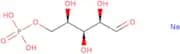
CAS:<p>D-Xylose-5-phosphate disodium salt is a Custom synthesis that has been fluorinated, methylated, and modified with a click reaction. D-Xylose-5-phosphate disodium salt is also an oligosaccharide and polysaccharide. The CAS No. for this compound is 1083083-57-1.</p>Formula:C5H11O8P•Na2Purity:(%) Min. 80%Color and Shape:White/Off-White SolidMolecular weight:276.09 g/molMethyl 2-acetamido-2-deoxy-b-D-glucopyranoside
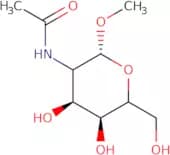
CAS:<p>Methyl 2-acetamido-2-deoxy-b-D-glucopyranoside is a xylose sugar that is found in the leaves of Nepeta cataria. It has shown to inhibit bacterial growth by binding to DNA and RNA, as well as inhibit transcription, translation, and replication. Methyl 2-acetamido-2-deoxy-b-D-glucopyranoside also binds to cardiac channels and inhibits their activity. This compound has been shown to have anti cancer effects on prostate cancer cells in mice. Furthermore, it inhibits microbial metabolism in vitro by inhibiting the enzyme acetolactate synthase. Methyl 2-acetamido-2-deoxy-b-D -glucopyranoside has also been shown to be an effective treatment for autoimmune diseases such as multiple sclerosis and rheumatoid arthritis in mice.</p>Formula:C9H17NO6Purity:Min. 95%Color and Shape:White Off-White PowderMolecular weight:235.24 g/mol2-Acetamido-3,4,6-tri-O-acetyl-2-deoxy-D-glucohydroximo-1,5-lactone
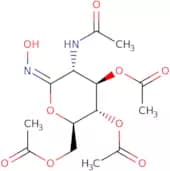
CAS:<p>2-Acetamido-3,4,6-tri-O-acetyl-2-deoxy-D-glucohydroximo-1,5-lactone is a methylated sugar. It is a white to off white powder with a molecular weight of 518. The chemical formula for 2-Acetamido-3,4,6-tri-O-acetyl-2-deoxy--D--glucohydroximo--1,5--lactone is C16H26N2O8 and the structural formula is as follows:br></p>Formula:C14H20N2O9Purity:Min. 95%Color and Shape:White PowderMolecular weight:360.32 g/mol2,3,5-Tri-O-benzoyl-β-D-ribofuranosyl cyanide
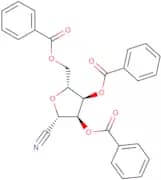
CAS:<p>Building block for C-nucleoside synthesis</p>Formula:C27H21NO7Purity:Min. 98 Area-%Color and Shape:White PowderMolecular weight:471.46 g/mol2-Deoxy-2-(4-methoxybenzyliden)imino-D-glucose
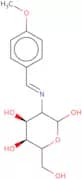
CAS:<p>2-Deoxy-2-(4-methoxybenzyliden)imino-D-glucose is a modified carbohydrate that is used for the synthesis of oligosaccharides, polysaccharides, and glycosaminoglycans. This compound is also used as a substrate for methylation reactions. It can be synthesized from D-glucose by the addition of a 2-(4-methoxybenzylidene) group to the 2′ position of the carbon atom on the anomeric carbon. The structure of this compound has been determined by X-ray crystallography.</p>Formula:C14H19NO6Purity:Min. 95%Color and Shape:White to off-white solid.Molecular weight:297.3 g/molCalcium D-saccharate tetrahydrate
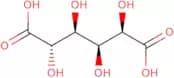
CAS:<p>Calcium D-saccharate is the calcium salt of saccharic acid, also known as glucaric acid. Calcium D-saccharate has been evaluated for chemopreventive activity in a rat tracheal epithelial cell following exposure to the carcinogen benzo[a]pyrene. Addition of calcium D-saccharate to sugarcane juice during liming enhanced clarification as high molecular weight components were removed by filtration.</p>Formula:C6H8O8·Ca·(H2O)4Color and Shape:PowderMolecular weight:320.26 g/mol1,3,4,6-Tetra-O-acetyl-2-[(2-aminoacetyl)amino]-2-deoxy-b-D-glucopyranose
CAS:<p>1,3,4,6-Tetra-O-acetyl-2-[(2-aminoacetyl)amino]-2-deoxy-b-D-glucopyranose is a synthetic sugar. It has a molecular formula of C12H18O8 and a molecular weight of 352.29. It is synthesized by the click reaction with 2-(1,3-dithiolo[5,6-c]pyridinium)-1,4,5,8-tetraazacyclododecane as the initiator. 1,3,4,6-Tetra-O-acetyl-2-[(2-aminoacetyl)amino]-2-deoxy--b -D--glucopyranose has been shown to react with methylating agents to form methylated derivatives that are useful in glycosylation reactions.</p>Formula:C16H24N2O10Purity:Min. 95%Molecular weight:404.37 g/molPhenyl b-L-thiofucopyranoside
<p>Phenyl b-L-thiofucopyranoside is a custom-synthesized, fluorinated, modified sugar that is used in the synthesis of oligosaccharides and polysaccharides. This compound is an excellent choice for methylation reactions due to its high reactivity and stability under harsh conditions. Phenyl b-L-thiofucopyranoside can be used as a precursor for the synthesis of saccharide derivatives, such as monosaccharides and complex carbohydrates. It has been shown to be stable to heat and pH extremes, making it ideal for use in organic syntheses.</p>Formula:C12H16O4SPurity:Min. 95%Color and Shape:PowderMolecular weight:256.32 g/mol2,3,5-Tri-O-benzyl-L-xylofuranose
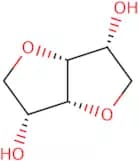
CAS:<p>2,3,5-Tri-O-benzyl-L-xylofuranose is a sugar molecule that has been modified to inhibit glycosidases. 2,3,5-Tri-O-benzyl-L-xylofuranose is an iminosugar that inhibits the enzyme β-glucosidase and α-galactosidase. The compound is not metabolized and it binds to the enzyme's active site. 2,3,5-Tri-O-benzyl L xylofuranose has been shown to be effective at inhibiting all of the glycosidases tested in this study with inhibition potencies ranging from 0.1 mM to 10 mM. This compound also inhibits epoxides and cyclic enzymes such as azido reductase and dihydropyrimidine dehydrogenase.</p>Formula:C26H28O5Purity:Min. 95%Color and Shape:PowderMolecular weight:420.5 g/mol1,4:3,6-Dianhydro-D-mannitol
CAS:<p>Building block for polymers synthesis, ionic liquids and chiral auxiliaries</p>Formula:C6H10O4Purity:Min. 95%Color and Shape:PowderMolecular weight:146.14 g/molD-Xylose-1-phosphate triethylammonium
CAS:<p>D-Xylose-1-phosphate triethylammonium is a synthetic compound that is used as an intermediate in the synthesis of oligosaccharides and polysaccharides. It has been shown to be a substrate for glycosylation reactions, with the potential to form glycosidic bonds with a variety of monosaccharides and polysaccharides. This product can also be fluorinated or methylated, and can undergo click modification or other modifications to make it suitable for use in various applications. D-Xylose-1-phosphate triethylammonium is available in high purity and can be custom synthesized according to customer specifications.</p>Formula:C5H11O8PPurity:Min. 95%Color and Shape:PowderMolecular weight:230.11 g/mol1,2,3,4-Tetra-O-acetyl-β-D-mannopyranose
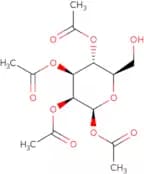
CAS:<p>1,2,3,4-Tetra-O-acetyl-β-D-mannopyranose is a fluorinated monosaccharide that has been synthesized. It is a complex carbohydrate with the molecular formula C12H24O8 and a molecular weight of 256.24 g/mol. 1,2,3,4-Tetra-O-acetyl-β-D-mannopyranose has been modified with glycosylation and polysaccharides to create a click modification. It can be used in custom synthesis and provides high purity.</p>Formula:C14H20O10Purity:Min. 95%Color and Shape:White Off-White PowderMolecular weight:348.3 g/molD-Galacturonic acid monohydrate
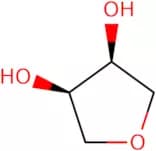
CAS:<p>D-Galacturonic acid (GalA) is a hexuronic acid with the CH2OH at C5 of galactose replaced by a carboxyl group (Collins, 2006). D-galacturonic acid is abundant in pectic polysaccharides which are characterized by a high α-1,4 linked galacturonic acid content and include pectic acid (polygalacturonic acid), rhamnogalacturonan I (Oomen, 2002), rhamnogalacturonan (RG) II (Vidal, 2000), xylogalacturonan, and homogalacturonan. These polymers play roles in strengthening cell walls, cell adhesion and are established as part of signaling cascades that detect cell wall degradation upon pathogen attack.</p>Formula:C6H10O7·H2OPurity:(Titration) Min. 97%Color and Shape:White Off-White PowderMolecular weight:212.15 g/mol1,4-Anhydro-D-erythritol
CAS:<p>1,4-Anhydro-D-erythritol is a sugar alcohol that can be found in various plants and fruits. It is a reaction product of D-erythrose and glycerol, with an average formation rate of 10%. The hydroxyl group on the 1,4-anhydro-D-erythritol molecule reacts with methyl glycosides to produce an ester. Trifluoromethanesulfonic acid is used as a catalyst in this process, which activates the hydroxyl group on the molecule. The reaction mechanism for this process involves three steps: elimination of water, dehydration of the hydroxyl group, and addition of methyl glycoside. This process results in a new molecule called 1,4-anhydro-D-erythritol methyl ester (AEME). AEME has been shown to have conformational properties that are different from those of its parent compound. The conformational</p>Formula:C4H8O3Purity:Min. 95%Color and Shape:Clear LiquidMolecular weight:104.1 g/molD-Lyxonic acid potassium
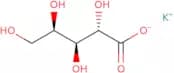
CAS:<p>D-Lyxonic acid potassium salt is a pentitol that is a stereospecific, aldonic, and nature D-glycosylamine. It can be synthesized by reacting phenylhydrazine with glycolic acid chloride in the presence of catalytic amounts of sodium hydroxide. The yield is about 98%. This compound has been shown to have anti-inflammatory properties when it reacts with hydrogen chloride to form D-lyxonic acid chloride. It also has been shown to inhibit the growth of bacteria and fungi by binding to the cell wall and inhibiting protein synthesis.</p>Formula:C5H9KO6Purity:Min. 95%Color and Shape:PowderMolecular weight:204.22 g/molD-Salicin
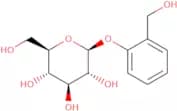
CAS:<p>D-Salicin is a naturally occurring compound, classified as a biologically active glycoside. It is acquired from the bark of willow trees, primarily species within the genus Salix. The primary mode of action of D-Salicin involves its metabolic conversion into salicylic acid within the human body. This conversion occurs in the gastrointestinal tract and bloodstream, ultimately displaying effects similar to non-steroidal anti-inflammatory drugs (NSAIDs).</p>Formula:C13H18O7Purity:Min. 98 Area-%Color and Shape:White Off-White PowderMolecular weight:286.28 g/molGDP-L-fucose disodium salt
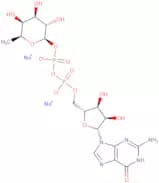
CAS:<p>GDP-L-fucose is a natural fucosyl donor and substrate for fucosyltransferases (FUT) that catalyses the fucosylation of, for example, human milk oligosaccharides or glycoproteins. GDP-L-fucose is widely used in (chemo)enzymatic synthesis of glycans. Cymit Quimicaesis of GDP-L-fucose, a nucleotide sugar consisting of an L-fucose that is β-glycosidically linked to the nucleotide guanosine diphosphate (GDP), is achieved either through de novo synthesis via GDP-mannose or through a salvage pathway from free fucose. Fucosylation is catalysed by fucosyltransferases (~ 13 FUT genes have been identified in the human genome to date) to generate α-1,2, α-1,3, α-1-4 and α-1-6 linkages of fucose to other sugars, as well as direct linkages to peptides, with release of GDP (Lairson, 2008).</p>Formula:C16H23N5O15P2Na2Purity:Min. 90 Area-%Color and Shape:White Off-White PowderMolecular weight:633.31 g/molMethyl 2,3,4-tri-O-benzyl-α-D-glucopyranoside
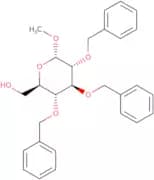
CAS:<p>Resource for the 6-O-modification of Glc e.g. in glucuronic acid synthesis</p>Formula:C28H32O6Purity:Min. 95%Color and Shape:White PowderMolecular weight:464.55 g/mol6-Phosphogluconic acid, trisodium salt dihydrate
CAS:<p>6-Phosphogluconic acid, trisodium salt dihydrate is a custom synthesis that has been made to order. It is a complex carbohydrate that can be modified with methylation, glycosylation and other modifications. 6-Phosphogluconic acid, trisodium salt dihydrate is an Oligosaccharide and Polysaccharide of Modification saccharides. It can be made as an Methylated Glycosylated Carbohydrate or a Click Modified Sugar. It can be Fluorinated or Synthetically made for high purity.</p>Formula:C6H14Na3O12PMolecular weight:378.11 g/mol

![1,3,4,6-Tetra-O-acetyl-2-[(2-aminoacetyl)amino]-2-deoxy-b-D-glucopyranose](/_next/image/?url=https%3A%2Fstatic.cymitquimica.com%2Fproducts%2F3D%2Fthumb-webp%2FMT145107.webp&w=3840&q=75)