Monosaccharides
Subcategories of "Monosaccharides"
- Alloses(11 products)
- Arabinoses(21 products)
- Erythroses(11 products)
- Fructoses(9 products)
- Fucoses(36 products)
- Galactosamine(41 products)
- Galactose(261 products)
- Glucoses(365 products)
- Glucuronic Acids(52 products)
- Glyco-substrates for Enzyme(78 products)
- Guloses(6 products)
- Idoses(4 products)
- Inositols(15 products)
- Lyxoses(4 products)
- Mannoses(65 products)
- O-Glycans(48 products)
- Psicoses(3 products)
- Rhamnoses(10 products)
- Riboses(61 products)
- Sialic Acids(100 products)
- Sorboses(4 products)
- Sugars(173 products)
- Tagatoses(4 products)
- Taloses(8 products)
- Xyloses(20 products)
Found 6085 products of "Monosaccharides"
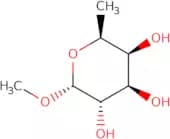
Methyl a-L-fucopyranoside
CAS:Methyl a-L-fucopyranoside is a natural product that has been shown to have many biological effects, including antioxidant and anti-inflammatory properties. It has been shown to inhibit the growth of bacteria by binding to the ribosome, preventing protein synthesis and cell division. The compound has also been shown to have anti-inflammatory effects in mice with inflammatory bowel disease. Methyl a-L-fucopyranoside inhibits the production of pro-inflammatory cytokines, such as interferon alfa-2b (IFNα2β), which is induced by IFNγ. This inhibition of IFNα2β activity may be due to methyl a-L-fucopyranoside's ability to bind to cytosolic calcium and inhibit its transport into the nucleus. Methyl a-L-fucopyranoside also blocks the production of antimicrobial peptides, such as defensins or cathelicidins.Formula:C7H14O5Purity:Min. 98 Area-%Color and Shape:White PowderMolecular weight:178.18 g/molXylitol
CAS:Xylitol is a sugar alcohol that has been shown to have antimicrobial properties. It is also used as a sweetener in chewing gum and toothpaste. Xylitol inhibits the growth of bacteria by binding to the enzyme adenosine triphosphate (ATP) synthase, which is required for energy metabolism. The binding of xylitol to ATP synthase prevents the formation of ATP and blocks bacterial growth, leading to cell death. Xylitol can be produced from xylose, a sugar found in plants and animals, through biochemical reactions that are catalyzed by enzymes such as xylitol dehydrogenase and xylulokinase. This process is anaerobic and does not require oxygen or organic nutrients. Xylitol has been shown to have physiological effects on wild-type strain bacteria such as Aerobacter aerogenes.Formula:C5H12O5Purity:Min. 95%Color and Shape:White PowderMolecular weight:152.15 g/mol1,2,4,6-Tetra-O-acetyl-3-deoxy-D-galactose
1,2,4,6-Tetra-O-acetyl-3-deoxy-D-galactose (1,2,4,6TDA) is a custom synthesis that is a complex carbohydrate. It has been modified with methylation and glycosylation. 1,2,4,6TDA is an oligosaccharide with a molecular weight of 498.06 Da and a CAS number of 90193-74-8. This product is high purity and can be fluorinated. This product can also be synthesized using the click modification reaction.Formula:C14H20O9Purity:Min. 95%Molecular weight:332.3 g/mol2,4-Di-O-methyl-D-glucose
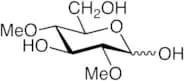
CAS:2,4-Di-O-methyl-D-glucose is a partially O-methylated glucose sugar.Formula:C8H16O6Purity:Min. 95%Color and Shape:PowderMolecular weight:208.21 g/molBenzyl-alpha-S-GalNAc
CAS:Please enquire for more information about Benzyl-alpha-S-GalNAc including the price, delivery time and more detailed product information at the technical inquiry form on this page
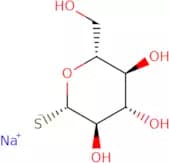
Formula:C15H21NO5SPurity:Min. 98 Area-%Molecular weight:327.4 g/molb-D-Thioglucose sodium salt
CAS:Keratin-reducing component in cosmetic applications; used in Glc conjugation
Formula:C6H11NaO5SPurity:Min. 95%Color and Shape:White PowderMolecular weight:218.2 g/mol2,3,4-Tri-O-benzyl-D-glucuronide benzyl ester
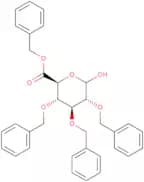
CAS:2,3,4-Tri-O-benzyl-D-glucuronide benzyl ester is a synthetic glycosylation product. It has been custom synthesized and modified with fluorination and methylation. This compound is an oligosaccharide that can be used as a pharmaceutical intermediate or in the synthesis of complex carbohydrates. 2,3,4-Tri-O-benzyl-D-glucuronide benzyl ester has been shown to have high purity and can be used for research purposes.Formula:C34H34O7Purity:Min. 95%Color and Shape:PowderMolecular weight:554.63 g/mol1,3,4,6-Tetra-O-acetyl-2-azido-2-deoxy-α-D-mannopyranose
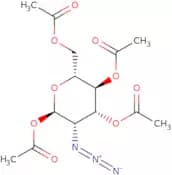
CAS:1,3,4,6-Tetra-O-acetyl-2-azido-2-deoxy-a-D-mannopyranose (1,3,4,6-TA) is a stable analog of the glycosidic sugar 2,6-dideoxymannose. This compound has been shown to be a potent inhibitor of the synthesis of Neisseria meningitidis capsular polysaccharides and an effective vaccine adjuvant against Mycobacterium tuberculosis. 1,3,4,6-TA is also a competitive inhibitor for the enzyme mycothiol and other thioglycosidic enzymes that are involved in the biosynthesis of mycolic acids. 1,3,4,6-TA was synthesized from 2-(N'-bromoacetamido)-2'-deoxymannose by reaction with sodium azide in acetone. The structure is bicyclic with twoFormula:C14H19N3O9Purity:Min. 95%Color and Shape:White PowderMolecular weight:373.32 g/molHexadecyl-D-xylopyranoside
CAS:Hexadecyl-D-xylopyranoside is a synthetic sugar that has been fluorinated and methylated. It is a complex carbohydrate that belongs to the group of modified sugars. This product has many applications in the synthesis of oligosaccharides and saccharides, as well as in glycosylation reactions. Hexadecyl-D-xylopyranoside can be used in custom syntheses, and has been shown to have high purity with a CAS No. 115211-19-3.Formula:C21H42O5Purity:Min. 95 Area-%Color and Shape:White Off-White PowderMolecular weight:374.56 g/mol4-Methoxyphenyl 3-O-allyl-2-azido-4,6-O-benzylidene-2-deoxy-β-D-glucopyranoside
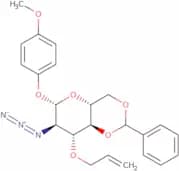
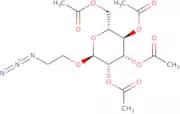
CAS:4-Methoxyphenyl 3-O-allyl-2-azido-4,6-O-benzylidene-2-deoxy-b-D-glucopyranoside (MPA) is a glycosylated antigen that has been shown to be specific for mycobacterium avium. It is a cytosolic calcium ionophore and can induce platelet membrane activation and coagulation. MPA has also been found to be chemoprotective in animal models of cancer. MPA can be used as an indicator of the body mass index (BMI).Formula:C23H25N3O6Purity:Min. 95%Color and Shape:PowderMolecular weight:439.47 g/mol2-Azidoethyl 2,3,4,6-tetra-O-acetyl-a-D-mannopyranoside
CAS:2-Azidoethyl 2,3,4,6-tetra-O-acetyl-a-D-mannopyranoside is a custom synthesis. It is a complex carbohydrate that has been modified with glycosylation and methylation. This saccharide is a glycoside of the simple sugar mannose and the amino acid 2-azidoethanol. The compound has been fluorinated to yield a stable molecule. This product is of high purity and can be used in the synthesis of other compounds.Formula:C16H23N3O10Purity:Min. 95 Area-%Color and Shape:PowderMolecular weight:417.37 g/molMethyl 2-acetamido-4,6-O-benzylidene-2-deoxy-a-D-glucopyranoside
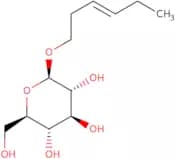
CAS:Methyl 2-acetamido-4,6-O-benzylidene-2-deoxy-a-D-glucopyranoside is a synthetic monosaccharide with a high purity. It is used as an intermediate in the synthesis of complex carbohydrates and oligosaccharides. Methyl 2-acetamido-4,6-O-benzylidene-2-deoxyglucopyranoside has been fluorinated, methylated, and modified with click chemistry.Formula:C16H21NO6Purity:Min. 95%Color and Shape:PowderMolecular weight:323.34 g/mol(Z)-3-Hexen-1-yl b-D-glucopyranoside
CAS:The chemical profile of the methyl ester (Z)-3-hexen-1-yl b-D-glucopyranoside has been determined using high performance liquid chromatography. The compound is an anti-fungal agent and its main pharmacological effects are related to radical scavenging activity. It shows possible neuropharmacological activity, but further studies are required to confirm this. The chemical profile of Z)-3-hexen-1-yl b-D-glucopyranoside was found to be different from that of other compounds in the genus. This compound belongs to a group of compounds called aldehydes, which is characterized by methoxy and dimethoxy substitutions on the benzene ring. The compound is used in traditional Chinese medicine for the treatment of scopolin or codonopsis radix, which are two types of chinese medicinal herbs.Formula:C12H22O6Purity:Min. 95%Color and Shape:PowderMolecular weight:262.30 g/molD-Mannurono-6,3-lactone
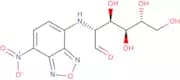
CAS:D-Mannurono-6,3-lactone is a carbohydrate that can be found in plants. The compound is a monosaccharide and an isomer of D-mannose. It consists of 6 carbon atoms, 3 oxygen atoms, and 1 nitrogen atom. D-Mannurono-6,3-lactone has been shown to have kinetic properties that are different from other carbohydrates. The chromatographic method used to isolate the compound was based on its acidic properties. This acid hydrolysis allowed for the separation of the molecule into two components: one with a pK value of 4.5 and another with a pK value of 2.5. These components were then separated using a fluorimetric method due to their differing fluorescence intensities at 490 nm and 530 nm wavelengths. D-Mannurono-6,3-lactone has been shown to interact with fulvellum (an antibiotic). This interactionFormula:C6H8O6Purity:Min. 95%Color and Shape:PowderMolecular weight:176.12 g/mol2-NBDG
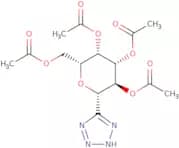
CAS:Fluorescent substrate used to monitor glucose uptakeFormula:C12H14N4O8Purity:Min. 95%Color and Shape:Red SolidMolecular weight:342.26 g/mol5'-(2,3,4,6-Tetra-O-acetyl-b-D-galactopyranosyl) tetrazole
CAS:Glycogen phosphorylase inhibitorFormula:C15H20N4O9Purity:Min. 95%Molecular weight:400.34 g/mol1,2,3,4,6-Penta-O-acetyl-β-D-mannopyranose
CAS:1,2,3,4,6-Penta-O-acetyl-β-D-mannopyranose is a custom synthesis of an oligosaccharide that is used in the modification of saccharides and complex carbohydrates. It has been used in the synthesis of glycosylations and methylations. This product is a fluorinated monosaccharide with high purity.Formula:C16H22O11Purity:Min. 98 Area-%Color and Shape:PowderMolecular weight:390.34 g/molFerric carboxymaltose
CAS:Ferric carboxymaltose is a form of iron that is administered intravenously and is used to treat iron deficiency. Ferric carboxymaltose has been shown to be effective in treating iron deficiency anemia as well as other conditions, such as inflammation of the bowel or hematologic response. Ferric carboxymaltose binds to free iron in the blood and prevents it from oxidizing. Ferric carboxymaltose also exhibits an anti-inflammatory effect by inhibiting the production of pro-inflammatory cytokines and chemokines. The polymerase chain reaction (PCR) technique has been used to measure ferritin levels in the blood, which are then used to determine whether treatment with ferric carboxymaltose is necessary.Color and Shape:Powdera-D-[UL-13C6]Glucose-1-phosphate dipotassium salt hydrate
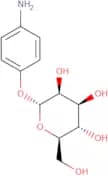
CAS:a-D-[UL-13C6]Glucose-1-phosphate dipotassium salt hydrate is a kinetic and structural analysis of the glucose phosphate metabolic pathway. It has been used to study biochemical properties of the glucose phosphate metabolic pathway, and to study the control mechanisms for this process. Specifically, it has been used to determine kinetic parameters that are necessary for understanding glucose metabolism. This compound has also been used to study hydrogen bonding interactions between monoclonal antibodies and ganoderma lucidum and transfer reactions of immobilized enzymes. The pH optimum for this compound is 4.5, and it can be synthesized from solanum tuberosum.Formula:C6H11K2O9P·xH2OPurity:Min. 95%Color and Shape:PowderMolecular weight:342.27 g/mol4-Aminophenyl a-D-mannopyranoside
CAS:4-Aminophenyl a-D-mannopyranoside is a compound that has been shown to have anti-inflammatory properties. It is also used as a starting material in the synthesis of other drugs. Rats with chronic kidney disease were given 4-aminophenyl a-D-mannopyranoside daily for three weeks, and it was found that this compound prevented the development of kidney injury markers. This drug has also been shown to be effective against mouse strains with nervous system diseases. 4-Aminophenyl a-D-mannopyranoside binds to lysine residues on proteins and prevents the interactions between these residues and the amino acid glutathione, which is required for glut1 uptake in brain cells. This uptake is essential for cellular function, and therefore 4-aminophenyl a-D-mannopyranoside may be useful as chemotherapeutic treatment for brain cancer.
Formula:C12H17NO6Purity:Min. 95%Color and Shape:Off-White PowderMolecular weight:271.27 g/mol








![a-D-[UL-13C6]Glucose-1-phosphate dipotassium salt hydrate](/_next/image/?url=https%3A%2Fstatic.cymitquimica.com%2Fproducts%2F3D%2Fthumb-webp%2FMG64091.webp&w=3840&q=75)