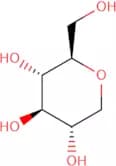
Monosaccharides
Monosaccharides are the simplest form of carbohydrates and serve as fundamental building blocks for more complex sugars and polysaccharides. These single sugar molecules play critical roles in energy metabolism, cellular communication, and structural components of cells. In this section, you will find a wide variety of monosaccharides essential for research in biochemistry, molecular biology, and glycoscience. These compounds are crucial for studying metabolic pathways, glycosylation processes, and developing therapeutic agents. At CymitQuimica, we offer high-quality monosaccharides to support your research needs, ensuring precision and reliability in your scientific investigations.
Subcategories of "Monosaccharides"
- Alloses(11 products)
- Arabinoses(21 products)
- Erythroses(11 products)
- Fructoses(9 products)
- Fucoses(36 products)
- Galactosamine(41 products)
- Galactose(261 products)
- Glucoses(365 products)
- Glucuronic Acids(51 products)
- Glyco-substrates for Enzyme(77 products)
- Guloses(6 products)
- Idoses(4 products)
- Inositols(15 products)
- Lyxoses(4 products)
- Mannoses(65 products)
- O-Glycans(48 products)
- Psicoses(3 products)
- Rhamnoses(10 products)
- Riboses(61 products)
- Sialic Acids(100 products)
- Sorboses(4 products)
- Sugars(173 products)
- Tagatoses(4 products)
- Taloses(8 products)
- Xyloses(20 products)
Show 17 more subcategories
Found 6090 products of "Monosaccharides"
Sort by
Purity (%)
0
100
|
0
|
50
|
90
|
95
|
100
DL-Glyceraldehyde 3-phosphate - 45-55 mg/mL aqueous solution
CAS:<p>Glyceraldehyde 3-phosphate (G3P) is an intermediate in the glycolytic pathway. It is also a component of polysaccharides and glycosaminoglycans. G3P is synthesized from glucose by the enzyme triose phosphate isomerase. The synthesis of G3P can be achieved by a number of methods, including methylation, fluorination, and click chemistry. This product contains 45-55 mg/mL of Glyceraldehyde 3-phosphate in water solution at pH 7.0 and at a temperature range of 2-8°C.</p>Formula:C3H7O6PPurity:Min. 95 Area-%Molecular weight:170.06 g/molD-Quinovosamine hydrochloride
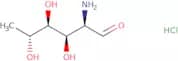
CAS:<p>Quinovosamine hydrochloride (QNH) is a fatty acid that belongs to the group of galacturonic acid. It has been shown to be biologically active in wild-type strains and in some bacterial strains, including Pseudomonas aeruginosa. QNH has also been used for preparation of monoclonal antibodies directed against receptor activity, which are activated by QNH.</p>Formula:C6H13NO4·HClPurity:Min. 95%Color and Shape:PowderMolecular weight:199.63 g/molSimvastatin acyl-b-D-glucuronide
CAS:<p>Simvastatin acyl-b-D-glucuronide is a modification of simvastatin that has been synthesized and modified to provide high purity. It is a white, crystalline solid with a melting point of about 200°C. This compound can be used as an intermediate in the synthesis of oligosaccharides, polysaccharides, or other carbohydrate derivatives.</p>Formula:C31H48O12Purity:Min. 97 Area-%Color and Shape:White Off-White PowderMolecular weight:612.71 g/molb-D-Xylopyranosyl azide
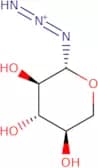
CAS:<p>b-D-Xylopyranosyl azide is a device that records multimedia. It has been found that b-D-Xylopyranosyl azide can record audio, video, and data recordings by automated means. The renaming of multimedia files is also possible with b-D-Xylopyranosyl azide.</p>Formula:C5H9N3O4Purity:Min. 95%Color and Shape:White PowderMolecular weight:175.14 g/mol5-Thio-D-glucose-6-phosphate diammonium salt
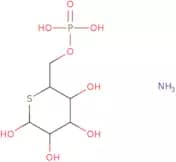
CAS:<p>Glucose 6-phosphatase substrate</p>Formula:C6H11O8PS·N2H8Purity:Min. 95%Color and Shape:PowderMolecular weight:310.26 g/mol1-Octylamino-1-deoxy-D-glucitol
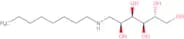
CAS:<p>1-Octylamino-1-deoxy-D-glucitol is a natural product that is extracted from the bark of the tree Streptomyces griseorubens. It has been shown to have a diastereomeric ratio of 97:3 and an optical purity of 98%. The thermodynamic properties of this compound are determined by the reaction time, which can vary from 1 to 24 hours. The enantiomers are separated by chromatography or crystallization, and the solubility data is determined at 25°C.</p>Formula:C14H31NO5Purity:Min. 95%Color and Shape:PowderMolecular weight:293.4 g/molD-Tagatose
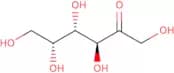
CAS:<p>Low-calorie sweetener; additive in detergents, cosmetics, and pharmaceuticals</p>Formula:C6H12O6Purity:Min. 99 Area-%Color and Shape:PowderMolecular weight:180.16 g/molThermopsoside
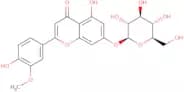
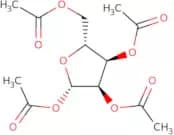
CAS:<p>Thermopsoside is an organic acid that has been isolated from the plant species Vitex agnus-castus. Thermopsoside has shown antibacterial activity against a variety of bacteria and fungi, including Escherichia coli, Staphylococcus aureus, and Candida albicans. It is thought to act by inhibiting the synthesis of fatty acids and vitexin in the bacterial cell membrane or by binding to the bacterial ribosome. Thermopsoside also shows anti-inflammatory effects on skin cells and is used in some cosmetic products as an ingredient in skin-conditioning lotions.<br>Thermopside inhibits prostaglandin production by blocking cyclooxygenase (COX) enzymes.</p>Formula:C22H22O11Purity:Min. 98 Area-%Color and Shape:PowderMolecular weight:462.4 g/mol1,2,3,4-Tetra-O-acetyl-L-fucopyranose
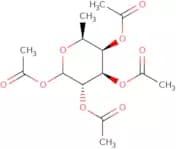
CAS:<p>Intermediate for the anomeric modification of Fuc, including fucosylation</p>Formula:C14H20O9Purity:Min. 97 Area-%Color and Shape:White PowderMolecular weight:332.3 g/molN-Acetyl-L-xylosamine
<p>N-Acetyl-L-xylosamine is a custom synthesis of a glycosylation product that contains an acetyl group and a xylosamine. It is used as a building block for the synthesis of complex carbohydrates. N-Acetyl-L-xylosamine can be modified with fluorination, saccharide, modification, sugar, or oligosaccharide to create custom products.</p>Formula:C7H13NO5Purity:Min. 95%Color and Shape:Yellow PowderMolecular weight:191.18 g/mol1,2,4,6-Tetra-O-acetyl-3-O-benzyl-D-glucopyranose
CAS:<p>This is a Custom Synthesis of a 1,2,4,6-Tetra-O-acetyl-3-O-benzyl-D-glucopyranose. The desired product is an Oligosaccharide with a complex carbohydrate structure. It has been Fluorinated and Methylated in order to create the desired product. Modification and Click Modification have also been performed on this molecule.</p>Formula:C21H26O10Purity:Min. 95%Color and Shape:PowderMolecular weight:438.43 g/mol1,2,3,5-Tetra-O-acetyl-β-D-ribofuranose
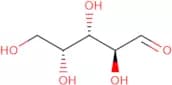
CAS:<p>Important resource for RNA- and DNA-related syntheses including ribosylation</p>Formula:C13H18O9Purity:Min. 95%Color and Shape:White PowderMolecular weight:318.28 g/molD-Lyxose
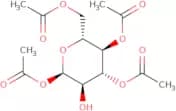
CAS:<p>Starting material for chiral-pool based synthesis of modified nucleosides</p>Formula:C5H10O5Purity:Min. 99 Area-%Color and Shape:White PowderMolecular weight:150.13 g/mol1,3,4,6-Tetra-O-acetyl-a-D-glucopyranose
CAS:<p>1,3,4,6-Tetra-O-acetyl-a-D-glucopyranose is a synthon that is used as a synthetic intermediate for the synthesis of other compounds. It is also a reactive compound that can be used to synthesize carboxylic acids and hydroxy ketones by reaction with water or alcohols. 1,3,4,6-Tetra-O-acetyl-a-D-glucopyranose can also be converted into esters by reaction with alcohols.</p>Formula:C14H20O10Purity:Min. 93 Area-%Color and Shape:White Off-White PowderMolecular weight:348.3 g/mol4-Acetamidophenyl b-D-glucuronide sodium salt
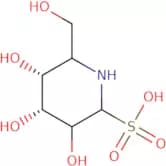
CAS:<p>4-Acetamidophenyl b-D-glucuronide sodium salt is a pharmaceutical drug that is a metabolite of acetaminophen. It can be detected in the urine by biochips, which are microarrays that contain immobilized binding sites for specific analytes. The analysis of 4-acetamidophenyl b-D-glucuronide sodium salt in urine is used to screen for the use of acetaminophen and to identify cytochrome P450 2C19 (CYP2C19) activity. This drug can also be detected by spectrometric methods using biochemical assays on plates or hepatocytes and mass spectrometric detection methods using liquid chromatography/mass spectrometry (LC/MS). Acetaminophen has been shown to have toxic effects on the liver, kidneys, and lungs in humans, as well as on diode photoluminescence.</p>Formula:C14H16NNaO8Purity:Min. 95%Color and Shape:PowderMolecular weight:349.27 g/molD-Mannojirimycin hydrogensulfite
<p>D-Mannojirimycin hydrogensulfite, an iminosugar analogue of Mannose, is a potent inhibitor of alpha-mannosidase.</p>Formula:C6H13NO7SPurity:Min. 95%Color and Shape:PowderMolecular weight:243.24 g/molPropyl b-D-glucuronide
CAS:<p>Propyl b-D-glucuronide is a synthetic compound that belongs to the family of carbohydrates. It has a fluorinated hydroxyl group at the C3 position and an esterified carboxylic acid at the C1 position. This compound can be used as a building block for oligosaccharides and polysaccharides, which are complex carbohydrates. Propyl b-D-glucuronide is soluble in water and has a molecular weight of 176.</p>Formula:C9H16O7Purity:Min. 95%Color and Shape:Tan To Brown SolidMolecular weight:236.22 g/mol1,3,5-Tri-O-benzoyl-2-deoxy-2-fluoro-a-D-arabinofuranose
CAS:<p>Resource for the synthesis of Clofarabine and other bioactive arabinosides</p>Formula:C26H21FO7Purity:Min. 98 Area-%Color and Shape:White Off-White PowderMolecular weight:464.44 g/molα-Chloralose (max. 20% β-anomer)
CAS:<p>Alpha-Chloralose (max. 20% beta-anomer) is a chemical compound primarily used as a sedative and for rodent control. It is synthesized through a chemical reaction involving glucose and chloral, creating a substance with unique physiological properties. Its mode of action primarily involves depressing the central nervous system, leading to reduced responsiveness and hypothermia in targeted organisms. Alpha-Chloralose induces symptoms that facilitate its application as a tranquilizer, particularly in small mammals and birds during scientific research. Additionally, due to its efficacy in lowering metabolic rates, it is utilized as a rodenticide. Within this context, it serves to humanely control rodent populations by inducing hypothermic conditions, leading to a humane death. Its dual functionality—both as a sedative and a rodenticide—makes it a versatile tool in scientific research and pest management. The specification of a maximum 20% beta-anomer content ensures a standardized formulation, enhancing its reliability and consistency for experimental and practical applications.</p>Formula:C8H11Cl3O6Molecular weight:309.53 g/molRef: 3D-C-3305
1kgTo inquire5kgTo inquire10kgTo inquire25kgTo inquire2500gTo inquire-Unit-kgkgTo inquire1,5-Anhydro-D-glucitol
CAS:<p>Short-term marker of glycemic control</p>Formula:C6H12O5Purity:Min. 95%Color and Shape:White Off-White PowderMolecular weight:164.16 g/mol