Monosaccharides
Monosaccharides are the simplest form of carbohydrates and serve as fundamental building blocks for more complex sugars and polysaccharides. These single sugar molecules play critical roles in energy metabolism, cellular communication, and structural components of cells. In this section, you will find a wide variety of monosaccharides essential for research in biochemistry, molecular biology, and glycoscience. These compounds are crucial for studying metabolic pathways, glycosylation processes, and developing therapeutic agents. At CymitQuimica, we offer high-quality monosaccharides to support your research needs, ensuring precision and reliability in your scientific investigations.
Subcategories of "Monosaccharides"
- Alloses(11 products)
- Arabinoses(21 products)
- Erythroses(11 products)
- Fructoses(9 products)
- Fucoses(36 products)
- Galactosamine(41 products)
- Galactose(261 products)
- Glucoses(365 products)
- Glucuronic Acids(51 products)
- Glyco-substrates for Enzyme(77 products)
- Guloses(6 products)
- Idoses(4 products)
- Inositols(15 products)
- Lyxoses(4 products)
- Mannoses(65 products)
- O-Glycans(48 products)
- Psicoses(3 products)
- Rhamnoses(10 products)
- Riboses(61 products)
- Sialic Acids(100 products)
- Sorboses(4 products)
- Sugars(173 products)
- Tagatoses(4 products)
- Taloses(8 products)
- Xyloses(20 products)
Show 17 more subcategories
Found 6088 products of "Monosaccharides"
Sort by
Purity (%)
0
100
|
0
|
50
|
90
|
95
|
100
4,6-Di-O-methyl-D-glucose
CAS:<p>A partially methylated glucose with the anomeric position free</p>Formula:C8H16O6Purity:Min. 95%Color and Shape:PowderMolecular weight:208.21 g/molPhenyl 2-O-benzoyl-4,6-O-benzylidene-3-O-(2-naphthylmethyl)-b-D-thioglucopyranoside
CAS:<p>Phenyl 2-O-benzoyl-4,6-O-benzylidene-3-O-(2-naphthylmethyl)-b-D-thioglucopyranoside is a synthetic sugar with a complex carbohydrate structure. It has been modified by methylation, fluorination, and glycogenation. This product is used in the synthesis of saccharides and oligosaccharides for various purposes. Phenyl 2-O-benzoyl-4,6-O-benzylidene-3-- O-(2--naphthylmethyl)-b--D--thioglucopyranoside is CAS No. 1352561--95--5 and can be custom synthesized to meet your specifications.</p>Formula:C37H32O6SPurity:Min. 95%Color and Shape:PowderMolecular weight:604.71 g/mol1,2,3,4-Tetra-O-pivaloyl-6-O-(tert-butyldiphenylsilyl)-a-D-mannopyranose
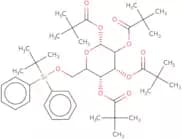
<p>1,2,3,4-Tetra-O-pivaloyl-6-O-(tert-butyldiphenylsilyl)-a-D-mannopyranose is a glycosylated sugar that can be methylated and fluorinated. It has high purity and is custom synthesized for the synthesis of oligosaccharides. This sugar has CAS number 29091-01-9 and is used in the synthesis of polysaccharides.</p>Formula:C42H62O10SiPurity:Min. 95%Molecular weight:755.02 g/mol2,3,4,6-Tetra-O-benzoyl-a-D-glucopyranosyl trichloroacetimidate
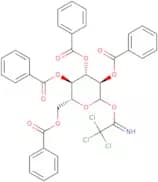
CAS:<p>A calibration system is a device that utilizes a set of parameters to calibrate or correct for errors in measurement. The device utilizes the properties of the signal, such as amplitude and frequency, to compensate for electronic distortion. A calibration system can be used in many different fields including biology, medicine and telecommunications. The optical system includes a sensor that interacts with an organism or cell culture to measure the concentration of a substance. The sensor may utilize light-emitting diodes (LEDs) or photodetectors to detect changes in current or voltage. Calibration is needed to ensure accuracy when using this type of sensor. A linearized data base stores information about polypeptides such as their linear sequence and how they interact with other molecules. This data base can be accessed by programs that calculate the sequence of new polypeptides and predict their function in cells and organisms.</p>Formula:C36H28Cl3NO10Purity:Min. 95%Color and Shape:PowderMolecular weight:740.97 g/molN-(4-Methylbenzyliden)imino-2,3,4,6-tetra-O-pivaloyl-D-glucopyranoside
<p>N-(4-Methylbenzyliden)imino-2,3,4,6-tetra-O-pivaloyl-D-glucopyranoside is a synthetic monosaccharide with a complex carbohydrate structure. It can be used in custom synthesis and glycosylation reactions. This product is not found in nature and has not been reported to be found in any natural products. The CAS number for this compound is 51492-04-3.</p>Formula:C34H51NO9Purity:Min. 95%Molecular weight:617.77 g/mol1,3:4,6-Di-O-benzylidene-D-mannitol
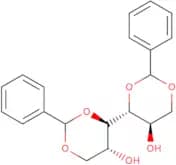
CAS:<p>1,3:4,6-Di-O-benzylidene-D-mannitol is a chiral sugar that is synthesized from d-mannitol. It is used for the preparation of polymers with acrylonitrile and phosphine. 1,3:4,6-Di-O-benzylidene-D-mannitol can be obtained by copolymerizing the monomers d-mannitol and acrylonitrile in an enantioselective manner. The yield of this compound depends on the analytical methods used to determine the composition of the polymer. The product is also used as a ligand in metal hydrides and simplifies the synthesis of chiral methyl esters.</p>Formula:C20H22O6Purity:Min. 95%Color and Shape:PowderMolecular weight:358.39 g/mol5-Thio-D-glucose-6-phosphate diammonium salt
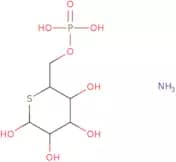
CAS:<p>Glucose 6-phosphatase substrate</p>Formula:C6H11O8PS·N2H8Purity:Min. 95%Color and Shape:PowderMolecular weight:310.26 g/mol1-Octylamino-1-deoxy-D-glucitol
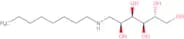
CAS:<p>1-Octylamino-1-deoxy-D-glucitol is a natural product that is extracted from the bark of the tree Streptomyces griseorubens. It has been shown to have a diastereomeric ratio of 97:3 and an optical purity of 98%. The thermodynamic properties of this compound are determined by the reaction time, which can vary from 1 to 24 hours. The enantiomers are separated by chromatography or crystallization, and the solubility data is determined at 25°C.</p>Formula:C14H31NO5Purity:Min. 95%Color and Shape:PowderMolecular weight:293.4 g/molD-Tagatose
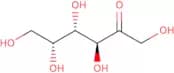
CAS:<p>Low-calorie sweetener; additive in detergents, cosmetics, and pharmaceuticals</p>Formula:C6H12O6Purity:Min. 99 Area-%Color and Shape:PowderMolecular weight:180.16 g/mol1,2,3,4-Tetra-O-acetyl-L-fucopyranose
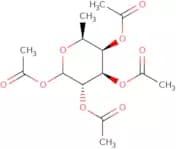
CAS:<p>Intermediate for the anomeric modification of Fuc, including fucosylation</p>Formula:C14H20O9Purity:Min. 97 Area-%Color and Shape:White PowderMolecular weight:332.3 g/molD-Lyxose
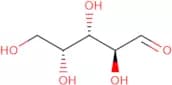
CAS:<p>Starting material for chiral-pool based synthesis of modified nucleosides</p>Formula:C5H10O5Purity:Min. 99 Area-%Color and Shape:White PowderMolecular weight:150.13 g/mol1,3,4,6-Tetra-O-acetyl-a-D-glucopyranose
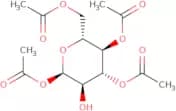
CAS:<p>1,3,4,6-Tetra-O-acetyl-a-D-glucopyranose is a synthon that is used as a synthetic intermediate for the synthesis of other compounds. It is also a reactive compound that can be used to synthesize carboxylic acids and hydroxy ketones by reaction with water or alcohols. 1,3,4,6-Tetra-O-acetyl-a-D-glucopyranose can also be converted into esters by reaction with alcohols.</p>Formula:C14H20O10Purity:Min. 93 Area-%Color and Shape:White Off-White PowderMolecular weight:348.3 g/mol4-Acetamidophenyl b-D-glucuronide sodium salt
CAS:<p>4-Acetamidophenyl b-D-glucuronide sodium salt is a pharmaceutical drug that is a metabolite of acetaminophen. It can be detected in the urine by biochips, which are microarrays that contain immobilized binding sites for specific analytes. The analysis of 4-acetamidophenyl b-D-glucuronide sodium salt in urine is used to screen for the use of acetaminophen and to identify cytochrome P450 2C19 (CYP2C19) activity. This drug can also be detected by spectrometric methods using biochemical assays on plates or hepatocytes and mass spectrometric detection methods using liquid chromatography/mass spectrometry (LC/MS). Acetaminophen has been shown to have toxic effects on the liver, kidneys, and lungs in humans, as well as on diode photoluminescence.</p>Formula:C14H16NNaO8Purity:Min. 95%Color and Shape:PowderMolecular weight:349.27 g/molPropyl b-D-glucuronide
CAS:<p>Propyl b-D-glucuronide is a synthetic compound that belongs to the family of carbohydrates. It has a fluorinated hydroxyl group at the C3 position and an esterified carboxylic acid at the C1 position. This compound can be used as a building block for oligosaccharides and polysaccharides, which are complex carbohydrates. Propyl b-D-glucuronide is soluble in water and has a molecular weight of 176.</p>Formula:C9H16O7Purity:Min. 95%Color and Shape:Tan To Brown SolidMolecular weight:236.22 g/mol1,3,5-Tri-O-benzoyl-2-deoxy-2-fluoro-a-D-arabinofuranose
CAS:<p>Resource for the synthesis of Clofarabine and other bioactive arabinosides</p>Formula:C26H21FO7Purity:Min. 98 Area-%Color and Shape:White Off-White PowderMolecular weight:464.44 g/molL-Rhamnose diethyl mercaptal
CAS:<p>L-Rhamnose diethyl mercaptal is an antiperspirant and deodorant that is used in combination with other ingredients to reduce or eliminate body odor. It is a supplement, often found in combinations with other compounds such as neodymium and radium. This compound works by preventing the formation of sweat from the apocrine glands, which reduces underarm wetness and body odor. L-Rhamnose diethyl mercaptal also has antimicrobial properties that help prevent bacterial growth on the skin surface.</p>Formula:C10H22O4S2Purity:Min. 95%Color and Shape:PowderMolecular weight:270.41 g/molGalNAc benzyloxy beta-pentanoic acid
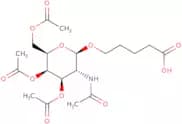
CAS:<p>Trivalent GalNAc precursor</p>Formula:C19H29NO11Purity:Min. 95%Color and Shape:PowderMolecular weight:447.43 g/molMethyl 4,6-O-benzylidene-a-D-mannopyranoside
CAS:<p>Methyl 4,6-O-benzylidene-a-D-mannopyranoside is a hexadecanoic acid that is mediated by the target cell. It has been shown to inhibit the growth of bacteria and cancer cells in vitro. Methyl 4,6-O-benzylidene-a-D-mannopyranoside also possesses an antibacterial activity with a low mammalian toxicity. This compound is hydrolyzed by esterases or glucuronidases, oxidized by cytochrome P450 enzymes, reduced by glutathione reductase, or conjugated with glucuronic acid. The residue of this compound has been shown to be carcinogenic in vivo and in vitro. Anticancer activity of this compound may be due to its ability to disrupt DNA synthesis and induce apoptosis of cancer cells.</p>Formula:C14H18O6Purity:Min. 95%Color and Shape:PowderMolecular weight:282.29 g/molD-Glucosamine HCl - sea shell origin
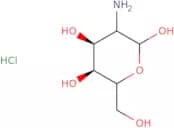
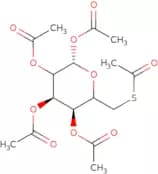
CAS:<p>D-Glucosamine (GlcN) is an aldohexose (2-Amino-2-deoxyglucose) in which the hydroxyl group at position 2 is replaced by an amino group (Collins, 2006). D-Glucosamine is found in chitosan as the N-Acetylated derivative in chitin (Rudrapatnam, 2003), glycoproteins, glycolipids and the glycosaminoglycan hyaluronic acid (Fallacara, 2018). Glucosamine, as its sulfate salt, often in combination with the polydisaccharide chondroitin, is marketed over-the-counter as a treatment for osteoarthritis inflammation and its accompanying pain. Only the D-enantiomer of glucosamine exists in nature.</p>Formula:C6H13NO5·HClPurity:(Titration) Min. 98%Color and Shape:White PowderMolecular weight:215.63 g/mol1,2,3,4-Tetra-O-acetyl-6-S-acetyl-6-deoxy-6-thio-b-D-glucopyranose
<p>1,2,3,4-Tetra-O-acetyl-6-S-acetyl-6-deoxy-6-thio-b-D-glucopyranose is a synthetic compound that is used as a building block for the synthesis of other compounds. It is an acetylated oligosaccharide that can be modified with fluorine atoms to form 1,2,3,4-tetra-[F]fluoro-[F]deoxy-[F]thio-[F]hexose. This product has high purity and can be used in glycosylation reactions.</p>Formula:C16H22O10SPurity:Min. 95%Molecular weight:406.41 g/mol