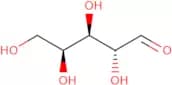
Monosaccharides
Subcategories of "Monosaccharides"
- Alloses(11 products)
- Arabinoses(21 products)
- Erythroses(11 products)
- Fructoses(9 products)
- Fucoses(36 products)
- Galactosamine(41 products)
- Galactose(262 products)
- Glucoses(365 products)
- Glucuronic Acids(52 products)
- Glyco-substrates for Enzyme(78 products)
- Guloses(6 products)
- Idoses(4 products)
- Inositols(15 products)
- Lyxoses(4 products)
- Mannoses(65 products)
- O-Glycans(48 products)
- Psicoses(3 products)
- Rhamnoses(10 products)
- Riboses(61 products)
- Sialic Acids(100 products)
- Sorboses(4 products)
- Sugars(174 products)
- Tagatoses(4 products)
- Taloses(8 products)
- Xyloses(20 products)
Found 6138 products of "Monosaccharides"
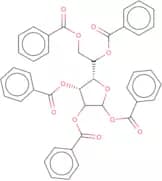
1,2,3,5,6-Penta-O-benzoyl-D-galactofuranose
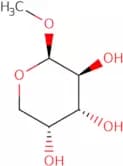
CAS:1,2,3,5,6-Penta-O-benzoyl-D-galactofuranose is a sugar that is custom synthesized and can be modified with fluorination. This product has a CAS number of 138811-45-7 and is high purity. It can be used in glycosylation, oligosaccharide synthesis, methylation, monosaccharide synthesis and polysaccharide synthesis. It is an important building block for the modification of complex carbohydrates.Formula:C41H32O11Purity:Min. 95%Color and Shape:White PowderMolecular weight:700.69 g/molMethyl β-D-arabinopyranoside
CAS:Methyl b-D-arabinopyranoside is a fluorine containing molecule that has been shown to be an excellent marker for suberin. It is insoluble in water, and can be detected by resonator diffraction. The chemical composition of methyl b-D-arabinopyranoside was determined using liquid crystal composition and plates. A polymer particle with a macroscopic size was used to determine the fluorescence of methyl b-D-arabinopyranoside. Fluorescence analysis showed that methyl b-D-arabinopyranoside is a green fluorescent material with a maximum emission wavelength of 514 nm. Hydroalcoholic extraction was used to isolate this compound from the plant Ricinus communis L., where it was found in constant proportions.Formula:C6H12O5Purity:Min. 95%Color and Shape:PowderMolecular weight:164.16 g/mol5-Azido-5-deoxy-2,3-O-isopropylidene-D-gulono-1,4-lactone
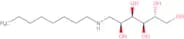
5-Azido-5-deoxy-2,3-O-isopropylidene-D-gulono-1,4-lactone is a carbohydrate that has been modified by the addition of an azide group. Carbohydrates are complex carbohydrates that consist of monosaccharides linked together to form polysaccharides. They are sugar molecules that act as a source of energy for living organisms. 5-Azido-5-deoxy-2,3-O-isopropylidene -D gulono 1,4 lactone is a monosaccharide which can be methylated and glycosylated with other sugars to form a polysaccharide. It is also fluorinated and saccharide. This compound belongs to CAS No. 144948–71–8 and has the molecular formula C6H8N2O7F9O6.Purity:Min. 95%1-Octylamino-1-deoxy-D-glucitol
CAS:1-Octylamino-1-deoxy-D-glucitol is a natural product that is extracted from the bark of the tree Streptomyces griseorubens. It has been shown to have a diastereomeric ratio of 97:3 and an optical purity of 98%. The thermodynamic properties of this compound are determined by the reaction time, which can vary from 1 to 24 hours. The enantiomers are separated by chromatography or crystallization, and the solubility data is determined at 25°C.Formula:C14H31NO5Purity:Min. 95%Color and Shape:PowderMolecular weight:293.4 g/molD-Lyxose
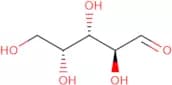
CAS:Starting material for chiral-pool based synthesis of modified nucleosides
Formula:C5H10O5Purity:Min. 99 Area-%Color and Shape:White PowderMolecular weight:150.13 g/molD-Talose
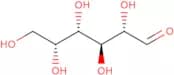
CAS:Unnatural hexose used for the investigation of clostridial Rib-5-P-isomerasesFormula:C6H12O6Purity:Min. 99 Area-%Color and Shape:White PowderMolecular weight:180.16 g/mol6-Azido-6-deoxy-D-fructose
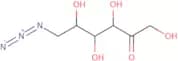
CAS:6-Azido-6-deoxy-D-fructose is a piperidine that condenses with glyceraldehyde in the presence of aldolase and produces D-glyceraldehyde. This reaction is stereospecifically catalyzed by aldolase, which converts the product to D-glyceraldehyde 3-phosphate. 6Azido-6deoxy-D-fructose has been shown to exhibit polyhydroxylated properties.
Formula:C6H11N3O5Purity:Min. 95%Color and Shape:Clear LiquidMolecular weight:205.17 g/molEsculin sesquihydrate
CAS:Sugars formed by photosynthesis are essential for plants nutrition and they can be carried by a sophisticated system called phloem from the leaves to the root tips. Since the phloem is a delicate tissue composed of various specialized cell types, the study of its structure and functions remains a challenging task. Recently, fluorescent coumarin glucoside derivatives, including esculin (Plant Physiology 2015, 1211-1220) have been used as phloem probes. Among the probes tested, only esculin and fraxin are transported, while skimmin is not, suggesting a certain specifity of natural coumarin glucosides for the transporter AtSUC2.Formula:C30H38O21Purity:Min. 98.0 Area-%Molecular weight:734.62 g/mol4-Acetamidophenyl b-D-glucuronide sodium salt
CAS:4-Acetamidophenyl b-D-glucuronide sodium salt is a pharmaceutical drug that is a metabolite of acetaminophen. It can be detected in the urine by biochips, which are microarrays that contain immobilized binding sites for specific analytes. The analysis of 4-acetamidophenyl b-D-glucuronide sodium salt in urine is used to screen for the use of acetaminophen and to identify cytochrome P450 2C19 (CYP2C19) activity. This drug can also be detected by spectrometric methods using biochemical assays on plates or hepatocytes and mass spectrometric detection methods using liquid chromatography/mass spectrometry (LC/MS). Acetaminophen has been shown to have toxic effects on the liver, kidneys, and lungs in humans, as well as on diode photoluminescence.Formula:C14H16NNaO8Purity:Min. 95%Color and Shape:PowderMolecular weight:349.27 g/mol5-Thio-D-glucose-6-phosphate diammonium salt
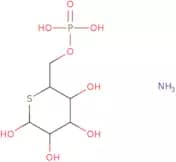
CAS:Glucose 6-phosphatase substrateFormula:C6H11O8PS·N2H8Purity:Min. 95%Color and Shape:PowderMolecular weight:310.26 g/mol2,3,4-Tri-O-benzyl-L-rhamnopyranose
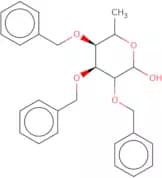
CAS:2,3,4-Tri-O-benzyl-L-rhamnopyranose is a chemical compound that belongs to the family of carbohydrates known as rhamnopyranoses. It is a derivative of L-rhamnose, which is a naturally occurring aldohexose sugar. The compound is often used as a glycosyl donor in the synthesis of oligosaccharides and glycoconjugates. The three benzyl groups in the molecule provide protection for the hydroxyl groups, allowing for selective deprotection and glycosylation. 2,3,4-Tri-O-benzyl-L-rhamnopyranose is also used as a precursor in the synthesis of various natural products.
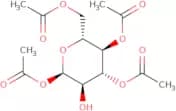
Formula:C27H30O5Purity:Min. 95%Color and Shape:PowderMolecular weight:434.52 g/mol1,3,4,6-Tetra-O-acetyl-a-D-glucopyranose
CAS:1,3,4,6-Tetra-O-acetyl-a-D-glucopyranose is a synthon that is used as a synthetic intermediate for the synthesis of other compounds. It is also a reactive compound that can be used to synthesize carboxylic acids and hydroxy ketones by reaction with water or alcohols. 1,3,4,6-Tetra-O-acetyl-a-D-glucopyranose can also be converted into esters by reaction with alcohols.Formula:C14H20O10Purity:Min. 93 Area-%Color and Shape:White Off-White PowderMolecular weight:348.3 g/mol4-Methoxyphenyl 3-O-benzyl-α-D-mannopyranoside
CAS:4-Methoxyphenyl 3-O-benzyl-a-D-mannopyranoside is a synthetic carbohydrate that has been modified with a click reaction. It is an Oligosaccharide, which is a type of Carbohydrate, and has a saccharide sequence. This product is used in the synthesis of complex carbohydrates. The product has high purity and custom synthesis capabilities.Formula:C20H24O7Purity:Min. 95%Molecular weight:376.4 g/molDiacetone-D-glucose
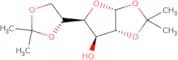
CAS:1,2:5,6-Di-O-isopropylidene-alpha-D-glucofuranose, also known as diacetone-D-glucose (DAG), is a partially protected D-glucose sugar locked in the furanose form with isopropylidene protecting groups on the 1,2 and 5,6 positions. The unprotected 3 position is ready for a variety of chemical manipulations, such as alkylation, acylation or stereo-inversion. An orthogonal protecting group could be added to the 3 position to allow deprotection of an isopropylidene and therefore manipulations of the other hydroxyl groups. Diacetone-D-glucose has been used to make fluorinated hexopyranose glycolysis inhibitors useful in the treatment of brain tumours.
Formula:C12H20O6Purity:Min. 98 Area-%Color and Shape:White Off-White PowderMolecular weight:260.28 g/molD-Tagatose
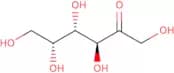
CAS:Low-calorie sweetener; additive in detergents, cosmetics, and pharmaceuticalsFormula:C6H12O6Purity:Min. 99 Area-%Color and Shape:PowderMolecular weight:180.16 g/molPropyl b-D-glucuronide
CAS:Propyl b-D-glucuronide is a synthetic compound that belongs to the family of carbohydrates. It has a fluorinated hydroxyl group at the C3 position and an esterified carboxylic acid at the C1 position. This compound can be used as a building block for oligosaccharides and polysaccharides, which are complex carbohydrates. Propyl b-D-glucuronide is soluble in water and has a molecular weight of 176.Formula:C9H16O7Purity:Min. 95%Color and Shape:Tan To Brown SolidMolecular weight:236.22 g/molL-Rhamnose diethyl mercaptal
CAS:L-Rhamnose diethyl mercaptal is an antiperspirant and deodorant that is used in combination with other ingredients to reduce or eliminate body odor. It is a supplement, often found in combinations with other compounds such as neodymium and radium. This compound works by preventing the formation of sweat from the apocrine glands, which reduces underarm wetness and body odor. L-Rhamnose diethyl mercaptal also has antimicrobial properties that help prevent bacterial growth on the skin surface.
Formula:C10H22O4S2Purity:Min. 95%Color and Shape:PowderMolecular weight:270.41 g/molL-Lyxose
CAS:Starting material for chiral-pool based organic synthesis
Formula:C5H10O5Purity:Min. 98 Area-%Color and Shape:White PowderMolecular weight:150.13 g/molMethyl 4,6-O-benzylidene-a-D-mannopyranoside
CAS:Methyl 4,6-O-benzylidene-a-D-mannopyranoside is a hexadecanoic acid that is mediated by the target cell. It has been shown to inhibit the growth of bacteria and cancer cells in vitro. Methyl 4,6-O-benzylidene-a-D-mannopyranoside also possesses an antibacterial activity with a low mammalian toxicity. This compound is hydrolyzed by esterases or glucuronidases, oxidized by cytochrome P450 enzymes, reduced by glutathione reductase, or conjugated with glucuronic acid. The residue of this compound has been shown to be carcinogenic in vivo and in vitro. Anticancer activity of this compound may be due to its ability to disrupt DNA synthesis and induce apoptosis of cancer cells.Formula:C14H18O6Purity:Min. 95%Color and Shape:PowderMolecular weight:282.29 g/mol1,3,5-Tri-O-benzoyl-2-deoxy-2-fluoro-a-D-arabinofuranose
CAS:Resource for the synthesis of Clofarabine and other bioactive arabinosidesFormula:C26H21FO7Purity:Min. 98 Area-%Color and Shape:White Off-White PowderMolecular weight:464.44 g/mol