Monosaccharides
Monosaccharides are the simplest form of carbohydrates and serve as fundamental building blocks for more complex sugars and polysaccharides. These single sugar molecules play critical roles in energy metabolism, cellular communication, and structural components of cells. In this section, you will find a wide variety of monosaccharides essential for research in biochemistry, molecular biology, and glycoscience. These compounds are crucial for studying metabolic pathways, glycosylation processes, and developing therapeutic agents. At CymitQuimica, we offer high-quality monosaccharides to support your research needs, ensuring precision and reliability in your scientific investigations.
Subcategories of "Monosaccharides"
- Alloses(11 products)
- Arabinoses(21 products)
- Erythroses(11 products)
- Fructoses(9 products)
- Fucoses(36 products)
- Galactosamine(41 products)
- Galactose(261 products)
- Glucoses(365 products)
- Glucuronic Acids(51 products)
- Glyco-substrates for Enzyme(77 products)
- Guloses(6 products)
- Idoses(4 products)
- Inositols(15 products)
- Lyxoses(4 products)
- Mannoses(65 products)
- O-Glycans(48 products)
- Psicoses(3 products)
- Rhamnoses(10 products)
- Riboses(61 products)
- Sialic Acids(100 products)
- Sorboses(4 products)
- Sugars(173 products)
- Tagatoses(4 products)
- Taloses(8 products)
- Xyloses(20 products)
Show 17 more subcategories
Found 6088 products of "Monosaccharides"
Sort by
Purity (%)
0
100
|
0
|
50
|
90
|
95
|
100
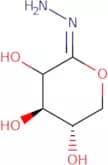
L-Arabinose hydrazone
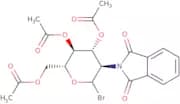
CAS:<p>L-Arabinose hydrazone is a hydrazone of L-arabinose. It has been shown to be an efficient catalyst for the dehydration of ketones and secondary alcohols, and is also capable of catalyzing the dehydration of primary alcohols. The use of L-Arabinose hydrazone as a catalyst is sustainable because it does not produce any byproducts in the reaction.</p>Formula:C5H10N2O4Purity:Min. 95%Molecular weight:162.14 g/mol3,4,6-Tri-O-acetyl-2-deoxy-2-phthalimido-D-glucopyranosyl bromide
CAS:<p>3,4,6-Tri-O-acetyl-2-deoxy-2-phthalimido-D-glucopyranosyl bromide is a synthetic compound that has been used in the synthesis of glycosides and oligosaccharides. It can be used to prepare an artificial sugar with a click modification. The chemical structure consists of three acetyl groups on the 2′ position on the sugar ring, which may be methylated or fluorinated. The compound is insoluble in water and melts at 161°C. 3,4,6-Tri-O-acetyl-2-deoxy-2-phthalimido-D-glucopyranosyl bromide is classified as a carbohydrate and is soluble in alcohols, ethers, and chloroform.</p>Formula:C20H20BrNO9Purity:Min. 95%Molecular weight:498.28 g/molMethyl 2,3,4-tri-O-benzyl-b-L-fucopyranoside
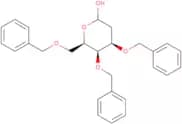
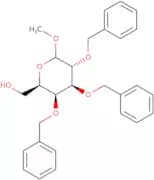
CAS:<p>Methyl 2,3,4-tri-O-benzyl-b-L-fucopyranoside is a carbohydrate that contains a saccharide unit. This molecule belongs to the class of oligosaccharides and has CAS number 74841-88-6. It is synthesized from monosaccharides and custom synthesis. Methyl 2,3,4-tri-O-benzyl-b-L-fucopyranoside is also known as methylated, glycosylated, or fluorinated sugar. The product can be customized for specific requirements.</p>Formula:C28H32O5Purity:Min. 95%Molecular weight:448.55 g/mol3,4,6-Tri-O-acetyl-2-deoxy-D-galactopyranose
<p>3,4,6-Tri-O-acetyl-2-deoxy-D-galactopyranose is a methylated saccharide that is the product of the reaction between 3,4,6-triacetyl-2,3,4,6-tetrapropionyl D galactopyranose and formaldehyde. It has been modified by Click chemistry and can be used for glycosylation reactions. This product is available in high purity and yields a complex carbohydrate that can be synthesised from various carbohydrates.</p>Formula:C12H18O8Purity:Min. 95%Molecular weight:290.27 g/molL-Rhodinose
CAS:<p>L-Rhodinose is a sugar that can be found in plants, bacteria, and fungi. It has been shown to have many biological properties, including activation of the receptor binding site. L-Rhodinose is used as a model system for studying glycosidic bonds. The effective dose of L-rhodinose is not yet known. Studies have shown that L-rhodinose may be useful in treating cancer cells or preventing tumor growth. L-rhodinose has also been shown to have anti-inflammatory effects and can induce apoptosis.</p>Formula:C6H12O3Purity:Min. 95%Molecular weight:132.16 g/mol3,4-Di-O-acetyl-1,6-anhydro-2-deoxy-2-fluoro-b-D-glucopyranose
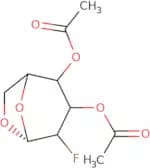
CAS:<p>3,4-Di-O-acetyl-1,6-anhydro-2-deoxy-2-fluoro-b-D-glucopyranose is a synthetic sugar that has been modified to include a fluorine atom. It is a complex carbohydrate that is used in the synthesis of glycosides. 3,4-Di-O-acetyl-1,6-anhydro-2,3 -difluoro b D glucopyranose can be used in the synthesis of an acetylated glycoside with click chemistry. This modification can be achieved through methylation and/or glycosylation reactions. 3,4 Di O acetyl 1,6 anhydro 2 deoxy 2 fluoro b D glucopyranose can also be used in the synthesis of oligosaccharides or saccharides by modifying either its glycone or reducing end.</p>Formula:C10H13FO6Purity:Min. 95%Molecular weight:248.21 g/mol2,3,4-Tri-O-acetyl-b-D-ribopyranosyl azide
CAS:<p>2,3,4-Tri-O-acetyl-b-D-ribopyranosyl azide is a high purity chemical with custom synthesis. It has been shown to have a fluorination and glycosylation reaction. This chemical also has methylation and modification properties that may be useful for the synthesis of oligosaccharides and monosaccharides. 2,3,4-Tri-O-acetyl-b-D-ribopyranosyl azide may be used as an intermediate for saccharide or complex carbohydrate synthesis.</p>Formula:C11H15N3O7Purity:Min. 95%Molecular weight:301.26 g/molMethyl 2,3,4,6-tetra-O-benzyl-D-mannopyranoside
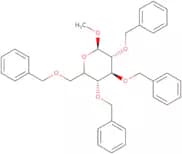
CAS:<p>Methyl 2,3,4,6-tetra-O-benzyl-D-mannopyranoside is a benzylated sugar that has been glycosidically linked to an amino acid. This product has been shown to be a contaminant in the synthesis of other compounds and can be used as a chloride or benzylating reagent. It is used in the preparation of glycosyl halides and condensations. Methyl 2,3,4,6-tetra-O-benzyl-D-mannopyranoside is also used in the synthesis of natural products such as flavones and alkaloids.</p>Formula:C35H38O6Purity:Min. 95%Molecular weight:554.67 g/molCimifugin 4'-O-b-D-glucopyranoside
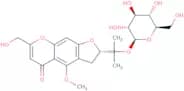
CAS:<p>Cimifugin 4'-O-b-D-glucopyranoside is a complex carbohydrate that has been modified with methylamine and fluorine. It is a custom synthesis of cimifugin, which is an oligosaccharide found in the roots of the Chinese medicinal plant Cimicifuga. Cimifugin 4'-O-b-D-glucopyranoside has been modified to increase its solubility and stability. The modification also increases its bioavailability, which may be due to the ability of methylamine to chelate heavy metals or the fluoroalkylation of cimifugin, making it more lipophilic. Cimifugin 4'-O-b-D-glucopyranoside has been shown to have antiinflammatory effects, as well as hepatoprotective properties.</p>Purity:Min. 95%4-Aminobutyl β-D-galactopyranoside
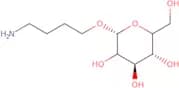
CAS:<p>4-Aminobutyl b-D-galactopyranoside is a methylated saccharide that is also a glycosylation reaction product of 4-aminobutyl b-D-galactopyranoside. It has been modified with Click chemistry and fluorinated for use in carbohydrate research, including glycoprotein synthesis, carbohydrate modification, and oligosaccharide synthesis. 4-Aminobutyl b-D-galactopyranoside has been shown to be a potent inhibitor of the enzyme aminoglycoside adenyltransferase 1 (AGT1), which is involved in the synthesis of bacterial cell wall peptidoglycan. This compound has been used as a model for glycosylation reactions as it contains both an amino and sugar moiety.</p>Formula:C10H21NO6Purity:Min. 95%Molecular weight:251.28 g/mol4-Chlorophenyl-2,3,4,6-tetra-O-acetyl-b-D-glucopyranoside
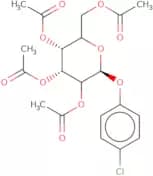
CAS:<p>4-Chlorophenyl-2,3,4,6-tetra-O-acetyl-b-D-glucopyranoside is a custom synthesis of an Oligosaccharide. It is a synthetic compound that contains a sugar that is attached to a 4 chlorophenol. The glycosylation process has been completed with the addition of an acetate group. This product is fluorinated at the 2 and 4 positions with chlorine gas and methylated at the 6 position. The modification process has been completed with click chemistry, which involves the reaction of an azide and an alkyne to form a 1,3 dipole. The complex carbohydrate has been modified by adding a saccharide group to the Carbonyl group on the right side of the molecule.</p>Formula:C20H23ClO10Purity:Min. 95%Molecular weight:458.9 g/mol2-Acetamido-1,3-di-O-benzyl-4,6-O-benzylidene-2-deoxy-b-D-glucopyranoside
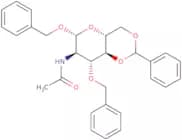
CAS:<p>2-Acetamido-1,3-di-O-benzyl-4,6-O-benzylidene-2-deoxy-b-D-glucopyranoside is a modification of a carbohydrate. It is a complex carbohydrate that has been synthesized by custom synthesis. It is an oligosaccharide with high purity and monosaccharides methylated at the hydroxyl group. The glycosylation and polysaccharide have been synthesized with fluorination and saccharides.</p>Formula:C29H31NO6Purity:Min. 95%Molecular weight:489.56 g/mol2,3,5-Tri-O-benzyl-L-lyxono-1,4-lactone
<p>Tri-O-benzyl-L-lyxono-1,4-lactone is a methylated saccharide. It can be used as a building block for the synthesis of oligosaccharides and glycosylations. It can also be used as a click modification to modify proteins and polymers.</p>Formula:C26H26O5Purity:Min. 95%Color and Shape:PowderMolecular weight:418.48 g/mol2-O-Acetyl-3,4,6-tri-O-benzyl-b-D-glucopyranosyl trichloroacetimidate
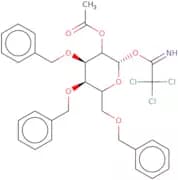
CAS:<p>2-O-Acetyl-3,4,6-tri-O-benzyl-b-D-glucopyranosyl trichloroacetimidate is a product of sugar modification. The modification is performed by the addition of acetyl groups to the hydroxyl groups on the glucose molecule. This process can be used to produce oligosaccharides and complex carbohydrates. The compound has no fluorine atoms and is not methylated or glycosylated. It has a CAS number of 180714-32-3.</p>Formula:C31H32Cl3NO7Purity:Min. 95%Molecular weight:636.95 g/mol2-Chloroethyl b-D-glucopyranoside
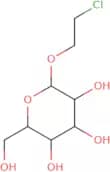
CAS:<p>2-Chloroethyl b-D-glucopyranoside is a custom synthesis, complex carbohydrate, and Oligosaccharide. It is modified with methylation, glycosylation, and fluorination. 2-Chloroethyl b-D-glucopyranoside has a CAS No. of 90318-86-8. It is synthesized in a high purity and has a high quality. This product contains sugar and can be found in Polysaccharides.</p>Formula:C8H15ClO6Purity:Min. 95%Molecular weight:242.65 g/molEmodin-1-O-b-D-glucopyranoside
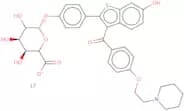
<p>Emodin-1-O-b-D-glucopyranoside is a synthetic, fluorinated, glycosylated oligosaccharide. It can be used as a high purity, non-fluorinated carbohydrate for research purposes. Emodin-1-O-b-D-glucopyranoside has been modified via Click chemistry to provide the desired functional group and is available in various sizes.</p>Purity:Min. 95%Raloxifene-4'-D-glucuronide lithium salt
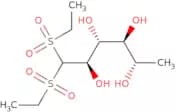
CAS:<p>Raloxifene-4'-D-glucuronide lithium salt is a metabolite of raloxifene, an estrogen receptor modulator. It has been used in the treatment of osteoporosis and breast cancer. Raloxifene-4'-D-glucuronide lithium salt inhibits protein synthesis by inhibiting the activity of ribosomes. Raloxifene-4'-D-glucuronide lithium salt binds to microsomal preparations, which are organelles found in liver cells that synthesize proteins. This binding slows down the rate at which proteins are synthesized, leading to its anti-cancer properties.</p>Formula:C34H34NO10S·LiPurity:Min. 95%Molecular weight:655.64 g/molL-Rhamnose bis(ethylsulfone)
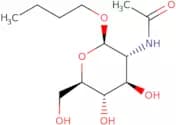
CAS:<p>L-Rhamnose bis(ethylsulfone) is a custom synthesis that belongs to the class of saccharides. L-Rhamnose bis(ethylsulfone) is often used in the production of complex carbohydrates, such as polysaccharides and glycosylation. It has been modified with fluorination, methylation, and click modification. L-Rhamnose bis(ethylsulfone) can be used for the synthesis of oligosaccharides or saccharides by glycosylation.</p>Formula:C10H22O8S2Purity:Min. 95%Molecular weight:334.41 g/molButyl 2-acetamido-2-deoxy-b-D-glucopyranoside
CAS:<p>Butyl 2-acetamido-2-deoxy-β-D-glucopyranoside is a photosynthetic organism that functions as an anti-EGFR antibody. It binds to the EGFR receptor on cancer cells and blocks its activation, preventing tumor growth. This product has been shown to be effective against a wide variety of cancers, including lung, breast, head and neck, ovarian, prostate and bladder cancers.</p>Formula:C12H23NO6Purity:Min. 95%Molecular weight:277.31 g/mol2,3-O-Isopropylidene-1,5-di-O-toluoyl-b-D-ribofuranose
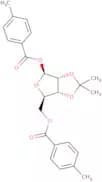
CAS:<p>2,3-O-Isopropylidene-1,5-di-O-toluoyl-b-D-ribofuranose (IPDT) is a saccharide that is modified with a methyl group at the 2' position of the ribose. This modification can be used to control the rate of glycosylation reactions, or to synthesize oligosaccharides and complex carbohydrates. IPDT is also an important precursor for click chemistry reactions, which are used in the synthesis of polymers and other organic compounds.</p>Formula:C24H26NO7Purity:Min. 95%Molecular weight:440.47 g/molHirsutanonol 5-O-glucoside
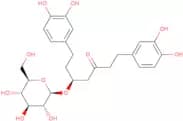
CAS:<p>Hirsutanonol 5-O-glucoside is an antral suppressant. It controls symptoms and parameters of the disease. It is a biopsy that has been carried out in patients with symptoms of gastric ulcer disease. The biopsy samples were stained with haematoxylin and eosin, and histological investigation showed that the interstitial cells are stained. Hirsutanonol 5-O-glucoside is also a symptomatic drug that can be used to investigate the correlation between gastric ulcer disease and gender.</p>Purity:Min. 95%5-Hydroxymethyl tolterodine b-D-glucuronide
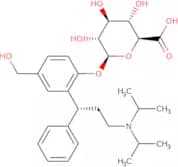
CAS:<p>5-Hydroxymethyl tolterodine b-D-glucuronide is a custom synthesis of a complex carbohydrate. It is an Oligosaccharide that is modified with Methylation, Glycosylation and Carbohydrate. The CAS No. is 210573-52-7, and it has a purity of >99%. This product has the following properties: Fluorination, Synthetic, Click modification, saccharide, sugar.</p>Formula:C28H39NO8Purity:Min. 95%Molecular weight:517.61 g/mol3,6-Di-O-tert-butyldiphenylsilyl-D-galactal
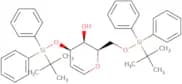
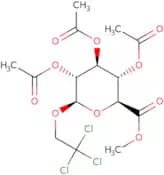
CAS:<p>3,6-Di-O-tert-butyldiphenylsilyl-D-galactal is an oligosaccharide that is a methylated and fluorinated derivative of the natural product D-galactal. The chemical structure of 3,6-di-O-tert-butyldiphenylsilyl-D-galactal is based on a beta-(1->4) linkage of two glucose residues with a terminal alpha-(1->3) linkage to form an alpha-(1->6) linkage. The compound is readily available in high purity, and can be custom synthesized to meet specific customer requirements for glycosylation, modification, or other special requests. 3,6-Di-O-tert-butyldiphenylsilyl--D--galactal has been shown in vitro to inhibit the growth of Mycobacterium tuberculosis and Mycobacterium av</p>Purity:Min. 95%Trichloroethyl 2,3,4-tri-O-acetyl-b-D-glucopyranosiduronic acid methyl ester
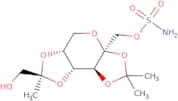
CAS:<p>Trichloroethyl 2,3,4-tri-O-acetyl-b-D-glucopyranosiduronic acid methyl ester is a synthetic carbohydrate that can be used for glycosylation reactions. Trichloroethyl 2,3,4-tri-O-acetyl-b-D-glucopyranosiduronic acid methyl ester is an intermediate in the synthesis of oligosaccharides and complex carbohydrates. It can be used to modify the sugar component of glycoproteins and glycopeptides.</p>Formula:C15H19Cl3O10Purity:Min. 95%Molecular weight:465.66 g/molR-Hydroxy topiramate
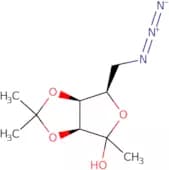
CAS:<p>R-Hydroxy topiramate is the stable isotope of the active pharmaceutical ingredient, topiramate. It can be used for the calibration of liquid chromatography and mass spectrometry methods. R-Hydroxy topiramate is prepared by dilution of a solution of topiramate with water, followed by elution from an ion exchange resin with methanol. The eluent is dried under vacuum to remove methanol and finally dissolved in a minimal volume of acetonitrile. R-Hydroxy topiramate is used to measure concentrations of lamotrigine and zonisamide in plasma and serum samples.</p>Formula:C12H21NO9SPurity:Min. 95%Molecular weight:355.36 g/mol6-Azido-1,6-dideoxy-3,4-O-isopropylidene-D-lyxo-2-hexulofuranose
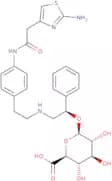
CAS:<p>6-Azido-1,6-dideoxy-3,4-O-isopropylidene-D-lyxo-2-hexulofuranose is a synthetic sugar that can be modified to form an oligosaccharide and polysaccharide. It has been fluorinated and methylated to create a glycosylation site for the attachment of other sugars. This sugar is used in the synthesis of complex carbohydrates. 6-Azido-1,6-dideoxy -3,4-O -isopropylidene -D -lyxo -2 -hexulofuranose has a CAS number of 122194 05 2 and is soluble in water. It has a purity level of ≥ 98% and can be custom synthesized to meet your specifications.</p>Formula:C9H15N3O4Purity:Min. 95%Molecular weight:229.23 g/molMirabegron O-glucuronide
CAS:<p>Mirabegron is a drug that has been used to treat overactive bladder and urinary incontinence. Mirabegron is an agonist of the beta-3 adrenergic receptor and increases the levels of cAMP in cells by binding to this receptor. This leads to relaxation of smooth muscle tissue, which decreases resistance in the bladder and urethra and promotes urine storage. Mirabegron O-glucuronide is a metabolite of mirabegron that can be detected in urine using mass spectrometry methods. Mirabegron O-glucuronide has been found in human liver samples following oral administration, as well as in human blood samples after intravenous administration.</p>Purity:Min. 95%3-Indolyl b-D-glucopyranoside trihydrate
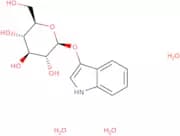
CAS:<p>Precursor of the uremic toxin indoxyl sulfate</p>Formula:C14H17NO6·3H2OPurity:Min. 95%Molecular weight:349.33 g/mol1'-Epi 2',2'-difluoro-2'-deoxyuridine 3',5'-dibenzoate
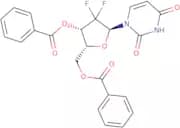
CAS:<p>1'-Epi 2',2'-difluoro-2'-deoxyuridine 3',5'-dibenzoate is a synthetic compound that has been designed for use in the synthesis of oligosaccharides and polysaccharides. The compound is a monosaccharide, which can be modified by fluorination or click chemistry to provide a variety of different side chains and properties. 1'-Epi 2',2'-difluoro-2'-deoxyuridine 3',5'-dibenzoate is a high purity product with no detectable impurities.</p>Formula:C23H18F2N2O7Purity:Min. 95%Molecular weight:472.4 g/mol2-Formylphenyl 2-acetamido-3,4,6-tri-O-acetyl-2-deoxy-b-D-glucopyranoside
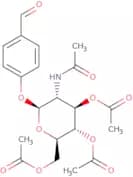
CAS:<p>2-Formylphenyl 2-acetamido-3,4,6-tri-O-acetyl-2-deoxy-b-D-glucopyranoside is a complex carbohydrate with the molecular formula C21H26F3NO9. It is a synthetic compound that can be used as an intermediate in the synthesis of saccharides and glycosides. Custom synthesis of this product is available on request. 2-Formylphenyl 2-acetamido 3,4,6 tri O acetyl 2 deoxy b D glucopyranoside has a purity of > 98% (HPLC). This product is also fluorinated to provide excellent solubility and resistance to hydrolysis by acids or bases.</p>Formula:C21H25NO10Purity:Min. 95%Molecular weight:451.42 g/mol1-O-Tosyl-2,3:4,5-di-O-isopropylidene-L-arabinitol
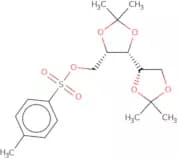
CAS:<p>1-O-Tosyl-2,3:4,5-di-O-isopropylidene-L-arabinitol is a sugar that is used in the synthesis of oligosaccharides and complex carbohydrates. This product can be custom synthesized to meet your needs. It has been shown to react with fluorine at high temperatures and with CH3OH/NaOH at low temperatures. 1-O-Tosyl-2,3:4,5-di-O-isopropylidene arabinitol can also be glycosylated or methylated. The CAS number for this product is 1241674-36-1.</p>Formula:C18H26O7SPurity:Min. 95%Color and Shape:SolidMolecular weight:386.46 g/molAzido 2-acetamido-2-deoxy-3,4,6-tri-o-acetyl-β-D-galactopyranosyl
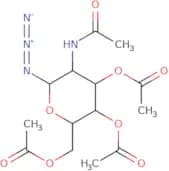
CAS:<p>Azido 2-acetamido-2-deoxy-3,4,6-tri-O-acetyl-β-D-galactopyranosyl is a high purity and custom synthesis sugar. Azido 2-acetamido-2-deoxy-3,4,6-triO acetyl βD galactopyranosyl can be fluorinated, glycosylated, modified with methylation and other methods. It can also be used to synthesize oligosaccharides or monosaccharides. This carbohydrate is used in complex carbohydrates.</p>Formula:C14H20N4O8Purity:Min. 95%Molecular weight:372.33 g/molPhenyl 2,3,4,6-tetra-O-benzoyl-b-D-thiogalactopyranoside
CAS:Phenyl 2,3,4,6-tetra-O-benzoyl-b-D-thiogalactopyranoside is a sugar that can be custom synthesized. It has a high purity and can be fluorinated or glycosylated. This compound is used for the synthesis of oligosaccharides and saccharides. Phenyl 2,3,4,6-tetra-O-benzoyl-b-D-thiogalactopyranoside is used in the modification of complex carbohydrates.Purity:Min. 95%1,2,3,4,6-Penta-O-benzoyl-b-D-galactopyranose
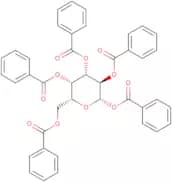
CAS:<p>Penta-O-benzoyl-b-D-galactopyranose is a pentasaccharide that has been shown to have an inhibitory effect on the growth of corynebacterium, which may be due to its ability to modulate fatty acid synthesis. Penta-O-benzoyl-b-D-galactopyranose is a disaccharide that is used as a diagnostic agent for corynebacteria. It is also used as a growth factor in the production of Corynebacterium glutamicum. The safety profile of this drug has not been evaluated in humans.</p>Formula:C41H32O11Purity:Min. 95%Molecular weight:700.71 g/mol(4-Methoxyphenyl)methylbeta-D-glucopyranoside
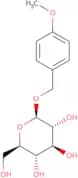
CAS:<p>(4-Methoxyphenyl)methylbeta-D-glucopyranoside is a synthetic sugar that is used for research purposes. It has been modified with fluorine and methyl groups to create a new compound that can be used as a fluorescence probe for DNA. This sugar has been synthesized by glycosylation of 4-methoxyphenol, followed by an oxidation reaction. The molecular weight of this compound is 792.7 g/mol, and it has been assigned the CAS number 81381-72-8.</p>Formula:C14H20O7Purity:Min. 95%Molecular weight:300.3 g/mol4,6-O-Benzylidene-N-Boc-2-O-p-toluenesulfonyl-1,5-imino-D-glucitol
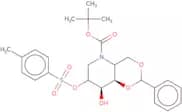
CAS:<p>4,6-O-Benzylidene-N-Boc-2-O-p-toluenesulfonyl-1,5-imino-D-glucitol is a monosaccharide that is used in the synthesis of complex carbohydrates. This compound can be custom synthesized and has a high purity. It is also available as a CAS number 1219116-88-7. 4,6-O-Benzylidene can be modified with methylation, click modification, fluorination, saccharide modification, or polysaccharide modification.</p>Formula:C25H31NO8SPurity:Min. 95%Molecular weight:505.58 g/mol1,6-Anhydro-3-O-benzyl-b-L-idopyranose
CAS:<p>1,6-Anhydro-3-O-benzyl-b-L-idopyranose is an oligosaccharide in which the aldehyde group of the original sugar has been modified. It is a complex carbohydrate that is synthesized by the fluorination of glucose with 1,6-dichlorohexane and benzyl bromide. The product is purified by crystallization and recrystallization to obtain a high purity. It is a monosaccharide sugar that can be used as a starting material for modification or synthesis of other carbohydrates.</p>Formula:C13H16O5Purity:Min. 95%Molecular weight:252.26 g/molPhenyl 2,3,4-tri-O-acetyl-6-O-benzyl-b-D-thiogalactopyranoside
CAS:<p>Phenyl 2,3,4-tri-O-acetyl-6-O-benzyl-b-D-thiogalactopyranoside is a complex carbohydrate with an Oligosaccharide and Polysaccharide backbone. This compound can be modified with methylation to produce a saccharide with a specific structure. Phenyl 2,3,4-tri-O-acetyl-6-O-benzylb -D -thiogalactopyranoside is a high purity, synthetic glycosylated material. It has been fluorinated to form the corresponding fluorinated product.</p>Purity:Min. 95%Methyl 2,3,4-tri-O-benzyl-D-galactopyranoside
CAS:<p>Methyl 2,3,4-tri-O-benzyl-D-galactopyranoside is an Oligosaccharide that contains three benzyl groups. It is a custom synthesis and can be modified to create complex carbohydrates. Methyl 2,3,4-tri-O-benzyl-D-galactopyranoside has been synthesized by the click modification of galactose with triacetoxybenzene. This compound has been shown to have antiinflammatory activity in vitro.</p>Formula:C28H32O6Purity:Min. 95%Molecular weight:464.56 g/molPsicose diacetonide
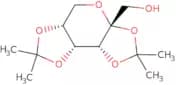
CAS:<p>Psicose diacetonide is a synthetic, custom-synthesized carbohydrate. It is a complex carbohydrate that is made of saccharides and has been modified to have a fluorinated monosaccharide. Psicose diacetonide is an oligosaccharide with a high purity and has been methylated and glycosylated.</p>Purity:Min. 95%Norfluoxetine b-D-glucuronide
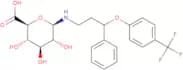
CAS:<p>Norfluoxetine is a selective serotonin reuptake inhibitor (SSRI) that is metabolized to the active metabolite, norfluoxetine b-D-glucuronide. The metabolism of norfluoxetine b-D-glucuronide has been shown to be inhibited by estradiol. Norfluoxetine b-D-glucuronide also exhibits antioxidant activity, which may be related to its ability to modulate expression of genes encoding antioxidant proteins. Norfluoxetine b-D-glucuronide has been found in wastewater and wastewater treatment plant effluents, suggesting this drug may have an environmental impact. The transcriptome of organisms exposed to norfluoxetine b-D-glucuronide has been studied and it was found that there are some genes that are responsive to this drug.</p>Formula:C22H24F3NO7Purity:Min. 95%Color and Shape:White PowderMolecular weight:471.42 g/mol?-Gal-nonoate
CAS:<p>β-Gal-nonoate is a high purity, custom synthesis, sugar modified with fluorination, glycosylation, and methylation. It is a synthetic molecule that has CAS No. 357192-77-9. β-Gal-nonoate is a modification of β-galactoside and it's glycosylated with oligosaccharides and monosaccharides. It is an oligosaccharide that can be complex carbohydrate.</p>Formula:C10H19N3O7Purity:Min. 95%Molecular weight:293.27 g/molD-Fructose-1,6-diphosphate disodium salt
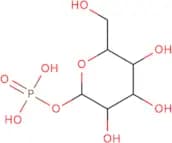
CAS:<p>D-Fructose-1,6-diphosphate disodium salt is a custom synthesis of methylated D-fructose. D-Fructose is an oligosaccharide found in polysaccharides and saccharides. It can be modified by fluorination and click chemistry. D-Fructose has many applications including being a monosaccharide, polysaccharide, or carbohydrate in the synthesis of polymers and pharmaceuticals.</p>Formula:C6H12O12P2·2NaPurity:Min. 95%Molecular weight:384.08 g/molL-Galactose-1-phosphate
CAS:<p>L-Galactose-1-phosphate is a modification of the monosaccharide galactose. This product can be synthesized by methylation and glycosylation of L-galactose, as well as by fluorination and saccharide synthesis. This product has a CAS number of 210100-25-7. It is also a complex carbohydrate that contains many sugars. The molecular weight of this product is 541.37 g/mol, with an empirical formula of C6H14O6P2. This product is soluble in water, methanol, ethanol, acetone and chloroform. It has a melting point of 162 °C and a boiling point of 320 °F at atmospheric pressure. This product is not stable in alkaline conditions, but stable in acidic conditions.</p>Purity:Min. 95%Benzyl 5-amino-5-deoxy-2,3-O-isopropylidene-6-O-trityl-a-D-mannofuranoside
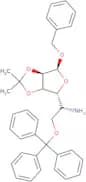
CAS:<p>Benzyl 5-amino-5-deoxy-2,3-O-isopropylidene-6-O-trityl-a-D-mannofuranoside is a complex carbohydrate that is synthesized by the glycosylation of benzyl 5-amino-5,6,7,8,9,10,11,12,13,14-, 2,3,4-, or 6-(N","N"-dimethylamino)ethyl 5-[(2","N"-dimethylamino)-ethoxycarbonyl]-5-[(2","N"-dimethylamino)ethoxycarbonyl]-4H-[1]benzopyranose with 6-(N","N"-dimethylaminomethylene)-a-"D"mannofuranose. The chemical modification includes fluorination and methylation. This product has a CAS number of 9136415 and purity of more than</p>Formula:C35H37NO5Purity:Min. 95%Molecular weight:551.67 g/mol1-O-Acetyl-2,3,5-tri-O-p-chlorobenzoyl-b-D-ribofuranose
CAS:<p>1-O-Acetyl-2,3,5-tri-O-p-chlorobenzoyl-b-D-ribofuranose is a modified monosaccharide that is synthesized by the methylation of 2,3,5,6'-tetraacetyl bromoacetyl bromoacetate with sodium methoxide in methanol and acetone. The compound is then reacted with formaldehyde and acetic anhydride to produce 1-(4'-chlorobenzoyl)-2,3,5,-triacetoxybibofuranoside. The product is then treated with phosphoryl chloride to generate 1-(4'-chlorobenzoyl)-2,3,5,-triacetoxybibofuranoside O-(1'',2'''-dichloroethyl) ether. This product has been used as a complex carbohydrate in the synthesis of oligosaccharides or</p>Formula:C28H21Cl3O9Purity:Min. 95%Molecular weight:607.82 g/mol2,3-O-Isopropylidene-1,6-di-O-p-toluenesulfonyl-a-L-sorbofuranose
CAS:<p>2,3-O-Isopropylidene-1,6-di-O-p-toluenesulfonyl-a-L-sorbofuranose is a synthetic sugar that has been modified with fluorine. It has a molecular weight of 594.65 and melting point of 190°C. The compound is used as a precursor for the synthesis of oligosaccharides and polysaccharides.</p>Formula:C23H28O10S2Purity:Min. 95%Molecular weight:528.59 g/mol1,3,4,5,6-Penta-O-acetyl-2-keto-D-fructose
CAS:<p>1,3,4,5,6-Penta-O-acetyl-2-keto-D-fructose is a custom synthesis of monosaccharide. It has been modified by fluorination and methylation. The CAS number for 1,3,4,5,6-Penta-O-acetyl-2-keto-D-fructose is 494828–55–6. This product is a saccharide that is a sugar with a complex carbohydrate structure.</p>Formula:C16H22O11Purity:Min. 95%Molecular weight:390.34 g/mol2-Deoxy-D- arabino- hexonic acid calcium
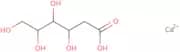
CAS:<p>2-Deoxy-D-arabino-hexonic acid calcium is a fluorinated monosaccharide with a molecular weight of 348.09 g/mol. It can be used for the synthesis of oligosaccharides, glycosylations, and polysaccharides. Click modification, methylation, sugar modification are all possible modifications for this compound. This product has been custom synthesized by our company and is available in high purity.</p>Formula:C6H12O6·xCaPurity:Min. 95%3,6-Di-O-triisopropylsilyl-D-galactal
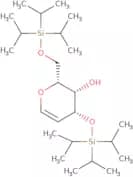
CAS:<p>3,6-Di-O-triisopropylsilyl-D-galactal is a synthetic sugar that is used as a reagent for glycosylation. It has been shown to react with the aldehyde group of an alcohol to form an acetal. The product can be hydrolyzed under acidic conditions to release the desired sugar product. 3,6-Di-O-triisopropylsilyl-D-galactal is soluble in water and ethanol and has CAS number 201053-37-4.</p>Purity:Min. 95%