


Monosaccharides
Subcategories of "Monosaccharides"
- Alloses(11 products)
- Arabinoses(21 products)
- Erythroses(11 products)
- Fructoses(9 products)
- Fucoses(36 products)
- Galactosamine(41 products)
- Galactose(262 products)
- Glucoses(365 products)
- Glucuronic Acids(52 products)
- Glyco-substrates for Enzyme(78 products)
- Guloses(6 products)
- Idoses(4 products)
- Inositols(15 products)
- Lyxoses(4 products)
- Mannoses(65 products)
- O-Glycans(48 products)
- Psicoses(3 products)
- Rhamnoses(10 products)
- Riboses(61 products)
- Sialic Acids(100 products)
- Sorboses(4 products)
- Sugars(174 products)
- Tagatoses(4 products)
- Taloses(8 products)
- Xyloses(20 products)
Found 6138 products of "Monosaccharides"
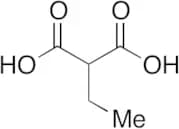
Ethylmalonic Acid
CAS:Applications Ethylmalonic Acid is used as a diagnostic agent used in the diagnosis of Ethylmalonic encephalopathy which is a rare autosomal recessive inborn error of metabolism.
References Baertling, F. et al.: Eur. J. Pediat., 173, 1719 (2014); Sudo, Y. et al.: Hu,am Genome Var., 1, 15016 (2014);Formula:C5H8O4Color and Shape:NeatMolecular weight:132.12D-Gulose
CAS:Applications D-Glucose is a aldohexose sugar that is very rare in nature but has been found in archaea, bacteria and other eukaryotes. Gulose is the C-3 Epimer of galactose (G155250).
References Sun, Y.X., et al.: Biosci. Biotech. Biochem., 70, 598 (2006); Bhuiyan, S.H., et al.: J. Biosci. Bioengin., 88, 567 (1999);Formula:C6H12O6Color and Shape:Off White SolidMolecular weight:180.1559Methyl a-D-glucopyranoside
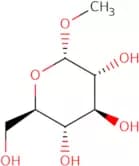
CAS:Methyl α-D- glucopyranoside is a methylated sugar used as an inhibitor of lectin-conjugate binding. Methyl α-D- glucopyranoside is commonly used in protein purification for eluting glycoproteins and other glycoconjugates from affinity chromatography columns of agarose lectin. Methyl α-D- glucopyranoside is also known as Methyl alpha-D-glucoside or alpha-Methyl-glucoside.Formula:C7H14O6Purity:Min. 98 Area-%Color and Shape:PowderMolecular weight:194.18 g/molN-Hexanoyl-D-glucosamine
CAS:N-Hexanoyl-D-glucosamine is a hexose sugar that is a component of the glycosaminoglycan heparin. It is structurally related to acetylglucosamine and n-acetylglucosamine, which are also components of heparin. N-Hexanoyl-D-glucosamine can be synthesized by the injection of propionylated D-glucose into animal tissues. The biosynthesis of this compound is impaired in animals with diabetes mellitus.Formula:C12H23NO6Purity:(%) Min. 98%Color and Shape:White PowderMolecular weight:277.31 g/molMycophenolic acid b-D-glucuronide
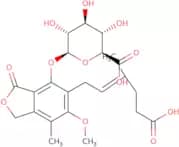
CAS:Mycophenolic acid b-D-glucuronide is a metabolite of mycophenolic acid, which is an immunosuppressant drug. The glucuronide form of mycophenolic acid is the main form found in human serum. Mycophenolic acid b-D-glucuronide has been shown to have a concentration–time curve that has a higher peak at about 3 hours and lower troughs than those for mycophenolic acid. It has also been shown to have similar effects on autoimmune diseases as its parent compound, but with fewer side effects. Mycophenolic acid b-D-glucuronide can be detected by high performance liquid chromatography (HPLC). The analytical method for this compound was developed using HPLC methods with detection by fluorescence at 254 nm and has been validated for use in human serum samples.END>Formula:C23H28O12Purity:Min. 96 Area-%Color and Shape:PowderMolecular weight:496.46 g/mol2,3-Di-O-benzyl-4-deoxy-L-fucose
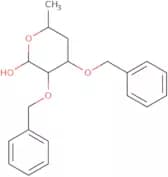
CAS:2,3-Di-O-benzyl-4-deoxy--L-fucose is a methylated derivative of the fucose monosaccharide. It is synthesized through a click reaction that involves the use of an azide group on the sugar and an alkyne group on a thiol reagent. The synthesis utilizes one step, yielding 2,3-Di-O-benzyl-4-deoxy--L-fucose in high purity with low residual starting material. The product has been modified for glycosylation and can be used in oligosaccharides or polysaccharides.Formula:C20H24O4Purity:Min. 95%Color and Shape:Clear Colourless LiquidMolecular weight:328.4 g/molMuramic acid hydrate
CAS:Muramic acid hydrate as an amino sugar with a carboxylic acid group. It occurs in nature as N-acetylmuramic acid which is typically found in cell wall of bacterial.Formula:C9H17NO7•(H2O)xPurity:Min. 95%Color and Shape:White PowderMolecular weight:269.25 g/mol3-O-Benzyl-1,2,4-tri-O-acetyl-D-xylopyranoside
3-O-Benzyl-1,2,4-tri-O-acetyl-D-xylopyranoside is a methylated saccharide that has been modified with the click chemistry. This product can be used for the synthesis of complex carbohydrates and glycosylations. This product is available in high purity and custom synthesis. It is soluble in water or aqueous solutions, making it ideal for use in biological applications. 3-O-Benzyl-1,2,4-tri-O-acetyl-D-xylopyranoside can be used as an intermediate for the synthesis of oligosaccharides and glycoconjugates. It has CAS number 69936–76–5.Purity:Min. 95%Propranolol D-glucuronide D6
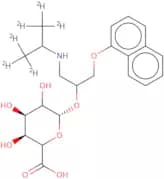
Controlled ProductPropranolol D-glucuronide D6 is a synthetic, fluorinated, saccharide that is a modification of propranolol. It has high purity and can be custom synthesized to meet specific requirements. Propranolol D-glucuronide D6 has been shown to inhibit the growth of bacteria by binding to the 50S ribosomal subunit. It is used in veterinary medicine to treat respiratory infections caused by Clostridium perfringens and other bacteria. The drug also has a toxic effect on respiratory system cells, which may be due to its ability to induce apoptosis.
Formula:C22H23NO8D6Purity:Min. 95%Molecular weight:441.5 g/mol5-O-Benzyl-D-ribose
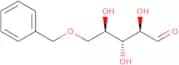
CAS:5-O-Benzyl-D-ribose is an enantiomer of D-ribose. It has been used as an antiperspirant, although it does not stop the formation of sweat, but rather reduces the amount of perspiration. 5-O-Benzyl-D-ribose is also used in the synthesis of deodorants and enantiomers for optically active pharmaceuticals. The configurations are determined by the configuration of the substituents on the benzene ring and can be either R or S. The configurations can be separated into two groups:Formula:C12H16O5Purity:Min. 95%Color and Shape:PowderMolecular weight:240.25 g/molN- [(3R, 4R, 5R) - 4- Hydroxy- 5- (hydroxymethyl) - 3- pyrrolidinyl] -acetamide
CAS:N- [(3R, 4R, 5R) - 4- Hydroxy- 5- (hydroxymethyl) - 3- pyrrolidinyl] -acetamide is a synthetic compound that is composed of two molecules of acetamide linked to each other by an ester linkage. The acetamide group is attached to the nitrogen atom of the heterocycle. The N-COOH carbonyl group is attached to the oxygen atom of the heterocycle. N-[(3R,4R,5R)-4-hydroxy-5-(hydroxymethyl)-3-(pyrrolidin-1-yl)pyrrolidinium]acetamide has not been studied in humans or animals.Purity:Min. 95%1-Deoxy-D-sorbose
D-sorbose is a diastereomer of D-xylose. It inhibits the glycolysis pathway, which stops the production of energy and leads to cell death. D-sorbose is synthesized from D-xylose by enzymatic conversion with 1,4-dihydroxybenzene. The crystalline form of D-sorbose is polymorphic and can be identified using X-ray diffraction. It has been shown to have cytotoxic effects on C. elegans and A. actinomycetes, but not on E. coli or other Gram negative bacteria. The imbalance in the ratio of these organisms may lead to an increased risk for cancer in humans.
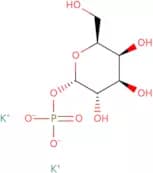
Purity:Min. 95%a-L-Galactose-1-phosphate dipotassium salt
CAS:a-L-Galactose-1-phosphate dipotassium salt is an oligosaccharide that can be prepared by the methylation of a galactose molecule. It is a synthetic compound that has been shown to have antiviral properties. The modification of the sugar structure with fluorine atoms increases the stability of the molecule and prevents its degradation. This product is soluble in water and can be used as a pharmaceutical intermediate for other compounds.Formula:C6H11K2O9PPurity:Min. 95%Color and Shape:PowderMolecular weight:336.33 g/molUDP-α-D-galacturonic acid
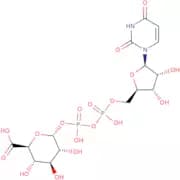
CAS:UDP-α-D-galacturonic acid is a biochemical precursor for the synthesis of UDP-glucuronic acid. It is an intermediate in the biosynthesis of glycosaminoglycans, proteoglycans and lipopolysaccharides. This compound has been shown to inhibit the growth of cancer cells by inducing apoptosis in vitro. The presence of this compound may be detected by its ability to act as a substrate for glucuronidation reactions.Formula:C15H22N2O18P2Purity:Min. 95%Color and Shape:White Off-White PowderMolecular weight:580.29 g/molEstriol 3-O-b-D-glucuronide sodium salt
CAS:Estriol 3-O-b-D-glucuronide sodium salt is an estrogenic compound that is metabolized to 17β-estradiol, the most potent endogenous estrogen. Estriol 3-O-b-D-glucuronide sodium salt is found in wastewater and has been detected in effluent from various sources. The presence of estriol 3-O-b-D glucuronide sodium salt in wastewater indicates that it may be discharged from pharmaceutical manufacturing plants. It has been shown to be present at high concentrations in the effluent of a pharmaceutical plant that manufactures estrogens, which may have resulted from incomplete recovery during production. Estriol 3-O-b glucuronide sodium salt can be readily recovered by liquid chromatography with a reversed phase column and eluted with acetonitrile containing 0.1% trifluoroacetic acid (TFA). Recoveries are typically greater than 90%. Estrogen conjugates such
Formula:C24H31NaO9Purity:Min. 95%Color and Shape:PowderMolecular weight:486.49 g/mol(1R) -1- [(2S, 3R,4S) -4-(Acetylamino)methyl-3- hydroxy- 1- azetidinyl] -1, 2- ethanediol
(1R) -1- [(2S, 3R,4S) -4-(Acetylamino)methyl-3- hydroxy- 1- azetidinyl] -1, 2- ethanediol is a custom synthesis. It is a complex carbohydrate that consists of an oligosaccharide with the CAS No. 6056-89-2. This product has been modified by methylation and glycosylation and has been fluorinated in order to improve its stability. The purity of this product is high and it contains a saccharide or sugar which is a polysaccharide as well as a carbonyl group.Purity:Min. 95%1,2-O-Isopropylidene - 5- O- (tert.butyldimethylsilyl) -β- D- glucofuranuronic acid γ-lactone
1,2-O-Isopropylidene - 5- O- (tert.butyldimethylsilyl) -beta- D- glucofuranuronic acid gamma-lactone is a synthetic compound that is used in the preparation of complex carbohydrates. This product can be methylated, glycosylated, or click modified to produce a wide range of products for use in the food and beverage industry. 1,2-O-Isopropylidene - 5- O- (tert.butyl dimethylsilyl) -beta- D- glucofuranuronic acid gamma lactone is also used in the production of polysaccharides and oligosaccharides with CAS No. 70690–05–4 and 70690–06–5 respectively. It has been shown to be fluorinated at various positions on the sugar ring with high purity and precision.Purity:Min. 95%(1S) -1- [(2R, 3S) -N-Benzyl-3-hydroxy- 1- azetidinyl] -1, 2- ethanediol
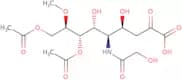
This product is a custom-synthesized, complex carbohydrate with the CAS number of 12078-03-7. This product is an Oligosaccharide that has been modified with saccharides and methylated. It has been glycosylated and click modified. The product is a sugar that has been fluorinated and synthesized. It has high purity and is synthetic.Purity:Min. 95%7,9-Di-O-acetyl-N-glycolyl-8-O-methylneuraminic acid
CAS:7,9-Di-O-acetyl-N-glycolyl-8-O-methylneuraminic acid is a synthetic glycolylneuraminic acid analogue that can be used in the treatment of bacterial infections. It is a prodrug that is converted to glycolylneuraminic acid by monoclonal antibody and other enzymes. 7,9-Di-O-acetyl-N-glycolyl-8-O-methylneuraminic acid inhibits the activity of necrosis factor (TNF) by binding to its receptor, thereby preventing TNF from binding to cells and stimulating inflammation. This compound has been shown to be effective against many bacteria including methicillin resistant Staphylococcus aureus (MRSA). Techniques used for the synthesis include high performance liquid chromatography with mass spectrometry detection and cavity ring down spectroscopy.Formula:C16H25NO12Purity:Min. 95%Molecular weight:423.37 g/mol2-C-(tert.Butylmethylsilyloxy)methyl-2,3:5,6-di-O-isopropylidene-D-mannono-1.4-lactone
2-C-(tert.Butylmethylsilyloxy)methyl-2,3:5,6-di-O-isopropylidene-D-mannono-1.4-lactone is a custom synthesis of a complex carbohydrate with Oligosaccharide, CAS No., Polysaccharide and Modification properties. It is a saccharide that is Methylation and Glycosylation modified. This product has Click modification and Carbohydrate properties. 2C-(tert.Butylmethylsilyloxy)methyl-2,3:5,6-di-O-isopropylidene-D-mannono 1,4 lactone is a high purity product with Fluorination and Synthetic properties.Purity:Min. 95%1-O-Acetyl-3,5-di-O-benzoyl-2-deoxy-2-fluoro-b-D-ribofuranoside
CAS:1-O-Acetyl-3,5-di-O-benzoyl-2-deoxy-2-fluoro-betaDribofuranoside is a synthetic sugar that is used as a building block for the synthesis of oligosaccharides and glycosylations. It can be modified by click chemistry with other molecules to produce glycosides. This compound has CAS number 149623-91-6 and is also known as methyl 1, 3, 5 di O benzoyl beta D ribofuranoside.Purity:Min. 95%β-L-Fucopyranosylamine
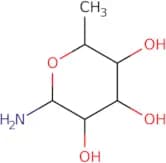
CAS:B-L-Fucopyranosylamine is a Custom synthesis, Modification, Fluorination, Methylation, Monosaccharide, Synthetic, Click modification, Oligosaccharide, saccharide, Glycosylation. It has CAS No. 103419-79-0 and Carbohydrate.Formula:C6H13NO4Purity:Min. 95%Color and Shape:White PowderMolecular weight:163.17 g/molMethyl 2,3,4-tri-O-benzoyl-6-O-triisopropylsilyl-a-D-mannopyranoside
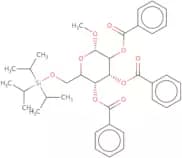
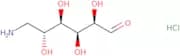
Methyl 2,3,4-tri-O-benzoyl-6-O-triisopropylsilyl-a-D-mannopyranoside is a synthetic glycosylation agent with high purity and custom synthesis. The product is used to modify saccharides and oligosaccharides with the addition of the methyl group at C2 of the sugar. It can be used for modification of complex carbohydrates, fluorination, and saccharide. Methyl 2,3,4-tri-O-benzoyl-6-O-triisopropylsilyl-a -D -mannopyranoside has CAS No. 617069–91–8. The product can be synthesized in various configurations to meet customer needs.Formula:C37H46O9SiPurity:Min. 95%Molecular weight:662.86 g/mol6-Amino-6-deoxy-D-glucose hydrochloride
CAS:6-Amino-6-deoxy-D-glucose hydrochloride is a chromatographic agent that is used to detect and identify viruses. It is also used to study antiviral drugs and the virus life cycle. 6-Amino-6-deoxy-D-glucose hydrochloride has been shown to inhibit protein synthesis in animal cells infected with paramyxoviruses, which may be due to its ability to inhibit acetylation of proteins. This drug has also been shown to inhibit influenza virus replication in cell culture. 6-Amino-6-deoxy--D--glucose hydrochloride binds to the viral ribonucleic acid (RNA) and inhibits the replication of the virus by binding competitively to the RNA polymerase enzyme.Formula:C6H13NO5·(HCl)Purity:Min. 95%Color and Shape:White PowderMolecular weight:215.63 g/mol2-Azido-2-deoxy-(S)-3,4-O-phenylmethylene-D-Arabinonic acid 1,5-lactone
2-Azido-2-deoxy-(S)-3,4-O-phenylmethylene-D-arabinonic acid 1,5-lactone is a custom synthesis. It is a modification of the natural sugar arabinose. The chemical structure has been modified by fluorination and methylation. This product can be used in the synthesis of monosaccharide and saccharide oligosaccharides. 2-Azido-2-deoxy-(S)-3,4-O-phenylmethylene-D-arabinonic acid 1,5 -lactone is an organic compound that belongs to the group of carbohydrates and polysaccharides.Purity:Min. 95%D-Gluco-2,4-O-Isopropylidene-2,3,4,5-tetrahydroxy-1,6-dicarboxylic acid 3,6-lactone methyl ester
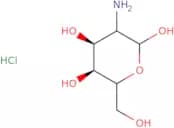
D-Gluco-2,4-O-Isopropylidene-2,3,4,5-tetrahydroxy-1,6-dicarboxylic acid 3,6-lactone methyl ester is a custom synthesis of D-glucose with a methyl group at the 2 position. The compound has been fluorinated to increase its hydrophobicity and is used as an intermediate in the synthesis of oligosaccharides and polysaccharides. It has also been used in the modification of saccharides such as glycosides. This product is offered in high purity and can be modified according to customer specifications.Purity:Min. 95%D-Glucosamine hydrochloride - non-animal origin
CAS:D-Glucosamine (GlcN) is an aldohexose (2-Amino-2-deoxyglucose) in which the hydroxyl group at position 2 is replaced by an amino group (Collins, 2006). D-Glucosamine is found in chitosan as the N-Acetylated derivative in chitin (Rudrapatnam, 2003), glycoproteins, glycolipids and the glycosaminoglycan hyaluronic acid (Fallacara, 2018). Glucosamine, as its sulfate salt, often in combination with the polydisaccharide chondroitin, is marketed over-the-counter as a treatment for osteoarthritis inflammation and its accompanying pain. Only the D-enantiomer of glucosamine exists in nature.Formula:C6H13NO5·HClPurity:(Hplc) 98.00 To 102.00%Color and Shape:White PowderMolecular weight:215.63 g/molMethyl 3- Deoxy- 3- fluoro-b- D- xylopyranoside
CAS:Methyl 3-Deoxy-3-fluoro-b-D-xylopyranoside is a modification of the natural monosaccharide D-xylose. It is a synthetic molecule that has been modified with fluorine substituents. Methyl 3-Deoxy-3-fluoro-b-D-xylopyranoside can be used as a saccharide in the synthesis of complex carbohydrates. This reagent is supplied as a white powder and can be used in glycosylation reactions to modify the carbohydrate moiety.Formula:C6H11FO4Purity:Min. 95%Molecular weight:166.15 g/molMethylphenyl 2-O-benzyl-b-D-thiogalactopyranoside
Methylphenyl 2-O-benzyl-b-D-thiogalactopyranoside (MPBGT) is a modification of the natural disaccharide, galactose. It is synthesized by the glycosylation and methylation of galactose with methyl phenyl b-D-thioglucopyranoside. MPBGT is typically used as a building block for oligosaccharides or polysaccharides. The MPBGT can be modified by fluorination or saccharide substitution to produce diverse products.Formula:C20H24O5SPurity:Min. 95%Molecular weight:376.47 g/mol1-O-Acetyl-2,3,5-tri-O-benzoyl-b-L-ribofuranose
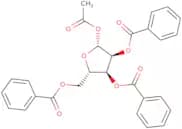
CAS:1-O-Acetyl-2,3,5-tri-O-benzoyl-b-L-ribofuranose is a reactive proton that has been shown in kinetic studies to be able to react with chloride ions. It is a stereoselective molecule that can be used to produce xanthosine (X), guanosine (G), and 2-aminoadenosine (A) from the corresponding ribofuranosides. 1-O-Acetyl-2,3,5-tri-O-benzoyl ribofuranose has been shown to inhibit viral replication in the case of hepatitis B and C viruses. This compound also inhibits cross coupling reactions with anions such as chloride ions and can be used as a potential antiviral agent or drug candidate for treatment of chronic hepatitis C infections.Formula:C28H24O9Purity:Min. 95%Color and Shape:White PowderMolecular weight:504.48 g/mol5-Keto-D-gluconic acid
CAS:5-Keto-D-gluconic acid is an intermediate in the synthetic pathway of glucose. The enzyme 5-keto-D-gluconate dehydrogenase catalyzes the conversion of 5-keto-D-gluconate to D-glucono-1,5-lactone. This reaction is important for plant physiology and is used industrially for the production of citric acid. In order to synthesize 5-keto-D-gluconic acid, a p. pastoris strain was engineered with an increased expression of 5KGDH, which led to an increase in the production of this compound. This synthesis took place through a dinucleotide phosphate intermediate that was formed by two molecules of malonic acid. Citric acid was also synthesized from this intermediate.
The enzyme activity levels were measured using a bacterial strain that contained a wild type gene sequence (WT) and a mutant gene sequence (Formula:C6H10O7Purity:Min. 98 Area-%Color and Shape:Clear LiquidMolecular weight:194.14 g/mol1,4-Dideoxy-1,4-imino-D-arabinitol
CAS:1,4-Dideoxy-1,4-imino-D-arabinitol (1,4DA) is an inhibitor of glycolysis that has potent inhibitory activity against the enzyme phosphofructokinase. It has been shown to decrease cellular ATP levels in rat liver and kidney tissues. 1,4DA also inhibits urine production by inhibiting the conversion of fructose to glucose in the kidney. This compound is a racemic mixture with two enantiomers: R and S. The pharmacokinetics of 1,4DA have been studied in rats and humans using a model system. In rats, 1,4DA was absorbed rapidly and excreted unchanged in the urine. In humans, this drug was well absorbed after oral administration and metabolized mainly by hydrolysis to form 1,4-dideoxyfructose (Fru).Formula:C5H11NO3Purity:Min. 95%Molecular weight:133.15 g/mol2-O-Hydroxyethyl-D-glucose
CAS:2-O-Hydroxyethyl-D-glucose is a synthesised compound that has been glycosidically linked to the glucoside. This compound is an intramolecular glucoside with a bicyclic structure. It can be used in the synthesis of other compounds, such as 3-o-hydroxypropyl-D-glucose, which has been shown to have anti-inflammatory effects.Formula:C8H16O7Purity:Min. 95%Color and Shape:PowderMolecular weight:224.21 g/mol4,6-O-(4-Methoxybenzylidene)-1,2,3-tri-O-pivaloyl-b-D-galactopyranose
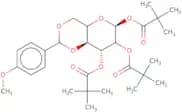
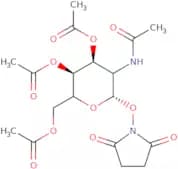
4,6-O-(4-Methoxybenzylidene)-1,2,3-tri-O-pivaloyl-b-D-galactopyranose is a custom synthesis of a complex carbohydrate. It is an oligosaccharide that has been modified with methylation and glycosylation. The CAS number for this compound is 123097-29-2. This compound has a high purity and has been fluorinated with the click reaction. It is a synthetic sugar that is also a polysaccharide.Formula:C29H42O10Purity:Min. 95%Molecular weight:550.65 g/molO-(2-Acetamido-3,4,6-tri-O-acetyl-2-deoxy-b-D-glucopyranosyl)-N-hydroxysuccinimide
CAS:O-(2-Acetamido-3,4,6-tri-O-acetyl-2-deoxy-b-D-glucopyranosyl)-N-hydroxysuccinimide is a glycosylation agent that can be used in the synthesis of glycoproteins and polysaccharides. It has been shown to be effective for the synthesis of oligosaccharides, polysaccharides and complex carbohydrates. The compound has a CAS number of 170590-84-8 and is classified as an intermediate organic chemical. O-(2-Acetamido-3,4,6-tri-O-acetyl-2 -deoxy--b--D--glucopyranosyl)-N--hydroxysuccinimide reacts with primary alcohols to form acetal derivatives. This reaction can also be used for Click chemistry and fluorination in order to modify saccharide structures.Formula:C18H23NO12Purity:Min. 95%Molecular weight:445.37 g/mol5-Azido-5-deoxy-1-C-butyl-2,3-O-isopropylidene-D-ribofuranose
5-Azido-5-deoxy-1-C-butyl-2,3-O-isopropylidene-D-ribofuranose is a custom synthesis of an oligosaccharide that is modified by methylation and glycosylation. It has a CAS number of 533881-00-6.Purity:Min. 95%2,5-Anhydro-3-deoxy-6-O-methyl-4-O-tert.butyldimethylsilyl-L-arabino-hexonic acid methyl ester
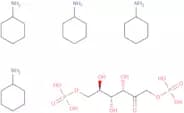
2,5-Anhydro-3-deoxy-6-O-methyl-4-O-tert.butyldimethylsilyl-L-arabinohexonic acid methyl ester (2,5Anh3DMA) is a custom synthesis that is used as an intermediate for the preparation of oligosaccharides and polysaccharides. This compound has a CAS number of 51357-61-1 and is soluble in water. 2,5Anh3DMA can be modified with different groups such as methylation, glycosylation, or fluorination to produce desired products. It can be synthesized by the click reaction between an acetaldehyde and a silyl enolate.Purity:Min. 95%D-Fructose-1,6-diphosphate tetra(cyclohexylammonium) salt
CAS:D-Fructose-1,6-diphosphate tetra(cyclohexylammonium) salt is a white to off-white crystalline powder. It is soluble in water and ethanol and insoluble in ether, chloroform, and benzene. D-Fructose-1,6-diphosphate tetra(cyclohexylammonium) salt is used as a raw material for the production of mono and oligosaccharides by click chemistry or glycosylation. The chemical formula for this substance is CHNO4.H2O4C8H11N.Formula:C6H14O12P2·4C6H13NPurity:Min. 95%Molecular weight:736.81 g/molMethyl N-benzyl-4,6-dideoxy-4,6-imino-2,3-O-isopropylidene-b-D-talopyranoside
Methyl N-benzyl-4,6-dideoxy-4,6-imino-2,3-O-isopropylidene-b-D-talopyranoside is a fluorinated monosaccharide with a custom synthesis. It is a synthetic oligosaccharide that has undergone glycosylation and polysaccharide modification. This compound has been modified by methylation, click chemistry, and sugar formation. It is available in high purity with a CAS number of 29059-07-1.
Purity:Min. 95%1-Deoxy-3,4-O-isopropylidene-D-allitol(D-altritol)
1-Deoxy-3,4-O-isopropylidene-D-allitol (D-altritol) is a glycosylation product of D-mannitol. It is a methylated, fluorinated, saccharide with a complex carbohydrate structure that has been synthesized to be used as a reagent in Click chemistry. This compound serves as an alternative to the natural product D-mannitol and can be custom synthesized to meet your needs. 1-Deoxy-3,4-O-isopropylidene-D-allitol (D-altritol) has CAS number 225570–83–8.Purity:Min. 95%6- Deoxy- 1, 2:3, 5- bis- isopropylidene-D- ido-heptitol
6- Deoxy- 1, 2:3, 5- bis- isopropylidene-D- ido-heptitol is a modified oligosaccharide that is used as a reagent in the synthesis of complex carbohydrates. It has been shown to inhibit bacterial growth by binding to ribose and other sugars. 6-Deoxy-1,2:3,5-bis-isopropylidene-D-idoheptitol can be used to produce glycosides or methylated saccharides. This compound has been shown to have high purity and the CAS number for this product is 107738-94 -7.
Purity:Min. 95%Methyl 4,6-O-benzylidene-2-deoxy-a-D-allopyranoside
Methyl 4,6-O-benzylidene-2-deoxy-a-D-allopyranoside is an oligosaccharide that has a complex carbohydrate structure with a fluorination modification. It is synthesized by the methylation of 4,6-O-benzylidene-2,3,4,6 tetra deoxy aldopyranose and the glycosylation with methylated glucose. Methyl 4,6-O-benzylidene-2-deoxy-a -D allopyranoside is used in research to study the synthesis of saccharides and glycoconjugates. Its CAS number is 6891–51–8. This product is available for custom synthesis.Formula:C14H18O5Purity:Min. 95%Molecular weight:266.29 g/molMethyl-2,3,4,6-tetra-O-acetyl-α-D-mannopyranoside
CAS:Methyl-2,3,4,6-tetra-O-acetyl-alpha-D-mannopyranoside is a sugar that is synthesized by the methylation of an alpha-D-mannopyranoside. This compound can be customized for any application and is available in high purity. It is used as a building block for polysaccharides and oligosaccharides. Methyl-2,3,4,6-tetra-O-acetyl-alpha-D-mannopyranoside has been shown to have many applications including being used as a click modification substrate. The synthesis of this compound can be done by fluorination or glycosylation.
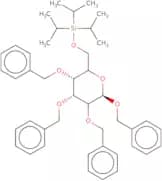
Formula:C15H22O10Purity:Min. 95%Color and Shape:PowderMolecular weight:362.33 g/mol1,2,3,4-Tetra-O-benzyl-6-O-triisopropylsilyl-b-D-glucopyranose
1,2,3,4-Tetra-O-benzyl-6-O-triisopropylsilyl-b-D-glucopyranose is a Fluorination reagent for glycosylation. It is used to introduce fluorine atoms into the sugar molecule and can be used in a variety of synthesis reactions. It is often used as a precursor to other sugars or carbohydrates and it provides a high degree of purity. Click modification of 1,2,3,4-Tetra-O-benzyl-6-O-triisopropylsilyl-b-D-glucopyranose has been shown to be an effective way to increase the stability of this compound.Formula:C43H56O6SiPurity:Min. 95%Molecular weight:697.01 g/molN-[(4'-Dimethylaminophenyl)-1-propenyl]imino-2,3,4,6-tetra-O-pivaloyl-D-glucopyranose
CAS:N-[(4'-Dimethylaminophenyl)-1-propenyl]imino-2,3,4,6-tetra-O-pivaloyl-D-glucopyranose is a fluorinated sugar that can be used for the synthesis of glycoconjugates. It is an oligosaccharide with an acetal linkage to the hydroxyl group at C2 and a pivaloyl group linked to the hydroxyl group at C3. This compound has been shown to be effective in methylation reactions.Formula:C37H58N2O9Purity:Min. 95%Molecular weight:674.88 g/mol





![N- [(3R, 4R, 5R) - 4- Hydroxy- 5- (hydroxymethyl) - 3- pyrrolidinyl] -acetamide](/_next/image/?url=https%3A%2Fstatic.cymitquimica.com%2Fproducts%2F3D%2Fthumb-webp%2FMH163543.webp&w=3840&q=75)

![(1R) -1- [(2S, 3R,4S) -4-(Acetylamino)methyl-3- hydroxy- 1- azetidinyl] -1, 2- ethanediol](/_next/image/?url=https%3A%2Fstatic.cymitquimica.com%2Fproducts%2F3D%2Fthumb-webp%2FMA163403.webp&w=3840&q=75)
![(1S) -1- [(2R, 3S) -N-Benzyl-3-hydroxy- 1- azetidinyl] -1, 2- ethanediol](/_next/image/?url=https%3A%2Fstatic.cymitquimica.com%2Fproducts%2F3D%2Fthumb-webp%2FMB163377.webp&w=3840&q=75)




![N-[(4'-Dimethylaminophenyl)-1-propenyl]imino-2,3,4,6-tetra-O-pivaloyl-D-glucopyranose](/_next/image/?url=https%3A%2Fstatic.cymitquimica.com%2Fproducts%2F3D%2Fthumb-webp%2FMD08489.webp&w=3840&q=75)