Monosaccharides
Monosaccharides are the simplest form of carbohydrates and serve as fundamental building blocks for more complex sugars and polysaccharides. These single sugar molecules play critical roles in energy metabolism, cellular communication, and structural components of cells. In this section, you will find a wide variety of monosaccharides essential for research in biochemistry, molecular biology, and glycoscience. These compounds are crucial for studying metabolic pathways, glycosylation processes, and developing therapeutic agents. At CymitQuimica, we offer high-quality monosaccharides to support your research needs, ensuring precision and reliability in your scientific investigations.
Subcategories of "Monosaccharides"
- Alloses(11 products)
- Arabinoses(21 products)
- Erythroses(11 products)
- Fructoses(9 products)
- Fucoses(36 products)
- Galactosamine(41 products)
- Galactose(261 products)
- Glucoses(365 products)
- Glucuronic Acids(51 products)
- Glyco-substrates for Enzyme(77 products)
- Guloses(6 products)
- Idoses(4 products)
- Inositols(15 products)
- Lyxoses(4 products)
- Mannoses(65 products)
- O-Glycans(48 products)
- Psicoses(3 products)
- Rhamnoses(10 products)
- Riboses(61 products)
- Sialic Acids(100 products)
- Sorboses(4 products)
- Sugars(173 products)
- Tagatoses(4 products)
- Taloses(8 products)
- Xyloses(20 products)
Show 17 more subcategories
Found 6088 products of "Monosaccharides"
Sort by
Purity (%)
0
100
|
0
|
50
|
90
|
95
|
100
2,3,5-Tri-O-benzyl-1-O-(4-nitrobenzoyl)-D-arabinofuranose
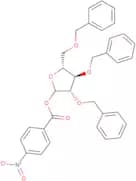
CAS:<p>2,3,5-Tri-O-benzyl-1-O-(4-nitrobenzoyl)-D-arabinofuranose is an organic compound that belongs to the group of furan derivatives. The configuration of this molecule was determined to be (2S,3S) by the use of stereoselective synthesis. It can be synthesized from a benzaldehyde and a ribofuranosyl chloride with a yield of about 95%. This compound has been shown to react with azides in a catalytic transfer reaction yielding yields of up to 100%.</p>Formula:C33H31NO8Purity:Min. 95%Color and Shape:PowderMolecular weight:569.6 g/molN-Acetyl-D-galactosamine-4-O-sulphate sodium
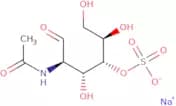
CAS:<p>N-Acetyl-D-galactosamine-4-O-sulphate sodium salt is a carbohydrate, modification. It is a synthetic, custom synthesis, high purity, monosaccharide, glycosylation and methylation product. The CAS number of this product is 660839-03-2.</p>Formula:C8H15NO9S•NaPurity:Min. 95%Color and Shape:PowderMolecular weight:324.26 g/molMethyl 3,4-di-O-acetyl-D-glucuronal
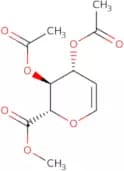
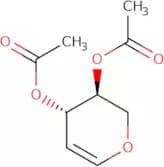
CAS:<p>Methyl 3,4-di-O-acetyl-D-glucuronal is a sugar that has been synthesized in the laboratory. It is a functional sugar that can be used as a building block for other sugars. The conformation of this molecule was determined by conformational studies. This molecule has two benzyl groups that are oriented in different ways, which simplifies the parameters for this compound. Methyl 3,4-di-O-acetyl-D-glucuronal is an anomeric sugar and can be found in the pyranose ring. Methyl 3,4-di-O-acetyl-D-glucuronal also has a conformational theory that was developed to optimize its orientations and predict its geometries.</p>Formula:C11H14O7Purity:Min. 95%Color and Shape:White PowderMolecular weight:258.22 g/molα-D-Glucose-1,6-diphosphate tetrapotassium hydrate
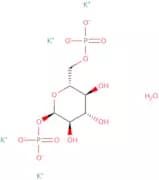
CAS:<p>Inhibitor of hexokinase; activator of phosphofructokinase-1</p>Formula:C6H14O12P2•4K•(H2O)nPurity:Min. 95%Color and Shape:PowderMolecular weight:496.51 g/mol3-O-Benzyl-6-O-tert-butyldimethylsilyl-1,2-O-isopropylidene-a-D-glucofuranose
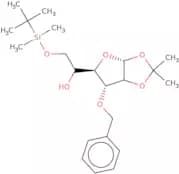
<p>3-O-Benzyl-6-O-tert-butyldimethylsilyl-1,2-O-isopropylidene-a-D-glucofuranose is a custom synthesis of a monosaccharide. It is synthesized by fluorinating the hydroxyl group on C3 and then methylating the benzyl group. The resulting product is a glycosylation that can be used as a carbohydrate for biosynthesis or as a research tool for studying saccharides.</p>Formula:C22H36O6SiPurity:Min. 95%Molecular weight:424.6 g/molN-Acetyl-2,3-dehydro-2-deoxyneuraminic acid sodium
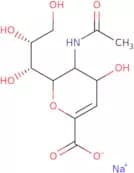
CAS:<p>Inhibitor of viral, bacterial and animal sialidase</p>Formula:C11H16NNaO8Purity:Min. 95%Color and Shape:White PowderMolecular weight:313.24 g/molRaloxifene 4'-D-glucuronide
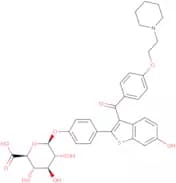
CAS:<p>Raloxifene 4'-D-glucuronide is a drug that is a prodrug of raloxifene, and it can be used to treat osteoporosis. The compound is metabolized by glucuronidation in the liver, and it has been found to have bioequivalence with the parent drug. Raloxifene 4'-D-glucuronide is marketed under the trade name Evista.</p>Formula:C34H35NO10SPurity:Min. 95%Color and Shape:PowderMolecular weight:649.71 g/molPhenylethyl-β-D-glucopyranoside
CAS:<p>Phenylethyl-beta-D-glucopyranoside is a phenolic compound that is found in plants such as Echinacea. Phenylethyl-beta-D-glucopyranoside has been shown to inhibit tumor cell proliferation by increasing the levels of enzyme catalysis and enzyme activity, and decreasing the levels of protocatechuic acid. This compound also inhibits fatty acid synthesis, which may be due to its ability to inhibit the production of 4-hydroxycinnamic acid via inhibition of the enzyme acyl coenzyme A:cholesterol acyltransferase. The cyanobacterial strain Synechococcus elongatus PCC 7942 was found to produce phenylethyl glucoside, an iridoid glucoside with high cytotoxic activity against human tumor cells.</p>Formula:C14H20O6Purity:Min. 95%Color and Shape:PowderMolecular weight:284.31 g/molPhenyl α-D-galactopyranoside
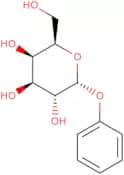
CAS:<p>Phenyl a-D-galactopyranoside is a pesticide that is used to control the growth of endophytic fungi. It has been shown to have an antibacterial effect against Gram-positive bacteria and can be used as a fungicide. Phenyl a-D-galactopyranoside can be synthesized from the corresponding synthons, which are 3-hydroxybenzoic acid and 4-methylphenol. This compound contains a carbonyl group and hydroxyl group that are reactive with enzymes such as esterases, glucuronidases, and glutathione reductase, which hydrolyzes it into its inactive form.</p>Formula:C12H16O6Purity:Min. 95%Color and Shape:PowderMolecular weight:256.25 g/molD-Glucosamine-2-N, 3-O, 6-O-trisulfate sodium salt
<p>D-Glucosamine-2-N, 3-O, 6-O-trisulfate sodium salt is a high purity oligosaccharide that can be custom synthesized. This product is composed of sugar, Click modification, fluorination, glycosylation, and methylation. It has CAS No. and Oligosaccharide. This product is used in the production of complex carbohydrates due to its saccharide composition.</p>Formula:C6H10NNa3O14S3Purity:Min. 95%Color and Shape:White/Off-White SolidMolecular weight:485.31 g/molD-Glucose-13C6
CAS:<p>D-Glucose-13C6 is a complex carbohydrate, which is composed of a glucose molecule with one carbon atom labeled as C6. It is used to study the structure of carbohydrates and their interactions with proteins. D-Glucose-13C6 also has applications in the study of diseases such as Alzheimer's disease, Parkinson's disease, diabetes mellitus type 2, and cancer. In addition, this molecule can be used to measure plasma glucose concentrations in humans or animals. D-Glucose-13C6 is not active against bacteria such as Pseudomonas aeruginosa or Escherichia coli. The synthesis of D-glucose-13C6 requires anhydrous dextrose and unlabeled glucose.</p>Formula:C6H12O6Purity:Min. 98 Area-%Color and Shape:White PowderMolecular weight:186.11 g/molAllyl β-D-galactopyranoside
CAS:<p>Allyl β-D-galactopyranoside is a complex carbohydrate that is modified by methylation, glycosylation, and fluorination. It can be synthesized using the Carbohydrate-Click reaction. Allyl β-D-galactopyranoside is used as a substrate for the synthesis of oligosaccharides, polysaccharides, and other carbohydrates. This product has high purity and is available in custom synthesis.</p>Formula:C9H16O6Purity:Min. 95%Color and Shape:White PowderMolecular weight:220.22 g/mol2,3,4-Tri-O-acetyl-1,6-anhydro-b-D-galactopyranose
CAS:<p>2,3,4-Tri-O-acetyl-1,6-anhydro-b-D-galactopyranose is a sugar that has been modified with fluorination. This modification is done in an effort to increase the solubility of this product. It is also used as the backbone for other sugars in order to create complex carbohydrates or polysaccharides. In addition, 2,3,4-Tri-O-acetyl-1,6-anhydro-b-D-galactopyranose can be methylated and glycosylated in order to modify its properties. This product is available for custom synthesis and has a purity level of 99%.</p>Formula:C12H16O8Purity:Min. 95%Color and Shape:PowderMolecular weight:288.25 g/molRepaglinide acyl-D-glucuronide
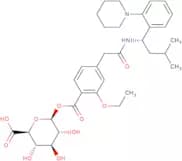
CAS:<p>Repaglinide is a drug that belongs to the class of drugs called meglitinides. It is used in the treatment of type 2 diabetes mellitus and has been shown to lower blood sugar levels. Repaglinide is metabolized to repaglinide acyl-D-glucuronide, its active form, by esterases in the liver. The majority of this metabolite is excreted in urine as an acyl glucuronide. A small amount of this metabolite is excreted into bile and undergoes enterohepatic circulation, resulting in reabsorption and conjugation with glucuronic acid. This process results in a decrease in the amount of repaglinide acyl-D-glucuronide that circulates through the body and prolongs its activity.</p>Formula:C33H44N2O10Purity:(%) Min. 97%Color and Shape:White PowderMolecular weight:628.71 g/molmyo-Inositol 1,3,4,5,6-pentakisphosphate decasodium salt
CAS:<p>Myo-inositol 1,3,4,5,6-pentakisphosphate decasodium salt is a complex carbohydrate that has been modified with fluorine. This modification has been shown to increase the solubility of myo-inositol 1,3,4,5,6-pentakisphosphate decasodium salt in organic solvents. Myo-inositol 1,3,4,5,6-pentakisphosphate decasodium salt is used in the synthesis of oligosaccharides and polysaccharides. It also serves as a substrate for methylation and glycosylation reactions. The synthesis of this compound can be achieved by a Click reaction.</p>Formula:C6H17O21P5·10NaPurity:Min. 95%Color and Shape:PowderMolecular weight:809.95 g/mol2,3,4,6-Tetra-O-acetyl-β-D-galactopyranosyl azide
CAS:<p>2,3,4,6-Tetra-O-acetyl-β-D-galactopyranosyl azide is a catalyst that has been used in the production of carbonate catalysts. It can also be used to reoxidize metallic catalysts.</p>Formula:C14H19N3O9Purity:Min. 95%Color and Shape:White PowderMolecular weight:373.32 g/mol3,4-Di-O-acetyl-L-arabinal
CAS:<p>3,4-Di-O-acetyl-L-arabinal is a synthetic compound that belongs to the class of monofluorides. It has been synthesized from l-arabinose by a stereoselective process, with triflic acid as the catalyst and propargylation as the key step. The synthetic pathway starts from an acid hydrolysis of L-arabinose to yield 3,4-di-O-acetyl-L-arabinonic acid. This acid is then converted to 3,4 diacetyl L arabinonic acid with acetic anhydride and acetic acid in the presence of triethylamine. The final product is then obtained by reacting this intermediate with 1 equivalent of sodium fluoride in tetrahydrofuran (THF) using catalytic reduction with sodium borohydride at 0 °C. The major advantage of this synthetic process is that it provides two stereoisomers: (</p>Formula:C9H12O5Purity:Min. 95%Color and Shape:Yellow Clear LiquidMolecular weight:200.19 g/molL-Xylonic acid-1,4-lactone
CAS:<p>L-Xylonic acid-1,4-lactone is an enzyme that functions as a glycolytic enzyme. It catalyzes the conversion of D-xylose to L-xylonic acid and L-xylonic acid-1,4-lactone. This enzyme is expressed in leukemia HL60 cells and is activated by acidic conditions. L-Xylonic acid-1,4-lactone has been shown to be catabolized by the enzyme xylanase. The kinetic properties of this reaction have been studied using mass spectrometric techniques and biochemical methods. The rate of the reaction was found to be dependent on the presence of divalent cations (Mg2+ or Ca2+) or monovalent ions (Na+ or K+). L-Xylonic acid 1,4 lactone also catabolizes glucose with a similar rate constant.</p>Formula:C5H8O5Purity:Min. 95 Area-%Color and Shape:White PowderMolecular weight:148.11 g/molMethyl β-D-maltopyranoside
CAS:<p>Methyl β-D-maltopyranoside is a disaccharide that is an aglycon of maltosides. It has been shown to bind to the active site of alpha-d-glucopyranosidases, which are enzymes that hydrolyze alpha-d-glucopyranosides. Methyl β-D-maltopyranoside has also been shown to interact with dihedral angles and hydroxyl groups in the enzyme binding region, which may be due to conformational changes in the enzyme's active site. The kinetic constants for methyl β-D-maltopyranoside have been calculated by using an algorithm.</p>Formula:C13H24O11Purity:(%) Min. 98%Color and Shape:PowderMolecular weight:356.32 g/mol3,5,6-Tri-O-benzyl-1,2-O-Isopropylidene-a-D-glucofuranose
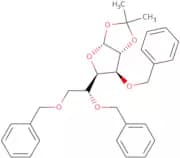
CAS:<p>3,5,6-Tri-O-benzyl-1,2-O-isopropylidene-a-D-glucofuranose is a synthetic monosaccharide that has been fluorinated at the C3 position. It is an oligosaccharide with a complex carbohydrate structure. This glycosylation product can be custom synthesized and has been modified by methylation. 3,5,6-Tri-O-benzyl-1,2-O-isopropylidene Glucuronic acid can be used in the synthesis of polysaccharides or as a sugar for click chemistry. The chemical formula is C13H28O4F3 and its molecular weight is 322.32 g/mol.</p>Formula:C30H34O6Purity:Min. 95%Color and Shape:PowderMolecular weight:490.59 g/molN-Acetyl-D-glucosamine
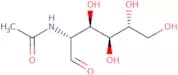
CAS:<p>N-acetyl D-glucosamine (GlcNAc) is an aldohexose (2-acetamido-2-deoxyglucose) in which the hydroxyl group at position 2 is replaced by NHAc (Collins, 2006). N-acetyl D-glucosamine forms the exoskeletons of molluscs and insects as the building block of the polysaccharide chitin (Rudrapatnam, 2003). N-acetyl D-glucosamine is a key component of N- and O-linked glycans, present in glycolipids and the glycosaminoglycan hyaluronic acid (Fallacara, 2018). A recent study has suggested that N-acetyl D-glucosamine may have therapeutic potential for COVID-19 as it affects the spike protein-ACE2 receptor interaction during the infection with SARS-CoV-2 virus (Baysal, 2021).</p>Formula:C8H15NO6Purity:Min. 98 Area-%Color and Shape:PowderMolecular weight:221.21 g/molN-Methyl-D-glucamine HCl
CAS:<p>N-Methyl-D-glucamine HCl is a salt of N-methylglucamine and hydrochloric acid. It is used as a buffer to maintain the pH of solutions at a desired level. N-Methyl-D-glucamine HCl has an inhibition constant (Ki) of 0.5 mM for glutamate, which can be used to measure the concentration of glutamate in tissue samples or reaction mixtures. This compound also inhibits locomotor activity, and its effect on blood pressure may be due to its ability to inhibit amines. The Ki for chloride is approximately 2 mM, and it can be used to measure the concentration of chloride in solution.</p>Formula:C7H17NO5·HClColor and Shape:PowderMolecular weight:231.67 g/mol2-Acetamido-2,6-dideoxy-D-galactose
CAS:<p>2-Acetamido-2,6-dideoxy-D-galactose (2ADG) is a structural analogue of the natural monosaccharide 2,6-dideoxy-D-galactose. It has been shown to have an antimicrobial effect against aerobacter aerogenes in vitro. 2ADG is metabolized by glycosidases and methyl glycosides to form 1,4-anhydro-2,3,4,6 tetraacetamido-2,4,6 dideoxy D galactose. This compound inhibits the growth of bacterial strains that are resistant to polymyxin b., such as Pseudomonas aeruginosa. The inhibition of these bacteria is due to the inhibition of the synthesis of their outer membrane lipopolysaccharides by 2ADG. The antibacterial activity is also attributed to its ability to inhibit the metabolism of glycan molecules in some bacteria</p>Formula:C8H15NO5Purity:Min. 95%Color and Shape:White PowderMolecular weight:205.21 g/mol2-Formylphenyl b-D-glucopyranoside
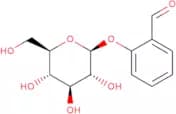
CAS:<p>2-Formylphenyl b-D-glucopyranoside is a phenolic compound that has been shown to have high resistance to transport. It has been shown to possess surface methodology and this property can be used for the delivery of compounds. 2-Formylphenyl b-D-glucopyranoside has also been shown to inhibit plant enzyme activities such as detoxification enzymes and carbohydrate chemistry, which are important in the uptake of natural compounds. In addition, it is able to bind with amines and hydroxyl groups on cells, which may be due to its receptor cell properties. 2-Formylphenyl b-D-glucopyranoside can be synthesized by reacting trifluoroacetic acid with an amine and a hydroxyl group in the presence of glycol ethers or natural compounds.</p>Formula:C13H16O7Purity:Min. 95%Color and Shape:PowderMolecular weight:284.26 g/molMethyl 2,3,5-tri-O-(2,4-dichlorobenzyl)-b-D-ribofuranoside
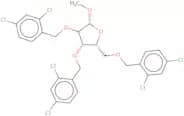
CAS:<p>Methyl 2,3,5-tri-O-(2,4-dichlorobenzyl)-b-D-ribofuranoside is a glycosylation agent that is used as a monosaccharide or oligosaccharide modification. It can be utilized in the synthesis of saccharides and polysaccharides. Methyl 2,3,5-tri-O-(2,4-dichlorobenzyl)-b-D-ribofuranoside is a custom synthesis product with high purity and CAS No. 163759-40-8.</p>Formula:C27H24Cl6O5Purity:Min. 95%Molecular weight:641.21 g/molD-Xylose-5-phosphate disodium
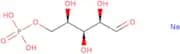
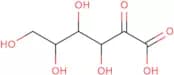
CAS:<p>D-Xylose-5-phosphate disodium salt is a Custom synthesis that has been fluorinated, methylated, and modified with a click reaction. D-Xylose-5-phosphate disodium salt is also an oligosaccharide and polysaccharide. The CAS No. for this compound is 1083083-57-1.</p>Formula:C5H11O8P•Na2Purity:(%) Min. 80%Color and Shape:White/Off-White SolidMolecular weight:276.09 g/mol2-Keto-L-galactonic acid
CAS:<p>2-Keto-L-galactonic acid is a chemical compound that belongs to the group of fatty acids. It is produced by the degradation of polyunsaturated fatty acids and has been shown to be a potential control agent for hepatic steatosis. 2-Keto-L-galactonic acid also inhibits the synthesis of dinucleotide phosphate in rat liver cells, leading to an accumulation of intracellular potassium ion. This compound inhibits the uptake of glucose by activating ATPase, which leads to an increase in intracellular pH. The uptake of 2-keto-L-galactonic acid into cells has been shown using cell culture experiments with wild type and mutant strains.</p>Formula:C6H10O7Purity:Min. 95%Molecular weight:194.14 g/mol3-Deoxy-3-fluoro-D-allose
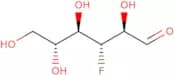
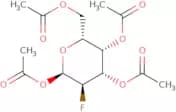
CAS:<p>3-Deoxy-3-fluoro-D-allose is a chemical compound with the molecular formula CHNO. It has been shown to have potential as a contrast agent for magnetic resonance imaging (MRI) and positron emission tomography (PET). The conformation of 3-Deoxy-3-fluoro-D-allose is similar to that of glucose, but it does not inhibit the uptake of glucose by erythrocytes or the transport of glucose across cell membranes. 3DFA has been shown to be taken up by cells in the brain, kidney, and liver. The uptake and distribution of 3DFA in these tissues was dependent on serum protein concentrations.</p>Formula:C6H11FO5Color and Shape:PowderMolecular weight:182.15 g/mol1,3,4,6-Tetra-O-acetyl-2-deoxy-2-fluoro-D-galactopyranose
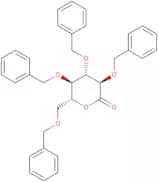
CAS:<p>1,3,4,6-Tetra-O-acetyl-2-deoxy-2-fluoro-D-galactopyranose is a fluorinated sugar that is used in the synthesis of glycosides. It is a synthetic compound that is prepared by reacting 1,3,4,6-tetraacetyl galactose with potassium bifluoride and diethyl oxalate in presence of anhydrous sodium sulfate. The product obtained has the following structural formula: The chemical name for this compound is 1,3,4,6-Tetraacetyl -2-[(1R)-1-(ethoxycarbonyl)propyl]-2-(fluorooxymethyl) -D-galactopyranose. The CAS number for this compound is 83697–45–4.</p>Formula:C14H19FO9Purity:(As Sum Of Anomers) Min. 98 Area-%Color and Shape:White PowderMolecular weight:350.3 g/mol2,3,4,6-Tetra-O-benzyl-D-glucono-1,5-lactone
CAS:<p>Intermediate in the synthesis of tofogliflozin</p>Formula:C34H34O6Purity:Min. 95%Color and Shape:PowderMolecular weight:538.63 g/mol2,3,5-Tri-O-benzyl-L-xylofuranose
CAS:<p>2,3,5-Tri-O-benzyl-L-xylofuranose is a sugar molecule that has been modified to inhibit glycosidases. 2,3,5-Tri-O-benzyl-L-xylofuranose is an iminosugar that inhibits the enzyme β-glucosidase and α-galactosidase. The compound is not metabolized and it binds to the enzyme's active site. 2,3,5-Tri-O-benzyl L xylofuranose has been shown to be effective at inhibiting all of the glycosidases tested in this study with inhibition potencies ranging from 0.1 mM to 10 mM. This compound also inhibits epoxides and cyclic enzymes such as azido reductase and dihydropyrimidine dehydrogenase.</p>Formula:C26H28O5Purity:Min. 95%Color and Shape:PowderMolecular weight:420.5 g/molD-Glucose - anhydrous
CAS:<p>Glucose (Glu) is the most common carbohydrate on the planet, found in all living organisms and is the major source of metabolic energy for plants and animals. Glucose is a building block in numerous oligosaccharides and polysaccharides. It is present in blood and milk, in gangliosides and in N- and O-linked glycans (Collins, 2006). Glucose is wrongly called a simple sugar because in solution it exists in five forms: two six membered rings (α/β), two five membered rings (α/β) and a straight chain form, a system known as mutarotation (Robyt, 2012). The proportions of different glucose forms are dictated by temperature and pH. D-Glucose is optically active (dextrorotary) and L-Glucose is its enantiomer (Levorotary). Its hydroxyl groups are all equatorial, providing maximum stability, according to Hudsons rules (Hudson, 1948).</p>Formula:C6H12O6Purity:Min. 96 Area-%Color and Shape:White PowderMolecular weight:180.16 g/molD-Galacturonic acid monohydrate
CAS:<p>D-Galacturonic acid (GalA) is a hexuronic acid with the CH2OH at C5 of galactose replaced by a carboxyl group (Collins, 2006). D-galacturonic acid is abundant in pectic polysaccharides which are characterized by a high α-1,4 linked galacturonic acid content and include pectic acid (polygalacturonic acid), rhamnogalacturonan I (Oomen, 2002), rhamnogalacturonan (RG) II (Vidal, 2000), xylogalacturonan, and homogalacturonan. These polymers play roles in strengthening cell walls, cell adhesion and are established as part of signaling cascades that detect cell wall degradation upon pathogen attack.</p>Formula:C6H10O7·H2OPurity:(Titration) Min. 97%Color and Shape:White Off-White PowderMolecular weight:212.15 g/molDL-myo-Inositol-1-phosphate
CAS:<p>Inositol-1-phosphate is a precursor of inositol and is involved in the regulation of cell signalling. It has been shown to inhibit neuronal death by decreasing intracellular calcium levels. Inositol-1-phosphate also inhibits epidermal growth factor induced cytosolic calcium increase in hybridoma cells. Inositol-1-phosphate has been shown to be neuroprotective, which may be due to its ability to stimulate p2y receptors and inhibit neurokinin-1 receptor activities.</p>Formula:C6H13O9PPurity:Min. 95%Color and Shape:PowderMolecular weight:260.14 g/molPhenyl α-D-thiomannopyranoside
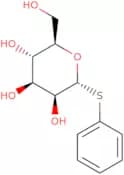
CAS:<p>Phenyl α-D-thiomannopyranoside is a saccharide that can be modified to produce various derivatives. Phenyl α-D-thiomannopyranoside is a high purity, custom synthesis carbohydrate. This product is synthesized by the methylation and glycosylation of phenyl α-D-mannopyranoside. The carbohydrate has been fluorinated for the production of fluorinated derivatives. Phenyl α-D-thiomannopyranoside is an oligosaccharide and sugar that belongs to the class of carbohydrates. It can be used in protein modification and complex carbohydrate synthesis.</p>Formula:C12H16O5SPurity:Min. 95%Color and Shape:White PowderMolecular weight:272.32 g/molb-D-Galactoheptose
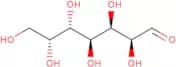
CAS:<p>B-D-Galactoheptose is a short-chain carbohydrate that is found in Citrus. It can be used as a food additive, but it also serves as an intermediate in the synthesis of other sugars. The stereospecificity of this sugar is determined by the orientation of its hydroxyl group on carbon atom 2. This sugar has been shown to inhibit the growth of food-borne pathogens, such as Salmonella and Staphylococcus, and has been shown to have anti-inflammatory properties. The biosynthesis of b-D-galactoheptose begins with the conversion of glucose into erythrose 4 phosphate. This process requires ATP and pyruvate kinase and proceeds through two reactions: erythrose 4 phosphate dehydrogenase, which converts erythrose 4 phosphate into erythronate 4 phosphate; and aldolase, which converts erythronate 4 phosphate into b-D</p>Formula:C7H14O7Purity:Min. 95%Color and Shape:PowderMolecular weight:210.18 g/molMethyl b-D-thiogalactopyranoside
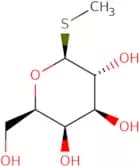
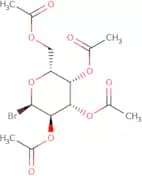
CAS:<p>Methyl b-D-thiogalactopyranoside (MTGP) is a cell lysis agent that can be used for diagnostic purposes to measure enzyme activities in cells. It is also used to determine the kinetic of an enzyme reaction, as well as its acid formation. MTGP has been shown to inhibit sugar transport and metabolism by binding to the sugar molecule and preventing it from passing through cellular membranes. This inhibition prevents the accumulation of proton gradients across the membrane, which disrupts ATP production and leads to cell death. MTGP is also an inhibitor of glucose-6-phosphate dehydrogenase (G6PDH), which converts glucose into sorbitol. Sorbitol accumulates intracellularly and leads to cell death by osmotic lysis.</p>Formula:C7H14O5SPurity:Min. 98 Area-%Color and Shape:PowderMolecular weight:210.25 g/mol1-Bromo-2,3,4,6-tetra-O-acetyl-α-D-galactopyranoside
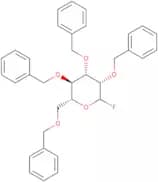
CAS:<p>Donor for Koenigs-Knorr type galactosylation and other anomeric substitutions</p>Formula:C14H19BrO9Purity:Min. 95%Color and Shape:White PowderMolecular weight:411.2 g/mol2,3,4,6-Tetra-O-benzyl-D-mannopyranosyl fluoride
CAS:<p>2,3,4,6-Tetra-O-benzyl-D-mannopyranosyl fluoride is a glycosylamine that has been synthesized from l-threonine. The chemical structure of this compound can be classified as a pyranose sugar with an O-methylated benzyl group at the C2 position. This sugar is synthesized by reductive cleavage of the methyl ether and subsequent reaction with sodium borohydride. The conformational analysis of the molecule was performed using molecular mechanics calculations and quantum mechanical simulations. In addition, electron paramagnetic resonance (EPR) experiments were conducted to determine the chemical shift in the 1H NMR spectrum and to identify the acceptor or donor in the molecule. Trichloroacetimidates are used as monomers for this type of synthesis because they provide good yields and can be easily prepared by reacting chloroacetic acid with chloral hydrate.</p>Formula:C34H35FO5Purity:Min. 95%Color and Shape:Yellow PowderMolecular weight:542.64 g/molAtractyloside dipotassium salt
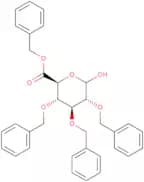
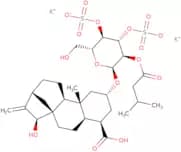
CAS:<p>Atractyloside dipotassium salt is a chemical compound that acts as a potent mitochondrial toxin. It is primarily derived from plant sources, notably from the Atractylis gummifera species. This compound functions by specifically inhibiting the adenine nucleotide translocase (ANT) located in the inner mitochondrial membrane, thereby obstructing the exchange of ADP and ATP across this membrane. This blockade disrupts ATP synthesis, leading to alterations in cellular bioenergetics and apoptotic pathways.</p>Formula:C30H44K2O16S2Purity:Min. 95 Area-%Molecular weight:802.99 g/mol2,3,4-Tri-O-benzyl-D-glucuronide benzyl ester
CAS:<p>2,3,4-Tri-O-benzyl-D-glucuronide benzyl ester is a synthetic glycosylation product. It has been custom synthesized and modified with fluorination and methylation. This compound is an oligosaccharide that can be used as a pharmaceutical intermediate or in the synthesis of complex carbohydrates. 2,3,4-Tri-O-benzyl-D-glucuronide benzyl ester has been shown to have high purity and can be used for research purposes.</p>Formula:C34H34O7Purity:Min. 95%Color and Shape:PowderMolecular weight:554.63 g/mol2,3,4,6-Tetra-O-benzoyl-1-deoxy-D-arabino-hex-1-enopyranose
CAS:<p>2,3,4,6-Tetra-O-benzoyl-1-deoxy-D-arabino-hex-1-enopyranose is a glycosyl compound that has been synthesized by the elimination of trifluoride and alcohols. It is used as a starting material for the synthesis of other compounds. This compound can react with halides to form etherate or ester derivatives. 2,3,4,6-Tetra-O-benzoyl-1-deoxy-D-arabino hexane can also be reacted with boron trifluoride or boron trifluoride etherate to form eliminations.</p>Formula:C34H26O9Purity:Min. 95%Molecular weight:578.57 g/molFerric carboxymaltose
CAS:<p>Ferric carboxymaltose is a form of iron that is administered intravenously and is used to treat iron deficiency. Ferric carboxymaltose has been shown to be effective in treating iron deficiency anemia as well as other conditions, such as inflammation of the bowel or hematologic response. Ferric carboxymaltose binds to free iron in the blood and prevents it from oxidizing. Ferric carboxymaltose also exhibits an anti-inflammatory effect by inhibiting the production of pro-inflammatory cytokines and chemokines. The polymerase chain reaction (PCR) technique has been used to measure ferritin levels in the blood, which are then used to determine whether treatment with ferric carboxymaltose is necessary.</p>Color and Shape:PowderColchicoside
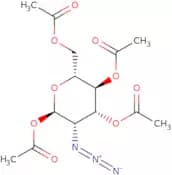
CAS:<p>Colchicoside is a natural compound that belongs to the chemical family of phenylpropanoids. It is used in the treatment of gout and pseudogout, and has been shown to be effective against demecolcine-induced hemolytic activity. Colchicoside has also shown to be an analog for other compounds with toxicological studies, such as hydrochloric acid and potassium dichromate. The toxicity studies performed on colchicoside have shown that it can cause damage to cells in culture by inhibiting DNA repair mechanisms.</p>Formula:C27H33NO11Purity:Min. 95%Color and Shape:PowderMolecular weight:547.55 g/mol1,3,4,6-Tetra-O-acetyl-2-azido-2-deoxy-α-D-mannopyranose
CAS:<p>1,3,4,6-Tetra-O-acetyl-2-azido-2-deoxy-a-D-mannopyranose (1,3,4,6-TA) is a stable analog of the glycosidic sugar 2,6-dideoxymannose. This compound has been shown to be a potent inhibitor of the synthesis of Neisseria meningitidis capsular polysaccharides and an effective vaccine adjuvant against Mycobacterium tuberculosis. 1,3,4,6-TA is also a competitive inhibitor for the enzyme mycothiol and other thioglycosidic enzymes that are involved in the biosynthesis of mycolic acids. 1,3,4,6-TA was synthesized from 2-(N'-bromoacetamido)-2'-deoxymannose by reaction with sodium azide in acetone. The structure is bicyclic with two</p>Formula:C14H19N3O9Purity:Min. 95%Color and Shape:White PowderMolecular weight:373.32 g/mol5-Keto-D-gluconic acid hemicalcium salt
CAS:<p>5-Keto-D-gluconic acid hemicalcium salt (5KDG) is an intermediate in the pentose phosphate pathway. It is a molecule that contains five carbon atoms, one double bond, and two hydroxyl groups. 5KDG has been found to be an effective inhibitor of gluconobacter, a type of bacteria which produces D-gluconic acid. The enzyme 5KDG dehydrogenase catalyzes the conversion of 5KDG into D-gluconate. 5KDG has been shown to have antiepileptic effects and can be used for the treatment of epilepsy.</p>Formula:C6H9O7CaPurity:Min. 95%Color and Shape:PowderMolecular weight:213.17 g/molAtractyloside dipotassium salt
CAS:<p>Atractyloside is a natural compound that can be extracted from plants. It has been shown to have pluripotent activity, which means it can differentiate into different types of cells. Atractyloside also exhibits antioxidant and anti-apoptotic properties, which are believed to be due to its ability to increase mitochondrial membrane potential and reduce reactive oxygen species production. Atractyloside has also been shown to protect against neuronal death in vitro and in vivo by inhibiting the activation of caspase-dependent cell death pathways. Atractyloside has been shown to have a cardioprotective effect in animal models of myocardial infarcts, although it is unclear if this effect is due to the drug or due to the atractyloside contained in traditional Chinese medicine.</p>Formula:C30H44K2O16S2Purity:Min. 90 Area-%Color and Shape:White/Off-White SolidMolecular weight:802.99 g/mol2-Deoxy-D-ribose
CAS:<p>Used in synthetic organic chemistry and natural product synthesis. Induces apoptosis by inhibiting the synthesis and increasing the efflux of glutathione. It is used for synthesis of optically active dipyrrolyl alkanols from pyrroles on the surface of montmorillonite KSF clay.</p>Formula:C5H10O4Purity:Min. 98 Area-%Color and Shape:White PowderMolecular weight:134.13 g/mol(3R, 5R) -1-Benzyl-3, 4, 5- piperidinetriol
<p>(3R, 5R) -1-Benzyl-3, 4, 5- piperidinetriol is a modification of the parent compound. The modification of the parent compound is accomplished by the introduction of a benzyl group at the 3' and 5' positions of the molecule. This modification can be used to synthesize oligosaccharides, which are complex carbohydrates. (3R, 5R) -1-Benzyl-3, 4, 5- piperidinetriol is synthesized from high purity (99%) monosaccharide methylated with formaldehyde in aqueous solution with hydrochloric acid and sodium hydroxide as catalysts. It has CAS number 8056-97-2 and molecular weight of 231.24 grams per mole.</p>Purity:Min. 95%Methyl 2-O-acetyl-4,6-O-benzylidene-a-D-glucopyranoside
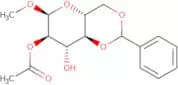
CAS:<p>Methyl 2-O-acetyl-4,6-O-benzylidene-a-D-glucopyranoside is a sugar with the molecular formula C9H10O5. It is an Oligosaccharide, Synthetic, Glycosylation, Fluorination, Custom synthesis, Methylation, Monosaccharide, Polysaccharide and saccharide. Methyl 2-O-acetyl-4,6-O-benzylidene-a-D-glucopyranoside has a Click modification and complex carbohydrate. This product has high purity and can be modified to meet your needs.</p>Formula:C16H20O7Purity:Min. 95%Molecular weight:324.33 g/mol