Monosaccharides
Monosaccharides are the simplest form of carbohydrates and serve as fundamental building blocks for more complex sugars and polysaccharides. These single sugar molecules play critical roles in energy metabolism, cellular communication, and structural components of cells. In this section, you will find a wide variety of monosaccharides essential for research in biochemistry, molecular biology, and glycoscience. These compounds are crucial for studying metabolic pathways, glycosylation processes, and developing therapeutic agents. At CymitQuimica, we offer high-quality monosaccharides to support your research needs, ensuring precision and reliability in your scientific investigations.
Subcategories of "Monosaccharides"
- Alloses(11 products)
- Arabinoses(21 products)
- Erythroses(11 products)
- Fructoses(9 products)
- Fucoses(36 products)
- Galactosamine(41 products)
- Galactose(261 products)
- Glucoses(365 products)
- Glucuronic Acids(51 products)
- Glyco-substrates for Enzyme(77 products)
- Guloses(6 products)
- Idoses(4 products)
- Inositols(15 products)
- Lyxoses(4 products)
- Mannoses(65 products)
- O-Glycans(48 products)
- Psicoses(3 products)
- Rhamnoses(10 products)
- Riboses(61 products)
- Sialic Acids(100 products)
- Sorboses(4 products)
- Sugars(173 products)
- Tagatoses(4 products)
- Taloses(8 products)
- Xyloses(20 products)
Show 17 more subcategories
Found 6088 products of "Monosaccharides"
Sort by
Purity (%)
0
100
|
0
|
50
|
90
|
95
|
100
3-Acetamido-1-benzylazetidine-2R,4S-diyl bis(methylene) diacetate
CAS:<p>This product is a custom synthesis. The chemical formula for this product is C8H11N2O4. This product has the molecular weight of 272.24 g/mol and the molecular formula is C8H11N2O4. This product is synthesized from 3-acetamido-1-benzylazetidine-2R,4S-diyl bis(methylene) diacetate monohydrate. It can be fluorinated, glycosylated, methylated, modified and oligosaccharide or monosaccharide saccharides. This product can be used in various fields such as pharmaceuticals, agrochemicals, food additives, cosmetics and so on.</p>Formula:C18H24N2O5Purity:Min. 95%Molecular weight:348.39 g/mol6-Azido-6-deoxy-D-fructose
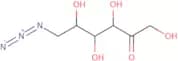
CAS:<p>6-Azido-6-deoxy-D-fructose is a piperidine that condenses with glyceraldehyde in the presence of aldolase and produces D-glyceraldehyde. This reaction is stereospecifically catalyzed by aldolase, which converts the product to D-glyceraldehyde 3-phosphate. 6Azido-6deoxy-D-fructose has been shown to exhibit polyhydroxylated properties.</p>Formula:C6H11N3O5Purity:Min. 95%Color and Shape:Clear LiquidMolecular weight:205.17 g/mol4,6-Di-O-methyl-D-glucose
CAS:<p>A partially methylated glucose with the anomeric position free</p>Formula:C8H16O6Purity:Min. 95%Color and Shape:PowderMolecular weight:208.21 g/mol1,2-O-Isopropylidene-3-deoxy-3-fluoro-a-D-ribofuranose
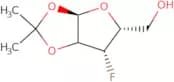
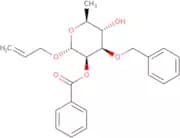
CAS:<p>1,2-O-Isopropylidene-3-deoxy-3-fluoro-a-D-ribofuranose is a custom synthesis. It is a complex carbohydrate that has been modified by methylation and glycosylation. This molecule has been fluorinated to produce a high purity product with the desired properties. The 1,2-O-isopropylidene group provides for increased stability and solubility of the product.</p>Formula:C8H13FO4Purity:Min. 95%Molecular weight:192.18 g/molAllyl 2-O-benzoyl-3-O-benzyl-a-L-rhamnopyranoside
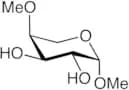
CAS:<p>Allyl 2-O-benzoyl-3-O-benzyl-a-L-rhamnopyranoside is a complex carbohydrate that can be used in the synthesis of saccharides and polysaccharides. It has been modified by methylation, glycosylation, and carbamylation. The CAS number for this product is 940274-21-5.</p>Formula:C23H26O6Purity:Min. 95%Molecular weight:398.46 g/molMethyl 4-O-methyl-β-L-arabinopyranoside
CAS:<p>Methyl 4-O-methyl-β-L-arabinopyranoside is an L-arabinose analogue</p>Formula:C7H14O5Purity:Min. 95%Color and Shape:PowderMolecular weight:178.18 g/mol2-Amino-2-deoxy-D-altrose
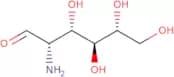
CAS:<p>2-Amino-2-deoxy-D-altrose (2AD) is a molecule with the chemical formula C6H14N2O4. It belongs to the class of compounds known as uronic acids. 2AD is an acetylated molecule that has been structurally studied by X-ray crystallography and NMR spectroscopy. The molecule contains a ring of six carbon atoms, two of which are epoxide groups. The nature of this compound is glycosidic, with focus on hexamethylphosphoramide and diamino oligosaccharides. 2AD has been shown to have anti-inflammatory activities in animals, but its exact mechanism of action remains unknown. This compound may act through a ring-opening reaction or by inhibiting prostaglandin synthesis.</p>Formula:C6H13NO5Purity:Min. 95%Molecular weight:179.17 g/mol5-Thio-D-glucose-6-phosphate diammonium salt
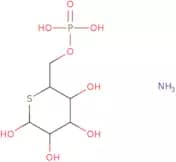
CAS:<p>Glucose 6-phosphatase substrate</p>Formula:C6H11O8PS·N2H8Purity:Min. 95%Color and Shape:PowderMolecular weight:310.26 g/molEmodin 1-glucoside
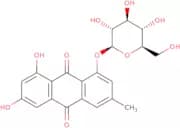
CAS:<p>Emodin 1-glucoside is a natural anthraquinone glycoside that is produced by plants and has been shown to have cytotoxic effects against human cells. Emodin 1-glucoside inhibits the function of enzymes, such as glycosidases, phosphatases, and proteases. This compound is activated by calcium ions and has been shown to disrupt mitochondrial membrane potential. Emodin 1-glucoside also inhibits sugar residues and has shown significant cytotoxicity against cultured human cells at higher concentrations. It may be used as a medicine for the treatment of inflammation or cancer.</p>Formula:C21H20O10Purity:Min. 95%Color and Shape:PowderMolecular weight:432.38 g/mol1-Octylamino-1-deoxy-D-glucitol
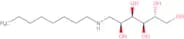
CAS:<p>1-Octylamino-1-deoxy-D-glucitol is a natural product that is extracted from the bark of the tree Streptomyces griseorubens. It has been shown to have a diastereomeric ratio of 97:3 and an optical purity of 98%. The thermodynamic properties of this compound are determined by the reaction time, which can vary from 1 to 24 hours. The enantiomers are separated by chromatography or crystallization, and the solubility data is determined at 25°C.</p>Formula:C14H31NO5Purity:Min. 95%Color and Shape:PowderMolecular weight:293.4 g/molD-Tagatose
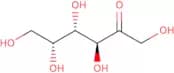
CAS:<p>Low-calorie sweetener; additive in detergents, cosmetics, and pharmaceuticals</p>Formula:C6H12O6Purity:Min. 99 Area-%Color and Shape:PowderMolecular weight:180.16 g/mol1,2,3,4-Tetra-O-acetyl-L-fucopyranose
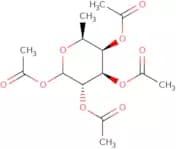
CAS:<p>Intermediate for the anomeric modification of Fuc, including fucosylation</p>Formula:C14H20O9Purity:Min. 97 Area-%Color and Shape:White PowderMolecular weight:332.3 g/molD-Lyxose
CAS:<p>Starting material for chiral-pool based synthesis of modified nucleosides</p>Formula:C5H10O5Purity:Min. 99 Area-%Color and Shape:White PowderMolecular weight:150.13 g/mol1,3,4,6-Tetra-O-acetyl-a-D-glucopyranose
CAS:<p>1,3,4,6-Tetra-O-acetyl-a-D-glucopyranose is a synthon that is used as a synthetic intermediate for the synthesis of other compounds. It is also a reactive compound that can be used to synthesize carboxylic acids and hydroxy ketones by reaction with water or alcohols. 1,3,4,6-Tetra-O-acetyl-a-D-glucopyranose can also be converted into esters by reaction with alcohols.</p>Formula:C14H20O10Purity:Min. 93 Area-%Color and Shape:White Off-White PowderMolecular weight:348.3 g/mol4-Acetamidophenyl b-D-glucuronide sodium salt
CAS:<p>4-Acetamidophenyl b-D-glucuronide sodium salt is a pharmaceutical drug that is a metabolite of acetaminophen. It can be detected in the urine by biochips, which are microarrays that contain immobilized binding sites for specific analytes. The analysis of 4-acetamidophenyl b-D-glucuronide sodium salt in urine is used to screen for the use of acetaminophen and to identify cytochrome P450 2C19 (CYP2C19) activity. This drug can also be detected by spectrometric methods using biochemical assays on plates or hepatocytes and mass spectrometric detection methods using liquid chromatography/mass spectrometry (LC/MS). Acetaminophen has been shown to have toxic effects on the liver, kidneys, and lungs in humans, as well as on diode photoluminescence.</p>Formula:C14H16NNaO8Purity:Min. 95%Color and Shape:PowderMolecular weight:349.27 g/molPropyl b-D-glucuronide
CAS:<p>Propyl b-D-glucuronide is a synthetic compound that belongs to the family of carbohydrates. It has a fluorinated hydroxyl group at the C3 position and an esterified carboxylic acid at the C1 position. This compound can be used as a building block for oligosaccharides and polysaccharides, which are complex carbohydrates. Propyl b-D-glucuronide is soluble in water and has a molecular weight of 176.</p>Formula:C9H16O7Purity:Min. 95%Color and Shape:Tan To Brown SolidMolecular weight:236.22 g/mol1,3,5-Tri-O-benzoyl-2-deoxy-2-fluoro-a-D-arabinofuranose
CAS:<p>Resource for the synthesis of Clofarabine and other bioactive arabinosides</p>Formula:C26H21FO7Purity:Min. 98 Area-%Color and Shape:White Off-White PowderMolecular weight:464.44 g/molL-Rhamnose diethyl mercaptal
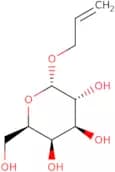
CAS:<p>L-Rhamnose diethyl mercaptal is an antiperspirant and deodorant that is used in combination with other ingredients to reduce or eliminate body odor. It is a supplement, often found in combinations with other compounds such as neodymium and radium. This compound works by preventing the formation of sweat from the apocrine glands, which reduces underarm wetness and body odor. L-Rhamnose diethyl mercaptal also has antimicrobial properties that help prevent bacterial growth on the skin surface.</p>Formula:C10H22O4S2Purity:Min. 95%Color and Shape:PowderMolecular weight:270.41 g/molAllyl α-D-galactopyranoside
CAS:<p>Allyl α-D-galactopyranoside is a colorimetric reagent that reacts with the polysaccharides to form a colored product. The reaction is based on the transfer of an allyl group from the reagent to the polysaccharide. This reaction can be performed using atomic force microscopy and microscopy techniques, as well as using light and UV-visible spectroscopy. The reaction can also be used to measure glycopolymer concentrations. A titration procedure has been developed for this purpose, in which an excess of allyl α-D-galactopyranoside is added to a solution containing galactose and ammonium sulfate. Allyl α-D-galactopyranoside reacts with galactose to produce an insoluble precipitate that can be measured by weighing or using optical density measurements at a certain wavelength.</p>Formula:C9H16O6Purity:Min. 97 Area-%Color and Shape:White Off-White PowderMolecular weight:220.22 g/molL-Galactose
CAS:<p>L-Galactose is a glycol ether that has been shown to have antibacterial efficacy against Gram-positive bacteria. It acts by inhibiting the synthesis of p-hydroxybenzoic acid, which is required for the synthesis of bacterial cell walls and their components. L-Galactose also has an inhibitory effect on the growth of Gram-negative bacteria by preventing methyl glycoside formation. L-Galactose has been used in polymerase chain reaction assays as a competitive inhibitor in analytical methods. It can be used at concentrations up to 5% and does not affect x-ray diffraction data or pluripotent cells.<br>L-galactose can be used as a preservative in cosmetics such as lotions, creams, and ointments due to its mildness and lack of toxicity. The use of L-galactose in these products may prevent spoilage due to microbial contamination.</p>Formula:C6H12O6Purity:Min. 99 Area-%Color and Shape:White PowderMolecular weight:180.16 g/molMethyl 4,6-O-benzylidene-a-D-mannopyranoside
CAS:<p>Methyl 4,6-O-benzylidene-a-D-mannopyranoside is a hexadecanoic acid that is mediated by the target cell. It has been shown to inhibit the growth of bacteria and cancer cells in vitro. Methyl 4,6-O-benzylidene-a-D-mannopyranoside also possesses an antibacterial activity with a low mammalian toxicity. This compound is hydrolyzed by esterases or glucuronidases, oxidized by cytochrome P450 enzymes, reduced by glutathione reductase, or conjugated with glucuronic acid. The residue of this compound has been shown to be carcinogenic in vivo and in vitro. Anticancer activity of this compound may be due to its ability to disrupt DNA synthesis and induce apoptosis of cancer cells.</p>Formula:C14H18O6Purity:Min. 95%Color and Shape:PowderMolecular weight:282.29 g/mol4-Deoxy-4-fluoro-D-glucose
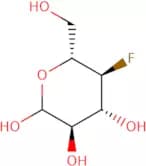
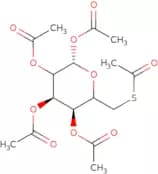
CAS:<p>4-Deoxy-4-fluoro-D-glucose is a biochemical compound that is used to bind to the carbon source in target tissues. It has a fluorine atom and two hydroxy groups, which are responsible for its biological properties. 4-Deoxy-4-fluoro-D-glucose binds to the 6 phosphate in bacterial enzymes and inhibits their activity, leading to cell death. It also binds to the hydroxyl group of proteins and alters their function. 4-Deoxy-4-fluoro-D-glucose is an inhibitor of bacterial enzymes, but has no effect on eukaryotic cells due to its inability to bind with these types of enzymes.</p>Formula:C6H11FO5Purity:Min. 95%Color and Shape:PowderMolecular weight:182.15 g/mol1,2,3,4-Tetra-O-acetyl-6-S-acetyl-6-deoxy-6-thio-b-D-glucopyranose
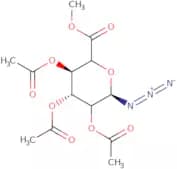
<p>1,2,3,4-Tetra-O-acetyl-6-S-acetyl-6-deoxy-6-thio-b-D-glucopyranose is a synthetic compound that is used as a building block for the synthesis of other compounds. It is an acetylated oligosaccharide that can be modified with fluorine atoms to form 1,2,3,4-tetra-[F]fluoro-[F]deoxy-[F]thio-[F]hexose. This product has high purity and can be used in glycosylation reactions.</p>Formula:C16H22O10SPurity:Min. 95%Molecular weight:406.41 g/molMethyl 2,3,4-tri-O-acetyl-b-D-galactopyranuronosyl azide
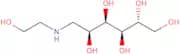
<p>This is a custom synthesis of a carbohydrate. It is a methylated, glycosylated, fluorinated, complex carbohydrate that can be synthesized to any desired degree of substitution. This product has been designed for use as a fluorescent tag or label in biochemistry and cell biology research. It is modified at the anomeric position with an acetyl group and an azide group. The acetyl group confers solubility in water, while the azide group confers fluorescence. The modifications also allow for click chemistry reactions, which are used in protein labeling and activation studies.</p>Formula:C13H17N3O9Purity:Min. 95%Color and Shape:PowderMolecular weight:359.29 g/mol1-Deoxy-1-(hydroxyethylamino)-D-glucitol
CAS:<p>1-Deoxy-1-(hydroxyethylamino)-D-glucitol (DEG) is a sugar alcohol that has been used as a transport inhibitor for the efflux of galactitol. It competitively inhibits the uptake of galactitol in the cell, resulting in a decrease in intracellular levels of this sugar. The uptake of other sugars is not affected by DEG, which makes it an effective tool for studying the transport mechanisms for these sugars. DEG is also chiral and has been used to study the uptake of chiral molecules. This research was done by using Drosophila melanogaster as an animal model, showing that DEG can be used to investigate how cells take up different molecules. These studies have led to insights into how cells metabolize different sugars and fats.</p>Formula:C8H19NO6Purity:Min. 95%Color and Shape:PowderMolecular weight:225.24 g/molL-Xylose
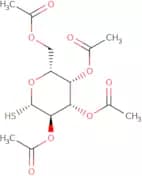
CAS:<p>Chiral-pool resource for organic synthesis</p>Formula:C5H10O5Purity:Min. 99 Area-%Color and Shape:White PowderMolecular weight:150.13 g/mol2,3,4,6-Tetra-O-acetyl-b-D-thiogalactopyranose
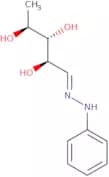
CAS:<p>2,3,4,6-Tetra-O-acetyl-b-D-thiogalactopyranose is a synthetic sugar that is prepared by the fluorination of D-galactopyranose and subsequent acetylation. This compound can be used for glycosylation reactions and as a substrate for click chemistry. It is an oligosaccharide with four monosaccharides in its backbone. The CAS number of 2,3,4,6-Tetra-O-acetyl-b-D-thiogalactopyranose is 50615-66-2.</p>Formula:C14H20O9SPurity:Min. 95%Color and Shape:PowderMolecular weight:364.37 g/mol5-Deoxy-L-ribose phenylhydrazone
CAS:<p>Intermediate in the synthesis of L-Primapterin</p>Formula:C11H16N2O3Purity:Min. 95%Molecular weight:224.26 g/molDL-Glyceraldehyde 3-phosphate - 45-55 mg/mL aqueous solution
CAS:<p>Glyceraldehyde 3-phosphate (G3P) is an intermediate in the glycolytic pathway. It is also a component of polysaccharides and glycosaminoglycans. G3P is synthesized from glucose by the enzyme triose phosphate isomerase. The synthesis of G3P can be achieved by a number of methods, including methylation, fluorination, and click chemistry. This product contains 45-55 mg/mL of Glyceraldehyde 3-phosphate in water solution at pH 7.0 and at a temperature range of 2-8°C.</p>Formula:C3H7O6PPurity:Min. 95 Area-%Molecular weight:170.06 g/mol1,3,4,6-Tetra-O-acetyl-2-azido-2-deoxy-L-mannopyranose
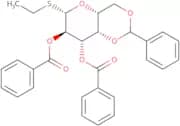
<p>1,3,4,6-Tetra-O-acetyl-2-azido-2-deoxy-L-mannopyranose is a carbohydrate that is synthesized by the modification of the glycosylation process. It is a methylated and fluorinated oligosaccharide with a high purity. This product is available for custom synthesis in order to meet specific customer requirements.</p>Formula:C14H19N3O9Purity:Min. 95%Color and Shape:White To Off-White SolidMolecular weight:373.32 g/molEthyl 2,3-di-O-benzoyl-4,6-O-benzylidene-β-D-thiogalactopyranoside
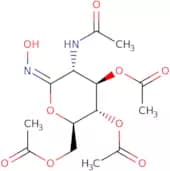
CAS:<p>Ethyl 2,3-di-O-benzoyl-4,6-O-benzylidene-b-D-thiogalactopyranoside is a high purity custom synthesis sugar. This product contains the Click modification, fluorination and glycosylation modifications. It can be used in the synthesis of oligosaccharides, monosaccharides and saccharides. Ethyl 2,3-di-O-benzoyl-4,6-O-benzylidenebDthiogalactopyranoside is used to synthesize complex carbohydrates.</p>Formula:C29H28O7SPurity:Min. 98 Area-%Color and Shape:PowderMolecular weight:520.59 g/mol2-Acetamido-3,4,6-tri-O-acetyl-2-deoxy-D-glucohydroximo-1,5-lactone
CAS:<p>2-Acetamido-3,4,6-tri-O-acetyl-2-deoxy-D-glucohydroximo-1,5-lactone is a methylated sugar. It is a white to off white powder with a molecular weight of 518. The chemical formula for 2-Acetamido-3,4,6-tri-O-acetyl-2-deoxy--D--glucohydroximo--1,5--lactone is C16H26N2O8 and the structural formula is as follows:br></p>Formula:C14H20N2O9Purity:Min. 95%Color and Shape:White PowderMolecular weight:360.32 g/molPhenyl-β-D-glucuronic acid monohydrate
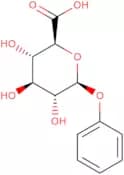
CAS:<p>Phenyl-beta-D-glucuronic acid monohydrate is a genotoxic agent that is metabolized to S-phenylmercapturic acid. This metabolite can be detected in urine as an indicator of exposure to the compound. Phenyl-beta-D-glucuronic acid monohydrate has been shown to have toxic effects on humans, such as decreasing the glomerular filtration rate and increasing reactive oxygen species levels. It also decreases antioxidant vitamin levels and causes blood disorders, including hemolytic anemia. Phenyl-beta-D-glucuronic acid monohydrate may also be used for the treatment of autoimmune diseases by inhibiting certain enzymes involved in inflammation and immune response.</p>Formula:C12H16O8Purity:Min. 98 Area-%Color and Shape:White PowderMolecular weight:288.26 g/molD-Maltose 1-phosphate dipotassium salt
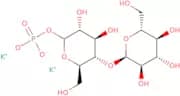
CAS:<p>D-Maltose 1-phosphate dipotassium salt is a disaccharide that can be used in the synthesis of oligosaccharides and polysaccharides. It is also an excellent candidate for further modification.</p>Formula:C12H21O14PK2Purity:Min. 95%Molecular weight:498.46 g/molChitobiose dihydrochloride
CAS:<p>Chitobiose 2HCl is a synthetic sugar that has been modified using Click chemistry. It is a fluorescent sugar that can be used as an indicator for protein-sugar interactions. Chitobiose 2HCl is soluble in water and has a molecular weight of 258.078 g/mol.</p>Formula:C12H24N2O9•(HCl)2Purity:Min. 95%Molecular weight:413.25 g/molN-Acetylmuramic acid
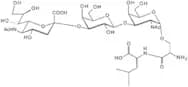
CAS:<p>Component of peptidoglycan in bacterial cell walls. Peptidoglycan is a mesh-like polymer, made of a glycan backbone containing alternating subunits of Nâacetylglucosamine (GlcNAc) and Nâacetylmuramic acid (MurNAc). An enzyme substrate that is used to characterize and differentiate MurNAc and GlcNAc kinases.</p>Formula:C11H19NO8Purity:Min. 97 Area-%Color and Shape:White PowderMolecular weight:293.27 g/mol(Neu5Ac a(2-3)-Gal-b(1-3)-GalNAc)SL-OH
<p>Neu5Ac a(2-3)-Gal-b(1-3)-GalNAc)SL-OH is an Oligosaccharide that is a complex carbohydrate with a Methylation modification. It is the product of Click chemistry and has been Fluorinated and saccharide, Modification, sugar, Oligosaccharide, Synthetic, CAS No., Monosaccharide, Custom synthesis, High purity.</p>Purity:Min. 95%1,2,3,4,6-Penta-O-acetyl-5-thio-D-galactose
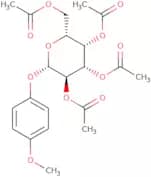
<p>1,2,3,4,6-Penta-O-acetyl-5-thio-D-galactose is a fluorinated monosaccharide that is synthesized by the reaction of 1,2,3,4,6-penta-O-acetyl-D-galactose with sodium hypochlorite in the presence of sodium bicarbonate. This compound has been shown to be an excellent substrate for glycosylation reactions and can be used as a sugar donor in polysaccharide synthesis. 1,2,3,4,6 penta O acetyl 5 thio D galactose can also be methylated with dimethylsulfoxide and trimethylsilyl chloride to form the corresponding methylated derivative. This product is available at high purity levels and CAS No. 68713-89-1.END></p>Formula:C16H22O10SPurity:Min. 95%Molecular weight:406.41 g/mol4-Methoxyphenyl 2,3,4,6-tetra-O-acetyl-β-D-galactopyranoside
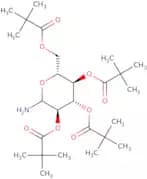
CAS:<p>4-Methoxyphenyl 2,3,4,6-tetra-O-acetyl-b-D-galactopyranoside is a white crystalline powder. It is soluble in water and ethanol. This chemical has been used as a reagent for the methylation of saccharides and oligosaccharides with 4-methoxybenzene sulfonate. It is also an excellent substrate for click chemistry reactions.</p>Formula:C21H26O11Purity:Min. 95%Color and Shape:White to off-white solid.Molecular weight:454.42 g/mol2,3,4,6-Tetra-O-pivaloyl-D-glucopyranosyl amine
CAS:<p>2,3,4,6-Tetra-O-pivaloyl-D-glucopyranosyl amine is a monosaccharide that is custom synthesized and modified with fluorination. It also has saccharide properties such as methylation and glycosylation. This product can be used in the synthesis of complex carbohydrates or polysaccharides. It is a high purity compound with CAS No. 888963-33-5.</p>Formula:C26H45NO9Purity:Min. 95%Molecular weight:515.64 g/mol4-Methylphenyl β-D-thiogalactopyranoside
CAS:<p>4-Methylphenyl β-D-thiogalactopyranoside is a custom synthesis. The chemical is an Oligosaccharide, Polysaccharide, Modification, saccharide, Methylation, Glycosylation, Carbohydrate that has been Fluorinated and Synthetically Modified. It is a High purity product with the CAS No. 28244-98-6.</p>Formula:C13H18O5SPurity:Min. 95%Color and Shape:White Off-White PowderMolecular weight:286.35 g/molPentagalloylglucose - Bio-X ™
CAS:<p>A gallotannin found in plants, with various biological activities. Its anti-cancer effect has been demonstrated in several cancer cell lines, mediated by inhibition of DNA replication, proliferation and angiogenesis. Elicits anti-inflammatory, antioxidative and anti-diabetic effects. Recently, it has been identified as an inhibitor of c-Myc in hepatocellular carcinoma and multiple myeloma cells.</p>Formula:C41H32O26Purity:Min. 98 Area-%Color and Shape:PowderMolecular weight:940.68 g/mol1,2-Isopropylidene-D,L-myo-inositol
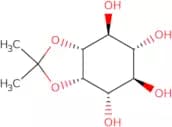
CAS:<p>1,2-Isopropylidene-D,L-myo-inositol is a modification of the natural product myo-inositol. It is synthesized by methylation and glycosylation of inositol with methanol. This chemical compound has been modified to include fluorination and saccharide.</p>Formula:C9H16O6Purity:Min. 95%Color and Shape:White PowderMolecular weight:220.22 g/mol1,2,4-Tri-O-acetyl-3-O-benzyl-D-xylopyranoside
<p>1,2,4-Tri-O-acetyl-3-O-benzyl-D-xylopyranoside is a carbohydrate that has been modified with fluorine. The chemical formula is C12H21FO5. It has CAS number: 90693-24-9 and molecular weight of 356.35 g/mol. There are many uses for this compound, including being a synthetic sugar for use in pharmaceuticals, being a custom synthesis for research purposes, or as an intermediate in the production of other compounds. 1,2,4-Tri-O-acetyl-3-O-benzyl--D--xylopyranoside is also used as a fluorescence probe to detect saccharides and oligosaccharides because it emits light when bound to these compounds due to its high purity.<br>1,2,4 Tri O acetyl 3 O benzyl D xylopyranoside can be used to</p>Purity:Min. 95%D-Galactono-1,4-lactone
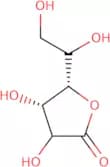
CAS:<p>D-Galactono-1,4-lactone is an intermediate in the galactose catabolism pathway. It is an acidic compound that can be found in plants and bacteria. D-Galactono-1,4-lactone has been shown to inhibit enzyme activities when it is present at high concentrations. This compound also inhibits the enzyme carbon source, which is involved in the conversion of glucose to energy. The deuterium isotope effect on the inhibition of enzyme activity by D-galactono-1,4-lactone has been studied extensively using plant phytochemicals such as triticum aestivum.</p>Formula:C6H10O6Purity:Min. 95%Color and Shape:White PowderMolecular weight:178.14 g/molD-Glucurono-3,6-lactone
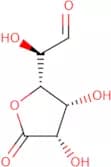
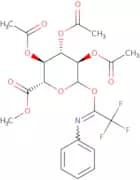
CAS:<p>Glucose metabolite</p>Formula:C6H8O6Purity:Min 98%Color and Shape:White PowderMolecular weight:176.12 g/mol1-(2,2,2-Trifluoro-N-phenylethanimidate)-2,3,4-tri-O-acetyl-D-glucopyranuronic acid methyl ester
CAS:<p>1-(2,2,2-Trifluoro-N-phenylethanimidate)-2,3,4-tri-O-acetyl-D-glucopyranuronic acid methyl ester is a methylated variant of an oligosaccharide. It has been synthesized by the click modification of an oligosaccharide with a monosaccharide and a fluorinated saccharide. This compound has been shown to have antiviral activity against the influenza virus in vitro. The antiviral activity may be due to its ability to inhibit the viral polymerase and RNA synthesis or to prevent virus assembly and release.</p>Formula:C21H22F3NO10Purity:Min. 95%Molecular weight:505.4 g/molUDP-2-amino-2-deoxy-D-glucose
<p>UDP-2-amino-2-deoxy-D-glucose is a modification of glucose. It is an organic compound that can be used in the synthesis of oligosaccharides and polysaccharides. It can be methylated or glycosylated with other sugars, such as galactose, to form complex carbohydrates. UDP-2-amino-2-deoxyglucose also has a high purity and CAS number.</p>Purity:Min. 95%Mitiglinide-acyl-b-D-glucuronide
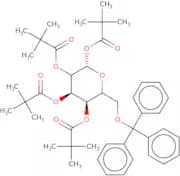
<p>Mitiglinide-acyl-b-D-glucuronide is a custom synthesis of an oligosaccharide and polysaccharide that has been fluorinated, modified and then acylated. This reagent is available in high purity and with a modification of methylation. It is a complex carbohydrate with high purity that is obtained by modifying the sugar monomer. Mitiglinide-acyl-b-D-glucuronide is a synthetic monosaccharide that has been modified with polysaccharides and saccharides to produce a product with high purity.</p>Formula:C25H33NO9Purity:Min. 95%Molecular weight:491.53 g/mol1,2,3,4-Tetra-O-pivaloyl-6-O-trityl-b-D-glucopyranose
CAS:<p>1,2,3,4-Tetra-O-pivaloyl-6-O-trityl-b-D-glucopyranose is a trityl derivative of glucose that can be used as a diagnostic agent for the assessment of cancer. When labeled with radioactive iodine, 1,2,3,4-Tetra-O-pivaloyl-6-O-trityl-b-D-glucopyranose has been shown to accumulate in bile and esophageal cancer cells. Magnetic resonance imaging (MRI) was used to evaluate the distribution of 1,2,3,4 tetra O pivaloyl 6 O trityl b D glucopyranose in patients with cirrhosis. The results suggest that this compound can be used as an indicator for the diagnosis of liver disease.</p>Formula:C45H58O10Purity:Min. 95%Molecular weight:758.94 g/mol