


Monosaccharides
Subcategories of "Monosaccharides"
- Alloses(11 products)
- Arabinoses(21 products)
- Erythroses(11 products)
- Fructoses(9 products)
- Fucoses(36 products)
- Galactosamine(41 products)
- Galactose(261 products)
- Glucoses(365 products)
- Glucuronic Acids(52 products)
- Glyco-substrates for Enzyme(78 products)
- Guloses(6 products)
- Idoses(4 products)
- Inositols(15 products)
- Lyxoses(4 products)
- Mannoses(65 products)
- O-Glycans(48 products)
- Psicoses(3 products)
- Rhamnoses(10 products)
- Riboses(61 products)
- Sialic Acids(100 products)
- Sorboses(4 products)
- Sugars(173 products)
- Tagatoses(4 products)
- Taloses(8 products)
- Xyloses(20 products)
Found 6088 products of "Monosaccharides"
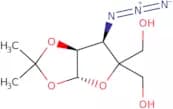
3-Azido-3-deoxy-4-hydroxymethyl-1,2-O-isopropylidene-a-D-ribofuranose
CAS:Carbohydrate building blockFormula:C9H15N3O5Purity:Min. 95%Color and Shape:PowderMolecular weight:245.23 g/mol1,2:4,5-Di-O-isopropylidene-D-glycero-D-manno-heptitol
1,2:4,5-Di-O-isopropylidene-D-glycero-D-manno-heptitol is a synthetic monosaccharide that can be used as a methylation substrate. The compound can be custom synthesized and has been shown to have good purity. It is found in polysaccharides and saccharides and can be modified with fluorination. This product is a complex carbohydrate with high purity and can serve as an intermediate for the synthesis of oligosaccharides and polysaccharides.Purity:Min. 95%(1R) -1- [(2S, 3R,4S) -4-Hydroxymethyl-3- hydroxy- 1- azetidinyl] -1, 2- ethanediol hydrochloride
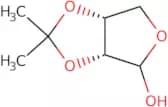
(1R) -1- [(2S, 3R,4S) -4-Hydroxymethyl-3- hydroxy- 1- azetidinyl] -1, 2- ethanediol hydrochloride is a synthetic modification of oligosaccharides and polysaccharides. It is an oligosaccharide with a high degree of polymerization (DP) and a high purity. The fluorination of saccharides can be used for the synthesis of this product.Purity:Min. 95%2,3-O-Isopropylidene-D-erythrofuranose
CAS:2,3-O-Isopropylidene-D-erythrofuranose is a synthetic anticancer agent that inhibits the synthesis of proteins. It binds to the sulfhydryl group of cysteine, which is an amino acid that is essential for protein synthesis. 2,3-O-Isopropylidene-D-erythrofuranose has been shown to be potent in inhibiting cancer cells and has been used in the treatment of leukemia and other cancers. This drug can also be used as a means of treating lysosomal storage diseases such as Gaucher's disease. Its anticancer activity may be due to its ability to inhibit glutamate dehydrogenase and glutathione reductase enzymes, which are required for the synthesis of glutathione, an important antioxidant enzyme. 2,3-O-Isopropylidene-D-erythrofuranose has been synthesised from l -tartaricFormula:C7H12O4Purity:Min. 95%Molecular weight:160.17 g/mol(1S) -1- [(2S, 3R) - 3- Hydroxy- 1- azetidinyl] -1, 2- ethanediol hydrochloride
CAS:(1S) -1- [(2S, 3R) - 3- Hydroxy- 1- azetidinyl] -1, 2- ethanediol hydrochloride is a custom synthesis that has been modified with fluorination, methylation, and monosaccharide modification. It is a synthetic compound that has been developed for use in the synthesis of oligosaccharides and saccharides. This product also has CAS No. 1338054-24-2 and is listed as Polysaccharide, Glycosylation, sugar, Carbohydrate, complex carbohydrate.Formula:C5H11NO3·HClPurity:Min. 95%Molecular weight:169.61 g/molMethyl 2,3,4-tri-O-benzoyl-6-O-tert-butyldimethylsilyl-a-D-galactopyranoside
Methyl 2,3,4-tri-O-benzoyl-6-O-tert-butyldimethylsilyl-a-D-galactopyranoside is an oligosaccharide that is used as a synthetic intermediate for the synthesis of other glycosylated compounds. This compound is fluorinated at the C2 position to provide a reactive site for further modification. Methyl 2,3,4-tri-O-benzoyl-6-O-(tert butyldimethylsilyl)-a D galactopyranoside can be modified with click chemistry to introduce new functional groups such as hydroxyl and amine groups. The methyl group on this compound can also be removed using methanolysis to produce methyl 2,3,4 tri - O benzoyl - 6 - O tert butyldimethylsilyl - a D galactopyranoside.Formula:C34H40O9SiPurity:Min. 95%Molecular weight:620.78 g/mol2-Acetamido-1,3,4-tri-O-butanoyl-2-deoxy-D-mannopyranose
CAS:2-Acetamido-1,3,4-tri-O-butanoyl-2-deoxy-D-mannopyranose is a protected mannosamine carbohydrate.
Formula:C23H39NO9Purity:Min. 95%Molecular weight:473.56 g/mol4-Hydroxyestradiol 4-O-β-D-glucuronide sodium Salt
CAS:4-Hydroxyestradiol 4-O-beta-D-glucuronide sodium salt is a custom synthesis of complex carbohydrates. This product is an Oligosaccharide, Polysaccharide, and Modification. It is made up of saccharides (sugar) and Carbohydrate. It has the CAS number 85359-06-4, which can be found on the Chemical Abstracts Service website. 4-Hydroxyestradiol 4-O-beta-D-glucuronide sodium salt is also Click modified with fluorine and synthetic. It has a purity of high purity and can be used for methylation and glycosylation reactions.
Formula:C24H32O9NaPurity:Min. 95%Molecular weight:487.5 g/mol2, 4- Anhydro-5-O-benzyl- 6- deoxy- L- mannonic acid methyl ester
2, 4-Anhydro-5-O-benzyl-6-deoxy-L-mannonic acid methyl ester is a synthetic oligosaccharide that can be used as a fluorinated carbohydrate. It is modified by the addition of methyl groups to the hydroxyl group of an anhydro sugar moiety. It can be used in various applications such as glycosylation and click chemistry. 2, 4-Anhydro-5-O-benzyl-6-deoxy--L--mannonic acid methyl ester has CAS number 167801–91–9 and molecular weight of 538.4 g/mol. It is soluble in water and ethanol.Purity:Min. 95%1-Amino-1-deoxy-D-fructose hydrochloride
CAS:1-Amino-1-deoxy-D-fructose hydrochloride is a chemical compound that has been used to study the effects of DNA damage on the rate of protein synthesis. 1-Amino-1-deoxy-D-fructose hydrochloride has been shown to be a strong inhibitor of DNA replication, particularly at sites where there is a high frequency of damaged bases. It also damages the DNA by cleaving it into fragments and inhibits protein synthesis by altering the sequences of DNA. The extent of damage caused by 1-amino-1-deoxy D fructose hydrochloride can be determined by analyzing the sequences in polyacrylamide gels after denaturing them. The reaction time for this chemical is short, so it can be used in studies with short reaction times.Formula:C6H13NO5·HClPurity:Min. 95%Color and Shape:White PowderMolecular weight:215.63 g/molN- [(Phenylmethoxy) carbonyl] glycylglycyl- 2- amino- 2- deoxy-a- D- manno- 2- heptulofuranosonic acid methyl ester
CAS:N- [(Phenylmethoxy) carbonyl] glycylglycyl- 2- amino- 2- deoxy-a- D- manno- 2- heptulofuranosonic acid methyl ester is a custom synthesis of an oligosaccharide, polysaccharide, and a complex carbohydrate. It is modified with methylation, glycosylation, and click modification. The CAS number for this compound is 161086-37-9. This product is highly pure, fluorinated, and synthetic.Purity:Min. 95%Methyl 2,3,4-tri-O-benzyl-6-O-trityl-a-D-mannopyranoside
CAS:Methyl 2,3,4-tri-O-benzyl-6-O-trityl-a-D-mannopyranoside is a complex carbohydrate that contains a glycosylation site. This compound has a CAS number of 40653-13-2, and is available for custom synthesis. Methyl 2,3,4-tri-O-benzyl-6-O-trityl-aD mannopyranoside is water soluble and has high purity. The chemical structure of this compound can be modified to include fluorination or Click modification. This compound is also an oligosaccharide containing sugar residues and monosaccharides with a molecular weight of approximately 1000 Da.Formula:C47H46O6Purity:Min. 95%Molecular weight:706.89 g/mol2-C-(tert.Butyldimethylsilyloxy)methyl-2,3:5,6-di-O-isopropylidene-D-allono-1.4-lactone
2-C-(tert.Butyldimethylsilyloxy)methyl-2,3:5,6-di-O-isopropylidene-D-allono-1.4-lactone is a custom synthesis that is a complex carbohydrate with the molecular formula C24H42O8 and molecular weight of 432. It has a CAS number of 71026-13-2 and can be found in the Polysaccharide category. The chemical modification of this compound includes methylation, glycosylation, and fluorination. This product is high purity and has been synthesized by Click chemistry.Purity:Min. 95%3,4,6-Trideoxy-3-(dimethylamino-b-D-xylo-hexopyranose)
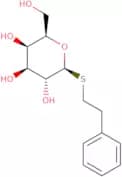
CAS:3,4,6-Trideoxy-3-(dimethylamino-b-D-xylo-hexopyranose) is a carbohydrate that belongs to the group of saccharides. It is a sugar that has been modified with fluorine groups. Fluorination increases the hydrophilicity of the sugar and makes it more soluble in water. 3,4,6-Trideoxy-3-(dimethylamino-b-D-xylo-hexopyranose) has been custom synthesized and can be ordered as a high purity material. The synthesis process includes methylation and glycosylation steps. 3,4,6-Trideoxy-3-(dimethylamino-b-D-xylo -hexopyranose) is used as a click modification for proteins.Formula:C8H17NO3Purity:Min. 95%Molecular weight:175.23 g/molPhenylethyl b-D-thiogalactopyranoside
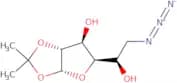
CAS:?-galactosidase inhibitorFormula:C14H20O5SColor and Shape:PowderMolecular weight:300.37 g/mol6-Azido-6-deoxy-1,2-O-isopropylidene-α-D-glucofuranose
CAS:6-Azido-6-deoxy-1,2-O-isopropylidene-a-D-glucofuranose is a Custom synthesis, Modification, Fluorination, Methylation, Monosaccharide, Synthetic, Click modification, Oligosaccharide, saccharide that is CAS No. 65371-16-6. It is a sugar or Carbohydrate and complex carbohydrate.Formula:C9H15N3O5Purity:Min. 95%Color and Shape:PowderMolecular weight:245.23 g/mol(2S, 3R, 4S) -2- [(1S) - 1, 2-Dihydroxyethyl] - 1- methyl- 3, 4- pyrrolidinediol
(2S, 3R, 4S) -2- [(1S) - 1, 2-Dihydroxyethyl] - 1- methyl- 3, 4- pyrrolidinediol is a glycosylate compound that is synthesized by the chemical modification of polysaccharides. It has many modifications like fluorination, saccharide and modification. This product can be custom synthesized to fit the requirements of the customer. The CAS number for this product is 1118-71-4. The molecular formula for this compound is C6H14O3 and it has a molecular weight of 192.19 g/mol. The purity level for this product is >99%.Purity:Min. 95%3,4:5,6-Di-O-isopropylidene-D-idonic acid methyl ester
3,4:5,6-Di-O-isopropylidene-D-idonic acid methyl ester is a modified sugar. It is a complex carbohydrate which is synthesized from D-glyceraldehyde and D-ribose. This product can be used in the production of glycosylated proteins or as an intermediate for custom synthesis. 3,4:5,6-Di-O-isopropylidene-D-idonic acid methyl ester has high purity and can be ordered with custom synthesis. 3,4:5,6-Di-O-isopropylidene-D-idonic acid methyl ester is soluble in water and alcohols. It can be used as a reagent for click chemistry modification.Purity:Min. 95%Methyl 4-C-Hydroxymethyl-2,3-O-isopropylidene-b-D-ribofuranoside
CAS:Methyl 4-C-Hydroxymethyl-2,3-O-isopropylidene-b-D-ribofuranoside is a modification of the monosaccharide, D-ribose. It is synthesized by the selective methylation of the hydroxymethyl group at position C4. The synthesis of this compound starts with the oxidation of D-ribose to form 2,3'-diisopropylidene boronate ester (1). This compound is then reacted with methyl iodide in the presence of an acid to form 4-(methyloxy)benzaldehyde (2). The final step involves conversion of 2 to 4-(methyloxy)benzylidene boronate ester (3), which is then hydrolyzed to yield methyl 4-C-hydroxymethyl-2,3-O-isopropylidene ribofuranoside.Purity:Min. 95%2,3-Anhydro-3,4-O-ispropylidene-7-O-triphenylmethyl-D-glycero-D-altro-heptonic acid diethylamide
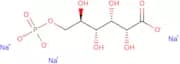
2,3-Anhydro-3,4-O-ispropylidene-7-O-triphenylmethyl-D-glycero-D-altroheptonic acid diethylamide is a custom synthesis that has been modified by fluorination and methylation. The compound is a monosaccharide with an Oligosaccharide chain. It is a synthetic molecule that can be found in the CAS No. 899072. This compound is a saccharide and a carbohydrate. It is complex carbohydrate that consists of glucose and galactose units.Purity:Min. 95%D-Gluconate 6-phosphate trisodium salt dihydrate
CAS:D-Gluconate 6-phosphate trisodium salt dihydrate is an oxidoreductase enzyme that catalyzes the conversion of D-gluconate 6-phosphate to D-glucono-6,1'-lactone. It is found in animals, where it is located in the cytoplasm and mitochondria. D-Gluconate 6-phosphate trisodium salt dihydrate has been shown to have a high kinetic activity in homogenates of rat liver and kidney, as well as in microsomes from rat liver. The enzyme also has a high affinity for phosphatidylethanolamine and low affinity for other lipids. This enzyme is inhibited by tetrazolium chloride and fatty acids.
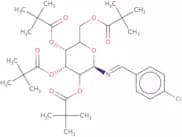
Formula:C6H10O10P·3Na·2H2OPurity:Min. 97%Color and Shape:White PowderMolecular weight:378.11 g/molN-(4-Chlorobenzyliden)imino-2,3,4,6-tetra-O-pivaloyl-D-glucopyranoside
This product is a complex carbohydrate that is custom synthesized by our experts. It is made of Oligosaccharide, Carbohydrate, Custom synthesis, Synthetic, High purity, CAS No., Monosaccharide, Methylation, Glycosylation and Polysaccharide. This product has the following properties: Fluorination, saccharide.Formula:C33H48ClNO9Purity:Min. 95%Molecular weight:638.19 g/mol2-Allyloxycarbonylamino-1,6-anhydro-2-deoxy-b-D-glucopyranose
2-Allyloxycarbonylamino-1,6-anhydro-2-deoxy-b-D-glucopyranose is a synthetic saccharide that has been modified with 2,5-difluoroacetophenone. This modification generates a fluorine atom at the C2 position of the glucose ring. The synthesis of this compound is performed by custom synthesis for Click chemistry. The desired reaction product is obtained in high purity and with good yield. The chemical formula for 2,5-difluoroacetophenone is C8H7F3O2 and the molecular weight is 191.19 g/mol. 2,5-Difluoroacetophenone has been shown to be an efficient reagent in glycosylation reactions because it can react selectively with primary alcohols and amines without affecting other functional groups present in the molecule. In addition, 2,5-difluoroacetophenonePurity:Min. 95%2-C-Hydroxymethyl-2,3:5,6-di-O-isopropylidene-L-gulono-1.4-lactone
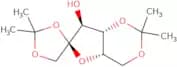
2-C-Hydroxymethyl-2,3:5,6-di-O-isopropylidene-L-gulono-1.4-lactone is a Custom synthesis that is used in the production of polysaccharides and other carbohydrates. It is a polysaccharide that contains many glycosylated sugars; it can be modified with methyl groups or fluorine atoms. Carbohydrates are polymers of monosaccharides linked together by glycosidic bonds. The basic structure of a carbohydrate consists of a central carbon atom to which two hydroxyl (OH) groups are attached, and three on each side. This molecule also has an oxo group, which reduces the glycosidic bond to an ether linkage. 2CGHGL is used as an additive for food products and pharmaceuticals due to its high purity and low cost.Purity:Min. 95%1,2:4,6-Di-O-isopropylidene-α-L-sorbofuranose
CAS:1,2:4,6-Di-O-isopropylidene-a-L-sorbofuranose is a synthetic glycoside that can be used as a carbohydrate in the synthesis of oligosaccharides and polysaccharides. It can be methylated at the C1 position to form 1,2:4,6-di-O-methylidene-a-L-sorbofuranose and then glycosylated with various saccharides at the O3 position. Fluorination of this compound at the C2 position yields 1,2:4,6-diO-(trifluoromethyl)idenea L sorbofuranose. This product has a melting point of 178°C.Formula:C12H20O6Purity:Min. 95%Color and Shape:White To Off-White SolidMolecular weight:260.28 g/mol2-13C-a-D-Mannose-1-phosphate dipotassium salt
2-13C-a-D-Mannose-1-phosphate dipotassium salt is a custom synthesis of a complex carbohydrate. It is a monosaccharide that can be used as a substrate for glycosylation, methylation, or click modification. This product is available in high purity and good quality.
Purity:Min. 95%N- [[(2R, 3R, 4S) - 4- [(Acetyloxy) methyl] - 3- (phenylmethoxy) - 1- (phenylmethyl) - 2- azetidinyl] methyl] -acetamide
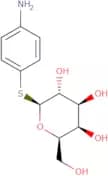
CAS:N-[[(2R, 3R, 4S) - 4- [(Acetyloxy) methyl] - 3- (phenylmethoxy) - 1- (phenylmethyl) - 2- azetidinyl] methyl] -acetamide is a modified carbohydrate with the molecular formula C14H19NO5. This product is a white to off-white crystalline solid, which can be used in the synthesis of various carbohydrates and sugars. It has been shown that this compound has good solubility in water and DMSO. N-[[(2R, 3R, 4S) - 4- [(Acetyloxy) methyl] - 3- (phenylmethoxy) - 1- (phenylmethyl) - 2- azetidinyl] methyl] -acetamide is an acetamide derivative of N-[2-(acetoxymethyl)-1-[3-(4′′′′′′′′′′Formula:C23H28N2O4Purity:Min. 95%Molecular weight:396.48 g/mol4-Aminophenyl β-D-thiogalactopyranoside
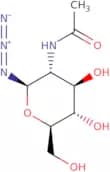
CAS:4-Aminophenyl β-D-thiogalactopyranoside is a custom synthesis of a fluorinated saccharide. It is an oligosaccharide that has been modified with a click modification, which is an atom transfer radical polymerization. The chemical name for 4-aminophenyl β-D-thiogalactopyranoside is 2,5-difluorobenzoyl-(1→4)-4-(4'-aminophenoxy)butyryl-(1→2)-β-D-thiogalactopyranoside. The CAS number for 4-aminophenyl β-D-thiogalactopyranoside is 29558-05-2. This product has high purity and can be used as a substitute for saccharides in the synthesis of polysaccharides or oligosaccharides.Formula:C12H17NO5SPurity:Min. 95%Color and Shape:PowderMolecular weight:287.33 g/mol2-Acetamido-2-deoxy-b-D-glucopyranosyl azide
CAS:2-Acetamido-2-deoxy-b-D-glucopyranosyl azide is a biodegradable, environmentally oriented compound that has been shown to be compatible with polylactic acid. This compound has shown unevenness in the hydroxy group and a functional group sensitive to hydrolysis. The molecular weight of 2-acetamido-2-deoxy-b-D-glucopyranosyl azide is 154.14 g/mol. It is soluble in water and has a natural environment frequency of 0.0005%.
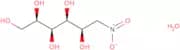
Formula:C8H14N4O5Purity:Min. 95 Area-%Color and Shape:White PowderMolecular weight:246.22 g/mol1-Deoxy-1-nitro-D-iditol hemihydrate
CAS:1-Deoxy-1-nitro-D-iditol hemihydrate is a glycoconjugate that is used in the synthesis of complex carbohydrates, such as glycosylation and methylation. The chemical structure consists of a hydroxyl group linked to an alpha carbon atom with a terminal nitro group. 1-Deoxy-1-nitro-D-iditol hemihydrate can be used for fluorination, saccharide, or modification reactions. It is also used in the synthesis of oligosaccharides and monosaccharides. This product has CAS No. 96613-89-7 and is available in high purity.Formula:C6H13NO7H2OPurity:Min. 95%Molecular weight:220.18 g/mol(3R, 4R) -3, 4- Difluoro- 1- (phenylmethyl) -L- proline methyl ester
CAS:(3R, 4R) -3, 4- Difluoro- 1- (phenylmethyl) -L- proline methyl ester is a synthetic sugar that can be modified by glycosylation and fluorination. It has applications in the synthesis of complex carbohydrates and oligosaccharides.
Purity:Min. 95%3,5-Dideoxy-3,5-imino-1,2-O-isopropylidene-N-benzyl-6-O-tert.butyldimethylsilyl-b-L-galactofuranose
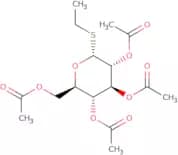
3,5-Dideoxy-3,5-imino-1,2-O-isopropylidene-N-benzyl-6-O-tert.butyldimethylsilyl-b-L-galactofuranose is a synthetic glycosylation agent that can be used in the synthesis of complex carbohydrate molecules. This compound is fluorinated and saccharide modified with methyl groups at the 3 and 5 positions. The final product has a purity of >99% and CAS No. 614734–05–0.Purity:Min. 95%Ethyl 2,3,4,6-tetra-O-acetyl-a-D-thioglucopyranoside
CAS:Ethyl 2,3,4,6-tetra-O-acetyl-a-D-thioglucopyranoside is an orthorhombic sugar that is composed of a mannopyranoside and a thioglucopyranoside. The crystal structure has been determined to be space group P2(1)/c.Formula:C16H24O9SPurity:Min. 98 Area-%Color and Shape:White PowderMolecular weight:392.42 g/mol1,2:5,6-Di-O-cyclohexylidene-a-D-ribo-hexofuranos-3-ulose hydrate
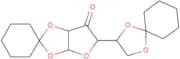
CAS:1,2:5,6-Di-O-cyclohexylidene-a-D-ribo-hexofuranos-3-ulose hydrate is a modified sugar that contains an oxygen atom in the furan ring. It has been shown to be stable and soluble in water, which is important for its applications in food and pharmaceuticals. This product can be used as a substitute for sucrose or glucose in foods. 1,2:5,6-Di-O-cyclohexylidene-a-D-ribo-hexofuranos 3 ulose hydrate has also been synthesized with methyl groups at the C1 position of the glycosyl residue. This modification yields a new molecule that exhibits increased stability and solubility.Formula:C18H28O7Purity:Min. 95%Molecular weight:356.41 g/mol(4R,5S)-2,2,5-Trimethyl-1,3-dioxolane-4-carboxylic acid
CAS:(4R,5S)-2,2,5-Trimethyl-1,3-dioxolane-4-carboxylic acid is a synthetic compound that has not been found in nature. It is a sugar derivative that can be used in the synthesis of oligosaccharides and monosaccharides. (4R,5S)-2,2,5-Trimethyl-1,3-dioxolane-4-carboxylic acid has a CAS number of 107983-40-4 and can be modified with fluorination or glycosylation. This product is also available in various quantities and purity levels.Purity:Min. 95%1-Deoxy- 3, 4- O- isopropylidene -D- erythro- 2- pentulofuranose
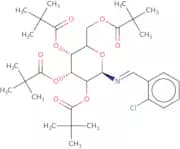
1-Deoxy-3,4-O-isopropylidene-D-erythro-2-pentulofuranose is a monosaccharide sugar that is synthetically produced. It has a CAS number, and can be modified with fluorination, methylation, or click modification. This compound can be used as a sugar in glycosylation reactions, and has high purity.Purity:Min. 95%N-(2-Chlorobenzyliden)imino-2,3,4,6-tetra-O-pivaloyl-D-glucopyranoside
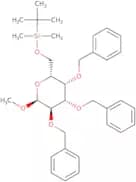
N-(2-Chlorobenzyliden)imino-2,3,4,6-tetra-O-pivaloyl-D-glucopyranoside is an oligosaccharide that is synthesized by the reaction of benzaldehyde with 2,3,4,6-tetra-O-pivaloyl D-glucopyranose. This compound has been modified to include a fluorine atom at the 6 position of the glucose ring. N-(2-Chlorobenzyliden)imino-2,3,4,6-tetra-O-pivaloyl-D-glucopyranoside can be used as a synthetic sugar in glycosylation reactions and Click chemistry.Formula:C33H48ClNO9Purity:Min. 95%Molecular weight:638.19 g/molMethyl 2,3,4-tri-O-benzyl-6-O-tert-butyldimethylsilyl-a-D-galactopyranoside
CAS:Methyl 2,3,4-tri-O-benzyl-6-O-tert-butyldimethylsilyl-a-D-galactopyranoside is a fluorinated monosaccharide that is used as a building block for the synthesis of oligosaccharides and polysaccharides. This chemical has been modified with methylation and click chemistry to give it an interesting utility in glycosylation reactions. Methyl 2,3,4-tri-O-benzyl-6-O-tert butyldimethylsilyl -a D galactopyranoside has a CAS number of 862730 60 7. It is soluble in methanol and ethanol and can be purified by recrystallization or chromatography. It has been shown to be nonmutagenic and nontoxic.Formula:C34H46O6SiPurity:Min. 95%Molecular weight:578.83 g/mol2,4-Di- C- methyl- 3, 4- O- isopropylidene -L- arabinonic acid γ-lactone
2,4-Di-C-methyl-3,4-O-isopropylidene-L-arabinonic acid gamma-lactone is a modification of an oligosaccharide. It has been synthesized to be used in the synthesis of complex carbohydrates. This product is custom synthesized and can be ordered with a high purity grade. The CAS number for this product is 123373-94-7 and the molecular weight is 498.5 g/mol. This product's chemical formula is C13H14O11 and it has a melting point of 185 °C to 191 °C. This product has a monosaccharide, methylation, glycosylation, polysaccharide, sugar, fluorination, saccharide structure that makes it an Oligosaccharide Carbohydrate Complex Carbohydrate Synthetic Custom synthesis High purity Glycosylation Polysaccharide Sugar Fluorination Saccharide.
Purity:Min. 95%2-Azido-((R)-3,6-O-benzylidene)-2,6-dideoxy- L-galacto(gluco)furanose
CAS:2-Azido-((R)-3,6-O-benzylidene)-2,6-dideoxy- L-galacto(gluco)furanose is a synthetic sugar that is used as a substrate in glycosylation reactions. It is also used for click modification and fluorination reactions. The chemical structure of 2-azido-(R)-3,6-O-benzylidene)-2,6-dideoxy-- L--galacto(gluco)furanose is shown below:Purity:Min. 95%N-Benzyl-3,5-dideoxy-3,5-imino-1,2-O-isopropylidene-a-D-gluco(b-L-ido)furanose
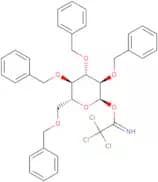
N-Benzyl-3,5-dideoxy-3,5-imino-1,2-O-isopropylidene-a-D-gluco(b-L-ido)furanose is a methylated saccharide that is used in the synthesis of complex carbohydrates. This synthetic compound is classified as a sugar and can be modified with a variety of chemical reactions. The carbonyl group on the C6 position can be fluorinated to produce N-(2,4,6'-trifluoroacetyl)-benzyl--3,5-dideoxy--3,5--imino--1,2--O--isopropylidene--a-(D)--gluco(b)--L--ido)furanose. This compound has CAS Number 58424–52–0 and is available for custom synthesis.Purity:Min. 95%2,3,4,6-Tetra-O-benzyl-a-D-glucopyranosyl trichloroacetimidate
CAS:2,3,4,6-Tetra-O-benzyl-a-D-glucopyranosyl trichloroacetimidate is a supernucleophile that reacts with saccharides to form glycosides. It is a reactive compound that can be used in syntheses to create new disaccharides. 2,3,4,6-Tetra-O-benzyl-a-D-glucopyranosyl trichloroacetimidate was used in the synthesis of a glycoside analogue of glucopyranose. This compound has also been shown to react with imidates.
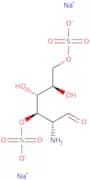
Formula:C36H36Cl3NO6Purity:Min. 95%Color and Shape:White PowderMolecular weight:685.03 g/molD-Glucosamine-3,6-di-O-sulphate sodium
CAS:D-Glucosamine-3,6-di-O-sulphate sodium salt is a synthetic, fluorinated, monosaccharide that is prepared by the modification of D-glucosamine. It can be synthesized by reacting D-glucosamine with sodium sulfite in the presence of hydrochloric acid. This product has been modified to contain a reactive group for click chemistry. The synthesis of this compound involves methylation, which is a process used to introduce methyl groups into organic compounds. This product is also an oligosaccharide and polysaccharide. The sugar molecule in this product is glucosamine, which is a carbohydrate that contains glucose and amino acids. Glucosamines are complex carbohydrates that play a role in the synthesis of glycoproteins and glycolipids in cells.Formula:C6H13NO11S2•Na2Purity:Min. 95%Color and Shape:PowderMolecular weight:385.28 g/mol1,2-O-Isopropylidene-5-O-tert-butyldiphenylsilyl-b-D-arabinofuranose
CAS:1,2-O-Isopropylidene-5-O-tert.butyldiphenylsilyl-b-D-arabinofuranose is a modified sugar that can be used in the synthesis of complex carbohydrates. It has been custom synthesized and is available in high purity with a CAS number. It is an oligosaccharide that can be methylated or glycosylated. The chemical name for 1,2-O-Isopropylidene-5-O-tert.butyldiphenylsilyl-b-D-arabinofuranose is 5-(1,1'-Biphenylethyl)-3'-hydroxybenzaldehyde O-(4,4'-dimethoxytrityl)ester. This product also has fluorination and saccharide properties.
Formula:C24H32O5SiPurity:Min. 95%Molecular weight:428.59 g/mol5-Azido-2-C-(hydroxymethyl)-5-deoxy-2,3-O-isopropylidene-D-ribono-1.4-lactone
5-Azido-2-C-(hydroxymethyl)-5-deoxy-2,3-O-isopropylidene-D-ribono-1.4-lactone is used as a modification agent in oligosaccharides and polysaccharides. It is used to modify the carbohydrate structure of these compounds through glycosylation and methylation. 5-Azido-2-C-(hydroxymethyl)-5-deoxy-2,3-O-isopropylidene--D--ribono--1.4--lactone has been shown to be highly pure with a CAS number of 82577–09–8. This compound can be synthesized by reacting the acid with 2,3,5,6,-tetraacetic acid in chloroform solution or by reacting the acid with sodium azide in methanol solution at 0°C for 12 hours.Purity:Min. 95%3-OBenzyl-1, 2- O-isopropylidene-a- D- glucofuranose cyclic 5, 6- carbonate
3-OBenzyl-1, 2-O-isopropylidene-a-D-glucofuranose cyclic 5, 6-carbonate is a synthetic monosaccharide. It is a complex carbohydrate that has been modified with fluorination and methylation. This product can be custom synthesized to meet your needs. The CAS No. for this product is 109414-65-3.Purity:Min. 95%Methyl 2-amino-2-deoxy-a-D-mannopyranoside
CAS:Methyl 2-amino-2-deoxy-a-D-mannopyranoside is a fluorinated monosaccharide, which can be synthesized from the natural amino acid L -lysine. It is an important building block for complex carbohydrates and polysaccharides. Methyl 2-amino-2-deoxy-a-D-mannopyranoside can also be used to modify glycosyl groups, methyl groups, and sugar molecules.Formula:C7H15NO5Purity:Min. 95%Molecular weight:193.2 g/mol2,3:4,5-Di-O-isopropylidene-D-talitol (altritol)
2,3:4,5-Di-O-isopropylidene-D-talitol (altritol) is a complex carbohydrate that can be used as a monosaccharide. It is a glycosylation product of D-talitol and it has been shown to have Methylation, Click modification and Polysaccharide modification. 2,3:4,5-Di-O-isopropylidene-D-talitol (altritol) is fluorinated at the C2 position and is soluble in water. It has CAS number 51617-94-7 and can be synthesized with high purity.Purity:Min. 95%5-Thio-D-galactopyranose
5-Thio-D-galactopyranose is a homolog of D-galactose. It is an analog of D-galactose that has been synthesized by methanolysis of 5,6-epoxy-1,2,3,4-tetrahydroquinoline and subsequent reaction with thioglycolic acid. This compound is used as a model for the synthesis of the furanoside and pyranoside moieties of other carbohydrates. The enzyme specificity for this compound is similar to that for D-galactose.Purity:Min. 95%N-Acetyl-D-[1,2,3-¹³C3]neuraminic acid
CAS:N-Acetyl-D-[1,2,3-¹³C3]neuraminic acid is a modification of the natural sugar N-acetylneuraminic acid. It can be synthesized by reacting 1,2,3-¹³C3]cytidine with sodium hydroxide and acetic anhydride in methanol. It is a carbohydrate that can be found in many plants and animals. This compound has been shown to inhibit glycosylation and methylation reactions. N-Acetyl-D-[1,2,3-¹³C3]neuraminic acid is also a monosaccharide that belongs to the group of sugars. Due to its high purity and availability, this substance can be used as a substitute for sialic acid in research experiments.Formula:C3C8H19NO9Purity:Min. 95%Color and Shape:PowderMolecular weight:312.25 g/mol

![(1R) -1- [(2S, 3R,4S) -4-Hydroxymethyl-3- hydroxy- 1- azetidinyl] -1, 2- ethanediol hydrochloride](/_next/image/?url=https%3A%2Fstatic.cymitquimica.com%2Fproducts%2F3D%2Fthumb-webp%2FMH163402.webp&w=3840&q=75)
![(1S) -1- [(2S, 3R) - 3- Hydroxy- 1- azetidinyl] -1, 2- ethanediol hydrochloride](/_next/image/?url=https%3A%2Fstatic.cymitquimica.com%2Fproducts%2F3D%2Fthumb-webp%2FMH163414.webp&w=3840&q=75)



![N- [(Phenylmethoxy) carbonyl] glycylglycyl- 2- amino- 2- deoxy-a- D- manno- 2- heptulofuranosonic …](/_next/image/?url=https%3A%2Fstatic.cymitquimica.com%2Fproducts%2F3D%2Fthumb-webp%2FMP163942.webp&w=3840&q=75)


![(2S, 3R, 4S) -2- [(1S) - 1, 2-Dihydroxyethyl] - 1- methyl- 3, 4- pyrrolidinediol](/_next/image/?url=https%3A%2Fstatic.cymitquimica.com%2Fproducts%2F3D%2Fthumb-webp%2FMD163936.webp&w=3840&q=75)



![N- [[(2R, 3R, 4S) - 4- [(Acetyloxy) methyl] - 3- (phenylmethoxy) - 1- (phenylmethyl) - 2- azetidin…](/_next/image/?url=https%3A%2Fstatic.cymitquimica.com%2Fproducts%2F3D%2Fthumb-webp%2FMA163471.webp&w=3840&q=75)








![N-Acetyl-D-[1,2,3-¹³C3]neuraminic acid](/_next/image/?url=https%3A%2Fstatic.cymitquimica.com%2Fproducts%2F3D%2Fthumb-webp%2FMA182016.webp&w=3840&q=75)