Monosaccharides
Subcategories of "Monosaccharides"
- Alloses(11 products)
- Arabinoses(21 products)
- Erythroses(11 products)
- Fructoses(9 products)
- Fucoses(36 products)
- Galactosamine(41 products)
- Galactose(261 products)
- Glucoses(365 products)
- Glucuronic Acids(52 products)
- Glyco-substrates for Enzyme(78 products)
- Guloses(6 products)
- Idoses(4 products)
- Inositols(15 products)
- Lyxoses(4 products)
- Mannoses(65 products)
- O-Glycans(48 products)
- Psicoses(3 products)
- Rhamnoses(10 products)
- Riboses(61 products)
- Sialic Acids(100 products)
- Sorboses(4 products)
- Sugars(173 products)
- Tagatoses(4 products)
- Taloses(8 products)
- Xyloses(20 products)
Found 6085 products of "Monosaccharides"
Methyl (2R,3R,4S)-2,3-dihydroxy-4-oxo-butanoate 2,4-hemiacetal
Methyl (2R,3R,4S)-2,3-dihydroxy-4-oxo-butanoate 2,4-hemiacetal is a custom synthesis chemical that is not found in nature. It has the molecular formula CH3O(COOCH3)2C(OH)(OCH2CH2)2CHO. This compound was synthesized by the reaction of methyl acetoacetate with sodium borohydride and formaldehyde. The product was purified by recrystallization from ethyl acetate and hexane. Methyl (2R,3R,4S)-2,3-dihydroxy-4-oxo-butanoate 2,4-hemiacetal is a colorless solid that melts at 60°C and decomposes at 160°C. The purity of this compound is greater than 99%. This chemical reacts with nucleophiles to form acetals or hemiacetPurity:Min. 95%1-O-Acetyl-2-azido-2-deoxy-3,4-di-O-benzyl-6-O-benzoyl-D-glucopyranose
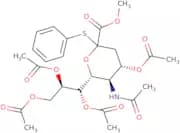
This compound is a custom synthesis of 1-O-acetyl-2-azido-2-deoxy-3,4-di-O-benzyl-6-O-benzoylglucopyranose. It is a synthetic carbohydrate that is used in the modification of saccharides and oligosaccharides. This product has been fluorinated to allow for fluorescence detection and click chemistry applications. It is a white solid with a melting point of 105 degrees Celsius. The CAS number for this compound is 15148344.Formula:C29H29N3O7Purity:Min. 95%Molecular weight:531.56 g/molPhenyl 4,7,8,9-tetra-O-acetyl-2-thio-N-acetyl-D-neuraminic acid methyl ester
CAS:N-Acetyl-2-phenylthioneuraminic acid methyl ester 4,7,8,9-tetraacetate, also called per-O-acetyl-thiophenyl-N-acetylneuraminic acid methyl ester, belongs to the family of sialic acids. This neuraminic acid derivative, as well as other related compounds, such as, N-Acetyl-9-azido-9-deoxy-neuraminic acid, N-Acetyl-2-O-methyl-a-D-neuraminic acid and N-Acetylneuraminic acid dihydrate, act as ligands for the synthesis of many intermediates of sialylated carbohydrates. Sialic acid derivatives present on the surface of vertebrate cells are crucial to advances in biology, as they play a significant role in pathogen-cell interactions and act as mediators of physiological processes.Formula:C26H33NO12SPurity:Min. 95%Color and Shape:PowderMolecular weight:583.61 g/mol2-Azido- 2- deoxy- 3, 4- O-benzylidene-D- ribonic acid d- lactone
2-Azido-2-deoxy-3,4-O-benzylidene-D-ribonic acid d-lactone is a glycosylation product of 2,4,6 azido 2,3,4 O benzylidene D -ribose. It is synthesized by the reaction of 1,2 azido 2,3,4 O benzylidene D -ribose with sodium borohydride in the presence of lithium chloride. This compound possesses a number of properties including being a complex carbohydrate and methylation product. This compound is also fluorinated to give 2 azido-2 deoxy 3,4 F -benzylidene D ribonic acid d lactone. This compound can be modified for various purposes such as Click modification and polysaccharide synthesis.Purity:Min. 95%2,6-Anhydro-D-glycero-D-gluo-heptonic acid methylamide
2,6-Anhydro-D-glycero-D-gluo-heptonic acid methylamide is a synthetic sugar that is used as a building block for the synthesis of oligosaccharides and monosaccharides. The glycosylation of 2,6-Anhydro-D-glycero-D-gluo-heptonic acid methylamide can be catalyzed by any of the glycosylators that use saccharides as substrates. This modification can also be achieved by methylation to produce methylated 2,6-Anhydro-D-glycero-D-gluo heptonic acid methylamide. It has been shown to exhibit antiviral activity against herpes simplex virus type 1.Purity:Min. 95%(2S, 3S, 4R) -3- [[[(2S, 3S, 4R) - 3- Azido- 4- [[[(1, 1- dimethylethyl) dimethylsilyl] oxy] methyl] - 1- (phenylmethyl) - 2- azetid inyl] carbonyl] amino] - 4- [[[(1, 1- dimethylethyl) dimethylsilyl] oxy] methyl] - 1- (phenylmethyl) -2- azetidinecarb
The synthesis starts with a commercially available, methyl-protected, phenyl-protected 2-azetidinecarboxylic acid. The carbonyl group is then converted to an amide by reaction with ammonia in the presence of a base (such as triethylamine) and an appropriate coupling agent (such as HOBt). The amide is then deprotected by treatment with hydrochloric acid to give the desired product. This compound has not been characterized fully yet but it is expected to be a complex carbohydrate.
Purity:Min. 95%2,3,4-Tri-O-acetyl-1-O-azido-1-deoxy-b-D-arabinopyranoside
CAS:2,3,4-Tri-O-acetyl-1-O-azido-1-deoxy-b-D-arabinopyranoside is a methylated sugar that can be used to modify oligosaccharides. It has an acetyl functional group on the 2' position of the ribose moiety. This product is a white crystalline powder and it is soluble in water and methanol.Formula:C11H15N3O7Purity:Min. 95%Molecular weight:301.25 g/mol2-Acetamido-4,6-O-benzylidene-2-deoxy-D-glucopyranose
CAS:2-Acetamido-4,6-O-benzylidene-2-deoxy-D-glucopyranose is an ether of d-glucosamine. It is formed by the reaction of benzyl alcohol and acetamidine with sodium methoxide in the presence of a catalyst. The stereoselectivity of this reaction can be tuned by using different alkali metals as catalysts. The nature and reactivity of the metal cation determines whether 2-acetamido-4,6-O-benzylidene-2,3,5,6,-tetraacetate or 2,3,5,6,-tetraacetate will be produced.Formula:C15H19NO6Purity:Min. 95%Color and Shape:White PowderMolecular weight:309.31 g/mol(5R, 6R, 7S, 8R) -5, 6, 7, 8-Tetrahydro- 5- methyl- tetrazolo[1, 5- a] pyridine- 6, 7, 8- triol
CAS:Tetrahydro-5-methyl-tetrazolo[1,5-a]pyridine-6,7,8-triol is an organic compound that has been synthesized from a sugar. Tetrahydro-5-methyl-tetrazolo[1,5-a]pyridine-6,7,8-triol is soluble in water and formic acid. It is used as a synthetic intermediate for the production of oligosaccharides and saccharides. Tetrahydro-5-methyl-tetrazolo[1,5-a]pyridine-6,7,8-triol can be used to produce glycosylation or methylation in the laboratory. It is also used as a chemical reagent in complex carbohydrate synthesis.Formula:C6H10N4O3Purity:Min. 95%Molecular weight:186.17 g/mol3-C-Methyl- 5, 6- O- isopropylidene-D- gluconic acid g- lactone
3-C-Methyl- 5, 6- O- isopropylidene-D- gluconic acid g- lactone is an oligosaccharide that was synthesized by the reaction of 3,4-dihydroxybenzoic acid and methyl acrylate. The molecular weight of this sugar is 459. Its CAS number is 72854-10-7. This sugar has a purity level of >95%. It has been modified with methylation and click chemistry to afford various derivatives. This carbohydrate can be used in glycosylation reactions or as a building block for polysaccharides.Purity:Min. 95%Sucrose 6'-monophosphate dipotassium
CAS:Sucrose 6'-monophosphate dipotassium salt is a high purity, custom synthesis sugar. Click modification and fluorination of sucrose with potassium fluoride yields an oligosaccharide. Glycosylation and methylation of the saccharide with sodium methoxide yields a monosaccharide. Carbohydrates are defined as polyhydroxy aldehydes or ketones that contain either aldoses or ketoses. Complex carbohydrates are sugars that consist of two or more simple sugars linked together. Sucrose has six carbon atoms, 12 hydrogen atoms, six oxygen atoms, and two sulfur atoms in its molecular structure. The molecular formula for sucrose is C12H22O11S2K2O4P. The CAS number for sucrose is 36064-19-4. Molecular weight: 342.3 g/molFormula:C12H23O14P•K2Purity:Min. 95%Color and Shape:PowderMolecular weight:500.47 g/mol3,6-Dideoxy-3,6-imino-1,2-O-isopropylidene-a-D-glucofuranose
3,6-Dideoxy-3,6-imino-1,2-O-isopropylidene-a-D-glucofuranose is an oligosaccharide that has been modified to contain fluorine. This sugar is a complex carbohydrate that can be custom synthesized for use in glycosylation reactions. It can be used to modify polysaccharides and has been shown to have a high purity.Purity:Min. 95%3-O-Benzyl-1,2-O-isopropylidene-b-L-lyxofuranose
CAS:3-O-Benzyl-1,2-O-isopropylidene-b-L-lyxofuranose is an oligosaccharide that is a member of the class of carbohydrates. It has a saccharide sequence that is composed of three monosaccharides: b-D-glucopyranose, L-xylopyranose, and β-(3’,4’)-benzylidene erythritol. The carbohydrate is modified with fluorine atoms at the two hydroxyl positions on the glucose unit and a benzyl group at the C4 position on the xylopyranose unit. 3-O-Benzyl-1,2-O-isopropylidene -b -L -lyxofuranose is useful for click chemistry reactions due to its reactive benzyl group. This product has high purity and can be custom synthesized toFormula:C15H20O5Purity:Min. 95%Molecular weight:280.32 g/mol4-Deoxy-4-fluoro-D-mannose
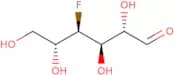
CAS:4-Deoxy-4-fluoro-D-mannose is a sugar that is an analog of 3-deoxy-3-fluoro-d-mannose. It is synthesized by the transfer of a 6-hydroxyl group from 6,6'-dideoxyadenosine to the C6 hydroxyl group of 3,6'-dihexadecylthio adenosine. 4,4'-Difluoro D-mannose is then obtained by hydrolysis and decarboxylation. This process can be catalyzed by enzyme catalysis with phosphofructokinase or hexokinase. 4,4'-Difluoro D mannose has been used in biochemical studies as an analog for 6,6'-dideoxydaunosine. It has also been used as a substrate for virus glycosylation and protein glycosylation in living cells. In addition, it has been shown to inhibitFormula:C6H11FO5Purity:Min. 95%Color and Shape:PowderMolecular weight:182.15 g/mol(3S, 5S) -1-Benzyl-3, 4, 5- piperidinetriol
(3S, 5S) -1-Benzyl-3, 4, 5- piperidinetriol is a custom synthesis that belongs to the group of methylated and fluorinated triols. It is a high purity compound with a monosaccharide sugar. This product can be used as an intermediate for the synthesis of complex carbohydrate compounds such as oligosaccharides and polysaccharides.Purity:Min. 95%Raloxifene-6-D-glucuronide lithium salt
CAS:Raloxifene-6-D-glucuronide lithium salt is a custom synthesis of a complex carbohydrate. It is an oligosaccharide that has been modified by methylation and glycosylation. The modification of the saccharide with click chemistry has provided a high purity product. This compound has been fluorinated to provide an organic molecule with a pharmaceutical grade purity.
Formula:C34H34NO10S·LiPurity:Min. 95%Molecular weight:655.64 g/molN-Acetyl-D-galactosamine-3,6-di-O-sulphate sodium salt
A sulfated GalNAc analogueFormula:C8H13NO12S2·2NaPurity:Min. 95%Color and Shape:White to off-white solid.Molecular weight:425.3 g/molD-Galactose-4-O-sulphate sodium
CAS:D-Galactose-4-O-sulphate sodium salt is a white crystalline powder. It is soluble in water and ethanol, but insoluble in ether. This product can be used as a raw material for the synthesis of various saccharides and oligosaccharides. D-Galactose-4-O-sulphate sodium salt has an average purity of 99%. It is custom synthesized to meet customer requirements.Formula:C6H12O9S•NaPurity:(%) Min. 95%Color and Shape:PowderMolecular weight:283.21 g/mol2-Methyl-(3,4,6-tri-O-acetyl-1,2-dideoxy-a-D-glucopyrano)-[2,1-d]-2-oxazoline
CAS:2-Methyl-(3,4,6-tri-O-acetyl-1,2-dideoxy-a-D-glucopyrano)-[2,1-d]-2-oxazoline (TAO) is a molecule that is produced during the glycosylation of proteins. TAO has been shown to enhance chemotherapy by targeting and inhibiting the growth of cancer cells. TAO binds to the epidermal growth factor receptor (EGFR), which is a protein that regulates cell proliferation. TAO inhibits cancer cell growth by blocking the activation of EGFR and its downstream signaling pathways. This inhibition leads to tumor regression in xenografts in mice. TAO also blocks o-glycosylation, which is a process that enhances cancer therapy resistance.Formula:C14H19NO8Purity:90%Color and Shape:Yellow PowderMolecular weight:329.31 g/mol2,3,4,6-Tetra-O-acetyl-D-galactopyranosyl azide
CAS:2,3,4,6-Tetra-O-acetyl-D-galactopyranosyl azide is a fluorinated sugar that can be used as a synthetic intermediate for the glycosylation of polysaccharides. This compound has been shown to have high purity and does not react with other compounds in the reaction mixture.
Formula:C14H19N3O9Purity:Min. 95%Molecular weight:373.32 g/molβ-Xylobiose hexa-O-acetate
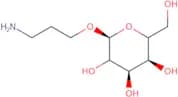
CAS:β-Xylobiose hexa-O-acetate is an acetyl protected xylobioseFormula:C22H30O15Purity:Min. 95%Color and Shape:PowderMolecular weight:534.46 g/mol3-Aminopropyl α-D-mannopyranoside
CAS:Mannose with an aliphatic 3 carbon amine linker.Formula:C9H19NO6Purity:Min. 95%Color and Shape:PowderMolecular weight:237.25 g/mol(2R, 3R, 4R) -3-Benzyloxy- 1- benzyl-4- (hydroxymethyl) - 2- azetidinecarboxylic acid methyl ester
(2R, 3R, 4R) -3-Benzyloxy- 1- benzyl-4-(hydroxymethyl)- 2-azetidinecarboxylic acid methyl ester is an oligosaccharide. It is a modification of the Oligosaccharide which is a carbohydrate with multiple saccharides. This means that it contains two or more types of sugar monomers. The primary type of sugar in this compound is the Monosaccharide, which are single units of sugar that are joined together to form a sugar polymer. The other type of sugar in this compound is the Polysaccharide, which is made up of many different monomers. Carbohydrates are an important source of energy for living organisms and they can be found in many different forms such as sugars and starches. This compound has been modified by Methylation (addition of a methyl group), Glycosylation (addition of glycosidicPurity:Min. 95%Calcium L(-)-arabonate tetrahydrate
CAS:Calcium L-Arabonate is a calcium salt of arabic acid. Calcium L-Arabonate is an absorbable form of calcium that has been shown to be effective in the prevention and treatment of osteoporosis. This compound was discovered in 1867, but was not used for medicinal purposes until the early 1900s when it was found to be effective in treating the symptoms of rickets.Formula:C10H20O12·Ca·(H2O)4Purity:Min. 95%Color and Shape:White PowderMolecular weight:444.38 g/molN-Methyl-L-glucosamine
CAS:N-Methyl-L-glucosamine is a monosaccharide that is used as a building block for glycosaminoglycans. It can be synthesized by the enzyme glucoamylase from glucose and UDP-N-acetylglucosamine, or supplied exogenously as a dietary supplement. N-Methyl-L-glucosamine is stable in the presence of light and resistant to microbial degradation. This agent has been shown to be effective in inhibiting skin cancer in mice when combined with other agents such as hydroquinone, retinoic acid, and tretinoin. N-Methyl-L-glucosamine has been shown to have antiangiogenic properties on tubule cells, which may be due to its ability to inhibit the production of vascular endothelial growth factor (VEGF) in these cells.Formula:C7H15NO5Purity:Min. 95%Molecular weight:193.2 g/mola-D-Galactose-sp-biotin
a-D-Galactose-sp-biotin is a glycosylation product with a complex carbohydrate structure. It is synthesized by reacting a galactose with a spacer arm and biotin. The product has been modified to include fluorination, saccharide modification, and Oligosaccharide synthesis. This product is available in high purity and CAS No.Formula:C25H44N4O9SPurity:Min. 95%Color and Shape:PowderMolecular weight:576.7 g/molPhenyl 2-azido-2-deoxy-b-D-selenofucopyranoside
Phenyl 2-azido-2-deoxy-b-D-selenofucopyranoside is a carbohydrate with the CAS number 54519-52-8. It is a custom synthesis that is available in high purity and can be methylated, glycosylated and click modified. Phenyl 2-azido-2-deoxy-b-D-selenofucopyranoside is an oligosaccharide that has been fluorinated, which makes it stable at higher temperatures. This product is used as a synthetic building block for complex carbohydrates and saccharides.Purity:Min. 95%Methyl-2,3,4,6-tetra-O-acetyl-α-D-mannopyranoside
CAS:Methyl-2,3,4,6-tetra-O-acetyl-alpha-D-mannopyranoside is a sugar that is synthesized by the methylation of an alpha-D-mannopyranoside. This compound can be customized for any application and is available in high purity. It is used as a building block for polysaccharides and oligosaccharides. Methyl-2,3,4,6-tetra-O-acetyl-alpha-D-mannopyranoside has been shown to have many applications including being used as a click modification substrate. The synthesis of this compound can be done by fluorination or glycosylation.
Formula:C15H22O10Purity:Min. 95%Color and Shape:PowderMolecular weight:362.33 g/mol1,2-O-Isopropylidene-b-L-arabinofuranose
1,2-O-Isopropylidene-b-L-arabinofuranose is a custom synthesis. It is modified by fluorination, methylation, and monosaccharide synthesis. This product can be used in the creation of oligosaccharides and saccharides. 1,2-O-Isopropylidene-b-L-arabinofuranose is a carbohydrate that has been glycosylated and polysaccharided with other sugars to form complex carbohydrates.Purity:Min. 95%1-Deoxy-1-nitro-D-mannitol
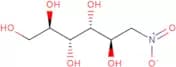
CAS:1-Deoxy-1-nitro-D-mannitol is an inorganic molecule that has a proton and a voltammetry. It is used to monitor the transport of d-arabinose across the blood vessels in the femoral vein. This compound is synthesized by the reaction of sodium nitrite with mannitol in the presence of hydrochloric acid. It can be detected using optical techniques, such as UV/VIS spectroscopy, fluorescence spectroscopy, and absorption spectroscopy. 1-Deoxy-1-nitro-D-mannitol has been shown to have a cotton effect on neurotransmitters in the frontoparietal cortex.Formula:C6H13NO7Purity:Min. 95%Molecular weight:211.17 g/mol1-Deoxy- 3, 4- O- isopropylidene -D- erythro- 2- pentulofuranose
1-Deoxy-3,4-O-isopropylidene-D-erythro-2-pentulofuranose is a monosaccharide sugar that is synthetically produced. It has a CAS number, and can be modified with fluorination, methylation, or click modification. This compound can be used as a sugar in glycosylation reactions, and has high purity.Purity:Min. 95%N-(2-Chlorobenzyliden)imino-2,3,4,6-tetra-O-pivaloyl-D-glucopyranoside
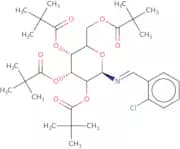
N-(2-Chlorobenzyliden)imino-2,3,4,6-tetra-O-pivaloyl-D-glucopyranoside is an oligosaccharide that is synthesized by the reaction of benzaldehyde with 2,3,4,6-tetra-O-pivaloyl D-glucopyranose. This compound has been modified to include a fluorine atom at the 6 position of the glucose ring. N-(2-Chlorobenzyliden)imino-2,3,4,6-tetra-O-pivaloyl-D-glucopyranoside can be used as a synthetic sugar in glycosylation reactions and Click chemistry.Formula:C33H48ClNO9Purity:Min. 95%Molecular weight:638.19 g/molUDP-D-glucose disodium salt
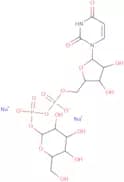
CAS:UDP-D-glucose disodium salt is a sugar-nucleotide substrate of glucosyltransferases. It’s used as the donor of glucose in the biosyntheses of glycoproteins, glycolipids and polysaccharides. It’s also used with its membrane receptor, P2RY14, to investigate innate mucosal immune responses in preventing infection in the female reproductive tract (FRT).Formula:C15H22N2Na2O17P2Purity:Min. 85 Area-%Color and Shape:White PowderMolecular weight:610.27 g/mol1,5-Anhydro-4,6-O-benzylidene-D-glucitol
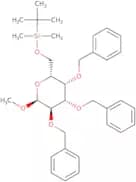
CAS:1,5-Anhydro-4,6-O-benzylidene-D-glucitol is a type of d-mannitol that is used as an intermediate in organic chemistry. It can be converted to a number of other compounds such as epoxides and nucleophilic agents. 1,5-Anhydro-4,6-O-benzylidene-D-glucitol is also an inhibitor of thrombin. It has been shown to inhibit the activity of trypsin and epoxide by forming hydrogen bonds with the enzyme's active sites. This molecule has been studied using molecular modeling and simulations with axial hydrogens found on the purine ring. In addition, 1,5-Anhydro-4,6-O-benzylidene -D -glucitol can be synthesized in organic chemistry through different routes. One method starts from dibenzoylmethane and 3-(Formula:C13H16O5Purity:Min. 95%Color and Shape:PowderMolecular weight:252.26 g/molMethyl 2,3,4-tri-O-benzyl-6-O-tert-butyldimethylsilyl-a-D-galactopyranoside
CAS:Methyl 2,3,4-tri-O-benzyl-6-O-tert-butyldimethylsilyl-a-D-galactopyranoside is a fluorinated monosaccharide that is used as a building block for the synthesis of oligosaccharides and polysaccharides. This chemical has been modified with methylation and click chemistry to give it an interesting utility in glycosylation reactions. Methyl 2,3,4-tri-O-benzyl-6-O-tert butyldimethylsilyl -a D galactopyranoside has a CAS number of 862730 60 7. It is soluble in methanol and ethanol and can be purified by recrystallization or chromatography. It has been shown to be nonmutagenic and nontoxic.Formula:C34H46O6SiPurity:Min. 95%Molecular weight:578.83 g/molN-Acetyl-D-glucosamine - plant source
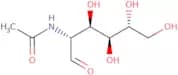
CAS:N-acetyl D-glucosamine (GlcNAc) is an aldohexose (2-acetamido-2-deoxyglucose) in which the hydroxyl group at position 2 is replaced by NHAc (Collins, 2006). N-acetyl D-glucosamine forms the exoskeletons of molluscs and insects as the building block of the polysaccharide chitin (Rudrapatnam, 2003). N-acetyl D-glucosamine is a key component of N- and O-linked glycans, present in glycolipids and the glycosaminoglycan hyaluronic acid (Fallacara, 2018). A recent study has suggested that N-acetyl D-glucosamine may have therapeutic potential for COVID-19 as it affects the spike protein-ACE2 receptor interaction during the infection with SARS-CoV-2 virus (Baysal, 2021).Formula:C8H15NO6Purity:Min. 98 Area-%Color and Shape:PowderMolecular weight:221.21 g/mol1,2:3,4-Diacetone-β-D-glucopyranoside
CAS:1,2:3,4-Diacetone-b-D-glucopyranoside is a glycosylation agent that is used in the synthesis of polysaccharides. It reacts with the hydroxyl groups of saccharide molecules to form glycosidic bonds. 1,2:3,4-Diacetone-b-D-glucopyranoside can be modified by methylation and fluorination reactions to produce different derivatives. This product is CAS No. 496879-67-5 and has a purity of >98%.Formula:C12H20O6Purity:Min. 97 Area-%Color and Shape:PowderMolecular weight:260.29 g/mol2-Amino-2-N-carbobenzoxy-2-deoxy-D-mannose
CAS:2-Amino-2-N-carbobenzoxy-2-deoxy-D-mannose is a custom synthesis product that can be produced with high purity. It has a CAS number of 137157-50-7 and is an oligosaccharide, polysaccharide, and carbohydrate. 2-Amino-2-N-carbobenzoxy-2-deoxy-D-mannose is synthesized by the methylation of 2,3,4,6 tetraaminopyrimidine with formaldehyde to give 1,4 diaminocyclohexane. This compound is then reacted with carbonyl chloride to give carbamoyl chloride. The last step in the synthesis process is reacting this compound with 2,3,4,6 tetraaminopyrimidine to give the final product.
Formula:C14H19NO7Purity:Min. 95%Color and Shape:White PowderMolecular weight:313.3 g/mol(3S, 5S) -1-Isopropyl-3, 4, 5- piperidinetriol
(3S, 5S) -1-Isopropyl-3, 4, 5- piperidinetriol is a synthetic oligosaccharide that has been modified by fluorination and glycosylation. It is synthesized from a sugar that is then methylated. This compound has a CAS number of 85314-88-5. It is used as an ingredient in food products to provide sweetness and bulk to baked goods.Purity:Min. 95%Cerebrosides - Phrenosin
CAS:Cerebrosides are a type of complex carbohydrate that consists of a sugar molecule attached to a fatty acid. The sugar molecule is either glucose or galactose and the fatty acid is usually a long chain fatty acid. Cerebrosides are found in the brain and spinal cord and their function is not yet fully understood. Phrenosin (Cerebrosides-Phrenosin) is a high purity, custom synthesis, sugar-based glycoconjugate with Click modification, fluorination, glycosylation, synthetic, methylation, modification, oligosaccharide, monosaccharide and saccharide as its main components. It has been shown to have strong anti-inflammatory activities in animal models.Formula:C42H81NO9Purity:Min. 95%Color and Shape:White PowderMolecular weight:744.09 g/mol4-Toluoyl 2,3-di-O-benzyl-4,6-O-benzylidene-b-D-thioglucopyranoside
4-Toluoyl 2,3-di-O-benzyl-4,6-O-benzylidene-b-D-thioglucopyranoside is a modified carbohydrate. It is an oligosaccharide that can be synthesized through the chemical modification of a saccharide molecule. The synthesis of this compound may involve methylation, saccharide, and click modification. This product has CAS No. 627072 and its molecular weight is 574.5. This product is available for custom synthesis in order to meet your needs.
Purity:Min. 95%2,3-Di-O-methyl-D-glucopyranose
CAS:2,3-Di-O-methyl-D-glucopyranose is a hederagenin, a disaccharide that is found in the bark of the Hedera helix plant. This compound has been shown to have anti-inflammatory properties and may be useful for treating arthritis. The hederagenin molecule contains two glucose molecules connected by an alpha 1,4 glycosidic bond. It also contains a carboxy group at C2 and a chain of carbons with a hydroxyl group at C3. There are three other chains of carbons with hydroxyl groups at C1, C4, and C5. These chains are linked together by an ether bond between carbon 5 and carbon 6. The 2,3-diO-methyl substituent is located on the O atom of one of the oxygen atoms in the hydroxyl groups. This molecule also has two triterpene glycosides attached to itFormula:C8H16O6Purity:Min. 95%Color and Shape:PowderMolecular weight:208.21 g/mol3,5-Di-O-benzoyl-2-deoxy-2,2-difluoro-1-O-methanesulfonyl-a-D-ribofuranoside - 98% alpha purity
CAS:Intermediate in the synthesis of GemcitabineFormula:C20H18F2O8SPurity:Min. 95%Color and Shape:PowderMolecular weight:456.41 g/mol2,4-Di- C- methyl- 3, 4- O- isopropylidene -L- arabinonic acid γ-lactone
2,4-Di-C-methyl-3,4-O-isopropylidene-L-arabinonic acid gamma-lactone is a modification of an oligosaccharide. It has been synthesized to be used in the synthesis of complex carbohydrates. This product is custom synthesized and can be ordered with a high purity grade. The CAS number for this product is 123373-94-7 and the molecular weight is 498.5 g/mol. This product's chemical formula is C13H14O11 and it has a melting point of 185 °C to 191 °C. This product has a monosaccharide, methylation, glycosylation, polysaccharide, sugar, fluorination, saccharide structure that makes it an Oligosaccharide Carbohydrate Complex Carbohydrate Synthetic Custom synthesis High purity Glycosylation Polysaccharide Sugar Fluorination Saccharide.
Purity:Min. 95%2-Azido-((R)-3,6-O-benzylidene)-2,6-dideoxy- L-galacto(gluco)furanose
CAS:2-Azido-((R)-3,6-O-benzylidene)-2,6-dideoxy- L-galacto(gluco)furanose is a synthetic sugar that is used as a substrate in glycosylation reactions. It is also used for click modification and fluorination reactions. The chemical structure of 2-azido-(R)-3,6-O-benzylidene)-2,6-dideoxy-- L--galacto(gluco)furanose is shown below:Purity:Min. 95%D-Glucoheptonic acid-1,4-lactone
CAS:D-Glucoheptonic acid-1,4-lactone is a chiral compound that can be used as an enantiomer of the natural sugar glucose. The human liver has been shown to metabolize this compound into proton and an analog of glucofuranose. This means that D-Glucoheptonic acid-1,4-lactone is able to be broken down by glycosidases. D-Glucoheptonic acid-1,4-lactone also inhibits α-L-rhamnosidase and other enzymes responsible for the breakdown of carbohydrates. This inhibition may lead to increased blood glucose levels in humans. D-Glucoheptonic acid-1,4-lactone has been shown to have inhibitory activities against both bacterial and mammalian enzymes. Hydrogen fluoride (HF) was used as a catalyst in the synthesis of this compound with benzylidene acetal
Formula:C7H12O7Purity:Min. 95%Color and Shape:PowderMolecular weight:208.17 g/molMethyl 2,3,4-tri-O-benzoyl-α-D-glucopyranoside
CAS:Methyl 2,3,4-tri-O-benzoyl-α-D-glucopyranoside is a glycosylation agent that is used for the synthesis of complex carbohydrates and monosaccharides. This product is also used in Click chemistry as a reactive group. Methyl 2,3,4-tri-O-benzoyl-α-D-glucopyranoside can be fluorinated or saccharified to produce high purity sugars for use in pharmaceuticals. Methyl 2,3,4-tri-O-benzoyl -αD -glucopyranoside has CAS number 52621–71–3. It is synthesized through the reaction of benzaldehyde with glycerol in the presence of sodium hydroxide and potassium carbonate.Formula:C28H26O9Purity:Min. 95%Color and Shape:PowderMolecular weight:506.5 g/mol5,6-O-Isopropylidene-L-ascorbic acid
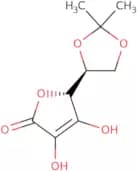
CAS:5,6-O-Isopropylidene-L-ascorbic acid is an access to the vitamin C molecule. It can be synthesized from L-ascorbic acid by reacting with isopropyl iodide and hydrochloric acid. Cryo-electron microscopy has been used to identify the location of 5,6-O-Isopropylidene-L-ascorbic acid in human ganglion cells. This compound has a number of physiological activities and is one of the most powerful antioxidants found in humans. 5,6-O-Isopropylidene-L-ascorbic acid is a precursor to retinoic acid and hydrogen chloride, which are important for erythropoietin production in the kidneys. Dehydroascorbate (DHA) is formed when 5,6-O-Isopropylidene-L-ascorbic acid reacts with hydrogen chloride. DFormula:C9H12O6Purity:Min. 95%Molecular weight:216.19 g/molXylitol
CAS:Xylitol is a sugar alcohol that can be found in some plants, including berries and corn husks. It is also produced by the body during normal metabolism. Xylitol has been shown to have antimicrobial properties against aerobacter aerogenes, a bacterium that inhabits the human gastrointestinal tract. Xylitol inhibits bacterial growth by binding to glucose-6-phosphate dehydrogenase, which prevents the conversion of glucose into energy for cell growth and reproduction. Xylitol also affects the water balance of cells by inhibiting their ability to extract water vapor from their environment. Xylitol is metabolized by a number of bacteria strains, which leads to the production of hydrogen peroxide or xylose as an end product. The biochemical properties of xylitol are still being researched and it is not yet known how this compound interacts with other biological compounds.Formula:C5H12O5Purity:Min. 98.5 Area-%Molecular weight:152.15 g/mol3-O-Benzyl-1,2-O-isopropylidene-D-xylose
3-O-Benzyl-1,2-O-isopropylidene-D-xylose is a synthetic sugar that can be used as a monosaccharide or an oligosaccharide. It has a CAS number and is a member of the Carbohydrate family. 3-O-Benzyl-1,2-O-isopropylidene-D-xylose can be custom synthesized and is available in high purity. It also has a click modification, which makes it more stable to oxidative conditions. This carbohydrate can be used for glycosylation or methylation.Purity:Min. 95%

![(2S, 3S, 4R) -3- [[[(2S, 3S, 4R) - 3- Azido- 4- [[[(1, 1- dimethylethyl) dimethylsilyl] oxy] methy…](/_next/image/?url=https%3A%2Fstatic.cymitquimica.com%2Fproducts%2F3D%2Fthumb-webp%2FMA163462.webp&w=3840&q=75)


![(5R, 6R, 7S, 8R) -5, 6, 7, 8-Tetrahydro- 5- methyl- tetrazolo[1, 5- a] pyridine- 6, 7, 8- triol](/_next/image/?url=https%3A%2Fstatic.cymitquimica.com%2Fproducts%2F3D%2Fthumb-webp%2FMT163943.webp&w=3840&q=75)




![2-Methyl-(3,4,6-tri-O-acetyl-1,2-dideoxy-a-D-glucopyrano)-[2,1-d]-2-oxazoline](/_next/image/?url=https%3A%2Fstatic.cymitquimica.com%2Fproducts%2F3D%2Fthumb-webp%2FMM07263.webp&w=3840&q=75)