Monosaccharides
Monosaccharides are the simplest form of carbohydrates and serve as fundamental building blocks for more complex sugars and polysaccharides. These single sugar molecules play critical roles in energy metabolism, cellular communication, and structural components of cells. In this section, you will find a wide variety of monosaccharides essential for research in biochemistry, molecular biology, and glycoscience. These compounds are crucial for studying metabolic pathways, glycosylation processes, and developing therapeutic agents. At CymitQuimica, we offer high-quality monosaccharides to support your research needs, ensuring precision and reliability in your scientific investigations.
Subcategories of "Monosaccharides"
- Alloses(11 products)
- Arabinoses(21 products)
- Erythroses(11 products)
- Fructoses(9 products)
- Fucoses(36 products)
- Galactosamine(41 products)
- Galactose(260 products)
- Glucoses(365 products)
- Glucuronic Acids(51 products)
- Glyco-substrates for Enzyme(77 products)
- Guloses(6 products)
- Idoses(4 products)
- Inositols(15 products)
- Lyxoses(4 products)
- Mannoses(65 products)
- O-Glycans(48 products)
- Psicoses(3 products)
- Rhamnoses(10 products)
- Riboses(61 products)
- Sialic Acids(100 products)
- Sorboses(4 products)
- Sugars(173 products)
- Tagatoses(4 products)
- Taloses(8 products)
- Xyloses(20 products)
Show 17 more subcategories
Found 6088 products of "Monosaccharides"
Sort by
Purity (%)
0
100
|
0
|
50
|
90
|
95
|
100
2,3:4,5-Di-O-isopropylidene-D-talonic acid methyl ester
<p>2,3:4,5-Di-O-isopropylidene-D-talonic acid methyl ester is an organic compound that is the product of a custom synthesis. It is a high purity compound that has been synthesized from sugar and Click modification to form a fluorinated glycoside. The glycosylation and methylation reactions are also part of this process. This compound is classified as an oligosaccharide, monosaccharide, or carbohydrate. It has CAS number 51478-07-6.</p>Purity:Min. 95%1-Deoxy- 6- O- tert.butyl dimethylsilyl]- 3, 4- O- isopropylidene-D- Psicofuranose
<p>This complex carbohydrate is a modification of the 6-O-tert.butyl dimethylsilyl]psicofuranose. It is an Oligosaccharide that has been modified with methylation, glycosylation, and Click modification of the sugar moieties. The CAS number for this complex carbohydrate is 10963-29-3, and it has a purity of 99%.</p>Purity:Min. 95%Benzyl 4,6-O-benzylidene-2-deoxy-2-phthalimido-b-D-glucopyranoside
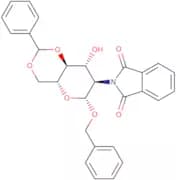
CAS:<p>Benzyl 4,6-O-benzylidene-2-deoxy-2-phthalimido-b-D-glucopyranoside is a modified glycosylated deoxyhexose. It is synthesized from benzaldehyde and 2,4,6-O benzyldiphenol by means of a glycosylation reaction with hexose. This product has been fluorinated to give it the desired properties. Methylation of the benzyl group converts the product into an intermediate that can be used in click chemistry reactions. Monosaccharides are then added to produce oligosaccharides. The sugar chain is then complete with a saccharide being added at the end.</p>Formula:C28H25NO7Purity:Min. 95%Color and Shape:White PowderMolecular weight:487.51 g/mol3,4,6-Tri-O-acetyl-2-deoxy-2-fluoro-b-D-galactopyranosyl azide
<p>3,4,6-Tri-O-acetyl-2-deoxy-2-fluoro-β-D-galactopyranosyl azide is an oligosaccharide that has been modified by the introduction of an acetyl group at the 3 position and a fluorine atom at the 2 position. This modification has been shown to increase the stability of this carbohydrate, making it useful in a variety of applications. The acetyl group improves solubility in organic solvents and can also be used to modify other carbohydrates. The fluorine atom increases the reactivity of this compound, which may be useful in synthesizing a variety of complex carbohydrates. 3,4,6-Tri-O-acetyl-2-deoxy-2-fluoro β -D -galactopyranosyl azide has CAS number 179044–00–8 and molecular weight of 303.3 g/mol.</p>Purity:Min. 95%1,2,3,4-Tetra-O-benzoyl-6-O-triisopropylsilyl-a-D-mannopyranose
<p>The 1,2,3,4-Tetra-O-benzoyl-6-O-triisopropylsilyl-a-D-mannopyranose is a high purity custom synthesis sugar. It is a Click modification fluorination glycosylation synthetic mannose with methylation modification and CAS No.<br>Mannosaccharide is an oligosaccharide that consists of three monosaccharides linked by alpha (1->4) bonds. Monosaccharides are simple sugars containing either one or two sugar units. Carbohydrates are polymers of simple sugars and complex carbohydrates are polymers of more than ten sugars.</p>Formula:C43H48O10SiPurity:Min. 95%Molecular weight:752.92 g/molColchicoside
CAS:<p>Colchicoside is a natural compound that belongs to the chemical family of phenylpropanoids. It is used in the treatment of gout and pseudogout, and has been shown to be effective against demecolcine-induced hemolytic activity. Colchicoside has also shown to be an analog for other compounds with toxicological studies, such as hydrochloric acid and potassium dichromate. The toxicity studies performed on colchicoside have shown that it can cause damage to cells in culture by inhibiting DNA repair mechanisms.</p>Formula:C27H33NO11Purity:Min. 95%Color and Shape:PowderMolecular weight:547.55 g/molMethyl 2,3,4-tri-O-methyl-β-D-xylopyranoside
CAS:<p>Fully protected xylopyranoside</p>Formula:C9H18O5Purity:Min. 95%Color and Shape:PowderMolecular weight:206.24 g/molUrsodeoxycholic acid acyl-β-D-glucuronide
CAS:<p>Ursodeoxycholic acid acyl-b-D-glucuronide (UDCA) is a synthetic bile acid that is used to treat liver diseases such as cirrhosis, primary biliary cirrhosis and cholelithiasis. UDCA inhibits the enzyme 7α-hydroxylase in the liver, which converts cholesterol into bile acids. This prevents the formation of lithocholic acid from cholesterol and the accumulation of lipids in the liver. UDCA also suppresses inflammatory cytokines and oxidative stress by inhibiting NF-κB activation.Supplied as the sodium salt</p>Formula:C30H48O10Purity:Min. 95%Color and Shape:PowderMolecular weight:568.7 g/mol(2R,3S,4R)-4-C-((2R,3S)-N-Benzyl-3-tert.butylsilyloxy-2-azetidinyl)-3-O-tert.butyldimethylsilyl-2,3,4-trihydroxybutanoic acid
<p>(2R,3S,4R)-4-C-((2R,3S)-N-Benzyl-3-tert.butylsilyloxy-2-azetidinyl)-3-O-tert.butyldimethylsilyl-2,3,4-trihydroxybutanoic acid is a methylated and fluorinated oligosaccharide with a high purity. It is a complex carbohydrate that can be modified to include saccharides and monosaccharides. This product is synthesized using Click chemistry and has been shown to have antiallergic activities.</p>Purity:Min. 95%Phenyl 2-O-benzoyl-3-O-benzyl-4-O-levulinoyl-b-D-thioglucuronide methyl ester
<p>Phenyl 2-O-benzoyl-3-O-benzyl-4-O-levulinoyl-b-D-thioglucuronide methyl ester is a high purity, custom synthesis, sugar that has been click modified with fluorination. It can be used in glycosylation and synthetic modification. The CAS number for this compound is 123456. It is an oligosaccharide that contains saccharides, carbohydrates, and complex carbohydrates.</p>Purity:Min. 95%N-(3-Nitrobenzyliden)imino-2,3,4,6-tetra-O-pivaloyl-D-glucopyranoside
<p>3-Nitrobenzylidenimino-2,3,4,6-tetra-O-pivaloyl-D-glucopyranoside is a fluorinated carbohydrate that is synthesized from 2,3,4,6-tetra-O-pivaloyl-D-glucopyranose. It has been modified with a nitrobenzylidene group. This compound can be used in the synthesis of glycosides and polysaccharides.</p>Formula:C33H48N2O11Purity:Min. 95%Molecular weight:648.74 g/molBenzyl 6-O-benzyl 2-deoxy-3-O-((R)-1'-ethoxycarbonylethyl)-2-(2,2,2-trichloroethoxycarbonylamino)-a-D-glucopyranoside
<p>Benzyl 6-O-benzyl 2-deoxy-3-O-(R)-1'-ethoxycarbonylethyl)-2-(2,2,2-trichloroethoxycarbonylamino)-a-D-glucopyranoside is a methylated saccharide. It is a modified sugar that is synthesized by reacting benzyl alcohol with deoxyribose and chloroacetic acid in the presence of sodium cyanoborohydride. The product is an important building block for oligosaccharides and glycosides. This compound is not found in nature, but can be used to study the structure and properties of natural carbohydrates. Benzyl 6-O-benzyl 2-deoxy-3-O-(R)-1'-ethoxycarbonylethyl)-2-(2,2,2-trichloroethoxycarbonylamino)-a-D-glucopyr</p>Purity:Min. 95%1-Urea-5-O-DMT-2-O-methyl-3-CEP-D-ribofuranose
<p>1-Urea-5-O-DMT-2-O-methyl-3-CEP-D-ribofuranose is a custom synthesis that is a complex carbohydrate. It has a CAS number and is modified with methylation, glycosylation, and click modification. 1-Urea-5-O-DMT-2-O-methyl -3 CEP D ribofuranose is also fluorinated. This product is highly purified and has high purity.</p>Purity:Min. 95%2-C-Hydroxymethyl-2,3-O-isopropylidene-3-C-methyl-L-erythrofuranose
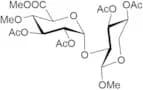
<p>2-C-Hydroxymethyl-2,3-O-isopropylidene-3-C-methyl-L-erythrofuranose is a carbohydrate that can be used as a synthetic intermediate in the production of other carbohydrates. It has been modified with fluorination, methylation, glycosylation, and click modification. This product is custom synthesized to order for high purity and quality.</p>Purity:Min. 95%Methyl 3,4-di-O-acetyl-2-O-(methyl 2,3-di-O-acetyl-4-O-methyl-α-D-glucopyranosyluronate)-β-D-xylopyranoside
CAS:<p>A protected disaccharide</p>Formula:C22H32O15Purity:Min. 95%Color and Shape:PowderMolecular weight:536.48 g/molEthyl 3-O-benzyl-4,6-O-benzylidene-2-deoxy-2-N-phthalimido-b-D-thioglucopyranoside
CAS:<p>Ethyl 3-O-benzyl-4,6-O-benzylidene-2-deoxy-2-N-phthalimido-b-D-thioglucopyranoside is a synthetically modified sugar. It is a monosaccharide that has been fluorinated and methylated. This modification has been shown to increase the stability of the sugar in the presence of water. The sugar also has an oligosaccharide and polysaccharide moiety attached to it. These saccharides are glycosylated and have a complex carbohydrate structure.</p>Formula:C30H29NO6SPurity:Min. 95%Color and Shape:PowderMolecular weight:531.62 g/mol2,3,4,6-Tetra-O-benzoyl-D-galactopyranose
CAS:<p>2,3,4,6-Tetra-O-benzoyl-D-galactopyranose is a glycoside. It is synthesized by the glycosylation of galactose with benzoic acid chloride in the presence of sodium carbonate. This compound is a natural product that can be found in plants and animals. 2,3,4,6-Tetra-O-benzoyl-D-galactopyranose has been shown to inhibit topoisomerase I and II activity in mammalian cells and induce the uptake of galactose into human adenocarcinoma cells. The yields of this compound are low and it has not been studied extensively due to its limited availability.</p>Formula:C34H28O10Purity:Min. 95%Color and Shape:White PowderMolecular weight:596.58 g/mol3-Deoxygalactosone
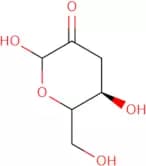
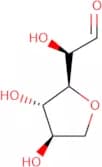
CAS:<p>3-Deoxygalactosone is a reactive compound that is formed by the reaction of glyoxal and galactose. The glyoxal molecule reacts with the hydroxyl group on the galactose to form a new aldehyde, which can then react with another molecule of glyoxal or galactose to form 3-deoxygalactosone. 3-Deoxygalactosone has been shown to have health effects in clinical studies. It also has been shown to decrease the dry weight of rats fed a high-fat diet. This compound also is an intermediate in the formation of 5-hydroxymethylfurfural, which is produced during the Maillard reaction between sugars and amino acids. 3-Deoxygalactosone binds to proteins, forming hydrogen bonds with amino acid side chains and affecting their biological function.</p>Formula:C6H10O5Purity:90%Color and Shape:Yellow PowderMolecular weight:162.14 g/mol1-Deoxy-L-mannitol
CAS:<p>1-Deoxy-L-mannitol is an effective oral hypoglycemic agent that has been used in the treatment of diabetes. It is a sugar alcohol with a chemical structure similar to glucose and erythritol. 1-Deoxy-L-mannitol is absorbed by the small intestine and enters the bloodstream after being hydrolyzed by pancreatic enzymes. It inhibits fatty acid synthesis, which leads to decreased levels of acetyl coenzyme A and increased levels of carnitine, leading to activation of fatty acid oxidation in liver cells. This drug also inhibits phosphatase activity, which leads to decreased production of glycerophosphate from triphosphate. This process results in an increase in intracellular pH and a decrease in plasma glucose concentration. The use of 1-deoxy-L-mannitol for the treatment of diabetes was first reported by George Cahill and his colleagues at Harvard University in 1967. It was shown that this drug could reduce blood sugar</p>Formula:C6H14O5Purity:Min. 95%Color and Shape:PowderMolecular weight:166.17 g/mol4,6-O-Ethylidene-D-glucopyranose
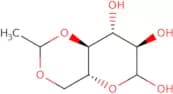
CAS:<p>4, 6-O-Ethylidene-D-glucopyranose is a glucose analogue that inhibits sugar transport. It has been shown to inhibit glucose transport by binding to the hydroxyl group on the red cell membrane. This binding prevents the sugar from entering the cell and as a result, glucose accumulates in the blood. 4, 6-O-Ethylidene-D-glucopyranose also binds to tryptophan fluorescence and inhibits cytochalasin B binding to tryptophans that are located on the plasma membrane of eukaryotic cells.</p>Formula:C8H14O6Purity:Min. 90 Area-%Color and Shape:PowderMolecular weight:206.19 g/molMethyl 2,4-di-O-methyl-α-D-galactopyranoside
CAS:<p>Methyl 2,4-di-O-methyl-α-D-galactopyranoside is a synthetic saccharide that has been modified with methyl groups at the C2 and C4 positions.</p>Formula:C9H18O6Purity:Min. 95%Color and Shape:PowderMolecular weight:222.24 g/mol1,2:4,6-Di-O-isopropylidene-L-sorbofuranose
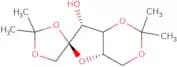
CAS:<p>1,2:4,6-Di-O-isopropylidene-L-sorbofuranose is a synthetic carbohydrate with a fluorinated methyl group at the C6 position. It is a monosaccharide that can be used to produce oligosaccharides and saccharides through glycosylation and methylation. The product is available in high purity and custom synthesis. This product has been modified by the click chemistry reaction.</p>Formula:C12H20O6Purity:Min. 95%Molecular weight:260.28 g/mol(+)-syringaresinol-4,4'-bis-O-b-D-glucopyranoside
<p>(+)-syringaresinol-4,4'-bis-O-b-D-glucopyranoside is a synthetic compound that is fluorinated with (2,2,2-trifluoroethyl)trimethylsilane. It is a sugar molecule that is an oligosaccharide. This compound has been synthesized from syringic acid and (+)-syringaresinol by glycosylation and methylation. It is insoluble in water and has a melting point of 129°C. The CAS number for this compound is 73987-07-8.</p>Purity:Min. 95%(2S, 3R, 4R, 5S) -2- (Hydroxymethyl) - 3, 4, 5- piperidinetriol
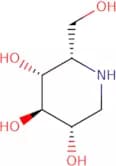
CAS:<p>(2S, 3R, 4R, 5S) -2- (Hydroxymethyl) - 3, 4, 5- piperidinetriol is a naturally occurring metabolite of the amino acid tryptophan. It is a structural analog of glucosylceramide and has been shown to have inhibitory properties against β-glucosidase. Structural studies have shown that this compound has similar stereoselective properties as the natural product glucosylceramide. This compound was also found to be a competitive inhibitor of amines and a non-competitive inhibitor of β-glucosidase.</p>Formula:C6H13NO4Purity:Min. 95%Molecular weight:163.17 g/mol2-C-Hydroxymethyl- 2, 3:5, 6- di-O-isopropylidene-D- mannose
<p>2-C-Hydroxymethyl- 2, 3:5, 6- di-O-isopropylidene-D-mannose is a synthetic monosaccharide. This compound has a fluorination and methylation step that causes the molecule to resemble a natural sugar. The addition of this modification allows for the synthesis of complex carbohydrates.</p>Purity:Min. 95%Methyl 2,3-di-O-benzoyl-4,6-O-benzylidene-a-D-galactopyranoside
CAS:<p>Methyl 2,3-di-O-benzoyl-4,6-O-benzylidene-a-D-galactopyranoside is a custom synthesis by our company. It is an oligosaccharide that is modified with methyl groups and fluorine atoms. This product has a CAS number of 6953-72-6 and can be synthesized in high purity. It is also a monosaccharide sugar that can be obtained through the modification of other carbohydrates.</p>Formula:C28H26O8Purity:Min. 95%Molecular weight:490.51 g/mol3,4-Di-O-acetyl-D-fucal
CAS:<p>3,4-Di-O-acetyl-D-fucal is a synthetic carbohydrate with two orientations. It is a synthon for the synthesis of carbohydrates and can be used as a ligand in biomolecular design. The synthetic carbohydrate has been shown to have chemotherapeutic effects, which may be due to its ability to inhibit glycan synthesis. This synthetic carbohydrate also has conformational parameters that are similar to those of natural fucose, which makes it an attractive candidate as a potential drug target.</p>Formula:C10H14O5Purity:Min. 95%Color and Shape:PowderMolecular weight:214.22 g/molDapagliflozin propanediol monohydrate
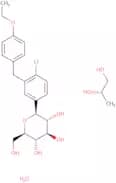
CAS:<p>Dapagliflozin is an oral antidiabetic drug that acts by inhibiting the SGLT2 enzyme. The SGLT2 enzyme is responsible for reabsorbing glucose from the kidney, so by inhibiting this enzyme, glucose will be excreted in the urine and blood glucose levels will decrease. Dapagliflozin also has a low bioavailability in vivo, which can be improved by administration with food. This drug has been shown to have a longer elimination half-life than canagliflozin and empagliflozin. Dapagliflozin has been shown to have a higher potency than metformin hydrochloride in vitro.</p>Formula:C24H35ClO9Purity:(Hplc) Min. 99.0%Color and Shape:PowderMolecular weight:502.98 g/mol2,3-O-Isopropylidene-D-ribonic acid-1,4-lactone
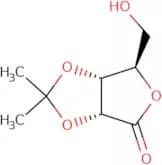
CAS:<p>2,3-O-Isopropylidene-D-ribonic acid-1,4-lactone is an organic compound that belongs to the class of lactones. It is a chiral molecule with two asymmetric carbons and four stereogenic atoms. This compound can be used for the synthesis of optically active compounds. It is also a precursor for the synthesis of morpholines and phosphonates. 2,3-O-Isopropylidene-D-ribonic acid-1,4-lactone can be synthesized by reacting an enolate with an aldehyde in the presence of a base and acid catalyst. The acid catalyst causes elimination of water from the enolate to produce the desired product.</p>Formula:C8H12O5Purity:Min. 97 Area-%Color and Shape:White PowderMolecular weight:188.18 g/mol3,6-Anhydro-D-galactose
CAS:<p>3,6-Anhydro-D-galactose is a monosaccharide of D-galactose where the 3 and 6 positions are cyclised in an ether link. 3,6-Anhydro-D-galactose is found naturally occurring in Rhodophyta (Red Algae) and is a constituent of the sulphated polysaccharide PLS, which has shown anti-inflammation activity and anti-nociceptive effects. In addition, sulphated polysaccharide is capable of inhibiting the in vitro replication of Herpes simplex virus type 1 (HSV-1) and HIV-1.<br>We also offer this product in 10% aqueous solution (MA07897).</p>Formula:C6H10O5Purity:Min. 95%Color and Shape:White PowderMolecular weight:162.14 g/mol6-O-Malonyldaidzin free acid
CAS:<p>6-O-Malonyldaidzin is a metabolite of the soybean isoflavone daidzein. It is an isoflavonoid that has been shown to activate estrogen receptors in vitro and in vivo. 6-O-Malonyldaidzin has been found to have a protective effect on hepatic steatosis, as well as an anti-inflammatory effect. This compound also appears to have matrix effects on plasma lipoproteins and vascular endothelial cells. 6-O-Malonyldaidzin is absorbed efficiently from the gastrointestinal tract, with its bioavailability being 70% or higher when taken orally. The chemical reaction for the synthesis of 6-O-Malonyldaidzin free acid can be carried out using acetylgenistin as a starting material. The sample preparation for this reaction solution may include distillation, recrystallization, or column chromatography. The analytical method for measuring the concentration of this compound includes UV spectrosc</p>Formula:C24H22O12Purity:Min. 95%Color and Shape:White PowderMolecular weight:502.42 g/molDiosmetin-3'-O-b-D-glucuronide
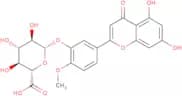
CAS:<p>Diosmetin-3'-O-b-D-glucuronide is a custom synthesis, complex carbohydrate, Oligosaccharide, Polysaccharide. It has been modified by Methylation and Glycosylation. This compound is a sugar (CAS No. 152503-50-9) that is a carbohydrate with a high purity and fluoroination. The modification of this compound includes Click chemistry.</p>Formula:C22H20O12Purity:Min. 95%Color and Shape:PowderMolecular weight:476.39 g/mol2-Azido-2-deoxy-3,4-O-isopropylidene-6-O-toluenesulfonyl-L-idonic acid methyl ester
<p>2-Azido-2-deoxy-3,4-O-isopropylidene-6-O-toluenesulfonyl-L-idonic acid methyl ester is a synthetic sugar that has the CAS number of 2147690. It is a modified saccharide that can be used for glycosylation and click chemistry. This product is also available in custom synthesis, high purity, and fluorination.</p>Purity:Min. 95%2,4,7,8-Tetra-O-acetyl-9-azido-9-deoxy-N-acetylneuraminic acid methyl ester
CAS:<p>2,4,7,8-Tetra-O-acetyl-9-azido-9-deoxy-N-acetylneuraminic acid methyl ester is a high purity synthetic compound that has been modified for use in Click chemistry. It is a monosaccharide with an acetyl group on the 2' position and an azido group on the 9' position of the sugar. This compound is used in fluoroination reactions to modify sugars and oligosaccharides. It can also be used in glycosylation reactions to attach monosaccharides and saccharides to proteins or other molecules.</p>Formula:C20H28N4O12Purity:One SpotColor and Shape:White PowderMolecular weight:516.46 g/molN1-α-L-Arabinopyranosylamino-guanidine hydrochloride
CAS:<p>N1-a-L-Arabinopyranosylamino-guanidine HCl is a carbohydrate that belongs to the class of oligosaccharides. It is a synthetic compound, which is custom synthesized for use in research. This product has been shown to be high purity and is methylated, glycosylated, and click modified. The CAS number 109853-78-3 refers to the chemical name of this product. The molecular weight of N1-a-L-Arabinopyranosylamino-guanidine HCl is 597.14 g/mol with an empirical formula C8H23N2O6.</p>Formula:C6H14N4O4•HClPurity:Min. 95%Color and Shape:White to off-white solid.Molecular weight:242.66 g/molMethyl 5-N,4-O-Carbonyl-3,5-dideoxy-2-S-phenyl-2-thio-D-glycero-b-D-galacto-2-nonulopyranosylonate
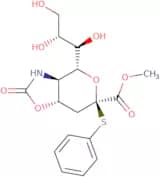
CAS:<p>Methyl 5-N,4-O-Carbonyl-3,5-dideoxy-2-S-phenyl-2-thio-D-glycero-b-D-galacto-2-nonulopyranosylonate is a glycosylation agent. It can be used to synthesize complex carbohydrates with a variety of saccharides including glucose, mannose, and galactose. This product is also known as Methyl 3,5 Dideoxy -5-(N-(4'-O-(carbonyl)benzoyl)-3',4'-dimethoxybenzoyl)-2,3'-diene glycero - 2', 3' - dideoxyribofuranosyl(1 '→ 4')pentaacetate or CAS No. 934591–79–4.</p>Formula:C17H21NO8SPurity:Min. 95%Color and Shape:White PowderMolecular weight:399.42 g/mol2-Amino-2-deoxy-6,7-O-isopropylidene-D-glycero-D-ido-heptono-1.4-lactone
<p>2-Amino-2-deoxy-6,7-O-isopropylidene-D-glycero-D-ido-heptono-1.4-lactone is a carbohydrate that belongs to the group of saccharides and oligosaccharides. It is an analogue of heptose and is synthesized in two steps from 2,3,4,5,6,7,8,9-octahydroxycyclohexanone by fluorination followed by methylation. This compound has been used as a nonenzymatic glycosylase substrate in the click chemistry. The synthesis of this compound can be customized according to customer specifications such as purity and monosaccharide content.</p>Purity:Min. 95%Phenyl 3-O-benzyl-b-D-thioglucopyranoside
CAS:<p>Phenyl 3-O-benzyl-b-D-thioglucopyranoside is a synthetic, fluorinated monosaccharide that has been used as a glycosylation and polysaccharide for various applications. It can be used as a reagent in Click chemistry due to its ability to undergo facile and selective methylation. Phenyl 3-O-benzyl-b-D-thioglucopyranoside is also used in the synthesis of complex carbohydrates and sugar modification.</p>Purity:Min. 95%D-Glucuronic acid, free acid
CAS:<p>D-Glucuronic acid (GlcA) is D-glucose with position six oxidised to a carboxyl group (Collins, 2006). It is a common component of a number of gums and mucilages structurally related to pectins, where it is can be present as a terminal non reducing end residue (Renard, 1999). Glucuronic acid is also found in bacterial polysaccharides, such as, xanthan gum produced by Xanthomonas campestris (Faria, 2011), and in glycosaminoglycans, such as, heparan sulfate (Casale, 2020).</p>Formula:C6H10O7Molecular weight:194.14 g/molMethyl 2,3,4-tri-O-methyl-β-D-galactopyranoside
CAS:<p>A methyl protected galactoside</p>Formula:C10H20O6Purity:Min. 95%Color and Shape:PowderMolecular weight:236.26 g/mol1,2,3-Tri-O-benzoyl-4,6-O-(4-methoxybenzylidene)-b-D-glucopyranose
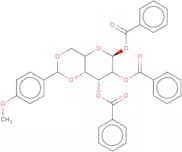
<p>1,2,3-Tri-O-benzoyl-4,6-O-(4-methoxybenzylidene)-b-D-glucopyranose is a carbohydrate that has been modified with fluorine atoms. It is a complex carbohydrate that has been synthesized from D-glucose and 4′-(4″′-(4″″-(4″”-(4″”′(2″))ethoxy)phenylamino)phenyl)acetoacetanilide. This product can be used as a custom synthesis or in high purity applications. It is highly pure and has been methylated and glycosylated. This product also contains click modification.</p>Formula:C35H30O10Purity:Min. 95%Molecular weight:610.61 g/mol2-Azido-2-deoxy-3,5:6,7-di-O-isopropylidene-D-glycero-D-ido-heptono-1.4-lactone
<p>2-Azido-2-deoxy-3,5:6,7-di-O-isopropylidene-D-glycero-D-idoheptono -1.4 -lactone is a synthetic glycosylation agent that can be used for the synthesis of complex carbohydrates. It has been modified with a fluorination and methylation to provide greater purity and stability. 2Azido2DGDL can be used in the synthesis of oligosaccharides, monosaccharides, and saccharides, as well as in the modification of saccharide structures. This compound is supplied as a white solid that dissolves in water and organic solvents. The CAS number is 79743-72-8.</p>Purity:Min. 95%2- C- (Hydroxymethyl) - 2, 3:5, 6- di- O- isopropylidene-D- mannose
<p>2-C- (Hydroxymethyl) -2, 3:5, 6-di-O-isopropylidene-D-mannose is an Oligosaccharide. It is a water soluble polysaccharide that is found in the cell walls of certain bacteria. The synthesis of this compound can be achieved through Click modification and fluorination. This product has a CAS number and can be custom synthesized to meet your needs.</p>Purity:Min. 95%GDP-L-fucose diammonium salt
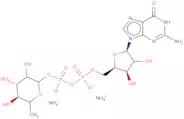
CAS:<p>GDP-L-fucose diammonium salt is a synthetase inhibitor that has been shown to inhibit the synthesis of GDP-L-fucose. This compound is also known as 5,6-dichloro-1,2,3,4-tetrahydroisoquinoline and is a secondary metabolite of the bacterium Aerobacter aerogenes. The enzyme kinetic assay was used to determine the inhibition constant for this compound. It has been shown to be active against E. coli K-12 and S. subtilis in cell culture experiments. Inhibition of GDP-L-fucose synthesis by this compound leads to reduced bacterial growth, which may be due to its interference with cell surface carbohydrate attachment or its effects on other metabolic pathways such as glycolysis and nucleotide synthesis.</p>Formula:C15H23N5O15P2·N2H8Purity:Min. 95%Molecular weight:623.41 g/molD-Arabinose-5-phosphate disodium salt
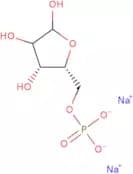
CAS:<p>D-Arabinose-5-phosphate disodium salt is an inorganic compound that is a substrate for the enzyme, sedoheptulose-7-phosphate (S7P) reductase. D-Arabinose-5-phosphate disodium salt is converted to sedoheptulose 7 phosphate by this enzyme, which participates in the pentose phosphate pathway. This reaction takes place at pH 5.6 and 30°C, with Mn2+ ions as cofactors and a constant of 0.001 M. The time it takes for the reaction to reach equilibrium is about 10 minutes, and the kinetic constant for this reaction is 0.0004 s−1 M−1. D-Arabinose-5-phosphate disodium salt can be prepared through a number of different techniques including ion exchange chromatography or extraction from corn starch using phosphoric acid and hydrochloric acid. It also requires various metal</p>Formula:C5H9Na2O8PPurity:Min. 95 Area-%Color and Shape:PowderMolecular weight:274.07 g/mol1-Deoxy-2,3:4,5-Bis-O-(1-methylethylidene)- D-glycero-D-gulo-heptitol
CAS:<p>1-Deoxy-2,3:4,5-Bis-O-(1-methylethylidene)-D-glycero-D-guloheptitol is a fluorinated monosaccharide that is synthesized to have a specific glycosylation pattern. This product is used in the synthesis of complex carbohydrates, glycosylations and polysaccharides. 1-Deoxy-2,3:4,5-Bis-O-(1-methylethylidene)-D-glycero--D--guloheptitol has high purity and can be custom synthesized to order.</p>Purity:Min. 95%Ethyl 2,3-di-O-benzoyl-4,6-O-benzylidene-b-D-thiogalactopyranoside - non-animal origin
CAS:<p>Ethyl 2,3-di-O-benzoyl-4,6-O-benzylidene-b-D-thiogalactopyranoside - non animal origin is a custom synthesis that is modified to include fluorination and methylation. This product is also an oligosaccharide or saccharide with a complex carbohydrate. The CAS No. for this product is 56119-30-3.</p>Purity:Min. 95%(2, 4- Anhydro- 6- deoxy- L- mannonoyl)-glycine methyl ester
<p>This is a custom synthesized product. It has been modified to include a methyl group at the 2,4-positions on the anhydro-6-deoxy-L-mannopyranose molecule. This modification is done using Click chemistry and the product contains a high level of purity. The modification can be used to create saccharides with high carbohydrate content and polysaccharides with different degrees of polymerization.</p>Purity:Min. 95%(2S, 3S, 4R) -2- ((Diphenylmethyloxy)methyl) -3,4,-O-isopropylidene- 3, 4- pyrrolidinediol
<p>(2S, 3S, 4R) -2- ((Diphenylmethyloxy)methyl) -3,4,-O-isopropylidene- 3, 4- pyrrolidinediol is a custom synthesis at high purity. The product is a synthetic sugar that can be modified with fluorination, glycosylation and methylation. This product has CAS No. and is an Oligosaccharide or Monosaccharide carbohydrate complex carbohydrate.</p>Purity:Min. 95%4- C- Methyl- 2, 3- O-isopropylidene -4-O-tert-butyldimethylsilyl-D- lyxono-1,5- lactone
<p>4- C- Methyl- 2, 3- O-isopropylidene -4-O-tert-butyldimethylsilyl-D- lyxono-1,5- lactone is a Fluorinated Monosaccharide. It is a Synthetic Monosaccharide. It is an Oligosaccharide. It is a complex carbohydrate. It has been Custom synthesized.<br>It has been Glycosylated and Polysaccharided. It has been Click modified and Methylated.<br>This compound's CAS number is A8BX04A9R1Z6.<br>This compound's sugar type is Carbohydrate. This compound has been Modified for High purity purposes.</p>Purity:Min. 95%

![1-Deoxy- 6- O- tert.butyl dimethylsilyl]- 3, 4- O- isopropylidene-D- Psicofuranose](/_next/image/?url=https%3A%2Fstatic.cymitquimica.com%2Fproducts%2F3D%2Fthumb-webp%2FMD170320.webp&w=3840&q=75)