Monosaccharides
Monosaccharides are the simplest form of carbohydrates and serve as fundamental building blocks for more complex sugars and polysaccharides. These single sugar molecules play critical roles in energy metabolism, cellular communication, and structural components of cells. In this section, you will find a wide variety of monosaccharides essential for research in biochemistry, molecular biology, and glycoscience. These compounds are crucial for studying metabolic pathways, glycosylation processes, and developing therapeutic agents. At CymitQuimica, we offer high-quality monosaccharides to support your research needs, ensuring precision and reliability in your scientific investigations.
Subcategories of "Monosaccharides"
- Alloses(11 products)
- Arabinoses(21 products)
- Erythroses(11 products)
- Fructoses(9 products)
- Fucoses(36 products)
- Galactosamine(41 products)
- Galactose(261 products)
- Glucoses(365 products)
- Glucuronic Acids(51 products)
- Glyco-substrates for Enzyme(77 products)
- Guloses(6 products)
- Idoses(4 products)
- Inositols(15 products)
- Lyxoses(4 products)
- Mannoses(65 products)
- O-Glycans(48 products)
- Psicoses(3 products)
- Rhamnoses(10 products)
- Riboses(61 products)
- Sialic Acids(100 products)
- Sorboses(4 products)
- Sugars(173 products)
- Tagatoses(4 products)
- Taloses(8 products)
- Xyloses(20 products)
Show 17 more subcategories
Found 6088 products of "Monosaccharides"
Sort by
Purity (%)
0
100
|
0
|
50
|
90
|
95
|
100
1-Deoxy-3,4-O-isopropylidene-D-allitol(D-altritol)
<p>1-Deoxy-3,4-O-isopropylidene-D-allitol (D-altritol) is a glycosylation product of D-mannitol. It is a methylated, fluorinated, saccharide with a complex carbohydrate structure that has been synthesized to be used as a reagent in Click chemistry. This compound serves as an alternative to the natural product D-mannitol and can be custom synthesized to meet your needs. 1-Deoxy-3,4-O-isopropylidene-D-allitol (D-altritol) has CAS number 225570–83–8.</p>Purity:Min. 95%D-Glucose 6-phosphate, monosodium salt
CAS:<p>D-Glucose 6-phosphate, monosodium salt is a natural compound found in honeybush (Cyclopia species) and other plants. The compound is also found in the human body as a result of its synthesis from glucose. D-Glucose 6-phosphate, monosodium salt is an inhibitor of NADPH cytochrome P450 reductase, which is an enzyme that converts NADPH to NADP+. This inhibition prevents the formation of nadph and causes an accumulation of reduced nicotinamide adenine dinucleotide (NADH), which leads to the inhibition of cell growth. D-Glucose 6-phosphate, monosodium salt has been shown to inhibit cancer cells and bacterial growth. It does this by inhibiting enzymes such as cytosolic phosphoglycerate kinase and phosphofructokinase.</p>Formula:C6H12O9PNaPurity:Min. 98.0 Area-%Molecular weight:282.12 g/mol3-Deoxy-1,2-O-isopropylidene-5-p-toluoyl-b-L-threo pentofuranose
<p>3-Deoxy-1,2-O-isopropylidene-5-p-toluoyl-b-L-threo pentofuranose is an Oligosaccharide with a molecular weight of 1094.00 Da. It is a synthetic sugar that is fluorinated at the 1' position and methylated at the 5' position. 3DOTF can be used as a substrate for glycosylation to produce glycans with desired terminal functionality. This product can also be modified using click chemistry to generate saccharides with novel functional groups.</p>Purity:Min. 95%4-O-(2-Acetamido-2-deoxy-b-D-glucopyranosyl)-L-fucopyranose
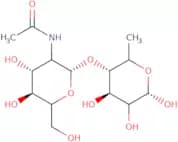
<p>4-O-(2-Acetamido-2-deoxy-b-D-glucopyranosyl)-L-fucopyranose is a synthetic oligosaccharide that is synthesized from the sugar 4-O-(2,3,4,6 tetraacetyl) fucose. It can be used as a substrate for glycosylation reactions and may also be used to modify other compounds. This product can be fluorinated or methylated and has a CAS number. The purity of this product is high with no detectable impurities.</p>Formula:C14H25NO10Purity:Min. 95%Molecular weight:367.35 g/molD-Erythrose - min 50% purity as a 70% aq. solution
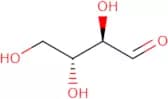
CAS:<p>Erythrose is a sugar that is used in the biosynthesis of other sugars, such as ribose and D-erythrose. It is also an intermediate in the pentose phosphate pathway for the production of NADPH. Erythrose can be converted to erythritol by reductase enzymes, which are necessary for the synthesis of DNA. The enzyme erythrose reductase has been shown to act on wild-type strains. Erythrose reduces d-erythrose to erythritol, which inhibits polymerase chain reactions by blocking transcription and replication of DNA. Erythrose has also been shown to have inhibitory properties against Toll-like receptor signaling pathways, which may be due to its ability to reduce reactive oxygen species (ROS) and hydrogen peroxide levels in cells.</p>Formula:C4H8O4Purity:Min. 50 Area-%Color and Shape:Clear LiquidMolecular weight:120.1 g/mol2-Deoxy-3,4-O-benzylidene-2-methylidene-D-ribono-1,5-lactone
<p>2-Deoxy-3,4-O-benzylidene-2-methylidene-D-ribono-1,5-lactone is a synthetic sugar that has been modified at the 3 and 4 positions of the sugar ring. The 2 position on the sugar ring has been fluorinated. It is monosaccharide that has been methylated at the 2 position of the sugar ring. The saccharide is a glycosylate and it has been glycosylated at the 1 and 5 positions of the sugar ring. It is a carbohydrate that belongs to a complex carbohydrate class.</p>Purity:Min. 95%2-Azido-2,6-dideoxy-3,5-((R)-benzylidene-L-mannofuranose
<p>2-Azido-2,6-dideoxy-3,5-((R)-benzylidene-L-mannofuranose) is a synthetic, fluorinated carbohydrate that can be used to modify saccharides, oligosaccharides, or polysaccharides with click chemistry. This product has been modified by the addition of an azido group at the 2 position and a fluoride atom at the 6 position. The CAS number for this product is 52765-69-0.</p>Purity:Min. 95%(2R, 3R, 4R) -3, 4- Dihydroxy- 2- (hydroxymethyl) - 1- pyrrolidinepropanoic acid
CAS:<p>(2R, 3R, 4R) -3, 4-Dihydroxy-2-(hydroxymethyl)-1-pyrrolidinepropanoic acid is a sugar derivative of Glycosylation. The compound is a custom synthesis that can be modified to meet your requirements. The CAS number is 1207674-35-8. This product has purity of >99% and can be used in the laboratory or as an intermediate in chemical synthesis.</p>Purity:Min. 95%3,5-Dideoxy-3,5-imino-1,2-O-isopropylidene-N-methyl-L-idofuranose
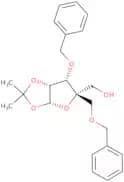
<p>3,5-Dideoxy-3,5-imino-1,2-O-isopropylidene-N-methyl-L-idofuranose is a custom synthesis that can be modified to the customer's specifications. This product has CAS No. and is a polysaccharide with modification. It is a carbohydrate that is a saccharide with methylation, glycosylation and click modification. This product is high purity, fluorinated and synthetic.</p>Purity:Min. 95%3-O-Benzyl-1,2-O-isoproylidene-4-C-(phenylmethoxy)methyl-β-L-lyxofuranose
CAS:<p>3-O-Benzyl-1,2-O-isoproylidene-4-C-(phenylmethoxy)methyl-b-L-lyxofuranose is a monosaccharide that belongs to the group of carbohydrates. It is used as a raw material in the synthesis of complex carbohydrates by click chemistry, glycosylation and methylation. 3-O-Benzyl--1,2--O--isoproylidene--4--C-(phenylmethoxy)methyl--b--L--lyxofuranose has been modified for use in fluoroformations and glycosylations. This compound can also be used as an intermediate for the synthesis of other saccharides.</p>Formula:C23H28O6Purity:Min. 95%Color and Shape:PowderMolecular weight:400.46 g/mol(S)-3-((2R,3S,5S)-5-Allyl-3-(benzyloxy)-4-oxotetrahydrofuran-2-yl)propane-1,2-diyl dibenzoate
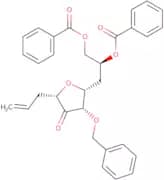
CAS:<p>(S)-3-((2R,3S,5S)-5-Allyl-3-(benzyloxy)-4-oxotetrahydrofuran-2-yl)propane-1,2-diyl dibenzoate is a small molecule that inhibits the activity of the epidermal growth factor receptor (EGFR). The EGFR is a transmembrane protein that binds to and signals through growth factor proteins. Inhibition of EGFR signaling prevents activation of downstream proteins such as extracellular signal regulated kinase 1/2 and phosphatidylinositol 3 kinase. This stabilized form has been shown to inhibit the growth of tumor cells in vitro and in vivo.</p>Purity:Min. 95%2,3,4,6-Tetra-O-acetyl-a-D-glucopyranosyl azide
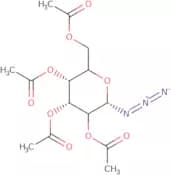
CAS:<p>This compound is a custom synthesis. It is used to synthesize complex carbohydrates, such as oligosaccharides and polysaccharides. This product has been modified with methylation and glycosylation. It is a carbohydrate that is classified as a saccharide. The CAS number for this product is 20379-61-7. This product has high purity, with the purity being over 99%. This product has been fluorinated and synthesized using Click chemistry.</p>Formula:C14H19N3O9Purity:Min. 95%Color and Shape:PowderMolecular weight:373.32 g/molMethyl 3,5-di-O-(p-chlorobenzoyl)-2-deoxy-b-D-ribofuranoside
<p>Methyl 3,5-di-O-(p-chlorobenzoyl)-2-deoxy-b-D-ribofuranoside is a synthetic oligosaccharide. It has been synthesized by the modification of the glycosylation site on an existing saccharide with a methyl group and fluorination at the 3’ position. This molecule is a monosaccharide with a p-chlorobenzoyl group attached to its 2’ position.</p>Purity:Min. 95%1,5-Anhydro-4,6-O-benzylidene-3-deoxy-D-glucitol
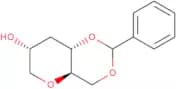
CAS:<p>1,5-Anhydro-4,6-O-benzylidene-3-deoxy-D-glucitol (1,5BPG) is a form compound that is conformationally restricted to the chair conformation. It has inhibitory activity against human macrophages and low activity against thp-1 cells. The 1,5BPG inhibits the activation of Nlrp3 and induces apoptosis in macrophages. These effects are mediated through binding to the hydroxyl group of C2 on the glucose moiety of 1,5BPG. The 1,5BPG also has high activity against marrow derived macrophages. This is due to its ability to inhibit the synthesis of phosphatidic acid and other lipids in these cells.</p>Formula:C13H16O4Purity:Min. 95%Color and Shape:PowderMolecular weight:236.26 g/mol(2E) -2, 3- Dideoxy- 3- methyl- 4, 5- O- isopropylidene - D- erythro- Hex- 2- enonic acid methyl ester
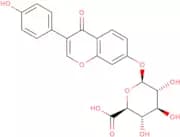
<p>(2E) -2, 3- Dideoxy- 3- methyl- 4, 5- O- isopropylidene - D- erythro- Hex- 2- enonic acid methyl ester is a custom synthesis sugar that can be fluorinated and glycosylated. It is a monosaccharide or saccharide carbohydrate that has the CAS No. of 91428-07-3. This sugar can be modified with methylation, modification, and Click modification to create new sugars for use in biotechnology and pharmaceuticals.</p>Purity:Min. 95%Formononetin-β-D-glucuronide sodium
CAS:<p>Formononetin-b-D-glucuronide sodium salt is a synthetic compound that is commonly used as a building block in the synthesis of oligosaccharides and polysaccharides. Formononetin-b-D-glucuronide sodium salt is also known to be an inhibitor of human DNA polymerase alpha, which has been shown to inhibit the replication of human immunodeficiency virus (HIV) and herpes simplex virus type 1 (HSV1). Formononetin-b-D-glucuronide sodium salt has high purity, with a purity level of >99%.</p>Formula:C22H19O10NaPurity:Min. 95%Color and Shape:White To Off-White SolidMolecular weight:466.37 g/molEthyl 2-amino-2-deoxy-b-D-glucopyranoside HCl
CAS:<p>Ethyl 2-amino-2-deoxy-b-D-glucopyranoside HCl is a synthetic monosaccharide that has a molecular weight of 174.14 g/mol. It is soluble in water and acidic solvents, and it can be used as a reactant for click chemistry and glycosylation reactions. Ethyl 2-amino-2-deoxy-b-D-glucopyranoside HCl is an intermediate in the synthesis of oligosaccharides, polysaccharides, and complex carbohydrates. This compound can be fluorinated with trifluoromethanesulfonic acid to produce ethyl 2-(trifluoromethanesulfonyl)amino-2-(trifluoromethanesulfonyl)deoxy-b-(trifluoromethanesulfonyl)glucopyranoside HCl. Ethyl 2 am</p>Purity:Min. 95%(1R) -1- [(2R, 3S,4S) -4-Hydroxymethyl-3- hydroxy- 1- azetidinyl] -1, 2- ethanediol
<p>1-Azetidinecarboxylic acid, 3-[(2R,3S,4S)-4-hydroxymethyl-3- hydroxy-1-azetidinyl]-, (1R) -1- [(2R, 3S,4S) -4-hydroxymethyl-3- hydroxy-1-azetidinyl] -1, 2-ethanediol is a complex carbohydrate that belongs to the group of polysaccharides. It has been modified by methylation and glycosylation. This product has high purity and is fluorinated for solubility.</p>Purity:Min. 95%1-O-Acetyl-2-O-benzoyl-3-O-tert-butyldimethylsilyl-L-threofuranose
<p>1-O-Acetyl-2-O-benzoyl-3-O-tert-butyldimethylsilyl-L-threofuranose is a carbohydrate that can be synthesized to serve as a monosaccharide. Carbohydrates are polysaccharides composed of repeating units of sugar, which may be either glucose or fructose. This carbohydrate has been modified with fluorination and acetylation. It can also be modified with methylation, click modification, or polysaccharide synthesis. This product is custom made and can be ordered in high purity for research purposes.</p>Purity:Min. 95%(1S) -1- [(2S, 3R,4R) -4-Hydroxymethyl-3- hydroxy- 1- azetidinyl] -1, 2- ethanediol
<p>(1S) -1- [(2S, 3R,4R) -4-Hydroxymethyl-3- hydroxy- 1- azetidinyl] -1, 2- ethanediol is a synthetic sugar that can be used as a glycosylation or click modification agent. It is also used in the synthesis of complex carbohydrates. This product has been shown to have high purity and is available for custom synthesis.</p>Purity:Min. 95%2-Azido-2-deoxy-3,5-O-isopropylidene-D-xylono-1,4-lactone
<p>2-Azido-2-deoxy-3,5-O-isopropylidene-D-xylono-1,4-lactone is a methylated saccharide that has been synthesized from D-xylonolactone. It has a CAS Number of 122758-81-6 and is available for custom synthesis. This molecule is a modified form of the natural product xyloglucan. It can be used as a glycosylation or fluorination reagent to create more complex carbohydrates.<br>2-Azido -2 deoxy -3,5 O -isopropylidene -D -xylono -1,4 lactone is prepared by the reaction of 2 moles of nitrous acid with 1 mole of D -xylonolactone in an organic solvent such as ethanol or acetone at room temperature. The product can then be purified by recrystallization from a mixture of</p>Purity:Min. 95%4-Methylphenyl 2-O-acetyl-3-O-benzyl-4-O-Fmoc-b-D-glucopyranuronic acid methyl ester
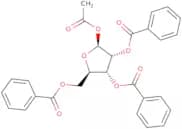
<p>4-Methylphenyl 2-O-acetyl-3-O-benzyl-4-O-Fmoc-b-D-glucopyranuronic acid methyl ester (4MPBA) is a custom synthesis of a sugar that belongs to the group of polysaccharides. It is a complex carbohydrate, which is an important component in living organisms. The modification of this sugar includes methylation and glycosylation. This product is available in high purity and has been fluorinated to increase its stability.</p>Purity:Min. 95%1-O-Acetyl-2,3,5-tri-O-benzoyl-b-D-ribofuranose
CAS:<p>1-O-Acetyl-2,3,5-tri-O-benzoyl-b-D-ribofuranose is an intermediate used to access a variety of ribonucleoside analogues. The ribosylation of substituted purines and pyrimidines with 1-O-Acetyl-2,3,5-tri-O-benzoyl-b-D-ribofuranose affords ribonucleoside analogues with the potential for biological and medicinal activity. Ribosylation requires the use of a catalyst such as trimethylsilyl trifluoromethane sulfonate and N,O-Bis(trimethylsilyl)trifluoroacetamide.</p>Formula:C28H24O9Purity:Min. 98 Area-%Color and Shape:White PowderMolecular weight:504.48 g/mol2-O-Benzyl-1-C-(1-butyl)-3,4-di-O-isopropylidene-2,4-di-C-methyl-L-arabinopyranose
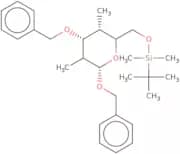
<p>2-O-Benzyl-1-C-(1-butyl)-3,4-di-O-isopropylidene-2,4-di-C-methyl-L-arabinopyranose is a fluorinated monosaccharide that has been synthesized by the glycosylation of 2,3,6,7,8,-pentaoxaheptane with 2,4,6,-triacetoxybenzaldehyde. The molecule is a complex carbohydrate and contains 10 identical units of D-(+)-glycero 1,2:5,6:8--octahydroquinoline. This compound is also known as 1-(2'-carboxyethyl)piperidine. The molecular weight of this compound is 476.11 and the CAS number is 324965-70-0. This compound was modified with methylation and click chemistry reactions to produce an amine group at the C</p>Purity:Min. 95%1,2,3,4-Tetra-O-benzyl-6-O-tert-butyldimethylsilyl-a-D-mannopyranose
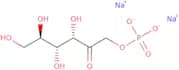
<p>This is a fluorinated monosaccharide, synthesized by the click modification of an oligosaccharide with an a-D-mannopyranose. The complex carbohydrate has been modified with methyl and benzyl groups, which can be removed using tert-butyldimethylsilyl chloride to yield 1,2,3,4-Tetra-O-benzyl-6-O--tert-butyldimethylsilyl a-D-mannopyranose.</p>Formula:C40H50O6SiPurity:Min. 95%Molecular weight:654.93 g/molD-Fructose 1-phosphate disodium salt
CAS:<p>D-Fructose 1-phosphate disodium salt is a high purity, custom synthesis sugar compound. It has CAS No. 71662-09-4 and Click modification. Fluorination and glycosylation are the two modifications that can be done on this product. This product is an oligosaccharide and it is a monosaccharide with saccharide as its complex carbohydrate.</p>Formula:C6H11Na2O9PPurity:Min. 90 Area-%Color and Shape:White PowderMolecular weight:304.1 g/mol2,3,4,5,6-Penta-O-acetyl-D-galactononitrile
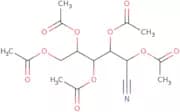
CAS:<p>2,3,4,5,6-Penta-O-acetyl-D-galactononitrile is a synthetic chemical compound that can be used in glycosylation reactions. It has been synthesized by the click modification of 2,3,4,5-tetra-O-acetyl-D-galactose with pentaerythritol tri(nitrile) followed by fluorination. The saccharide was then converted to the methyl ester and acetylated using acetic anhydride. This product is highly pure and can be custom synthesized according to your needs.<br>2,3,4,5,6-Penta-O-acetyl-D-galactononitrile has a molecular weight of 434.2 g/mol and its CAS number is 35439-42-0.</p>Formula:C16H21NO10Purity:Min. 95%Molecular weight:387.34 g/molMethyl 3-O-benzyl-4-O-(2,3,4-tri-O-benzyl-β-D-xylopyranosyl)-β-D-xylopyranoside
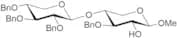
CAS:<p>A protected xylobiose analogue</p>Formula:C39H44O9Purity:Min. 95%Color and Shape:PowderMolecular weight:656.76 g/mol(2S, 3R, 4R) -3- Hydroxy- 4- (hydroxymethyl) - 2- azetidinecarboxylic acid
<p>(2S, 3R, 4R) -3- Hydroxy- 4- (hydroxymethyl) - 2- azetidinecarboxylic acid is a carbohydrate that has been modified for use in research and the biomedical industry. It is a monosaccharide that can be used as a building block for custom synthesis of saccharides or oligosaccharides. This product is also available with fluorination, methylation, glycosylation, or click modification.</p>Purity:Min. 95%3,4-O-Isopropylidene-2,3-di-C-mehtyl-6-O-tert.butyldimethylsilyl-D-allopyranose
<p>3,4-O-Isopropylidene-2,3-di-C-methyl-6-O-tert.butyldimethylsilyl-D-allopyranose is a fluorinated sugar that is synthesized by the reaction of 3,4-O-isopropylidene D-glucal with tert.butyldimethylsilyl chloride and allyl bromide in the presence of tetrapropylammonium perruthenate. This compound has been shown to be useful for glycosylation reactions and as an intermediate for the synthesis of oligosaccharides. It has also been used to introduce click modifications to sugars for applications such as immunoassays and molecular electronics. The compound is available to order from Sigma Aldrich in a custom synthesis or in stock form.</p>Purity:Min. 95%Methyl 5-Azido-3-O-benzyl-5-deoxy-1,2-O-isopropylidene-D-galactofuranoside
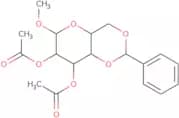
<p>Methyl 5-Azido-3-O-benzyl-5-deoxy-1,2-O-isopropylidene-D-galactofuranoside is a custom synthesis of a monosaccharide that can be fluorinated, methylated and modified with the click reaction. It is an oligosaccharide that can be saccharified by glycosylation or polysaccharided by glycosylation. It is a carbohydrate that contains a complex carbohydrate.<br>Methyl 5-Azido-3-O-benzyl-5-deoxy-1,2--O--isopropylidene--D--galactofuranoside has CAS No.</p>Purity:Min. 95%Methyl 2,3-di-O-acetyl-4,6-O-benzylidene-a-D-mannopyranoside
CAS:<p>Methyl 2,3-di-O-acetyl-4,6-O-benzylidene-a-D-mannopyranoside is a synthetic compound that has not been studied in vivo or in vitro. Methyl 2,3-di-O-acetyl-4,6-O-benzylidene-aDmannopyranoside is an oligosaccharide that can be modified with fluorination and methylation. It is synthesized by glycosylation of a Dmannopyranose using an acetate as the acyl donor. The acetate is then selectively benzylated to form the desired product.</p>Formula:C18H22O8Purity:Min. 95%Molecular weight:366.37 g/mol2,3-O-Isopropylidene-1,4-di-C-methyl-L-erythrofuranose
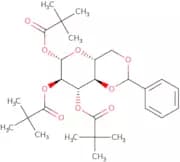
<p>2,3-O-Isopropylidene-1,4-di-C-methyl-L-erythrofuranose is a fluorinated monosaccharide. It is synthesized by the reaction of 2,3-O-isopropylidene L-erythroascorbic acid with sodium difluoromethanesulfinate in toluene under refluxing conditions. It can be used as an intermediate for the preparation of oligosaccharides and polysaccharides. This product has been shown to be resistant to degradation by enzymes such as glycosidases and esterases. It also has a high purity level and can be used for custom synthesis projects.</p>Purity:Min. 95%4,6-O-Benzylidene-1,2,3-tri-O-pivaloyl-b-D-glucopyranose
CAS:<p>4,6-O-Benzylidene-1,2,3-tri-O-pivaloyl-b-D-glucopyranose is a carbohydrate that belongs to the group of saccharides. It is a simple sugar that has been modified with fluorination. This compound has been synthesized by custom synthesis and has high purity and can be used in research. 4,6-O-Benzylidene-1,2,3-tri-O-pivaloyl-b-D-glucopyranose is not currently available on the market.</p>Formula:C28H40O9Purity:Min. 95%Molecular weight:520.63 g/mol6-Deoxy-2,3:4,5-di-O-isopropylidene-D-gulonic acid methyl ester
<p>6-Deoxy-2,3:4,5-di-O-isopropylidene-D-gulonic acid methyl ester is a monosaccharide that can be used as a glycosylation and methylation reagent. It's also an important building block in the synthesis of complex carbohydrate polymers. This product is custom synthesized to meet your requirements.</p>Purity:Min. 95%Methyl 2-deoxy-2-fluoro-L-arabinofuranoside
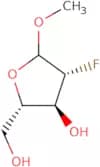
CAS:<p>Methyl 2-deoxy-2-fluoro-L-arabinofuranoside is a synthetic monosaccharide that can be used as a building block for the synthesis of oligosaccharides and polysaccharides. It has been shown to have high purity, and it can be custom synthesized. Methyl 2-deoxy-2-fluoro-L-arabinofuranoside is an excellent source of fluorine atoms, which are commonly used in glycosylation reactions. This product is also useful for click chemistry reactions with methyl groups, as well as other modifications such as oxidation, reduction, esterification, and acetylation.</p>Formula:C6H11FO4Purity:Min. 95%Color and Shape:PowderMolecular weight:166.15 g/mol1,2-O-Isopropylidene-a-L-xylofuranose
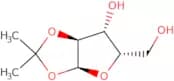
CAS:<p>1,2-O-Isopropylidene-a-L-xylofuranose is a sulfate transport molecule that is present in the blood plasma. It binds to sulfate anions which are then transported by the sodium/sulfate co-transporter from the blood and into cells. This process is called equilibrative or facilitated transport. 1,2-O-Isopropylidene-a-L-xylofuranose also binds to adenosine and transports it across membranes. This process is regulated by surface receptors and uptake transporters that regulate the rate of adenosine uptake at different parts of the body.</p>Formula:C8H14O5Purity:Min. 98 Area-%Color and Shape:White PowderMolecular weight:190.2 g/mol2-Deoxy-2-trifluoroacetamido-D-glucose
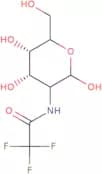
CAS:<p>2-Deoxy-2-trifluoroacetamido-D-glucose (dTFA) is an acetal that is formed from the reaction of trifluoroacetic acid with 2-deoxy-2-trifluoroacetamido-D-glucose. This compound yields aldehydes, and can be used to form glycosidic bonds. It also has the ability to react with amino groups on peptides and proteins, forming acetals. 2-Deoxy-2-trifluoroacetamido-D-glucose has been shown to have a variety of functions including being a carbohydrate, an acetal, and an inhibitor of peptide bond formation.</p>Formula:C8H12F3NO6Purity:Min. 95%Color and Shape:PowderMolecular weight:275.18 g/molEthyl 3,4-di-O-benzyl-2-O-levulinoyl-b-D-thioglucuronide benzyl ester
<p>Ethyl 3,4-di-O-benzyl-2-O-levulinoyl-b-D-thioglucuronide benzyl ester is a custom synthesis chemical. It is an oligosaccharide that contains a saccharide and a monosaccharide. The saccharide is a complex carbohydrate made up of sugar molecules. The monosaccharide is a sugar molecule that can be modified with fluorination to create high purity chemicals. Ethyl 3,4-di-O-benzyl-2-O-levulinoyl b -D thioglucuronide benzyl ester has been used in the synthesis of the polysaccharides and saccharides present in the human body. <br>Ethyl 3,4 -di -O -benzyl -2 -O -levulinoyl b D thioglucuronide benzyl ester is not used as a</p>Purity:Min. 95%Methyl 2,3,4-tri-O-benzyl-6-O-tert-butyldimethylsilyl-a-D-glucopyranoside
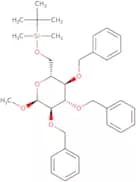
CAS:<p>Methyl 2,3,4-tri-O-benzyl-6-O-tert-butyldimethylsilyl-a-D-glucopyranoside is a glycosylation product of the glucopyranoside. It is a highly pure compound that is custom synthesized to suit the specific needs of customers. The synthesis includes fluorination, methylation and monosaccharide modification. This product has been shown to be useful in click chemistry and protein glycosylation studies.</p>Formula:C34H46O6SiPurity:Min. 95%Molecular weight:578.83 g/molMethyl 2,3-di-O-acetyl-4,6-O-(4-methoxybenzylidene)-a-D-galactopyranoside
<p>Methyl 2,3-di-O-acetyl-4,6-O-(4-methoxybenzylidene)-a-D-galactopyranoside is a custom synthesis. It is an oligosaccharide and polysaccharide. It has been modified with fluorination and click chemistry. Methyl 2,3-di-O-acetyl-4,6-O-(4 methoxybenzylidene)-a D galactopyranoside is a synthetic sugar.</p>Formula:C19H24O9Purity:Min. 95%Molecular weight:396.4 g/mol1,3,4,6-Tetra-O-acetyl-2-O-trifluoromethanesulfonyl-b-D-mannopyranose
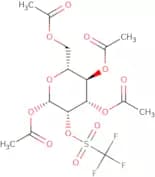
CAS:<p>1,3,4,6-Tetra-O-acetyl-2-O-trifluoromethanesulfonyl-b-D-mannopyranose is a chemical compound that belongs to the group of fatty acids. It is a product of chemical reactions and has been shown to be able to react with positrons in an organic solution. This compound can also react with potassium ions in water vapor. The reaction solution is suitable for testing samples and cell culture.</p>Formula:C15H19F3O12SPurity:Min. 98 Area-%Color and Shape:PowderMolecular weight:480.37 g/mol2-Deoxy-D-ribose 5-phosphate sodium salt
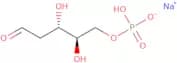
CAS:<p>2-Deoxy-D-ribose 5-phosphate sodium salt is a mutant of ribose 5-phosphate. It is an intermediate in the pentose phosphate pathway, which generates ribose 5-phosphate and NADPH. The 2nd step of this pathway is catalyzed by deacetylase, which converts acetaldehyde to acetyl CoA. 2-deoxy-D-ribose 5-phosphate sodium salt is also an oxidant that can react with hydrogen peroxide to form hydroxyl radicals. This intermediate has been shown to inhibit the growth of E. coli by causing mutations in the DNA and protein synthesis machinery, as well as by catalase activation.</p>Formula:C5H11O7P·xNaPurity:Min. 95%Color and Shape:PowderMolecular weight:214.11 g/mol2-Azido-2-deoxy-D-galactose
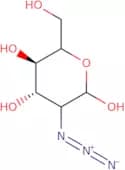
CAS:<p>2-Azido-2-deoxy-D-galactose is a disaccharide that is synthesized by the enzymatic addition of galactose to 2-azido-2-deoxyglucose. It has been shown to be antigenic in the test tube and is reactive with hydroxy groups. 2-Azido-2-deoxygalactose can be glycosylated by glycopeptides, which are glycoproteins containing one or more oligosaccharide chains covalently linked to a protein core. The hydrophilic nature of this sugar makes it an ideal candidate for conjugation with hydrophobic drugs such as antibiotics. This disaccharide was used in the synthesis of glycoconjugates, which are carbohydrate molecules attached to proteins or lipids, and can be found in bacteria such as Corynebacterium glutamicum. 2-Azido-2-deoxygalactose</p>Formula:C6H11N3O5Purity:Min. 98 Area-%Color and Shape:White PowderMolecular weight:205.17 g/mol2,5-Anhydro-D-glucitol
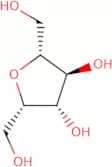
CAS:<p>2,5-Anhydro-D-glucitol is a sugar alcohol that is found naturally in the human body. It can be produced from D-glucose by the enzyme aldose reductase. This reaction involves an initial dehydration of D-glucose to form 2,5-anhydro-D-glucose, followed by a nucleophilic attack on the hydroxyl group of 2,5-anhydro-D-glucose by the phosphate group of ATP to form 2,5-anhydro-D-glucitol and ADP. The reaction mechanism for this process has been studied using kinetic and model studies. It has also been shown that metal ions are required for cationic polymerization reactions. A solid catalyst was used in this study because it could be easily removed after completion of the reaction. The 2,5-anhydro form of D-glucitol can undergo dehydration reactions to yield</p>Formula:C6H12O5Purity:Min. 95%Color and Shape:Clear LiquidMolecular weight:164.16 g/mol(5R, 6R, 7R, 8S) -5, 7-Dihydroxy- 8- (hydroxymethyl) - 1- azabicyclo[4.2.0] octan- 2- one
CAS:<p>This is a custom synthesis of (5R, 6R, 7R, 8S) -5, 7-dihydroxy-8- (hydroxymethyl) -1-azabicyclo[4.2.0]octan-2-one. This compound has been fluorinated and methylated and has a monosaccharide modification.</p>Purity:Min. 95%Phenyl 4,6-O-benzylidene-2-O-levulinoyl-3-O-(2-naphthylmethyl)-b-D-thioglucopyranoside
<p>Phenyl 4,6-O-benzylidene-2-O-levulinoyl-3-O-(2-naphthylmethyl)-b-D-thioglucopyranoside is a fluorinated monosaccharide. It can be synthesized in a custom synthesis and is available with high purity. This product is an oligosaccharide, which has glycosylation and polysaccharide properties. Phenyl 4,6-O-benzylidene-2-O-levulinoyl-3-O-(2-naphthylmethyl)-b-D -thioglucopyranoside is also a complex carbohydrate that has been modified by methylation and acetalization.</p>Purity:Min. 95%D-Xylulose 5-phosphate sodium
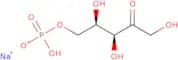
CAS:<p>D-Xylulose 5-phosphate sodium is a phosphorylated sugar derivative, which is a crucial intermediate in the pentose phosphate pathway, a metabolic pathway parallel to glycolysis. It is naturally sourced from biochemical processes within organisms where it plays a pivotal role in carbohydrate metabolism.The mode of action involves its function as a substrate in the non-oxidative phase of the pentose phosphate pathway, where it facilitates the interconversion of sugars necessary for nucleotide and amino acid biosynthesis. This intermediary step is vital for the production of ribose-5-phosphate and NADPH, which are essential for anabolic reactions and antioxidant defense mechanisms.D-Xylulose 5-phosphate sodium is predominantly used in biochemical research to study metabolic pathways. It helps researchers investigate cellular processes, understand disease mechanisms where metabolism is disrupted, and explore metabolic engineering applications. By examining its role and transformations, scientists gain insights into energy production, redox balance, and cellular growth, providing foundational knowledge crucial for the development of therapies targeting metabolic disorders and cancer.</p>Formula:C5H11O8P·xNaPurity:Min. 80 Area-%Color and Shape:PowderMolecular weight:230.11 g/molD-Mannono-1,5-lactone
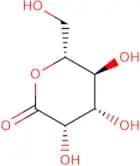
CAS:<p>D-Mannono-1,5-lactone is a custom synthesis. It is fluorinated to give 1,5-difluoro-D-mannono-1,4,6-lactone. The methylation of the C2 hydroxyl group and the C3 keto group gives 1,5-difluoro-D-mannono-1,4,6-(methylenedioxy)lactone. Click modification of this product with azide or acetylene gives 1,5-[(azido)-(acetylenyl)] D-mannono lactone or 1,5-[(acetylene)-(azido)] D manno lactone respectively. Monosaccharides can be synthesized from these products by glycosylation with a sugar donor. Polysaccharides can be synthesized from these products by glycosylation with a sugar donor and subsequent glycosidic linkage via an olig</p>Formula:C6H10O6Purity:Min. 95 Area-%Color and Shape:PowderMolecular weight:178.14 g/molN-Thioglycolyl-D-galactosamine
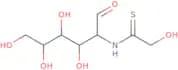
CAS:<p>D-Galactosamine is a glycosaminoglycan (GAG) that is found in the mammalian cell. N-Thioglycolyl-D-galactosamine is a synthetic analog of D-galactosamine that was developed to study the biosynthesis of GAGs and glycoconjugates in cells. This molecule can be activated by hematopoietic cells, which leads to an increase in o-glycosylation and galnac synthesis.</p>Formula:C8H15NO6SPurity:Min. 95%Molecular weight:253.27 g/mol




![(1R) -1- [(2R, 3S,4S) -4-Hydroxymethyl-3- hydroxy- 1- azetidinyl] -1, 2- ethanediol](/_next/image/?url=https%3A%2Fstatic.cymitquimica.com%2Fproducts%2F3D%2Fthumb-webp%2FMH163381.webp&w=3840&q=75)
![(1S) -1- [(2S, 3R,4R) -4-Hydroxymethyl-3- hydroxy- 1- azetidinyl] -1, 2- ethanediol](/_next/image/?url=https%3A%2Fstatic.cymitquimica.com%2Fproducts%2F3D%2Fthumb-webp%2FMH163401.webp&w=3840&q=75)


![(5R, 6R, 7R, 8S) -5, 7-Dihydroxy- 8- (hydroxymethyl) - 1- azabicyclo[4.2.0] octan- 2- one](/_next/image/?url=https%3A%2Fstatic.cymitquimica.com%2Fproducts%2F3D%2Fthumb-webp%2FMD163385.webp&w=3840&q=75)