Monosaccharides
Monosaccharides are the simplest form of carbohydrates and serve as fundamental building blocks for more complex sugars and polysaccharides. These single sugar molecules play critical roles in energy metabolism, cellular communication, and structural components of cells. In this section, you will find a wide variety of monosaccharides essential for research in biochemistry, molecular biology, and glycoscience. These compounds are crucial for studying metabolic pathways, glycosylation processes, and developing therapeutic agents. At CymitQuimica, we offer high-quality monosaccharides to support your research needs, ensuring precision and reliability in your scientific investigations.
Subcategories of "Monosaccharides"
- Alloses(11 products)
- Arabinoses(21 products)
- Erythroses(11 products)
- Fructoses(9 products)
- Fucoses(36 products)
- Galactosamine(41 products)
- Galactose(261 products)
- Glucoses(365 products)
- Glucuronic Acids(51 products)
- Glyco-substrates for Enzyme(77 products)
- Guloses(6 products)
- Idoses(4 products)
- Inositols(15 products)
- Lyxoses(4 products)
- Mannoses(65 products)
- O-Glycans(48 products)
- Psicoses(3 products)
- Rhamnoses(10 products)
- Riboses(61 products)
- Sialic Acids(100 products)
- Sorboses(4 products)
- Sugars(173 products)
- Tagatoses(4 products)
- Taloses(8 products)
- Xyloses(20 products)
Show 17 more subcategories
Found 6090 products of "Monosaccharides"
Sort by
Purity (%)
0
100
|
0
|
50
|
90
|
95
|
100
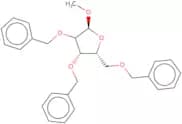
Methyl 2,3,5-tri-O-benzyl-a-D-arabinofuranoside
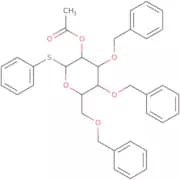
<p>Methyl 2,3,5-tri-O-benzyl-a-D-arabinofuranoside is a methylated sugar that belongs to the group of saccharides. It is often used as a Click modification and in custom synthesis of oligosaccharides. This product is also used for glycosylation and high purity modifications. Methyl 2,3,5-tri-O-benzyl-a-D-arabinofuranoside can be synthesized from arabinose and benzaldehyde with fluorination. The CAS number for this product is 51469-61-1.</p>Formula:C27H30O5Purity:Min. 95%Molecular weight:434.52 g/molPhenyl 2-O-Acetyl-3,4,6-tri-O-benzyl-1-thio-b-D-galactopyranoside
CAS:<p>Phenyl 2-O-Acetyl-3,4,6-tri-O-benzyl-1-thio-b-D-galactopyranoside is a glycosylated sugar that is under custom synthesis. The molecule contains a fluorinated benzene ring and an acetyl group. Phenyl 2-O-Acetyl-3,4,6-tri-O-benzyl 1,5 b -D -galactopyranoside can be modified in the laboratory to produce different derivatives and modifications. This product is made of high purity and has CAS No. 18387528 7.</p>Formula:C35H36O6SPurity:Min. 95%Molecular weight:584.72 g/molDidesmethylsibutamine D-glucuronide
<p>Didesmethylsibutamine D-glucuronide is a custom synthesis, complex carbohydrate, Oligosaccharide, CAS No. that is modified with saccharide and Methylation. It is synthesized with Carbohydrate and sugar to produce a high purity product. It also has the following modifications: Fluorination, Synthetic.</p>Purity:Min. 95%2-Azidoethyl 2-O-benzoyl-4,6-O-benzylidene-3-O-(4-methoxybenzyl)-a-D-mannopyranoside
<p>2-Azidoethyl 2-O-benzoyl-4,6-O-benzylidene-3-O-(4-methoxybenzyl)-a-D-mannopyranoside is a synthetic sugar that has been modified with fluorination and glycosylation. The carbohydrate is made of a complex chain of monosaccharides and saccharides. It is the CAS number for this chemical agent.</p>Purity:Min. 95%Methyl 1-(4'-tert-butyldimethylsilyl-6-hydroxyraloxifene)-2,3,4-tri-O-acetyl-b-D-glycopyranuronate
CAS:<p>Methyl 1-(4'-tert-butyldimethylsilyl-6-hydroxyraloxifene)-2,3,4-tri-O-acetyl-b-D-glycopyranuronate is a modified carbohydrate. It is a synthetic saccharide that has been modified with methylation, fluorination and saccharide synthesis. This product can be custom synthesized and is available in high purity. Methyl 1-(4'-tert-butyldimethylsilyl-6-hydroxyraloxifene)-2,3,4-tri-O-acetyl-b-D--glycopyranuronate can be used in glycosylation reactions as well as Click modification reactions. CAS No: 174264–49–4.</p>Formula:C46H55NO13SSiPurity:Min. 95%Molecular weight:890.08 g/mol3-O-Acetyl-1,2-O-isopropylidine-6-O-trityl-a-D-galactofuranose
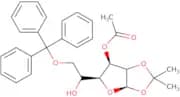
CAS:<p>3-O-Acetyl-1,2-O-isopropylidine-6-O-trityl-a-D-galactofuranose is a synthetic compound with a molecular weight of 514.5. It is an oligosaccharide with a glycosylation modification and fluorination. The compound can be used as a research tool in the study of glycosylation, methylation, click modification, polysaccharide synthesis, fluorination, saccharide modifications and sugar modifications. 3-O-Acetyl-1,2-O-isopropylidine-6-[trityl]-a-[D]galactofuranose can also be used for custom synthesis; this product is available in high purity.</p>Formula:C30H32O7Purity:Min. 95%Molecular weight:504.57 g/mol2-Deoxy-scyllo-inosose
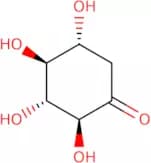
CAS:<p>2-Deoxy-scyllo-inosose is a biochemical with an unknown function. It is not a substrate for any known enzyme, but has been shown to be a substrate for the synthesis of corynebacterium glutamicum. The reaction mechanism of 2-deoxy-scyllo-inosose is still unclear, but it has been proposed that this molecule undergoes dehydration and then undergoes an acid catalyzed aldol cyclization to form 3-aminohexanol. This reaction produces fluorescence resonance energy transfer in group p2 subtilisin.<br>2DOS is also an antimicrobial agent which exhibits activity against Gram positive bacteria such as Streptococcus pyogenes, Enterococcus faecalis, and Bacillus subtilis.</p>Formula:C6H10O5Purity:Min. 95%Color and Shape:White PowderMolecular weight:162.14 g/molDehydroclindamycin
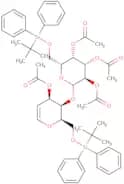
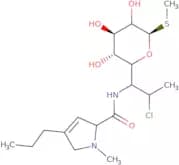
CAS:<p>Dehydroclindamycin is a semisynthetic antibiotic that belongs to the class of antibiotics known as lincosamides. It is used in clinical treatment for bacterial infections. Dehydroclindamycin acts by interfering with the bacterial ribosome and prevents the formation of proteins required for cell division. This drug may be susceptible to degradation by hydrolysis or oxidation, which can lead to impurities. Dehydroclindamycin is produced by hydrogenation of clindamycin hydrochloride using a Raney nickel catalyst, followed by chromatography. The spectrum of dehydroclindamycin consists of antibacterial activity against gram-positive bacteria such as Staphylococcus aureus and Enterococcus faecalis and gram-negative bacteria such as Escherichia coli and Klebsiella pneumoniae.</p>Formula:C18H31ClN2O5SPurity:Min. 95%Molecular weight:422.97 g/mol3,2',3',4'-Tetra-O-acetyl-6,6'-di-O-tert-butyldimethylsilyl-lactal
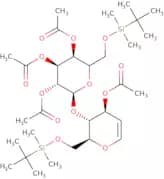
CAS:<p>3,2',3',4'-Tetra-O-acetyl-6,6'-di-O-tert-butyldimethylsilyl-lactal is a glycosylation agent that can be used in the synthesis of oligosaccharides and polysaccharides. It can be fluorinated to create a reactive site for methylation and click modification. 3,2',3',4'-Tetra-O-acetyl-6,6'-di-O-tert-butyldimethylsilyl-lactal is an acetylated lactal with a silyl ether protecting group. This product has been custom synthesized and is available in high purity.</p>Purity:Min. 95%2-Deoxy-b-L-erythro-pentofuranose
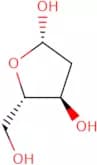
CAS:2-Deoxy-b-L-erythro-pentofuranose is an experimental drug that is a protonation product of 2,3-dideoxyproline. It is the result of conformational changes in the deoxyribose ring and puckering of the ribose units. The puckering motion also results in a change in the orientation of the hydrogen atoms on the carbons. This has led to analogous carbon configurations with different numbers of hydrogens, which can lead to different solutions. 2-Deoxy-b-L-erythro-pentofuranose binds to ribosomes and inhibits protein synthesis, which may be due to its pyrrolidine ring or membered ring structure.Formula:C5H10O4Purity:Min. 95%Molecular weight:134.13 g/molFucose 2-nitrophenylhydrazone
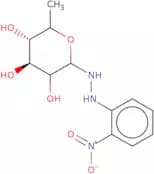
<p>Fucose 2-nitrophenylhydrazone is a custom synthesis that is a modification of fucose. It has been used in methylation, click modification, and fluorination. This compound has been shown to be effective in the synthesis of oligosaccharides and polysaccharides. Fucose 2-nitrophenylhydrazone has also been used as an intermediate for the synthesis of saccharides such as monosaccharide and sugar.</p>Formula:C12H17N3O6Purity:Min. 95%Molecular weight:299.111741-a-Methylaminotrityl-2-deoxy-3,5-di-O-toluoyl-D-ribose
<p>1-a-Methylaminotrityl-2-deoxy-3,5-di-O-toluoyl-D-ribose is a custom synthesis of an oligosaccharide. The compound has a CAS number and is a polysaccharide with glycosylation and methylation. It is fluorinated at the 1 position on the ribose ring and modified with a click chemistry reaction to link two sugars together. This modification allows for high purity of this compound.</p>Purity:Min. 95%1-Deoxy-L-idonojirimycin hydrochloride
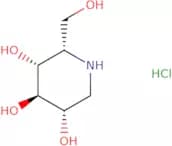
CAS:<p>1-Deoxy-L-idonojirimycin hydrochloride is a chaperone that is structurally related to the natural substrate, L-idonojirimycin. It has been found to interact with recombinant human Hsp70 and Hsp90. 1-Deoxy-L-idonojirimycin hydrochloride enhances the kinetic and thermodynamic parameters of these chaperones in vitro. The structural analysis of this compound revealed that it binds to both Hsp70 and Hsp90, which may be due to its ability to mimic the natural substrate's binding site on these chaperones.</p>Formula:C6H14ClNO4Purity:Min. 95%Molecular weight:199.63 g/mol(3R,4R,5R)-3-Fluoro-4-hydroxy-5-(hydroxymethyl)-3-methyloxolan-2-one
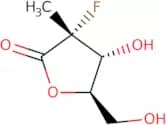
CAS:<p>(3R,4R,5R)-3-Fluoro-4-hydroxy-5-(hydroxymethyl)-3-methyloxolan-2-one is a nucleoside that has been synthesized and characterized by x-ray crystallographic analysis. It is an analog of the nucleoside fluorouracil which has been fluorinated at the 5 position of the oxo group. The crystal structure of (3R,4R,5R)-3-fluoro-4-hydroxy-5-(hydroxymethyl)-3-methyloxolan-2-one was determined using x ray crystallography to be a lactone with an anhydrous form. This compound is currently being investigated as a potential drug candidate for cancer treatment.</p>Formula:C6H9FO4Purity:Min. 95%Molecular weight:164.13 g/molα-Fructoselysine dihydrochloride
CAS:<p>α-Fructoselysine dihydrochloride is a custom synthesis of a complex carbohydrate with an Oligosaccharide and Polysaccharide. It has been modified by Methylation and Glycosylation. α-Fructoselysine dihydrochloride has a CAS number of 96192-34-6, which is used for Click modification. This product is pure and high in purity, as well as being Fluorinated and Synthetic.</p>Formula:C12H24N2O7·2(HCl)Purity:Min. 95%Molecular weight:308.33 g/mol1-O-Acetyl-3,5-di-O-benzoyl-2-deoxy-D-ribofuranose
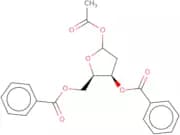
CAS:<p>1-O-Acetyl-3,5-di-O-benzoyl-2-deoxy-D-ribofuranose is a custom synthesis product. When fully synthesized and modified, it is a complex carbohydrate with glycosylation, methylation, click modification, fluorination and saccharide modifications. It has CAS No. 2155800-38-5 and Mw of 486.8 g/mol. 1-O-Acetyl-3,5-di-O-benzoyl--2--deoxy--D--ribofuranose can be used as an intermediate for the synthesis of oligosaccharides or monosaccharides or custom synthesis products. This product is available in high purity with >99% purity by HPLC analysis.</p>Formula:C21H20O7Purity:Min. 95%Molecular weight:384.38 g/mol6-O-Acetyl-1,2:3,5-di-O-methylidene-a-D-glucofuranose
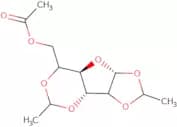
CAS:<p>6-O-Acetyl-1,2:3,5-di-O-methylidene-a-D-glucofuranose is a methylated saccharide that is a member of the polysaccharides. The compound has been modified using click chemistry to produce a fluorescent derivative. 6-O-Acetyl-1,2:3,5-di-O-methylidene-a-D-glucofuranose is also used for glycosylation and can be synthesized to provide high purity carbohydrates or sugars. It has an CAS number of 3244800 and may be used as a fluorinated complex carbohydrate.</p>Formula:C12H18O7Purity:Min. 95%Color and Shape:White to off-white solid.Molecular weight:274.27 g/molL-Idaric acid 1,4-lactone
CAS:<p>L-Idaric acid 1,4-lactone is a synthetic glycosylidic sugar that can be modified with fluorine compounds to create a variety of derivatives. It is used as a monomer in the synthesis of oligosaccharides, polysaccharides, and complex carbohydrates. L-Idaric acid 1,4-lactone can also be synthesized from methyl erythritol tetraacetate and glycerol in the presence of acetic anhydride.</p>Formula:C6H8O7Purity:Min. 98%Color and Shape:White PowderMolecular weight:192.12 g/molDecyl a- D- glucopyranoside
CAS:<p>Decyl a- D- glucopyranoside is a synthetic, custom-synthesized carbohydrate and sugar that is used in the synthesis of oligosaccharides. This compound is also used in the synthesis of saccharides and glycosylations. Decyl a- D- glucopyranoside has high purity and can be modified with fluorination, methylation, or glycosylation to produce desired products.</p>Formula:C16H32O6Purity:Min. 95%Molecular weight:320.42 g/molNBD-Fructose
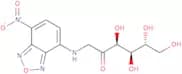
CAS:<p>Fluorescent substrate used to monitor fructose uptake</p>Formula:C12H14N4O8Purity:Min. 95%Molecular weight:342.26 g/molMethyl b-D-altropyranoside
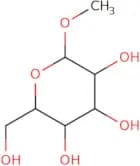
CAS:<p>Methyl b-D-altropyranoside is a methylated saccharide that can be used as a sugar substitute. It has the same sweetness as sugar and is also resistant to browning. Methyl b-D-altropyranoside is synthesized by treating an aldose or ketose with formaldehyde in the presence of sulfuric acid and an alkali. This product is water soluble, heat stable, and free from impurities such as glucose or fructose. Methyl b-D-altropyranoside can be used to modify polysaccharides and oligosaccharides, adding a methyl group to the carbon 2 position. In addition, it has been shown to have antioxidant properties due to its ability to quench reactive oxygen species (ROS).</p>Formula:C7H14O6Purity:Min. 95%Molecular weight:194.18 g/molMethyl 2-acetamido-3,6-di-O-benzyl-2-deoxy-a-D-glucopyranoside
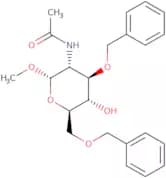
CAS:<p>Methyl 2-acetamido-3,6-di-O-benzyl-2-deoxy-a-D-glucopyranoside is a synthetic saccharide that is used in the synthesis of glycosides. This compound has been modified with fluorine to increase its stability and activity. Methyl 2-acetamido-3,6-di-O-benzyl-2-deoxyglucopyranoside can be used as a building block for glycosylation reactions due to its high purity and custom synthesis. It has been shown that this compound has click modification activity.</p>Formula:C23H29NO6Purity:Min. 95%Molecular weight:415.48 g/mol1,2,6-Tri-O-methyl-D-glucopyranoside
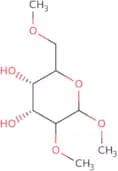
CAS:<p>1,2,6-Tri-O-methyl-D-glucopyranoside is a synthetic sugar that has been modified by fluorination and glycosylation. This product is a white crystalline powder with a melting point of 185°C. The chemical formula for this product is C5H12O5.</p>Formula:C9H18O6Purity:Min. 95%Molecular weight:222.24 g/mol3,4-O-[(1R,2R)-1,2-Dimethoxy-1,2-dimethyl-1,2-ethanediyl]-1,6-O-[(1S,2S)-1,2-dimethoxy-1,2-dimethyl-1,2-ethanediyl]-D-myo-inositol
CAS:<p>3,4-O-[(1R,2R)-1,2-Dimethoxy-1,2-dimethyl-1,2-ethanediyl]-1,6-O-[(1S,2S)-1,2-dimethoxy-1,2-dimethyl-1,2-ethanediyl]-D-myo-inositol is a synthetic carbohydrate with the CAS number 176798-27-9. It is a polysaccharide that can be modified by methylation and glycosylation. The modification of saccharides is achieved by the use of click chemistry. This product is a complex carbohydrate with a high purity and fluorination.</p>Formula:C18H32O10Purity:Min. 95%Molecular weight:408.44 g/mol1-O-Acetyl-2,3,5-tri-O-benzoyl-D-ribofuranose
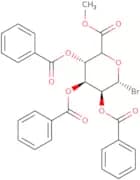
CAS:<p>1-O-Acetyl-2,3,5-tri-O-benzoyl-D-ribofuranose is a kinetic inhibitor that binds to the active site of L1210 leukemia cells. It inhibits the growth of these cells by reacting with chloride ions and causing cross-coupling reactions. This leads to the production of 2,3,5 triacetylated benzoyl ribofuranoside and 2 aminoadenosine. The latter molecule has significant antitumor effects on human macrophages and Leishmania donovani. 1-O-Acetyl-2,3,5-tri-O-benzoyl-D-ribofuranose also has significant antitumor effects on guanosine and xanthosine in human tumor cells.</p>Formula:C28H24O9Purity:Min. 95%Color and Shape:White PowderMolecular weight:504.48 g/mol1-Bromo-2,3,4-tri-O-benzoyl-a-D-glucuronide methyl ester
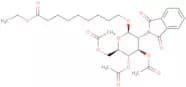
CAS:<p>1-Bromo-2,3,4-tri-O-benzoyl-a-D-glucuronide methyl ester is a custom synthesis. It is a high purity product with a custom synthesis. The CAS No. for this compound is 103674-69-7. This product undergoes Click modification and has high purity. The sugar in this compound is an oligosaccharide with glycosylation.</p>Formula:C28H23BrO9Purity:Min. 95%Molecular weight:583.39 g/mol(8-Ethoxycarbonyloctyl)-3,4,6-tri-O-acetyl-2-deoxy-2-phthalimido-b-D-glucopyranoside
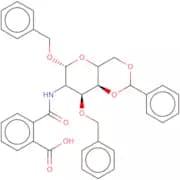
CAS:<p>(8-Ethoxycarbonyloctyl)-3,4,6-tri-O-acetyl-2-deoxy-2-phthalimido-b-D-glucopyranoside is a custom synthesis that has been modified with fluorination, methylation and acetylation. It is also a monosaccharide, which can be modified to form an oligosaccharide or polysaccharide. This product is a sugar that can be glycosylated to form complex carbohydrates.</p>Formula:C30H39NO12Purity:Min. 95%Molecular weight:605.63 g/mol1,3-Di-O-benzyl-4,6-O-benzylidene-2-(2-carboxybenzimido)-2-deoxy-b-D-glucopyranoside
<p>1,3-Di-O-benzyl-4,6-O-benzylidene-2-(2-carboxybenzimido)-2-deoxy-b-D-glucopyranoside (1,3DBG) is a glycosylation compound that is a natural product of the reaction between 1,3,4,6 tetra-, 2,3-, or 3,4-, dihydroxyacetone and benzaldehyde. This compound is an important building block for the synthesis of complex carbohydrates. 1,3DBG can be modified with methyl groups through click chemistry and fluorination reactions. It can also be modified by saccharide modification and acetal formation with polyols. The CAS number is 139027-06-0.</p>Formula:C35H33NO8Purity:Min. 95%Molecular weight:595.64 g/mol(5-Hydroxy rosiglitazone)-b-D-glucuronide
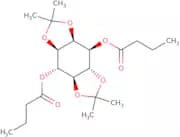
CAS:<p>(5-Hydroxy rosiglitazone)-b-D-glucuronide is a custom synthesis of a fluorinated derivative of rosiglitazone. This compound is modified by methylation, monosaccharide, and glycosylation to form a complex carbohydrate. The saccharide structure includes glucose, galactose, xylose, and arabinose. This molecule has CAS number 288853-59-8 and is listed in the Polysaccharides category.</p>Formula:C24H27N3O10SPurity:Min. 95%Color and Shape:Off-white solid.Molecular weight:549.55 g/mol1,4-Di-O-butanoyl-2,3:5,6-di-O-isopropylidene-D-myo-inositol
CAS:<p>1,4-Di-O-butanoyl-2,3:5,6-di-O-isopropylidene-D-myo-inositol is a synthetic glycosylation product. It has no known biological activity and is not metabolized by the body. This product is used for complex carbohydrate synthesis, fluorination reactions, methylation reactions, and click modifications.</p>Formula:C20H32O8Purity:Min. 95%Molecular weight:400.46 g/mol3,2',3',4'-Tetra-O-acetyl-6,6'-di-O-tert-butyldiphenylsilyl-lactal
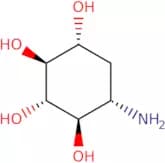
CAS:<p>3,2',3',4'-Tetra-O-acetyl-6,6'-di-O-tert-butyldiphenylsilyl-lactal is a modification of the oligosaccharide. The structure of this compound is an alpha-(1→4)-linked beta-D-galactopyranosyl residue, which is attached to a 3,2',3',4'-tetra-O-acetyl 6,6'-di-O-[ tert -butyldiphenylsilyl] lactal residue. This compound has been shown to be synthesized by methylation and glycosylation of the monosaccharide maltose. This modification has also been shown to inhibit the growth of bacteria. CAS No. 308103-45-9</p>Purity:Min. 95%3-Amino-2,3-dideoxy-D-myo-inositol
CAS:<p>3-Amino-2,3-dideoxy-D-myo-inositol (3ADMI) is a gene product that belongs to the class of chemical biology. It is an actuator that has been shown to be able to bind and activate enzymes. 3ADMI is used as a substrate in the calibration of enzyme kinetics and as an analog for aminoglycosides. The conjugates of 3ADMI have been shown to prevent viral replication by inhibiting the synthesis of DNA or RNA.</p>Formula:C6H13NO4Purity:Min. 95%Color and Shape:White/Off-White SolidMolecular weight:163.17 g/molMethyl 2,3-di-O-acetyl-b-D-xylopyranoside
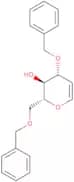
CAS:<p>Methyl 2,3-di-O-acetyl-b-D-xylopyranoside is a high purity synthetic product with custom synthesis and fluorination. This product is a sugar that has been modified by glycosylation and methylation. Methyl 2,3-di-O-acetyl-b-D-xylopyranoside is a complex carbohydrate that contains saccharides, such as monosaccharides and oligosaccharides.</p>Formula:C10H16O7Purity:Min. 95%Molecular weight:248.2 g/mol3,6-Di-O-benzyl-D-glucal
CAS:<p>3,6-Di-O-benzyl-D-glucal is a substrate for the enzyme fatty acid hydroxylase. This enzyme catalyzes the hydroxylation of fatty acids to produce hydroxy fatty acids and 3,6-di-O-benzyl-D-glucal. The stereoselective nature of this enzyme has been shown using microscopy to examine the reaction time in both monolayers and bilayers. The kinetics of this reaction have also been analyzed by kinetic analysis. It is thought that this reaction takes place in the cytosol, although it may also occur in mitochondria or chloroplasts.</p>Formula:C20H22O4Purity:Min. 95%Molecular weight:326.39 g/molPhenyl 3,4-O-(2',3'-dimethoxybutan-2',3'-diyl)-a-L-thiorhamnopyranoside
CAS:<p>Phenyl 3,4-O-(2',3'-dimethoxybutan-2',3'-diyl)-a-L-thiorhamnopyranoside is a custom synthesis of an oligosaccharide, monosaccharide, and fluorinated sugar. This synthetic compound is a complex carbohydrate that is glycosylated with a polysaccharide. The modification of this molecule includes methylation and sugar modifications. This product is high purity and can be used as a research chemical.</p>Formula:C18H26O6SPurity:Min. 95%Molecular weight:370.46 g/mol3-O-Toluoyl decitabine
CAS:<p>3-O-Toluoyl decitabine is a synthetic, high purity drug that is custom synthesized to order. The synthesis of 3-O-Toluoyl decitabine involves the modification of sugar molecules with fluorination, glycosylation, and methylation. This compound has CAS No. 183016-21-9 and is used in the treatment of cancer by inhibiting ribonucleic acid (RNA) synthesis. 3-O-Toluoyl decitabine inhibits RNA polymerase II and III, which are enzymes that catalyze the transcription of DNA into RNA. It also inhibits protein kinase C, which leads to cell death and tumor shrinkage.</p>Formula:C16H18N4O5Purity:Min. 95%Molecular weight:346.34 g/molIsorhamnetin 3-sophoroside-7-rhamnoside
CAS:<p>Isorhamnetin 3-sophoroside-7-rhamnoside is a homogeneous catalyst that has been used in the synthesis of nanoparticles. The catalytic activity of this compound was found to be high, with a reported turnover frequency of up to 5 million turnovers per minute. The Suzuki coupling reaction was used to synthesize nanoparticles by reacting an organic acid with an aryl halide or metal salt. Isorhamnetin 3-sophoroside-7-rhamnoside was one of the catalysts in this process and was shown to have a high yield when combined with palladium. This synthetic method also eliminates the need for organic solvents, which can be toxic and expensive.>>END>></p>Purity:Min. 95%1,2:5,6-Dianhydrogalactitol
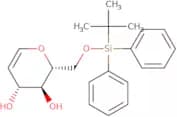
CAS:<p>1,2:5,6-Dianhydrogalactitol is a drug that has been shown to reduce the growth of tumors in mice. It is an antitumor agent that inhibits the activity of enzymes such as protein kinase A and phosphorylase kinase. This drug also inhibits the activity of the mitochondrial membrane potential, which is necessary for normal cellular function. The structure of 1,2:5,6-dianhydrogalactitol was first determined by analytical methods on mouse tumor tissue and then verified by a preparative high performance liquid chromatography (HPLC) experiment. It has been shown to be effective against pediatric tumors and is currently being evaluated for use in other cancer models.</p>Formula:C6H10O4Purity:Min. 95%Color and Shape:PowderMolecular weight:146.14 g/mol6-O-tert-Butyldiphenylsilyl-D-glucal
CAS:<p>6-O-tert-Butyldiphenylsilyl-D-glucal is a methylated sugar that can be used for glycosylation. It is an important building block for the synthesis of oligosaccharides and polysaccharides. The compound is readily available in high purity, which makes it suitable for synthesis of complex carbohydrates. In addition to its use as a synthetic reagent, 6-O-tert-Butyldiphenylsilyl-D-glucal can be used as a fluorinating agent. This product is listed as CAS No. 87316-22-1 in the Chemical Abstract Service (CAS) registry.</p>Purity:Min. 95%D-Mannose- 4- 13C
CAS:<p>D-Mannose is a sugar that is found in many plants and animals. It can be extracted from natural sources or synthesized with the use of Click modification, fluorination, glycosylation, and methylation. D-Mannose has been shown to inhibit bacterial adhesion and prevent the formation of biofilms. In addition, it has been shown to have anti-inflammatory activities. D-Mannose is a complex carbohydrate that is composed of saccharides joined together in chains and rings.</p>Purity:Min. 95%Molecular weight:181.15 g/molMethyl 3,5-di-O-acetyl-2-deoxy-2-(trifluoromethyl)-a-D-ribofuranoside
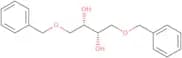
CAS:<p>Methyl 3,5-di-O-acetyl-2-deoxy-2-(trifluoromethyl)-a-D-ribofuranoside is a methylated sugar that can be custom synthesized. It is a monosaccharide with the molecular formula C4H8F3O7. Methyl 3,5-di-O-acetyl-2-deoxy-2-(trifluoromethyl)-a-D-ribofuranoside has been modified by fluorination and is used to study carbohydrate structures and functions. This chemical has an average purity of 98%.</p>Purity:Min. 95%(-)-1,4-Di-O-benzyl-L-threitol
CAS:<p>(-)-1,4-Di-O-benzyl-L-threitol is an organic compound that belongs to the group of homochiral compounds. It can be synthesized from l-tartaric acid and benzaldehyde. The reaction starts with a base addition to the carbonyl group of the acid, followed by nucleophilic attack at the carbonyl carbon by a hydroxyl group on the benzaldehyde. This reaction is mechanistic, showing electron transfer as well as desymmetrization. (-)-1,4-Di-O-benzyl-L-threitol can be used for asymmetric synthesis of alkanes and tetrahydrofurans without requiring any chiral reagents or catalysts. It has also been shown to react with acetone and ethylene glycol in dioxolane and alkylation reactions.</p>Formula:C18H22O4Purity:Min. 95%Molecular weight:302.36 g/mol2-Acetamido-2-deoxy-b-D-glucopyranosyl methylamine HCl
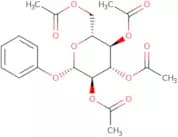
CAS:<p>2-Acetamido-2-deoxy-b-D-glucopyranosyl methylamine HCl is a synthetic, high purity, complex carbohydrate. It is a custom synthesis that has been modified with fluorination and methylation. The oligosaccharide has been glycosylated and polysaccharide click modification to give it a wide range of applications. 2-Acetamido-2-deoxy-b-D-glucopyranosyl methylamine HCl is used for the synthesis of glycoproteins, which are carbohydrates that are attached to proteins. It is also used in the production of research chemicals such as Fluorination, Monosaccharide, Synthetic, Oligosaccharide.</p>Formula:C9H18N2O5·HClPurity:Min. 95%Molecular weight:270.71 g/molPhenyl 2,3,4,6-tetra-O-acetyl-b-D-glucopyranoside
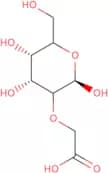
CAS:<p>Phenyl 2,3,4,6-tetra-O-acetyl-b-D-glucopyranoside is an imidate that can be synthesized from glycosides and derivatized with a variety of groups. This molecule is reactive and can be used to form glycosides by the reaction of a saccharide with phenyl 2,3,4,6-tetra-O-acetyl-b-D-glucopyranoside in the presence of acid or base. The resulting compounds are called glycosides because they contain both a sugar and phenyl 2,3,4,6-tetra-O-acetyl-b-D-glucopyranoside. Phenyl 2,3,4,6 tetra O acetyl b D glucopyranoside can also react with disaccharides to form glycosides.</p>Purity:Min. 95%2-O-Carboxymethyl-D-glucose
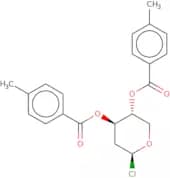
CAS:<p>2-O-Carboxymethyl-D-glucose is a reaction product of D-glucose and chloroacetate. It is often used in the production of sulfoxide and fibre. 2-O-Carboxymethyl-D-glucose can be used as a precursor for other chemical compounds, such as functional groups, acidic monomers, or reactive monomers. It has been shown to react with anhydroglucose at a rate of 1:1. The reaction time for this process is dependent on the concentration of the reactants.</p>Formula:C8H14O8Purity:Min. 95%Color and Shape:White Off-White PowderMolecular weight:238.19 g/mol1-Chloro-2-deoxy-3,4-di-O-toluoyl-D-ribopyranose
CAS:<p>1-Chloro-2-deoxy-3,4-di-O-toluoyl-D-ribopyranose is a custom synthesis of a complex carbohydrate. It is an Oligosaccharide and Polysaccharide that has been modified using methylation and glycosylation. The saccharide has also been fluorinated and the synthetic product is highly pure with CAS No. 516511-18-5. 1-Chloro-2,3,4,-diO-(1'-chloroethylidene) -D-[alpha] -ribopyranose is a sugar that can be used in many different applications including pharmaceuticals, agrochemicals, and biotechnology.</p>Formula:C21H21ClO5Purity:Min. 95%Color and Shape:White to off-white solid.Molecular weight:388.84 g/mol2-Naphthylmethyl 2-acetamido-3,4,6-tri-O-acetyl-2-deoxy-b-D-glucopyranoside
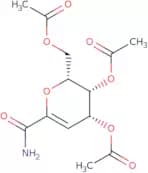
CAS:<p>2-Naphthylmethyl 2-acetamido-3,4,6-tri-O-acetyl-2-deoxy-b-D-glucopyranoside is a custom synthesis of a fluorinated sugar. It is synthesized by reacting 2,6-dichloroisonicotinoyl chloride with 3,4,6 triacetylated glucose in the presence of DMAP and DBU. The product is purified by column chromatography to give a white powder.</p>Formula:C25H29NO9Purity:Min. 95%Molecular weight:487.5 g/mol4,5,7-Tri-O-acetyl-2,6-anhydro-3-deoxy-D-lyxo-hept-2-enonamide
CAS:<p>4,5,7-Tri-O-acetyl-2,6-anhydro-3-deoxy-D-lyxo-hept-2-enonamide is a carbohydrate that belongs to the group of oligosaccharides. It is a synthetic compound that has been modified with fluorination and methylation. This compound has been synthesized with high purity and custom synthesis. The modification process includes glycosylation and click chemistry.</p>Formula:C13H17NO8Purity:Min. 95%Molecular weight:315.28 g/mola-D-Glucuronic acid 1-phosphate tripotassium salt pentahydrate
CAS:<p>1. Product Name: a-D-Glucuronic acid 1-phosphate tripotassium salt pentahydrate</p>Formula:C6H8O10PNa3Purity:Min. 95%Molecular weight:340.06 g/mol






![3,4-O-[(1R,2R)-1,2-Dimethoxy-1,2-dimethyl-1,2-ethanediyl]-1,6-O-[(1S,2S)-1,2-dimethoxy-1,2-dimethy…](/_next/image/?url=https%3A%2Fstatic.cymitquimica.com%2Fproducts%2F3D%2Fthumb-webp%2FMD16692.webp&w=3840&q=75)