Monosaccharides
Monosaccharides are the simplest form of carbohydrates and serve as fundamental building blocks for more complex sugars and polysaccharides. These single sugar molecules play critical roles in energy metabolism, cellular communication, and structural components of cells. In this section, you will find a wide variety of monosaccharides essential for research in biochemistry, molecular biology, and glycoscience. These compounds are crucial for studying metabolic pathways, glycosylation processes, and developing therapeutic agents. At CymitQuimica, we offer high-quality monosaccharides to support your research needs, ensuring precision and reliability in your scientific investigations.
Subcategories of "Monosaccharides"
- Alloses(11 products)
- Arabinoses(21 products)
- Erythroses(11 products)
- Fructoses(9 products)
- Fucoses(36 products)
- Galactosamine(41 products)
- Galactose(260 products)
- Glucoses(365 products)
- Glucuronic Acids(51 products)
- Glyco-substrates for Enzyme(77 products)
- Guloses(6 products)
- Idoses(4 products)
- Inositols(15 products)
- Lyxoses(4 products)
- Mannoses(65 products)
- O-Glycans(48 products)
- Psicoses(3 products)
- Rhamnoses(10 products)
- Riboses(61 products)
- Sialic Acids(100 products)
- Sorboses(4 products)
- Sugars(173 products)
- Tagatoses(4 products)
- Taloses(8 products)
- Xyloses(20 products)
Show 17 more subcategories
Found 6088 products of "Monosaccharides"
Sort by
Purity (%)
0
100
|
0
|
50
|
90
|
95
|
100
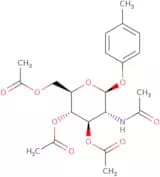
4-Methylphenyl 2-acetamido-3,4,6-tri-O-acetyl-2-deoxy-b-D-glucopyranoside
CAS:<p>4-Methylphenyl 2-acetamido-3,4,6-tri-O-acetyl-2-deoxy-b-D-glucopyranoside is a custom synthesis. It is an Oligosaccharide that is a Polysaccharide with a Modification of saccharide and Methylation. Carbohydrate is the most abundant organic molecule on earth. Sugars are carbohydrates and they are classified by their number of carbon atoms. 4MPTAGdG has a Glycosylation and Click modification, which suggests Fluorination and Synthetic. This carbohydrate has high purity and is made up of just one type of sugar: glucose.</p>Formula:C21H27NO9Purity:Min. 95%Molecular weight:437.44 g/molPhenyl 2-O-Acetyl-3,4,6-tri-O-benzyl-1-thio-b-D-galactopyranoside
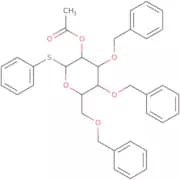
CAS:<p>Phenyl 2-O-Acetyl-3,4,6-tri-O-benzyl-1-thio-b-D-galactopyranoside is a glycosylated sugar that is under custom synthesis. The molecule contains a fluorinated benzene ring and an acetyl group. Phenyl 2-O-Acetyl-3,4,6-tri-O-benzyl 1,5 b -D -galactopyranoside can be modified in the laboratory to produce different derivatives and modifications. This product is made of high purity and has CAS No. 18387528 7.</p>Formula:C35H36O6SPurity:Min. 95%Molecular weight:584.72 g/molPsicose diacetonide
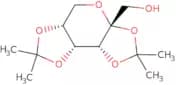
CAS:<p>Psicose diacetonide is a synthetic, custom-synthesized carbohydrate. It is a complex carbohydrate that is made of saccharides and has been modified to have a fluorinated monosaccharide. Psicose diacetonide is an oligosaccharide with a high purity and has been methylated and glycosylated.</p>Purity:Min. 95%2-Azidoethyl 2-O-benzoyl-4,6-O-benzylidene-3-O-(4-methoxybenzyl)-a-D-mannopyranoside
<p>2-Azidoethyl 2-O-benzoyl-4,6-O-benzylidene-3-O-(4-methoxybenzyl)-a-D-mannopyranoside is a synthetic sugar that has been modified with fluorination and glycosylation. The carbohydrate is made of a complex chain of monosaccharides and saccharides. It is the CAS number for this chemical agent.</p>Purity:Min. 95%Methyl 1-(4'-tert-butyldimethylsilyl-6-hydroxyraloxifene)-2,3,4-tri-O-acetyl-b-D-glycopyranuronate
CAS:<p>Methyl 1-(4'-tert-butyldimethylsilyl-6-hydroxyraloxifene)-2,3,4-tri-O-acetyl-b-D-glycopyranuronate is a modified carbohydrate. It is a synthetic saccharide that has been modified with methylation, fluorination and saccharide synthesis. This product can be custom synthesized and is available in high purity. Methyl 1-(4'-tert-butyldimethylsilyl-6-hydroxyraloxifene)-2,3,4-tri-O-acetyl-b-D--glycopyranuronate can be used in glycosylation reactions as well as Click modification reactions. CAS No: 174264–49–4.</p>Formula:C46H55NO13SSiPurity:Min. 95%Molecular weight:890.08 g/mol2,3,4,6-Tetra-O-acetyl-1,5-anhydro-D-mannitol
CAS:<p>2,3,4,6-Tetra-O-acetyl-1,5-anhydro-D-mannitol is a high yield precursor for the production of the drug 2,3,4,6-tetraacetoxybenzoin. The anomers are selectively formed by reacting with chlorides and iodides at elevated temperatures. The reaction yields the diastereomeric mixture of tetraacetoxybenzoin in a ratio of about 1:2. This product also reacts with acetobromoglucose to produce acrylonitrile (ACN). 2,3,4,6-Tetra-O-acetyl-1,5-anhydro-D-mannitol is a catalytic precursor for the production of the drug 2-(pyranosyl)-1-[2-(chloro)acetylamino]-2-(nitrophenyl)ethanol (PAN). This product can be</p>Formula:C14H20O9Purity:Min. 95%Molecular weight:332.3 g/molb-Maltosyl azide
CAS:<p>b-Maltosyl azide is a glycosylation reagent that is used in the synthesis of complex carbohydrates, saccharides, and oligosaccharides. It has been shown to be an efficient methylation agent for alcohols and phenols, as well as a good fluorinating agent for alcohols. b-Maltosyl azide can be used to modify sugars with Click chemistry and polysaccharides with fluorination. This compound is also commonly used for custom synthesis of saccharides, oligosaccharides, and monosaccharides.</p>Formula:C12H21N3O10Purity:Min. 95%Molecular weight:367.3 g/molDehydroclindamycin
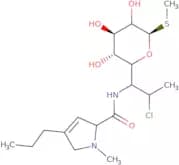
CAS:<p>Dehydroclindamycin is a semisynthetic antibiotic that belongs to the class of antibiotics known as lincosamides. It is used in clinical treatment for bacterial infections. Dehydroclindamycin acts by interfering with the bacterial ribosome and prevents the formation of proteins required for cell division. This drug may be susceptible to degradation by hydrolysis or oxidation, which can lead to impurities. Dehydroclindamycin is produced by hydrogenation of clindamycin hydrochloride using a Raney nickel catalyst, followed by chromatography. The spectrum of dehydroclindamycin consists of antibacterial activity against gram-positive bacteria such as Staphylococcus aureus and Enterococcus faecalis and gram-negative bacteria such as Escherichia coli and Klebsiella pneumoniae.</p>Formula:C18H31ClN2O5SPurity:Min. 95%Molecular weight:422.97 g/molMethyl 3,4-O-isopropylidene-6-O-trityl-a-D-galactopyranoside
CAS:<p>Methyl 3,4-O-isopropylidene-6-O-trityl-a-D-galactopyranoside is a synthetic, high purity carbohydrate. It is an oligosaccharide that has been modified with fluorination and methylation. Methyl 3,4-O-isopropylidene-6-O-tritylgalactopyranoside is used for the synthesis of glycosides and oligosaccharides.</p>Formula:C29H32O6Purity:Min. 95%Molecular weight:476.57 g/mol1-[[2-N-(5-Nitrothiazolyl)carboxamido]phenyl]-2,3,4-tri-O-acetyl-b-D-glucuronide methyl ester
<p>1-N-(5-Nitrothiazolyl)carboxamido-2,3,4-tri-O-acetyl-b-D-glucuronide methyl ester (NTG) is a glycosylated compound that was synthesized by click chemistry. It is an Oligosaccharide with a single sugar and a molecular weight of 514. The CAS number for NTG is 150158-09-8. NTG has been custom synthesized to order. The purity level of NTG is >99%.</p>Formula:C23H23N3O13SPurity:Min. 95%Molecular weight:581.51 g/molColitose
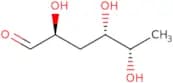
CAS:<p>Colitose is a sugar that has antimicrobial properties. It is a monosaccharide, which means it contains six carbon molecules. Colitose has been shown to inhibit bacterial growth and to prevent the development of resistant mutants in human serum. Colitose has also been shown to have therapeutic potential for infectious diseases such as bowel disease and other inflammatory bowel diseases. The structural analysis of colitose revealed that it contains terminal residues at the end of each chain, which are composed of glucose, galactose, and mannose. The glycan chains are linked together by alpha-1,6-glycosidic bonds. These terminal residues serve as a receptor for Toll-like receptors (TLRs), which are found on cells in the bowel wall and help regulate inflammation.</p>Formula:C6H12O4Purity:Min. 95%Color and Shape:PowderMolecular weight:148.16 g/mol2,3,4,6-Tetra-O-acetyl-b-D-glucopyranosyl ethylxanthate
CAS:<p>2,3,4,6-Tetra-O-acetyl-b-D-glucopyranosyl ethylxanthate is a synthetic carbohydrate that has been modified with acetyl groups. This modification is used to produce a carbohydrate that is more resistant to hydrolysis by enzymes. 2,3,4,6-Tetra-O-acetyl-b-D-glucopyranosyl ethylxanthate is one of many glycosides that have been modified with acetyl groups and fluorinated. This modification can be used for the synthesis of high purity carbohydrates.</p>Formula:C17H24O10S2Purity:Min. 95%Color and Shape:White To Off-White SolidMolecular weight:452.5 g/molα-D-Glucosamine 1-phosphate
CAS:<p>α-D-Glucosamine 1-phosphate is a methylated and glycosylated carbohydrate that is synthesized from glucose. It can be used as a building block for the synthesis of polysaccharides, such as chitin and cellulose. α-D-Glucosamine 1-phosphate can also be modified by fluorination to produce an active form with potent anticancer activity.</p>Formula:C6H14NO8PPurity:Min. 95%Molecular weight:259.15 g/mol(2R,3S,4R)-3,4-Dihydroxypyrrolidine-2-carboxylic acid
CAS:<p>(2R,3S,4R)-3,4-Dihydroxypyrrolidine-2-carboxylic acid is a methylated compound that has been synthesized by the click modification of an oligosaccharide. It is used as an intermediate in the synthesis of saccharides and polysaccharides. This product can be used for the fluorination of complex carbohydrates and for the modification of monosaccharides or sugars. The purity level of this product is high and it has been modified to have a desirable property.</p>Formula:C5H9NO4Purity:Min. 95%Molecular weight:147.13 g/mol(4R)-Benzyl-4-deoxy-4-C-nitrophenyl-b-D-arabinopyranoside
<p>(4R)-Benzyl-4-deoxy-4-C-nitrophenyl-b-D-arabinopyranoside is a synthetic glycoside that has been modified by fluorination and saccharide. It is a custom synthesis, which means it can be synthesized to order with high purity. This compound is used in the modification of glycoconjugates and polysaccharides, as well as the synthesis of oligosaccharides. It is also used in click chemistry, which involves the use of copper and azide ions.</p>Formula:C19H21NO6Purity:Min. 95%Molecular weight:359.37 g/mol3,4,6-Tri-O-acetyl-1,2-O-ethylidene-b-D-mannopyranoside
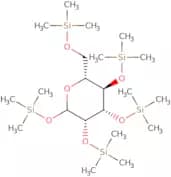
CAS:<p>3,4,6-Tri-O-acetyl-1,2-O-ethylidene-b-D-mannopyranoside is a synthetic glycosylation product of maltose and 1,2-O-ethylidene b-D mannopyranoside. This compound is a high purity product with custom synthesis. 3,4,6Tri acetyl 1,2 O ethylene b D mannopyranoside has the CAS number 630102 81 7.</p>Formula:C14H20O9Purity:Min. 95%Molecular weight:332.3 g/mol1,2,3,4,6-Penta-O-trimethylsilyl-D-mannopyranose
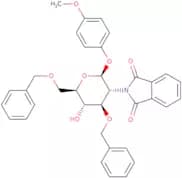
CAS:<p>1,2,3,4,6-Penta-O-trimethylsilyl-D-mannopyranose is a methylated pentasaccharide with a fluorinated hydroxyl group at the C2 position. It is used in the synthesis of polysaccharides and oligosaccharides. 1,2,3,4,6-Penta-O-trimethylsilyl-D-mannopyranose can be modified to produce new polysaccharides or oligosaccharides with desired properties. This product is also suitable for use in high purity applications due to its high purity and low background fluorescence.</p>Formula:C21H52O6Si5Purity:Min. 95%Molecular weight:541.06 g/mol4-Methoxyphenyl 3,6-Di-O-benzyl-2-deoxy-2-phthalimido-b-D-glucopyranoside
CAS:<p>4-Methoxyphenyl 3,6-Di-O-benzyl-2-deoxy-2-phthalimido-b-D-glucopyranoside is a glycopeptide with sucrase activity. It has been shown to prevent the growth of cancer cells in vitro and in vivo by inhibiting the production of insulin and other hormones. The anti-tumor effect was also observed in virus infected cells, where it inhibited the replication of papilloma virus. 4MPBG was found to inhibit the multiplication of human immunodeficiency virus (HIV) in vitro by binding to HIV RNA and blocking its synthesis.</p>Formula:C35H33NO8Purity:Min. 95%Molecular weight:595.64 g/mol2-Decyltetradecyl-D-xylopyranoside
CAS:<p>2-Decyltetradecyl-D-xylopyranoside is a synthetic, fluorinated carbohydrate that has been modified to contain a reactive methylene group. This compound can be used as a reactant in Click chemistry, which is an easy and convenient method for modifying the structure of polysaccharides. 2-Decyltetradecyl-D-xylopyranoside may be used for the synthesis of oligosaccharides or carbohydrates. This compound is soluble in water and organic solvents such as methanol and ethanol. It has a CAS number of 446264-02-4.</p>Formula:C29H58O5Purity:Min. 95%Color and Shape:Colourless solid.Molecular weight:486.77 g/mol2N-Fmoc-4N-(2,3,4,6-tetra-O-acetyl-b-D-galactopyranosyl)-L-asparagine
CAS:<p>2N-Fmoc-4N-(2,3,4,6-tetra-O-acetyl-b-D-galactopyranosyl)-L-asparagine is a fluorinated carbohydrate that has been synthesized and modified. It can be used in glycosylation reactions to produce oligosaccharides or polysaccharides. This compound is also useful in click chemistry since it can be methylated and undergo other chemical modifications. 2N-Fmoc-4N-(2,3,4,6-tetra-O-acetyl-b-Dgalactopyranosyl)-L asparagine is a white powder with a CAS number of 46746578.</p>Formula:C33H36N2O14Purity:Min. 95%Molecular weight:684.66 g/mol





![1-[[2-N-(5-Nitrothiazolyl)carboxamido]phenyl]-2,3,4-tri-O-acetyl-b-D-glucuronide methyl ester](/_next/image/?url=https%3A%2Fstatic.cymitquimica.com%2Fproducts%2F3D%2Fthumb-webp%2FMN04558.webp&w=3840&q=75)