Monosaccharides
Subcategories of "Monosaccharides"
- Alloses(11 products)
- Arabinoses(21 products)
- Erythroses(11 products)
- Fructoses(9 products)
- Fucoses(36 products)
- Galactosamine(41 products)
- Galactose(261 products)
- Glucoses(365 products)
- Glucuronic Acids(52 products)
- Glyco-substrates for Enzyme(78 products)
- Guloses(6 products)
- Idoses(4 products)
- Inositols(15 products)
- Lyxoses(4 products)
- Mannoses(65 products)
- O-Glycans(48 products)
- Psicoses(3 products)
- Rhamnoses(10 products)
- Riboses(60 products)
- Sialic Acids(100 products)
- Sorboses(4 products)
- Sugars(173 products)
- Tagatoses(4 products)
- Taloses(8 products)
- Xyloses(20 products)
Found 6083 products of "Monosaccharides"
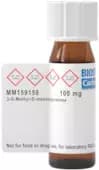
3-O-Methyl-D-mannopyranose
CAS:3-O-Methyl-D-mannopyranose is a glycosidic compound with immunostimulating properties. It is an intermediate in the synthesis of 3,6-anhydro-N-acetylneuraminic acid and other related carbohydrates. The hydrolysis of this molecule yields silver trifluoromethanesulfonate, chloride, and low molecular weight material. 3-O-Methyl-D-mannopyranose can be used as a reagent for the preparation of high molecular weight material by ion exchange chromatography or by dehydrative coupling.
Formula:C7H14O6Purity:Min. 95%Molecular weight:194.18 g/molRef: 3D-MM159159
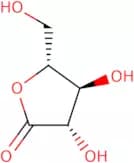
Discontinued product2-Amino-2,3,5-trideoxy-3-methyl-L-arabinonic acid-gamma-lactone hydrochloride
CAS:2-Amino-2,3,5-trideoxy-3-methyl-L-arabinonic acid-gamma-lactone hydrochloride is a lipid biosynthesis inhibitor that blocks the first step of this pathway by inhibiting the enzyme d-arabinose 4,5-diphosphate aldolase. This compound inhibits bacterial growth and leads to cell lysis. It has been shown to be active against cryptococcus neoformans and Candida neopformans. 2AADL has also been shown to inhibit the production of cell wall polysaccharides in C. neoformans and other fungi. 2AADL is thought to bind to the cell membrane through its alcohol group, which may lead to changes in the redox potential of the cells.
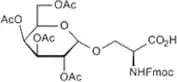
Purity:Min. 95%2,3,4,6-Tetra-O-acetyl-a-D-galactopyranosyl-Fmoc serine
CAS:2,3,4,6-Tetra-O-acetyl-a-D-galactopyranosyl-Fmoc serine is a custom synthesis that has been modified by fluorination and methylation. It is a monosaccharide with CAS No. 1351605-34-8 and Polysaccharide with Glycosylation and sugar Carbohydrate. This molecule has a complex carbohydrate structure with many glycosylation sites.Formula:C32H35NO14Purity:Min. 95%Molecular weight:657.62 g/molRef: 3D-MT09625
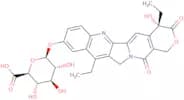
Discontinued productSN-38 glucuronide
CAS:SN-38 glucuronide is a metabolite of irinotecan that inhibits the growth of cancer cells by binding to the DNA polymerase, blocking the synthesis of DNA. SN-38 glucuronide has potent antitumor activity and high values for inhibiting tumor metastasis. It is mainly excreted in urine as a conjugate with glucuronic acid, which may be why urine samples are often used to measure its concentration. SN-38 glucuronide also interacts with other drugs, including chemical inhibitors and ATP-binding cassette transporters, which can affect its pharmacological properties.
Formula:C28H28N2O11Purity:Min. 97.5 Area-%Color and Shape:PowderMolecular weight:568.53 g/molRef: 3D-MS16856
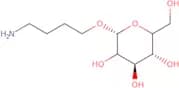
Discontinued product4-Aminobutyl β-D-galactopyranoside
CAS:4-Aminobutyl b-D-galactopyranoside is a methylated saccharide that is also a glycosylation reaction product of 4-aminobutyl b-D-galactopyranoside. It has been modified with Click chemistry and fluorinated for use in carbohydrate research, including glycoprotein synthesis, carbohydrate modification, and oligosaccharide synthesis. 4-Aminobutyl b-D-galactopyranoside has been shown to be a potent inhibitor of the enzyme aminoglycoside adenyltransferase 1 (AGT1), which is involved in the synthesis of bacterial cell wall peptidoglycan. This compound has been used as a model for glycosylation reactions as it contains both an amino and sugar moiety.
Formula:C10H21NO6Purity:Min. 95%Molecular weight:251.28 g/molRef: 3D-MA44856
Discontinued productPhenyl a-L-thiorhamnopyranoside
CAS:Phenyl a-L-thiorhamnopyranoside is a monosaccharide that is synthesized by the methylation of alpha-D-glucose. It is a custom synthesis that is used in the synthesis of oligosaccharides, polysaccharides, and sugar drugs. Phenyl a-L-thiorhamnopyranoside can be fluorinated to create an active form that has antibacterial activity. This compound has shown no signs of toxicity in animal studies and has been used as a food additive.
Formula:C12H16O4SPurity:Min. 95%Molecular weight:256.32 g/molEthyl 2,3-di-O-(4-methoxybenzyl)-4,6-O-(4-methoxybenzylidene)-b-D-thiogalactopyranoside
Ethyl 2,3-di-O-(4-methoxybenzyl)-4,6-O-(4-methoxybenzylidene)-b-D-thiogalactopyranoside is a high purity, custom synthesis sugar that can be modified with fluorination, glycosylation, and methylation. This product has CAS number 401071-27-8. Ethyl 2,3-di-O-(4-methoxybenzyl)-4,6-O-(4-methoxybenzylidene)-b-D-thiogalactopyranoside is an oligosaccharide and monosaccharide of the carbohydrate complex.
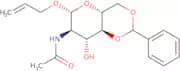
Formula:C32H38O8SPurity:Min. 95%Molecular weight:582.7 g/molAllyl 2-acetamido-4,6-O-benzylidene-2-deoxy-b-D-glucopyranoside
CAS:Allyl 2-acetamido-4,6-O-benzylidene-2-deoxy-b-D-glucopyranoside is a synthetic compound that belongs to the class of carbohydrates. It is used as a reagent in sugar chemistry and glycosylation reactions. Allyl 2-acetamido-4,6-O-benzylidene-2-deoxy-b-D-glucopyranoside is also used for the modification of polysaccharides and fluorination reactions. This product has been shown to be effective as a substrate for site specific methylation reactions. Allyl 2 acetamido 4,6 O benzylidene 2 deoxy b D glucopyranoside has been tested in vitro against methicillin resistant Staphylococcus aureus (MRSA) with promising results.
Formula:C18H23NO6Purity:Min. 95%Molecular weight:349.39 g/mol1,2,3,4-Tetra-O-acetyl-D-fucopyranose
1,2,3,4-Tetra-O-acetyl-D-fucopyranose is a glycosylation agent that can be used in the synthesis of complex carbohydrates or in the modification of natural polysaccharides. It can be fluorinated to produce 1,2,3,4-tetra-O-fluoro-D-fucopyranose or modified with a click reagent to produce 1,2,3,4-tetra-[5-(N'-diethylamino)pentyl]-D-fucopyranose. The CAS number for this product is 109712-63-7. This product is available for custom synthesis and is sold at a purity of >99%.
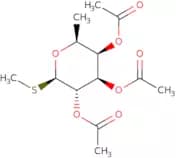
Purity:Min. 95%Methyl 2,3,4-tri-O-acetyl-β-L-thiofucopyranoside
CAS:Methyl 2,3,4-tri-O-acetyl-b-L-thiofucopyranoside is a ferrite that is important for the growth of cells. It can be used as a growth factor to promote the growth of cells. Covid®-19 pandemic A/Aureus strain is resistant to this drug and it has been shown to inhibit cellular transformation in human epidermal cells. The drug also reduces the size and number of cancerous lesions in mice by inhibiting tumor angiogenesis. Methyl 2,3,4-tri-O-acetyl-b-L-thiofucopyranoside can cause an overload of Ca2+ ions in the cell, which may lead to apoptosis or necrosis.
Formula:C13H20O7SPurity:Min. 95%Molecular weight:320.36 g/mol1,3,4,6-Tetra-O-acetyl-N-(4-methoxybenzylidene)-b-D-glucosamine
CAS:1,3,4,6-Tetra-O-acetyl-N-(4-methoxybenzylidene)-b-D-glucosamine is a high purity custom synthesis sugar that has been fluorinated and glycosylated. It is synthesized from the methylation of 4-(1,3,4,6-tetra-O-acetyl)-N-(4-hydroxybenzylidene)-b-D-glucosamine and can be used for the modification of saccharides or oligosaccharides. This compound has CAS No. 7597-81-1 and is known as a carbohydrate.
Formula:C22H27NO10Purity:Min. 95%Molecular weight:465.45 g/molRef: 3D-MT08177
Discontinued productClofibric acid acyl-b-D-glucuronide
CAS:Clofibric acid acyl-b-D-glucuronide is a reactive chemical species that has been shown to have genotoxic effects. It binds to DNA and forms covalent adducts, leading to mutations in the DNA sequence. Clofibric acid acyl-b-D-glucuronide is a metabolite of clofibrate, which is used for the treatment of hyperlipidemia and atherosclerosis. This metabolite can be detected in human blood, serum, and liver samples by GC/MS, with a limit of detection of 0.1 ng/mL (0.0003 µg/L).
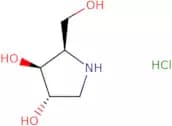
Formula:C16H19ClO9Purity:Min. 95%Molecular weight:390.77 g/mol1,4-Dideoxy-1,4-imino-D-xylitol HCl
CAS:1,4-Dideoxy-1,4-imino-D-xylitol HCl (DDX) is a potent inhibitor of the enzyme carboxypeptidase A2. DDX has been shown to inhibit the growth of HIV in vitro and in vivo. DDX also inhibits the production of proinflammatory cytokines and neurotrophic factors from HL60 cells. It has been shown to be a potential drug target for the treatment of infectious diseases such as alphaviruses, which produce a severe neuroinvasive disease in humans. DDX binds to dna with high affinity and specificity, but does not bind to RNA or proteins. DDX inhibits mitochondrial membrane potential by binding to ATP synthase and blocking the synthesis of ATP. DDX has also been shown to have an anti-oxidative injury effect on mitochondria, which may contribute to its inhibition of viral replication.
Formula:C5H11NO3·HClPurity:Min. 95%Molecular weight:169.61 g/molRef: 3D-MD10116
Discontinued product3,4,6-Tri-O-acetyl-2-deoxy-2-phthalimido-b-D-glucopyranosyl chloride
CAS:3,4,6-tri-O-acetyl-2-deoxy-2-phthalimido-b-D-glucopyranosyl chloride is a modification of the carbohydrate. It is a complex carbohydrate that has been custom synthesized for research purposes. It can be used as a monosaccharide or polysaccharide in glycosylation reactions. This compound has not been fluorinated and the CAS number is 7772-87-4.
Formula:C20H20ClNO9Purity:Min. 95%Molecular weight:453.83 g/molRef: 3D-MT05342
Discontinued productMethyl b-D-thioxylopyranoside
CAS:Methyl b-D-thioxylopyranoside is a synthetic sugar that is used in the synthesis of saccharides and oligosaccharides. It is also used to modify saccharides, such as glucosamine, by adding methyl groups to the sugar's hydroxyl group. Methyl b-D-thioxylopyranoside can be used for glycans with high purity and high yield. This product does not contain any other substances except for water and ethanol. The chemical formula for this product is C6H8O6.
Purity:Min. 95%1,2,3,5,6-Penta-O-propanoyl-b-D-glucofuranose
1,2,3,5,6-Penta-O-propanoyl-b-D-glucofuranose is a methylated sugar. It is a polysaccharide consisting of 1,2,3,5,6-penta-O-propanoyl-b-D-glucopyranosyl units linked by β-(1→4)-glycosidic bonds. This carbohydrate can be used in the synthesis of oligosaccharides and glycosylation reactions. 1,2,3,5,6-Penta-O-propanoyl b -D -glucofuranose has been fluorinated to give pentafluorobenzoyl b -D -glucofuranose which is used for click modification.
Purity:Min. 95%Tetra-O-acetyl-2-acetamido-2-deoxy-b-D-mannose
Tetra-O-acetyl-2-acetamido-2-deoxy-b-D-mannose is a modified sugar that is synthesized by the methylation of 2,4,6-trichloroacetimidate. This compound has been used in the synthesis of glycosylations and other modifications. Tetra-O-acetyl-2-acetamido-2-deoxy-b-D mannose can be custom synthesized to your specifications with high purity.
Purity:Min. 95%Ref: 3D-MT58668
Discontinued productL-Idaric acid
CAS:L-Idaric acid is a novel anti-inflammatory agent that is a derivative of the endogenous compound d-glucuronic acid. It has been shown to have anti-inflammatory effects in animal studies as well as in human cell cultures and it has been shown to be safe for use in humans. L-Idaric acid inhibits the production of inflammatory mediators, such as prostaglandins, leukotrienes, and cytokines. L-Idaric acid also inhibits the activity of β-glucuronidase, which may be responsible for its ability to prevent the degradation of glucuronic acid derivatives.
Formula:C6H10O8Purity:Min. 95%Color and Shape:White to off-white solid.Molecular weight:210.14 g/molNystatin A3
CAS:8,9-Dideoxy-28,29-dihydro-7,10-dihydroxy-35-O-(2,6-dideoxy-L-ribo-hexopyranosyl)amphotericin B is an antifungal drug that belongs to the class of polyene macrolides. It is a potent inhibitor of Candida albicans and Candida glabrata. This compound has been shown to have synergistic effects when used in combination with nystatin against C. albicans. 8,9-Dideoxy-28,29-dihydro-7,10-dihydroxy-35O-(2,6 - dideoxy - L - ribo - hexopyranosyl)amphotericin B also inhibits toll like receptor 4 (TLR4), which is responsible for the induction of inflammatory cytokines such as IL1B and IL8
Formula:C53H85NO20Purity:Min. 95%Molecular weight:1,056.24 g/molN-Acetylmuramic acid 6-phosphate
CAS:N-Acetylmuramic acid 6-phosphate is a molecule that belongs to the class of compounds known as nucleotide phosphates. It is an intermediate in the biosynthesis of peptidoglycan, which is a major component of bacterial cell walls. N-Acetylmuramic acid 6-phosphate is synthesized from ATP and N-acetylmuramic acid by hydrolysis. The reaction mechanism for this transformation involves an imine intermediate, which can be formed through the action of two molecules of ATP and one molecule of N-acetylmuramic acid. This reaction is catalyzed by an enzyme called heterocyst. The enzyme kinetics for this transformation are influenced by many factors, including temperature, pH, and substrate concentration.Formula:C11H20NO11PPurity:Min. 95%Molecular weight:373.25 g/mol