Monosaccharides
Monosaccharides are the simplest form of carbohydrates and serve as fundamental building blocks for more complex sugars and polysaccharides. These single sugar molecules play critical roles in energy metabolism, cellular communication, and structural components of cells. In this section, you will find a wide variety of monosaccharides essential for research in biochemistry, molecular biology, and glycoscience. These compounds are crucial for studying metabolic pathways, glycosylation processes, and developing therapeutic agents. At CymitQuimica, we offer high-quality monosaccharides to support your research needs, ensuring precision and reliability in your scientific investigations.
Subcategories of "Monosaccharides"
- Alloses(11 products)
- Arabinoses(21 products)
- Erythroses(11 products)
- Fructoses(9 products)
- Fucoses(36 products)
- Galactosamine(41 products)
- Galactose(260 products)
- Glucoses(365 products)
- Glucuronic Acids(51 products)
- Glyco-substrates for Enzyme(77 products)
- Guloses(6 products)
- Idoses(4 products)
- Inositols(15 products)
- Lyxoses(4 products)
- Mannoses(65 products)
- O-Glycans(48 products)
- Psicoses(3 products)
- Rhamnoses(10 products)
- Riboses(61 products)
- Sialic Acids(100 products)
- Sorboses(4 products)
- Sugars(173 products)
- Tagatoses(4 products)
- Taloses(8 products)
- Xyloses(20 products)
Show 17 more subcategories
Found 6088 products of "Monosaccharides"
Sort by
Purity (%)
0
100
|
0
|
50
|
90
|
95
|
100
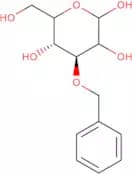
3-O-Benzyl-D-mannose
CAS:<p>3-O-Benzyl-D-mannose is a glycoside that is synthesized by the reaction of dibutyltin oxide with an anomeric or other glycosidic sugar. The reaction proceeds via a nucleophilic addition of the tin triflate to a glycosyl group followed by an electrophilic alkylation of the resulting alcohol. 3-O-Benzyl-D-mannose can be synthesized from the commercially available compound, D-mannose, and dibutyltin oxide. It has been shown to inhibit axial growth in Escherichia coli cells.</p>Formula:C13H18O6Purity:Min. 95%Molecular weight:270.28 g/molRef: 3D-MB159142
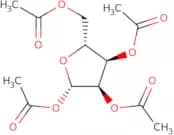
Discontinued product1,2,3,5-Tetra-O-acetyl-β-D-ribofuranose
CAS:<p>1,2,3,5-Tetra-O-acetyl-β-D-ribofuranose is a sugar that has been acetylated at the hydroxyl group. It has biological properties that are similar to those of 1,2,3,5-tetraacetyl-β-D-ribofuranose. This compound is an analog of 1,2,3,5-tetraacetyl-β-D-ribofuranose and can be used as a model system for studying the effects of acetylation on the properties of this molecule. Acetylation at the hydroxyl group in sugars can lead to low energy (chemical) properties. The acetylated form of this compound reacts with trifluoromethanesulfonic acid to give tetrafluoroethylene and ammonium sulfate in a model reaction solution. 1,2,3,5-Tetraacetyl β</p>Formula:C13H18O9Purity:Min. 97.5 Area-%Molecular weight:318.28 g/molD-Xylulose 5-phosphate sodium
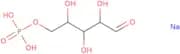
CAS:<p>D-Xylulose 5-phosphate sodium salt is a synthetic monosaccharide that can be used in the synthesis of oligosaccharides, polysaccharides, and complex carbohydrates. It is also used in glycosylation reactions. D-Xylulose 5-phosphate sodium salt has been fluorinated to provide better stability and solubility. The compound has a molecular weight of 206.06 g/mol and a CAS number of 105931-44-0. This product is available for custom synthesis upon request.</p>Formula:C5H11O8PNaPurity:Min. 95%Color and Shape:PowderMolecular weight:252.09 g/molRef: 3D-MX182933
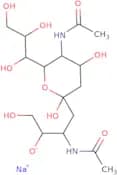
Discontinued product3'-a-Sialyl-N-acetyllactosamine sodium salt
CAS:<p>3'-a-Sialyl-N-acetyllactosamine sodium salt is a high purity, custom synthesis sugar. It has been modified with fluorination, glycosylation, and methylation to provide the desired properties. This product is also available in other forms such as monosaccharide and saccharide. 3'-a-Sialyl-N-acetyllactosamine sodium salt can be used in various applications including Click modification, fluoroamination, glycosylation, carbonylation and methylation. CAS No. 350697-53-9</p>Formula:C25H42N2O19NaPurity:Min. 95%Molecular weight:697.59 g/molRef: 3D-MS182937
Discontinued productD-Ribulose-5-phosphate sodium
CAS:<p>D-ribulose-5-phosphate sodium is a nucleotide sugar that is one of the ribonucleotides, which are fundamental components of RNA. D-ribulose 5-phosphate sodium has been shown to be an intermediate in the metabolism of ribulose and catalyzes the oxidation of d-arabinose. This enzyme also catalyses the synthesis of fatty acids and participates in reactions involving glycerolipids and phospholipids. The reaction mechanism involves a double displacement with simultaneous attack by a water molecule on C2' and C3'. When deuterium is present, it affects the rate of these reactions in a way that depends on the orientation of the substrate to the enzyme.</p>Formula:C5H11NaO8PPurity:Min. 95%Molecular weight:253.1 g/molRef: 3D-BDA05475
Discontinued product2-Acetamido-1,3,4,6-tetra-O-acetyl-2-deoxy-a-D-galactopyranose
CAS:<p>2-Acetamido-1,3,4,6-tetra-O-acetyl-2-deoxy-a-D-galactopyranose is a fluorinated complex carbohydrate that has been modified by methylation and acetylation. This product is a custom synthesis that has not been previously described in the scientific literature. It is synthesized from 2, 3, 4, 6 tetraacetyl alpha D galactopyranoside and 2 deoxy alpha D galactopyranose. The chemical properties of this compound are similar to those of other complex carbohydrates such as glycogen and heparin.</p>Formula:C16H23NO10Purity:Min. 90.0 Area-%Molecular weight:389.35 g/molDecyl D-glucopyranoside
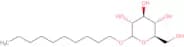
CAS:<p>Decyl D-glucopyranoside is a sodium salt of decyl D-glucopyranoside that is used as a detergent additive in cleaning compositions. Decyl D-glucopyranoside has shown antimicrobial activity against both Gram-positive and Gram-negative bacteria, including methicillin resistant Staphylococcus aureus (MRSA) and Clostridium perfringens. Decyl D-glucopyranoside has also been shown to have chemical stability at high temperatures, making it useful in the manufacture of lacrimal gland preparations and cationic surfactants.</p>Formula:C16H32O6Molecular weight:320.42 g/molRef: 3D-MD11310
Discontinued producttrans-Zeatin-O-glucoside
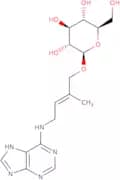
CAS:<p>trans-Zeatin-O-glucoside is a cytokinin metabolite, which is a compound derived from the naturally occurring plant hormone zeatin. This product is synthesized or can be naturally found in plants, where it plays a crucial role in the regulation of growth and development. As a glucoside, it involves a glucose molecule attached to the cytokinin, which affects the compound's solubility, stability, and transport within the plant system.</p>Formula:C16H23N5O6Purity:Min. 95%Molecular weight:381.38 g/molRef: 3D-MZ30318
Discontinued product