APIs for research and impurities
Subcategories of "APIs for research and impurities"
- Aminoacids and derivatives(12,316 products)
- Anthraquinones and derivatives(402 products)
- Benzimidazole and Imidazole Derivatives(10,375 products)
- Benzodiazepine Derivatives(323 products)
- Carbohydrates and glycoconjugates(5,038 products)
- Esters and Derivatives(42,239 products)
- Fatty Acids and Lypidic Derivatives(32,360 products)
- Flavonoids and Polyphenols(17,066 products)
- Free Radicals and Oxidant/Reducing Agents(208 products)
- Ketones and derivatives(2,393 products)
- Natural and semi-synthetic antibiotics(6,307 products)
- Nitriles and Cyano Derivatives(3,068 products)
- Nitrosamines and Derivatives(55 products)
- Nucleosides and Nucleotides(3,409 products)
- Organic Phosphates and Phosphonates(1,192 products)
- Organic Sulphonates and Sulphates(10,415 products)
- Organometallics(4,417 products)
- Others(6,257 products)
- Peptides and Proteins(3,129 products)
- Polymers and Derivatives(99 products)
- Purines and Pyrimidine Derivatives(8,889 products)
- Quinazoline and Quinoline Derivatives(65,574 products)
- Quinones and Derivatives(24,334 products)
- Salts and Derivatives of Active Pharmaceutical Ingredients (API)(81,501 products)
- Steroids and Derivatives(4,905 products)
- Sulfonamides and Derivatives(2,539 products)
- Terpenoids and Derivatives(3,827 products)
- Thiazolidinediones and Thiopyrans(2,752 products)
- β-Adrenergic Compounds(227 products)
Found 58881 products of "APIs for research and impurities"
Ref: 4Z-T-02197
Discontinued productRef: 4Z-I-058004
Discontinued productRef: 4Z-Z-062005
Discontinued productRef: 4Z-F-084014
Discontinued productMethylphenidate EP Impurity A-d5 (Mixture of Diastereomers) (Methylphenidate USP Related Compound A-d5 (Free Form), Ritalinic Acid-d5)
Formula:C13H12D5NO2Molecular weight:224.31Ref: 4Z-M-137031
Discontinued productRef: 4Z-P-0252
Discontinued productRef: 4Z-L-3217
Discontinued productRef: 4Z-O-103015
Discontinued productAflatoxin B1 8,9-Epoxide
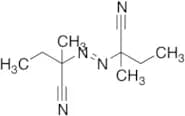
CAS:Controlled ProductFormula:C17H12O7Purity:>80%Color and Shape:NeatMolecular weight:328.272,2'-Azobis-(2-methylbutyronitrile)
CAS:Applications 2,2'-AZOBIS-(2-METHYLBUTYRONITRILE) (cas# 13472-08-7) is a useful research chemical.
Dangerous Goods Info This compound is forbidden to ship by air under IATA regulations.Formula:C10H16N4Color and Shape:White to Off-White SolidMolecular weight:192.27Trazodone Hydrochloride Impurity G
Trazodone Hydrochloride Impurity G is a synthetic compound that is an impurity found in Trazodone Hydrochloride, CAS No. 77893-17-6. This compound has the following physical properties: MW = 284.27, mp = 227-229°C, [α] D = -33.5° (c 1.0 in water), and UV max (λ max ) = 228 nm. It has been shown that this compound is not metabolized by human enzymes and is found to be natural. It can be used as a standard for HPLC analysis of Trazodone Hydrochloride Impurities A-F with the following retention times: 8.7 min for Impurity A, 9.2 min for Impurity B, 9.9 min for Impurity C, 10.4 min for Impurity D, 11.1 min for Impurity E, and 12.3 min for Impurity F.BR>BR
Formula:C17H27ClN2O·HClPurity:Min. 95%Molecular weight:347.32 g/mol9-Oxo azithromycin B
9-Oxo azithromycin B is a metabolite of azithromycin. It is an analytical standard for the HPLC analysis of azithromycin and its metabolites. 9-Oxo azithromycin B has been shown to bind to the ribosomes of bacteria, and inhibit protein synthesis. This drug also has antibiotic activity against Mycobacterium avium and Mycobacterium tuberculosis. 9-Oxo azithromycin B can be used in niche research or as an API impurity.br>
br>
br>Formula:C37H68N2O12Purity:Min. 95%Molecular weight:732.94 g/molAtorvastatin methyl ester
CAS:Atorvastatin methyl ester is a statin drug that inhibits the synthesis of cholesterol and other lipids in the body. It is used to reduce high levels of low-density lipoprotein (LDL) cholesterol, which may lead to heart disease or stroke. Atorvastatin methyl ester has been shown to be effective in reducing the uptake of LDL cholesterol into cells by preventing the formation of LDL particles. This drug also decreases the production of biphosphate-containing phospholipids, which are essential for dendritic cell maturation. The crystalline polymorphs have been characterized by X-ray diffraction and microscopy. Impurities can be detected using ultraviolet spectroscopy, infrared spectroscopy, or nuclear magnetic resonance spectroscopy.
Formula:C34H37FN2O5Purity:Min. 95%Color and Shape:PowderMolecular weight:572.67 g/molRef: 3D-IA18021
Discontinued productRotigotine Impurity 7
CAS:Rotigotine Impurity 7 is an impurity that has been identified in the synthesis of rotigotine. Rotigotine Impurity 7 is a synthetic compound with a CAS number of 1229620-82-9. It is intended for use as an analytical standard and as a component in the manufacture of rotigotine, which is indicated for the management of Parkinson's disease. This product has not been tested in animals or humans, and it should be handled with care.
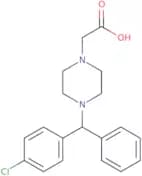
Formula:C21H28ClNO2SPurity:Min. 95%Molecular weight:393.97 g/molCetirizine Impurity B
CAS:Cetirizine Impurity B is a custom synthesis impurity. It is a product of the metabolism of cetirizine, an anti-allergic drug. Cetirizine Impurity B is used as an impurity standard for drug development and analytical HPLC studies. It has been assigned CAS number 113740-61-7 by the Chemical Abstracts Service. The purity of this compound is greater than 99%.
Formula:C19H21ClN2O2Purity:Min. 90 Area-%Color and Shape:PowderMolecular weight:344.8 g/molRef: 3D-IC181078
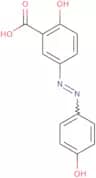
Discontinued productOlsalazine sodium impurity C
CAS:Olsalazine sodium impurity C is a metabolite of olsalazine sodium. It is a natural product that can be custom synthesized for research and development purposes. Olsalazine sodium impurity C has been shown to have pharmacopoeia-grade purity and can be used as an analytical standard or an API impurity in drug products. The CAS number for this substance is 259151-72-9.
Formula:C13H10N2O4Purity:Min. 95%Color and Shape:PowderMolecular weight:258.23 g/molRef: 3D-IO63796
Discontinued product15-O-Demethyl Tacrolimus
CAS:Tacrolimus is a macrolide that is used as an immunosuppressive drug. It has been shown to bind to the FK-binding protein, which in turn inhibits calcineurin. This prevents the release of IL-2, TNF-α and other cytokines. The immunosuppressive effects of tacrolimus have been evaluated using analytical methods such as coefficients, affinity, and monitoring techniques such as immunoassays and agglutination. These techniques are used to evaluate the plasma concentration of tacrolimus. Tacrolimus also binds to proteins in the blood samples and can be detected by turbidimetric or electrochemiluminescence immunoassay reagents.
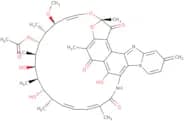
Formula:C43H67NO12Purity:Min. 95%Molecular weight:789.99 g/molRifaximin Impurity 1
CAS:Rifaximin Impurity 1 is a synthetic impurity standard for Rifaximin. It is a metabolite of rifaximin and is used in research and development to test the purity of drug products. It has a molecular weight of 314.2 g/mol and molecular formula C9H16N4O4S. This product is not manufactured by or for the original equipment manufacturer (OEM).
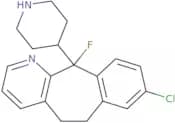
Formula:C43H49N3O11Purity:Min. 95%Molecular weight:783.86 g/mol11-Fluoro desloratadine
CAS:11-Fluoro desloratadine is a metabolite of the antihistamine, loratadine. It has shown to be an analytical standard for HPLC, and impurity standard for pharmacopoeia. 11-Fluoro desloratadine is typically synthesized by reacting loratadine with fluorinating reagent such as N-fluorosuccinimide (NFSI) in the presence of a base catalyst such as sodium methoxide. 11-Fluoro desloratadine is also found in breast milk at concentrations of up to 1.2% of total loratadine concentration, which has been attributed to incomplete metabolism or passive transfer from mother to child.
Formula:C19H20N2ClFPurity:Min. 95%Color and Shape:PowderMolecular weight:330.83 g/molRef: 3D-IF46257
Discontinued productDi-2-thienylmethanone
CAS:Di-2-thienylmethanone is a pyrazole with an activation energy of about 10.5 kcal/mol. It has been found to be toxic and can cause cell lysis. This molecule has been used in the synthesis of a number of drugs, including thiopental, a barbiturate that is used as an anaesthetic. Di-2-thienylmethanone is also the precursor for the synthesis of fluoroquinolones, which are potent antibacterial agents. The Friedel-Crafts reaction is one way this molecule is synthesized, and it involves the addition of an alkyl halide to an unsaturated double bond. This reaction is named after Charles Friedel and James Crafts who first discovered it in 1877.
Formula:C9H6OS2Purity:Min. 95%Color and Shape:White PowderMolecular weight:194.28 g/molRef: 3D-ID131940
Discontinued product2-Mercaptobenzimidazole
CAS:2-Mercaptobenzimidazole is a chemical compound that can be used for the treatment of infectious diseases. It has been shown to have antioxidative properties and inhibit the growth of bacteria. 2-Mercaptobenzimidazole also has an effect on human serum, which may be due to its ability to bind with proteins in serum and form hydrogen bonds. 2-Mercaptobenzimidazole is stable at high temperatures and has been shown as an effective antimicrobial agent against gram positive and gram negative bacteria.
Formula:C7H6N2SPurity:Min. 99 Area-%Color and Shape:White/Off-White SolidMolecular weight:150.19 g/molRef: 3D-IM00310
Discontinued product4-(2-Bromo-ethyl)-1-ethyl-3,3-diphenyl-pyrrolidin-2-one
CAS:This compound is a research and development impurity standard. It is synthesized in accordance with the pharmacopoeia, and it is an API impurity. It is also used as a metabolite standard for drug development and metabolism studies. This compound has been tested in HPLC standards.
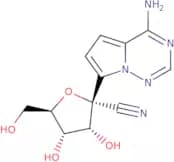
Purity:Min. 95%Remdesivir impurity 7
CAS:Remdesivir is an antiviral drug. It is an RNA-dependent RNA polymerase inhibitor that has been shown to be effective against a broad range of RNA viruses, including influenza A and B, rhinovirus, respiratory syncytial virus, and parainfluenza virus. Remdesivir impurity 7 (impurity) is a byproduct of the synthesis process of remdesivir. It is a white crystalline solid with a strong chemical odor. This impurity can be synthesized in high purity as well as in custom specifications to meet the needs of pharmaceutical companies developing new drugs.
Formula:C15H24NO5PPurity:Min. 95%Molecular weight:329.33 g/mol(3R)-3-Amino-1-[5,6-dihydro-3-(trifluoromethyl)-1,2,4-triazolo[4,3-α]pyrazin-7(8H)-yl]-4-(2,3,6-trifluorophenyl)-1-butanone
CAS:Please enquire for more information about (3R)-3-Amino-1-[5,6-dihydro-3-(trifluoromethyl)-1,2,4-triazolo[4,3-α]pyrazin-7(8H)-yl]-4-(2,3,6-trifluorophenyl)-1-butanone including the price, delivery time and more detailed product information at the technical inquiry form on this page
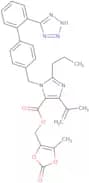
Formula:C16H15F6N5OPurity:Min. 95%Molecular weight:407.31 g/molOlmesartan EP Impurity C
CAS:Olmesartan medoxomil is a prodrug that is metabolized to the active form, olmesartan, in the liver. The esters of olmesartan medoxomil are metabolized by hydrolysis and by esterases. The most common side effects of olmesartan medoxomil are headache, dizziness, fatigue, nausea and diarrhea. Olmesartan medoxomil is used for the treatment of high blood pressure in adults. This drug also has anti-inflammatory properties due to its inhibition of prostaglandin synthesis.
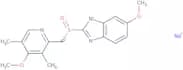
Formula:C29H28N6O5Purity:Min. 95%Color and Shape:White Off-White PowderMolecular weight:540.57 g/molEsomeprazole sodium
CAS:Esomeprazole is a proton pump inhibitor used to treat gastroesophageal reflux disease and other conditions where there is too much stomach acid. It is available as a capsule or tablet in doses of 20, 40, and 60 mg. Esomeprazole inhibits the production of gastric acid by blocking the hydrogen/potassium adenosine triphosphate (H+/K+ ATPase) enzyme system at the secretory surface of the gastric parietal cells. Omeprazole is an acidic drug that blocks the H+/K+ ATPase enzyme system. The two drugs have been compared in two-way crossover studies using healthy volunteers who were given omeprazole magnesium for one week followed by esomeprazole sodium for another week. There was no difference in their effect on acid secretion or on heartburn relief. The plasma concentrations of both drugs increased with increasing dose, but there was no significant difference between them in terms of either
Formula:C17H18N3NaO3SPurity:(%) Min. 95%Color and Shape:PowderMolecular weight:367.4 g/molRef: 3D-IM58097
Discontinued productO3-Desethyl apremilast
CAS:O3-Desethyl apremilast is an experimental drug product that belongs to the class of drug products. This drug product has been shown to be a natural, synthetic and analytical impurity in API. It is also an impurity standard for HPLC analysis. O3-Desethyl apremilast can be used in research and development, as well as niche applications in the pharmaceutical industry.
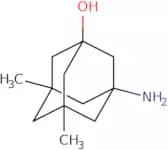
Formula:C20H20N2O7SPurity:Min. 95%Color and Shape:PowderMolecular weight:432.45 g/molMemantine impurity IV
CAS:Memantine impurity IV is a hydrolysis product of memantine. It appears as a white to off-white powder and has a molecular weight of 198.1 g/mol. Memantine impurity IV is an intermediate in the production of memantine and is therefore not used for any other purpose. The compound contains hydroxy groups, hydroxy, alcohols, and bridgehead groups which are efficient at hydrolyzing to form amino acids.
Formula:C12H21NO·HClPurity:Min. 95%Color and Shape:White PowderMolecular weight:231.76 g/molNLRP3i
CAS:NLRP3i is a molecule that is orally administered and has been shown to have anti-inflammatory effects in the heart. NLRP3i reduces pro-inflammatory cytokines and protects against cardiac dysfunction in mice with chronic kidney disease. It also protects against heart failure caused by ischemia reperfusion. This drug has been shown to be effective as a therapy for cancer, with some patients being resistant to chemotherapy, although it is not yet approved for this use.
Formula:C16H17ClN2O4SPurity:Min. 95%Molecular weight:368.84 g/molRef: 3D-FC155783
Discontinued productPantoprazole sulfide N-oxide
CAS:Pantoprazole sulfide N-oxide is a metabolite of pantoprazole, which is a proton pump inhibitor used to reduce stomach acid production. Pantoprazole sulfide N-oxide is an impurity in pantoprazole that can be detected by HPLC. It has been shown to have about the same biological activity as pantoprazole when given orally.
Formula:C16H15F2N3O4SPurity:Min. 95%Color and Shape:Off-White To Yellow SolidMolecular weight:383.37 g/molRef: 3D-IP26756
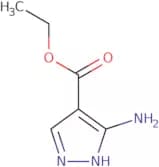
Discontinued productEthyl 3-aminopyrazole-4-carboxylate
CAS:Ethyl 3-aminopyrazole-4-carboxylate is an anticancer drug that inhibits the growth of cancer cells by inhibiting protein synthesis. It has been shown to inhibit the activity of dpp-iv and pde5, which are enzymes involved in cellular proliferation. Ethyl 3-aminopyrazole-4-carboxylate has also been shown to have antiinflammatory properties, which may be due to inhibition of prostaglandin synthesis.
Ethyl 3-aminopyrazole-4-carboxylate is a multinuclear compound that reacts with nitrogen atoms from the pyrazoles to form a stable molecule. Dimethylformamide is used as a solvent for this reaction. The synthesis of ethyl 3-aminopyrazole-4-carboxylate starts with acetylation, which converts the carboxylic acid group into an acetic acid group. The acetic acid group reacts with ammonia and hydrogen cyanFormula:C6H9N3O2Purity:Min. 95%Color and Shape:PowderMolecular weight:155.16 g/molRef: 3D-IE09849
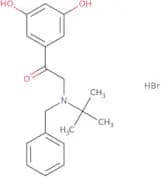
Discontinued productTerbutaline impurity D
CAS:Controlled ProductTerbutaline Impurity D is a synthetic drug with the CAS number 94109-61-2. This product has been developed as an impurity standard for Terbutaline, which is a drug product that has been approved by the United States Pharmacopoeia (USP). Terbutaline Impurity D can be used to study the metabolism of Terbutaline in animals. It is also used to develop new drugs by chemists and other scientists.
Formula:C19H23NO3Purity:Min. 95%Molecular weight:313.39 g/molTrazodone hydrochloride impurity H
Trazodone hydrochloride impurity H is an impurity of the drug product Trazodone hydrochloride. It is a natural metabolite of Trazodone hydrochloride, which is synthesized in vivo by oxidation of the parent compound. Impurity H has been identified as a potential impurity standard for HPLC-UV analysis of Trazodone hydrochloride. The purity of this compound is 98.3% and it is available on a custom synthesis basis.
Formula:C23H30Cl2N4·HClPurity:Min. 95%Molecular weight:469.88 g/mol11-(1-Piperazinyl)dibenzo[b,f][1,4]thiazepine hydrochloride
CAS:11-(1-Piperazinyl)dibenzo[b,f][1,4]thiazepine hydrochloride is a drug product that is used as an impurity standard in the manufacture of 11-aminoundecanoic acid. It is also used to study the metabolism of this compound. This drug product is not intended for use in humans or animals.
Formula:C17H18ClN3SPurity:Min. 95%Color and Shape:PowderMolecular weight:331.9 g/molN-[[2'-(2H-Tetrazol-5-yl)[1,1'-biphenyl]-4-yl]methyl]-L-Valine
CAS:N-[[2'-(2H-Tetrazol-5-yl)[1,1'-biphenyl]-4-yl]methyl]-L-Valine is a synthetic, nonstandardized HPLC standard that is used in drug development and metabolism studies. It is not available as a natural product, but can be made synthetically. N-[[2'-(2H-Tetrazol-5-yl)[1,1'-biphenyl]-4-yl]methyl]-L-Valine has the CAS No. 676129-92-3 and impurity standards are available for this compound.
Formula:C19H21N5O2Purity:Min. 95%Color and Shape:PowderMolecular weight:351.4 g/molRef: 3D-IT106480
Discontinued product6-Epi pravastatin sodium
CAS:6-Epi pravastatin sodium salt is a synthetic compound with the same molecular formula and chemical structure as the natural product. It has been used in pharmacological studies, drug development, and research. 6-Epi pravastatin sodium salt is a metabolite of pravastatin.
Formula:C23H36O7•NaPurity:Min. 92.0 Area-%Molecular weight:447.51 g/molRef: 3D-IE34975
Discontinued productN-[1-(R)-(+)-(2-Naphthyl)ethyl]-3-[3-(trifluoromethyl)phenyl]-1-aminopropane hydrochloride
CAS:N-[1-(R)-(+)-(2-Naphthyl)ethyl]-3-[3-(trifluoromethyl)phenyl]-1-aminopropane hydrochloride is a metabolite that is produced by the metabolism of naphthalene. It is an impurity in the naphthalene standard, which is used as an API to assess the purity of other substances. N-[1-(R)-(+)-(2-Naphthyl)ethyl]-3-[3-(trifluoromethyl)phenyl]-1-aminopropane hydrochloride has been shown to be a substrate for CYP2D6. This metabolite is also found in pharmaceuticals and other drugs.Formula:C22H22F3N•HClPurity:Min. 95%Molecular weight:393.87 g/molRef: 3D-IN58182
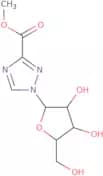
Discontinued product1-b-D-Ribofuranosyl-1,2,4-triazole-3-carboxylic acid methyl ester
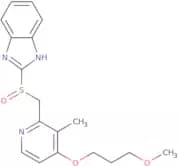
CAS:Intermediate in the synthesis of ribavirinFormula:C9H13N3O6Purity:Min. 95%Color and Shape:White PowderMolecular weight:259.22 g/molRabeprazole
CAS:Rabeprazole is a proton pump inhibitor that suppresses the production of stomach acid by blocking the H+/K+ ATPase enzyme. It is used for the treatment of gastroesophageal reflux disease, peptic ulcers, and Zollinger-Ellison syndrome. Rabeprazole has been shown to be more effective than omeprazole in reducing gastric acid secretion in two-way crossover studies. Rabeprazole also has been shown to inhibit the growth of antibiotic-resistant strains of bacteria. In addition, rabeprazole binds to metal ions like iron and copper, which may affect its pharmacokinetics and efficacy. This drug is currently being investigated as an analytical method for determination of proton pump inhibitors in human serum and urine samples by electrochemical impedance spectroscopy (EIS).
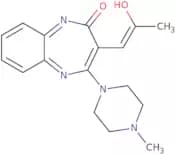
Formula:C18H21N3O3SPurity:Min. 95%Color and Shape:White PowderMolecular weight:359.44 g/molOlanzapine ketolactam
CAS:Olanzapine Ketolactam is a drug product that can be custom synthesized. It has a purity of at least 98% and is identified by its CAS number, 1017241-34-7. The metabolite of Olanzapine ketolactam is olanzapine N-oxide, which can be found in the urine of patients who have taken Olanzapine ketolactam. Metabolism studies have been conducted on this drug product to determine how it may affect the body. This drug product is also used in natural or synthetic drug development, pharmacopoeia, and analytical research.
Formula:C17H20N4O2Purity:Min. 95%Color and Shape:PowderMolecular weight:312.37 g/molRef: 3D-IO26538
Discontinued productAtropine impurity D
Atropine impurity D is a drug product that is an analytical standard for the metabolism studies of atropine. It is a natural API that belongs to the group of drugs and has CAS number 72-48-0. This drug has been synthesized from the synthetic process and then purified by HPLC. The purity of this drug exceeds 99%. Atropine impurity D is used as an impurity standard in pharmacopoeia, research and development, and drug development.
Purity:Min. 95%Erythromycin impurity M
Erythromycin impurity M is a natural, API impurity (impurity standard) that is a metabolite of erythromycin. It has been synthesized as a high purity HPLC standard to meet the requirements of pharmacopoeia and drug development. Erythromycin impurity M is an analytical reference material with CAS number 528-73-2.
Formula:C37H67NO13Purity:Min. 95%Molecular weight:733.93 g/molNaltrexone impurity A
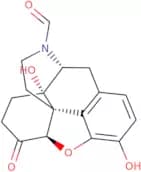
CAS:Controlled ProductNaltrexone impurity A is a synthetic, high-purity drug product that is used as an analytical reference standard in the development and manufacture of pharmaceuticals. It is also used as a pharmacopoeia reference standard and to study metabolism. Naltrexone impurity A has been shown to be a major metabolite of naltrexone and can be found in the urine at concentrations of 1-2% following oral administration. This impurity is not active when given orally, but may have activity if injected intravenously or intramuscularly.
Formula:C17H17NO5Purity:Min. 95%Color and Shape:PowderMolecular weight:315.32 g/molRef: 3D-IN167105
Discontinued productCetirizine propanediol ester impurity
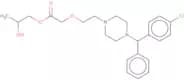
Cetirizine is a drug product that is metabolized to cetirizine propanediol ester. This impurity has been identified in the drug and is not expected to cause any adverse effects in humans. Cetirizine propanediol ester can be synthesized and purified through high-purity, analytical, and natural methods. The pharmacopoeia defines cetirizine propanediol ester as a metabolite of cetirizine. It can also be used as an impurity standard for HPLC analysis.
Formula:C24H31ClN2O4Purity:Min. 95%Molecular weight:446.97 g/mol5-Methoxy-2-[[(3,5-dimethyl-2-pyridinyl)methyl]sulphinyl]-1H-benzimidazole
CAS:5-Methoxy-2-[[(3,5-dimethyl-2-pyridinyl)methyl]sulphinyl]-1H-benzimidazole is a natural product. It is an impurity in the drug development process and may be present as an analytical marker for impurities. 5-Methoxy-2-[(3,5-dimethylpyridinium)methyl]sulfinyl]-1Hbenzimidazole is used as a pharmacopoeia standard and can be synthesized on request.Formula:C16H17N3O2SPurity:Min. 95%Color and Shape:PowderMolecular weight:315.39 g/molRef: 3D-IM57917
Discontinued productUrolithin M5
CAS:Urolithin M5 is a drug product that has undergone custom synthesis, and is high in purity. It has CAS No. 91485-02-8, analytical data, metabolism studies, and drug development. Urolithin M5 is natural, with a metabolite pharmacopoeia and niche. There are impurities in this substance that are of synthetic origin and have an analytical HPLC standard. This substance has been researched and developed for use as an Impurity Standard.
Formula:C13H8O7Purity:Min. 95%Color and Shape:PowderMolecular weight:276.2 g/molAtorvastatin epoxydione impurity
CAS:Atorvastatin epoxydione impurity (EPI) is a heptanoic, hydrate, diastereoisomer, racemic mixture, enantiomer and impurity of Atorvastatin. The EPI has been minimized in the formulation process by using a novel synthesis route that employs a chiral pyrrole derivative as an intermediate. This minimization has allowed for the elimination of the tautomer and other impurities present in the original compound.
Formula:C26H22FNO4Purity:Min. 95 Area-%Color and Shape:White PowderMolecular weight:431.46 g/molRef: 3D-IA18016
Discontinued product




![1-{4-[(4-methyl-1,4-diazepan-1-yl)methyl]phenyl}methanamine](/_next/image/?url=https%3A%2Fstatic.cymitquimica.com%2Fproducts%2F10%2Fthumb-webp%2FF518958.webp&w=3840&q=75)






![(3R)-3-Amino-1-[5,6-dihydro-3-(trifluoromethyl)-1,2,4-triazolo[4,3-α]pyrazin-7(8H)-yl]-4-(2,3,6-tr…](/_next/image/?url=https%3A%2Fstatic.cymitquimica.com%2Fproducts%2F3D%2Fthumb-webp%2FIA183166.webp&w=3840&q=75)

![11-(1-Piperazinyl)dibenzo[b,f][1,4]thiazepine hydrochloride](/_next/image/?url=https%3A%2Fstatic.cymitquimica.com%2Fproducts%2F3D%2Fthumb-webp%2FIN181068.webp&w=3840&q=75)
![N-[[2'-(2H-Tetrazol-5-yl)[1,1'-biphenyl]-4-yl]methyl]-L-Valine](/_next/image/?url=https%3A%2Fstatic.cymitquimica.com%2Fproducts%2F3D%2Fthumb-webp%2FIT106480.webp&w=3840&q=75)

![D-[Pro]31-Tirzepatide](/_next/image/?url=https%3A%2Fstatic.cymitquimica.com%2Fproducts%2F3D%2Fthumb-webp%2FIP11028.webp&w=3840&q=75)
![N-[1-(R)-(+)-(2-Naphthyl)ethyl]-3-[3-(trifluoromethyl)phenyl]-1-aminopropane hydrochloride](/_next/image/?url=https%3A%2Fstatic.cymitquimica.com%2Fproducts%2F3D%2Fthumb-webp%2FIN58182.webp&w=3840&q=75)
![5-Methoxy-2-[[(3,5-dimethyl-2-pyridinyl)methyl]sulphinyl]-1H-benzimidazole](/_next/image/?url=https%3A%2Fstatic.cymitquimica.com%2Fproducts%2F3D%2Fthumb-webp%2FIM57917.webp&w=3840&q=75)