


Amino Acids (AA)
Amino acids (AAs) are the fundamental building blocks of proteins, playing a crucial role in various biological processes. These organic compounds are essential for protein synthesis, metabolic pathways, and cell signaling. In this category, you will find a comprehensive range of amino acids, including essential, non-essential, and modified forms, which are vital for research in biochemistry, molecular biology, and nutritional sciences. At CymitQuimica, we provide high-quality amino acids to support your research and development needs, ensuring accuracy and reliability in your experimental outcomes.
Subcategories of "Amino Acids (AA)"
- Amino Acid Derivatives(3,957 products)
- Amino Acid and Amino Acid Related Compounds(3,472 products)
- Amino Acids with Oxygen or Sulphur(168 products)
- Boc- Amino Acids(351 products)
- Fmoc Amino Acids(1,710 products)
Found 38265 products of "Amino Acids (AA)"
Sort by
Purity (%)
0
100
|
0
|
50
|
90
|
95
|
100
(+)-a-Methyl-b-alanine
CAS:Controlled Product<p>Applications (+)-α-Methyl-β-alanine is a reactant for the chemoenzymatic assembly of cryptophycins as potent anticancer therapeutics.<br>References Magarvey, N.A., et al.: ACS Chem. Biol., 1, 766-779 (2006)<br></p>Formula:C4H9NO2Color and Shape:NeatMolecular weight:103.1204'-Methylacetanilide
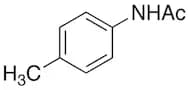
CAS:Controlled Product<p>Applications 4'-Methylacetanilide (cas# 103-89-9) is a compound useful in organic synthesis.<br></p>Formula:C9H11NOColor and Shape:NeatMolecular weight:149.19N-Carbobenzoxyglycine
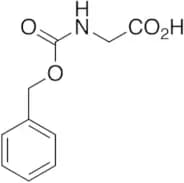
CAS:<p>Applications N-Carbobenzoxyglycine is used in the dipeptide synthesis.<br>References Hans, D., et al.: Med. Chem., 2, 627 (2006), Guzman, F., et al.: J. Biotechnol., 10, 279 (2007), Vlieghe, P., et al.: Drug Discov. Today, 15, 40 (2010),<br></p>Formula:C10H11NO4Color and Shape:NeatMolecular weight:209.2(2R)-3-Hydroxyisovaleroyl Carnitine
CAS:Controlled Product<p>Stability Very Hygroscopic<br>Applications Hydroxyisovaleroyl Carnitine is used as a diagnostic tool to identify the presence of orofacial clefts. Also used in the screening and diagnostics of inborn errors of metabolism.<br>References Denes, J. et al.: Anal. Chem., 84, 10113 (2012); Budner, M. et al.: Arch. Oral. Biol., 58, 459 (2013);<br></p>Formula:C12H23NO5Color and Shape:NeatMolecular weight:261.31L-2-Aminobutyric Acid-d6
CAS:Controlled Product<p>Applications L-2-Aminobutyric Acid-d6 is the isotope labelled analog of L-2-Aminobutyric Acid (A602930); a receptor antagonist.<br>References Porter, D.J.T., et al.: Biochem. Pharmacol., 50, 1475 (1995)<br></p>Formula:C4D6H3NO2Color and Shape:Off-WhiteMolecular weight:109.162-(Acetylamino)-3-(phenylthio)propanoic Acid
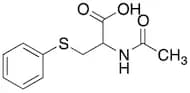
CAS:Controlled Product<p>Applications 2-(Acetylamino)-3-(phenylthio)propanoic acid is a useful chemical in research.<br></p>Formula:C11H13NO3SColor and Shape:NeatMolecular weight:239.29N-Acetyl-S-(3-carboxy-2-propyl)-L-cysteine-d3 Disodium Salt
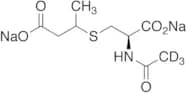
CAS:Controlled Product<p>Applications A labelled metabolite of Crotonaldehyde.<br>References Gray, J.M., et al.: Xenobiotica, 1, 55 (1971), Chung, F., et al.: Mutat. Res., 424, 71 (1999), Smith, C., et al.: Food Chem. Toxicol., 38, 637 (2000), Pan, J., et al.: Chem. Res. Toxicol., 15, 367 (2002),<br></p>Formula:C9H10D3NNa2O5SColor and Shape:NeatMolecular weight:310.29(±)-3-Amino-iso-butyric-2,3,3-d3 Acid
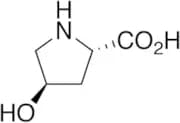
CAS:Controlled Product<p>Applications (±)-3-Amino-iso-butyric-2,3,3-d3 Acid is the labeled version of DL-3-Aminoisobutyric Acid (A603043(P)), which is a useful compound for suppressing atherosclerosis in apolipoprotein E-knockout mouse.<br>References Shimba, Y., et al.: Bio. Pharma. Bull., 43, 1016 (2020)<br></p>Formula:C4D3H6NO2Color and Shape:White To Off-WhiteMolecular weight:106.14trans-4-Hydroxy-L-proline
CAS:Controlled Product<p>Applications A natural constituent of animal structural proteins such as collagen and elastin. Several microorganisms producing proline trans-4- and cis-3-hydroxylase were discovered and these enzymes were applied to the industrial production of trans-4- and cis-3-hydroxy-L-proline.<br>References Langmaier, F. et al.: Int. J. Cosm. Sci., 24, 273 (2002); Lawrence, C., et al.: Biochem. J., 313, 185 (1996); Mori, H., et al.: J. Bacteriol.; 179, 5677 (1997); Clifton, I., et al.: Eur. J. Biochem., 268, 6625 (2001);<br></p>Formula:C5H9NO3Color and Shape:NeatMolecular weight:131.13NG,NG-Dimethylarginine-D6 Dihydrochloride
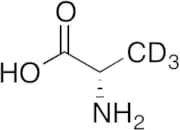
CAS:Controlled Product<p>Stability Very Hygroscopic<br>Applications A potent inhibitor of NO synthase of adrenal glands, brain, and vascular endothelial cells.<br>References Vallence, P., et al.: Lancet, 339, 572 (1992),<br></p>Formula:C8H14D6Cl2N4O2Color and Shape:NeatMolecular weight:281.21L-Alanine-d3
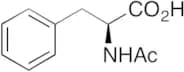
CAS:Controlled Product<p>Applications L-Alanine-d3 is the labeled analogue of L-Alanine (A481500), which is used to make in-vivo measurement of glucose and alanine metabolism in studies of patients with diabetes. L-Alanine is a non-essential amino acid for human development. L-Alanine is one of the 20 amino acids encoded by the genetic code.<br>References Bier, D.M. et al.: Diabetes, 26, 1005 (1977); Capaldo, B. et al.: J. Clin. Endocrinol. Metab., 71, 1220 (1990); Giacca, A. et al.: Diabetes, 47, 1763 (1998)<br></p>Formula:C3D3H4NO2Color and Shape:NeatMolecular weight:92.11N-Acetyl-L-phenylalanine
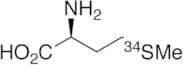
CAS:Controlled Product<p>Applications N-Acetyl-L-phenylalanine is an protected analogue of L-Phenylalanine (P319415), an essential amino acid produced for medical, feed, and nutritional applications such as in the preparation of Aspartame.<br>References Sriram, S., et al.: J. Med. Chem., 56, 2540 (2013); Parker, B.M., et al.: J. Biotech., 155, 396 (2011);<br></p>Formula:C11H13NO3Color and Shape:NeatMolecular weight:207.23L-Methionine-34S
CAS:<p>Applications Labelled L-Methionine, an essential aminoacid for human development. Hepatoprotectant; antidote (acetominophen poisoning); urinary acidifier.<br>References Benevenga, N.J., et al.: J. Agric. Food Chem., 22, 2 (1974), Fleisher, L.D., et al.: Clin. Endocrinol. Metab., 3, 37 (1974), Meinnel, T., et al.: Biochimie, 75, 1061 (1993),<br></p>Formula:C5H11NO234SColor and Shape:NeatMolecular weight:151.113-N-Methyl-L-histidine
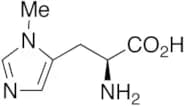
CAS:<p>Applications 3-N-Methyl-L-histidine is a potential compound to be used as a treatment with pharmacological PPARα agonists to stimulate the ubiquitin proteasome pathway and myofibrillar protein breakdown in skeletal muscle of rodents.<br>References Ringseis, R., et al.: Biochem. Biphys. Gen. Subject., 1830, 2105 (2013); Ubhi, B.K., et al.: Molec. Biosys., 8, 3125 (2012);<br></p>Formula:C7H11N3O2Color and Shape:NeatMolecular weight:169.18Glycyl-L-Tyrosine Dihydrate
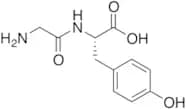
CAS:Controlled Product<p>Applications Glycyl-L-Tyrosine Dihydrate is used in process for producing N-Glycyltyrosine. Glycyl-L-Tyrosine Dihydrate is the anhydrous form of Glycyl-L-tyrosine(G720108); which is used in preparation method of high quality Aspartame and Aspartame crystallization-inducing agent.<br>References Mimura, T., et al.: Eur. Pat. Appl., (1999); Gao, Z., et al.: Faming Zhuanli Shenqing, (2019);<br></p>Formula:C11H14N2O4·2H2OColor and Shape:NeatMolecular weight:274.271,2,3-Trichloro-5-methylbenzene
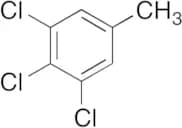
CAS:<p>Applications 1,2,3-Trichloro-5-methylbenzene is useful in calculating 21 physical properties of organic compounds strictly from molecular structure.<br> Not a dangerous good if item is equal to or less than 1g/ml and there is less than 100g/ml in the package<br>References Jain, N., et al.: J. Pharm. Sci., 88, 852-860 (1999)<br></p>Formula:C7H5Cl3Color and Shape:White To Off-WhiteMolecular weight:195.474DL-Cystine-2,2',3,3,3',3'-d6
CAS:Controlled Product<p>Applications DL-Cystine-2,2',3,3,3',3'-d6 (CAS# 352431-53-9) is a useful isotopically labeled research compound.<br></p>Formula:C6D6H6N2O4S2Color and Shape:NeatMolecular weight:246.34D-Tryptophan-d5
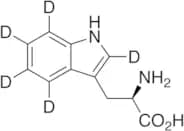
CAS:Controlled Product<p>Applications Labelled analogue of an essential amino acid found in naturally produced peptides. Unlike its stereoisomer, L-tryptophan, it is not used in structural or enzyme proteins.<br>References Karunakaran, S.et al.: Bochem. J., 414, 343 (2008); Pallaghy, P.K. et al.: Biochem., 38, 11553 (1999);<br></p>Formula:C112H5H7N2O2Color and Shape:NeatMolecular weight:209.26L-Saccharopine
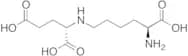
CAS:<p>Stability Hygroscopic<br>Applications L-Saccharopine is a product of breakdown of essential amino acid Lysine (L468895). Saccharopine is also part of the α-aminoadipate pathway of fungal lysine biosynthesis.<br>References Higashino, K., et al.: Biochem. Biophys. Res. Commun., 20, 285 (1965); Johansson, E., et al.: Structure, 8, 1037 (2000)<br></p>Formula:C11H20N2O6Color and Shape:NeatMolecular weight:276.29N-Pyrazinylcarbonyl-L-phenylalanine Methyl Ester
CAS:<p>Applications Used for the synthesis of Bortezomib from L-phenylalanine via dipeptidyl boronic acid ester intermediates.<br>References Zhu, Y., et al.: J. Med. Chem., 52, 4192 (2009),<br></p>Formula:C15H15N3O3Color and Shape:NeatMolecular weight:285.30L,L-Dityrosine Dihydrochloride
CAS:Controlled Product<p>Stability Hygroscopic<br>Applications Dityrosine (DY), a tyrosine dimer formed by 3,3’-biaryl bond formation can be used as a biomarker to detect oxidative protein damage and selective proteolysis. Fluorescence intensity decays of Dityrosine are generally characterized by two decay components, one with a lifetime in the range of 150 to 800 ps and another between 2.5 and 4.5 ns.<br>References Libertini, L., et al.: Biophys. J., 47, 765 (1985), Huggins, T., et al.: J. Biol. Chem., 268, 12341 (1993), Malencik, D., et al.: Biochemistry, 35, 4375 (1996),<br></p>Formula:C18H20N2O6·2ClHColor and Shape:NeatMolecular weight:433.28D-Arginine
CAS:Controlled Product<p>Applications D-Arginine is an unnatural isomer of L-Arginine (A769505), and is used to inhibit glutamate-induced nitric oxide production in rats. Derivatives of D-Arginine are used for pharmaceutical purposes, one example is 1-Deamino-8-D-arginine vasopressin, which is used to treat various bleeding disorders.<br>References Castellano, M., et al.: Neurosci. Lett., 314, 127 (2001); Kobrinsky, N., et al.: Lancet, 323, 1145 (1984); Weyrich, A., et al.: Circulation, 86, 279 (1992)<br></p>Formula:C6H14N4O2Color and Shape:NeatMolecular weight:174.205-Aminolevulinic Acid Methyl Ester Hydrochloride
CAS:Controlled Product<p>Applications 5-Aminolevulinic Acid Methyl Ester Hydrochloride, is the methyl ester of Aminolevulinic Acid (ALA) (A611780), which has been shown to have higher lipophilicity, and to be highly efficient at inducing protoporphyrin IX (PpIX) production in cell culture.<br>References Morrow, D. I. J., et al.: J. Pharmac. Sci., 99, 3486 (2010); Peng, Q., et al.: Cancer, 79, 2282 (1997);<br></p>Formula:C6H11NO3·HClColor and Shape:NeatMolecular weight:181.624-(1-Methylethyl)benzoic Acid
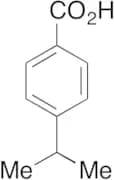
CAS:<p>Applications 4-(1-Methylethyl)benzoic Acid is used in the synthesis of quinuclidine benzamides as agonists for nicotinic acetylcholine receptors. Also used in the synthesis of nifuroxazide analogues showing antimicrobial activity against methicillin-resistant Staphylococcus.<br>References Bodnar, A. et al.: J. Med. Chem., 48, 905 (2005); Masunari, A. et al.: Bioorg. Med. Chem. Lett., 15, 4229 (2007);<br></p>Formula:C10H12O2Color and Shape:NeatMolecular weight:164.2N3-Ethylthymidine
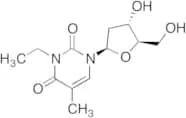
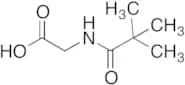
CAS:Controlled Product<p>Applications E677525<br>References Shimizu, T., et al.: Chem. Pharm. Bull., 53, 313 (2005)<br></p>Formula:C12H18N2O5Color and Shape:NeatMolecular weight:270.12157N-Pivaloylglycine
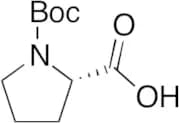
CAS:Controlled Product<p>Applications N-Pivaloylglycine is used in the biological study between dogs and rats. In a high dose toxicity study of pivalic acid (PA), PA caused skeletal muscle disorder in dog, and a significant increase of pivaloyl carnitine (PC) was observed in canine muscle, but not in rat muscle.<br>References Yamaguchi, T., et al.: Toxicol. Appl. Pharmacol., 214, 61-68 (2006)<br></p>Formula:C7H13NO3Color and Shape:NeatMolecular weight:159.18N-Boc-L-proline
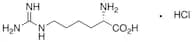
CAS:Controlled Product<p>Applications N-Boc-L-proline is a useful synthetic intermediate. It is used to synthesize Daclatasvir (D101500) which nhibits the HCV protein NS5A. Daclatasvir (D101500) can be used as a drug candidate for the treatment of hepatitis C (HCV).<br>References Gao, M., et al.: Nature, 465(7294), 96 (2010); Bell, T. W., Chem. Med. Chem., 5(10), 1663 (2010);<br></p>Formula:C10H17NO4Color and Shape:NeatMolecular weight:215.25L-Homoarginine Hydrochloride
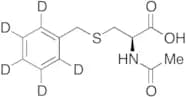
CAS:Controlled Product<p>Stability Moisture Sensitive<br>Applications An inhibitor of alkaline phosphatase isoenzymes. An analog of Homoarginine (H585000).<br>References Muth, W., et al.: J. Biol. Chem., 249, 7463 (1974), Hanukoglu, I., et al.: Eur. J. Biochem., 180, 479 (1989), Khaw, L., et al.: J. Bacteriol. 180, 809 (1998), Gallagher, D., et al.: J. Mol. Biol., 342, 119 (2004),<br></p>Formula:C7H16N4O2·ClHColor and Shape:NeatMolecular weight:224.69N-Acetyl-S-benzyl-d5-L-cysteine
CAS:Controlled Product<p>Applications N-Acetyl-S-benzyl-d5-L-cysteine is deuterium labelled N-Acetyl-S-benzyl-L-cysteine, which is a metabolite of toluene.<br>References Gargas, M., et al.: Toxicol. Appl. Pharmacol., 98, 87 (1989), Commandeur, J., et al.: Pharmacol. Rev., 47(2), 271 (1995), Campo, P., et al.: Neurotoxicol. Teratol., 21, 427 (1999), Lohse, C., et al.: J. Agr. Food Chem., 48, 5913 (2000),<br></p>Formula:C12D5H10NO3SColor and Shape:NeatMolecular weight:258.353-Hydroxy-DL-kynurenine
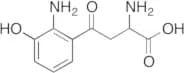
CAS:<p>Stability Hygroscopic<br>Applications 3-Hydroxy-DL-kynurenine is a tryptophan metabolite. Could be associated with symptoms in Parkinson's disease.<br>References Heilman, P. L., et al.: Movement Disorders, 35, 2028 (2020)<br></p>Formula:C10H12N2O4Color and Shape:NeatMolecular weight:224.21Ac-Glu-OMe
CAS:Controlled Product<p>Applications Ac-Glu-OMe (cas# 17015-15-5) is a useful research chemical.<br></p>Formula:C8H13NO5Color and Shape:NeatMolecular weight:203.192-Methyldibenzothiophene
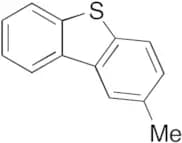
CAS:Controlled Product<p>Applications 2-Methyldibenzothiophene, is an alkyldibenzothiophene present in crude oil. Research concerning the biodegradation of Dibenzothiophene by different types of bacteria is a currently being carried out, as these bacteria have the ability to breakdown other harmful PAH’s as well. This may be used in removing spilled oil from marine and terrestrial environments.<br>References Boberg, F., et al.: Erdoel & Kohle, Erdgas, Petrochemie, 47, 187 (1994); Tanaka, Y., et al.: Applied Microbiology and Biotech., 59 (2), 325 (2002); Prince, R., Spill Sci. Tech. Bulletin, 8 (2), 145 (2003);<br></p>Formula:C13H10SColor and Shape:NeatMolecular weight:198.281-(2-Isopropylthiazol-4-yl)-N-methylmethanamine Dihydrochloride
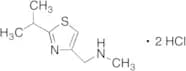
CAS:<p>Applications 1-(2-Isopropylthiazol-4-yl)-N-methylmethanamine dihydrochloride (cas# 1185167-55-8) is a useful research chemical.<br></p>Formula:C8H14N2S·2ClHColor and Shape:NeatMolecular weight:243.20Perfluoro-4-methoxybutanoic Acid
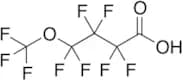
CAS:<p>Applications Perfluoro-4-Methoxybutanoic Acid (cas# 863090-89-5) is a useful research chemical.<br> Not a dangerous good if item is equal to or less than 1g/ml and there is less than 100g/ml in the package<br></p>Formula:C5HF9O3Color and Shape:NeatMolecular weight:280.053-[4-(2-Methoxyphenyl)piperazin-1-yl]propan-1-amine
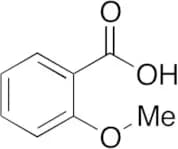
CAS:Controlled Product<p>Applications 3-[4-(2-methoxyphenyl)piperazin-1-yl]propan-1-amine (cas# 20529-23-1) is a useful research chemical.<br></p>Formula:C14H23N3OColor and Shape:NeatMolecular weight:249.352-Methoxybenzoic Acid
CAS:Controlled Product<p>Applications 2-Methoxybenzoic Acid is used in the preparation of benzohydroxamic acids as potent and selective anti-hepatitis C virus (HCV) agents.<br>References Kozlov, M.V., et al.: Bioorg. Med. Chem. Lett., 23, 5936 (2013)<br></p>Formula:C8H8O3Color and Shape:Off-WhiteMolecular weight:152.154-Chloro-2-methylaniline Hydrochloride
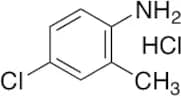
CAS:Controlled Product<p>Stability Hygroscopic<br>Applications 4-Chloro-2-methylaniline Hydrochloride (cas# 3165-93-3) is a useful research chemical.<br> Not a dangerous good if item is equal to or less than 1g/ml and there is less than 100g/ml in the package<br></p>Formula:C7H8ClN•HClColor and Shape:Off-WhiteMolecular weight:141.6036463-Hydroxy-2'-methoxy-2-naphthanilide
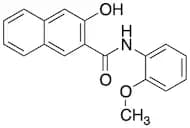
CAS:Controlled Product<p>Applications 3-Hydroxy-2'-methoxy-2-naphthanilide (cas# 135-62-6) is a useful research chemical.<br></p>Formula:C18H15NO3Color and Shape:NeatMolecular weight:293.312-Fluoro-3-methoxyphenylboronic acid
CAS:Controlled Product<p>Applications 2-Fluoro-3-methoxyphenylboronic acid<br></p>Formula:C7H8BFO3Color and Shape:NeatMolecular weight:169.953-Methyl-2-hexanamine Hydrochloride Salt
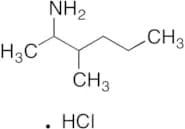
CAS:<p>Applications 3-Methyl-2-hexanamine HCl Salt is more stable and easier to purify compared to the free base.<br></p>Formula:C7H17N·HClColor and Shape:Off-White To BeigeMolecular weight:115.2236466-Amino-9-methylpurine(9-Methyl Adenine)
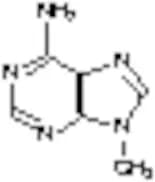
CAS:Controlled Product<p>Applications A receptor adenine derivative binding membrane brain animal cell line.<br>References Camaioni, E., et al.: Bioorg. Med. Chem., 6, 523 (1998), Kelly, M., et al.: Br. J. Pharmacol., 125, 979 (1998), Redzic, Z., et al.: Brain Res., 888, 66 (2001), Levy, D., et al.: J. Med. Chem., 46, 2177 (2003),<br></p>Formula:C6H7N5Color and Shape:NeatMolecular weight:149.151-Methylpiperazine
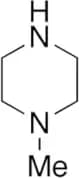
CAS:Controlled Product<p>Impurity Imatinib EP Impurity G<br>Applications 1-Methylpiperazine (Imatinib EP Impurity G) is used in the preparation of 2-(4-Methyl-1-piperazinylmethyl)acrylophenone(MPMAP), an antimicrotubular drug. It is a COVID19-related research product.<br>References Mallevais, M.L. et al.: Biochimie, 66, 477 (1984);<br></p>Formula:C5H12N2Color and Shape:Colourless To Light YellowMolecular weight:100.162-Hydroxy-3-methylbutyric Acid
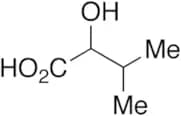
CAS:Controlled Product<p>Applications 2-Hydroxy-3-methylbutyric Acid is a α-hydroxylated butyric acid derivative used as a marker in chemical diagnosis of organic aciduria and other inborn errors. 2-Hydroxy-3-methylbutyric Acid is also used as a metabolomic biomarkers in preeclampsia.<br>References Nakagawa, K. et al.: J. Chrom. B Anal. Technol. Biomed. Life Sci., 878, 942 (2010); Kenny, L.C. et al.: Reprod. Sci., 15, 591 (2008); Garcia, A. et al.: Clin. Chem., 44, 1905 (1999);<br></p>Formula:C5H10O3Color and Shape:NeatMolecular weight:118.132-Ethyl-2-methylpentanoic Acid
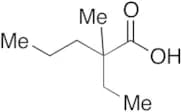
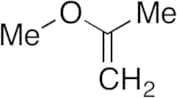
CAS:Controlled Product<p>Applications 2-Ethyl-2-methylpentanoic Acid is a derivative of 2,5-Dimethyl-2-ethylhexanoic Acid (D461540), used in biological studies to evaluate environmental chemicals for estrogenicity.<br>References Rabinowitz, J.R., et al.: Chem. Res. Toxicol.,22, 1594 (2009); Judson, R., et al.: Environ. Health Perspect, 117, 685 (2009)<br></p>Formula:C8H16O2Color and Shape:Colourless OilyMolecular weight:144.212-Methoxypropene
CAS:Controlled Product<p>Applications 2-Methoxypropene is used in the synthesis of Macrolactin A, a 24-member macrolide typically employed as an antibiotic. Also used in the synthesis of phenylalanine derivatives used as α4β1 and α4β7 receptor antagonists in the treatment of allergic asthma.<br>References Marino, K. et al.: J. Am. Chem. Soc., 12, 1664, (2002); Tilley, J. et al.: Bioorg. Med. Chem. Lett., 23, 1036 (2013);<br></p>Formula:C4H8OColor and Shape:NeatMolecular weight:72.113-Methylfuran-d3
CAS:Controlled Product<p>Stability Volatile<br>Applications Labelled 3-Methylfuran (M305443). 3-Methylfuran is a volatile organic compound (VOCs) used as a potential non-intrusive tool for screening of lung cancer.<br> Not a dangerous good if item is equal to or less than 1g/ml and there is less than 100g/ml in the package<br>References McWilliams, et al.: Curr. Oncol. Rep., 4, 487 (2002), Buszewski, B., et al.: Biomed. Chromatogr., 21, 553 (2007), Ligor, T., et al.: J. Breath. Res., 1, 1 (2007),<br></p>Formula:C52H3H3OColor and Shape:ColourlessMolecular weight:85.122-Methoxyethanol
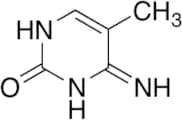
CAS:Controlled Product<p>Applications 2-Methoxyethanol is used in the synthesis of 2-aminothiazoles in the treatment of prion disease (1). 2-Methoxyethanol is also used in the preparation of Rho-associated kinase inhibitors or (ROCK) inhibitors, for treatment of cardiovascular disease (2). Drinking water contaminant candidate list 3 (CCL 3) compound as per United States Environmental Protection Agency (EPA), environmental, and food contaminants.<br> Not a dangerous good if item is equal to or less than 1g/ml and there is less than 100g/ml in the package<br>References 1. Li, Z. et al.: ChemMedChem. 2013 May;8(5):847-57.2. Boland, S. et al.: Bioorg. Med. Chem. Lett. 2013 Dec 1;23(23):6442-6.<br></p>Formula:C3H8O2Color and Shape:NeatMolecular weight:76.095-Methylcytosine (~90%)
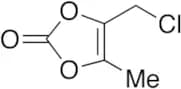
CAS:Controlled Product<p>Applications 5-Methylcytosine (cas# 554-01-8) is a useful research chemical.<br></p>Formula:C5H7N3OPurity:~90%Color and Shape:NeatMolecular weight:125.134-Chloromethyl-5-methyl-1,3-dioxol-2-one
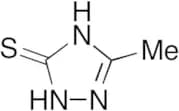
CAS:Controlled Product<p>Applications 4-Chloromethyl-5-methyl-1,3-dioxol-2-one is an important reagent in the preparation of angiotensin II receptor antagonist such as Olmesratan Medoxomil (O550000). 4-Chloromethyl-5-methyl-1,3-dioxol-2-one is also used in the preparation of prodrugs of ampicillin.<br>References Ikeda, S. et al.: Chem. Pharmac. Bull., 32, 4316 (1984); Wu, T. Yaox. Xueb., 41, 537 (2006);<br></p>Formula:C5H5ClO3Color and Shape:NeatMolecular weight:148.543-Methyl-1H(4H)-1,2,4-triazole-5-thione
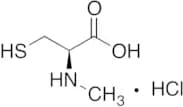
CAS:Formula:C3H5N3SColor and Shape:NeatMolecular weight:115.157N-Methyl-L-cysteine Hydrochloride
CAS:Controlled Product<p>Stability Air Sensitive<br>Applications N-Methyl-L-cysteine Hydrochloride is an intermediate used to prepare analogs of pyochelin (P840365), a siderophore of Pseudomonas aeruginosa.<br>References Rivault, F., et al.: Tetrahedron, 60, 12139 (2004); Noel, S., et al.: Bioorgan. Chem. Lett., 24, 132 (2014); Ankenbauer, R., et al.: J. Bacteriol., 170, 5344 (1988)<br></p>Formula:C4H9NO2S·ClHColor and Shape:NeatMolecular weight:171.651,6-Anhydro-β-D-glucopyranose-13C6
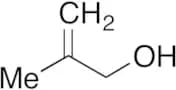
CAS:<p>Stability Hygroscopic<br>Applications Isotope labelled 1,6-Anhydro-β-D-glucopyranose (A648100), an compound that have been proven to be a valuable synthon for the preparation of various biologically important and structurally diverse products (e.g. rifamycin S, indanomycin, thromboxane B2, (+)-biotin, tetrodotoxin, quinone, and macrolide antibiotics) as well as for modified sugars.<br>References Fraser-Reid, B., et al. J. Am. Chem. Soc. 106, 731 (1984); Edwards, M.P., et al. J. Org. Chem. 49, 3503 (1984); Kelly, A.G., and Roberts, J.S. J. Chem. Soc., Chem. Commun. 228, (1980); Ogawa, T., et al. Carbohydr. Res. 57, C31 (1977); Isobe, M., et al. Tetrahedron Lett. 28, 6485 (1987);<br></p>Formula:C6H10O5Color and Shape:NeatMolecular weight:168.102-Methyl-2-propen-1-ol
CAS:Controlled Product<p>Stability Light Sensitive<br>Applications 2-Methyl-2-propen-1-ol has been used in the synthesis of C2-methyl-1,2-di-O-hexadecylglycerophosphocholine.<br> Not a dangerous good if item is equal to or less than 1g/ml and there is less than 100g/ml in the package<br>References Bittman, R., Witzke N.M.: Chem. Physics Lipid, 50, 99 (1989)<br></p>Formula:C4H8OColor and Shape:NeatMolecular weight:72.115-Amino-2-methyl-benzenesulfonamide
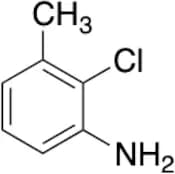
CAS:Controlled Product<p>Applications 5-amino-2-methyl-benzenesulfonamide (cas# 6973-09-7) is a useful research chemical.<br></p>Formula:C7H10N2O2SColor and Shape:NeatMolecular weight:186.232-Chloro-3-methylaniline
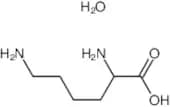
CAS:Controlled Product<p>Applications 2-Chloro-3-methylaniline (cas# 29027-17-6) is a useful research chemical.<br></p>Formula:C7H8ClNColor and Shape:NeatMolecular weight:141.60Dl-lysine Monohydrate
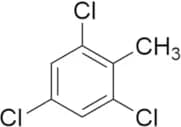
CAS:Controlled Product<p>Applications Dl-lysine monohydrate<br></p>Formula:C6H14N2O2·H2OColor and Shape:NeatMolecular weight:164.201,3,5-Trichloro-2-methylbenzene
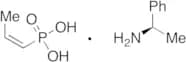
CAS:<p>Applications 1,3,5-Trichloro-2-methylbenzene can be used as reactant/reagent in hydrodechlorination process and catalysts for the production of 2,6-dichlorotoluene from polychlorotoluene-containing mixtures. Also, it is derived from 2,4,6-Trichlorobenzoic Acid (T774715), which is a possible degradation intermediate of Polychlorinated Biphenyls (PCBs) in contaminated soil, suggesting the occurrence of microbial transformation processes over time.<br> Not a dangerous good if item is equal to or less than 1g/ml and there is less than 100g/ml in the package<br>References Eichinger, W., et al.: PCT Int. Appl., WO 2001017932 A1 20010315 (2001); Stella, T., et al.: Sci Total Environ, 533, 177-186 (2015)<br></p>Formula:C7H5Cl3Color and Shape:White To Off-WhiteMolecular weight:195.47cis-Propenylphosphonic Acid (R)-(+)-α-Methylbenzylamine Salt
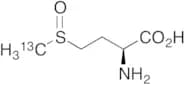
CAS:Controlled Product<p>Applications cis-Propenylphosphonic Acid (R)-(+)-α-Methylbenzylamine Salt is used as a reagent in the microbial production of Fosfomycin (F727505); a compound used as an antibiotic in the treatment of urinary tract infections.<br>References Watanabe, M., et al.: Appl. Environ. Microb., 65, 1036 (1999); Itoh, N., et al.: Appl. Microbiol. Biot., 43, 394 (1995); White, R.F., et al.: Appl. Microbiol., 22, 55 (1971); Keating, G. et al.: Drugs, 73, 1951 (2013); Demir, T. et al.: Int. J. Infect. Dis., 17, e966 (2013)<br></p>Formula:C3H7O3P(C8H11N)Color and Shape:NeatMolecular weight:243.10243L-Methionine Sulfoxide,13C
CAS:Controlled Product<p>Applications L-Methionine Sulfoxide 13C1 is a labelled analogue of L-Methionine Sulfoxide ( M260450). L-Methionine Sulfoxide ( M260450) an intermediate in the synthesis of the acyclic amino carboxylic acid L-Methionine sulfoximine.<br>References Lee, B., et al.: J. Biol. Chem., 283, 28361 (2008), Nordqvist, A., et al.: Bioorg. Med. Chem., 16, 5501 (2008);Balog, E., et al.: Biochem., 48, 3005 (2009);<br></p>Formula:CC4H11NO3SColor and Shape:White To Off-WhiteMolecular weight:166.2032-(N-Methyl-2-pyrrolidinyl)ethyl Chloride Hydrochloride
CAS:<p>Stability Hygroscopic<br>Applications 2-(N-Methyl-2-pyrrolidinyl)ethyl Chloride is an intermediate used in the synthesis of reversed lactam analogues of ARC-111 with potent topoisomerase I-targeting activity and cytotoxcity.<br>References Zhu, S.J., et al.: Bioorg. Med. Chem., 14, 3131 (2006); Tanaka, N., et al.: Chem. Pharma. Bull., 48, 245 (2000);<br></p>Formula:C7H14ClN·HClColor and Shape:NeatMolecular weight:147.65 + 36.464-Methyl-6-(2,4,4-trimethylpentyl)-2H-pyran-2-one
CAS:Controlled Product<p>Impurity Piroctone USP Related Compound B<br>Applications 4-Methyl-6-(2,4,4-trimethylpentyl)-2H-pyran-2-one is used in the synthesis of antibacterials and antimycotics. Related to Piroctone (P509400), an anti-dandruff agent used in shampoo formulations. Piroctone USP Related Compound B<br>References Georgalas, A. et al.: J. Cosm. Sci., 55, S207 (2004); Mayser, P. et al.: J. Cosm. Sci., 54, 263 (2008);<br></p>Formula:C14H22O2Color and Shape:NeatMolecular weight:222.322-Deoxy-2-chloro-D-glucose
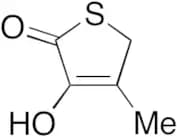
CAS:Controlled Product<p>Applications 2-Deoxy-2-chloro-D-glucose is a D-Glucose (G595000) derivative used in the synthesis of sugar nucleotides and oligosaccharides.<br>References Herr, D., et al.: Euro. J. App. Microbiol., 1, 41 (1975);<br></p>Formula:C6H11ClO5Color and Shape:NeatMolecular weight:198.603-Hydroxy-4-methyl-2(5H)-thiophenone
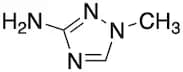
CAS:Controlled Product<p>Impurity Cefalexin EP Impurity D<br>Applications 3-Hydroxy-4-methyl-2(5H)-thiophenone (Cefalexin EP Impurity D) is an acid degradation product of Cephalexin (C256800) and Cefaclor (C235250), antibiotics.<br>References Dinner, A.: J. Med. Chem. 20, 963 (1977); Baetschi, S.W., et. al.: J. Pharmaceut., Sci., 86, 526 (1997)<br></p>Formula:C5H6O2SColor and Shape:NeatMolecular weight:130.1651-Methyl-1h-1,2,4-triazol-3-amine
CAS:Controlled Product<p>Applications 1-Methyl-1h-1,2,4-triazol-3-amine (cas# 49607-51-4) is a useful research chemical.<br></p>Formula:C3H6N4Color and Shape:NeatMolecular weight:98.1064-Chloro-3-cyano-6-methoxy-7-[3-(4-methylpiperazin-1-yl)propoxy]quinoline
CAS:<p>Stability Hygroscopic<br>Applications 4-Chloro-3-cyano-6-methoxy-7-[3-(4-methylpiperazin-1-yl)propoxy]quinoline is a useful reagent to prepare benzofuranyl derivatives for treating solid tumours. It is also an impurity of Bosutinib.<br>References Hennequin, L. F. A. PCT Int. Appl. (2003), WO 2003047585 A1 20030612 (2003); Hennequin, L. F. A., Gibson, K. H., Foote, K. M. PCT Int. Appl. WO 2003047582 A1 20030612 (2003)<br></p>Formula:C19H23ClN4O2Color and Shape:Off White SolidMolecular weight:374.862-Ethyl-6-methylpyrazine
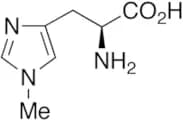
CAS:<p>Applications 2-ethyl-6-methylpyrazine (cas# 13925-03-6) is a useful research chemical.<br></p>Formula:C7H10N2Color and Shape:ColourlessMolecular weight:122.171-Methyl-L-histidine
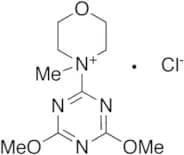
CAS:Controlled Product<p>Applications The urinary 1- and 3-methylhistidine (1- and 3-MH) metabolites as potential biomarkers of skeletal muscle toxicity. These metabolites were highly correlated to sex-, dose-, and time-dependent development of cerivastatin-induced myotoxicity. Natural but non-proteinogenic amino acid; employed as index of muscle protein breakdown.<br>References Berna, M., et al.: Anal. Chem., 79, 4199 (2007), Pritt, M., et al.: Toxicol. Sci., 103, 382 (2008), Tonomura, Y., et al.: Toxicology, 266, 48 (2009),<br></p>Formula:C7H11N3O2Color and Shape:NeatMolecular weight:169.184-(4,6-Dimethoxy-s-triazin-2-yl)-4-methyl-morpholinium Chloride
CAS:Controlled Product<p>Applications DMTMM, a conjugating agent that efficiently conjugat PnPS to Luminex microspheres without affecting the antigenicity of a broad set of PnPS.<br> Not a dangerous good if item is equal to or less than 1g/ml and there is less than 100g/ml in the package<br>References Wrzesien, J. & Graham, D.: Tetrahedron, 68, 1230 (2012); Schlottmann, S. et al.: J. Im. Meth., 309, 75 (2006)<br></p>Formula:C10H17N4O3·ClColor and Shape:NeatMolecular weight:276.72(4R,6S)-rel-5,6-Dihydro-4-hydroxy-6-methyl-4H-thieno[2,3-b]thiopyran-2-sulfonamide 7,7-Dioxide
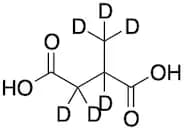
CAS:Controlled Product<p>Applications (4R,6S)-rel-5,6-Dihydro-4-hydroxy-6-methyl-4H-thieno[2,3-b]thiopyran-2-sulfonamide 7,7-Dioxide is used as a reactant in the preparation of Dorzolamide Hydrochloride (D535100), which is a carbonic anhydrase inhibitor; antiglaucoma agent.<br>References Lippa, E.A., et al.: Ophthalmology, 98, 308 (1991); Wang, R.-F., et al.: Arch. Ophthalmol., 109, 1297 (1991); Whikehart, D., et al.: J. Ocul. Pharmacol., 7, 195 (1991); Sjoquist, B., et al.: Drug Metab. Dispos., 26, 745 (1998);<br></p>Formula:C8H11NO5S3Color and Shape:NeatMolecular weight:297.37(±)-2-Methyl-d3-succinic-2,3,3-d3 Acid
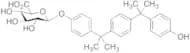
CAS:Controlled Product<p>Applications (±)-2-Methyl-d3-succinic-2,3,3-d3 Acid (CAS# 347840-08-8) is a useful isotopically labeled research compound.<br></p>Formula:C5D6H2O4Color and Shape:NeatMolecular weight:138.15Bisphenol P Mono-β-D-glucuronide (>90%)
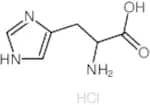
<p>Applications Bisphenol P Mono-β-D-glucuronide is a metabolite of Bisphenol P (B519475), which is a derivative of Bisphenol A (B519495), monomer used for policarbonate and epoxy resins.<br>References Krishnan, A.V., et al.: Endocrinology, 132, 2279 (1993); Steinmetz, R., et al.: Trends Endocrinol. Metab., 9, 124 (1998); Petersen, H., et al.: Eur. Food Res. Technol., 216, 355 (2003);<br></p>Formula:C30H34O8Purity:>90%Color and Shape:NeatMolecular weight:522.586D-Histidine Hydrochloride Hydrate
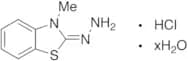
CAS:Controlled Product<p>Stability Hygroscopic<br>Applications D-Histidine, Hydrochloride Monohydrate was a useful reagent for the preparation of diastereomeric histidine-containing dipeptides to analyze lipophilicity and ionization constants.<br>References Vistoli, G., et al.: Chirality, 24, 566 (2012)<br></p>Formula:C6H9N3O2·HCl·xH2OColor and Shape:NeatMolecular weight:155.16 + 36.46 + x(18.02)3-Methyl-2-benzothiazolinone Hydrazone Hydrochloride Hydrate
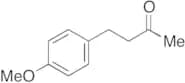
CAS:<p>Stability Hygroscopic<br>Applications 3-Methyl-2-benzothiazolinone Hydrazone Hydrochloride Hydrate is a chromegenic reagent for the determination of benzodiazepines, cholesterol, and enzyme activity. 3-Methyl-2-benzothiazolinone Hydrazone Hydrochloride Hydrate is used as an electrophilic coupling reagent used in the spectrophotometric determination of chloramine-B (CAB) and other residual chlorine content in various environmental water samples.<br> Not a dangerous good if item is equal to or less than 1g/ml and there is less than 100g/ml in the package<br>References Syed, A. et al.: Environ. Sci. Indian J., 3, 49 (2008); Syed, A.A. et al.: Chem. Environ. Res., 15, 41 (2006); Mohan, J. et al.: Indian J. Chem., 32B, 44 (1993);<br></p>Formula:C8H10ClN3S·xH2OColor and Shape:NeatMolecular weight:233.7184-(4-Methoxyphenyl)-2-butanone
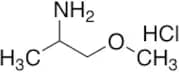
CAS:<p>Applications 4-(4-Methoxyphenyl)-2-butanone is also used in the synthesis of novel axially chiral Rh-NHC complexes. Used to synthesize carbonyl complexes as novel traceless linkers.<br>References Duan, W. et al.: Chem. Comm., 23, 2916 (2003); Gibson, S. et al.: Tetrahedron. Lett., 40, 1417 (1999);<br></p>Formula:C11H14O2Color and Shape:NeatMolecular weight:178.231-Methoxypropan-2-amine Hydrochloride
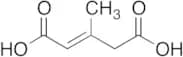
CAS:Controlled Product<p>Applications 1-methoxypropan-2-amine hydrochloride (cas# 677743-83-8) is a useful research chemical.<br></p>Formula:C4H11NO·ClHColor and Shape:NeatMolecular weight:125.5973-Methylglutaconic Acid
CAS:Controlled Product<p>Stability Hygroscopic<br>Applications 3-Methylglutaconic acid is a glutarate which builds up in the urine in 3-methylglutaconic aciduria. 3-methylglutaconic aciduria is a term used to describe five different disorders that impair the functioning of energy-producing centers within cells (mitochondria)<br>References Walsh, R., et al.: J. Inherit. Metab. Dis., 22, 251 (1999); Gonzalez, I., et al.: Am J Med Genet A., 134, 409 (2005); MacKenzie, J., et al.: Biochim Biophys Acta., 1772, 509 (2007)<br></p>Formula:C6H8O4Color and Shape:NeatMolecular weight:144.131,2,3,9-Tetrahydro-9-methyl-4H-carbazol-4-one
CAS:<p>Impurity Ondansetron EP Impurity C<br>Applications 1,2,3,9-Tetrahydro-9-(methyl-d3)-4H-carbazol-4-one (Ondansetron EP Impurity C) is used in the preparation of 5-HT3 modulators useful in the treatment and prevention of 5-HT3 receptor-mediated diseases. 1,2,3,9-Tetrahydro-9-methyl-4H-carbazol-4-one is an impurity of Ondansetron (O655000).<br> Not a dangerous good if item is equal to or less than 1g/ml and there is less than 100g/ml in the package<br>References Huang, W. et al.: Zhong. Yao. Dax. Xueb., 30, 1 (1999); Kim, M. et al.: Heterocycles, 45, 2041 (1997); Feng, R. et al.: Zhong. Yaox. Zaz., 46, 1436 (2011);<br></p>Formula:C13H13NOColor and Shape:Off-WhiteMolecular weight:199.252,6-Di-tert-butyl-4-methyl-d3-phenol
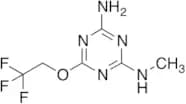
CAS:Controlled Product<p>Applications 2,6-Di-tert-butyl-4-methyl-d3-phenol (CAS# 86819-59-2) is a useful isotopically labeled research compound. This compound has been shown to significantly have lower toxic potency in mice compared to butylated hydroxytolune (BHT).<br>References Mizutani, T., et.al., Toxicol. Appl. Pharmacol. 69,283-290,(1983);<br></p>Formula:C15D3H21OColor and Shape:NeatMolecular weight:223.37N-Methyl-6-(2,2,2-trifluoroethoxy)-1,3,5-triazine-2,4-diamine
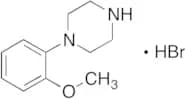
CAS:Controlled Product<p>Applications N-methyl-6-(2,2,2-trifluoroethoxy)-1,3,5-triazine-2,4-diamine (cas# 101988-70-9) is a useful research chemical.<br></p>Formula:C6H8F3N5OColor and Shape:White To Off-WhiteMolecular weight:223.161-(2-Methoxyphenyl)piperazine Hydrobromide
CAS:Controlled Product<p>Stability Hygroscopic<br>Applications 1-(2-Methoxyphenyl)piperazine Hydrobromide is a useful reagent for improving the synthesis of Eapidil.<br>References Wang, H., et al.: Anhui Huagong, 37, 23 (2011)<br></p>Formula:C11H16N2O·HBrColor and Shape:NeatMolecular weight:192.26 +(80.91)5-Carboxy-2-methylphenylboronic Acid
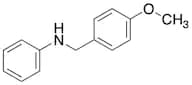
CAS:Controlled Product<p>Applications 5-Carboxy-2-methylphenylboronic Acid acts as a reagent in the synthesis of pyrazolopyridinone-based p38 MAP kinase inhibitor<br>References Milburn, R. R., et al.: Org. Process Res. Dev., 15, 31 (2011); Achmatowicz, M., et al.: J. Org. Chem., 74, 795 (2009)<br></p>Formula:C8H9BO4Color and Shape:NeatMolecular weight:179.97N-Phenyl-4-methoxybenzylamine
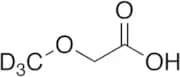
CAS:Controlled Product<p>Applications N-PHENYL-4-METHOXYBENZYLAMINE (cas# 3526-43-0) is a useful research chemical.<br></p>Formula:C14H15NOColor and Shape:NeatMolecular weight:213.2752-Methoxyacetic Acid-d3
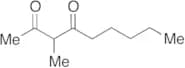
CAS:Controlled Product<p>Applications: Isotope labelled analogue of 2-Methoxyacetic Acid, a synthetic intermediate in the synthesis of dimethyl(alkyloxy)[(methylsulfonyl)phenyl]furanones as COX-2 inhibitors.<br>Dangerous Goods Info: Not a dangerous good if item is equal to or less than 1g/ml and there is less than 100g/ml in the package<br>References Leblanc, Y., et al.: Bioorg. Med. Chem. Lett., 9, 2207 (1999);<br></p>Formula:C32H3H3O3Color and Shape:NeatMolecular weight:93.103-Methylnonane-2,4-dione (>80%)
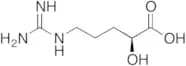
CAS:Controlled Product<p>Applications 3-Methylnonane-2,4-dione is a compound that possesses a butter-like and beany off flavour that is a result of flavour reversion of soya-bean oil. 3-Methylnonane-2,4-dione is also present in Japanese green tea and pressure-cooked hen meat.<br>References Farkaš, P., et al.: Food Chem., 60, 617 (1997); Guth, H. & Grosch, W.: Flav. Chem., No vol. given, 377 (1999); Kumazawa, K. & Masuda, H.: J. Agr. Food Chem., 47, 5169 (1999)<br></p>Formula:C10H18O2Purity:>80%Color and Shape:NeatMolecular weight:170.25L-Argininic Acid
CAS:<p>Applications L-Argininic Acid is a guanidino compound, of which accumulation in tissue can cause Hyperargininemia.<br>References Deignan, J., et al.: Mol. Gen. Metab., 93, 172 (2008); Balz, D., et al.: Intl. J. Develop. Neurosci., 21, 75 (2003); Wyse, A., et al.: Brain Res., 923, 50 (2001)<br></p>Formula:C6H13N3O3Color and Shape:Off White SolidMolecular weight:175.19Lysinoalanine Hydrochloride Salt
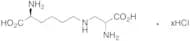
CAS:Controlled Product<p>Applications This not naturally occurring amino acid was first observed after alkali treatment of different proteins. Synthetic Lysinoalanine was found to have a strong chelating ability for metals.<br>References Schwass, D., et al.: J. Agric. Food Chem., 32, 1377 (1984), Ahmed, M., et al.: J. Biol. Chem., 261, 8816 (1986), Wells-Knecht, K., et al.: Biochem., 34, 3702 (1995),<br></p>Formula:C9H19N3O4·xHClColor and Shape:NeatMolecular weight:306.19Ethyl 2-Chloro-2-(2-(4-methoxyphenyl)hydrazono)acetate
CAS:Controlled Product<p>Applications Ethyl 2-chloro-2-(2-(4-methoxyphenyl)hydrazono)acetate (cas# 27143-07-3) is a useful research chemical.<br></p>Formula:C11H13N2O3ClColor and Shape:NeatMolecular weight:256.682-Methyl-2-(1-methylbutyl)-propanedioic Acid 1,3-Diethyl Ester
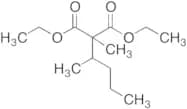
CAS:Controlled Product<p>Applications 2-Methyl-2-(1-Methylbutyl)-propanedioic Acid 1,3-Diethyl Ester is an intermediate in the synthesis of 2,3-Dimethyl-hexanoic Acid (D473405) which is used to prepare Mono-2,3-dimethylhexyl Phthalate (M539400), a metabolite of Dibutyl phthalate (DBP) (D429495), which is widely used in consumer products.<br>References Silva, M., et al.: Arch. Toxicol., 77, 561 (2003), Silva, M., et al.: Toxicology, 210, 123 (2005), Silva, M., et al.: J. Anal. Toxicol., 29, 819, (2005)<br></p>Formula:C8H17NO5Color and Shape:NeatMolecular weight:207.2242-Methoxy-5-(methylsulfonyl)benzoic Acid
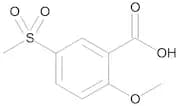
CAS:<p>Applications 2-Methoxy-5-(methylsulfonyl)benzoic acid (cas# 50390-76-6) is a useful research chemical.<br></p>Formula:C9H10O5SColor and Shape:NeatMolecular weight:230.244-(3-Hydroxyprop-1-en-1yl)-2-methoxyphenol
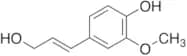
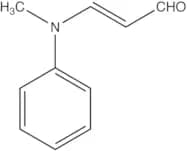
CAS:<p>Applications 4-(3-HYDROXYPROP-1-EN-1-YL)-2-METHOXYPHENOL (cas# 458-35-5) is a useful research chemical.<br></p>Formula:C10H12O3Color and Shape:NeatMolecular weight:180.20trans 3-(N-Methylanilino)acrolein
CAS:Controlled Product<p>Applications trans 3-(N-Methylanilino)acrolein (cas# 34900-01-1) is a compound useful in organic synthesis.<br></p>Formula:C10H11NOColor and Shape:NeatMolecular weight:161.20N-Boc-1,2-phenyldiamine
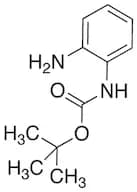
CAS:Controlled Product<p>Applications Protected 1,2-Phenyldiamine, an intermediate in the synthesis of histone deacetylase agents and antitumor agents.<br>References Andrews, D., et al.: Bioorg. Med. Chem. Lett., 18, 2580 (2008), Mahboobi, S., et al.: J. Med. Chem., 52, 2265 (2009),<br></p>Formula:C11H16N2O2Color and Shape:NeatMolecular weight:208.262-Methylpropylamine
CAS:<p>Applications 2-Methylpropylamine is used in the synthesis of arylsulfonamide inhibitors that act upon afflictions of osteoarthritis. In addition, it is used in the synthesis of novel reservatrol amide derivatives that act as anti-tumor agents.<br> Not a dangerous good if item is equal to or less than 1g/ml and there is less than 100g/ml in the package<br>References Yao, Ri-Sheng. et al.: Eur. J. Med. Chem. Lett., 62, 222 (2013); Nuti, E. et al.: Eur. j. Med. Chem., 62, 379 (2013)<br></p>Formula:C4H11NColor and Shape:NeatMolecular weight:73.14N-Acetyl-L-(-)-leucine
CAS:<p>Applications N-Acetyl-L-(-)-leucine is used in the preparation of small molecule inhibitors of anti-apoptotic Bcl-2 family proteins. Also used in the preparation of amphiphilic copolymers involving hydrophobic amino acid and oligopeptide side chains for optical tumor imaging in vivo.<br>References Zheng, C. et al.: Bioorg. Med. Chem. Lett., 22, 39 (2012); Miki, K. et al.: Bull. Chem. Soc. Jap., 85, 1277 (2012);<br></p>Formula:C8H15NO3Color and Shape:NeatMolecular weight:173.21β-Alanine-13C3,15N
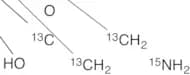
CAS:Controlled Product<p>Applications β-Alanine-13C3,15N is the isotope labeled analogue of β-Alanine (A637320), which is a naturally occurring beta amino acid. β-Alanine is formed in vivo by the degradation of Dihydro Uracil (D449990) and Carnosine. β-Alanine is also the rate-limiting precursor of Carnosine, as a result supplementation with β-Alanine increases the concentration of Carnosine in muscles.<br>References Derave, W. et al.: J. Appl. Physiol., 103, 1736 (2007); Xia, J.-F. et al.: J. Chrom. B Anal. Technol. Biomed. Life Sci., 977, 1930 (2009); Artioli, G.G. et al.: Med. Sci. Sports Exer.,42, 1162 (2010);<br></p>Formula:C3H715NO2Color and Shape:NeatMolecular weight:93.06β-Methylamino-L-alanine Dihydrochloride
CAS:Controlled ProductFormula:C4H10N2O2·2(HCl)Color and Shape:NeatMolecular weight:118.13 +2(36.46)2-[1-(Aminomethyl)cyclohexyl]acetic acid
CAS:Purity:97.0%Color and Shape:Solid, Off-white crystalline powderMolecular weight:171.240005493164062-(3-Aminophenyl)-quinoline-4-carboxylic acid
CAS:Purity:97%Color and Shape:SolidMolecular weight:264.28399658203125









![3-[4-(2-Methoxyphenyl)piperazin-1-yl]propan-1-amine](/_next/image/?url=https%3A%2Fstatic.cymitquimica.com%2Fproducts%2FTR%2Fthumb-webp%2FM229390.webp&w=3840&q=75)







![4-Chloro-3-cyano-6-methoxy-7-[3-(4-methylpiperazin-1-yl)propoxy]quinoline](/_next/image/?url=https%3A%2Fstatic.cymitquimica.com%2Fproducts%2FTR%2Fthumb-webp%2FC380750.webp&w=3840&q=75)

![(4R,6S)-rel-5,6-Dihydro-4-hydroxy-6-methyl-4H-thieno[2,3-b]thiopyran-2-sulfonamide 7,7-Dioxide](/_next/image/?url=https%3A%2Fstatic.cymitquimica.com%2Fproducts%2FTR%2Fthumb-webp%2FD678970.webp&w=3840&q=75)






![2-[1-(Aminomethyl)cyclohexyl]acetic acid](/_next/image/?url=https%3A%2Fstatic.cymitquimica.com%2Fproducts%2F10%2Fthumb-webp%2FF040287.webp&w=3840&q=75)


