Amino Acids (AA)
Subcategories of "Amino Acids (AA)"
- Amino Acid Derivatives(4,015 products)
- Amino Acid and Amino Acid Related Compounds(3,490 products)
- Amino Acids with Oxygen or Sulphur(168 products)
- Boc- Amino Acids(351 products)
- Fmoc Amino Acids(1,710 products)
Found 38368 products of "Amino Acids (AA)"
4-(3-fluorobenzoyl)-8-methyl-1-oxa-4,8-diazaspiro[4.5]decane-3-carboxylic acid
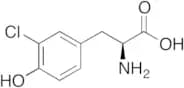
CAS:Purity:95.0%Molecular weight:322.335998535156253-Chloro-L-tyrosine
CAS:Controlled ProductStability Hygroscopic
Applications 3-Chloro-L-tyrosine was used in the enzymatic synthesis of halogen derivatives of aromatic amino acids labeled with hydrogen isotope. 3-Chloro-L-tyrosine exhibited stronger antioxidant properties in Hb-induced oxidative stress as was evident by higher efficiency of reduction of ferryl species.
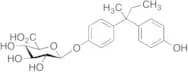
References Winnicka, E., et al.: J. Chem. Eng., 8, 54 (2014); Lu, N., et al.: Toxicol. In Vitro, 28, 847 (2014);Formula:C9H10NO3ClColor and Shape:NeatMolecular weight:215.63Bisphenol B Mono-b-D-glucuronide
Applications Bisphenol B Mono-β-D-glucuronide is a metabolite of Bisphenol B (B519565), which is the analogue of Bisphenol A (B519495), that is used to make certain plastic an epoxy resins. BPA and its analogs, are also shown to activate human pregnane X receptor (PXR), a nuclear receptor that functions as a master regulator of xenobiotic metabolism.
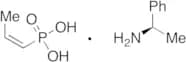
References Krishnan, A.V., et al.: Endocrinology, 132, 2279 (1993); Steinmetz, R., et al.: Trends Endocrinol. Metab., 9, 124 (1998); Petersen, H., et al.: Eur. Food Res. Technol., 216, 355 (2003); Yipeng, S., et al.: Env Hea. Pers., 120, 399 (2012);Formula:C22H26O8Color and Shape:White To Off-WhiteMolecular weight:418.44cis-Propenylphosphonic Acid (R)-(+)-α-Methylbenzylamine Salt
CAS:Controlled ProductApplications cis-Propenylphosphonic Acid (R)-(+)-α-Methylbenzylamine Salt is used as a reagent in the microbial production of Fosfomycin (F727505); a compound used as an antibiotic in the treatment of urinary tract infections.
References Watanabe, M., et al.: Appl. Environ. Microb., 65, 1036 (1999); Itoh, N., et al.: Appl. Microbiol. Biot., 43, 394 (1995); White, R.F., et al.: Appl. Microbiol., 22, 55 (1971); Keating, G. et al.: Drugs, 73, 1951 (2013); Demir, T. et al.: Int. J. Infect. Dis., 17, e966 (2013)Formula:C3H7O3P(C8H11N)Color and Shape:NeatMolecular weight:243.248-Nitroguanine
CAS:Controlled ProductApplications 8-Nitroguanine as a potential biomarker for progression of malignant fibrous histiocytoma, a model of inflammation-related cancer.
References Surh, Y., et al.: Mutat. Res., 480, 243 (2001), Balkwill, F., et al.: Lancet, 357, 539 (2001), Kawanishi, S., et al.: Biol. Chem., 387, 365 (2006), Hoki, Y., et al.: Cancer Sci., 98, 163 (2007),Formula:C5H4N6O3Color and Shape:NeatMolecular weight:196.12[4-(2-fluorophenyl)piperazin-1-yl](phenyl)acetic acid
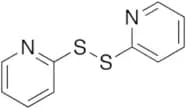
CAS:Color and Shape:SolidMolecular weight:314.3599853515632,2'-Dipyridinyl Disulfide
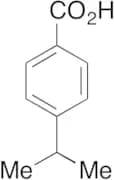
CAS:Controlled ProductFormula:C10H8N2S2Color and Shape:NeatMolecular weight:220.314-(1-Methylethyl)benzoic Acid
CAS:Applications 4-(1-Methylethyl)benzoic Acid is used in the synthesis of quinuclidine benzamides as agonists for nicotinic acetylcholine receptors. Also used in the synthesis of nifuroxazide analogues showing antimicrobial activity against methicillin-resistant Staphylococcus.
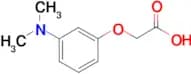
References Bodnar, A. et al.: J. Med. Chem., 48, 905 (2005); Masunari, A. et al.: Bioorg. Med. Chem. Lett., 15, 4229 (2007);Formula:C10H12O2Color and Shape:NeatMolecular weight:164.2(3-Dimethylamino-phenoxy)-acetic acid
CAS:Purity:98.0%Color and Shape:SolidMolecular weight:195.21800231933594[1-(2-Thienyl)-3,4-dihydroisoquinolin-2(1H)-yl]acetic acid
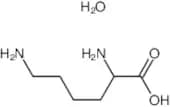
CAS:Purity:95.0%Molecular weight:273.3500061035156Dl-lysine Monohydrate
CAS:Controlled ProductApplications Dl-lysine monohydrate
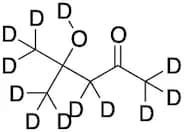
Formula:C6H14N2O2·H2OColor and Shape:NeatMolecular weight:164.24-Hydroxy-4-methyl-2-pentanone-d12
CAS:Controlled ProductApplications 4-Hydroxy-4-methyl-2-pentanone-d12 (CAS# 114253-85-9) is a useful isotopically labeled research compound.
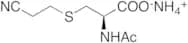
Formula:C6D12O2Color and Shape:NeatMolecular weight:128.23N-Acetyl-S-(2-cyanoethyl)-L-cysteine Ammonium Salt
CAS:Stability Hygroscopic
Applications N-Acetyl-S-(2-cyanoethyl)-L-cysteine Ammonium Salt is a metabolite of Acrylonitrile (AN) and acrylamide (AM); and are commonly used in the synthesis of plastics and polymers.
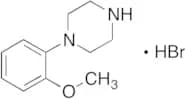
References van Bladeren, P., et al.: Drug Metab. Dispos., 9, 246 (1981), Guengerich, F., et al.: Chem. Res. Toxicol., 4, 168 (1991),Formula:C8H11N2O3S·H4NColor and Shape:SolidMolecular weight:233.291-(2-Methoxyphenyl)piperazine Hydrobromide
CAS:Controlled ProductStability Hygroscopic
Applications 1-(2-Methoxyphenyl)piperazine Hydrobromide is a useful reagent for improving the synthesis of Eapidil.
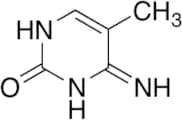
References Wang, H., et al.: Anhui Huagong, 37, 23 (2011)Formula:C11H16N2O·HBrColor and Shape:NeatMolecular weight:273.175-Methylcytosine (~90%)
CAS:Controlled ProductApplications 5-Methylcytosine (cas# 554-01-8) is a useful research chemical.
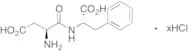
Formula:C5H7N3OPurity:~90%Color and Shape:NeatMolecular weight:125.13L-Aspartyl-L-phenylalanine Hydrochloride
CAS:Controlled ProductApplications L-Aspartyl-L-phenylalanine is an impurity of Thiamine (T344185). Thiamine Impurity B.
References Aluwihare, L., et al.: Science, 308, 1007 (2005), Koch, B., et al.: Anal. Chem., 79, 1758 (2007), Reemtsma, T., et al.: Environ. Sci. Technol., 42, 1430 (2008),Formula:C13H16N2O5xHClColor and Shape:NeatMolecular weight:280.286-((tert-Butoxycarbonyl)amino)-2-fluoronicotinic acid
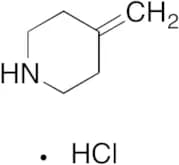
CAS:Purity:97%Molecular weight:256.23300170898444-Methylenepiperidine Hydrochloride
CAS:Controlled ProductApplications 4-Methylenepiperidine Hydrochloride is a building block that can be coupled with aryl halides via Suzuki cross-coupling to give benzyl piperidines and related compounds.
References Vice, S., et al.: J. Org. Chem., 66, 2487 (2001);Formula:C6H11N•(HCl)Color and Shape:NeatMolecular weight:97.1636464-Methylcyclohexanecarboxylic Acid Methyl Ester
CAS:Controlled ProductApplications 4-Methylcyclohexanecarboxylic Acid Methyl Ester is the methyl ester derivative of 4-Methyl-cyclohexanecarboxylic Acid (M299530) and is used as a starting material in many organic reactions.
References Fedyanin, N. P., et al.: J. Appl. Chem-USSR+, 51, 375 (1978)Formula:C9H16O2Color and Shape:NeatMolecular weight:156.224-(3-methoxybenzoyl)-8-propyl-1-oxa-4,8-diazaspiro[4.5]decane-3-carboxylic acid
CAS:Purity:95.0%Molecular weight:362.42599487304694-(2,3,4-trimethoxyphenyl)-3H,4H,5H,6H,7H-imidazo[4,5-c]pyridine-6-carboxylic acid
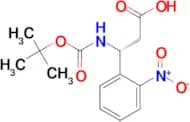
CAS:Purity:95.0%Molecular weight:333.343994140625(R)-3-((tert-Butoxycarbonyl)amino)-3-(2-nitrophenyl)propanoic acid
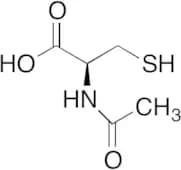
CAS:Purity:95.0%Molecular weight:310.3059997558594N-Acetyl-D-cysteine
CAS:Controlled ProductStability Air Sensitive
Applications N-Acetyl-D-cysteine is an isomer of N-Acetyl Cysteine which can act as a radioprotectant against many aspects of oxidative damage due to high dose irradiation.
References Neal, R., et al.: Free Radic. Biol. Med, 34, 689-695 (2003)Formula:C5H9NO3SColor and Shape:NeatMolecular weight:163.192-Deoxy-2-chloro-D-glucose
CAS:Controlled ProductApplications 2-Deoxy-2-chloro-D-glucose is a D-Glucose (G595000) derivative used in the synthesis of sugar nucleotides and oligosaccharides.
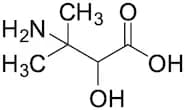
References Herr, D., et al.: Euro. J. App. Microbiol., 1, 41 (1975);Formula:C6H11ClO5Color and Shape:NeatMolecular weight:198.63-Amino-2-hydroxy-3-methylbutanoic Acid
CAS:Controlled ProductFormula:C5H11NO3Color and Shape:NeatMolecular weight:133.1468-methyl-4-(3-phenylpropanoyl)-1-oxa-4,8-diazaspiro[4.5]decane-3-carboxylic acid
CAS:Purity:95.0%Molecular weight:332.3999938964844Ref: 10-F806736
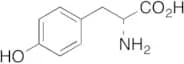
1gTo inquire5mgTo inquire10mgTo inquire25mgTo inquire50mgTo inquire100mgTo inquire250mgTo inquireD-Tyrosine
CAS:Controlled ProductApplications D-Tyrosine, the stereoisomer to L-Tyrosine (T899975), is an amino acid used in various organic syntheses for antibiotics. It is used in the synthesis of (-)-anisomycin, as well as BATSI (boronic acid transition state inhibitors) which act on β-lactamases. It has also been studied as an inhibitor of microbial growth on surfaces, reducing microbial attachment to hydrophillic glass and hydrophobic polypropylene surfaces.
References Li, Ji. et al.: Chin. Chem. Lett., 23, 647 (2012); Xu, H. et al.: Water Res., 45, 5796 (2011); Ke, W. et al.: Antimicrob. Agents Chemother., 55, 174 (2011);Formula:C9H11NO3Color and Shape:NeatMolecular weight:181.19rac 2-Aminothiazoline-4-carboxylic Acid
CAS:Controlled ProductStability Hygroscopic
Applications Used in the manufacturing of L-tryptophan by enzymic reaction.
References Franke, L., et al.: J. Med. Chem., 48, 6997 (2005), Fox, T., et al.: Curr. Top Med. Chem., 6, 1579 (2006),Formula:C4H6N2O2SColor and Shape:NeatMolecular weight:146.17L-Phenylalanine-13C6
CAS:Controlled ProductApplications Labelled analogue of L-Phenylalanine, an essential amino acid. L-Phenylalanine is biologically converted into L-tyrosine, another one of the DNA-encoded amino acids, which in turn is converted to L-DOPA and further converted into dopamine, norepinephrine, and epinephrine. L-Phenylalanine is produced for medical, feed, and nutritional applications such as in the preparation of Aspartame.
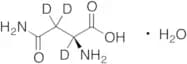
References Hollunger, G. et al.: Acta Pharmacol. Toxicol., 34, 391 (1974); Bagchi, S.P. et al.: Biochem. Pharmacol., 26, 900 (1977);Formula:C313C6H11NO2Color and Shape:White To Off-WhiteMolecular weight:171.15L-Asparagine-d3 Hydrate
CAS:Controlled ProductApplications L-Asparagine-d3 Hydrate is an isotope labelled L-Asparagine Hydrate, a naturally occurring amino acid that is not a essential for humans and can be synthesized from central metabolic pathway intermediates.
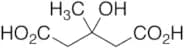
References Burda, P., et al.: Biochim. Biophys. Acta., 1426, 239 (1999); Yamane, H., et al.: Animal. Sci. J., 80, 286 (2009);Formula:C4D3H5N2O3·H2OColor and Shape:White To Off-WhiteMolecular weight:153.15173-Hydroxy-3-methylpentane-1,5-dioic Acid
CAS:Controlled ProductApplications 3-Hydroxy-3-methylpentane-1,5-dioic Acid (cas# 503-49-1) is a compound useful in organic synthesis.
Formula:C6H10O5Color and Shape:NeatMolecular weight:162.142-Ethyl-4-methyl-1-pentanol
CAS:Controlled ProductApplications 2-Ethyl-4-methyl-1-pentanol is a volatile chemical that can be used to diagnose ratoon stunting disease in Sugar cane.
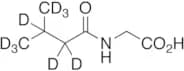
References Berna, A. Z., et al.: Pro. of the Conf. of the Austr. Soc. of Sugar Cane Tech., 37th, 150-157 (2015)Formula:C8H18OColor and Shape:NeatMolecular weight:130.23N-Iso Valerylglycine-d9
CAS:Controlled ProductApplications Isotope labelled N-Isovalerylglycine is a useful diagnostic tool in the diagnosis of many organic acidemias and mitochondrial fatty acid β-oxidation defects. N-Isovalerylglycine is found in the urine of patients with isovaleric acidemia, an inborn error of leucine metabolism.
References Tanaka, K. et al.: J. Biol. Chem., 242, 2966 (1967); Bonafe, L. et al.: Mol. Gen. Metab., 69, 311 (2000);Formula:C72H9H4NO3Color and Shape:NeatMolecular weight:168.248-benzyl-4-(3-methylbutanoyl)-1-oxa-4,8-diazaspiro[4.5]decane-3-carboxylic acid
CAS:Purity:95.0%Molecular weight:360.45401000976564-(4-bromophenyl)-3H,4H,5H,6H,7H-imidazo[4,5-c]pyridine-6-carboxylic acid
CAS:Purity:95.0%Molecular weight:322.16198730468754-(3,4-dichlorobenzoyl)-8-ethyl-1-oxa-4,8-diazaspiro[4.5]decane-3-carboxylic acid
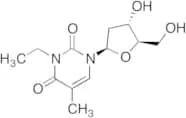
CAS:Purity:95.0%Molecular weight:387.260009765625N3-Ethylthymidine
CAS:Controlled ProductApplications E677525
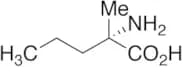
References Shimizu, T., et al.: Chem. Pharm. Bull., 53, 313 (2005)Formula:C12H18N2O5Color and Shape:NeatMolecular weight:270.28α-Methyl-L-valine
CAS:Controlled ProductApplications Used in the preparation of medicinal and herbicidal agents.
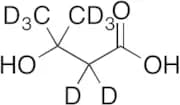
References Cronin, J., et al.: Science, 275, 951 (1997), Podlech, J., et al.: Cell Mol. Life. Sci., 58, 44 (2001), Lee, S., et al.: J. Biol. Chem., 278, 46649 (2003),Formula:C6H13NO2Color and Shape:NeatMolecular weight:131.17β-Hydroxyisovaleric Acid-d8
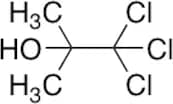
CAS:Controlled ProductFormula:C5H2D8O3Color and Shape:Colourless To YellowMolecular weight:126.181,1,1-Trichloro-2-methylpropan-2-ol
CAS:Controlled ProductStability Hygroscopic
Applications Chlorobutanol is used as a preservative and sedative. It has also been shown to exhibit antibacterial properties.
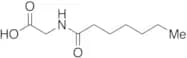
References Dutta, T., et al.: PCT Int. Appl., 22, (2020); Ibibia, E., et al.: Asian. J. Pharm. Clin. Res., 9, 179-182 (2016)Formula:C4H7Cl3OColor and Shape:Off-WhiteMolecular weight:177.46N-Heptanoylglycine
CAS:Applications An acylglycine present in urniary excretion that can be analyzed and be used as diagnostic tool for metabolic disorders, complementary to organic acids and acylcarnitine profiles.
References Bonafe, L. et al.: Mol. Genetics Metab., 69, 302 (2000);Formula:C9H17NO3Color and Shape:WhiteMolecular weight:187.242-sec-Butyl-3-methoxypyrazine
CAS:Controlled ProductApplications A compound contents in musts and wines from Vitis vinifera variety Cabernet Sauvignon.
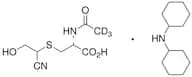
References Murray, K., et al.: J. Sci. Food Agric., 26, 973 (1975), Maga, J., et al.: Food Rev. Int., 8, 479 (1992), Allen, M., et al.: J. Agric. Food Chem., 43, 769 (1995),Formula:C9H14N2OColor and Shape:NeatMolecular weight:166.22N-Acetyl-S-(1-cyano-2-hydroxyethyl)-L-cysteine-d3 Dicyclohexylamine Salt (Mixture of Diastereomers)
CAS:Controlled ProductStability Hygroscopic
Applications A labelled metabolite of Acrylonitrile (ACN).
References Guengerich, F., et al.: Cancer Res., 41, 4925 (1981), Leonard, A., et al.: Mutation Res., 436, 263 (1999), Stadler, R., et al.: J. Agric. Food Chem., 52, 5550 (2004), Dybing, E., et al.: Food Chem. Toxicol., 43, 365 (2005), Rice, J., et al.: Mutation Res., 580, 3 (2005),Formula:C20H32D3N3O4SColor and Shape:White To Off-WhiteMolecular weight:416.59L-Valine-d8
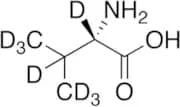
CAS:Controlled ProductApplications Labelled analogue of L-Vailne. L-Valine is an essential amino acid and one of 20 proteinogenic amino acids. L-Valine cannot be manufactured by the body and must be acquired through diet or supplementation. L-valine is found in grains, dairy products, mushrooms, meats, peanuts and soy proteins. L-Valine has been used in studies to attenuate arrhythmias and induce hypotensive effects.
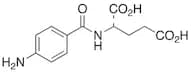
References Choi, C.W. et al.: Anim. Feed Sci. Technol., 102, 15 (2002); Kolarski, D. et al.: Krmiva, 30, 155 (1988); Oba, M. et al.: J. Dairy Sci., 93, 2044 (2010); Mitrega, K. et al.: Pharmacol. Res., 64, 218 (2011);Formula:C52H8H3NO2Color and Shape:NeatMolecular weight:125.2N-(4-Aminobenzoyl)-L-glutamic Acid
CAS:Controlled ProductImpurity Methotrexate EP Impurity K
Stability Hygroscopic
Applications Major metabolite of 5-Methyltetrahydrofolic Acid
References Ng, X., et al.: Food Chem., 110, 1000 (2008), Ng, X., et al.: Food Chem., 106, 200 (2007), Verlinde, P., et al.: J. Agric. Food Chem., 57, 6803 (2009), Gutzeit, D., et al.: Anal. Bioanal. Chem., 391, 211 (2008),Formula:C12H14N2O5Color and Shape:WhiteMolecular weight:266.25
![4-(3-fluorobenzoyl)-8-methyl-1-oxa-4,8-diazaspiro[4.5]decane-3-carboxylic acid](/_next/image/?url=https%3A%2Fstatic.cymitquimica.com%2Fproducts%2F10%2Fthumb-webp%2FF525636.webp&w=3840&q=75)



acetic acid](/_next/image/?url=https%3A%2Fstatic.cymitquimica.com%2Fproducts%2F10%2Fthumb-webp%2FF300215.webp&w=3840&q=75)
![[1-(2-Thienyl)-3,4-dihydroisoquinolin-2(1H)-yl]acetic acid](/_next/image/?url=https%3A%2Fstatic.cymitquimica.com%2Fproducts%2F10%2Fthumb-webp%2FF494876.webp&w=3840&q=75)


![4-(3-methoxybenzoyl)-8-propyl-1-oxa-4,8-diazaspiro[4.5]decane-3-carboxylic acid](/_next/image/?url=https%3A%2Fstatic.cymitquimica.com%2Fproducts%2F10%2Fthumb-webp%2FF525735.webp&w=3840&q=75)

![4-(2,3,4-trimethoxyphenyl)-3H,4H,5H,6H,7H-imidazo[4,5-c]pyridine-6-carboxylic acid](/_next/image/?url=https%3A%2Fstatic.cymitquimica.com%2Fproducts%2F10%2Fthumb-webp%2FF522519.webp&w=3840&q=75)

![8-methyl-4-(3-phenylpropanoyl)-1-oxa-4,8-diazaspiro[4.5]decane-3-carboxylic acid](/_next/image/?url=https%3A%2Fstatic.cymitquimica.com%2Fproducts%2F10%2Fthumb-webp%2FF525629.webp&w=3840&q=75)



![8-benzyl-4-(3-methylbutanoyl)-1-oxa-4,8-diazaspiro[4.5]decane-3-carboxylic acid](/_next/image/?url=https%3A%2Fstatic.cymitquimica.com%2Fproducts%2F10%2Fthumb-webp%2FF525807.webp&w=3840&q=75)
![4-(4-bromophenyl)-3H,4H,5H,6H,7H-imidazo[4,5-c]pyridine-6-carboxylic acid](/_next/image/?url=https%3A%2Fstatic.cymitquimica.com%2Fproducts%2F10%2Fthumb-webp%2FF522518.webp&w=3840&q=75)
![4-(3,4-dichlorobenzoyl)-8-ethyl-1-oxa-4,8-diazaspiro[4.5]decane-3-carboxylic acid](/_next/image/?url=https%3A%2Fstatic.cymitquimica.com%2Fproducts%2F10%2Fthumb-webp%2FF525681.webp&w=3840&q=75)


![1-[(3-methoxythien-2-yl)methyl]piperidine-4-carboxylic acid](/_next/image/?url=https%3A%2Fstatic.cymitquimica.com%2Fproducts%2F10%2Fthumb-webp%2FF518818.webp&w=3840&q=75)