Amino Acids (AA)
Amino acids (AAs) are the fundamental building blocks of proteins, playing a crucial role in various biological processes. These organic compounds are essential for protein synthesis, metabolic pathways, and cell signaling. In this category, you will find a comprehensive range of amino acids, including essential, non-essential, and modified forms, which are vital for research in biochemistry, molecular biology, and nutritional sciences. At CymitQuimica, we provide high-quality amino acids to support your research and development needs, ensuring accuracy and reliability in your experimental outcomes.
Subcategories of "Amino Acids (AA)"
- Amino Acid Derivatives(3,955 products)
- Amino Acid and Amino Acid Related Compounds(3,469 products)
- Amino Acids with Oxygen or Sulphur(168 products)
- Boc- Amino Acids(351 products)
- Fmoc Amino Acids(1,710 products)
Found 38260 products of "Amino Acids (AA)"
Sort by
Purity (%)
0
100
|
0
|
50
|
90
|
95
|
100
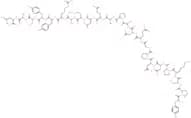
MAPKK2 (1-16) (human, mouse, rat)
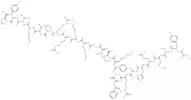
CAS:<p>Please enquire for more information about MAPKK2 (1-16) (human, mouse, rat) including the price, delivery time and more detailed product information at the technical inquiry form on this page</p>Formula:C81H144N24O19SPurity:Min. 95%Molecular weight:1,790.23 g/mol2-Amino-1-phenylpropan-1-one hydrochloride
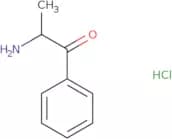
CAS:Controlled Product<p>2-Amino-1-phenylpropan-1-one hydrochloride is a chemical compound that can be used as an intermediate in the synthesis of ethyl formate. It is also a pharmaceutical intermediate, which is used to prepare triazine and alicyclic compounds. It has been shown to have potential use in the treatment of prostatic hypertrophy and heterocycle disorders. 2-Amino-1-phenylpropan-1-one hydrochloride has been found to be active in animals and humans and is not toxic to women or animals. This drug has shown no adverse effects on human health at doses up to 10 g/kg body weight.</p>Formula:C9H11NO•HClPurity:Min. 95%Color and Shape:PowderMolecular weight:185.65 g/mol(D-Lys16)-ACTH (1-24) (human, bovine, rat) trifluoroacetate salt
CAS:<p>Please enquire for more information about (D-Lys16)-ACTH (1-24) (human, bovine, rat) trifluoroacetate salt including the price, delivery time and more detailed product information at the technical inquiry form on this page</p>Formula:C136H210N40O31SPurity:Min. 95%Molecular weight:2,933.44 g/molTumor Targeted Pro-Apoptotic Peptide trifluoroacetate salt
<p>Please enquire for more information about Tumor Targeted Pro-Apoptotic Peptide trifluoroacetate salt including the price, delivery time and more detailed product information at the technical inquiry form on this page</p>Formula:C94H174N32O22S2Purity:Min. 95%Molecular weight:2,168.72 g/mol(D-Phe7)-Somatostatin-14
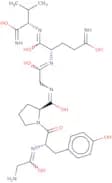
CAS:<p>Please enquire for more information about (D-Phe7)-Somatostatin-14 including the price, delivery time and more detailed product information at the technical inquiry form on this page</p>Formula:C76H104N18O19S2Purity:Min. 95%Molecular weight:1,637.88 g/molMca-Gly-Ala-Lys-Arg-His-Arg-Lys-Val-NH2 trifluoroacetate salt
<p>Please enquire for more information about Mca-Gly-Ala-Lys-Arg-His-Arg-Lys-Val-NH2 trifluoroacetate salt including the price, delivery time and more detailed product information at the technical inquiry form on this page</p>Formula:C52H83N19O12Purity:Min. 95%Molecular weight:1,166.34 g/molH-Leu-Trp-Met-Arg-OH
CAS:<p>Histidine is a non-essential amino acid that is found in all living cells. It is a precursor of histamine and can be converted to tryptophan by decarboxylation. Histidine has been found to be essential for growth in some bacteria and yeast, but not in higher plants or animals. The formyl group of histidine can be oxidized to a sulfoxide or reduced to a formyl group. Histidine residues are often found in the protein matrix of proteomic samples, but can also be used as an analyte. The two most common methods for the detection of histidine are matrix-assisted laser desorption/ionization mass spectrometry (MALDI MS) and matrix-assisted laser desorption/ionization time-of-flight mass spectrometry (MALDI TOF MS). These methods allow for the minimization of background interference from other molecules present in the sample, such as tryptophan residues.</p>Formula:C28H44N8O5SPurity:Min. 95%Molecular weight:604.77 g/molFmoc-Gly-Wang resin (200-400 mesh)
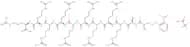
<p>Please enquire for more information about Fmoc-Gly-Wang resin (200-400 mesh) including the price, delivery time and more detailed product information at the technical inquiry form on this page</p>Purity:Min. 95%H-Arg-Arg-Lys-Asp-Leu-His-Asp-Asp-Glu-Glu-Asp-Glu-Ala-Met-Ser-Ile-Thr-Ala-OH
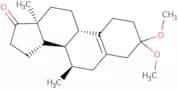
CAS:<p>Please enquire for more information about H-Arg-Arg-Lys-Asp-Leu-His-Asp-Asp-Glu-Glu-Asp-Glu-Ala-Met-Ser-Ile-Thr-Ala-OH including the price, delivery time and more detailed product information at the technical inquiry form on this page</p>Formula:C85H139N27O35SPurity:Min. 95%Molecular weight:2,131.24 g/mol7α-Methyl-3,3-dimethoxy-5(10)-estrene-17-one
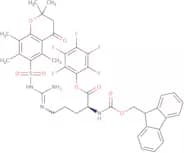
CAS:Controlled Product<p>Please enquire for more information about 7alpha-Methyl-3,3-dimethoxy-5(10)-estrene-17-one including the price, delivery time and more detailed product information at the technical inquiry form on this page</p>Formula:C21H32O3Purity:Min. 95%Color and Shape:PowderMolecular weight:332.48 g/molFmoc-Arg(Pmc)-OPfp
CAS:<p>Fmoc-Arg(Pmc)-OPfp is an amino acid that belongs to the group of l-amino acids. It has a molecular weight of 121.12 g/mol and a pKa of 9.78, and it can be used in the synthesis of oligopeptides. Fmoc-Arg(Pmc)-OPfp is also a positional isomer, which means that it has the same chemical formula but different spatial arrangements within the molecule. The position for this amino acid is on the N-terminal side of an alpha carbon atom, meaning that there are two chiral centers at this position on either side of the molecule. These two chiral centers are opposite each other, so they are called enantiomers. The conformation of this amino acid is L-amino acid because its amine group faces towards the right when looking at it from below. In addition, Fmoc-Arg(Pmc)-OPfp contains one specific mon</p>Formula:C41H41F5N4O7SPurity:Min. 95%Molecular weight:828.85 g/molH-Pro-Pro-Pro-OH
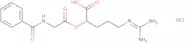
CAS:<p>H-Pro-Pro-Pro-OH is a synthetic peptide that inhibits the production of reactive oxygen species (ROS) by acting as an antioxidant. It has been shown to have a protective effect on cells, preventing cell death and promoting cell survival. H-Pro-Pro-Pro-OH also has a significant inhibitory effect on superoxide radical production in nanotubes and photoreceptors. It can be used to prevent the oxidation of α-tocopherol, which is a lipid soluble vitamin found in vegetable oils. The three amino acids in the sequence are hydrolysed to proline, which is an essential amino acid for human metabolism, and two dipeptides with chemical structures similar to those found in natural peptides. The peptide was synthesized from proline, histidine and arginine. This molecule can be detected using polyacrylamide gel electrophoresis and fluorescence microscopy with enhanced optical properties as a chromophore.</p>Formula:C15H23N3O4Purity:Min. 95%Molecular weight:309.36 g/molO-a-Hippuryl-L-argininic acid hydrochloride salt
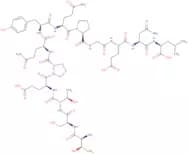
CAS:<p>Please enquire for more information about O-a-Hippuryl-L-argininic acid hydrochloride salt including the price, delivery time and more detailed product information at the technical inquiry form on this page</p>Formula:C15H20N4O5Purity:Min. 95%Molecular weight:336.34 g/molpp60 c-src (521-533)
CAS:<p>C-src is a protein kinase that plays an important role in cell signaling. The protein contains an ATP-binding domain and a catalytic domain, which are responsible for the phosphorylation of tyrosine residues on other proteins. C-src is involved in bone resorption, blood pressure control and tumor development. This molecule has been used as a template for the production of analogues with increased detection sensitivity (e.g., pp60 c-src (521-533) H-Thr-Ser-Thr-Glu-Pro-Gln).</p>Formula:C62H94N16O25Purity:Min. 95%Molecular weight:1,463.5 g/molFmoc-D-Arg(Pmc)-Wang resin (200-400 mesh)
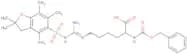
<p>Please enquire for more information about Fmoc-D-Arg(Pmc)-Wang resin (200-400 mesh) including the price, delivery time and more detailed product information at the technical inquiry form on this page</p>Purity:Min. 95%Z-Homoarg (Pbf)-OH
CAS:<p>Please enquire for more information about Z-Homoarg (Pbf)-OH including the price, delivery time and more detailed product information at the technical inquiry form on this page</p>Formula:C28H38N4O7SPurity:Min. 95%Molecular weight:574.69 g/molFmoc-Leu-Pro-OH
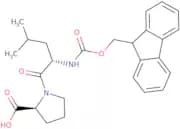
CAS:<p>Fmoc-Leu-Pro-OH is a benzyl ester that can be used in peptide synthesis. It can be used to remove the benzyl protecting group from the amino acids leucine, proline, and hydroxyproline. Fmoc-Leu-Pro-OH is also capable of cleaving dipeptides and octapeptides. The benzyl ester can be deprotected using anisole and accelerates the reaction. This reagent is irreversible, so it cannot be reused.</p>Formula:C26H30N2O5Purity:Min. 95%Molecular weight:450.53 g/molH-Ala-Gly-Gly-Gly-Gly-OH
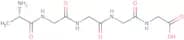
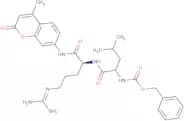
CAS:<p>Please enquire for more information about H-Ala-Gly-Gly-Gly-Gly-OH including the price, delivery time and more detailed product information at the technical inquiry form on this page</p>Formula:C11H19N5O6Purity:Min. 95%Molecular weight:317.3 g/molZ-Leu-Arg-AMC HCl
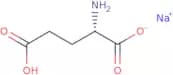
CAS:<p>Please enquire for more information about Z-Leu-Arg-AMC HCl including the price, delivery time and more detailed product information at the technical inquiry form on this page</p>Formula:C30H38N6O6Purity:Min. 95%Molecular weight:578.66 g/molSodium L-glutamate
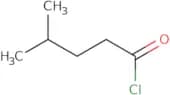
CAS:<p>Glutamate is the most abundant amino acid in the body and plays an important role in metabolism, brain function, and immune function. It is involved in many biochemical reactions and has been found to be associated with liver lesions, thermal expansion, and brain functions. Glutamate also has a role in diseases such as Huntington's disease, amyotrophic lateral sclerosis (ALS), and Parkinson's disease. Furthermore, glutamate is used as a neurotransmitter that regulates the central nervous system. The treatment of diseases can be done through glutamate replacement therapy or by inhibiting glutamate receptors. Glutamate levels in human serum have been shown to increase when blood sampling is taken from individuals with metabolic disorders. Results show high values for glutamate levels in human serum samples collected from patients with metabolic disorders.</p>Formula:C5H9NO4•NaPurity:Min. 95%Color and Shape:PowderMolecular weight:170.12 g/mol4-Methylvaleryl chloride
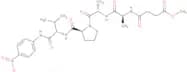
CAS:<p>4-Methylvaleryl chloride (4MVC) is a thionyl chloride that reacts with 2-pentenoic acid to produce 4-methylvaleric acid. It has been used as a pharmaceutical intermediate and as a potent inhibitor of side-chain cleavage reactions. The reaction time required for the formation of 4MVC depends on the reaction temperature. At room temperature, it takes approximately one hour to form; at 60 degrees Celsius, it takes approximately five minutes to form.</p>Formula:C6H11ClOPurity:Min. 95%Color and Shape:Colorless Clear LiquidMolecular weight:134.6 g/molMeOSuc-Ala-Ala-Pro-Val-pNA
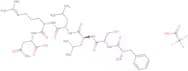
CAS:<p>MeOSuc-Ala-Ala-Pro-Val-pNA is specific chromogenic substrate for human elastase.</p>Formula:C27H38N6O9Purity:Min. 95%Molecular weight:590.63 g/molH-Cys(NPys)-D-Arg-D-Arg-D-Arg-D-Arg-D-Arg-D-Arg-D-Arg-D-Arg-D-Arg-NH2 trifluoroacetate salt
CAS:<p>Please enquire for more information about H-Cys(NPys)-D-Arg-D-Arg-D-Arg-D-Arg-D-Arg-D-Arg-D-Arg-D-Arg-D-Arg-NH2 trifluoroacetate salt including the price, delivery time and more detailed product information at the technical inquiry form on this page</p>Formula:C62H118N40O12S2Purity:Min. 95%Molecular weight:1,679.99 g/molPAR-4 (1-6) amide (human) trifluoroacetate salt
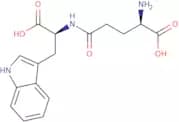
CAS:<p>Please enquire for more information about PAR-4 (1-6) amide (human) trifluoroacetate salt including the price, delivery time and more detailed product information at the technical inquiry form on this page</p>Formula:C28H42N8O8Purity:Min. 95%Molecular weight:618.68 g/molH-D-Glu(Trp-OH)-OH
CAS:<p>H-D-Glu(Trp-OH)-OH is a synthetic peptide that has been shown to inhibit the replication of the herpes simplex virus (HSV). It binds to toll-like receptor 3 and 4 on cells, which may inhibit HSV replication. This compound has also been shown to be a potent inhibitor of HIV, as well as hepatitis B and C. H-D-Glu(Trp-OH)-OH has been shown to cause lung damage in mice. The mechanism for this effect is unknown, but it may involve an increase in reactive oxygen species or other cell signaling pathways.</p>Formula:C16H19N3O5Purity:Min. 95%Molecular weight:333.34 g/molCharacteristic MSH-Tetrapeptide
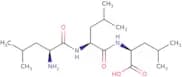
CAS:<p>The melanocortin-4 receptor (MC4R) is a G protein-coupled receptor that mediates the protective and cytoprotective activities of endogenous melanocortins. This receptor has been shown to be an important target for neuroprotective agents. The MC4R is expressed in the central nervous system, peripheral nervous system, and other tissues where it may have a role in regulating energy homeostasis. The N-terminal amino acid sequence of the human MC4R ligand is H-His-Phe-Arg-Trp-OH. This peptide has been shown to have potent agonist potency at the MC4R with a Kd of 0.2 nM and an EC50 of 2 nM.</p>Formula:C32H40N10O5Purity:Min. 95%Molecular weight:644.72 g/molLeu-Leu-Leu-OH
CAS:<p>Leu-Leu-Leu-OH is a pentapeptide that is used in cancer treatment to inhibit the growth of cancer cells. It prevents the production of proteins and, as a result, cell division. Leu-Leu-Leu-OH has been shown to be effective against tumor cells with an antibody that binds to the surface of cells. The monoclonal antibody is taken up by the cancer cells through receptor mediated endocytosis, which leads to inhibition of protein synthesis and cell death.</p>Formula:C18H35N3O4Purity:Min. 95%Color and Shape:White PowderMolecular weight:357.49 g/molH-Tyr-Gln-Ser-Leu-Arg-Trp-NH2 acetate salt
CAS:Controlled Product<p>Please enquire for more information about H-Tyr-Gln-Ser-Leu-Arg-Trp-NH2 acetate salt including the price, delivery time and more detailed product information at the technical inquiry form on this page</p>Formula:C40H58N12O9Purity:Min. 95%Molecular weight:850.96 g/mol(Phe1,Ser2)-TRAP-6 trifluoroacetate salt
CAS:<p>Please enquire for more information about (Phe1,Ser2)-TRAP-6 trifluoroacetate salt including the price, delivery time and more detailed product information at the technical inquiry form on this page</p>Formula:C34H56N10O9Purity:Min. 95%Molecular weight:748.87 g/molBoc-Ala-Ala-Asp-pNA
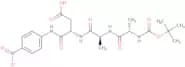
CAS:<p>Boc-Ala-Ala-Asp-pNA is a peptide that has been shown to have cytotoxic activity against the leukemia cell line, basophilic leukemia (BL). It also inhibits hemolytic activity and cytolysin production by staphylococcus. This peptide is expressed in the sequence of Boc-Ala-Ala-Asp and is composed of 20 amino acids. The Boc-Ala sequence has been shown to be involved in apoptosis, while Asp and pNA are responsible for inhibiting hemolytic activity. Functional assays have demonstrated that this peptide has a strong inhibitory effect on the growth of bacteria, including strains of subtilis and hybridization.</p>Formula:C21H29N5O9Purity:Min. 95%Molecular weight:495.48 g/molFmoc-Sar-Wang resin (200-400 mesh)
<p>Please enquire for more information about Fmoc-Sar-Wang resin (200-400 mesh) including the price, delivery time and more detailed product information at the technical inquiry form on this page</p>Purity:Min. 95%Dnp-Arg-Pro-Leu-Ala-Leu-Trp-Arg-Ser-OH trifluoroacetate salt
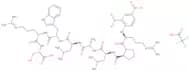
CAS:<p>Dnp-Arg-Pro-Leu-Ala-Leu-Trp-Arg-Ser-OH trifluoroacetate salt is a potent, competitive inhibitor of matrix metalloproteinase (MMP) 3 and MMP9. It binds to the catalytic zinc ion in the active site of these enzymes. Dnp-Arg-Pro-Leu-Ala-Leu-Trp-Arg-Ser-OH trifluoroacetate salt has been shown to inhibit tumor growth and promote neuronal death in vitro. This drug also blocks the release of matrix metalloproteins from cells, which are involved in extracellular processes such as cell migration and cell adhesion.</p>Formula:C52H77N17O14Purity:Min. 95%Molecular weight:1,164.27 g/molNesfatin-1 (30-59) (human) trifluoroacetate salt
<p>Please enquire for more information about Nesfatin-1 (30-59) (human) trifluoroacetate salt including the price, delivery time and more detailed product information at the technical inquiry form on this page</p>Formula:C167H263N41O54Purity:Min. 95%Molecular weight:3,709.12 g/molGRF (1-29) amide (human) acetate salt
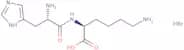
CAS:<p>Growth hormone-releasing factor (GRF) is a peptide fragment of amino acids 1–2 from GHRH (growth hormone-releasing hormone). This 1-29 region is the shortest fully functional fragment of GHRH. GRF is also known as sermorelin. Sermorelin binds to the growth hormone-releasing hormone receptor (GHRH-R), and acts as a surrogate for GHRH, causing growth hormone secretion.human: H-YADAIFTNSYRKVLGQLSARKLLQDIMSR-NH2rat: H-HADAIFTSSYRR I LGQLYARKLLHEIMNR-NH2</p>Formula:C149H246N44O42SPurity:Min. 95%Molecular weight:3,357.88 g/molH-His-Lys-OH·HBr
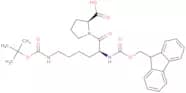
CAS:<p>Please enquire for more information about H-His-Lys-OH·HBr including the price, delivery time and more detailed product information at the technical inquiry form on this page</p>Formula:C12H21N5O3·HBrPurity:Min. 95%Molecular weight:364.24 g/molFmoc-Lys(Boc)-Pro-OH
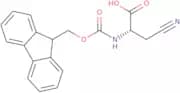
CAS:<p>Fmoc-Lys(Boc)-Pro-OH is a residue that is used in the optimization of peptide synthesis. It is an acid labile protecting group that can be removed by treatment with trichloroacetic acid or hydrogen fluoride. Fmoc-Lys(Boc)-Pro-OH can be used for chemical ligation to other protected amino acids, such as Boc-Lys(Bzl)-OH, to form peptides. The residue has been shown to be useful in systematic optimization of peptide pairings and in the stepwise synthesis of peptides. The residue has also been shown to have a high yield and purity when synthesized by x-ray crystallography.<br>Fmoc-Lys(Boc)-Pro-OH is an amino acid with a molecular weight of 120 Da and consists of two alpha amino acids, L -lysine and L -proline, joined by a peptide bond.</p>Formula:C31H39N3O7Purity:Min. 95%Molecular weight:565.66 g/molFmoc-b-cyano-L-alanine
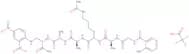
CAS:<p>Please enquire for more information about Fmoc-b-cyano-L-alanine including the price, delivery time and more detailed product information at the technical inquiry form on this page</p>Formula:C19H16N2O4Purity:Min. 95%Molecular weight:336.34 g/molAbz-Gly-Ala-Lys(Ac)-Ala-Ala-Dap (Dnp)-NH2 trifluoroacetate salt
CAS:<p>Please enquire for more information about Abz-Gly-Ala-Lys(Ac)-Ala-Ala-Dap (Dnp)-NH2 trifluoroacetate salt including the price, delivery time and more detailed product information at the technical inquiry form on this page</p>Formula:C35H48N12O12Purity:Min. 95%Molecular weight:828.83 g/mol5-Fmoc-amino-10,11-dihydro-5H-dibenzo[a,d]-cycloheptenyl-2-oxyacetyl-DL-Nle-4- methyl-benzhydrylamide resin
<p>Please enquire for more information about 5-Fmoc-amino-10,11-dihydro-5H-dibenzo[a,d]-cycloheptenyl-2-oxyacetyl-DL-Nle-4- methyl-benzhydrylamide resin including the price, delivery time and more detailed product information at the technical inquiry form on this page</p>Purity:Min. 95%N-Boc-glycine
CAS:<p>N-Boc-glycine is a chemical compound used in the synthesis of cyclic peptides. N-Boc-glycine is synthesized by the reaction of glycine with methanol and hydrochloric acid in the presence of an activated form of carbon monoxide. The pharmacokinetic properties of N-Boc-glycine are similar to those for human immunoglobulin, and it can be used as a reference compound for preparative high performance liquid chromatography (HPLC). It has been shown that the nitrogen atoms in N-Boc-glycine are chemically stable, which makes it suitable for asymmetric synthesis. N-Boc-glycine also has potent antagonist effects on biochemical properties such as calcium channel blockade, inhibition of platelet aggregation, and inhibition of neutrophil chemotaxis.</p>Formula:C7H13NO4Purity:Min. 95%Color and Shape:White PowderMolecular weight:175.18 g/molFibronectin Adhesion-Promoting Peptide trifluoroacetate salt
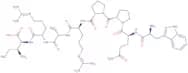
CAS:<p>Fibronectin Adhesion-Promoting Peptide trifluoroacetate salt H-Trp-Gln-Pro-Pro-Arg-Ala-Arg-Ile-OH trifluoroacetate salt (FAP) is a synthetic peptide that promotes fibronectin adhesion. It binds to the amino acid sequence in the C terminal end of fibronectin, which is known to be responsible for binding to actin filaments and growth factors. FAP has been shown to promote wound healing by stimulating the proliferation of corneal epithelial cells in vitro. The mechanism of action of FAP may be due to its ability to bind to chloride ions, which are involved in the regulation of cell proliferation and migration.</p>Formula:C47H74N16O10Purity:Min. 95%Molecular weight:1,023.19 g/mol(Ala2)-Leu-Enkephalin
CAS:<p>Leu-enkephalin is an opioid peptide that is a neurotransmitter in the brain. It is synthesized from the proenkephalin precursor and acts on δ-opioid receptors and kappa-opioid receptors. Leu-enkephalin has been shown to have physiological effects such as analgesia, hypothermia, hyperalgesia, and decreased gastrointestinal motility. Leu-enkephalin also inhibits voltage-dependent calcium channels in neuronal cells by binding to them with high affinity. The binding of leu-enkephalin to these channels affects their function and leads to neuronal death. Disulfide bonds are formed between cysteine residues on leu-enkephalin to stabilize this protein's structure.</p>Formula:C29H39N5O7Purity:Min. 95%Molecular weight:569.65 g/mol(H-Gly-Cys-OH)2 (Disulfide bond)
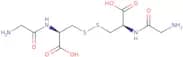
CAS:<p>Please enquire for more information about (H-Gly-Cys-OH)2 (Disulfide bond) including the price, delivery time and more detailed product information at the technical inquiry form on this page</p>Formula:C10H18N4O6S2Purity:Min. 95%Color and Shape:PowderMolecular weight:354.41 g/molAc-Arg-Leu-Arg-AMC trifluoroacetate salt
CAS:<p>Ac-Arg-Leu-Arg-AMC trifluoroacetate salt is a mitochondrial biogenesis activator that has been shown to increase the levels of proteins in the mitochondria. These proteins are required for mitochondrial membrane potential, ATP production, and protein homeostasis. Ac-Arg-Leu-Arg-AMC trifluoroacetate salt has been shown to increase the number of pluripotency markers in human liver cells and to reduce insulin resistance in animals. The drug also increases the expression of ubiquitin ligases and proteasomes, which are enzymes that degrade damaged proteins. Ac-Arg-Leu-Arg-AMC trifluoroacetate salt may be used for treating liver diseases or disorders as well as obesity.</p>Formula:C30H46N10O6•C2HF3O2Purity:Min. 96 Area-%Color and Shape:PowderMolecular weight:756.77 g/mol5-Fluoro-2-methoxyphenylacetone
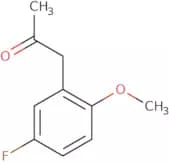
CAS:<p>5-Fluoro-2-methoxyphenylacetone is a chemical with a wide array of applications in research and industry. It is a versatile building block, useful intermediate, and reagent for organic synthesis. This compound has been used as a starting material in the synthesis of other compounds. CAS No. 1017082-10-8</p>Formula:C10H11FO2Color and Shape:PowderMolecular weight:182.19 g/molH-Pro-Pro-Pro-Pro-OH
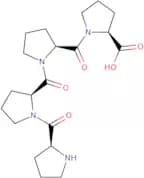
CAS:<p>H-Pro-Pro-Pro-Pro-OH is a proteolytic enzyme that has been shown to have potential applications in drug design. The enzyme is able to cleave proteins, such as albumin, at different sites. It can be used to optimize the design of therapeutic drugs by highlighting the parameters that are important for successful protein cleavage. The enzyme has also been shown to have toxicological properties and interacts with serum albumin. H-Pro-Pro-Pro-Pro-OH is a protease that can be found in human serum.</p>Formula:C20H30N4O5Purity:Min. 95%Molecular weight:406.48 g/molAc-Ser-Asp-Lys-Pro-OH
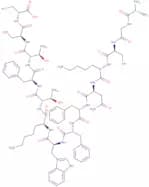
CAS:<p>Ac-Ser-Asp-Lys-Pro-OH is a tetrapeptide that has been shown to stimulate the growth of cells in vitro. It has been found to inhibit the production of interleukin-1β and tumor necrosis factor α, which are cytokines that are involved in inflammation. Ac-Ser-Asp-Lys-Pro-OH stimulates the production of growth factor β1 and collagen, which may be due to its ability to bind to toll like receptor 4 (TLR4). Acetylserotonin has been shown to have antiinflammatory and antifibrotic properties in animal models. Acetylserotonin also inhibits cancer cell growth and reduces drug resistance.</p>Formula:C20H33N5O9Purity:Min. 95%Molecular weight:487.5 g/molNeuropeptide Y (1-24) amide (human, rat) trifluoroacetate salt
CAS:<p>Please enquire for more information about Neuropeptide Y (1-24) amide (human, rat) trifluoroacetate salt including the price, delivery time and more detailed product information at the technical inquiry form on this page</p>Formula:C116H170N30O40SPurity:Min. 95%Molecular weight:2,656.84 g/molAc-Leu-pNA
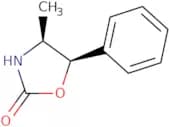
CAS:<p>Ac-Leu-pNA is a peptide that is isolated from pyrococcus furiosus. It has the ability to inhibit serine proteases, including trypsin and chymotrypsin, by forming hydrogen bonds with their active site. Ac-Leu-pNA also inhibits the activity of the enzyme proteasome, which breaks down proteins in cells. This inhibition is due to its ability to bind to the ubiquitin-proteasome system (UPS) and block the enzymatic reaction. Ac-Leu-pNA has been shown to have a blood pressure lowering effect in humans.</p>Formula:C14H19N3O4Purity:Min. 95%Molecular weight:293.32 g/mol(4S,5R)-4-Methyl-5-phenyloxazolidin-2-one
CAS:<p>(4S,5R)-4-Methyl-5-phenyloxazolidin-2-one is an amide that is prepared by the reaction of piperidine and benzyl chloride. It is a chiral compound with (4S,5R) configuration and has a basic hydrolysis. The compound was optimized for its synthesis by using different solvents. This amide has been used in the transfer of methyl groups to different substrates. It also has been used in asymmetric synthesis as a chiral auxiliary for the preparation of enantiopure sulfinyl compounds.</p>Formula:C10H11NO2Purity:Min. 95%Molecular weight:177.2 g/mol








![5-Fmoc-amino-10,11-dihydro-5H-dibenzo[a,d]-cycloheptenyl-2-oxyacetyl-DL-Nle-4- methyl-benzhydrylam…](/_next/image/?url=https%3A%2Fstatic.cymitquimica.com%2Fproducts%2F3D%2Fthumb-webp%2FFT111711.webp&w=3840&q=75)