Amino Acids (AA)
Amino acids (AAs) are the fundamental building blocks of proteins, playing a crucial role in various biological processes. These organic compounds are essential for protein synthesis, metabolic pathways, and cell signaling. In this category, you will find a comprehensive range of amino acids, including essential, non-essential, and modified forms, which are vital for research in biochemistry, molecular biology, and nutritional sciences. At CymitQuimica, we provide high-quality amino acids to support your research and development needs, ensuring accuracy and reliability in your experimental outcomes.
Subcategories of "Amino Acids (AA)"
- Amino Acid Derivatives(3,955 products)
- Amino Acid and Amino Acid Related Compounds(3,465 products)
- Amino Acids with Oxygen or Sulphur(168 products)
- Boc- Amino Acids(351 products)
- Fmoc Amino Acids(1,710 products)
Found 38248 products of "Amino Acids (AA)"
Sort by
Purity (%)
0
100
|
0
|
50
|
90
|
95
|
100
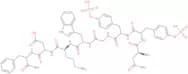
Cionin
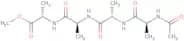
CAS:<p>Cionin is a synthetic peptide that binds to the pancreatic enzyme receptor. It has been shown to inhibit the growth of ascidian and stimulates the secretion of growth factors in vitro. Cionin also has a physiological effect on inflammatory diseases, such as ovary. Cionin is composed of three amino acids: H-Asn-Tyr(SO3H)-Tyr(SO3H)-Gly-Trp-Met-Asp-Phe-NH2. The first two amino acids are sulfated tyrosine residues, which may be responsible for its biological activity.</p>Formula:C53H63N11O19S3Purity:Min. 95%Molecular weight:1,254.33 g/molAc-Ala-Ala-Ala-Ala-OMe
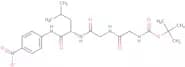
CAS:<p>Ac-Ala-Ala-Ala-Ala-OMe is a peptidase that hydrolyzes the ester bonds of the hydrophobic amino acid residues, such as alanine, valine, leucine, and isoleucine. This enzyme deacylates and releases these amino acids from the side chain of their corresponding fatty acyl groups. Ac-Ala-Ala-Ala-Ala-OMe also acts on N terminal and C terminal residues. The presence of a scissile bond in the peptide substrate is required for this enzyme to function. Acetylation reactions are concurrent with acylation reactions, which produce an acetylated peptide product.</p>Formula:C15H26N4O6Purity:Min. 95%Molecular weight:358.39 g/molBoc-Gly-Gly-Leu-pNA
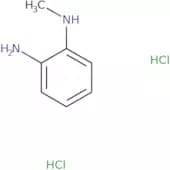
CAS:<p>Boc-Gly-Gly-Leu-pNA is an analog of the protease inhibitor serine protease. It has a reactive site that is similar to the reactive site on serine proteases. This enables Boc-Gly-Gly-Leu-pNA to bind to them and inhibit their activity. The compound also inhibits neutrophil activation, as shown by a decrease in its expression of CD11b and CD11c, which are markers of neutrophils.</p>Formula:C21H31N5O7Purity:Min. 95%Molecular weight:465.5 g/molN-Methyl-1,2-phenylenediamine dihydrochloride
CAS:<p>N-Methyl-1,2-phenylenediamine dihydrochloride (NMP) is a synthetic compound that is used as the precursor to various pharmaceuticals, such as the antihypertensive drug clonidine. NMP can be synthesized from benzene and ammonia or phenylmagnesium bromide. It is carcinogenic in animals and humans, and has been shown to cause DNA damage and cell apoptosis. The chemical has a high potential for nitrosation reactions when exposed to nitrites. This reaction produces nitric oxide, which is cytotoxic and can lead to liver cancer in rats.<br>The synthesis of NMP generates impurities such as methanol solvent, sodium sulfide, and hydrogen chloride gas. These impurities are often found in recycled NMP due to incomplete removal during processing.</p>Formula:C7H12Cl2N2Purity:Min. 95%Color and Shape:PowderMolecular weight:195.09 g/molSuc-Phe-Pro-Phe-pNA
CAS:<p>Suc-Phe-Pro-Phe-pNA is a peptide that has been shown to inhibit the effector functions of anisopliae. The molecule is synthesized by attaching a chloromethyl ketone to the carboxy terminal amino acid. This process is specific for only one sequence and can be used in metarhizium, which is a fungus that naturally occurs in soil and decomposing organic matter. Suc-Phe-Pro-Phe-pNA has been shown to be reactive with inflammatory diseases such as asthma, arthritis, and atherosclerosis. The molecule's activity may be due to its acidic nature or high salt content at its reactive site. This peptide also has a pH optimum range of 3–5, which may contribute to its activity as well.</p>Formula:C33H35N5O8Purity:Min. 95%Molecular weight:629.66 g/molUrocortin (human) trifluoroacetate salt
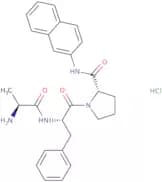
CAS:<p>Trifluoroacetate salt</p>Formula:C204H337N63O64Purity:Min. 95%Molecular weight:4,696.24 g/molH-Ala-Phe-Pro-bNA·HCl
CAS:<p>Please enquire for more information about H-Ala-Phe-Pro-bNA·HCl including the price, delivery time and more detailed product information at the technical inquiry form on this page</p>Formula:C27H30N4O3·HClPurity:Min. 95%Molecular weight:495.01 g/molCys(NPys)-Antennapedia Homeobox (43-58) amide trifluoroacetate salt
CAS:<p>Please enquire for more information about Cys(NPys)-Antennapedia Homeobox (43-58) amide trifluoroacetate salt including the price, delivery time and more detailed product information at the technical inquiry form on this page</p>Formula:C112H176N38O22S3Purity:Min. 95%Molecular weight:2,503.04 g/molNeuropeptide Y (free acid) (human, rat) trifluoroacetate salt
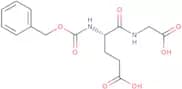
CAS:<p>Please enquire for more information about Neuropeptide Y (free acid) (human, rat) trifluoroacetate salt including the price, delivery time and more detailed product information at the technical inquiry form on this page</p>Formula:C189H284N54O58SPurity:Min. 95%Molecular weight:4,272.67 g/molZ-Glu-Gly-OH
CAS:<p>Z-Glu-Gly-OH is a cysteine donor for the chemical cross-linking of keratin proteins. Follicle cells are a major source of keratin, and glutamic acid is the most abundant amino acid in these cells. Glutamine is also abundant in keratins, and may be responsible for the cornified layer. Cysteine is used to cross-link the structural proteins, while glutamic acid and glutamine are involved in cross-linking the fibre and residue. Cross-linking results in an insoluble protein matrix that provides strength to skin.</p>Formula:C15H18N2O7Purity:Min. 95%Molecular weight:338.31 g/mol3-Iodo-2-methylbenzoic acid
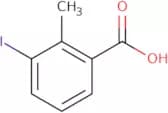
CAS:<p>3-Iodo-2-methylbenzoic acid is a reagent that is used as an intermediate in the synthesis of complex compounds and fine chemicals. 3-Iodobenzoic acid is classified as a speciality chemical, which means it can be used for research purposes only. 3-Iodo-2-methylbenzoic acid has many uses, including being a versatile building block in chemical reactions and a reaction component in the synthesis of useful scaffolds and building blocks.</p>Formula:C8H7IO2Purity:Min. 95%Color and Shape:SolidMolecular weight:262.04 g/molH-Lys(isopropyl)-OH
CAS:<p>Please enquire for more information about H-Lys(isopropyl)-OH including the price, delivery time and more detailed product information at the technical inquiry form on this page</p>Formula:C9H20N2O2Purity:Min. 95%Molecular weight:188.27 g/molSuc-Val-Pro-Phe-4MbNA
CAS:<p>Please enquire for more information about Suc-Val-Pro-Phe-4MbNA including the price, delivery time and more detailed product information at the technical inquiry form on this page</p>Formula:C34H40N4O7Purity:Min. 95%Molecular weight:616.7 g/molZ-Ala-Phe-OMe
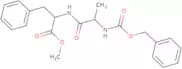
CAS:<p>Z-Ala-Phe-OMe is a model amide that has been used to study the serine protease catalysed hydrolysis of peptides. This compound is a water molecule analogue that is immobilized on an ion exchange resin, which can be used as a support for experiments in catalysis and thermodynamics. Z-Ala-Phe-OMe has shown to be more efficient than other substrates and can be used to study kinetic data and thermodynamic properties.</p>Formula:C21H24N2O5Purity:Min. 95%Molecular weight:384.43 g/mol2-Methylthio-cis-zeatin
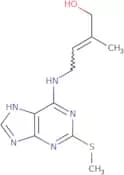
CAS:<p>2-Methylthio-cis-zeatin is a corynebacterium metabolite that is produced by the oxidative deamination of 2-methylthioadenosine. It can be used as an indicator for the presence of corynebacteria in various plant species and has been found to have physiological functions such as multiple-reaction monitoring, biochemical analysis, and chemical structures. The production of 2-methylthio-cis-zeatin has been detected in tissue culture and explants from plants. Chemical analyses have shown that this metabolite is an impurity or contaminant in some pharmaceuticals and food products. 2-Methylthio-cis-zeatin can be identified using chromatographic methods with a mass spectrometric detection (MS) method, which allows for the identification of its isomers. This metabolite can also be analyzed using chromatographic methods with MS detection, which allows for the identification of its isomers</p>Formula:C11H15N5OSPurity:Min. 95%Molecular weight:265.34 g/molToxic Shock Syndrome Toxin-1 (TSST-1) (58-78)
CAS:<p>Please enquire for more information about Toxic Shock Syndrome Toxin-1 (TSST-1) (58-78) including the price, delivery time and more detailed product information at the technical inquiry form on this page</p>Formula:C98H171N33O35Purity:Min. 95%Molecular weight:2,371.61 g/molFmoc-Cit-Wang resin (200-400 mesh)
<p>Please enquire for more information about Fmoc-Cit-Wang resin (200-400 mesh) including the price, delivery time and more detailed product information at the technical inquiry form on this page</p>Purity:Min. 95%Bz-Arg-Gly-Phe-Phe-Pro-4MbetaNA·HCl
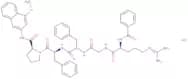
CAS:<p>Please enquire for more information about Bz-Arg-Gly-Phe-Phe-Pro-4MbetaNA·HCl including the price, delivery time and more detailed product information at the technical inquiry form on this page</p>Formula:C49H55N9O7·HClPurity:Min. 95%Molecular weight:918.48 g/molLactoferricin B (4-14) (bovine) trifluoroacetate salt
CAS:<p>Lactoferricin B (4-14) (bovine) trifluoroacetate salt is a peptide derivative, which is a fragment derived from bovine lactoferrin. It is obtained by enzymatic digestion of lactoferrin, a glycoprotein with a well-established role in the innate immune system. This specific peptide, Lactoferricin B (4-14), is known for its potent antimicrobial properties, attributed to its amphipathic structure that facilitates the disruption of microbial membranes. Additionally, it can modulate immune responses through interactions with immune cells, thereby influencing inflammatory processes.</p>Formula:C70H113N25O13SPurity:Min. 95%Molecular weight:1,544.87 g/molTRAP-6 (2-6) trifluoroacetate salt
CAS:<p>TRAP-6 (2-6) is a monoclonal antibody that binds to the enzyme collagenase, which is an important factor in tumor invasion and metastasis. The antibody binds to the active site of collagenase, thereby inhibiting its activity. TRAP-6 (2-6) has been shown to reduce the growth of cancer cells by inhibiting the production of β-amino acids and zymogens, which are required for tumor cell proliferation. It also inhibits serine proteases, such as thrombin receptor, which play an important role in tumor invasion and metastasis. TRAP-6 (2-6) also has anti-inflammatory properties and can be used for the treatment of basophilic leukemia.</p>Formula:C31H51N9O7Purity:Min. 95%Molecular weight:661.79 g/molBoc-Cys(SEt)-OH·DCHA
CAS:Controlled Product<p>Please enquire for more information about Boc-Cys(SEt)-OH·DCHA including the price, delivery time and more detailed product information at the technical inquiry form on this page</p>Formula:C10H19NO4S2·C12H23NPurity:Min. 95%Color and Shape:White/Off-White SolidMolecular weight:462.71HTLV-1 Tax (11-19) trifluoroacetate salt
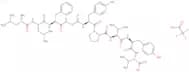
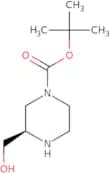
CAS:<p>Please enquire for more information about HTLV-1 Tax (11-19) trifluoroacetate salt including the price, delivery time and more detailed product information at the technical inquiry form on this page</p>Formula:C56H79N9O12Purity:Min. 95%Molecular weight:1,070.28 g/mol(R)-4-N-Boc-2-hydroxymethyl-piperazine
CAS:<p>Please enquire for more information about (R)-4-N-Boc-2-hydroxymethyl-piperazine including the price, delivery time and more detailed product information at the technical inquiry form on this page</p>Formula:C10H20N2O3Purity:Min. 95%Molecular weight:216.28 g/mol(Des-Bromo)-Neuropeptide B (1-23) (human) trifluoroacetate salt
CAS:<p>Please enquire for more information about (Des-Bromo)-Neuropeptide B (1-23) (human) trifluoroacetate salt including the price, delivery time and more detailed product information at the technical inquiry form on this page</p>Formula:C107H162N30O30Purity:Min. 95%Molecular weight:2,348.62 g/molAcetyl-(D-Val13)-α-MSH (11-13)
CAS:<p>Please enquire for more information about Acetyl-(D-Val13)-alpha-MSH (11-13) including the price, delivery time and more detailed product information at the technical inquiry form on this page</p>Formula:C18H33N5O4Purity:Min. 95%Molecular weight:383.49 g/molNeuronostatin-19 (mouse, rat) trifluoroacetate salt
<p>Please enquire for more information about Neuronostatin-19 (mouse, rat) trifluoroacetate salt including the price, delivery time and more detailed product information at the technical inquiry form on this page</p>Formula:C91H153N29O26Purity:Min. 95%Molecular weight:2,069.37 g/molZ-Ala-Ala-pNA
CAS:<p>Z-Ala-Ala-pNA is a bifunctional endopeptidase that has regulatory and subtilisin activity. It is used to regulate the production of nitrate in microorganisms such as bacteria and fungi, which can be an important factor in the production of food products. Z-Ala-Ala-pNA is a recombinant enzyme that was developed from a strain of Bacillus subtilis. This enzyme has binding sites for both serine proteinases and sodium nitrate. It degrades proteins by cleaving them at their serine residues, releasing amino acids and peptides from the N-terminus of the protein. The regulatory function of this enzyme is due to its ability to bind to nitrate ions, thereby regulating their concentration in cells.</p>Formula:C20H22N4O6Purity:Min. 95%Molecular weight:414.41 g/mol(Deamino-Cys1,Leu4,Lys8)-Vasopressin trifluoroacetate salt
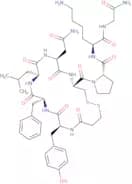
CAS:<p>Vasopressin is a hormone that belongs to the family of peptide hormones. Vasopressin has been shown to be localized in many tissues, including the brain, where it acts as a neurotransmitter and neuromodulator. Vasopressin is released by the paraventricular nucleus of the hypothalamus and stored in the posterior pituitary gland, from which it is released into the circulation when needed. Vasopressin binds to V1 receptors and causes an increase in cytosolic calcium levels through activation of voltage-gated calcium channels. It also stimulates cell growth and proliferation through activation of tyrosine kinase receptors on cells.</p>Formula:C47H67N11O11S2Purity:Min. 95%Molecular weight:1,026.23 g/molPolyphemusin II-Derived Peptide
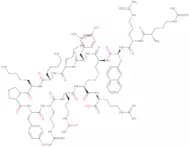
CAS:<p>Polyphemusin II-derived peptide H-Arg-Arg-2-Nal-Cys-Tyr-Arg-Lys-D-Lys-Pro-Tyr-Arg-Cit (PIIH) is a cyclic polypeptide with a disulfide bond. PIIH binds to the alpha4beta1 integrin receptor, which is involved in the adhesion of leukocytes to endothelial cells and the migration of monocytes and lymphocytes. PIIH has been shown to be a potent inhibitor of chemokine binding to cxcr4, an important regulator of inflammatory response in mouse tumor models. PIIH also inhibits hiv infection as it inhibits the release of virus from infected cells. This pharmacological effect is mediated by its ability to bind HIV gp120 and block gp120 binding to CD4 receptors on target cells.</p>Formula:C90H141N33O18S2Purity:Min. 95%Molecular weight:2,037.43 g/mol4-Amino-2-methylbenzoic acid
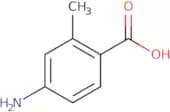
CAS:<p>4-Amino-2-methylbenzoic acid is a low molecular weight compound that has been shown to inhibit the neuraminidase enzyme. It interacts with the imine group of the enzyme and forms a covalent bond, which prevents the release of sialic acid from the terminal sugar residue of glycoproteins. The inhibition of this enzyme leads to decreased bacterial growth. 4-Amino-2-methylbenzoic acid has been shown to be active against Gram positive bacteria such as Staphylococcus aureus and Streptococcus pneumoniae, but not against Gram negative bacteria such as Escherichia coli or Pseudomonas aeruginosa. This compound is also able to inhibit the synthesis of c-reactive protein (CRP) in human erythrocytes.</p>Formula:C8H9NO2Purity:Min. 95%Color and Shape:PowderMolecular weight:151.16 g/molHIV Protease Substrate IV
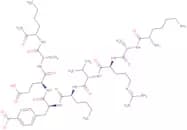
CAS:<p>Please enquire for more information about HIV Protease Substrate IV including the price, delivery time and more detailed product information at the technical inquiry form on this page</p>Formula:C49H83N15O13Purity:Min. 95%Molecular weight:1,090.28 g/molBoc-Ala-Ala-Pro-OH
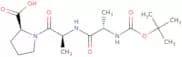
CAS:<p>Boc-Ala-Ala-Pro-OH is a tetrapeptide that is expressed in mammalian cells. It has been shown to have transcription-polymerase chain activity and can be used as a molecular modeling tool for the study of mutant enzymes. Boc-Ala-Ala-Pro-OH is an analog of the natural tetrapeptide Arg-Gly, which has been shown to be activated by proteolytic cleavage and complementarity with other tetrapeptides.</p>Formula:C16H27N3O6Purity:Min. 95%Molecular weight:357.4 g/molL-Lysine methyl ester 2HCl
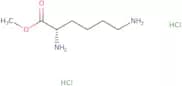
CAS:<p>L-Lysine methyl ester 2HCl is a lysine derivative that has been synthesized by reacting L-lysine with methanol and hydrochloric acid. This compound's cytotoxicity has been demonstrated in an inhibition study using calf thymus dna. L-Lysine methyl ester 2HCl contains amide, acid, and ester linkages, as well as hydrogen bonds that are typical of natural compounds. It is also biologically active and has a molecular weight of 246.3 g/mol. The chemical structure of this compound consists of a central l-lysine molecule with two methyl groups on the nitrogen atom. The compound also contains a carboxyl group on the end of the chain and an ester group on the second carbon atom from the end of the chain. L-Lysine methyl ester 2HCl can be found in soybeans and bovine fetal tissue. It exhibits morphological properties similar to other</p>Formula:C7H16N2O2·2HClPurity:Min. 95%Color and Shape:PowderMolecular weight:233.14 g/molZ-Ala-Ala-Lys-4MbetaNA formiate salt
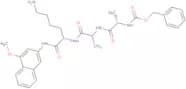
CAS:<p>Please enquire for more information about Z-Ala-Ala-Lys-4MbetaNA formiate salt including the price, delivery time and more detailed product information at the technical inquiry form on this page</p>Formula:C31H39N5O6·CH2O2Purity:Min. 95%Molecular weight:623.7 g/molCKS-17 (7-12)
CAS:<p>Please enquire for more information about CKS-17 (7-12) including the price, delivery time and more detailed product information at the technical inquiry form on this page</p>Formula:C37H60N6O9Purity:Min. 95%Molecular weight:732.91 g/molH-Trp-Met-OH
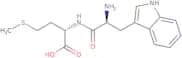
CAS:<p>The molecular formula for H-Trp-Met-OH is CHNOS. It is a neutral, solubilized, imino amide residue of L-phenylalanine. The compound has not been identified but it is presumed to be an azide or sulfate ester of tyrosine. This compound was isolated from the membranes of bacteria and peptidases break it down into other amino acids with the exception of lysine. The yield from this reaction is unknown.</p>Formula:C16H21N3O3SPurity:Min. 95%Molecular weight:335.42 g/molZ-Pro-Met-OH
CAS:<p>Z-Pro-Met-OH is a potent inhibitor of protein kinases. It has been shown to be resistant to peptidyl and sulphonium activation and also inhibits trypsin and other proteases. Z-Pro-Met-OH is a chloromethane derivative that is both an inhibitor of protein kinases and a substrate for the enzyme, which generates a constant concentration of product in the presence of enzyme. Z-Pro-Met-OH is more sensitive than other inhibitors tested to date, with the exception of staurosporine. It has sequence similarity to mammalian proteins, but lacks homology with any known protein.</p>Formula:C18H24N2O5SPurity:Min. 95%Molecular weight:380.46 g/mol(Gln22)-Amyloid b-Protein (1-40) trifluoroacetate salt
CAS:Controlled Product<p>Please enquire for more information about (Gln22)-Amyloid b-Protein (1-40) trifluoroacetate salt including the price, delivery time and more detailed product information at the technical inquiry form on this page</p>Formula:C194H296N54O57SPurity:Min. 95%Molecular weight:4,328.82 g/molHeat Shock Protein (hsp) Fragment trifluoroacetate salt
CAS:<p>Please enquire for more information about Heat Shock Protein (hsp) Fragment trifluoroacetate salt including the price, delivery time and more detailed product information at the technical inquiry form on this page</p>Formula:C63H113N22O25PSPurity:Min. 95%Molecular weight:1,641.74 g/molIL-6 (88-121) (human)
CAS:<p>Please enquire for more information about IL-6 (88-121) (human) including the price, delivery time and more detailed product information at the technical inquiry form on this page</p>Formula:C179H281N45O58SPurity:Min. 95%Molecular weight:4,023.48 g/molSplenopentin acetate salt
CAS:<p>Splenopentin acetate salt H-Arg-Lys-Glu-Val-Tyr-OH acetate salt is an experimental drug that belongs to the group of peptide hormones. It has been shown to have beneficial effects on bowel disease in animal models and also has anti-inflammatory properties. Splenopentin acetate salt H-Arg-Lys-Glu-Val-Tyr-OH acetate salt activates the T cell receptor and stimulates cytokine production, thereby reducing inflammation and relieving symptoms of autoimmune diseases. Splenopentin acetate salt H-Arg-Lys-Glu-Val-Tyr-OH acetate salt also stimulates colonies of cells called macrophages, which then produce inflammatory mediators such as IL1, IL2, IL4, and IL6. This agent is biocompatible with human cells in vitro (in a test tube).</p>Formula:C31H51N9O9Purity:Min. 95%Molecular weight:693.79 g/molCD36 (93-110)-Cys
CAS:<p>Please enquire for more information about CD36 (93-110)-Cys including the price, delivery time and more detailed product information at the technical inquiry form on this page</p>Formula:C96H151N29O33SPurity:Min. 95%Molecular weight:2,271.47 g/molFA-Phe-Ala-OH
CAS:<p>F-Phe-Ala-OH is a peptidyl amide that is ionizable at physiological pH. It has a constant and kinetic residue, as well as a hydrophobic, uncharged, and carboxypeptidase activity. F-Phe-Ala-OH catalyzes transpeptidation reactions between the amino acid residues of proteins. This reaction involves the elimination of one water molecule from the peptide bond to form an amine and an imine, which are then hydrolyzed to form the new peptide bond. The optimum pH for this catalysis is acidic.</p>Formula:C19H20N2O5Purity:Min. 95%Molecular weight:356.37 g/molAc-Asp-Glu-Val-Asp-chloromethylketone trifluoroacetate salt
CAS:<p>Ac-Asp-Glu-Val-Asp-chloromethylketone trifluoroacetate salt is a basic protein. It inhibits the neuronal death induced by dopamine and its derivatives, which is caused by overactivation of the mitochondrial membrane potential and release of cytochrome c from mitochondria to cytosol. This compound also inhibits the activation of toll-like receptor 4 (TLR4) and nuclear factor κB (NF-κB) signaling pathways in neuronal cells. Ac-Asp-Glu-Val-Asp-chloromethylketone trifluoroacetate salt has been shown to have antiinflammatory effects when applied topically on skin wounds. The molecule has been used as a model system for studying the molecular mechanism of epidermal growth factor (EGF) activation in hybridoma cell lines and primary cells.</p>Formula:C21H31ClN4O11Purity:Min. 95%Molecular weight:550.94 g/molFmoc-D-Arg(Pbf)-Wang resin (200-400 mesh)
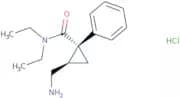
<p>Please enquire for more information about Fmoc-D-Arg(Pbf)-Wang resin (200-400 mesh) including the price, delivery time and more detailed product information at the technical inquiry form on this page</p>Purity:Min. 95%(E)-2-(Aminomethyl)-N,N-diethyl-1-phenylcyclopropanecarboxamideHydrochloride
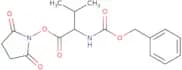
CAS:Controlled Product<p>Levomilnacipran is a serotonin-norepinephrine reuptake inhibitor (SNRI) that is used for the treatment of major depressive disorder and fibromyalgia. It has been shown to have antidepressant effects in patients with major depressive disorder and fibromyalgia. Levomilnacipran inhibits the reuptake of serotonin and norepinephrine by blocking the transporter proteins in these neurotransmitter pathways, increasing their availability to interact with receptors in the brain. Levomilnacipran also has been found to inhibit aminotransferase activity, which may be responsible for its hepatotoxicity.</p>Formula:C15H23ClN2OPurity:Min. 95%Molecular weight:282.81 g/molZ-L-Valine N-hydroxysuccinimide ester
CAS:<p>Z-L-Valine N-hydroxysuccinimide ester is a synthetic δ opioid ligand that has been shown to have potent inhibitory activity against casein. The compound has also been shown to have high affinity for opioid receptors and δ opioid receptors, which may be due to its ability to form supramolecular complexes with these proteins. Z-L-Valine N-hydroxysuccinimide ester binds to the receptor binding site of the protein, preventing it from interacting with other molecules. It is not selective for one receptor over another and can bind to both the δ and μ opioid receptors. This synthetic substance may be used as a lead compound in drug development.</p>Formula:C17H20N2O6Purity:Min. 95%Molecular weight:348.35 g/molAtriopeptin I (rat)
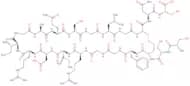
CAS:<p>Atriopeptin I is a peptide hormone that is produced in the rat mesenteric gland. It has been shown to have β-amino acid, diagnostic agents, ph optimum, and receptor activity. Atriopeptin I has been found to have atrial natriuretic effects and may be useful for the treatment of infectious diseases. Atriopeptin I has also been shown to bind with a monoclonal antibody and enzyme inhibitors as well as having a disulfide bond. The biological function of this peptide hormone is not yet known, but it is thought to be involved in fatty acid metabolism.</p>Formula:C83H135N29O30S2Purity:Min. 95%Molecular weight:2,083.27 g/molFmoc-Cys(tBu)-Wang resin (200-400 mesh)
<p>Please enquire for more information about Fmoc-Cys(tBu)-Wang resin (200-400 mesh) including the price, delivery time and more detailed product information at the technical inquiry form on this page</p>Purity:Min. 95%Fmoc-Arg(Pmc)-Wang resin (100-200 mesh)
<p>Please enquire for more information about Fmoc-Arg(Pmc)-Wang resin (100-200 mesh) including the price, delivery time and more detailed product information at the technical inquiry form on this page</p>Purity:Min. 95%