Amino Acids (AA)
Amino acids (AAs) are the fundamental building blocks of proteins, playing a crucial role in various biological processes. These organic compounds are essential for protein synthesis, metabolic pathways, and cell signaling. In this category, you will find a comprehensive range of amino acids, including essential, non-essential, and modified forms, which are vital for research in biochemistry, molecular biology, and nutritional sciences. At CymitQuimica, we provide high-quality amino acids to support your research and development needs, ensuring accuracy and reliability in your experimental outcomes.
Subcategories of "Amino Acids (AA)"
- Amino Acid Derivatives(3,955 products)
- Amino Acid and Amino Acid Related Compounds(3,465 products)
- Amino Acids with Oxygen or Sulphur(168 products)
- Boc- Amino Acids(351 products)
- Fmoc Amino Acids(1,710 products)
Found 38248 products of "Amino Acids (AA)"
Sort by
Purity (%)
0
100
|
0
|
50
|
90
|
95
|
100
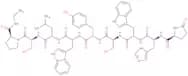
(Des-Gly10,D-Trp6,Pro-NHEt 9)-LHRH (sea bream)
CAS:<p>Please enquire for more information about (Des-Gly10,D-Trp6,Pro-NHEt 9)-LHRH (sea bream) including the price, delivery time and more detailed product information at the technical inquiry form on this page</p>Formula:C61H76N14O13Purity:Min. 95%Molecular weight:1,213.34 g/mol(D-Arg0, Hyp 3,Igl5,D-Igl7, Oic 8)-Bradykinin trifluoroacetate salt
CAS:<p>Please enquire for more information about (D-Arg0, Hyp 3,Igl5,D-Igl7, Oic 8)-Bradykinin trifluoroacetate salt including the price, delivery time and more detailed product information at the technical inquiry form on this page</p>Formula:C64H95N19O13Purity:Min. 95%Molecular weight:1,338.56 g/molp-Methoxybenzylmercaptan
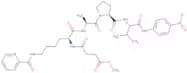
CAS:<p>P-Methoxybenzylmercaptan is an inhibitor of protein synthesis. It binds to the active site of the enzyme ribonuclease A, which is involved in the processing of messenger RNA. P-Methoxybenzylmercaptan also inhibits other enzymes such as alkaline phosphatase and esterases. It has been shown to be effective against HIV infection. This compound can be used for chemical ligation reactions and as a cell culture medium additive, as it protects cells from oxidation and provides a more acidic environment. P-Methoxybenzylmercaptan has been shown to bind to amines and is being investigated for its use in drug development.</p>Formula:C8H10OSPurity:Min. 95%Color and Shape:Clear LiquidMolecular weight:154.23 g/molMeOSuc-Lys(2-picolinoyl)-Ala-Pro-Val-pNA
CAS:<p>Please enquire for more information about MeOSuc-Lys(2-picolinoyl)-Ala-Pro-Val-pNA including the price, delivery time and more detailed product information at the technical inquiry form on this page</p>Formula:C36H48N8O10Purity:Min. 95%Molecular weight:752.81 g/molZ-Ala-His-OH
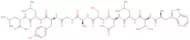
CAS:<p>Z-Ala-His-OH is a peptide consisting of three amino acids. It has been shown to have an optimal activity at pH 4.5, and can be recycled. Z-Ala-His-OH is synthesized by introducing the amino acid building blocks into a reaction system, where they are systematically introduced at different positions in order to produce the desired peptide sequence. Z-Ala-His-OH is an ionizable molecule that shows high affinity for the active site of its target enzyme. This property makes it useful in solvents with low dielectric constants, such as water or organic solvents with acidic properties. The kinetic behavior of this molecule has been studied systematically by measuring its rate of reaction in different solvents with different pH values and concentrations of reactants.END></p>Formula:C17H20N4O5Purity:Min. 95%Molecular weight:360.36 g/molGalanin (2-11) amide trifluoroacetate salt
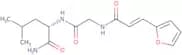
CAS:<p>Galanin (2-11) amide trifluoroacetate salt H-Trp-Thr-Leu-Asn-Ser-Ala-Gly-Tyr-Leu-Leu is a galanin analog and a ligand for the galanin receptor 1. It has affinity for the receptors in the brain, which are involved in cognition, and is used to study Alzheimer's disease. Galanin (2-11) amide trifluoroacetate salt H-Trp-Thr-Leu-Asn-Ser -Ala -Gly -Tyr -Leu -Leu is a member of the family of neuropeptides and neuromodulators that regulate nerve injury and alzheimer's disease.</p>Formula:C54H81N13O14Purity:Min. 95%Molecular weight:1,136.3 g/molFA-Gly-Leu-NH2
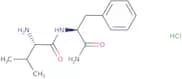
CAS:<p>FA-Gly-Leu-NH2 is an amide that inhibits the activity of metalloproteases by binding to the zinc ion in the active site. It was shown to inhibit protease activity and protein synthesis in armillaria. This compound also showed irreversible inhibition of thermolysin, a serine protease, and protein synthesis in yeast. The biological properties of FA-Gly-Leu-NH2 were studied using a synthetic substrate for thermolysin, which led to the conclusion that this inhibitor has potential as a therapeutic agent for inflammatory diseases.</p>Formula:C15H21N3O4Purity:Min. 95%Molecular weight:307.35 g/molH-Val-Phe-NH2·HCl
CAS:<p>Please enquire for more information about H-Val-Phe-NH2·HCl including the price, delivery time and more detailed product information at the technical inquiry form on this page</p>Formula:C14H21N3O2·HClPurity:Min. 95%Molecular weight:299.8 g/molD-Tryptophan methyl ester hydrochloride
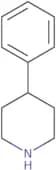
CAS:<p>D-Tryptophan is an amino acid that is naturally produced by the human body and is also found in certain foods such as bananas, oats, and turkey. D-Tryptophan methyl ester hydrochloride is a synthetic form of this amino acid. It has been shown to inhibit cell growth and may have other physiological effects such as regulating mood or sleep patterns. This drug binds to the cavity of enzymes involved in the synthesis of proteins and nucleic acids, which prevents them from carrying out their normal functions. The binding constants for D-tryptophan methyl ester hydrochloride with these enzymes are stronger than those for natural d-tryptophan. The reaction solution was studied using UV absorption spectroscopy and showed that glycol ethers were more effective solvents than piperonal, which allowed for asymmetric synthesis. Molecular docking analysis has shown that D-tryptophan methyl ester hydrochloride binds to the enzyme cavity more tightly than</p>Formula:C12H14N2O2•HClPurity:Min. 95%Color and Shape:PowderMolecular weight:254.71 g/mol4-Phenyl-piperidine
CAS:<p>4-Phenyl-piperidine is a nitro compound that has been shown to be toxic for the kidneys and nervous system. 4-Phenyl-piperidine has been shown to inhibit dopamine uptake in the striatum and locomotor activity in rats. It also inhibits the hydrolysis of hydrochloric acid, which produces hydrogen ion (H+) ions, resulting in an acidic environment. The chemical structures of 4-phenyl-piperidine are similar to those of tricyclic antidepressants drugs, such as amitriptyline and imipramine, with a phenyl ring attached to an amine group. This drug is used as a pharmaceutical preparation for treating depression by inhibiting the reuptake of serotonin and norepinephrine, which are neurotransmitters that affect mood.</p>Formula:C11H15NPurity:Min. 95%Molecular weight:161.24 g/molN-Tritylglycine
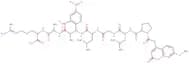
CAS:<p>N-Tritylglycine is an acidic amino acid that can be protonated in a highly acidic environment. It has been shown to inhibit the growth of tumor tissue by inducing apoptosis and inhibiting protein synthesis. N-Tritylglycine is used as a reagent for analytical chemistry, where it is used to detect amines such as histamine and serotonin. N-Tritylglycine also has been shown to be potent inhibitor of kinesin.</p>Formula:C21H19NO2Purity:Min. 95%Molecular weight:317.38 g/molMca-Pro-Leu-Gly-Leu-Dap (Dnp)-Ala-Arg-NH2 trifluoroacetate salt
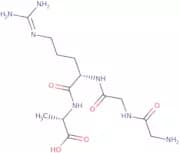
CAS:<p>Please enquire for more information about Mca-Pro-Leu-Gly-Leu-Dap (Dnp)-Ala-Arg-NH2 trifluoroacetate salt including the price, delivery time and more detailed product information at the technical inquiry form on this page</p>Formula:C49H68N14O15Purity:Min. 95%Molecular weight:1,093.15 g/molH-Gly-Gly-Arg-Ala-OH acetate salt
CAS:<p>Please enquire for more information about H-Gly-Gly-Arg-Ala-OH acetate salt including the price, delivery time and more detailed product information at the technical inquiry form on this page</p>Formula:C13H25N7O5Purity:Min. 95%Molecular weight:359.38 g/molSuc-Ala-Glu-Pro-Phe-AMC
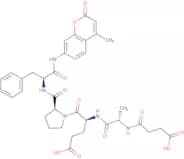
CAS:<p>Please enquire for more information about Suc-Ala-Glu-Pro-Phe-AMC including the price, delivery time and more detailed product information at the technical inquiry form on this page</p>Formula:C36H41N5O11Purity:Min. 95%Molecular weight:719.74 g/molTAT 2-4 trifluoroacetate salt
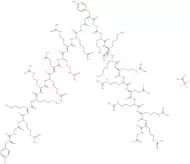
CAS:<p>Trifluoroacetate salt</p>Formula:C132H240N66O29Purity:Min. 95%Molecular weight:3,215.75 g/molH-Ser-Asn-OH
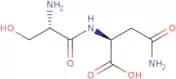
CAS:<p>H-Ser-Asn-OH is a fatty acid that belongs to the amide group. It has an inhibitory effect on bacterial membranes, which can be seen in the x-ray crystal structures of H-Ser-Asn-OH cocrystallized with lipids from the bacterial membrane. The inhibition of bacterial membranes is due to its ability to bind strongly to the phospholipid head group and reduce the fluidity of the membrane. H-Ser-Asn-OH has also been shown to have a diagnostic effect on tissues and monolayers in vitro.</p>Formula:C7H13N3O5Purity:Min. 95%Molecular weight:219.2 g/molZ-Phe-Ala-diazomethylketone
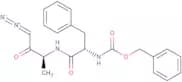
CAS:<p>Z-Phe-Ala-diazomethylketone is a molecule that belongs to the class of hydrolase inhibitors. It has been shown to have inhibitory properties against trichomonas vaginalis and proteolytic activity against liver cells. Z-Phe-Ala-diazomethylketone also has a kinetic energy of 11.2 kcal/mol, which is higher than most protease inhibitors. This molecule has been shown to be effective as a cell vaccine in wild-type mice and as a protease inhibitor in brain cells. The optimal ph for this molecule is 7.5, which corresponds to its pKa value of 5.1.</p>Formula:C21H22N4O4Purity:Min. 95%Molecular weight:394.42 g/molPalmitoyl-Cys((RS)-2,3-di(palmitoyloxy)-propyl)-Ser-Lys-Lys-Lys-Lys-OH trifluoroacetate salt
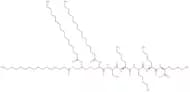
CAS:<p>Agonist of toll-like receptors TLR1/2</p>Formula:C81H156N10O13SPurity:Min. 95%Molecular weight:1,510.23 g/molH-Tyr-Gly-Arg-Phe-Ser-OH·HCl
CAS:<p>Please enquire for more information about H-Tyr-Gly-Arg-Phe-Ser-OH·HCl including the price, delivery time and more detailed product information at the technical inquiry form on this page</p>Formula:C29H40N8O8·HClPurity:Min. 95%Molecular weight:665.14 g/molL-Glutamic acid 5-benzyl ester
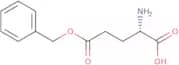
CAS:<p>L-Glutamic acid 5-benzyl ester is an amino acid that has been synthesized to have a lysine residue. It is an ester hydrochloride and has been shown to have broad-spectrum antimicrobial properties. L-glutamic acid 5-benzyl ester's antimicrobial activity is thought to be due to its chemical structure which allows it to act as an antimicrobial peptide, binding to receptors on the surface of bacterial cells and inhibiting their growth. L-glutamic acid 5-benzyl ester also inhibits osteogenic genes in cervical cancer cells, but not in normal cells.</p>Formula:C12H15NO4Purity:Min. 95%Color and Shape:White Off-White PowderMolecular weight:237.25 g/molNeuropeptide VF (124-131) (human) trifluoroacetate salt
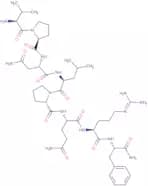
CAS:<p>Neuropeptide VF (124-131) (human) trifluoroacetate salt H-Val-Pro-Asn-Leu-Pro-Gln-Arg-Phe-NH2 trifluoroacetate salt is a peptide that is synthesized in the hypothalamus and is involved in the regulation of gonadotropin secretion. It has been shown to inhibit cell growth in vitro and to have an inhibitory effect on cancer cells. This peptide also binds to receptors α, adenohypophyseal, cellular, testicular, vasoactive intestinal peptide, messenger RNA, estradiol benzoate, cancer, and progesterone receptor.</p>Formula:C45H72N14O10Purity:Min. 95%Molecular weight:969.14 g/molZ-Phe-Phe-Phe-OH
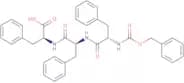
CAS:<p>Z-Phe-Phe-Phe-OH is an organic solvent that is homogeneous, has low solubility and a high boiling point. The epimerization of this compound can be achieved through the use of experimental methods. Z-Phe-Phe-Phe-OH is used in medicinal solvents as well as fields such as pharmacology and chemistry. This compound also has efficient methods for producing it and yields are detectable. There are also no residues from this compound.</p>Formula:C35H35N3O6Purity:Min. 95%Molecular weight:593.67 g/molH-Thr-Gln-OH
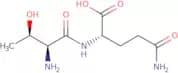
CAS:<p>Clostridium is a genus of Gram-positive bacteria that includes many important human pathogens. Clostridium perfringens is the most common cause of food poisoning, and can be fatal if not treated. It causes necrotizing enteritis in infants, who have less resistance to the toxins produced by this bacterium. The pathogenesis of C. perfringens has been shown to involve proteolytic activity, which breaks down proteins into smaller parts, and autocatalytic activity, which releases enzymes from within the cell to digest its own peptidoglycan layer. Proteolytic activity has also been shown to be involved in the development of cancer and other diseases such as atherosclerosis and Alzheimer's disease. There are numerous interventions available for preventing or treating clostridium infections: chlorate, streptomycin, penicillin, erythromycin, tetracycline, metronidazole, fluoroquinolones such as</p>Formula:C9H17N3O5Purity:Min. 95%Molecular weight:247.25 g/molZ-Gly-Gly-Gly-OSu
CAS:<p>Please enquire for more information about Z-Gly-Gly-Gly-OSu including the price, delivery time and more detailed product information at the technical inquiry form on this page</p>Formula:C18H20N4O8Purity:Min. 95%Molecular weight:420.37 g/molBradykinin (2-7) acetate salt
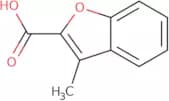
CAS:<p>Please enquire for more information about Bradykinin (2-7) acetate salt including the price, delivery time and more detailed product information at the technical inquiry form on this page</p>Formula:C29H40N6O8Purity:Min. 95%Molecular weight:600.66 g/mol3-Methylbenzofuran-2-carboxylic acid
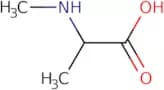
CAS:<p>3-Methylbenzofuran-2-carboxylic acid is a dianion that binds to the cell membrane and inhibits bacterial growth. This compound has been shown to be active against bacteria at low concentrations. 3-Methylbenzofuran-2-carboxylic acid has been used as an antibacterial agent for the treatment of gram-negative bacteria such as Escherichia coli and Proteus mirabilis. It also inhibits the growth of gram-positive bacteria including Staphylococcus aureus, Streptococcus pneumoniae, and Enterococcus faecalis. The reaction temperature required for the synthesis of this compound is high, but it can be prepared at lower temperatures by using anhydrous acetonitrile in place of hydrochloric acid.</p>Formula:C10H8O3Purity:Min. 95%Color and Shape:White PowderMolecular weight:176.17 g/molN-Methyl-DL-alanine
CAS:<p>N-Methyl-DL-alanine is an amino acid that is also known as d-alanine. It is a precursor for the synthesis of other amino acids such as histidine, methionine, and arginine. N-Methyl-DL-alanine is found in the mitochondria of cells and plays a role in energy metabolism. It has been shown to be taken up by cells through an active transport process and can act as a competitive inhibitor of mitochondrial uptake. At physiological concentrations, N-methyl DL-alanine inhibits fatty acid oxidation by decreasing the activity of carnitine palmitoyltransferase I (CPT I) and enhancing lipid accumulation in the liver. N-Methyl DL-alanine has been shown to inhibit cycloleucin A production by acting as an inhibitor of fatty acid synthase (FAS).</p>Formula:C4H9NO2Purity:Min. 95%Color and Shape:White PowderMolecular weight:103.12 g/molBoc-Asp(OBzl)-chloromethylketone
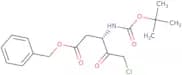
CAS:<p>Boc-Asp(OBzl)-chloromethylketone is a synthetic molecule that is immunoreactive with gp120, the virus protein. It has been shown to inhibit the proliferation of human neuroblastoma cells and induce cell death. This compound also has an effect on cytokine production in vitro. This drug is currently being studied as a potential treatment for HIV infection. Boc-Asp(OBzl)-chloromethylketone binds to the receptor type and viral type, which are essential for the virus life cycle and induces antibody production in vivo.</p>Formula:C17H22ClNO5Purity:Min. 95%Molecular weight:355.81 g/molZ-Ala-Ala-NH2
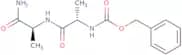
CAS:<p>Z-Ala-Ala-NH2 is a peptide that has been modified. Z-Ala-Ala-NH2 is a hydrolase and has the ability to hydrolyze peptides. It can be used in organic solvents as an unmodified hydrolase, or it can be modified with a nucleophile (such as an amine) to produce an active hydrolase. The unmodified form of Z-Ala-Ala-NH2 has been shown to have high yields and specificity for peptidyl substrates. This modification is also useful for the synthesis of amide bonds in peptides, which are more stable than ester bonds.</p>Formula:C14H19N3O4Purity:Min. 95%Molecular weight:293.32 g/molBoc-Ser(Ile-Fmoc)-OH
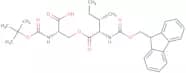
CAS:<p>Boc-Ser(Ile-Fmoc)-OH is a peptide synthesis reagent that can be used for the efficient and convenient preparation of peptides. It is a synthetic, non-natural amino acid that has been synthesized by the chemists at Pfizer. Boc-Ser(Ile-Fmoc)-OH is an epimer of natural L-serine and has been shown to be more soluble than L-serine making it easier to work with. This reagent can also be used in the synthesis of biomolecules such as proteins and nucleic acids. The chemistry behind this compound has been published in the journal Biomolecular Chemistry.</p>Formula:C29H36N2O8Purity:Min. 95%Molecular weight:540.6 g/molTRAF6 Control Peptide trifluoroacetate salt
CAS:<p>Please enquire for more information about TRAF6 Control Peptide trifluoroacetate salt including the price, delivery time and more detailed product information at the technical inquiry form on this page</p>Formula:C139H232N34O42Purity:Min. 95%Molecular weight:3,051.53 g/molH-Leu-Ser-Phe-OH
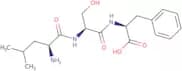
CAS:<p>H-Leu-Ser-Phe-OH is a synthetic molecule that is a serine protease. It has been shown to have phosphatase activity, which can be used in the processing of milk proteins. This enzyme can also be used in the production of acid casein and colostrum. The enzyme has been shown to convert aspartic acid into asparagine, which is then converted into aminosugars such as melamine and phenylalanine. H-Leu-Ser-Phe-OH can be used for the treatment of fibrinogen deficiency, with its ability to cleave fibrinogen at the γ site. The enzyme has also been shown to have an effect on blood coagulation by cleaving fibrinogens at the γ site, thus preventing clot formation.</p>Formula:C18H27N3O5Purity:Min. 95%Molecular weight:365.42 g/molZ-Ile-Met-OH
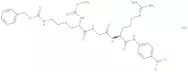
CAS:<p>Z-Ile-Met-OH is a synthetic protease that has been used in the immobilization of κ-carrageenan. The endopeptidase activity of this protease was proved to be higher than that of trypsin and chymotrypsin. It can also be used as an immobilized enzyme for the hydrolysis of polyacrylamide.</p>Formula:C19H28N2O5SPurity:Min. 95%Molecular weight:396.5 g/molMethoxycarbonyl-Lys(Z)-Gly-Arg-pNA hydrochloride salt
CAS:<p>Please enquire for more information about Methoxycarbonyl-Lys(Z)-Gly-Arg-pNA hydrochloride salt including the price, delivery time and more detailed product information at the technical inquiry form on this page</p>Formula:C30H41N9O9Purity:Min. 95%Molecular weight:671.7 g/molH-β-Ala-Phe-OH
CAS:<p>H-beta-Ala-Phe-OH is a synthetic dipeptide that is positioned at the C terminus of the l-phenylalanine residue. It has two residues, H and beta-Ala, which are connected by a peptide bond between the carboxyl group of beta-Ala and the amino group of phenylalanine. The crystallographic structure of this molecule shows that it adopts a helical conformation with hydrogen bonds between adjacent helices. This water-soluble molecule has been shown to have antihypertensive properties in animal studies.</p>Formula:C12H16N2O3Purity:Min. 95%Color and Shape:PowderMolecular weight:236.27 g/mol((R)-4-Hydroxy-4-methyl-Orn (5-TAMRA)7)-Phalloidin
<p>Please enquire for more information about ((R)-4-Hydroxy-4-methyl-Orn (5-TAMRA)7)-Phalloidin including the price, delivery time and more detailed product information at the technical inquiry form on this page</p>Formula:C60H69N11O14SPurity:Min. 95%Molecular weight:1,200.32 g/molVIP Antagonist
CAS:<p>The VIP antagonist is a model system that has been shown to inhibit the activity of VIP in fetal bovine lung. The VIP antagonist has been shown to be effective against a variety of cancers, including colon cancer and prostate cancer. It also inhibits the production of cytosolic Ca2+ in human skin cells and has anti-inflammatory properties. The VIP antagonist's biological properties have been studied extensively, including its ability to induce neuronal death by inhibiting the release of neurotransmitters from neurons in culture.</p>Formula:C154H257N49O40SPurity:Min. 95%Molecular weight:3,467.06 g/molMca-Pro-Leu-Gly-Leu-Glu-Glu-Ala-Dap (Dnp)-NH2 trifluoroacetate salt
CAS:<p>Please enquire for more information about Mca-Pro-Leu-Gly-Leu-Glu-Glu-Ala-Dap (Dnp)-NH2 trifluoroacetate salt including the price, delivery time and more detailed product information at the technical inquiry form on this page</p>Formula:C53H70N12O20Purity:Min. 95%Molecular weight:1,195.19 g/molAutocamtide-2-Related Inhibitory Peptide
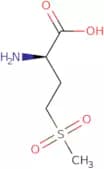
CAS:<p>Please enquire for more information about Autocamtide-2-Related Inhibitory Peptide including the price, delivery time and more detailed product information at the technical inquiry form on this page</p>Formula:C64H116N22O19Purity:Min. 95%Molecular weight:1,497.74 g/molH-D-Met(O2)-OH
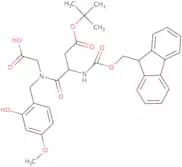
CAS:<p>H-D-Met(O2)-OH is an amino acid that is naturally occurring in the human body. It can be found in dietary sources such as milk, eggs, and meat. This amino acid is a building block for proteins and also has a number of metabolic pathways. H-D-Met(O2)-OH isomerizes to form D-Met(O2)-OH and L-Met(O2)-OH through enzymatic reactions. These isomers have different biological effects, with L-Met(O2)-OH being more potent than D-Met(O2)-OH. The enzyme that catalyzes this reaction is called synthetase. H-D-Met(O2)-OH can be used as a supplement to increase muscle mass or as a treatment for gluconeogenesis disorders such as diabetes mellitus type 2.</p>Formula:C5H11NO4SPurity:Min. 95%Molecular weight:181.21 g/molFmoc-D-Asp(OtBu)-(Hmb)Gly-OH
CAS:<p>Please enquire for more information about Fmoc-D-Asp(OtBu)-(Hmb)Gly-OH including the price, delivery time and more detailed product information at the technical inquiry form on this page</p>Formula:C33H36N2O9Purity:Min. 95%Molecular weight:604.65 g/molPseudin-2 trifluoroacetate salt
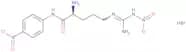
CAS:<p>Please enquire for more information about Pseudin-2 trifluoroacetate salt including the price, delivery time and more detailed product information at the technical inquiry form on this page</p>Formula:C122H202N36O32Purity:Min. 95%Molecular weight:2,685.13 g/molH-Arg(NO2)-pNA·HBr
CAS:<p>Please enquire for more information about H-Arg(NO2)-pNA·HBr including the price, delivery time and more detailed product information at the technical inquiry form on this page</p>Formula:C12H17N7O5·HBrPurity:Min. 95%Molecular weight:420.22 g/mol(D-Leu6)-LHRH (1-8) (free acid) trifluoroacetate salt
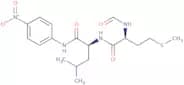
CAS:<p>Please enquire for more information about (D-Leu6)-LHRH (1-8) (free acid) trifluoroacetate salt including the price, delivery time and more detailed product information at the technical inquiry form on this page</p>Formula:C52H72N14O12Purity:Min. 95%Molecular weight:1,085.22 g/molFor-Met-Leu-pNA
CAS:<p>Please enquire for more information about For-Met-Leu-pNA including the price, delivery time and more detailed product information at the technical inquiry form on this page</p>Formula:C18H26N4O5SPurity:Min. 95%Molecular weight:410.49 g/molN-Me-Abz-Lys-Pro-Leu-Gly-Leu-Dap (Dnp)-Ala-Arg-NH2 trifluoroacetate salt
CAS:<p>Please enquire for more information about N-Me-Abz-Lys-Pro-Leu-Gly-Leu-Dap (Dnp)-Ala-Arg-NH2 trifluoroacetate salt including the price, delivery time and more detailed product information at the technical inquiry form on this page</p>Formula:C51H79N17O13Purity:Min. 95%Molecular weight:1,138.28 g/molPAR-2 (6-1) amide (human) trifluoroacetate salt
CAS:<p>Please enquire for more information about PAR-2 (6-1) amide (human) trifluoroacetate salt including the price, delivery time and more detailed product information at the technical inquiry form on this page</p>Formula:C28H54N8O7Purity:Min. 95%Molecular weight:614.78 g/molLeu-Leu-OMe·HCl
CAS:<p>Leu-Leu-OMe·HCl is a reagent that is used as a reaction component. It is soluble in water and has a pH of 2.0. Leu-Leu-OMe·HCl is also useful for the synthesis of building blocks and fine chemicals with versatile applications, such as bioactive compounds and pharmaceuticals. This chemical has been shown to react with other molecules to form a variety of complex compounds, making it useful for research purposes. This compound can be used as an intermediate in the synthesis of many different products, including pharmaceuticals, pesticides, and insecticides.</p>Formula:C13H26N2O3·HClPurity:Min. 95%Color and Shape:PowderMolecular weight:294.82 g/mol(D-Lys3)-GHRP-6
CAS:<p>D-Lys3-GHRP-6 is a synthetic peptide that has been shown to stimulate cellular proliferation and inhibit apoptosis in cell culture. D-Lys3-GHRP-6 binds to the ghrelin receptor, which is found on cells in the stomach and pancreas, as well as in the brain. This binding stimulates the release of cytosolic calcium and enhances protein synthesis. D-Lys3-GHRP-6 also stimulates growth factor production and increases body fat mass in animals.</p>Formula:C49H63N13O6Purity:Min. 95%Molecular weight:930.11 g/molFmoc-Cys(Trt)-Wang resin (200-400 mesh)
<p>Please enquire for more information about Fmoc-Cys(Trt)-Wang resin (200-400 mesh) including the price, delivery time and more detailed product information at the technical inquiry form on this page</p>Purity:Min. 95%