Amino Acids (AA)
Amino acids (AAs) are the fundamental building blocks of proteins, playing a crucial role in various biological processes. These organic compounds are essential for protein synthesis, metabolic pathways, and cell signaling. In this category, you will find a comprehensive range of amino acids, including essential, non-essential, and modified forms, which are vital for research in biochemistry, molecular biology, and nutritional sciences. At CymitQuimica, we provide high-quality amino acids to support your research and development needs, ensuring accuracy and reliability in your experimental outcomes.
Subcategories of "Amino Acids (AA)"
- Amino Acid Derivatives(3,971 products)
- Amino Acid and Amino Acid Related Compounds(3,477 products)
- Amino Acids with Oxygen or Sulphur(168 products)
- Boc- Amino Acids(351 products)
- Fmoc Amino Acids(1,710 products)
Found 38321 products of "Amino Acids (AA)"
Sort by
Purity (%)
0
100
|
0
|
50
|
90
|
95
|
100
Fmoc-Phe(4-NO2)-Wang resin
<p>Fmoc-Phe(4-NO2)-Wang resin is a versatile and useful building block, which can be used as a reagent, speciality chemical, and useful scaffold. This compound has been shown to be a useful building block in the synthesis of complex compounds with high quality. Fmoc-Phe(4-NO2)-Wang resin is also a useful intermediate in the synthesis of research chemicals.</p>Color and Shape:White PowderH-Glu-Lys-OH
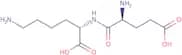
CAS:<p>H-Glu-Lys-OH is an amino acid that has been used for structural analysis and as a pharmacological tool. This compound has been shown to be an agonist at the apical membrane of intestinal cells, where it stimulates the release of growth factors. H-Glu-Lys-OH has also been shown to have potent antagonist activity against the glutamate receptor in caco-2 cells. The reaction products of this amino acid are stabilizing for dna polymerase chain reactions.</p>Formula:C11H21N3O5Purity:Min. 95 Area-%Color and Shape:PowderMolecular weight:275.3 g/molN-alpha-Fmoc-L-histidine
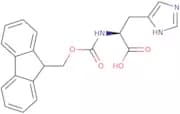
CAS:<p>N-alpha-Fmoc-L-histidine is a diagnostic agent that can be used to diagnose and treat prostate cancer. It has been shown to be an effective chemotherapeutic agent against prostate cancer, with a mechanism of action that is dependent on the microenvironment of the tumor tissue. N-alpha-Fmoc-L-histidine can be conjugated to other agents like doxorubicin, which will increase its therapeutic potential. The conjugates are taken up by prostate carcinoma cells via receptor mediated endocytosis and then released inside the cell, where they induce apoptosis. This process is independent of p53 status and does not require metabolic activation.</p>Formula:C21H19N3O4Purity:Min. 95%Molecular weight:377.39 g/mol2-Phenyl-malononitrile
CAS:<p>2-Phenyl-malononitrile is an amide with a malonic acid group. It is a nucleophilic agent that inhibits the activity of histone deacetylases (HDACs). 2-Phenyl-malononitrile binds to the zinc ion in the active site of HDACs, preventing them from catalyzing the removal of acetyl groups from lysine residues on histones and other proteins. The use of 2-phenyl-malononitrile as an inhibitor has been shown to be effective against lipid kinases and protein targets of oxidative stress. It also inhibits transfer reactions involving oxygen nucleophiles, such as hydrochloric acid or carbonyl compounds. In addition, 2-phenyl-malononitrile has been shown to have pharmaceutical preparations for inhibiting cancer cell growth by targeting proteins involved in transcriptional regulation.</p>Formula:C9H6N2Purity:Min. 95%Color and Shape:SolidMolecular weight:142.16 g/molN-Boc-L-homoserine
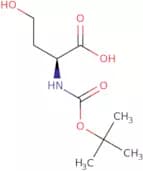
CAS:<p>N-Boc-L-homoserine is a lactam with an alkyl group, which makes it a useful synthetic intermediate for the synthesis of various products. It has been used in the synthesis of β-unsaturated ketones and conjugates. N-Boc-L-homoserine is also found naturally in nature and can be found as its two isomers, L-homoserine and D-homoserine. This compound has been shown to have histone deacetylase inhibition activity, which may be due to its ability to inhibit histone acetyl transferase. N-Boc-L-homoserine is synthesized from butyric acid, which is a tetrapeptide that contains four amino acids: valine, leucine, proline, and hydroxyproline.</p>Formula:C9H17NO5Purity:Min. 95%Color and Shape:PowderMolecular weight:219.24 g/mol(S)-Fmoc-2-amino-heptanedioic acid-7-tert-butyl ester
CAS:<p>Please enquire for more information about (S)-Fmoc-2-amino-heptanedioic acid-7-tert-butyl ester including the price, delivery time and more detailed product information at the technical inquiry form on this page</p>Formula:C26H31NO6Purity:Min. 95%Molecular weight:453.53 g/mol5-Methylnicotinaldehyde
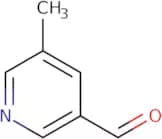
CAS:<p>5-Methylnicotinaldehyde is a chemical compound that belongs to the group of tetrahydropyridines. It is a reagent for producing triphosgene and dimethylformamide. 5-Methylnicotinaldehyde has been shown to inhibit muscarinic acetylcholine receptors, leading to an increase in acetylcholine release from nerve endings. This may be due to its ability to bind with the receptor affinity site at the base of the nicotinic acetylcholine receptor. 5-Methylnicotinaldehyde also has anti-inflammatory properties and can be used as a pesticide.</p>Formula:C7H7NOPurity:Min. 95%Color and Shape:PowderMolecular weight:121.14 g/mol2,4-Difluoro-3-methylbenzaldehyde
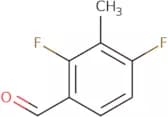
CAS:<p>2,4-Difluoro-3-methylbenzaldehyde is a chemical compound that is used as a building block for the synthesis of other chemicals. It can be used as a research chemical or intermediate due to its versatility. 2,4-Difluoro-3-methylbenzaldehyde has a CAS number of 847502-88-9 and is classified as a speciality chemical with high quality. This compound may be useful in the synthesis of polymers and pharmaceuticals due to its ability to form covalent bonds with other molecules.</p>Formula:C8H6F2OPurity:Min. 95%Color and Shape:Clear LiquidMolecular weight:156.13 g/mol3-Methoxy-2-methylbenzoic acid
CAS:<p>3-Methoxy-2-methylbenzoic acid is a diazotization agent that is used to produce bromoethane. It is also used as an initiator in the synthesis of dimethylformamide and tetrahydrofuran. 3-Methoxy-2-methylbenzoic acid can be recycled and is used to synthesize methylbenzene, chloroanisole, and grignard reaction products such as chlorobenzene and low yield. 3-Methoxy-2-methylbenzoic acid has been shown to have a high yield for these reactions in comparison to other diazotization agents.</p>Formula:C9H10O3Purity:Min. 95%Color and Shape:White PowderMolecular weight:166.17 g/molα-Chloro-ω-(2,2-Dichloro-1,1,2-Trifluoroethyl)-Poly(Difluoromethylene)
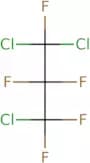
CAS:Controlled Product<p>Alpha-Chloro-Omega-(2,2-Dichloro-1,1,2-Trifluoroethyl)-Poly(Difluoromethylene) is a fluorinated polymer that has been shown to be effective in removing chlorine atoms from the atmosphere. The production of this polymer requires an irradiation process with a magnetic field. Alpha-Chloro-Omega-(2,2-Dichloro-1,1,2-Trifluoroethyl)-Poly(Difluoromethylene) is produced by the reaction of alpha chlorohydrin and trifluoroethylene. This polymer is insoluble in water and is not flammable or explosive. It can be used as a chemical precursor for other fluoropolymers or as an additive for polyurethane. Alpha Chloro Omega - ( 2 , 2 - Dichloro - 1 , 1 , 2 - Trifluoroethyl )</p>Formula:C3Cl3F5Purity:Min. 95%Molecular weight:237.38 g/mol5-Methyl-1,3,4-oxadiazole-2-thiol
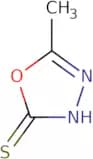
CAS:<p>5-Methyl-1,3,4-oxadiazole-2-thiol is an inhibitor of the reductoisomerase enzyme. It has been shown to inhibit the growth of Brassica species, leading to a herbicidal effect. This compound also has a biological activity that inhibits the biosynthesis of methionine and threonine in bacteria.</p>Formula:C3H4N2OSPurity:Min. 95 Area-%Color and Shape:PowderMolecular weight:116.14 g/molCyclo-Val-Pro-diketopiperazine
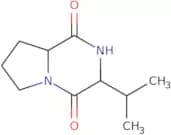
CAS:Cyclo-Val-Pro-diketopiperazine is a drug that inhibits the growth of colon cancer cells by inducing apoptosis. It has been shown to have an inhibitory effect on the proliferation of p. aeruginosa and other bacteria, which may be due to its ability to interfere with DNA replication. Cyclo-Val-Pro-diketopiperazine also induces tumor cell apoptosis in vitro. The mechanism for this is not yet known, but it may involve interference with mitochondrial membrane potential or inhibition of acetate extraction from colonic cells. In addition, this drug has been shown to induce apoptosis in colorectal adenocarcinoma cells by causing an increase in reactive oxygen species and a decrease in mitochondrial membrane potential. Cyclo-Val-Pro-diketopiperazine can cause an increase in the levels of acetate extractable from caco2 cells as well as a decrease in mitochondrial membrane potential, which are bothFormula:C10H16N2O2Purity:Min. 95%Color and Shape:PowderMolecular weight:196.25 g/molFmoc-L-Asn-OH
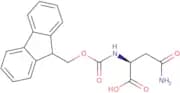
CAS:<p>Fmoc-L-Asn-OH is an organic compound that belongs to the group of amides. It reacts with a reactive site in the molecule and is able to form an amide bond. Fmoc-L-Asn-OH has been shown to be effective in the treatment of Alzheimer's disease by inhibiting the formation of beta-amyloid plaques. This compound has also been shown to have a role in cancer prevention, as it can inhibit tumor growth and reduce tumor size. Fmoc-L-Asn-OH can be used as a potential antiinflammatory agent because its mechanism studies have revealed that it inhibits prostaglandin synthesis.</p>Formula:C19H18N2O5Purity:Min. 95%Color and Shape:PowderMolecular weight:354.36 g/molL-Leucine, USP
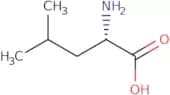
CAS:<p>Amino acid</p>Formula:C6H13NO2Purity:98.5 To 101.5%Color and Shape:White PowderMolecular weight:131.17 g/mol1-(4-Fluorophenyl)-N-Methylcyclohexylamine
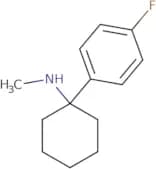
CAS:Controlled Product<p>1-(4-Fluorophenyl)-N-Methylcyclohexylamine is a planar molecule with an electron density distribution that is more concentrated in the region of the benzene ring. The 4-fluorostyrene substituent has a vinyl group. The electron density distribution is more concentrated in the region of the benzene ring, and is less concentrated in the region of the methyl group, which is substituted by a fluorine atom. This molecule can be used as an intermediate to synthesize other molecules with conformational, planar, or hybridized properties.</p>Formula:C13H18FNPurity:Min. 95%Molecular weight:207.29 g/molL-Tyrosinol hydrochloride
CAS:<p>L-Tyrosinol hydrochloride is a chiral molecule that is the hydrogenated form of L-tyrosine. It is an intermediate in the synthesis of L-dopa, which is used to treat Parkinson's disease. The enzymatic reaction that converts L-tyrosinol hydrochloride to L-dopa requires adenosine 5'-phosphosulfate as cofactor and histidine as a catalyst. The conversion of L-tyrosinol hydrochloride to L-dopa occurs with high yield and has been shown to be stereoselective. This synthetic pathway has been shown to have an activation energy of 53 kcal/mol and a reaction time of 30 minutes at room temperature.</p>Formula:C9H13NO2·HClColor and Shape:White Off-White PowderMolecular weight:203.67 g/molAc-Arg-Gly-Lys(Ac)-AMC trifluoroacetate salt
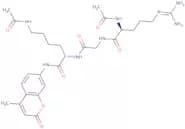
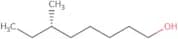
CAS:<p>Ac-Arg-Gly-Lys(Ac)-AMC is a potent apoptotic agent that induces the apoptosis of cancer cells by binding to the caspase-9, which is an enzyme that initiates the process of apoptosis. Ac-Arg-Gly-Lys(Ac)-AMC has been shown to inhibit the growth of cancer cells in cell culture and also shows potent antitumor activity against MDA-MB-231 breast cancer cells. This drug can be used as a potential therapeutic agent for cancers such as colorectal, prostate, and pancreatic cancer. Ac-Arg-Gly-Lys(Ac)-AMC is also able to induce apoptosis in human leukemia cells and may have a potential role in therapy for acute myelogenous leukemia (AML).</p>Formula:C28H40N8O7•C2HF3O2Purity:Min. 98 Area-%Color and Shape:PowderMolecular weight:714.69 g/mol(S)-(+)-6-Methyl-1-octanol
CAS:<p>The (+)-isomer of 6-methyl-1-octanol is a chiral, primary alcohol that has been synthesized and characterized. It is an analytical reagent for the determination of hydroxy groups on a molecule. The (+)-isomer is also used as a synthetic intermediate in the synthesis of other bioactive molecules.</p>Formula:C9H20OPurity:Min. 95%Molecular weight:144.25 g/mol1,2-Dipalmitoyl-sn-glycero-3-phosphatidic acid sodium
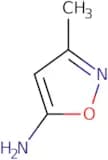
CAS:1,2-Dipalmitoyl-sn-glycero-3-phosphatidic acid sodium (DPPA) is a drug substance that has been used in primary culture to study the cell membrane of hepatocytes. This compound is a phospholipid with a cavity at one end and contains two hydroxy groups that can be conjugated to other molecules. It has been shown to be effective against Hepatitis B virus and mesenchymal stromal cells. DPPA has also been used as an adjuvant for gadolinium contrast agents for magnetic resonance imaging. Gadolinium may bind to the hydroxy groups on DPPA, which increases its birefringence and brightness on MRI scans.Formula:C35H69Na2O8PPurity:Min. 98 Area-%Color and Shape:White PowderMolecular weight:694.87 g/mol5-Amino-3-methylisoxazole
CAS:<p>5-Amino-3-methylisoxazole is a tetronic acid that can be switched between two forms, the cis and trans form. It is a structural analogue of salicylaldehyde and has a similar functional theory. 5-Amino-3-methylisoxazole is an intermediate in the synthesis of quinoline derivatives, sulfa drugs and other chemicals. It can also be used as an antibacterial agent because it has been shown to have activity against E. coli and Staphylococcus aureus. The cis form of 5-amino-3-methylisoxazole is formed when it reacts with chloride ions or sodium salts under ultrasonication. This activated form has been shown to have antimicrobial activity against gram negative bacteria such as E. coli and Salmonella typhi, although not for gram positive bacteria such as S. aureus or Proteus vulgaris. The trans form of the molecule contains no</p>Formula:C4H6N2OPurity:Min. 95%Molecular weight:98.1 g/mol