Peptides
Subcategories of "Peptides"
Found 29729 products of "Peptides"
Glucagon like-peptide-2 (GLP-2)
Glucagon like-peptide-2 (GLP-2) is a gut hormone produced in the enteroendocrine L cells of gastrointestinal tract by the cleavage of the 160-amino-acid proglucagon molecule. GLP-2 is secreted following the ingestion of food and carries out its activities via the GLP-2 G-protein coupled receptors (GLP-2Rs). GLP-2 has a range of roles within the cell, including: anti-inflammatory effects promoting the expansion of the intestinal mucosa, stimulating intestinal blood flow, inhibiting gastric acid secretion and gastric emptying, increasing intestinal barrier function and enhancing nutrient and fluid absorption.
Molecular weight:3,555.7 g/molSARS-CoV-2 NSP13 (226-240)
The SARS-CoV-2 non-structural protein 13 (NSP13) has been identified as a target for anti-viral therapeutics due to its highly conserved sequence and is essential for viral replication. NSP13 is part of the helicase superfamily 1B. As an NTPase and RNA helicase, NSP13 binds to RNA-dependent RNA polymerase and acts in concert with the replication-transcription complex to stimulate backtracking and further activate NSP13 helicase activity. These factors make NSP13 a good target for developing new antiviral drugs. In addition, the identification of epitopes within the NSP13 sequence can help design more effective SARS-CoV-2 vaccines.Models have predicted epitopes exhibiting antigenicity, stability and interactions with MHC class-I and class-II molecules. NSP13 (226-240) is an epitope candidate with various HLA restrictions. This epitope can be used to better vaccine design for more durable CD4+ and CD8+ T cell responses for long-lasting immunity.Molecular weight:1,565.9 g/molGluten Exorphin A5
CAS:Gluten Exorphin A5 is a δ opioid that has been synthetically produced. It binds to the μ-opioid receptor, which is found on cells in the gastrointestinal tract, and can be used to treat inflammatory diseases and autoimmune diseases. Gluten Exorphin A5 also has anti-cancer properties, as it inhibits cell proliferation and induces apoptosis in colon cancer cells by binding to their surface. Gluten Exorphin A5 is orally active and can be used for the treatment of infectious diseases. This drug also binds to bacterial surfaces and blocks the pain response induced by naloxone. The molecular weight of Gluten Exorphin A5 has been determined using a spectrometer after purification.Formula:C29H37N5O9Purity:Min. 95%Color and Shape:White PowderMolecular weight:599.63 g/molCoV Main Protease (Mpro) Substrate
Substrate for the severe acute respiratory syndrome coronavirus main protease (SARS-CoV Mpro). The substrate sequence is derived from residues P4-P5' of the SARS-CoV Mpro N-terminal autoprocessing site and was identified by a docking study. This substrate binds to and acts as a competitive inhibitor of SARS-CoV Mpro, (3CLpro).Experiments show that the octapeptide AVLQSGFR is bound to SARS-CoV Mpro through six hydrogen bonds. It is an effective inhibitor of SARS coronavirus with an EC50 of 2.7 x 10⁻² mg/L and is able to block replication of the virus. The octapeptide also shows no detectable toxicity in the host cells.
1-Myristoyl-rac-glycerol
CAS:1-Myristoyl-rac-glycerol is a fatty acid with a hydroxyl group and an antimicrobial effect. It has been shown to have clinical properties and is used in pharmaceutical preparations as an antimicrobial agent. 1-Myristoyl-rac-glycerol has been found to be active against gram negative bacteria such as E. coli, Pseudomonas aeruginosa, and Klebsiella pneumoniae, while being inactive against gram positive bacteria such as Staphylococcus aureus or Bacillus subtilis. The antimicrobial activity of this compound is due to its ability to disrupt the integrity of bacterial cell membranes by acting on lipid synthesis. 1-Myristoyl-rac-glycerol also has hemolytic activity and can cause death in fungi and yeast cells. 1-Myristoyl-rac-glycerol is not metabolized by humans but may be metabolized by microbes such as CandidaFormula:C17H34O4Purity:Min. 95%Color and Shape:PowderMolecular weight:302.45 g/molSARS-CoV-2 NSP13 (551-565)
The SARS-CoV-2 non-structural protein 13 (NSP13) has been identified as a target for anti-viral therapeutics due to its highly conserved sequence and is essential for viral replication. NSP13 is part of the helicase superfamily 1B. As an NTPase and RNA helicase, NSP13 binds to RNA-dependent RNA polymerase and acts in concert with the replication-transcription complex to stimulate backtracking and further activate NSP13 helicase activity. These factors make NSP13 a good target for developing new antiviral drugs. In addition, the identification of epitopes within the NSP13 sequence can help design more effective SARS-CoV-2 vaccines.Models have predicted epitopes exhibiting antigenicity, stability and interactions with MHC class-I and class-II molecules. NSP13 (551-565) is an epitope candidate with various HLA restrictions. This epitope can be used to better vaccine design for more durable CD4+ and CD8+ T cell responses for long-lasting immunity.Molecular weight:1,673.8 g/molAmyloid beta-Protein (1-42) sodium salt
CAS:Amyloid β-Protein (1-42) is a fragment of the amyloid beta protein that is thought to be a major contributor to the development of Alzheimer's disease. Amyloid β-Protein (1-42) has been shown to have neuroprotective effects, as it reduces cell death in the brain and preserves memory. It binds to the β-catenin protein in neurons and protects against oxidative stress by reducing production of reactive oxygen species. This molecule also reduces microglia activation and tnf-α levels, which may reduce inflammation. Amyloid β-Protein (1-42) is found in plants such as pueraria lobata, and has been used for centuries in traditional Chinese medicine for its anti-inflammatory properties.Formula:C203H311N55O60SPurity:Min. 95%Color and Shape:White PowderMolecular weight:4,514.04 g/molBMAP-28
Numerous studies have found BMAP-28 to have AMP activity against various bacteria, fungi, and some parasites such as Leishmania. Of note, studies show it inhibits multi-drug resistant (pan-resistant) species of both Gram-negative and Gram-positive bacteria including Acinetobacter baumanniim, Pasteurella multocida, and MRSA. With the rise in antibiotic-resistant species, BMAP-28 is a useful discovery for creating new more potent analogues.In mammalian studies BMAP-28 induces cancer cell death and prevents growth, via inducing mitochondrial pore opening and depolarisation leading to cell apoptosis making it a target for future cancer treatment.
Molecular weight:3,071.9 g/molbeta-Amyloid (1-14)
Aβ has been identified as the key subunit of the extracellular plaques found in the brains of patients with Alzheimer disease (AD) and Down syndrome (DS). Aβ has therefore been extensively studied as a potential target for treatment of AD.Aβ is formed from the cleavage of the large, transmembrane protein- APP (amyloid precursor protein). Cleavage of APP by β- and then &γ--secretases results in the formation of Aβ. Aβ can aggregate to produce amyloid-β oligomers, which are thought to be highly neurotoxic. Over time Aβ can further aggregate to produce the characteristic senile plaques present in AD and DS. Aβ can be degraded by enzymes such as neprilysin, insulin degrading enzyme or endothelin converting enzyme. At physiological levels Aβ may be involved in controlling synaptic activity and neuronal survival.
Molecular weight:1,696.7 g/molMucin 10 (153 - 165), EA2
Mucin 10 (153 - 165), EA2.
Color and Shape:PowderMolecular weight:1,316.6 g/molFmoc-Gly-Rink-Amide MBHA Resin
Fmoc-Gly-Rink-Amide MBHA Resin is a resin for the synthesis of peptides. It is an ester of glycerol and a resin with a high content of amine groups. The product can be used as a building block for the synthesis of peptides, which are biologically active molecules that are composed of amino acids. Fmoc-Gly-Rink-Amide MBHA Resin has been shown to have good binding properties to both Cys and Met residues, which are two important amino acids in peptides. This product can be used to synthesize proteins that contain up to six residues at one time.Purity:Min. 95%TAT-Beclin Scrambled
TAT-Beclin Scrambled is a scrambled version of the peptide derived from a region of the Beclin 1 protein. The original peptide interacts with a newly identified negative regulator of autophagy, GAPR-1 (also called GLIPR2) to act as a potent inducer of autophagy. Autophagy is an essential process that maintains cellular homeostasis and carries out lysosome-mediated degradation of unwanted proteins in the cytoplasm. It is often examined when looking at disease pathways because of this regulatory function. While the immune system initiates the removal of viruses and pathogens through the autophagic pathway, some viruses (such as HIV) are able to evade this process.The scrambled sequence in this peptide means it can be used as an effective negative control in such experiments because whilst it contains the same amino acids as Beclin-1 (and thus has the same molecular weight), it does not express the same properties as the original peptide.TAT (47-57) is present due to its properties as a cell penetrating cationic peptide (CPP). It derived from the N-terminus of the Tat protein, which is a trans-activator of the transcription protein present in the human immunodeficiency virus (HIV). As a CPP, TAT (47-57) is able facilitate the delivery of the Beclin Scrambled protein across the plasma membrane.This peptide contains a GG linker between the C-terminus of TAT (47-57) and the N-terminus of Beclin Scrambled.Color and Shape:PowderMolecular weight:3,738.9 g/molSRC Substrate Peptide
Src is a member of the Src family tyrosine kinases (SFKs), a large cytosolic, non-receptor, kinase family that controls multiple signalling pathways in animal cells. SFKs play key roles in cell morphology and differentiation, motility, proliferation and survival. Src contains an N-terminal 14-carbon myristoyl group, a unique segment, an SH3 domain, an SH2 domain, a protein-tyrosine kinase domain and a C-terminal regulatory tail. Src is expressed ubiquitously however it is seen at far higher levels in the brain, osteoclasts, and platelets. Src is a proto-oncogene and elevated levels of Src protein are seen in different tumours including: breast- lung- thyroid- glioblastoma- colorectal- pancreatic- prostate- gastric- biliary tract, ovarian and skin cancer. Src levels are often associated with tumour progression, metastasis and a poor clinical outcome and therefore Src has been investigated as a therapeutic target.
Color and Shape:PowderMolecular weight:1,668.9 g/molFdM
FdM, ferredoxin maquette is a synthetic peptide which can bind a [4Fe-4S] cluster and contains a bacterial ferredoxin consensus motif (CIACGAC).Molecular weight:1,525.6 g/molTAT-Pro ADAM10 (709-729)
Peptide obtained by linking the 11 amino acid human HIV Tat transporter to a 21 amino acid sequence corresponding to the ADAM10 proline-rich domains.
Molecular weight:3,912.7 g/molEchinotocin neuropeptide
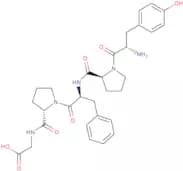
Echinotocin is a neurophysin containing precursor neuropeptide derived from the sea urchin Strongylocentrotus purpuratus.Color and Shape:PowderMolecular weight:964.4 g/molβ-Casomorphin (1-5) (bovine) acetate salt
CAS:β-Casomorphin (1-5) (bovine) acetate salt is a bioactive peptide, which is derived from the enzymatic breakdown of bovine casein, a milk protein. This peptide fragment exhibits a sequence-specific opioid-like activity, primarily due to its interaction with opioid receptors in the central nervous system. The mode of action involves mimicking the endogenous opioids by binding to these receptors, which can modulate pain perception, gut motility, and potentially impact mood and immune responses.Due to its physiological effects, β-Casomorphin (1-5) is of significant interest in scientific research focusing on its potential implications in gastrointestinal functions, neurochemical pathways, and its controversial role in conditions such as autism spectrum disorders and schizophrenia. It is also studied for its potential impact on dietary practices and the digestive processes associated with dairy consumption. Research continues to explore its pharmacokinetics, receptor affinities, and broader biological effects within dietary contexts and therapeutic frameworks.Formula:C30H37N5O7Purity:Min. 95%Molecular weight:579.65 g/molClick EB1
EB1 is a penetratin analogue that was synthesised to be an endosomolytic cell penetrating peptide (CPP). Certain amino acids in the penetratin sequence were replaced with histidine to encourage formation of an alpha helix upon protonation in the acidic endosomes. As a CPP, EB1 has been shown to form a strong interaction with the phospholipid bilayer during insertion with rapid cellular uptake, there is a moderate amount of cell leakage and no significant cytotoxicity.EB1 is provided here with a N-terminal alkyne attachment. Two of the most regularly encountered functional groups for click chemistry are azides and alkynes, and the azide-alkyne cycloaddition has become the most popular click reaction. The use of click chemistry with alkyne-EB1 allows a wide variety of applications particularly for conjugation, modification and peptide design.
Color and Shape:PowderMolecular weight:3,177.9 g/mol