Peptides
Subcategories of "Peptides"
Found 29729 products of "Peptides"
NHS-dPEG®4-( m-dPEG®8)3-Este
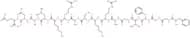
NHS-dPEG®4-( m-dPEG®8)3-Este is a PEG compound with two different functional groups (also known as heterobifunctional). Unlike homobifunctional PEG compounds (same functional group on both ends), this type of compounds are more versatile as have two different anchor points. NHS-dPEG®4-( m-dPEG®8)3-Este is used as a linker and spacer to add a PEG moiety, via pegylation (a bioconjugation technique) to proteins, peptides, oligonucleotides, small molecules and nanoparticles.Formula:C182H347F4N5O86Purity:Min. 95%Molecular weight:4,057.72 g/mol[D-Arg1,D-Trp7,9,Leu11]-Substance P
This product is a Substance P antagonist. Substance P is a neuropeptide that acts as a neurotransmitter and neuromodulator. It is best known for its role in nociception or pain perception. Substance P is also involved in other biological processes such as the regulation of gastrointestinal motility and the inflammatory response. As a tachykinin neuropeptide, substance P acts through binding to its specific neurokinin 1 receptor (NK-1R). NK-1R is present in neurons and on glial cell types. Substance P is also involved in: increased inflammation in the lungs, gastrointestinal tract and the skin and neuroinflammation. Interestingly the levels of Substance P are raised in inflammatory bowel diseases and through its involvement in cytokine release, it contributes to asthma pathology. These diverse selection of functions makes substance P a target for therapeutic research.
Formula:C75H108N20O13•3HCI•8H2OPurity:Min. 95%Molecular weight:1,751.3 g/molMaltose Binding Protein E.coli Recombinant
Maltose Binding Protein E.coli Recombinant is a maltose binding protein derived from E. coli that can be used as a research tool in pharmacology and cell biology. Maltose Binding Protein E.coli Recombinant is an antibody that binds to the maltose receptor on the surface of cells, which are found on the outer membrane of most bacteria. Maltose Binding Protein E.coli Recombinant is a high-purity recombinant protein with a molecular weight of about 31 kDa, and has been shown to be an activator and inhibitor of ion channels, depending on its concentration. This protein also interacts with various proteins in the cytoplasm and binds to peptides that have been identified as ligands for this receptor.
Purity:Min. 95%Mannose Binding Lectin Light Tryptic Peptide Standard (4 nmol)
Mannose binding lectin is a host defense protein which has the ability to recognize a variety of infectious agents. This Mannose Binding Lectin Light Tryptic Peptide Standard can be used in protein identification and quantitation studies.Purity:Min. 95%CNP-53 (Porcine, Rat)
CNP-53 is a peptide that is an inhibitor of protein interactions. It is a peptide sequence consisting of 53 amino acids and has been shown to inhibit the binding of human CNPase to its substrate, cyclic nucleotide monophosphate (cNMP). CNP-53 can also be used as a research tool to study the function of ion channels and receptors. This peptide has been shown to be highly purified and is produced in mammalian cells. It has a CAS number:
Formula:C251H414N82O70S3Purity:Min. 95%Molecular weight:5,796.7 g/molIFN g Rat
IFN-g rat is a peptide that has been used as an activator of immune cells. It binds to the interferon gamma receptor, and promotes the proliferation of T helper cells and B cells, as well as the production of cytokines. IFN-g rat is also used in research to study protein interactions and ligand-receptor binding. IFN-g rat is a recombinant human protein that has been shown to have no detectable levels of pyrogens or endotoxins.
IFN-g Rat is available in bulk quantities from Life Science Research Tools, Inc.Purity:Min. 95%SPDP-dPEG®36-Acid
CAS:SPDP-dPEG®36-Acid is a PEG compound with two different functional groups (also known as heterobifunctional). Unlike homobifunctional PEG compounds (same functional group on both ends), this type of compounds are more versatile as have two different anchor points. SPDP-dPEG®36-Acid is used as a linker and spacer to add a PEG moiety, via pegylation (a bioconjugation technique) to proteins, peptides, oligonucleotides, small molecules and nanoparticles.
Formula:C83H158N2O39S2Purity:Min. 95%Molecular weight:1,872.26 g/molBNP Human
BNP Human is a peptide with a molecular weight of 5.5 kDa. It is the human form of brain natriuretic peptide (BNP) and is used for research purposes in cell biology, immunology, pharmacology, and life science. BNP Human is an activator of ion channels and inhibits protein interactions. BNP Human has been shown to have effects on receptors and ligands. It has CAS number: 60714-06-2.Purity:Min. 95%Human-monoBiotin (PheB1)
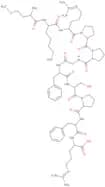
Human-monoBiotin (PheB1) is a peptide that activates the acetylcholine receptor and may be used as an inhibitor for ion channels. This peptide has been shown to inhibit the binding of acetylcholine to its receptor, which may lead to therapeutic benefits for diseases associated with protein interactions, such as Alzheimer's disease. It also has a role in cell biology and pharmacology.Purity:Min. 95%Des-Asp1-[Ile8]-Angiotensin II
CAS:Des-Asp1-[Ile8]-Angiotensin II is a peptide that has been shown to have analgesic effects. It has been reported to be active in anesthetized, Sprague-Dawley rats and in primary cultures of rat brain neurons. The peptide binds to the angiotensin II type 1 receptor (AT1) subtype and enhances the activity of the receptor when it is bound by angiotensin II. Des-Asp1-[Ile8]-Angiotensin II also inhibits aminopeptidase activity, leading to an increase in the concentration of angiotensin II. This leads to increased antinociception at high concentrations, which may be due to its effect on baroreceptors or mesenteric blood vessels.
Formula:C43H68N12O9•2CH3COOH•4H2OPurity:Min. 95%Molecular weight:1,089.24 g/molAnti Total Glucagon (Human, Rat) Serum
Anti Total Glucagon (Human, Rat) Serum is a research tool that can be used in the study of ion channels and receptor-ligand interactions. It is a purified serum that contains glucagon. This product has been tested for purity and is used in the life science industry as a research tool to study protein interactions.Purity:Min. 95%Z-Leu-Leu-Nva-H (aldehyde)
CAS:Z-Leu-Leu-Nva-H (aldehyde) is a peptide that has been used as an activator and an inhibitor of ion channels. It binds to the receptor site on the ion channel, which changes the flow of ions through the channel. This peptide has been shown to inhibit ligand binding and protein interactions. Z-Leu-Leu-Nva-H (aldehyde) is a high purity product that is available in bulk amounts.
Formula:C25H39N3O5Purity:Min. 95%Molecular weight:461.60 g/molAmino-dPEG®4 Acid
CAS:Amino-dPEG®4 Acid is a PEG compound with two different functional groups (also known as heterobifunctional). Unlike homobifunctional PEG compounds (same functional group on both ends), this type of compounds are more versatile as have two different anchor points. Amino-dPEG®4 Acid is used as a linker and spacer to add a PEG moiety, via pegylation (a bioconjugation technique) to proteins, peptides, oligonucleotides, small molecules and nanoparticles.
Purity:Min. 95%Molecular weight:265.3 g/molNociceptin (Human)
CAS:Nociceptin is a peptide that binds to the NOP receptor and activates it, which inhibits neuronal activity. It has been shown to inhibit protein interactions by acting as an inhibitor of the enzyme proteasome. Nociceptin activates the Ligand-gated ion channels, which are involved in pain perception. Nociceptin also has been used as a research tool for investigating protein interactions and antibody production.
Formula:C79H129N27O22Purity:Min. 95%Molecular weight:1,809 g/molm-dPEG®4-Tosylate
CAS:m-dPEG®4-Tosylate is a PEG compound with two different functional groups (also known as heterobifunctional). Unlike homobifunctional PEG compounds (same functional group on both ends), this type of compounds are more versatile as have two different anchor points. m-dPEG®4-Tosylate is used as a linker and spacer to add a PEG moiety, via pegylation (a bioconjugation technique) to proteins, peptides, oligonucleotides, small molecules and nanoparticles.Formula:C26H44N2O13Purity:Min. 95%Molecular weight:592.63 g/molPACAP (Human, 6-38)
CAS:PACAP is a peptide that belongs to the class of activators. It is used as a research tool for its ability to activate ion channels in mammalian cells. PACAP interacts with receptors and can be found in both the central nervous system and peripheral tissues. The receptor for PACAP, known as the PAC1 receptor, is coupled to G-proteins and regulates adenylate cyclase activity. PACAP has been shown to inhibit cell proliferation and promote apoptosis in various types of cancer cells.
PACAP also stimulates the release of oxytocin from neurohypophysis cells, which may lead to its use as a treatment for autism spectrum disorders or depression.Formula:C182H300N56O45SPurity:Min. 95%Molecular weight:4,024.7 g/molZ-Val-Val-Arg-AMC
CAS:Z-Val-Val-Arg-AMC is a synthetic peptide that activates the glycine receptor. It has been shown to inhibit ion channel function in a rat model of epilepsy, and also to block the binding of an antibody against the glycine receptor. The peptide was synthesized by coupling L-valine, L-valylglycine, and L-arginine with methyl 2-(4'-methylaminophenyl) acetate. Z-Val-Val-Arg-AMC is a high purity product that has been shown to be useful in cell biology research as a tool for studying ligand/receptor interactions.
Formula:C34H45N7O7Purity:Min. 95%Molecular weight:663.76 g/molCBZ-N-Amido-dPEG®3-Amine
CAS:CBZ-N-Amido-dPEG®3-Amine is a PEG compound with two different functional groups (also known as heterobifunctional). Unlike homobifunctional PEG compounds (same functional group on both ends), this type of compounds are more versatile as have two different anchor points. CBZ-N-Amido-dPEG®3-Amine is used as a linker and spacer to add a PEG moiety, via pegylation (a bioconjugation technique) to proteins, peptides, oligonucleotides, small molecules and nanoparticles.Formula:C25H53NO12Purity:Min. 95%Molecular weight:559.69 g/molSerum Thymic Factor
CAS:Serum thymic factor (STF) is a peptide that is secreted by the thymus gland. STF has been shown to inhibit the binding of lysosomal enzymes to their receptors in the presence of proteinase inhibitors. STF also activates complement C3 and C4, leading to the production of anaphylatoxins. This peptide has been used as a research tool for studying protein interactions and receptor-ligand interactions. Additionally, STF has been shown to be a ligand that binds to a receptor on human erythrocytes.
Formula:C33H54N12O15Purity:Min. 95%Molecular weight:858.85 g/molANP (Human, 5-27)
CAS:ANP (Human, 5-27) is a native peptide amino acid sequence that is found in the human body. It is also known as Atrial Natriuretic Peptide and is a ligand for the ANP receptor. ANP (Human, 5-27) has been shown to activate the receptor by binding with it and thus stimulate the production of cyclic guanosine monophosphate. This substance has been used as a research tool for pharmacology and cell biology studies because of its potential to inhibit or stimulate protein synthesis, depending on its concentration. It has also been used to produce antibodies against it.
Formula:C97H154N34O32S3Purity:Min. 95%Molecular weight:2,404.7 g/molAnti IL-1beta (Rat) Serum
Anti IL-1beta (Rat) Serum is a peptide used as a research tool in immunology and cell biology. It is an inhibitor of the inflammatory cytokine IL-1β, and binds to its receptor with high affinity. This antibody can be used in pharmacological studies to investigate protein interactions. The use of this antibody has been shown to inhibit the activation of ion channels, which may lead to the treatment of diseases such as Alzheimer's disease and epilepsy.
CoV-2 N (196 a.a)
A human infecting coronavirus (viral pneumonia) called 2019 novel coronavirus, 2019-nCoV was found in the fish market at the city of Wuhan, Hubei province of China on December 2019. The 2019-nCoV shares an 87% identity to the 2 bat-derived severe acute respiratory syndrome 2018 SARS-CoV-2 located in Zhoushan of eastern China. 2019-nCoV has an analogous receptor-BD-structure to that of 2018 SARS-CoV, even though there is a.a. diversity so thus the 2019-nCoV might bind to ACE2 receptor protein (angiotensin-converting enzyme 2) in humans. While bats are possibly the host of 2019-nCoV, researchers suspect that animal from the ocean sold at the seafood market was an intermediate host. RSCU analysis proposes that the 2019-nCoV is a recombinant within the viral spike glycoprotein between the bat coronavirus and an unknown coronavirus. The E. coli derived recombinant protein contains the Coronavirus 2019 middle region 196 a.a. from the nucleocapsid protein and fused to GST-6xHis tag at N-terminal and having a M.W. Of 48.4 kDa. It has been purified using PNTA Sepharose-Affinity Purification. The CoV-2 Nucleocapsid protein solution is supplied in 50mM Tris-HCl pH 8, 1M Urea, and 50% Glycerol.Purity:Min. 95%Neurokinin B (Human, Porcine, Bovine, Rat, Mouse)
CAS:As a member of the tachykinin neuropeptide family, Neurokinin B is involved in the dilation of blood vessels, the contraction of smooth muscles and the excitation of neurons. This product can be applied as a NK3 receptors selective agonist and is available as a 0.5mg vial.
Formula:C55H79N13O14S2Purity:Min. 95%Molecular weight:1,210.4 g/molGalanin (Human)
CAS:Galanin is a peptide that belongs to the family of neuropeptides and is found in the endocrine system, the central and peripheral nervous systems. It has been shown to inhibit the release of acetylcholine in the central nervous system and interestingly in Alzheimer’s disease patients, hyperinervation of galanin fibres has been found. Galanin is also known to have a variety of physiological effects including inhibition of insulin release, stimulation of prolactin and growth hormone secretion and it also plays a role in feeding, mood, cognition, neuroendocrine regulation and affects gastrointestinal motility. Galanin asserts its effects through associated with G-protein coupled receptors. This product is available as a 0.5mg vial.
Formula:C139H210N42O43Purity:Min. 95%Molecular weight:3,157.4 g/molm-dPEG®23-OH
CAS:m-dPEG®23-OH is a PEG polymer categorised as monofunctional (OH-PEG-X). Used as a linker, m-dPEG®23-OH is used to attached PEG to proteins, peptides, oligonucleotides, nanoparticles and small molecules via pegylation, a bioconjugation technique.
Formula:C47H96O24Purity:Min. 95%Molecular weight:1,045.25 g/molAzido-dPEG®12-NHS ester
CAS:Azido-dPEG®12-NHS ester is a PEG compound with two different functional groups (also known as heterobifunctional). Unlike homobifunctional PEG compounds (same functional group on both ends), this type of compounds are more versatile as have two different anchor points. Azido-dPEG®12-NHS ester is used as a linker and spacer to add a PEG moiety, via pegylation (a bioconjugation technique) to proteins, peptides, oligonucleotides, small molecules and nanoparticles.Formula:C16H34N4O7Purity:Min. 95%Molecular weight:394.46 g/molMethionyl-Lysyl-Bradykinin (Human, Bovine)
CAS:Methionyl-Lysyl-Bradykinin is a peptide inhibitor that has been shown to inhibit the activity of protein kinase C (PKC). PKC is involved in a number of cellular functions, including the regulation of ion channels and the activation of other enzymes. Methionyl-Lysyl-Bradykinin can be used as an inhibitor in research tool experiments. It can also be used as an activator or ligand in receptor binding experiments. The high purity and specificity of this product make it suitable for use as a research reagent.Formula:C61H94N18O13SPurity:Min. 95%Molecular weight:1,319.6 g/molAnti Secretin (Human) Serum (50 ul)
CAS:Anti-Secretin (Human) Serum is a purified protein that inhibits the activity of secretin, a peptide hormone. It is used as a research tool to study the effects of secretin on various cells and tissues. It can also be used as an inhibitor in receptor binding experiments. Anti-Secretin (Human) Serum has been shown to inhibit the activity of ion channels such as calcium channels and potassium channels. This product is highly purified and has a purity level of > 98%.Formula:C29H42N8O8Purity:Min. 95%Molecular weight:630.69 g/molSuc-Ala-Ala-Pro-Phe-AMC
CAS:Suc-Ala-Ala-Pro-Phe-AMC is a peptide that is an activator of the acetylcholine receptor. Suc-Ala-Ala-Pro-Phe-AMC has been shown to inhibit the binding of the ligand to the receptor and also prevent activation of ion channels. It has been used as a research tool for studying protein interactions, as well as, antibody production and cell biology. This peptide can also be used as a pharmacological agent, which may be useful in treating diseases such as Alzheimer's disease.
Formula:C34H39N5O9Purity:Min. 95%Molecular weight:661.7 g/molFmoc-N-Amido-dPEG®12-Acid
CAS:Fmoc-N-Amido-dPEG®12-Acid is a PEG compound with two different functional groups (also known as heterobifunctional). Unlike homobifunctional PEG compounds (same functional group on both ends), this type of compounds are more versatile as have two different anchor points. Fmoc-N-Amido-dPEG®12-Acid is used as a linker and spacer to add a PEG moiety, via pegylation (a bioconjugation technique) to proteins, peptides, oligonucleotides, small molecules and nanoparticles.Purity:Min. 95%Molecular weight:839.96 g/mol[Sar1,Ile8]-Angiotensin II
CAS:Sar1,Ile8]-Angiotensin II is a peptide that acts as an inhibitor of angiotensin II. It interacts with protein targets in the cell and blocks their function. Sar1,Ile8]-Angiotensin II is a research tool that can be used to study the interactions between proteins and inhibitors. Sar1,Ile8]-Angiotensin II has high purity and is not radioactive. It is also an antibody that can be used in life science research.Formula:C46H73N13O10Purity:Min. 95%Molecular weight:968.15 g/molAmino-dPEG®24-OH
CAS:Amino-dPEG®24-OH is a PEG polymer categorised as monofunctional (OH-PEG-X). Used as a linker, Amino-dPEG®24-OH is used to attached PEG to proteins, peptides, oligonucleotides, nanoparticles and small molecules via pegylation, a bioconjugation technique.
Formula:C48H99NO24Purity:Min. 95%Molecular weight:1,074.29 g/molH-SDEGGYTCFFRDHSYQEE-OH
MOG(91-108) corresponds to amino acids 97 to 108 of the rat myelin oligodendrocyte glycoprotein (MOG).
Fmoc-N-Amido-dPEG®12-NHS Ester
CAS:Fmoc-N-Amido-dPEG®12-NHS Ester is a PEG compound with two different functional groups (also known as heterobifunctional). Unlike homobifunctional PEG compounds (same functional group on both ends), this type of compounds are more versatile as have two different anchor points. Fmoc-N-Amido-dPEG®12-NHS Ester is used as a linker and spacer to add a PEG moiety, via pegylation (a bioconjugation technique) to proteins, peptides, oligonucleotides, small molecules and nanoparticles.Formula:C46H68N2O18Purity:Min. 95%Molecular weight:937.03 g/molBevacizumab Light chain
Light chain of the bevacizumab monoclonal antibody, sold as the antitumour therapeutic Avastin. It prevents vascular endothelial growth factor (VEGF) from binding to VEGF receptors 1 and 2 thus inhibiting angiogenesis in tumours.
Molecular weight:1,282.6 g/molTau (195-209) Light
Amino acids 195-209 of tubulin-associated unit (tau). This region represents a tau tryptic peptide and is part of the core of the tau protein. Tau is a phosphoprotein involved in microtubule (MT) assembly and stability as well as brain development. Tau is phosphorylated at multiple sites by several protein kinases, including cyclic-AMP-dependent protein kinases and casein kinase type-1. Tau phosphorylation causes tau to change shape, negatively regulating its ability to stimulate MT assembly. Tau is also glycosylated, and-O-glycosylation may have a role in its subcellular localisation and degradation.Malfunctioning tau protein contributes to the structural core of the paired helical filaments (PHFs), which make up neurofibrillary tangles (NFTs). NFTs are often observed in neurodegenerative disorders, such as Alzheimer disease and other tauopathies. Tau is expressed from a single gene and is alternatively spliced to yield six different isoforms in the adult central nervous system (CNS).Molecular weight:1,392.6 g/molFmoc-N-Amido-dPEG®4-t-boc-Hydrazide
CAS:Fmoc-N-Amido-dPEG®4-t-boc-Hydrazide is a PEG compound with two different functional groups (also known as heterobifunctional). Unlike homobifunctional PEG compounds (same functional group on both ends), this type of compounds are more versatile as have two different anchor points. Fmoc-N-Amido-dPEG®4-t-boc-Hydrazide is used as a linker and spacer to add a PEG moiety, via pegylation (a bioconjugation technique) to proteins, peptides, oligonucleotides, small molecules and nanoparticles.Formula:C31H43N3O9Purity:Min. 95%Molecular weight:601.69 g/molAngiotensin IV acetate
CAS:Angiotensin IV (human) is an active analogue of the chemoattractant protein, angiotensin. It is a potent anti-inflammatory cytokine that inhibits the production of pro-inflammatory cytokines, such as IL-10. Angiotensin IV (human) has been shown to significantly reduce the production of pro-inflammatory cytokines in mice with chronic inflammation and can be used to treat autoimmune diseases. The biological properties of this protein have been studied using polymerase chain reactions and cytosolic calcium assays. It has been shown to inhibit binding to both the angiotensin receptor and angiotensin converting enzyme. Angiotensin IV (human) also has locomotor activity.Formula:C40H54N8O8Purity:Min. 95%Molecular weight:774.91 g/molAzido-dPEG®8-Acid
CAS:Azido-dPEG®8-Acid is a PEG compound with two different functional groups (also known as heterobifunctional). Unlike homobifunctional PEG compounds (same functional group on both ends), this type of compounds are more versatile as have two different anchor points. Azido-dPEG®8-Acid is used as a linker and spacer to add a PEG moiety, via pegylation (a bioconjugation technique) to proteins, peptides, oligonucleotides, small molecules and nanoparticles.Purity:Min. 95%Molecular weight:467.51 g/molPyr-Ala
CAS:Pyr-Ala is a peptide that has been shown to be effective in treating inflammatory diseases. It specifically targets the group P2 sequences of the inflammatory cytokine IL-1β. Pyr-Ala also inhibits IL-6 and TNF-α activity by binding to the amide bond of these molecules, inhibiting their catalysis and preventing their formation. Pyr-Ala has also shown efficacy in autoimmune diseases, such as rheumatoid arthritis, by inhibiting the production of proinflammatory cytokines including IL-1β and TNF-α. This drug binds to the bacterial enzyme that catalyzes the conversion of L -alanine into pyruvic acid, preventing its function and inhibiting bacterial growth.
Formula:C8H12N2O4Purity:Min. 95%Molecular weight:200.19 g/molCyclo(Ala-Pro) (Bulk)
CAS:Cyclo(Ala-Pro) is a cyclic peptide that has been shown to inhibit the growth of endophytic fungi. It also has hydroxyl group and a regulatory function, which may be due to its ability to bind to DNA or RNA. Cyclo(Ala-Pro) can be used as a food additive for animal health purposes.
Formula:C8H12N2O2Purity:Min. 95%Molecular weight:168.19 g/molAlpha-MSH (Human, Porcine, Bovine, Rat, Mouse)
CAS:Alpha-MSH is a peptide that binds to the Melanocortin 1 receptor. Alpha-MSH is a peptide hormone and neurotransmitter that is involved in the regulation of numerous physiological processes, including appetite, sexual desire, immune response, and skin pigmentation. In addition to its role as a natural hormone, it has been studied as a potential drug for the treatment of obesity and other diseases. The product can also be used as an antibody probe for Western blotting or immunohistochemistry. The product is produced synthetically.Formula:C77H109N21O19SPurity:Min. 95%Molecular weight:1,664.9 g/molFmoc-MeDbz
CAS:Fmoc-MeDbz is an antimicrobial peptide that has been synthesized using solid-phase synthesis. The peptide is composed of the unusual amino acids Fmoc-Me and Dbz. It is a cyclic peptide with an amide bond at its C-terminus. Fmoc-MeDbz has a neutral ph value and can be activated using chemical ligation and modifications to improve its stability. Synthetic analogs of this peptide have also been developed to improve its antibacterial activity against various bacterial strains such as methicillin resistant Staphylococcus aureus (MRSA).
Formula:C23H20N2O4Purity:Min. 95%Molecular weight:388.42 g/molm-dPEG®15-Amine
CAS:m-dPEG®15-Amine is a PEG compound with two different functional groups (also known as heterobifunctional). Unlike homobifunctional PEG compounds (same functional group on both ends), this type of compounds are more versatile as have two different anchor points. m-dPEG®15-Amine is used as a linker and spacer to add a PEG moiety, via pegylation (a bioconjugation technique) to proteins, peptides, oligonucleotides, small molecules and nanoparticles.Formula:C59H109NO28Purity:Min. 95%Molecular weight:1,280.49 g/molm-dPEG®8-Thiol
CAS:m-dPEG®8-Thiol is a PEG compound with two different functional groups (also known as heterobifunctional). Unlike homobifunctional PEG compounds (same functional group on both ends), this type of compounds are more versatile as have two different anchor points. m-dPEG®8-Thiol is used as a linker and spacer to add a PEG moiety, via pegylation (a bioconjugation technique) to proteins, peptides, oligonucleotides, small molecules and nanoparticles.Formula:C34H66N4O13SPurity:Min. 95%Molecular weight:770.97 g/molNHS-dPEG®4-( m-dPEG®24)3-Ester
CAS:NHS-dPEG®4-( m-dPEG®24)3-Ester is a PEG compound with two different functional groups (also known as heterobifunctional). Unlike homobifunctional PEG compounds (same functional group on both ends), this type of compounds are more versatile as have two different anchor points. NHS-dPEG®4-( m-dPEG®24)3-Ester is used as a linker and spacer to add a PEG moiety, via pegylation (a bioconjugation technique) to proteins, peptides, oligonucleotides, small molecules and nanoparticles.
Formula:C15H24N4O8Purity:Min. 95%Molecular weight:388.37 g/molm-dPEG®12-Azide (Azido-m-dPEG®12)
CAS:m-dPEG®12-Azide (Azido-m-dPEG®12) is a PEG compound with two different functional groups (also known as heterobifunctional). Unlike homobifunctional PEG compounds (same functional group on both ends), this type of compounds are more versatile as have two different anchor points. m-dPEG®12-Azide (Azido-m-dPEG®12) is used as a linker and spacer to add a PEG moiety, via pegylation (a bioconjugation technique) to proteins, peptides, oligonucleotides, small molecules and nanoparticles.
Formula:C24H28F4N2O9Purity:Min. 95%Molecular weight:564.48 g/molAla-pNA
CAS:Ala-pNA is a peptide hormone that is related to vasopressin and has been shown to be a potential drug target for renal cell cancer. In vitro studies have shown that Ala-pNA inhibits the growth of human leukemia cells and other carcinoma cell lines. The reduction in cell proliferation was due to the decrease in proteolytic activity, which was due to the inhibition of collagenase synthesis. This peptide hormone also inhibits protein synthesis, leading to decreased production of enzymes such as p-nitrophenyl phosphate synthase and sodium citrate synthase. A study on the use of this compound on rats with induced renal carcinoma showed that it had no toxicological effects.
Formula:C9H11N3O3Purity:Min. 95%Molecular weight:209.2 g/molFMRF-Amide
CAS:A molluscan cardioexcitatory neuropeptide which has the potential to be used itn cell biology, pharmacological, and protein-protein interaction studies.
Formula:C29H42N8O4SCH3COOH•2H2OPurity:Min. 95%Molecular weight:598.8 g/mol


![[D-Arg1,D-Trp7,9,Leu11]-Substance P](/_next/image/?url=https%3A%2Fstatic.cymitquimica.com%2Fproducts%2F3D%2Fthumb-webp%2FPSP-4173.webp&w=3840&q=75)







![Des-Asp1-[Ile8]-Angiotensin II](/_next/image/?url=https%3A%2Fstatic.cymitquimica.com%2Fproducts%2F3D%2Fthumb-webp%2FPAN-4037.webp&w=3840&q=75)










![[Sar1,Ile8]-Angiotensin II](/_next/image/?url=https%3A%2Fstatic.cymitquimica.com%2Fproducts%2F3D%2Fthumb-webp%2FPAN-4016-V.webp&w=3840&q=75)