Enzyme Substrates
Enzyme substrates are molecules upon which enzymes act to catalyze chemical reactions. The substrate binds to the active site of the enzyme, where it undergoes a specific transformation to form the product of the reaction. Enzyme substrates are essential tools in research for studying enzyme kinetics, specificity, and mechanism of action. They are also used in diagnostic assays and biochemical studies. At CymitQuimica, we provide a diverse selection of high-quality enzyme substrates to support your research in enzymology and biochemistry.
Subcategories of "Enzyme Substrates"
Found 1527 products of "Enzyme Substrates"
Sort by
Purity (%)
0
100
|
0
|
50
|
90
|
95
|
100
4-Nitrophenyl laurate
CAS:<p>4-Nitrophenyl laurate is a chromogenic substrate for lipase. Upon hydrolysis, para-nitrophenol is released yielding a yellowish colour. 4-Nitrophenyl laurate is used in different applications such as the Lipase activity screening, clinical diagnostics</p>Formula:C18H27NO4Purity:Min. 95%Color and Shape:White PowderMolecular weight:321.41 g/molAldol® 458 nonanoate, Biosynth Patent: EP 2427431 and US 8940909
CAS:Controlled Product<p>Aldol 458 nonanoate is a high quality, chromogenic and fluorogenic substrate for use in enzymatic, chemiluminescent, and immunochemical reactions. Aldol 458 nonanoate is used as a chromogenic substrate for the detection of glucose oxidase activity in culture media and as a fluorogenic substrate for the detection of glucose oxidase activity in environmental testing. This product has CAS number 2484872-52-6.</p>Formula:C25H29NO4Purity:Min. 98.0 Area-%Molecular weight:407.5 g/mol5-Bromo-4-chloro-3-indolyl b-L-fucopyranoside
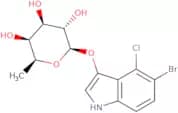
CAS:<p>5-Bromo-4-chloro-3-indolyl β-L-fucopyranoside (X-Fuc) is a chromogenic substrate specifically designed for the identification and detection of fucosidase enzyme activity. Upon cleavage by fucosidase, it generates a blue-colored 5-Bromo-4-chloro-3-hydroxy-indole precipitate, which can be easily observed under a microscope or spectrophotometer. This feature makes X-Fuc an invaluable tool across various applications, such as biochemical analysis, histochemical staining, cell biology, and enzyme kinetic assays. By providing a fast, sensitive, and reliable readout for fucosidase activity, 5-Bromo-4-chloro-3-indolyl β-L-fucopyranoside facilitates essential research in the understanding of biological processes and the development of therapeutic interventions.</p>Formula:C14H15BrClNO5Purity:Min. 95%Color and Shape:White PowderMolecular weight:392.63 g/molalpha-N-Bz-L-Arg-aminoluciferin
<p>alpha-N-Bz-L-Arg-aminoluciferin is a modified form of D-luciferin used as a luminescent enzyme substrate for protease.</p>Formula:C24H25N7O4S2Purity:Min. 95 Area-%Molecular weight:539.63 g/mol5-Bromo-4-chloro-3-indoxyl-beta-D-glucuronic acid, sodium salt trihydrate
CAS:<p>Chromogenic substrate for beta-glucuronidase (GUS) yielding blue precipitate upon cleavage. Used for identification of beta-glucuronidase. X-beta-D-glucuronide has been reported as chromogenic substrate in a number of chromogenic E. coli/ coliform culture media. About 95% of common E. coli possess beta-D-glucuronidase activity. Such chromogenic culture media are used for detection and enumeration of E. coli in food samples such as meat, dairy products and shellfish and have clinical applications in the assessment of urinary infections. It has gained international acceptance as highly accurate test for the presence of E. coli in drinking water samples. It is also used for the detection of the expression of GUS (E. coli beta-glucuronidase) gene fusion marker constructs in plants. The sodium salt has advantages over the cyclohexylammonium salt as being non-electrostatic and possessing a naturally-occurring cation.</p>Formula:C14H18BrClNNaO10Purity:Min. 99.0 Area-%Molecular weight:498.65 g/mol4-Methylumbelliferyl-N-acetyl-β-D-glucosaminide-6-sulfate, sodium salt
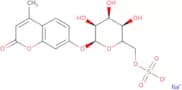
CAS:<p>4-Methylumbelliferyl 2-acetamido-2-deoxy-beta-D-glucopyranoside-6-sulfate sodium salt is a high-quality fluorogenic substrate specifically designed for the detection and quantification of various enzymes, including beta-glucosidases and sulfatases. Upon hydrolysis by the target enzyme, this substrate releases the highly fluorescent 4-methylumbelliferone, allowing for real-time monitoring and accurate measurement of enzyme activities in biochemical assays, diagnostic tests, and research applications. 4-Methylumbelliferyl 2-acetamido-2-deoxy-beta-D-glucopyranoside-6-sulfate sodium salt has excellent solubility in water, ensuring a consistent and reliable performance in different experimental conditions. This versatile substrate is an essential tool for researchers and industry professionals who require a sensitive and reproducible detection method for enzymes of interest.</p>Formula:C18H20NNaO11SPurity:Min. 98.0 Area-%Molecular weight:481.41 g/molRef: 3D-M-5505
5mgTo inquire25mgTo inquire50mgTo inquire100mgTo inquire250mgTo inquire-Unit-ggTo inquire3-Indoxyl sulfate, potassium salt
CAS:3-Indoxyl sulfate, potassium salt (3ISK) is a chemical compound that is soluble in water. It has been used as a marker for bowel disease, and it has been shown to react with analytical methods such as titration calorimetry and lc-ms/ms. 3ISK can be used to determine the optimum concentration for pharmacological treatment of bowel disease. The metabolic fate of 3ISK has been studied extensively and it is found that 3ISK is metabolized by microbial enzymes in the gut, which may lead to an increased incidence of bowel disease in patients with low levels of microbial metabolism. 3ISK also plays an important physiological function by maintaining mitochondrial membrane potential, which could have implications for pharmacological treatment of bowel disease.Formula:C8H6KNO4SPurity:Min. 98.0 Area-%Molecular weight:251.31 g/mol4-Methylumbelliferyl lignocerate
CAS:<p>4-Methylumbelliferyl lignocerate is a fluorogenic substrate for lipase. After enzymatic cleaveage, free 4-methylumbelliferone (also known as hymecromone) is released, exhibiting blue fluorescence upon excitation with UV light. The strongest fluorescence of 4-methylumbelliferone requires deprotonation of the hydroxyl group (thus requires alkaline pH), with a maximal fluorescence intensity obtained with excitation at 350 to 370 nm and emission at 440 to 470 nm. The use of 4-methylumbelliferyl lignocerateas a substrate for measuring the lipase activity is used for X-linked adrenoleukodystrophy diagnosis and peroxisomal disorder screening.</p>Formula:C34H54O4Purity:Min. 95%Color and Shape:PowderMolecular weight:526.79 g/mol6-Bromo-2-naphthyl 2-acetamido-2-deoxy-b-D-glucopyranoside
CAS:<p>6-Bromo-2-naphthyl 2-acetamido-2-deoxy-b-D-glucopyranoside is a chromogenic substrate used for the detection of chitinase activity. Upon hydrolysis by chitinase, it releases a yellow-brown color, which is easily detected by spectrophotometry. This substrate has been used to study chitinases in various organisms, including bacteria, fungi, and insects. It can also be used to quantitate chitinase activity in various biological samples.</p>Formula:C18H20BrNO6Purity:Min 97%Color and Shape:White PowderMolecular weight:426.26 g/mol6-Chloro-3-indoxyl-α-D-galactopyranoside
CAS:Chromogenic substrate for α-galactosidase yielding a salmon-colored precipitate.Formula:C14H16ClNO6Molecular weight:329.74 g/mol6-Chloro-3-indoxyl-3-acetate
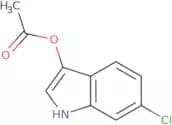
CAS:<p>6-Chloro-3-indoxyl-3-acetate is a chromogenic substrate for carboxylesterase yielding a salmon colored precipitate upon cleavage. Mainly used in histochemistry.</p>Purity:Min. 95%Color and Shape:White PowderMolecular weight:209.63 g/mol4-Methylumbelliferyl a-D-glucosaminide
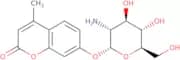
CAS:<p>4-Methylumbelliferyl alpha-D-glucosaminide is a fluorogenic substrate for alpha-N-acetylglucosaminidase. After enzymatic cleaveage, free 4-methylumbelliferone (also known as hymecromone) is released, exhibiting blue fluorescence upon excitation with UV light. The strongest fluorescence of 4-methylumbelliferone requires deprotonation of the hydroxyl group (thus requires alkaline pH), with a maximal fluorescence intensity obtained with excitation at 350 to 370 nm and emission at 440 to 470 nm. The use of 4-methylumbelliferyl alpha-D-glucosaminideas a substrate for measuring the alpha-N-acetylglucosaminidase activity is used for Sanfilippo syndrome B and Mucopolysaccharidosis IIIB (MPS IIIB) diagnosis.</p>Formula:C16H19NO7Purity:Min. 90 Area-%Color and Shape:White PowderMolecular weight:337.32 g/molAquaSpark® beta-D-glucuronide, 10 mM in DMSO, Ramot at Tel-Aviv University Ltd. Patent family WO 2017/130191
CAS:<p>For use in bacterial detection</p>Formula:C34H37ClO13Purity:Min. 95%Color and Shape:Clear LiquidMolecular weight:688.19 g/mol5-Bromo-6-chloro-3-indoxyl phosphate, disodium salt trihydrate
CAS:Water soluble substrate for visualizing alkaline phosphatase activity. Produces a magenta colored insoluble end product that is detected visually, when used together with nitroblue tetrazolium. The substrate system is versatile and functions in a variety of applications, including Northern, Southern, and Western blotting, in situ hybridization, ELISAs and immunohistochemistry.Formula:C8H10BrClNNa2O7PPurity:Min. 99.0 Area-%Molecular weight:424.49 g/mol4-Methylumbelliferyl dodecanoate
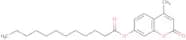
CAS:<p>4-Methylumbelliferyl dodecanoate is a fluorogenic substrate for lipase. After enzymatic cleaveage, free 4-methylumbelliferone (also known as hymecromone) is released, exhibiting blue fluorescence upon excitation with UV light. The strongest fluorescence of 4-methylumbelliferone requires deprotonation of the hydroxyl group (thus requires alkaline pH), with a maximal fluorescence intensity obtained with excitation at 350 to 370 nm and emission at 440 to 470 nm. The use of 4-methylumbelliferyl dodecanoateas a substrate for measuring the lipase activity is used for detecting pancreatic insufficiency in diagnosis assays as well as the screening of lipase deficiency.</p>Formula:C22H30O4Purity:Min. 95%Color and Shape:PowderMolecular weight:358.47 g/molCelluchrome
<p>Celluchrome (short name for remazol brilliant blue carboxymethyl cellulose or RBB-CMC) is a chromogenic substrate for cellulases. With a higher sensitivity, RBB-CMC allows for the detection of the enzyme activity even when small amounts are present.</p>Purity:Min. 95%Color and Shape:Powder2-Naphthyl-β-D-Glucuronide Sodium Salt
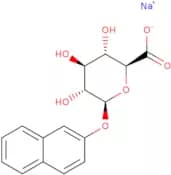
CAS:2-Naphthyl-beta-D-glucuronide sodium salt is an enzyme substrate to detect beta-glucuronidase. The enzyme cleaves the glycosidic bond in 2-naphthyl-beta-D-glucuronide to release 2-naphtol and glucuronic acid. Beta-glucuronidase activity assays are important in many fields such as cancer research, as the enzyme is expressed in some tumors and its activity can be targeted for cancer therapy. The enzyme has also an important role in drug metabolism as it recognizes and binds to drug glucuronide conjugate (as 2-naphthyl-beta-D-glucuronide) facilitating its hydrolysis to release the active part. 2-Naphthyl-beta-D-glucuronide sodium salt has a higher solubility as it is in its salt form.Formula:C16H15NaO7Purity:Min. 95%Color and Shape:PowderMolecular weight:342.28 g/mol4-Methylumbelliferyl a-L-idopyranosiduronic acid 2-sulphate disodium salt - Moscerdam™ biochemical purity
CAS:<p>PAIRED PRODUCT AVAILABLE: alpha-L-iduronidase Enzyme, FI1793834MU-alpha-L-iduronide-2-sulphate (M2) is a fluorogenic substrate of iduronate-2-sulphatase (IDS), used in a 2-step assay coupled with alpha-L-iduronidase. The assay is used in biochemical testing for Hunter syndrome (mucopolysaccharidosis II / MPS II). In a first step, IDS from biological samples cleaves the sulphate group from M2. In a second step, exogeneous alpha-L-iduronidase which cleaves the 4-MU moiety is added to the reaction, resulting in release of a fluorescent signal (Ex 360 nm / Em 455 nm). The reaction is stopped by the addition of sodium carbonate.</p>Formula:C16H14Na2O12SPurity:Min. 99 Area-%Color and Shape:White PowderMolecular weight:476.32 g/molLuc-coliforms Na
CAS:<p>Luc-coliforms Na is a fluorogenic substrate that is used in the diagnosis of bacterial contamination. It is a conjugate of the enzyme luciferase and the substrate coelenterazine, which are combined in a buffer solution. Luc-coliforms Na is used to detect bacteria by adding it to a culture broth or other growth media. The bacteria will emit light as they break down the luc-coliforms Na and produce ATP, which can then be measured with an appropriate detector. Luc-coliforms Na can also be used as a stain for gram-negative rods, such as coliforms, e.g., Escherichia coli, Enterobacter aerogenes, Klebsiella pneumoniae, Proteus mirabilis.</p>Formula:C17H17NaN2O8S2Purity:Min. 95 Area-%Molecular weight:464.44 g/molRef: 3D-L-8263
5mgTo inquire10mgTo inquire25mgTo inquire50mgTo inquire100mgTo inquire-Unit-mgmgTo inquire4-Nitrophenyl-alpha-D-glucopyranoside, beta-Anomer < 0.1%
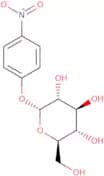
CAS:<p>4-Nitrophenyl-alpha-D-glucopyranoside, beta-Anomer is a chromogenic sugar that can be used as an indicator for the presence of 4-nitrophenol. It is a highly reactive compound that spontaneously reacts with nitrobenzene to form a dinitroaniline. This anomeric structure is easily oxidized by air and light to form the corresponding o-dinitroaniline. When this reaction occurs, this substance changes color from yellow to red.</p>Formula:C12H15NO8Purity:Min. 99.0 Area-%Molecular weight:301.26 g/mol2-Nitrophenyl-N-acetyl-beta-D-glucosaminide
CAS:<p>Chromogenic β-Glucosaminidase substrate yielding a yellow absorbent solution upon cleavage.</p>Formula:C14H18N2O8Purity:Min. 99 Area-%Molecular weight:342.31 g/mol4-Nitrophenyl-beta-D-glucopyranoside
CAS:<p>Chromogenic β-glucosidase substrate yielding a yellow solution upon cleavage.</p>Formula:C12H15NO8Purity:Min. 99.0 Area-%Molecular weight:301.25 g/mol2-Naphthyl caprylate
CAS:<p>2-Naphthyl caprylate is a substrate that is employed in an assays for carboxylesterase and lipase and when hydrolyzed, produces 2-naphthol, a compound that can also be identified via fluorescence analysis. By combining it with a diazonium salt, the formation of the corresponding azo dye occurs. In particular, this substrate is used to detect the extracellular lipase of Pseudomonas fluorescens B52.</p>Formula:C18H22O2Purity:Min. 95%Color and Shape:White PowderMolecular weight:270.37 g/mol4-Methylumbelliferyl b-D-galactopyranoside-6-sulphate sodium salt - Moscerdam™ biochemical purity
CAS:4-MU-Gal-6S (M4A) is a fluorogenic substrate of galactose-6-sulfate sulfatase (GALNS), used for the diagnosis of Mucopolysaccharidosis IV type A (MPS IV A). MPS IV, also known as Morquio syndrome, is a rare metabolic disorder in which the human body cannot process glycosaminoglycans (GAGs). MPS IV A is caused by the deficiency of the enzyme N-acetyl-galactosamine-6-sulfatase resulting in accumulation of keratan and chondroitin sulfate in tissues. M4A is used as the GALNS substrate in the anti-lysosomal enzyme antibody assay for the treatments of lysosomal storage disorders (LSDs) with enzyme replacement therapies (ERTs).Formula:C16H17NaO11SPurity:Min. 97 Area-%Color and Shape:White PowderMolecular weight:440.36 g/mol3-Indoxyl-β-D-galactopyranoside
CAS:<p>Chromogenic substrate for β-D-galactosidase, yielding a blue precipitate upon cleavage.</p>Formula:C14H17NO6Purity:Min. 98 Area-%Molecular weight:295.29 g/mol4-Nitrophenyl 2-acetamido-2-deoxy-b-D-glucopyranoside-6-sulfate
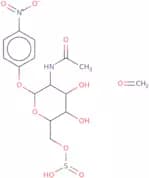
<p>4-Nitrophenyl 2-acetamido-2-deoxy-b-D-glucopyranoside is a chemiluminescent substrate that can be used in the detection of various enzymes. This product has been tested for sterility and purity, and it has passed all tests. It is also free of any detectable levels of heavy metals or other contaminants. 4NP2AG6S is a high quality bioluminescent substrate with CAS No. 71498-92-5. It is a fluorescent compound that reacts with an enzyme to produce light. The reaction can be detected by measuring the emitted light intensity at 680 nm (max).</p>Purity:Min. 95%3,4-Cyclohexenoesculetine β-D-glucopyranoside
CAS:<p>Chromogenic substrate for beta-glucosidase</p>Formula:C19H22O9Purity:Min. 95%Color and Shape:PowderMolecular weight:394.37 g/molL-Arginyl-L-arginine 7-amido-4-methylcoumarin trihydrochloride
CAS:<p>Fluorogenic substrate for cathepsin B or aminopeptidase III. Yields a blue fluorescent solution upon cleavage.</p>Formula:C22H36Cl3N9O4Purity:Min. 98 Area-%Molecular weight:596.95 g/mol4-Nitrophenyl-alpha-D-maltopyranoside
CAS:<p>Chromogenic α-maltosidase substrate yielding a yellow solution upon cleavage.</p>Formula:C18H25NO13Purity:Min. 98.0 Area-%Molecular weight:463.40 g/mol3-Indolyl β-D-galactopyranoside
CAS:<p>Chromogenic substrate for β-D-galactosidase, yielding a blue precipitate upon cleavage.</p>Formula:C14H17NO6Purity:Min. 95%Color and Shape:PowderMolecular weight:295.29 g/molN-α-CBZ-L-Arginine 7-amido-4-methylcoumarin hydrochloride
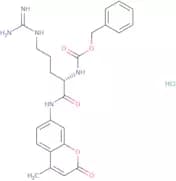
CAS:<p>N-alpha-CBZ-L-Arginine 7-amido-4-methylcoumarin hydrochloride is a high quality and highly purified substrate for enzymes that catalyze the release of light when they react with their specific substrates. It is used in a variety of applications, including diagnostics and food testing. NACBZLAMC hydrochloride is an excellent ligand for chemiluminescence reactions and can be used to detect the presence of various analytes. It can also be used as a staining agent to detect proteins on Western blots or to stain bacterial cultures for identification. This product has been shown to be effective against numerous bacteria, including Staphylococcus aureus and Pseudomonas aeruginosa, as well as fungi like Candida albicans.</p>Formula:C24H28ClN5O5Purity:Min. 99 Area-%Molecular weight:501.97 g/mol2-O-(4-Nitrophenyl)-a-D-N-acetylneuraminic acid sodium salt
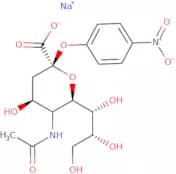
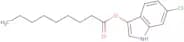
CAS:<p>2-O-(4-Nitrophenyl)-alpha-D-N-acetylneuraminic acid sodium salt is a chromogenic substrate used to detect the enzymatic activity of neuraminidase or sialidase. After cleavage, the nitrophenyl moiety is released exhibiting a light yellowish color. 2-O-(4-Nitrophenyl)-alpha-D-N-acetylneuraminic acid sodium salt is used in bacterial neuraminidase activity assays.</p>Purity:Min. 95%Color and Shape:Yellow PowderMolecular weight:452.35 g/mol6-Chloro-3-indoxyl nonanoate
CAS:<p>6-Chloro-3-indoxyl nonanoate is a fluorescent substrate that is used in the detection of beta-galactosidase activity. It has been used to detect the enzyme levels in various culture media and as a high quality, food testing, and environmental testing. The product is also used as a ligand for enzyme inhibition studies. 6-Chloro-3-indoxyl nonanoate has shown to be an excellent fluoroquinolone substrate for chemiluminescence assays. This product is CAS No. 133950-72-8 and is of high purity and high quality.</p>Purity:Min. 95%Molecular weight:307.81 g/molDL-threo-2-methylisocitrate sodium salt
CAS:<p>DL-threo-2-methylisocitrate sodium salt is an enzyme substrate for isocitrate lyase 1 (ICL1), an enzyme involved in the glyoxylate cycle, a metabolic pathway that allows organisms to convert acetate into glucose. It is also a substrate for bovine heart aconitase and acts as inhibitor of TPN-linked isocitrate dehydrogenase.</p>Formula:C7H10O7·xNaPurity:Min. 95%Color and Shape:PowderMolecular weight:206.15 g/molAldol® 458 beta-D-galactopyranoside, Biosynth Patent: EP 2427431 and US 8940909
CAS:<p>Aldol® 458 beta-D-galactopyranoside is a chromogenic and fluorogenic enzyme substrate used for detection of beta-galactosidase activity. The colorless enzyme substrate is cleaved by lactose utilizing bacteria grown in liquid or solid media, yielding yellow coloration and green fluorescence. Aldol® 458 beta-D-galactopyranoside can also be used in beta-galactosidase gene reporter assays or immunoassay applications (ELISA). Aldol® 458 beta-D-galactopyranoside can be used under aerobic and anaerobic conditions.</p>Formula:C22H23NO8Purity:Min. 95 Area-%Color and Shape:PowderMolecular weight:429.42 g/molIsopropyl-β-D-thiogalactopyranoside
CAS:<p>A non-metabolizable allolactose analogue, widely used in molecular biology for overexpression of recombinant proteins from inducible systems under the control of lac promoter. IPTG binds to the LacI repressor and causes its release from the lac operator, allowing gene expression to take place. Present in vectors of pGEX, pGEM-T, pET, pRSET, pMAL class and others.</p>Formula:C9H18O5SPurity:Min. 99 Area-%Molecular weight:238.3 g/molRef: 3D-I-8020
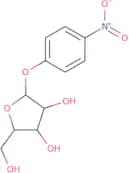
25gTo inquire50gTo inquire100gTo inquire250gTo inquire500gTo inquire-Unit-ggTo inquire4-Nitrophenyl b-L-arabinofuranoside
CAS:<p>Chromogenic substrate targeting alpha-L-arabinofuranosidase</p>Purity:Min. 95%Color and Shape:White/Off-White SolidMolecular weight:271.22 g/molResorufin N-acetyl-b-D-glucosamine
CAS:<p>Resorufin N-acetyl-b-D-glucosamine is fluorogenic substrate for N-acetyl-beta-D-glucosaminidase (NAG).</p>Formula:C20H20N2O8Purity:Min. 98 Area-%Color and Shape:Orange PowderMolecular weight:416.38 g/molAldol® 484 acetate, Biosynth Patent: EP 2427431 and US 8940909
CAS:Controlled Product<p>Aldol® 484 acetate is a chromogenic substrate for carboxylesterases yielding a red precipitate. In contrast to classical indoxyl substrates, Aldol® substrates can be used under aerobic and anaerobic conditions.</p>Formula:C22H16ClFN2O3Purity:Min. 95%Color and Shape:PowderMolecular weight:410.83 g/molPhosphoric acid, mono(4-nitrophenyl) ester
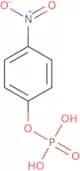
CAS:<p>Phosphatase substrate</p>Formula:C6H6NO6PPurity:Min. 95%Color and Shape:White PowderMolecular weight:219.09 g/molDehydroluciferin
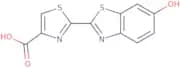
CAS:<p>Dehydroluciferin is a bioluminescence probe that is a potent inhibitor of the firefly luciferase reaction. It is a byproduct of the oxidation of luciferin, the substrate for firefly luciferase, which catalyzes the bioluminescence reaction. It can also form during the synthesis or storage of luciferin. Its presence can potentially lead to issues in bioluminescent assays.</p>Formula:C11H6N2O3S2Purity:Min. 97 Area-%Color and Shape:PowderMolecular weight:278.31 g/mol4-Nitrophenyl a-L-arabinopyranoside
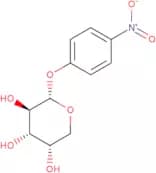
CAS:<p>Substrate for a-L-arabinopyranosidase</p>Formula:C11H13NO7Purity:Min. 98 Area-%Color and Shape:White PowderMolecular weight:271.22 g/mol3-Acetylumbelliferyl b-D-glucopyranoside
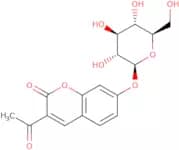
CAS:<p>3-Acetylumbelliferyl beta-D-glucopyranoside is a fluorogenic enzyme substrate for beta-galactosidase-6-phosphatase. It is used in in diagnostic assays such as Gaucher disease.</p>Formula:C17H18O9Purity:Min. 95%Color and Shape:PowderMolecular weight:366.32 g/mol4-Methylumbelliferyl 2-deoxy-2-sulfamino-a-D-glucopyranoside sodium salt - Moscerdam™ biochemical purity
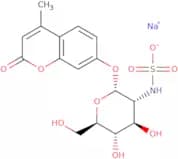
CAS:<p>4-Methylumbelliferyl 2-deoxy-2-sulfamino-a-D-glucopyranoside sodium salt (M3A or MU-GlcNS) is a fluorogenic substrate of heparin sulfamidase, used in the diagnosis of Mucopolysaccharidosis III type A (MPS III A). MPS III A, also known as Sanfilippo syndrome type A, is caused by the deficiency of heparan N-sulfatase. Heparin sulfamidase in the assay desulfates MU-GlcNS to 4-methylumbelliferyl 2-amino-2-deoxy-α-D-glucopyranoside (MU-GlcNH2). To release fluorometrically measurable 4-methylumbelliferone (MU) and by-product glucosamine, MU-GlcNH2 is further hydrolysed by an enzyme such as yeast α-glucosidase during a second incubation.</p>Formula:C16H18NO10SNaPurity:Min. 95 Area-%Color and Shape:White PowderMolecular weight:439.37 g/mol4-Nitrophenyl 2-acetamido-2-deoxy-3-O-(b-D-galactopyranosyl)-b-D-glucopyranoside
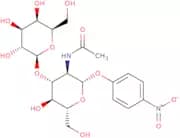
CAS:<p>Chromogenic substrate for fucosyltransferases</p>Formula:C20H28N2O13Purity:Min. 98 Area-%Color and Shape:White PowderMolecular weight:504.44 g/molAldol® 470 choline phosphate, Biosynth Patent: EP 2427431 and US 8940909
CAS:<p>Aldol® 470 choline phosphate is a chromogenic and fluorogenic enzyme substrate used for detection of phosphatidyl-choline specific phospholipase C (PC-PLC, EC 3.1.4.3) activity. The colorless product is cleaved by PC-PLC positive microorganisms in liquid or solid media, yielding a yellow color and green fluorescence. Aldol® 470 choline phosphate therefore, enables the detection and identification of PC-PLC positive pathogenic bacteria, such as, Clostridium perfringens, Pseudomonas aeruginosa, Helicobacter pylori, Legionella pneumophila, Bacillus cereus, Bacillus anthracis, Listeria monocytogenes, and others. Aldol® 470 choline phosphate can be used under aerobic and anaerobic conditions.</p>Formula:C28H31N2O7PPurity:Min. 95%Color and Shape:PowderMolecular weight:538.53 g/mol4-Methylumbelliferyl-α-D-mannopyranoside
CAS:<p>4-Methylumbelliferyl alpha-D-mannopyranoside (4-MU-a-D-Man) is a fluorogenic substrate used in activity assays for alpha-mannosidase. When it is hydrolyzed by alpha-mannosidase, it produces a fluorescent compound, 4-methylumbelliferone (4-MU). 4-MU-a-D-Man is often used in medical research to monitor the activity of alpha-mannosidase, which is important in lysosomal storage diseases. In addition, 4-Methylumbelliferyl alpha-D-mannopyranoside has been used to study the the activity of concanavalin A, a lectin that specifically binds to alpha-D-mannopyranosyl and alpha-D-glucopyranosyl residues on various glycoproteins. The use of this fluorogenic enzyme substrate permits study the degree of alpha-D-mannosidic linkage cleavage by the enzyme.</p>Formula:C16H18O8Purity:Min. 98 Area-%Molecular weight:338.32 g/molRef: 3D-M-5730
1gTo inquire5gTo inquire10gTo inquire500mgTo inquire2500mgTo inquire-Unit-ggTo inquire4-Nitrophenyl a-D-mannopyranoside
CAS:<p>4-Nitrophenyl a-D-mannopyranoside is a chromogenic pNP enzyme substrate that enables the detection and quantification of a-D-mannosidase activity in various biological samples through a colorimetric assay. The hydrolysis of the substrate by the enzyme releases 4-nitrophenol, a yellow compound whose absorption can be measured spectrophotometrically. Applications for this substrate span biomedical research, disease diagnostics, and industrial enzyme production.</p>Formula:C12H15NO8Purity:Min. 98.0 Area-%Color and Shape:Off-White PowderMolecular weight:301.25 g/mol4-Methylumbelliferyl palmitate
CAS:<p>Fluorogenic substrate for esterase yielding a blue fluorescent solution upon cleavage.</p>Formula:C26H38O4Purity:Min. 99 Area-%Molecular weight:414.59 g/molRef: 3D-M-5750
1gTo inquire5gTo inquire250mgTo inquire500mgTo inquire2500mgTo inquire-Unit-ggTo inquire3,4-Cyclohexenoesculetin β-D-glucuronide
<p>Chromogenic substrate for beta-glucuronidase</p>Purity:Min. 95%