Metabolismo
Los inhibidores del metabolismo son compuestos que interfieren con las vías metabólicas, alterando la producción y utilización de energía dentro de las células. Estos inhibidores se utilizan para estudiar la regulación del metabolismo, el papel de las vías metabólicas en enfermedades como el cáncer y la diabetes, y para desarrollar nuevas estrategias terapéuticas. Los inhibidores del metabolismo pueden dirigirse a diversas enzimas y procesos involucrados en la glucólisis, la oxidación de ácidos grasos y otras funciones metabólicas. En CymitQuimica, ofrecemos una amplia gama de inhibidores del metabolismo de alta calidad para apoyar su investigación en bioquímica, trastornos metabólicos y desarrollo de fármacos.
Subcategorías de "Metabolismo"
- AhR(42 productos)
- Aminopeptidasa(76 productos)
- CETP(20 productos)
- Anhídrido carbónico(196 productos)
- Caseína quinasa(139 productos)
- DHFR(30 productos)
- Descarboxilasa(4 productos)
- Deshidrogenasa(302 productos)
- FAAH(64 productos)
- FXR(62 productos)
- Factor Xa(87 productos)
- Ácido graso sintasa(37 productos)
- Ferroptosis(227 productos)
- GR(3 productos)
- GSNOR(3 productos)
- Glucoquinasa(56 productos)
- HIF / HIF Prolilhidroxilasa(146 productos)
- HMG-CoA reductasa(34 productos)
- Hidroxilasa(36 productos)
- IDO(84 productos)
- LDL(7 productos)
- Lipasa(107 productos)
- Lípido(62 productos)
- Lipoxigenasa(133 productos)
- MAO(85 productos)
- MPO(2 productos)
- NAMPT(40 productos)
- P450(6 productos)
- PAI-1(26 productos)
- PDE(170 productos)
- PED(1 productos)
- PKM(17 productos)
- PPAR(170 productos)
- Fosfolipasa(85 productos)
- ROR(47 productos)
- Receptor de retinoides(20 productos)
- SGK(10 productos)
- Tiorredoxina(12 productos)
- Transferasa(30 productos)
- Transportador(43 productos)
- UGT(4 productos)
- Inhibidores de la xantina oxidasa (XO)(9 productos)
Mostrar 34 subcategorías más
Se han encontrado 9197 productos de "Metabolismo"
Ordenar por
Pureza (%)
0
100
|
0
|
50
|
90
|
95
|
100
TAK-915
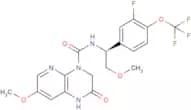
CAS:TAK-915: potent, brain-ready PDE2A inhibitor, 0.61 nM IC50, 4100x selectivity over PDE1A.Fórmula:C19H18F4N4O5Pureza:98%Forma y color:SolidPeso molecular:458.36Homomoschatoline
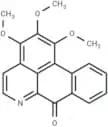
CAS:Homomoschatoline is an antibacterial isolated from Artabotrys crassifolius.Fórmula:C19H15NO4Pureza:98%Forma y color:SolidPeso molecular:321.33AubipyOMe
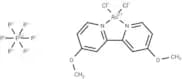
CAS:AubipyOMe serves as an effective inhibitor of Tartrate-resistant Acid Phosphatase (TRAP/ACP5), a metalloenzyme identified in activated osteoclasts and macrophages. It exhibits inhibitory IC50 values of 1.3 μM against TRAP5a and 1.8 μM against TRAP5b. Additionally, it effectively suppresses TRAP activity in extracts from mouse macrophages and human lung tissues.Fórmula:C12H12AuCl2F6N2O2PForma y color:SolidPeso molecular:629.07Dioctanoylphosphatidic acid sodium
CAS:Dioctanoylphosphatidic acid sodium serves as a modulator of phagocyte respiratory bursts, a precursor to diacylglycerol and lyso-phosphatidic acid, and influences the phosphorylation of the mammalian target of rapamycin (mTOR). Additionally, it enhances the viability of gallbladder cancer cells inhibited by histone deacetylase inhibitors (HDACI). This compound is derived from glycerophospholipids through the action of phospholipase D.Fórmula:C19H36NaO8PForma y color:SolidPeso molecular:446.457α,24(S)-Dihydroxycholesterol
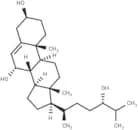
CAS:7α,24(S)-Dihydroxycholesterol ((3β,7α,24S)-Cholest-5-ene-3,7,24-triol) acts as a ligand for liver X receptors (LXR), specifically binding to the ligand-binding domains of LXRα and LXRβ. This compound is synthesized through the E-α,β-unsaturated ketone process, starting with arsindole and J-secondary-butyl dimethylsiloxy-bis-positive-5-cholestenal as the initial materials. It undergoes a series of transformations to produce 7α,24(S)-dihydroxycholesterol.Fórmula:C27H46O3Forma y color:SolidPeso molecular:418.653-Ferrocenylpropionic anhydride
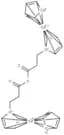
CAS:3-Ferrocenylpropionic anhydride is extensively used in compound synthesis, serving as an intermediary for producing various bioactive compounds. Additionally, by modulating specific enzyme activities, 3-Ferrocenylpropionic anhydride has demonstrated potential anti-tumor properties.Fórmula:C26H26Fe2O3Forma y color:SolidPeso molecular:498.17RBM14C12
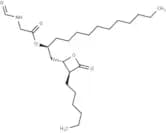
CAS:RBM14C12 is a compound known for its cell signaling activity. It plays a crucial role in researching lipid metabolism and cell membrane structure. Additionally, RBM14C12 can be utilized in the development of novel compounds aimed at modulating the biological mechanisms associated with lipid-related diseases.Fórmula:C26H39NO6Forma y color:SolidPeso molecular:461.599-cis-β-Carotene
CAS:9-cis-β-Carotene, a precursor of retinal, is cleaved by beta-carotene oxygenase 1 (BCMO1) to produce 9-cis-retinal.Fórmula:C40H56Pureza:98%Forma y color:SolidPeso molecular:536.87(S)-CPP sodium
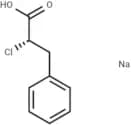
CAS:(S)-CPP sodium serves as an inhibitor of the branched-chain α-keto acid dehydrogenase complex (BCKDC) kinase, commonly referred to as BDK or keto acid dehydrogenase kinase. As a negative regulator of BCKDC activity, (S)-CPP (IC50 of 6.3 μM) inhibits BDK, which activates the complex, leading to a significant reduction in the levels of leucine/isoleucine and valine in the plasma of wild-type mice.Fórmula:C9H8ClNaO2Forma y color:SolidPeso molecular:206.60Diethylumbelliferyl phosphate
CAS:Diethylumbelliferyl phosphate (DEUP) is a potent and selective inhibitor of cholesterol esterase that does not inhibit protein kinase A activity in vitro. It disrupts steroidogenesis by blocking cholesterol transport to mitochondria in steroidogenic cells, with an IC50 of 11.6 μM. This compound may also limit the absorption of dietary cholesterol.Fórmula:C14H17O6PForma y color:SolidPeso molecular:312.25OMDM169
CAS:OMDM169: potent/selective MAGL inhibitor, raises 2-AG, analgesic via cannabinoid receptors, IC50: 0.13-0.41μM in rat/COS-7, inactive at CB1/CB2.Fórmula:C25H45NO5Pureza:98%Forma y color:SolidPeso molecular:439.63MRS4458
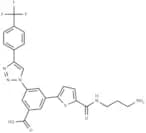
CAS:MRS4458 is an effective inhibitor of the P2Y14 Receptor.Fórmula:C24H20F3N5O3SPureza:98%Forma y color:SolidPeso molecular:515.51EpoY
CAS:EpoY (SD-142) is an irreversible inhibitor of the primary brain microtubule-associated tyrosine carboxypeptidase (TCP), a complex formed by vasohibin-1 (VASH1) and small vasohibin-binding protein (SVBP). By inhibiting TCP with an IC50 value of approximately 500 nM, EpoY effectively reduces the levels of detyrosinated α-tubulin, which is crucial for microtubule dynamics and neuronal differentiation. This inhibition results in significant differentiation defects and is linked to potential issues related to cancer and cardiomyopathy.Fórmula:C15H17NO7Forma y color:SolidPeso molecular:323.30SAR114137
CAS:SAR114137 is a highly effective pharmaceutical compound characterized by potent bioactivity. It exhibits variations in its amorphous content during the physical processing of crystalline active pharmaceutical ingredients (APIs). The amorphous API content of SAR114137 significantly decreases when subjected to various jet milling techniques. Additionally, SAR114137 demonstrates good chemical stability in drug formulations.Fórmula:C17H24F2N4O2Forma y color:SolidPeso molecular:354.39GC-IN-2
CAS:GC-IN-2 (Compound 25) is an effective and selective non-sugar-based glucocerebrosidase inhibitor with an IC50 value of 6.46 μM. It is utilized in research related to Gaucher's disease.Fórmula:C19H16N2O3SForma y color:SolidPeso molecular:352.411,2-Dipentadecanoyl-rac-glycerol
CAS:1,2-Dipentadecanoyl-rac-glycerol (DG(15:0/15:0/0:0)) is a compound referenced in studies examining the effect of insulin on the content of 1,2-diacylglycerol in rat hearts. Insulin is observed to increase the amount of 1,2-diacylglycerol containing specific fatty acid compositions in the heart, which may be linked to cardiac contractility.Fórmula:C33H64O5Forma y color:SolidPeso molecular:540.86RO5101576
CAS:RO5101576 is a potent antagonist of LTB4 receptor.Fórmula:C36H38O8SPureza:98%Forma y color:SolidPeso molecular:630.75hCAIX-IN-20
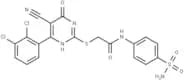
CAS:hCAIX-IN-20 (compound APBS-5m) is a potent inhibitor of carbonic anhydrase IX (hCA IX), with a Ki of 2.7 nM, playing a significant role in cancer research.Fórmula:C19H13Cl2N5O4S2Peso molecular:510.373-Oxochenodeoxycholic acid
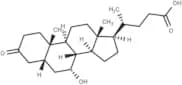
CAS:3-Oxochenodeoxycholic acid is an endogenous metabolite detectable in feces and may serve as a diagnostic marker for various diseases, including COVID-19.Fórmula:C24H38O4Forma y color:SolidPeso molecular:390.556HSD17B13-IN-32
CAS:HSD17B13-IN-32 (Compound 67) is an inhibitor of hydroxysteroid 17β-dehydrogenase 13 (HSD17B13) with an IC50 value of ≤0.1 μM for estradiol. It can be used for research on liver diseases, metabolic diseases, or cardiovascular diseases, such as NAFLD or NASH, as well as drug-induced liver injury (DILI) [1].Fórmula:C23H15Cl2N5O3Forma y color:SolidPeso molecular:480.3