Metabolismo
Los inhibidores del metabolismo son compuestos que interfieren con las vías metabólicas, alterando la producción y utilización de energía dentro de las células. Estos inhibidores se utilizan para estudiar la regulación del metabolismo, el papel de las vías metabólicas en enfermedades como el cáncer y la diabetes, y para desarrollar nuevas estrategias terapéuticas. Los inhibidores del metabolismo pueden dirigirse a diversas enzimas y procesos involucrados en la glucólisis, la oxidación de ácidos grasos y otras funciones metabólicas. En CymitQuimica, ofrecemos una amplia gama de inhibidores del metabolismo de alta calidad para apoyar su investigación en bioquímica, trastornos metabólicos y desarrollo de fármacos.
Subcategorías de "Metabolismo"
- AhR(42 productos)
- Aminopeptidasa(76 productos)
- CETP(20 productos)
- Anhídrido carbónico(196 productos)
- Caseína quinasa(138 productos)
- DHFR(32 productos)
- Descarboxilasa(4 productos)
- Deshidrogenasa(302 productos)
- FAAH(64 productos)
- FXR(62 productos)
- Factor Xa(85 productos)
- Ácido graso sintasa(37 productos)
- Ferroptosis(226 productos)
- GR(3 productos)
- GSNOR(3 productos)
- Glucoquinasa(57 productos)
- HIF / HIF Prolilhidroxilasa(146 productos)
- HMG-CoA reductasa(34 productos)
- Hidroxilasa(36 productos)
- IDO(84 productos)
- LDL(7 productos)
- Lipasa(107 productos)
- Lípido(61 productos)
- Lipoxigenasa(134 productos)
- MAO(87 productos)
- MPO(2 productos)
- NAMPT(40 productos)
- P450(6 productos)
- PAI-1(26 productos)
- PDE(169 productos)
- PED(1 productos)
- PKM(17 productos)
- PPAR(170 productos)
- Fosfolipasa(86 productos)
- ROR(47 productos)
- Receptor de retinoides(22 productos)
- SGK(10 productos)
- Tiorredoxina(12 productos)
- Transferasa(29 productos)
- Transportador(45 productos)
- UGT(4 productos)
- Inhibidores de la xantina oxidasa (XO)(9 productos)
Mostrar 34 subcategorías más
Se han encontrado 9182 productos de "Metabolismo"
Ordenar por
Pureza (%)
0
100
|
0
|
50
|
90
|
95
|
100
Magnesium ionophore III
CAS:Magnesium ionophore III (ETH 4030) is an ion carrier that regulates intracellular magnesium ion concentrations. It enhances cellular functions and metabolic activities by increasing the permeability of cell membranes to magnesium ions. Additionally, Magnesium ionophore III is utilized in research to explore the significance of magnesium ions in biological processes and their impact on cellular physiology.Fórmula:C30H58N4O4Forma y color:SolidPeso molecular:538.81Casein kinase 1δ-IN-19
CAS:Casein kinase1δ-IN-19 (compound 492) is a potent inhibitor of casein kinase 1δ. It is utilized in research related to neurodegenerative disorders, such as Alzheimer's disease.
Fórmula:C21H19N5O3Forma y color:SolidPeso molecular:389.4076′SLN
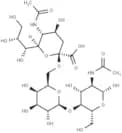
CAS:6′SLN is a characteristic glycan found on the surface of cancer-related extracellular vesicles (EVs) and serves as the primary form of protein glycosylation within EVs. Additionally, 6′SLN, a derivative of sialic acid, interacts with hemagglutinins (HAs) from both human and avian influenza strains, making it relevant in the study of anti-influenza drugs.Fórmula:C25H42N2O19Forma y color:SolidPeso molecular:674.6ERAP1 modulator-2
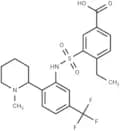
CAS:ERAP1 modulator-2 (compound 10) is a potent ERAP1 inhibitor with an IC50 value of less than 100 nM.
Fórmula:C22H25F3N2O4SForma y color:SolidPeso molecular:470.505Dopaminechrome
CAS:Dopaminechrome (DACHR) is an oxidation product of dopamine that promotes the generation of H2O2 at mitochondrial complex I in the brain in a concentration- and respiration-dependent manner. It possesses neurotoxic properties and can be utilized in Parkinson's disease research.
Fórmula:C8H7NO2Forma y color:SolidPeso molecular:149.1471-Stearoyl-sn-glycerol 3-phosphate sodium
CAS:1-Stearoyl-sn-glycerol 3-phosphate sodium, a biologically active phospholipid, plays a crucial role in regulating cell motility, proliferation, invasion, survival, and the production of growth factors through interactions with G protein-coupled receptors (GPCR). Synthesized during the formation of membrane phospholipids, this compound typically has a low plasma concentration (approximately 100nM) and originates from various cell types, including activated platelets, epithelial cells, leukocytes, neuronal cells, and tumor cells. Its distinctive structure features stearic acid at the sn-1 position and a hydroxyl group at the sn-2 position.Fórmula:C21H42NaO7PForma y color:SolidPeso molecular:460.52DC360
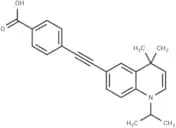
CAS:DC360 is a synthetic analog of all-trans retinoic acid (ATRA) that can induce the expression of RARβ. It is useful for studies characterizing the retinoic acid signaling pathway.
Fórmula:C23H23NO2Forma y color:SolidPeso molecular:345.434DOCP
CAS:DOCP (2-((2,3-Bis(oleoyloxy)propyl)dimethylammonio)ethyl hydrogen phosphate) is a lipid characterized by an opposite charge orientation compared to traditional phosphatidylcholine (PC) lipids, featuring quaternary ammonium near the bilayer interface and phosphate groups projecting into the aqueous environment. This unique structure of iPC lipids presents an excellent opportunity to investigate the biophysical characteristics and biological activities influenced by the reversal of surface charges on bilayers.Fórmula:C43H82NO8PForma y color:SolidPeso molecular:772.094-MDM
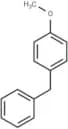
CAS:4-MDM (4-Methoxydiphenylmethane) is an orally active anti-inflammatory compound that selectively enhances the aminopeptidase activity of leukotriene A4 hydrolase (LTA4H). By promoting the degradation of proline-glycine-proline by LTA4H, 4-MDM reduces neutrophil recruitment in the lungs, alleviating inflammation without affecting the epoxide hydrolase activity of LTA4H. This compound is useful for research in pulmonary diseases.Fórmula:C14H14OForma y color:SolidPeso molecular:198.26IDO1-IN-25
CAS:IDO1-IN-25, a dual inhibitor of IDO1/TDO2, showcases IC50 values of 0.17 μM for IDO1 and 3.2 μM for TDO2. It effectively suppresses NO production in RAW264.7 cells following stimulation with lipopolysaccharide (LPS). Additionally, IDO1-IN-25 demonstrates anti-inflammatory properties in a mouse ear edema model of acute inflammation induced by croton oil.Fórmula:C14H8Cl3NO2SForma y color:SolidPeso molecular:360.64LTA4H-IN-2
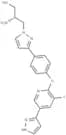
CAS:LTA4H-IN-2 (compound (S)-2) acts as an orally active inhibitor targeting Leukotriene A4 Hydrolase, exhibiting potent activity with an IC 50 of less than 3 nM [1].Fórmula:C20H19FN6O2Forma y color:SolidPeso molecular:394.4CGS 24592
CAS:CGS-24592 is an orally active, selective, and potent inhibitor of neutral endopeptidase 24.11 (NEP), with an IC50 value of 1.6 nmol/L. It reduces the degradation of atrial natriuretic peptide (ANP), thereby increasing plasma ANP concentration and lowering blood pressure. CGS-24592 shows potential for research in cardiovascular diseases such as hypertension and congestive heart failure.Fórmula:C19H23N2O6PForma y color:SolidPeso molecular:406.37Bestatin methyl ester
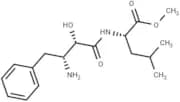
CAS:Bestatin methyl ester (600, 900 µM; 24 h) inhibits spore cell differentiation in Dictyostelium discoideum.Fórmula:C17H26N2O4Forma y color:SolidPeso molecular:322.4Quinapril
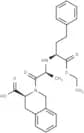
CAS:Quinapril is an orally active, non-peptide, and non-thiol angiotensin-converting enzyme (ACE) inhibitor. It primarily blocks the conversion of angiotensin I to angiotensin II in both plasma and tissues. Upon enzymatic hydrolysis, Quinapril is converted into the pharmacologically active Quinaprilat and is effective in hypertension models.Fórmula:C25H30N2O5Forma y color:SolidPeso molecular:438.516(±)-HIP-B
CAS:(±)-HIP-B is an excitatory amino acid transporter blocker.Fórmula:C6H8N2O4Pureza:98%Forma y color:SolidPeso molecular:172.14m-APTA
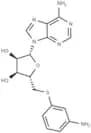
CAS:m-APTA (5'-S-(3-aminophenyl)-5'-thioadenosine) is a selective chemoprotective agent targeting methylthioadenosine phosphorylase (MTAP). It can be converted into adenine, which is a crucial step in shielding normal cells from the toxicity of nucleobase analogs (NBA). m-APTA holds potential for research in MTAP-deficient cancers.Fórmula:C16H18N6O3SForma y color:SolidPeso molecular:374.418PRL3-CNNM4 interaction-IN-1
CAS:PRL3-CNNM4 interaction-IN-1 (Compound C28d52) is an inhibitor of the PRL3-CNNM4 interaction that also suppresses CNNM inhibition mediated by PRL. This compound exhibits favorable pharmacokinetic and drug metabolism properties.Fórmula:C8H8O2SForma y color:SolidPeso molecular:168.21CK1δ-IN-3
CAS:CK1δ-IN-3 (compound 376) is a CK1δ (casein kinase 1δ) inhibitor that can be used to study neurodegenerative diseases such as Alzheimer's disease.Fórmula:C24H19N3O2SPureza:99.27%Forma y color:SolidPeso molecular:413.49Ref: TM-T204344
1mg185,00€5mg459,00€10mg657,00€25mg1.026,00€50mg1.415,00€100mg1.872,00€200mg2.555,00€L 671776
CAS:L 671776 is an inositol monophosphatase inhibitor.Fórmula:C23H32O5Pureza:98%Forma y color:SolidPeso molecular:388.5Carbonic anhydrase inhibitor 4
CA inhibitor 4, photoprobe; targets hCA I-XIV; Ki: 640-1166 nM.Fórmula:C21H18N2O4SForma y color:SolidPeso molecular:394.44