Membrane Transporter/Ion Channel
Membrane transporter and ion channel inhibitors are compounds that block the function of proteins responsible for the transport of ions, nutrients, and other molecules across cell membranes. These inhibitors are crucial for studying the regulation of cellular homeostasis, signal transduction, and neurotransmission. Membrane transporter and ion channel inhibitors are also important in developing treatments for disorders such as epilepsy, cardiovascular diseases, and metabolic syndromes. At CymitQuimica, we provide a diverse selection of high-quality membrane transporter and ion channel inhibitors to support your research in physiology, neuroscience, and pharmacology.
Subcategories of "Membrane Transporter/Ion Channel"
- ABC(3 products)
- ATPase(93 products)
- Adiponectin receptor(5 products)
- CFTR(64 products)
- CGRP Receptor(52 products)
- Calcium Channel(496 products)
- Chloride channel(49 products)
- GABA Receptor(336 products)
- Monoamine Transporter(23 products)
- Monocarboxylate transporter(17 products)
- NKCC(2 products)
- NPC1L1(3 products)
- Na-K-Cl cotransporter(8 products)
- OAT(27 products)
- OCT(7 products)
- P-gp(53 products)
- Potassium Channel(277 products)
- Proton pump(39 products)
- SGLT(30 products)
- Sodium Channel(202 products)
- TRP/TRPV Channel(93 products)
Show 13 more subcategories
Found 2290 products of "Membrane Transporter/Ion Channel"
Sort by
Purity (%)
0
100
|
0
|
50
|
90
|
95
|
100
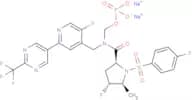
TRPA1 Antagonist 1
CAS:<p>TRPA1 Antagonist 1 is an antagonist of TRPA1(IC50: 8 nM) and is a methylene phosphate prodrug which converts to its active parent drug.</p>Formula:C24H20F6N5Na2O7PSPurity:98%Color and Shape:SolidMolecular weight:713.45PF-06462894
CAS:PF-06462894: morpholinopyrimidone, mGlu5 antagonist (Ki=6nM), no immune activation in mouse model.Formula:C18H23N3O3Purity:98%Color and Shape:SolidMolecular weight:329.39TRPV1 antagonist 10
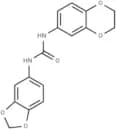
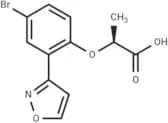
CAS:<p>TRPV1 antagonist 10 is a potent, orally active TRPV1 antagonist with an IC50 of 33.06 nM and serves as a moderate to weak inhibitor of URAT1 (IC50 = 22.51 μM) and GLUT9 (inhibition of 60.25% at 50 μM). It exhibits analgesic and urate-lowering properties and is applicable for research in hyperuricemia and inflammatory pain.</p>Formula:C16H14N2O5Color and Shape:SolidMolecular weight:314.2932-PPA
CAS:2-PPA serves as a selective TMEM175 inhibitor (IC 50 =32 μM), primarily influencing lysosomal activity. Through acute inhibition of TMEM175, 2-PPA enhances lysosomal macromolecular catabolism, which in turn boosts macrophage activity and other digestive processes. This compound holds significance in Parkinson's disease research.Formula:C11H10N2Color and Shape:SolidMolecular weight:170.21Sp-8-Br-cGMPS
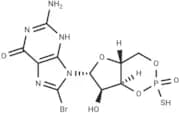
CAS:<p>Sp-8-Br-cGMPS, an analogue of cGMP, acts as an agonist for cGMP gated cation channels (CNG channels) with an EC50 of 106.5 μM. While Sp-8-Br-cGMPS can induce currents, it does not stabilize channel open states as effectively as a full agonist.</p>Formula:C10H11BrN5O6PSColor and Shape:SolidMolecular weight:440.17CRM1-IN-3
CAS:<p>CRM1-IN-3 (B28), a noncovalent inhibitor of CRM1, is utilized in the research of protein localization and tumor studies [1].</p>Formula:C26H26ClN3O3Color and Shape:SolidMolecular weight:463.96NMD670
CAS:<p>NMD670 is an orally active, partial inhibitor of the skeletal muscle-specific chloride channel ClC-1. It enhances muscle excitability and neuromuscular transmission, restoring muscle function and mobility. NMD670 has a favorable safety profile and improves muscle function in rats, particularly in an MG rat model [1].</p>Formula:C12H10BrNO4Color and Shape:SolidMolecular weight:312.12Caramboxin
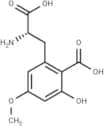
CAS:<p>Caramboxin, a neurotoxin, can induce acute kidney injury.</p>Formula:C11H13NO6Color and Shape:SolidMolecular weight:255.22Kv7.2/Kv7.3 agonist 1
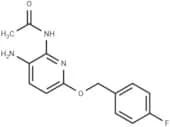
CAS:<p>Kv7.2/Kv7.3 agonist 1 (Compound 16) is an orally effective agonist for the KV7.2/7.3 channels (KV7.2/7.3 channel/KCNQ2/3) with an EC50 of 1.03 μM. This compound demonstrates analgesic effects in mouse models of chronic constriction injury (CCI) and Streptozotocin-induced diabetic peripheral neuropathy (DPNP), with ED50 values of 12.02 mg/kg and 9.63 mg/kg, respectively.</p>Formula:C14H14FN3O2Color and Shape:SolidMolecular weight:275.28Dehydroindapamide
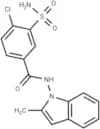
CAS:<p>Dehydroindapamide, an indole form of Indapamide, is utilized to quantify the turnover rate of Indapamide in CYP3A4, which is approximately 10 times higher than that of Indoline, with slightly enhanced affinity for CYP3A4.</p>Formula:C16H14ClN3O3SColor and Shape:SolidMolecular weight:363.82Vormatrigine
CAS:<p>Vormatrigine effectively inhibits sodium channels (sodium channel).</p>Formula:C16H12F6N4O2Color and Shape:SolidMolecular weight:406.28EU 1622-240
CAS:<p>EU 1622-240 is an allosteric modulator with a preference for GluN2B, GluN2C, and GluN2D, exhibiting EC50 values of 0.57, 0.82, and 1.1 μM, respectively. It possesses favorable physicochemical properties, along with in vitro stability and permeability.</p>Formula:C20H14BrF2N3O2SColor and Shape:SolidMolecular weight:478.31Cyproflanilide
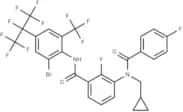
CAS:<p>Cyproflanilide is a GABAR antagonist that exhibits high activity against a variety of pests, including those from the Lepidoptera, Coleoptera, and Thysanoptera orders.</p>Formula:C28H17BrF12N2O2Color and Shape:SolidMolecular weight:721.33H052
CAS:<p>H052 is a selective inhibitor of Staphylococcus aureus α-hemolysin (Hla). It binds to the Hla monomer, disrupting its interaction with the host cell membrane, thereby blocking pore formation and inhibiting calcium influx, cytotoxicity, and inflammatory response. H052 exhibits inhibitory activity against Hla-induced calcium influx (EC50 = 30 nM in U937 cells) and holds potential for research into lung infections caused by S. aureus.</p>Formula:C21H15ClFN3O4SColor and Shape:SolidMolecular weight:459.88Caged MK801
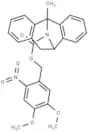
CAS:Caged MK801 (cMK801) is a selective, noncompetitive, and irreversible blocker of the NMDA receptor open channel. The NVOC cage is compatible in neuropharmacology and does not alter the intrinsic activity of the molecule.Formula:C26H24N2O6Color and Shape:SolidMolecular weight:460.48S9-A13
CAS:S9-A13 is a potent and selective inhibitor of SLC26A9, exhibiting an IC50 of 90.9 nM without inhibiting other members of the SLC26 family, such as SLC26A3, SLC26A4, and SLC26A6. It also inhibits the SLC26A9 Cl- current in cells lacking CFTR expression.Formula:C20H18ClN3O2SColor and Shape:SolidMolecular weight:399.89Perfluoroheptanesulfonic acid
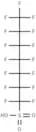
CAS:<p>Perfluoroheptanesulfonic acid (1-Perfluoroheptanesulfonic acid; Perfluoroheptanesulphonic acid) is a perfluoroalkyl substance (PFAS). This compound has been detected in landfill leachate and has been shown to induce deformities in zebrafish larvae (EC50=168.1 μM). Exposure to PFHpS in fetuses can lead to reduced birth weight.</p>Formula:C7HF15O3SColor and Shape:SolidMolecular weight:450.12BGT1-IN-1
CAS:BGT1-IN-1 (compound 9) is an effective inhibitor of BGT1, demonstrating IC50 values of 13.9 µM for hBGT1 and 58.3 µM for GAT3. It exhibits no cytotoxic effects and possesses neuroprotective activity.Formula:C6H9NO2Color and Shape:SolidMolecular weight:127.14CFTR corrector 17
CAS:CFTRcorrector 17 (example 17) is a regulator of the cystic fibrosis transmembrane conductance regulator (CFTR). It is utilized in the study of diseases mediated by CFTR.Formula:C18H15FN2O2Color and Shape:SolidMolecular weight:310.32(R)-KMH-233
CAS:<p>(R)-KMH-233 is an isomer of KMH-233, which can serve as a reference compound in experiments. KMH-233 functions as a potent, reversible, and selective inhibitor of L-type amino acid transporter 1 (LAT1), effectively hindering the uptake of LAT1 substrate, l-leucine (IC50=18 μM), and also inhibiting cell growth. Even at a low concentration of 25 μM, KMH-233 significantly enhances the efficacy of Bestatin and cisplatin.</p>Formula:C32H25N7O5Molecular weight:587.58